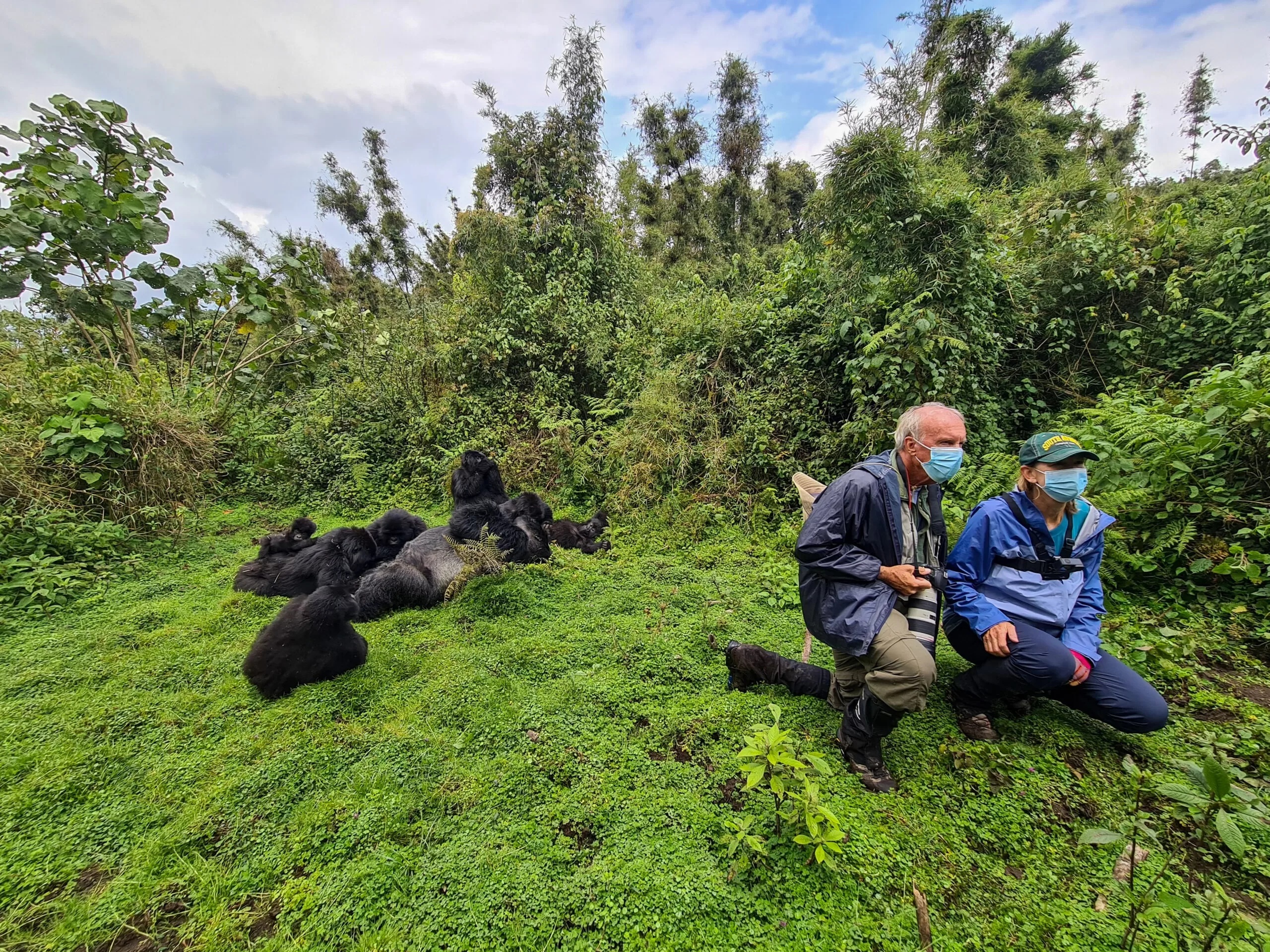
First-Time in Rwanda? 10 Essential Rules for Primate Tracking. Essential rules for primate tracking in Rwanda include maintaining a 7-meter (21-foot) distance from gorillas, limiting viewing time to one strict hour, staying home if sick to prevent disease transmission, avoiding flash photography, and following all instructions from your park ranger guide
Popular tour packages
2-days-luxury-rwanda-gorilla-trekking-safari-from-kigali-city
3-days-rwanda-gorilla-trekking-and-golden-monkey-tracking-in-volcanoes
3-days-rwanda-gorilla-trekking-safari-itinerary-in-volcanoes-park
4-days-rwanda-golden-monkey-tracking-and-bisoke-hiking-tour-package
4-days-best-volcanoes-and-bwindi-impenetrable-national-park-double-gorilla-trekking
4-days-rwanda-primates-safari-gorilla-trekking-and-chimpanzee-all-inclusive-package
5-days-best-chimpanzee-tracking-golden-monkey-tracking-and-visit-to-lake-kivu
5-days-rwanda-double-gorilla-trekking-and-golden-monkey-tracking
5-days-uganda-gorilla-trekking-chimps-and-rwanda-golden-monkey-tracking-combo
6-days-gorillas-trekking-chimpanzee-tracking-and-golden-monkeys-safari-in-rwanda
7-days-best-gorilla-trekking-and-other-highlights-of-rwanda-tour
8-days-best-of-rwanda-uganda-safari-volcanoes-to-best-uganda-safari-parks
1. Maintain a 7-Meter Distance
Keep at least a 7-meter (22-foot) gap between yourself and the mountain gorillas or chimpanzees. This buffer zone prevents accidental physical contact, lowers animal stress, and stops the spread of contagious germs. If a curious young ape approaches you, quietly back away while keeping your eyes cast downward.
2. Stay Home If You Are Sick
Never join a primate trek if you have a cold, flu, cough, or any communicable illness. Primates share a massive amount of their DNA with humans and lack natural immunity to human viruses. A simple sniffle can prove fatal to an entire family of gorillas or chimpanzees. Park authorities offer refunds or reschedule options if you fall ill.
3. Limit Viewing Time to One Hour
Once your group locates the primate family, your viewing time is strictly capped at one hour. This time limit minimizes human disruption to their daily routines, foraging patterns, and social bonding. Rushing or overstaying stresses the animals and alters their natural behavior in the wild.
4. Stick to the Tight Group
Always stay bunched closely together with your assigned group of eight trekkers and your lead ranger. Primates view a tight, cohesive group as a single, non-threatening entity rather than an aggressive or scattered threat. Spreading out across the forest floor can confuse or intimidate the animals.
5. Keep Your Voice Low
Speak only in whispers or soft, muted tones once you near the primate troop. Loud voices, sudden shouts, or excited gasps startle the animals and disrupt their peace. Maintaining a calm, quiet atmosphere lets you tune into the natural forest sounds and intimate animal communications.
6. Turn Off Flash Photography
Always disable the flash on your camera, smartphone, or video recorder before taking photos. Bright, sudden flashes frighten gorillas and chimpanzees, causing them to feel threatened or retreat into the dense brush. Use a silent shutter mode and rely on natural forest light.
7. Never Eat, Drink, or Smoke Nearby
Consuming food, chewing gum, smoking, or drinking water is strictly forbidden within the vicinity of the primates. Dropping food scraps or packaging can introduce dangerous foreign bacteria to the ecosystem. It also tempts the animals to approach humans for handouts, which ruins their natural foraging habits.
8. Cover Your Face if You Cough or Sneeze
If you feel an unavoidable sneeze or cough coming on while near the animals, turn your head completely away from them. Use a handkerchief, your elbow, or a face mask to trap droplets. Wearing a fresh face mask is often a mandatory safety requirement throughout your time in the park.
9. Do Not Touch the Primates
Physical contact with mountain gorillas or chimpanzees is strictly prohibited under all circumstances. Even if a playful infant or a young juvenile brush past your leg, resist the urge to reach out and touch them. Respecting their space keeps both species safe from aggression and disease.
10. Pack Out All Your Trash and Waste
Leave nothing behind in the rainforest. If nature calls during a long trek, ask your guide to help you dig a proper 30-centimeter-deep hole and bury your waste completely. Never litter wrappers, tissues, or plastic bottles, as curious primates may ingest them and fall gravely ill.
Why is maintaining a strict 7-meter distance from primates mandatory?
Maintaining a strict 7-meter (22-foot) distance from mountain gorillas and chimpanzees is essential to safeguard both wildlife and visitors. Because primates share nearly 98% of human DNA, they are highly susceptible to human viruses and bacteria while lacking natural antibodies against them. Physical separation prevents cross-species disease transmission. Additionally, keeping this buffer zone lowers stress levels among primate families, allowing them to carry out their daily foraging, resting, and social routines without feeling threatened. If a playful juvenile or curious silverback moves toward you, your ranger guide will instruct you to slowly back away while keeping your eyes cast downward to signal non-aggression.
What should you do if you fall ill on the morning of your scheduled trek?
If you wake up with symptoms of a cold, flu, cough, fever, or any communicable illness, you must refrain from joining the trek. Great apes have zero immunity against human respiratory illnesses, meaning a routine cold can turn fatal for an entire gorilla family or chimpanzee troop. To encourage honest reporting without financial loss, Rwandan park authorities and responsible operators offer flexible refund or rescheduling options for sick guests. Prioritizing primate health over a schedule ensures conservation efforts remain uncompromised. Always inform your tour leader or guide immediately if you feel unwell before heading into the forest.
Why is viewing time strictly capped at one hour once primates are located?
The one-hour observation rule is designed to balance visitor experience with long-term wildlife protection. Prolonged exposure to human groups increases stress levels, alters natural foraging and mating behaviors, and heightens the risk of disease transmission. By capping encounters at sixty minutes, national park authorities ensure that wild primate troops retain their natural habits without becoming over-habituated or anxious. This strict time limit allows visitors to enjoy an intimate, unforgettable encounter while giving the animals ample privacy and freedom for the remainder of the day.
How does remaining in a tight group protect both trekkers and primates?
Staying closely bunched together with your eight-person trekking group and park rangers creates a single, predictable silhouette in the eyes of wild primates. Gorillas and chimpanzees view a compact group as a non-threatening, unified entity rather than an aggressive or scattered threat. Spreading out across the forest floor confuses the animals, increases their stress, and can provoke defensive charges from dominant silverbacks. Furthermore, staying close ensures that your park rangers can manage the group effectively and guide everyone safely should an unexpected situation arise.
Why is keeping your voice low critical near gorilla and chimpanzee troops?
Rainforest ecosystems depend on complex acoustic cues, and wild primates rely heavily on sound to communicate and assess safety. High-pitched gasps, sudden shouts, or loud talking startle gorillas and chimpanzees, triggering distress signals or causing them to retreat into dense cover. Speaking softly in low whispers preserves a calm atmosphere, ensuring the animals remain relaxed and comfortable in your presence. Maintaining quiet surroundings also enhances your overall experience, allowing you to hear subtle forest sounds, vocalizations, and chest beats clearly.
What physiological risks does flash photography pose to wild primates?
Flash photography is strictly prohibited because sudden, bright bursts of artificial light frighten and disorient wild animals. In the shaded environment of dense tropical rainforests, sudden light flashes startle primates and may be interpreted by dominant silverbacks as an aggressive challenge or dangerous threat. This can lead to defensive charges or cause the group to flee into inaccessible terrain. To capture great photos safely, disable your camera flash completely, switch to a silent shutter mode, and adjust your ISO settings to work with ambient forest light.
Why are eating, drinking, and smoking prohibited during primate encounters?
Consuming food, chewing gum, drinking beverages, or smoking within sight of wild primates is banned to prevent health and behavioral risks. Dropped food scraps or packaging introduce foreign bacteria and viruses into the forest ecosystem. Moreover, wild apes possess an incredible sense of smell; exposing them to human food creates unnatural food conditioning, encouraging them to raid crops or approach humans for handouts. Smoking also poses toxicological risks and wildland fire hazards. All snacks and water must be consumed at designated resting points far away from wildlife.
What protocols should you follow if you need to cough or sneeze near primates?
If you feel an sudden cough or sneeze coming on while near primates, turn your head completely away from the animals immediately. Use a handkerchief, your inner elbow, or your face mask to trap respiratory droplets and prevent airborne contamination. Because great apes are vulnerable to human respiratory pathogens, wearing a clean face mask is mandatory during gorilla and chimpanzee viewings in Rwanda. Diligent hygiene practices protect delicate wildlife populations from preventable infection.
Why is touching mountain gorillas or chimpanzees strictly forbidden?
Physical contact with primates is banned under all circumstances, even if a curious infant or playful juvenile approaches and touches you first. Touching wild animals breaks critical boundaries, compromises their wild nature, and increases the likelihood of disease transmission through skin contact. Additionally, touching a young ape can trigger an immediate protective response from nearby adults or dominant silverbacks, putting visitor safety at risk. Practicing self-restraint and respecting physical space protects both humans and wildlife.
How should human waste and litter be managed during rainforest treks?
Littering plastic wrappers, water bottles, or tissues is forbidden, as curious animals may ingest trash and fall gravely ill. Everything packed into the rainforest must be packed out. If nature calls during a trek where facilities are unavailable, notify your park ranger. They will dig a 30-centimeter (12-inch) deep hole away from water sources so human waste and biodegradable toilet tissue can be buried completely. Adhering to Leave-No-Trace practices maintains pristine habitats and safeguards ecosystem health.
What role do park ranger guides play during a primate tracking expedition?
Park ranger guides are highly trained professionals responsible for visitor safety, wildlife protection, and pathfinding. They monitor primate family locations, read subtle animal behaviors, and enforce safety regulations throughout the trek. Following your ranger's instructions without delay ensures a secure encounter, whether they instruct you to lower your gaze, crouch down, or step back. Respecting ranger authority fosters a safe environment for both tourists and wild animals.
How should visitors prepare physically for tracking in Rwanda’s terrain?
Primate tracking in Volcanoes National Park or Nyungwe Forest involves navigating steep ridges, slippery mud, high altitudes, and dense vegetation. Treks range from one to several hours depending on animal movements. Physical preparation—such as cardiovascular exercises and leg conditioning—improves stamina. Wearing sturdy, waterproof hiking boots with ankle support, long trousers, gaiters, and gardening gloves protects against mud, sharp vines, and stinging nettles, ensuring a comfortable trekking experience.
How does controlled primate tourism directly benefit wildlife conservation?
High-value, low-impact eco-tourism generates critical funding needed to protect Rwanda's natural national heritage. Revenues from tracking permits fund daily anti-poaching patrols, veterinary medical care for injured primates, habitat restoration, and ecological research. Additionally, Rwanda's revenue-sharing program directs 10% of park entrance fees into surrounding communities, funding schools, healthcare facilities, and infrastructure. This sustainable model turns local residents into active conservation partners.
How can travelers interpret basic gorilla body language during encounters?
Recognizing primate body language helps travelers remain calm and react appropriately. Displays like chest-beating, drumming on the ground, or short mock charges are typically dominance displays or warnings rather than direct attacks. When these occur, rangers instruct trekkers to crouch down, remain quiet, and avoid eye contact to show submission. Conversely, quiet feeding, grooming, and resting indicate a relaxed troop. Understanding these cues ensures respectful interaction with wild apes.
How do chimpanzee tracking experiences differ from gorilla tracking?
While gorilla tracking in Volcanoes National Park involves observing calm, ground-dwelling herbivore families, chimpanzee tracking in Nyungwe Forest is dynamic and fast-paced. Chimpanzees are active, arboreal omnivores that move quickly through the forest canopy, frequently vocalizing with loud pant-hoots. Tracking chimpanzees requires moving through dense montane terrain while looking high into the trees. Both experiences offer unique glimpses into primate life across different Rwandan ecosystems.
What camera equipment and settings work best for ethical forest photography?
Ethical photography requires balancing image quality with animal welfare. Bring a versatile telephoto lens (such as 70–200mm or 100–400mm) to capture detailed photos from the mandatory 7-meter distance. Use high ISO settings and wide apertures to handle low light under the dense rainforest canopy without using a flash. Turn off electronic shutter sounds and focus beeps to avoid disturbing the primates, and refrain from carrying bulky tripods that block forest paths.
Why is proper rain gear essential for primate tracking in Rwanda?
Rwanda’s montane rainforests feature unpredictable weather patterns where sudden, heavy downpours can occur even during dry seasons. Proper gear—including a lightweight waterproof jacket, rain trousers, and a protective waterproof cover for your daypack—keeps you dry and comfortable. Staying dry prevents hypothermia at cooler, high altitudes and safeguards sensitive camera gear, letting you focus fully on the tracking experience.
How does hiring a local porter support park communities and improve your trek?
Hiring a local porter at park headquarters is a practical way to enhance your trekking experience while supporting neighboring communities. Porters carry daypacks, assist travelers over steep or slippery sections, and help navigate rough terrain. The daily wage earned by porters directly supports local household income, healthcare, and education. Hiring a porter directly links tourism revenue to community well-being around Rwanda’s national parks.
Why is Rwanda recognized worldwide as a conservation success story?
Rwanda's collaborative approach to conservation has helped reverse the decline of mountain gorilla populations, moving them from critically endangered status toward recovery. This achievement stems from strong government commitment, community revenue-sharing, anti-poaching efforts, and strict adherence to ecotourism guidelines. Rwanda demonstrates how well-regulated tourism can actively protect endangered species while supporting local economic development.
Why should you book your Rwandan primate safari with Roads of Adventure Safaris?
Planning a smooth, ethical safari in Rwanda requires expert logistics, deep regional expertise, and a commitment to sustainable travel. Roads of Adventure Safaris specializes in tailored gorilla and chimpanzee tracking itineraries across Volcanoes, Nyungwe, and Akagera National Parks.
Our team manages all operational details—including securing official tracking permits, arranging luxury or mid-range eco-lodge accommodations, providing comfortable 4x4 safari vehicles, and assigning experienced driver-guides. We brief every client on safety and conservation guidelines before departure to ensure an ethical encounter with Rwanda's primates.