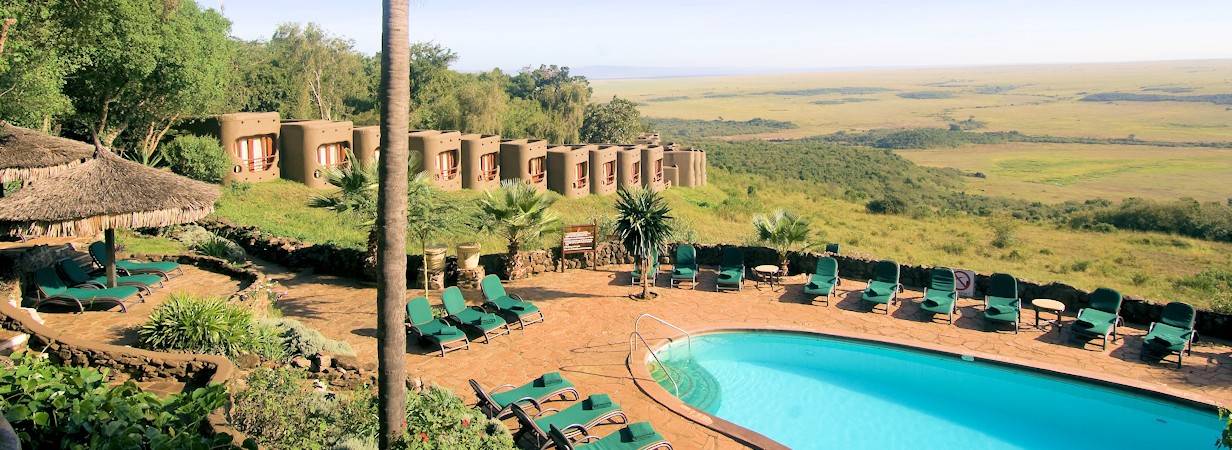
Yes, staying in accommodations just outside the Masai Mara (like Talek or Sekeneni gates) can significantly lower your nightly lodging costs. However, because you pay park entrance fees per 24 hours spent inside the reserve, daily travel time to the gates and extra vehicle fuel may offset your savings
3-days-budget-masai-mara-safari-tour-package-itinerary
3-days-masai-mara-national-reserve-kenya-safari-tour-package
3-days-fly-in-masai-mara-safari-tour-package
3-days-luxury-masai-mara-kenya-honeymoon-safari-vacation
4-days-best-luxury-kenya-safari-to-lake-nakuru-and-masai-mara-safari-tour
5-days-best-of-kenya-wildlife-safari-to-masai-mara-lake-nakuru-and-amboseli-national-park
6-days-luxury-kenya-safari-round-trip-starting-from-masai-mara
Accommodation Costs
Choosing where to stay around the Masai Mara comes down to balancing up-front luxury with hidden value. Properties located inside the reserve boundary command a steep premium due to their prime real estate. High-end, exclusive lodges inside the park can easily exceed $500 per person, per night, often climbing much higher during the peak migration season. This premium buys you direct, immediate access to the sweeping savannahs and the raw theatricality of the wild right from your tent deck.
Conversely, opting for basic tented camps, eco-lodges, or budget campsites situated outside the official reserve boundaries can cost significantly less per night. This makes an African safari accessible to budget-conscious travelers who want to see the legendary wildlife without the five-star price tag. However, it is vital to look past the baseline room rate. While external lodging looks friendlier on paper, it often functions on a half-board or basic full-board model. Inside lodges, though costly, frequently offer fully inclusive packages that cover gourmand meals, premium beverages, and guided activities, closing the perceived price gap when you tally up the total daily spend.
Park Fees
Park fees are a major operational factor that can heavily influence your overall budget, and recent structure changes require careful navigation. Previously operating on a standard 24-hour cycle, Masai Mara National Reserve entry tickets now utilize a strict 12-hour validity window (typically from 6:00 AM to 6:00 PM). For non-resident adults, these conservation fees sit at $100 per day during the low season (January to June) and surge to $200 per day during the peak high season (July to December).
Crucially, these fees apply to every individual regardless of whether your bed is inside or outside the reserve lines. However, staying outside the boundary adds an layer of logistical complexity to your daily entry. Because you must physically clear the gates each morning and exit by evening, you are bound to rigid transit timetables. If your morning commute gets delayed at a busy gate, it eats directly into your prime early-morning game drive limits. Overstaying past the evening cut-off or trying to manage multiple re-entries will trigger a mandatory second day's park fee, quickly erasing any nightly room savings you managed to secure by booking an external lodge.
Transportation & Logistics
The geographic reality of the Masai Mara means that choosing external accommodations inherently reshapes your daily transportation and logistics. When you sleep outside the gates, you will inevitably spend significantly more on fuel, wear-and-tear, and your driver’s time simply commuting to and from the prime, wildlife-dense viewing zones. This daily transit can take anywhere from 45 minutes to two hours each way, turning what should be a peaceful sunrise safari into a rushed, bumpy highway drive before you even spot your first apex predator.
Piecing together a DIY itinerary with independent vehicle rentals, local drivers, and standalone external lodging often leads to unforeseen bottlenecks and escalating operational costs. Booking an all-inclusive package through a specialized local tour operator is almost always the more cost-effective and seamless route. An operator optimizes the entire circuit—bundling custom 4x4 safari vehicles, experienced professional guides, park entry permits, and strategically located inside or conservancy lodging into one cohesive rate. This eliminates logistical friction, eliminates hidden gate fees, and ensures your time on the ground is spent tracking the Big Five rather than navigating transit corridors.
Nightly Rate Comparison: Inside vs. Outside the Reserve
Lodging rates outside the main gates—such as Sekenani, Talek, or Oloololo—are substantially lower than equivalent accommodations inside the Masai Mara National Reserve. On average, standard mid-range lodges and tented camps situated just outside the gates cost $120 to $250 per room, per night. Inside the reserve, comparable mid-range properties range from $350 to $700 per night, while luxury options easily exceed $1,000 per night.
This steep premium for inside-the-park lodging is driven by exclusive, unfenced wilderness access, significantly lower vehicle traffic around the properties, and high government concession fees levied on structures built within public land. Camps outside the gates avoid these specific state concession penalties, allowing them to pass operational savings directly to budget-conscious travelers.
Daily Park Entry Fees and Budget Impact
Staying outside the reserve does not exempt you from park entry fees; you must pay them every single day you cross the gates to view wildlife. The Narok County government enforces a uniform fee structure regardless of your accommodation's location. For international non-residents, the fee is $100 per adult, per day during the low season (January 1 to June 30) and rises sharply to $200 per adult, per day during the high season (July 1 to December 31).
Furthermore, the park enforces a strict 12-hour ticket rule (6:00 AM to 6:00 PM). Tickets do not roll over to the next day. For a couple visiting during the peak migration season, park fees add a mandatory $400 per day to the budget, plus a daily vehicle entry fee of roughly KES 1,000 to KES 1,500 ($8 to $12 USD). This means daily entry fees can quickly outpace the nightly savings of an outside lodge.
Extra Fuel and Vehicle Hire Costs
Commuting daily from an outside camp into prime wildlife viewing areas requires significant vehicle usage, inflating fuel and rental expenses. Safari vehicle hire (typically a 4x4 open-sided Land Cruiser or a customized safari van) ranges from $150 to $250 per day, including a professional driver-guide. Fuel is typically charged on top of this or calculated into a flat mileage allowance.
Because the best wildlife viewing areas—like the Mara River crossing points or the Musiara Marsh—are often located 20 to 40 kilometers deep inside the reserve, you will easily log an extra 60 to 80 kilometers of driving per day just transiting back and forth from an outside gate. At local fuel prices, this adds an estimated $20 to $40 daily in fuel overhead that wouldn't be spent if you were already positioned at a centralized lodge inside the park.
Extended Driving Time and Missing Prime Wildlife Hours
The extended driving time required to enter the park each day presents a massive disadvantage for wildlife viewing. Predators like lions, leopards, and cheetahs are most active during the cooler twilight hours of the early morning (6:00 AM to 8:00 AM) and late evening (4:30 PM to 6:30 PM).
If you stay far outside the gates, queuing for ticket verification at major entry points like Sekenani or Talek during morning rush hour can delay your entry by 30 to 45 minutes. By the time your vehicle reaches the primary game-viewing loops, the sun is high, temperatures have risen, and apex predators have largely retreated into thick thickets to sleep, causing you to miss the peak predatory action that travelers staying inside enjoy right at dawn.
"All-Inclusive" Packages at Outside Accommodations
Many properties outside the gates offer "all-inclusive" or "full-board" packages to remain competitive. These packages usually cover three meals a day and on-site amenities, which helps cap food costs. However, they rarely include the hidden variables: daily vehicle transport into the reserve, driver tips, and park entry fees.
While an outside camp's all-inclusive rate looks appealing on paper, it often fails to balance out the high cost of external daily travel. Once you tack on the high-season $200 daily park fee and $200 vehicle hire to actually see the wildlife, a seemingly cheap $150 all-inclusive outside tented camp morphs into a $550+ daily operational expense, narrowing the price gap between it and an inside-the-park lodge.
Hidden Costs and Transit Days from Distant Budget Lodges
Choosing budget accommodations located far outside the official perimeter introduces severe hidden costs. Properties advertised as "near the Mara" can actually sit 25 to 50 kilometers away from the nearest gate over notoriously rough, unpaved corrugated roads.
Transiting these distances consumes hours of daylight, meaning you lose valuable game-viewing time to grueling transit. In some cases, travelers are forced to allocate an entire extra safari day ($150–$250 vehicle hire) just to cover the slow inbound and outbound travel days to their distant lodge. This structural inefficiency means you spend more on car rental days and driver fees simply to cover logistical distance, wiping out the nominal savings of the cheaper nightly room rate.
Private Conservancy vs. Public Campsite: Pros and Cons
Staying in a private conservancy (e.g., Mara North, Olare Motorogi) just outside the reserve vs. using public campsites inside the reserve offers vastly different fee and experiential dynamics:
- Private Conservancies: Accommodations are upscale and include specific conservancy fees ($80 to $150 per night), which go directly to the local Maasai landowners. The major pro is exclusivity: strict limits on vehicle numbers, allowed off-road driving for close-up sightings, night game drives, and walking safaris. The con is the high financial barrier; it is explicitly positioned as a premium, low-density luxury experience.
- Public Campsites: Located inside the reserve, public camping costs a flat $30 to $40 per person, per night. The pro is absolute budget efficiency and unmatched immersion, as you sleep directly inside the wildlife action without walls. The con is a lack of basic infrastructure (often raw pit latrines and no electricity), zero exclusivity, and overcrowding during peak hours at major nearby wildlife sightings.
8. Meal Inclusions on Budget Group Tours
Most budget group tours departing from Nairobi or outside the reserve operate on a full-board basis, meaning three meals a day are bundled into the initial package price. These meals are typically prepared by a dedicated camp chef traveling with the group or provided directly by the budget tented camp.
However, you must allocate extra money for personal beverage consumption (sodas, beers, and bottled water are rarely included), custom safari snacks, and tips for the camp staff and guide. Additionally, if the group decides to do a full-day game drive deep into the reserve, the camp will pack basic box lunches. If you prefer hot sit-down meals at established reserve lodges during midday breaks, you must budget an extra $30 to $50 per meal out of pocket.
Self-Drive with Budget Rental vs. All-Inclusive Tour Packages
For inexperienced safari travelers, a self-drive trip staying outside the reserve is rarely more cost-effective than an all-inclusive tour package. A self-drive 4x4 rental costs $150 to $200 per day, fuel runs high, and you must pay daily vehicle entry fees (KES 1,000–1,500). Crucially, without an experienced guide who communicates via long-range safari radio networks, self-drivers spend hours aimlessly searching for wildlife, burning fuel and wasting expensive park tracking hours.
In contrast, budget all-inclusive group safari packages leverage economies of scale. Operators bundle transport, fuel, a professional spotter, meals, and lodging into a unified rate. This approach reduces your individual cost per day significantly below what you would spend coordinating a solo self-drive vehicle with external lodging.
Seasonal Valuation Dynamics: Peak vs. Low Season
The seasonal pricing structure totally shifts the financial dynamic of choosing inside versus outside accommodations:
- Low Season (January to June): With the park entry fee set at $100 per day, staying outside the reserve offers excellent financial value. Lodges inside lower their rates significantly to attract guests, but outside accommodations drop even lower. Because the reserve is uncrowded, gate delays are non-existent, meaning you can stay outside without missing early morning wildlife action.
- Peak Migration Season (July to December): The park entry fee doubles to $200 per person, per day. At this price point, staying outside becomes highly inefficient. Gate congestion spikes, causing massive morning delays. Because you are paying a premium daily fee just to cross the gate, any delay means you are wasting your entry investment. Paying a bit extra to stay inside during peak season guarantees immediate access to the migration river crossings, justifying the higher up-front lodge cost.
Booking Kenya safari to Masai mara with us Roads of Adventure safaris
To book a Masai Mara safari with Roads of Adventure Safaris, contact them directly via their official Roads of Adventure Safaris Contact or SafariBookings Profile. Since you are starting from Kampala, you can either drive overland or fly to Nairobi.
