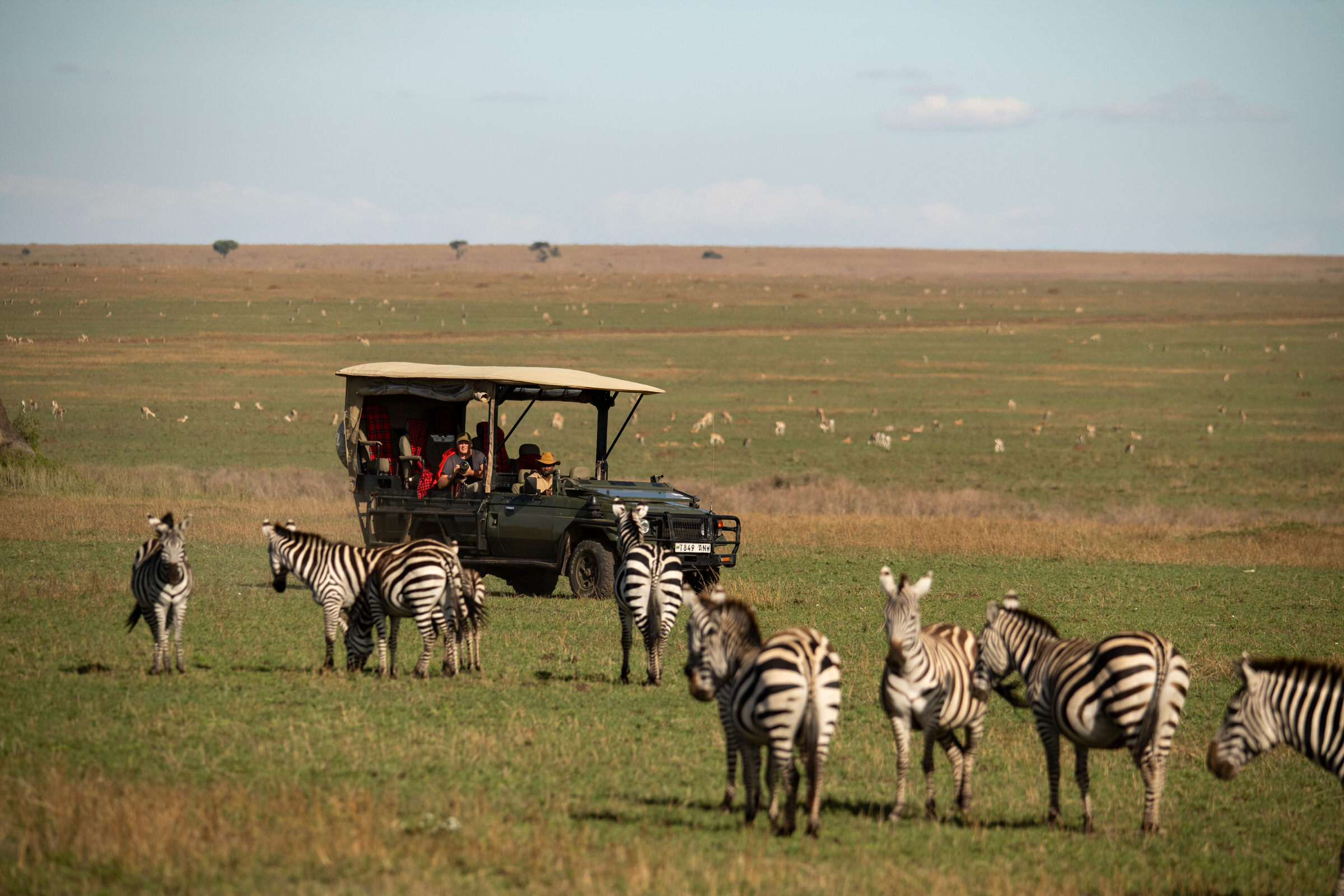
A 3-day Masai Mara safari typically involves a scenic drive from Nairobi (approx. 5-6 hours), featuring intensive game drives to spot the Big Five, with highlights including the Mara River and cultural visits. Top itinerary options focus on maximizing wildlife viewing through full-day drives, balloon rides, or specialized photography tours
3-days-budget-masai-mara-safari-tour-package-itinerary
3-days-masai-mara-national-reserve-kenya-safari-tour-package
3-days-fly-in-masai-mara-safari-tour-package
3-days-luxury-masai-mara-kenya-honeymoon-safari-vacation
3-Day Classic Road Safari
This 3-Day Classic Road Safari is a high-impact escape into the heart of Kenya’s Great Rift Valley, designed for those who want to experience the raw power of the African savanna within a compact timeframe. Leaving the urban sprawl of Nairobi behind, the journey quickly shifts into a dramatic descent down the Kikuyu Escarpment, offering breathtaking panoramas of the valley floor before arriving at the world-renowned Maasai Mara. This 3 days Masai mara safari itinerary balances the thrill of the hunt with the serenity of the golden plains, focusing on the region’s dense predator populations and the iconic "Big Five." From the rhythmic swaying of acacia trees to the distant roar of a lion at dusk, every moment is curated to provide a deep, visceral connection to the wild. It is a perfect introduction to the safari lifestyle, where the dust of the road leads to the ultimate theater of nature.
Day 1: Nairobi to the Maasai Mara
Your adventure begins with a morning departure from Nairobi, heading west toward the Great Rift Valley. After a brief stop at the viewpoint to marvel at the earth’s largest trench, you descend to the valley floor, passing through Narok town before entering the Maasai Mara. Upon arrival at your lodge, you’ll enjoy a late lunch before heading out for an afternoon game drive. The low-angled sun provides the perfect light for photography as you search for your first sightings of elephants, buffalo, and the Mara’s famous lions. The air is cool and the savanna is alive with activity as predators begin their evening prowl. You return to camp at dusk for dinner under the stars, falling asleep to the wild symphony of the African night, marking a successful start to your safari.
Day 2: Full-Day Savanna Exploration
Today is dedicated to a deep exploration of the Maasai Mara’s diverse ecosystems. After an early breakfast, you head out with a picnic lunch to spend the entire day in the field. This allows you to reach the Mara River, where hippos and crocodiles congregate, and to traverse the remote corners of the reserve where cheetahs and leopards are often spotted. The scale of the plains is humbling, with thousands of grazers like wildebeest and zebras stretching to the horizon. Your expert guide will interpret the complex behaviors of the wildlife, from the social hierarchies of elephant troops to the strategic stalking of a pride of lions. Lunch is served under a solitary acacia tree, providing a moment of stillness in the vast wilderness before continuing your search for the "Big Five."
Day 3: Final Morning and Return to Nairobi
On your final day, you wake early for a "sunrise" game drive, the most active time for the Mara’s apex predators. You might witness a pride of lions returning from a night hunt or catch a glimpse of an elusive leopard in the riverine forest. The early light catches the dew on the grass, creating a hauntingly beautiful farewell to the savanna. After a late breakfast back at the lodge, you begin the drive back across the Rift Valley toward Nairobi. The return journey offers one last look at the dramatic escarpments and rural Kenyan life along the highway. You arrive in the city by late afternoon, carrying with you the sights and sounds of the wild interior, concluding a compact yet transformative journey into the heart of Africa’s most iconic wilderness.
3-Day Fly-in Safari
This 3-Day Fly-in Safari is the ultimate expression of efficiency and elegance, designed to bypass the long dusty roads of the interior in favor of a swift, scenic transition into the wild. Your journey begins at Nairobi’s Wilson Airport, where you board a light aircraft for a breathtaking 45-minute flight over the Great Rift Valley, trading hours of driving for a bird’s-eye view of the shimmering lakes and volcanic escarpments below. By landing directly on a remote bush airstrip in the heart of the Maasai Mara, you maximize your presence in the theater of nature. This itinerary is curated for the discerning traveler who values time, offering immediate access to high-density wildlife zones and the refined comfort of a luxury tented camp. From the moment the wheels touch the red earth, the focus is entirely on the majestic animals and the serene luxury of the African savanna, ensuring every minute is spent in total immersion.
Day 1: Arrival and Golden Hour Game Drive
Your safari begins with a morning flight from Wilson Airport, soaring over the dramatic patchwork of the Kenyan highlands before descending into the vast, emerald plains of the Maasai Mara. Upon landing at the bush airstrip, your private guide will be waiting to whisk you away to a luxury camp tucked along the Mara River. After a refined gourmet lunch and a brief siesta, you head out for your first game drive. The fly-in logistics mean you are exploring deep-field territory while others are still in transit. As the sun begins its golden descent, you track the "Big Five" through the whistling thorns, perhaps spotting a pride of lions awakening for their nightly hunt. The evening concludes with sundowners on a scenic ridge, followed by a sophisticated three-course dinner under the sprawling African stars.
Day 2: Intensive Wildlife Immersion
With the convenience of staying in a prime, central location, Day 2 is dedicated to witnessing the rawest moments of the savanna. You have the luxury of choice: a full-day expedition with a decadent picnic set under a solitary desert date tree, or split morning and afternoon drives that allow for midday relaxation by the infinity pool. Your expert guide will navigate the diverse riverine forests and open grasslands, searching for the elusive leopard or a cheetah on the hunt. Because you are based in a high-density wildlife zone, every turn offers a new encounter, from massive elephant bulls to the colorful displays of lilac-breasted rollers. The day is a masterclass in biodiversity, providing ample time for photography and quiet observation of the complex social lives of the Mara’s resident species.
Day 3: Dawn Patrol and Return Flight
The final morning is dedicated to the "Dawn Patrol," a time when the air is crisp and the predators are most active. You might witness the final moments of a nocturnal hunt or see a leopard stealthily caching its kill in the high branches of a croton tree. The early light provides a crystalline clarity to the landscape, perfect for capturing the last few iconic images of your journey. After a hearty bush breakfast back at the camp, you are transferred to the airstrip for your return flight to Nairobi. As the light aircraft lifts off, you gain one final, soaring perspective of the endless plains you have called home. You arrive back at Wilson Airport by midday, feeling remarkably refreshed and deeply connected to the wild, having squeezed a lifetime of memories into three perfectly executed days.
3-Day Budget Joining Safari
This 3-Day Budget Joining Safari is the most accessible and socially vibrant way to experience the legendary Maasai Mara without the premium price tag of a private expedition. By joining a group of like-minded travelers in a shared 4x4 land cruiser or safari van, you drastically reduce costs while benefiting from the collective excitement of a communal wildlife search. The journey takes you from the bustling streets of Nairobi, down the dramatic Great Rift Valley escarpment, and into the heart of the savanna. Accommodations are focused on comfort and value, utilizing established tented camps or eco-lodges situated just outside the reserve boundaries. This itinerary is perfect for solo adventurers, students, or couples who prioritize authentic wildlife encounters and cross-cultural connections over exclusive seclusion. It is a high-energy, "no-frills" adventure that proves the majesty of the African wilderness is available to everyone, regardless of their budget, provided they have a passion for discovery.
Day 1: Nairobi to the Maasai Mara
Your budget journey begins with a morning pickup in Nairobi, where you meet your fellow explorers and expert driver-guide. The drive west features a breathtaking stop at the Great Rift Valley viewpoint, offering a vast panorama of the volcanic floor below. After descending the escarpment and passing through the market town of Narok, you arrive at your tented camp in time for a late lunch. The highlight of the day is the late-afternoon game drive, your first introduction to the Mara’s rolling grasslands. As the group scans the horizon together, you’ll likely spot herds of wildebeest, zebras, and perhaps your first pride of lions basking in the fading light. Evening is spent around a communal campfire, sharing stories with travelers from around the world before retiring to your comfortable, insect-proof tent for the night.
Day 2: Full-Day Group Game Drive
Today is the centerpiece of the safari, involving a comprehensive, full-day exploration of the Maasai Mara National Reserve. After a sunrise breakfast, the group heads out with picnic lunch boxes to maximize time in the wild. This shared adventure allows for a "crowdsourced" spotting effort, as multiple sets of eyes help track down the elusive leopard or a cheetah poised for a hunt. You will visit the Mara River to observe pods of hippos and massive Nile crocodiles, while traversing the plains to find the "Big Five." The collective energy of the group adds to the thrill of every discovery, from a nesting vulture to a massive elephant herd. Lunch is enjoyed at a designated picnic site under the shade of a classic acacia tree, surrounded by the infinite horizons of the African savanna.
Day 3: Final Morning Drive and Return
The final day starts with a "pre-breakfast" game drive at 6:30 AM, capitalizing on the crisp morning air when predators are most mobile. This is often the most rewarding time for sightings, as you might catch a glimpse of a hyena den or lions finishing a night's kill. The golden morning light provides spectacular photo opportunities for the group to capture their final memories of the Mara. Following the drive, you return to the camp for a hearty breakfast before packing up for the return journey. The drive back to Nairobi includes a stop for lunch along the way, arriving in the city by late afternoon. You’ll be dropped off at your hotel or the airport, concluding a cost-effective yet profoundly rich experience that highlights the best of Kenya’s natural heritage.
3-Day Full-Day Picnic Safari
This 3-Day Full-Day Picnic Safari is an intensive, high-endurance wildlife expedition specifically engineered for the serious naturalist and the dedicated photographer. By eliminating the need to return to camp for midday meals, this itinerary keeps you in the heart of the action during the most critical hours of the day. This is the gold standard for witnessing the Great Migration, as it provides the patience and mobility required to wait by the banks of the Mara River for the elusive and dramatic crossings. Every hour is reclaimed for exploration, allowing you to venture into the remote "triangles" of the reserve where fewer vehicles dare to go. From the misty dawn starts to the golden "magic hour" at dusk, your focus remains entirely on the theater of the savanna. It is an immersive, raw, and unhurried encounter with nature, where the only schedule is dictated by the movement of the herds.
Day 1: Entry and Initial Scouting
Your expedition begins with an early departure from Nairobi, descending the Great Rift Valley as you head toward the Maasai Mara. Upon entering the reserve, the "Full-Day Picnic" philosophy commences immediately. Instead of a standard check-in, you head deep into the savanna with a gourmet packed lunch. This allows you to spend your very first afternoon scouting the movement of the Great Migration herds. As you enjoy your meal overlooking a busy waterhole, your guide will begin tracking the "Big Five." The day focuses on establishing the location of the large prides and the direction of the wildebeest columns. By the time you arrive at your lodge at sunset, you have already completed a comprehensive survey of the local ecology, setting a high-impact tone for the intensive wildlife photography and observation planned for the following morning.
Day 2: The Intensive River Expedition
Today is the cornerstone of the safari, dedicated entirely to the drama of the Mara River. Leaving at sunrise with a full day’s provisions, you bypass the central tourist loops and head for the primary crossing points. This is where patience pays off; you may spend several hours under a desert date tree, quietly watching thousands of wildebeest gather on the cliffs. Having a picnic lunch on-site means you won't miss the sudden, chaotic moment when the first animal leaps into the crocodile-infested waters. Beyond the river, the day includes traversing the expansive Talek plains to track cheetahs and leopards in their hunting territories. The lack of a "return-to-base" requirement allows for a seamless, 12-hour immersion in the wild, concluding only when the sun dips below the horizon, painting the savanna in deep crimson.
Day 3: Sunrise Patrol and Final Transit
The final day focuses on the "Sunrise Patrol," targeting the apex predators during their most active hunting window. You will explore the riverine thickets and kopjes as the lions and hyenas conclude their nocturnal rounds. The morning light provides a crystalline clarity to the landscape, ideal for capturing the final iconic images of your journey. After a breakfast picnic served in the middle of the "Endless Plains," you conduct a final sweep of the northern corridors, looking for any species that may have remained elusive. This strategy ensures that even your departure day is a high-quality game drive. By mid-morning, you begin the transit back across the Rift Valley, arriving in Nairobi by late afternoon. You return with a camera full of action shots and a deep, visceral understanding of the Serengeti-Mara ecosystem’s complex rhythms.
3-Day Cultural Focus Safari
This 3-Day Cultural Focus Safari is a meticulously balanced expedition designed for the traveler who believes that the soul of a landscape is found in its people. While the Maasai Mara is world-renowned for its thundering hooves and apex predators, this itinerary elevates the experience by intertwining high-octane game drives with meaningful, authentic human connection. You will not only track the "Big Five" across the golden savanna but also step into the private world of the Maasai, the legendary guardians of these lands. By visiting a traditional Manyatta (homestead), you move beyond the role of a spectator to become a student of ancient pastoralist wisdom, learning how the Maasai have coexisted with lions and elephants for centuries. This journey offers a holistic perspective of the African bush, where the raw power of the wild is harmonized with the vibrant traditions, rhythmic songs, and resilient spirit of the local community.
Day 1: The Rift Valley and Savanna Welcome
Your journey begins with a scenic drive from Nairobi, descending the dramatic Great Rift Valley escarpment. After reaching the Maasai Mara in time for lunch, you head out for an afternoon game drive. This first foray into the wild focuses on the Mara’s resident wildlife, including elephants, giraffes, and the ever-present gazelles. As the sun sets, your guide introduces the cultural context of the region, explaining the boundaries between the reserve and the Maasai group ranches. The evening is spent at your lodge, where the distant sounds of cattle bells from nearby homesteads mingle with the calls of nightjars. This initial day sets the stage for the duality of the trip, establishing a deep appreciation for the vast environment that serves as the shared home for both the magnificent African wildlife and the iconic Maasai people.
Day 2: Manyatta Immersion and The Big Five
Today is the heart of your cultural exchange. Following a sunrise game drive to spot predators at their most active, you visit an authentic Maasai Manyatta. You are welcomed by the Adumu (jumping dance) and invited into the mud-and-dung homes to learn about traditional fire-making, beadwork, and pastoral life. You will sit with the elders to discuss their ancient coexistence with wildlife and the challenges of modern conservation. After a morning of deep cultural immersion, you enjoy a picnic lunch before heading back into the reserve for a full afternoon of game viewing. This creates a powerful connection; as you watch a pride of lions, you do so with a newfound understanding of the Maasai’s respect for these predators. The day concludes with a sense of the profound harmony between human heritage and nature.
Day 3: Dawn Patrol and Heritage Return
On your final day, you head out for a "Dawn Patrol" game drive, catching the savanna as it awakens in a haze of golden light. This is a prime time to spot leopards returning to cover or cheetahs scanning the plains for a morning meal. The clarity of the morning air provides a final opportunity for spectacular photography of the wildlife you have come to know. After a hearty bush breakfast, you bid farewell to the Mara and begin the return journey to Nairobi. As you ascend the Rift Valley escarpment, you carry back more than just sightings of the "Big Five"; you return with the rhythmic chants of the Maasai echoing in your mind and a transformed perspective on how culture and conservation are inextricably linked in the heart of East Africa.
1. What is the best itinerary for a 3-day budget safari?
The best budget itinerary is defined by its clever use of shared resources and strategic proximity. To keep costs low without sacrificing the quality of wildlife encounters, the journey begins with road transport from Nairobi. Traveling in a shared safari van or "joining" group not only splits the fuel and guide costs among several travelers but also provides a social atmosphere. The route takes you through the scenic Great Rift Valley, with a brief stop at the escarpment for photos before descending toward the Narok plains.
In a budget-focused schedule, accommodation is typically situated just outside the official park gates. Staying in basic tented camps or eco-lodges in the Sekenani or Talek areas allows you to avoid the high "concession fees" charged by lodges inside the reserve while remaining only a few minutes' drive from the action. These camps offer comfortable beds, mosquito netting, and warm showers, ensuring you are rested for the early starts.
The itinerary structure usually involves an afternoon game drive on Day 1, a full-day intensive exploration on Day 2, and a final "dawn patrol" on Day 3. By utilizing a group-joining model, you benefit from the "many eyes" effect, where a group of travelers helps the guide spot lions or cheetahs hidden in the tall grass. This approach proves that the Maasai Mara’s majesty is accessible to those who prioritize the experience over luxury amenities. It is a high-energy, value-driven way to see one of the world's premier wildlife destinations without the premium price tag.
2. How can I maximize wildlife viewing on a short trip?
To maximize wildlife sightings on a condensed 3-day trip, you must adopt the "Full-Day Picnic" strategy. The traditional safari model involves a morning game drive, a return to the lodge for a heavy lunch, and a late afternoon drive. However, on a short trip, the 3 to 4 hours spent returning to base and eating are "lost" hours where predators like cheetahs or leopards—which are often active during the late morning—might be missed.
By opting for a full-day game drive on Day 2, you leave the lodge at sunrise with packed picnic lunch boxes. This mobility allows you to venture far into the Trans-Mara or toward the Mara River, areas that are often too distant for those returning to camp for lunch. You can follow a specific pride of lions for hours, witnessing their social dynamics or wait patiently by a riverbank for a potential crossing during the migration season.
Furthermore, being in the field during the "quiet" midday hours often leads to unique sightings. While most vehicles have returned to their lodges, you might find a leopard lounging in a sausage tree or a family of elephants enjoying a private bath in a secluded pool. Maximizing a short trip is about persistence and presence. By staying in the park from dawn until dusk, you effectively double your "eyes-on-prey" time, significantly increasing your chances of witnessing rare behaviors and the legendary "Big Five" in action.
3. Is a flying safari itinerary better than driving?
Whether a flying safari is "better" depends entirely on your valuation of time versus budget. A flying safari is undeniably the most efficient way to experience the Maasai Mara. A 45-minute flight from Nairobi's Wilson Airport replaces a 6-hour, often bumpy road journey. For a 3-day itinerary, this "time reclamation" is massive; it means you can be on a game drive by 11:00 AM on Day 1, whereas road travelers might not arrive until late afternoon.
Beyond time, the comfort and perspective of a flying safari are superior. Soaring over the Great Rift Valley provides a breathtaking aerial view of the volcanic escarpments and shimmering lakes, offering a geographic context that you miss from the ground. Flying also leaves you refreshed; you arrive at your luxury camp ready for adventure rather than exhausted by the "African massage" of the unpaved roads leading to the reserve.
However, the cost is significantly higher, often adding several hundred dollars to the package. Driving, while slower, offers its own rewards. You get to see the changing Kenyan landscape, pass through vibrant market towns like Narok, and experience the transition from the highlands to the savanna. For those with a limited 3-day window and a larger budget, flying is the clear winner as it turns a transit day into a full wildlife day. But for those who enjoy the "road trip" aspect and want to keep costs down, the drive remains a classic, quintessential part of the African experience.
4. What is included in a typical 3-day Masai Mara itinerary?
A typical 3-day Maasai Mara itinerary is designed as a comprehensive, all-inclusive package to ensure travelers can focus entirely on the wildlife. The core of the package is the professional guide and specialized vehicle. Whether it’s a custom 4x4 Land Cruiser or a safari van with a pop-up roof, the vehicle is your mobile observatory. The guide is perhaps the most important inclusion; their ability to track animals, interpret behavior, and navigate the vast plains is what transforms a simple drive into a safari.
Accommodation and meals are standard inclusions. Most itineraries provide "Full Board," meaning breakfast, lunch, and dinner are covered. This is essential as there are no "restaurants" in the bush; you rely entirely on your lodge or the picnic boxes they provide. Inclusions also extend to bottled water during game drives to keep you hydrated in the equatorial sun.
Park Entrance Fees are a critical component. In the Maasai Mara, these fees are significant (often $100–$200 per person per day for non-residents). A reputable itinerary will clearly state that these are included, as they cover the conservation efforts that keep the reserve pristine. Finally, emergency medical evacuation (such as Flying Doctors) is often bundled in for peace of mind. What is usually not included are alcoholic beverages, tips for the guide, and optional cultural visits. By covering the essentials—transport, food, shelter, and access—the 3-day itinerary provides a seamless, "plug-and-play" adventure into the wild.
5. When is the best time to visit for the Great Migration?
The best time to visit for the world-famous Great Migration is during the peak season from July to October. During this window, over 1.5 million wildebeest, zebras, and gazelles move from Tanzania's Serengeti into the Maasai Mara in search of greener pastures. This is the period of the "Great Drama," where the herds must face the perilous Mara River crossings, braving massive Nile crocodiles and steep banks.
For a 3-day itinerary, visiting during this window offers the highest density of wildlife you will likely ever see. The sheer volume of animals is staggering; the plains are literally carpeted in black and white stripes and brown coats. This abundance of prey also triggers intense predator activity. Lions, leopards, and hyenas are at their most active, and sightings of hunts are much more frequent than during other times of the year.
However, travelers should be aware that this is also the most crowded and expensive time to visit. Lodge prices peak, and popular sightings—especially at the river—can attract many vehicles. If you want the migration experience with fewer crowds, the "shoulder" months of late September and early October can be excellent as the herds begin their slow move back south. Regardless of the month, a 10-day window is great, but even in 3 days during the migration, you are almost guaranteed to witness a spectacle of nature that occurs nowhere else on the planet.
6. Can I see the Big Five in just three days?
Yes, it is highly realistic to see the "Big Five" (lion, leopard, rhinoceros, elephant, and buffalo) in just three days in the Maasai Mara. The reserve has one of the highest concentrations of wildlife on the continent, meaning you aren't just looking for "an" animal; you are often surrounded by them. Lions are exceptionally easy to spot; the Mara is home to several large, famous prides that are often found basking in the open plains or near the river.
Elephants and buffalo are ubiquitous and can be seen in large herds throughout the year. The leopard is the most elusive of the five, but a skilled guide knows the specific riverine forests and rocky "kopjes" where they prefer to hide. A 3-day itinerary gives your guide enough "game drive sessions" to check these specialized habitats. The black rhino is the rarest, but they are resident in specific areas of the Mara Triangle and the central plains; a dedicated morning search often yields a sighting.
The key to success in a 3-day window is the expertise of your guide. They communicate via radio with other drivers to share sightings, ensuring that if a leopard is spotted three miles away, you can get there in time. While nature never gives a 100% guarantee, the Maasai Mara is arguably the best place in Africa to achieve the "Big Five" in a short timeframe. By the end of Day 2, most travelers have usually seen four of the five, leaving the final morning for the ultimate "clean sweep."
7. What does a "fly-in" itinerary look like?
A "fly-in" itinerary is the epitome of logistical elegance, replacing long road transits with swift, scenic aerial hops. The journey typically begins with a morning departure from Wilson Airport in Nairobi, the domestic hub for safari flights. The flight itself is a 45-minute to 1-hour trip in a light aircraft (usually a Cessna Caravan or Dash 8), offering stunning views of the Rift Valley's jagged cliffs and the sprawling greenery of the Kenyan highlands.
Upon landing at one of the Mara’s many bush airstrips (such as Keekorok, Ol Kiombo, or Musiara), you are met by a 4x4 vehicle from your lodge. Instead of a "transfer," this drive to the lodge often becomes your first game drive. Because you arrive so early, you have time for a relaxed lunch and a nap before heading out for an afternoon game drive. This is a stark contrast to road travelers who usually arrive just as the sun is setting.
The second day follows the standard intensive game-viewing pattern, but on Day 3, the fly-in advantage shines again. You can enjoy a full morning game drive and a leisurely breakfast, only heading to the airstrip in the early afternoon for your flight back to Nairobi. This means you get two extra game drives compared to the driving itinerary. It is a "high-impact" schedule that maximizes every hour of your 3-day stay, turning what would be "transit time" into "safari time," albeit at a premium price point.
8. What is the "Full Day Game Drive" itinerary option?
The "Full Day Game Drive" is an itinerary choice designed for maximum immersion. Instead of the traditional split schedule (morning drive, lunch at the lodge, afternoon drive), you leave the camp immediately after an early breakfast—around 6:30 or 7:00 AM—and do not return until sunset. The lodge provides you with picnic lunch boxes, which are enjoyed at a designated site under a solitary acacia tree or overlooking the Mara River.
This option is essential for travelers who want to see the Mara River crossings or explore the more remote corners of the reserve. The river can be a long drive from many lodges; going there and back in a single morning is often impossible. By committing to a full day, you can park your vehicle near a crossing point and wait for the "pressure" of the wildebeest herds to build, ensuring you don't miss the dramatic moment they leap into the water.
Furthermore, a full-day drive allows you to experience the shifting moods of the savanna. You see the golden light of dawn, the shimmering heat of midday—when many animals seek shade—and the soft "blue hour" of dusk. It is particularly rewarding for photographers who want to capture different lighting conditions. While it can be physically tiring to spend 10–12 hours in a vehicle, the "Full Day" option is the most effective way to ensure you don't miss a single beat of the Maasai Mara’s daily drama.
9. Should I include a Masai village visit in my itinerary?
Including a visit to a Maasai Manyatta (village) is highly recommended as it adds a vital human dimension to the wildlife experience. The Maasai are the ancestral guardians of this land, and their culture is inextricably linked to the ecosystem. For an extra cost (typically $20–$30 per person), you are welcomed into a traditional homestead where you can learn about their pastoralist lifestyle, which has remained remarkably resilient in the face of modernity.
During the visit, you will witness the famous Adumu (jumping dance), where the warriors demonstrate their strength and agility. You are invited inside their mud-and-dung homes (Inkajijik) to see how they live, cook, and raise their families. It is an opportunity to ask questions about their traditions, their relationship with lions, and their sophisticated use of medicinal plants. You can also see (and purchase) the intricate beadwork created by the women, which serves as a primary source of income for the community.
While some travelers worry that village visits can feel "touristic," they are a primary way for the local community to benefit directly from tourism. To ensure an authentic experience, ask your guide to take you to a village that has a genuine partnership with your lodge. A 1-hour cultural visit provides a profound contrast to the "Big Five" and offers a deeper understanding of how conservation and culture must work together to protect the Maasai Mara for future generations.
10. Is it hot air balloon safari worth adding to the itinerary?
A hot air balloon safari is a significant financial add-on (typically costing $450 to $500 per person), but it is widely considered one of the most breathtaking experiences in the world of travel. The adventure begins in the pre-dawn darkness, as you watch the massive balloons being inflated by torchlight. As the sun begins to peek over the horizon, you lift off silently, drifting wherever the wind takes you.
From the air, the perspective of the Maasai Mara is transformed. You see the winding Mara River, the geometric patterns of the acacia forests, and the vast columns of the migration that are invisible from the ground. The silence of the flight—punctuated only by the occasional roar of the burner—allows you to glide over herds of elephants and giraffes without disturbing them. It is a photographer's dream, providing an "unobstructed" view of the savanna in the softest morning light.
The flight concludes with a "Champagne Bush Breakfast" on the plains, a refined tradition where you enjoy a full English breakfast with sparkling wine in the middle of the wilderness. For a 3-day itinerary, adding a balloon safari on the second morning creates a "peak memory" that often overshadows everything else. While the price is high, the combination of the aerial view, the silence of the flight, and the luxury of the bush breakfast makes it a "bucket list" item that most travelers find worth every penny.
11. What is the best itinerary for families with kids?
The best itinerary for families with children is one that prioritizes comfort, engagement, and flexibility. Unlike the intensive "Full Day" drives meant for adults, a family-friendly schedule should feature shorter, 2–3 hour game drives. This prevents "safari fatigue" and keeps children excited about what they are seeing. Lodges like the Sopa or Simba lodges are often recommended for families because they are large, enclosed, and feature amenities like swimming pools, which are perfect for burning off energy between drives.
Accommodation choice is key. Enclosed lodges provide a sense of security for parents, and many offer "Kids' Clubs" or guided nature walks within the grounds where children can learn about "the small five" (insects, birds, and plants) from Maasai naturalists. These educational moments are often more impactful for kids than long hours in a vehicle.
The itinerary should also be flexible. If the kids are tired, the afternoon drive can be skipped in favor of a dip in the pool or a visit to a nearby Maasai school. Including a cultural visit is also great for kids, as they can meet Maasai children and see a way of life that is vastly different from their own. By balancing wildlife with "play time" and educational activities, a 3-day family safari becomes a manageable and magical introduction to nature that can inspire a lifelong love for conservation in the next generation.
12. How is the itinerary adjusted for the rainy season?
During the rainy seasons (March to May and November to December), the safari itinerary must become more flexible and tactical. The primary challenge is the terrain; the black cotton soil of the Mara can become extremely slippery and muddy, making some tracks impassable. As a result, game drives may be shorter or restricted to the main, well-maintained gravel roads to avoid getting stuck.
Wildlife behavior also changes. With water abundant everywhere, animals are no longer tethered to the rivers and permanent waterholes. They tend to disperse into the thicker bush, making them harder to find than in the dry season. To compensate, guides often spend more time tracking and using their knowledge of animal behavior rather than just "driving to the river." However, the reward is the "Green Season" beauty—the grass is lush, the dust is gone, and the air is incredibly clear, making for stunning photography.
The itinerary also accounts for afternoon thunderstorms. Game drives are often scheduled for the early morning and mid-afternoon, with a return to the lodge before the typical 4:00 PM downpour. Many lodges offer "Green Season" discounts, making this a great time for budget-conscious travelers who don't mind a little mud. While the logistics are more challenging, the sight of a newborn gazelle in the vibrant green grass or a dramatic lightning storm over the plains provides a raw, powerful experience that is missing from the dusty dry season.
13. Are private safari itineraries available?
Yes, private safari itineraries are highly available and are the preferred choice for photographers, honeymooners, and families who want a tailored experience. In a private itinerary, you have exclusive use of a 4x4 safari vehicle and a dedicated guide. This means the schedule is 100% flexible; if you want to spend four hours watching a single leopard, you can do so without worrying about the preferences of other passengers.
The tailored focus is the greatest advantage. If you are an avid birder, your guide will focus on the riverine forests and specialized species. If you are a photographer, your guide will prioritize positioning the vehicle for the best light and angles. You also have the freedom to decide your own start and end times. If you want to leave the camp at 5:30 AM with a thermos of coffee to catch the first light, you can.
Private itineraries also allow for a more intimate atmosphere. You can choose specific lodges that cater to your tastes—whether that’s a luxury "boutique" tented camp or a remote eco-lodge. While a private 3-day safari is more expensive than a group-joining one (since you are covering the full cost of the vehicle and guide), the "per-person" cost becomes much more reasonable for groups of four or more. For those who want to "own" their African adventure and ensure every minute is spent exactly how they wish, the private itinerary is the gold standard.
14. What is the typical itinerary on the final day?
The final day of a 3-day Maasai Mara safari is designed to squeeze out every last drop of "wildlife value" before returning to civilization. The day begins early, typically with a 6:00 AM "Sunrise Game Drive." This is one of the most productive times for viewing, as the air is cool and the predators—lions, hyenas, and the occasional leopard—are often still active after their night of hunting. Witnessing the sun rise over the savanna with a silhouette of a giraffe or an elephant is the quintessential "final memory" of the Mara.
After about two hours in the field, you return to the lodge for a hearty breakfast and to complete the check-out process. Around 10:00 AM, you begin the return journey. For those on a driving safari, this involves a "game drive en route" as you head toward the park gate, offering one last chance to spot any animals you might have missed.
The drive back to Nairobi includes a stop for lunch in Narok and a final look at the Great Rift Valley from the viewpoint. You typically arrive back in Nairobi between 4:00 PM and 5:00 PM, where you are dropped off at your hotel or Jomo Kenyatta International Airport for your flight home. For fly-in guests, the final day is even more relaxed, often including a late-morning drive and lunch at the lodge before a 2:00 PM flight back to Wilson Airport. Regardless of the transport mode, the final day is a bittersweet transition from the raw freedom of the bush back to the urban rhythm of the city.
15. What is a "Mara Conservancy" itinerary?
An itinerary focused on the Mara Conservancy (also known as the Mara Triangle) or the Private Conservancies (like Mara North, Olare Motorogi, or Naboisho) offers a more exclusive and controlled safari experience. The Mara Triangle is the western part of the reserve, managed by a non-profit conservancy; it is famous for its well-maintained roads, strict anti-poaching units, and high wildlife density, particularly for rhinos and large lion prides.
The Private Conservancies surrounding the main reserve operate on a unique model: the land is leased from Maasai landowners, and the number of tourists and vehicles is strictly limited. An itinerary here provides a "private" feel; you might find a leopard and be the only vehicle there, whereas in the main reserve, you might be sharing the sighting with twenty others.
Conservancy itineraries also allow for exclusive activities that are forbidden in the main national reserve, such as night game drives (to see nocturnal animals like aardvarks and honey badgers) and guided bush walks. These activities provide a much more intimate, sensory connection to the land. While staying in these areas is generally more expensive, the "quality of sighting" and the lack of crowds make it the preferred choice for repeat visitors and luxury travelers who want to experience the Maasai Mara as it was decades ago—wild, quiet, and profoundly personal.
Booking 3 days Masai mara safari with us Roads of Adventure safaris
Book a thrilling 3-day Masai Mara safari with Roads of Adventure Safaris for an unforgettable Kenyan wilderness experience. This package includes private transport from Nairobi, exploring the stunning Great Rift Valley, and intensive game drives to spot the Big Five. Enjoy professional guiding, comfortable accommodation, and packed meals, ensuring a memorable adventure. Witness incredible wildlife in the renowned Masai Mara.
