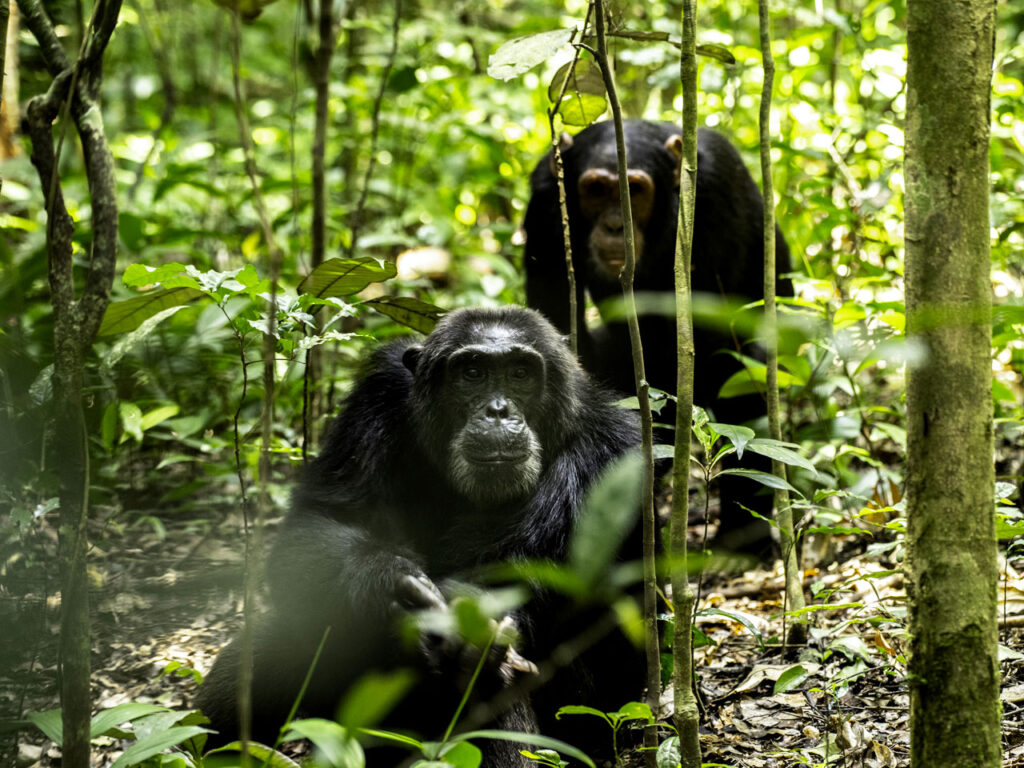
Discounted chimpanzee tracking in Kibale Forest National Park is available during the low season months of April, May, and November. These discounted permits, offered by the Uganda Wildlife Authority (UWA), apply to foreign non-residents and residents, providing a more affordable, less crowded experience to see the chimpanzees.
2-days-best-chimpanzee-tracking-in-kibale-forest-park-tour-package
3-days-trips-to-queen-elizabeth-national-park-for-chimpanzee-tracking-in-kyambura-gorge
4-days-chimpanzee-tracking-in-lake-mburo-national-park-and-lake-mburo-safari
4-days-kibale-forest-chimpanzee-tracking-and-queen-elizabeth-national-park
5-days-un-matched-uganda-gorilla-safari-and-chimpanzee-tour-itinerary
Best Time
The low season in East Africa—typically occurring from March to May and again in November—is often unfairly maligned due to the "long rains." However, for those focused on aesthetics, this is arguably the best time for a Kenya birding safari and forest tracking. The rainfall is rarely constant; instead, it usually manifests as dramatic afternoon tropical downpours followed by crisp, clear skies.
This cycle washes the dust from the air, providing incredible clarity for long-distance photography and bird spotting. The vegetation undergoes a spectacular transformation, turning every shade of emerald and lime. For birders, this coincides with the presence of migratory species and the peak breeding season, where residents display their most flamboyant plumage. The scenery is lush, the light is soft and golden, and the absence of the "safari dust" that plagues the dry season ensures your camera sensors and binoculars stay clean, resulting in high-contrast, professional-grade imagery.
Permit Availability
One of the most significant logistical hurdles of a primate safari is the scarcity of permits. In the peak season, gorilla and chimpanzee permits can sell out up to a year in advance. However, during the low season, permit availability is much more flexible. This allows for more spontaneous travel planning, which is ideal for those who prefer to monitor weather patterns or bird migration reports before committing to a date.
While permits are easier to secure, the gold standard remains booking through reputable tour operators or directly with the Uganda Wildlife Authority (UWA). Tour operators often have established relationships that can help secure permits in specific sectors of Bwindi or Kibale that are known for better birding or easier terrain. Even in the low season, the "daily cap" on visitors per gorilla family remains strictly enforced to protect the animals, so while you have a much better chance of getting your preferred dates, early coordination still ensures a seamless transition between your forest treks and your broader Kenya birding safari itinerary.
Experience
The quality of the tracking experience in the low season is often superior due to the lack of "human congestion." In the peak months, popular trailheads can feel busy, but during the rains, the number of tourists drops significantly. This often results in more private encounters with the primates. It is not uncommon to find yourself in a tracking group of only three or four people, rather than the maximum of eight.
This intimacy allows for a much quieter environment, which is crucial for hearing the subtle calls of forest birds or the gentle grunts of a silverback. With fewer people vying for the "perfect angle," photographers have more freedom to move and frame their shots without obstruction. The rangers and guides, under less pressure from large crowds, often have more time to share deep ecological insights, turning a standard trek into a private masterclass in African biodiversity. For the discerning traveller, the "exclusivity" of the low season far outweighs the minor inconvenience of a muddy trail.
Other Benefits
The financial advantages of low-season travel are a compelling "Other Benefit" that can significantly reduce the overall cost of a high-end safari. During these months, many luxury lodges and boutique camps slash their accommodation rates by as much as 30% to 50% to entice visitors. This "low-season pricing" allows travellers to stay in world-class properties that might otherwise be over-budget during the peak months.
Furthermore, many tour operators offer discounts on vehicle hire and guided services. These savings can be reinvested into extending your trip—perhaps adding a few extra days for a specialized Kenya birding safari at the coast or a boat trip on the Nile. Beyond the monetary savings, the "service" level at lodges often feels more personalized; with fewer guests to attend to, the staff can provide a bespoke level of attention, from private candlelit dinners to customized birding walks around the lodge grounds, making the entire journey feel like a VIP experience.
Age Requirement
Regardless of the season or the cost, the age requirement for gorilla and chimpanzee tracking remains a non-negotiable legal and conservation standard. Participants must be at least 15 years old. This rule is strictly enforced by the UWA and other regional wildlife bodies for several critical reasons. Firstly, younger children are more likely to carry "childhood" diseases like mumps, measles, or even common colds, to which primates have no immunity; an outbreak could be catastrophic for a habituated family.
Secondly, the physical and psychological demands of tracking require a level of maturity. A trek can involve hours of silence and the ability to remain calm when a silverback makes a "mock charge" or a chimpanzee screams in the canopy. A child’s unpredictable movements or noises could startle the animals, leading to dangerous situations. For families on a Kenya birding safari with younger children, many lodges offer "junior birder" programmes or educational nature walks in less sensitive areas, ensuring that the younger generation stays engaged while the adults head into the deep forest for the primate encounters.
1. When are discounts available for chimpanzee tracking?
Discounts are primarily tied to the "Green Season," which corresponds to Uganda's months of higher rainfall. For 2026, the UWA has officially designated April, May, and November as the low-season months where promotional rates apply. During these windows, the goal is to encourage visitation when the parks are quieter. While you should expect tropical showers, the rain is often intermittent, and the forest becomes a vibrant, lush emerald—perfect for photography and seeing the chimps foraging on the lower canopy levels where fruit is abundant.
2. How much does discounted chimpanzee tracking cost?
In a landmark move for 2026, the UWA has introduced significant savings for all traveller categories during the low season. For Foreign Non-Residents, the permit price drops from the standard $250 to $200. Foreign Residents living in East Africa see a reduction to $150, and East African Citizens (including Ugandans) can track for UGX 150,000. These rates represent a $50 saving for international guests, which can be significant when multiplied across a couple or a small group, making the "Pearl of Africa" even more competitive.
3. Are discounted permits available for all visitors?
Yes, for the 2026 season, the discounts have been broadened to include Foreign Non-Residents, which was not always the case in previous years. This universal approach ensures that international tourists, residents, and local citizens all benefit from lower entry barriers during April, May, and November. Whether you are flying in from London or driving from Kampala, the seasonal discount is applied at the point of purchase, provided your tracking date falls within the designated low-season months.
4. Do I need to book in advance for discounted tracking?
Absolutely. Even with the seasonal discounts, the number of people allowed to track a specific chimpanzee community per day is strictly limited to ensure the animals' well-being. As of March 1, 2026, the UWA eliminated the "7-day hold" policy; permits are now only secured upon full payment. It is highly recommended to book 3 to 6 months in advance, as the new discounted rates have increased demand during what used to be very quiet months.
5. Is chimpanzee tracking with a discount still worth it?
There is no difference in the quality of the encounter. A discounted permit grants you the exact same one hour of face-to-face time with a habituated chimpanzee family as a full-price peak-season permit. You will still be led by the same expert UWA rangers and follow the same high standards of conservation. In fact, many repeat visitors prefer the "discounted" months because the trails are less crowded, allowing for a more intimate and quiet experience with the primates.
6. Are there discounts for children to join?
The "discount" applies to the permit price, not the age of the participant. The minimum age for chimpanzee tracking remains strictly 15 years old. This is a non-negotiable conservation rule to protect the chimps from childhood diseases and to ensure that all participants can handle the physical and mental demands of the forest. Consequently, there are no "child-priced" tickets; anyone meeting the age requirement pays the applicable rate for their residency status.
7. What does a discounted permit include?
Your discounted permit is an all-inclusive conservation pass. It covers the park entry fee for the day ($40 value), the services of a professional armed ranger guide, and the "tracking" itself. Most importantly, it covers the conservation fee that funds the 24-hour protection of the Kibale and Queen Elizabeth ecosystems. It does not, however, include personal items such as porters, transport to the park, or tips for your guides.
8. Can I get a discount on habituation instead of tracking?
Historically, discounts have been focused on the standard one-hour tracking sessions. As of the current 2026 tariff structure, the Chimpanzee Habituation Experience (CHEX)—which allows you to spend 4 hours with the chimps—is generally excluded from the low-season promotional rates. While the standard tracking is $200 in the low season, the CHEX remains at its standard rate (starting at $300 for foreign non-residents), as it is a more exclusive, research-based activity with very limited daily availability.
9. Are there cheaper times to do tracking in Kibale?
Yes, April and May are typically the "cheapest" times to visit Kibale, not just because of the permit discounts, but because of the "trickle-down" effect on the local economy. Many luxury lodges in the Bigodi and Fort Portal areas offer low-season accommodation rates, sometimes reducing their prices by 30% to 40%. Combining a $200 permit with a discounted luxury lodge makes this the most cost-effective window for a high-end primate safari.
10. Where do I book discounted permits?
Permits should be booked either directly through the Uganda Wildlife Authority (UWA) headquarters in Kampala or via a licensed tour operator. Because the new 2026 system requires immediate payment, using a reputable operator is often easier for international travellers, as they can handle the bank transfers and physical permit collection, ensuring your spot is locked in the moment you confirm your dates.
11. Do I get a discount if I bring my own gear?
No. The permit price is a fixed statutory fee set by the government to fund conservation, research, and community upliftment. Bringing your own high-end binoculars, professional camera gear, or specialized hiking boots does not reduce the cost of the permit. The fee is for the access and expertise provided by the park, rather than the equipment used by the visitor.
12. Does the discount affect the time spent tracking?
One of the most common myths is that "cheaper permits mean less time." This is incorrect. Every tracking permit, regardless of the price paid, entitles the visitor to exactly one hour of observation once the chimpanzees have been located. The time it takes to find them can vary from 30 minutes to three hours, but your "golden hour" with the family remains the same.
13. Is tracking discounted during the rainy season?
Yes, the discount is a direct response to the weather. The rainy seasons (April-May and November) are the only times these discounts are active. While the rain makes the forest "bloom," it also makes the trails muddier and more humid. The discount acts as an incentive for travellers to embrace the "Green Season" and rewards those who are willing to navigate a slightly more adventurous terrain with significant financial savings.
14. How do I verify if a discount is active?
You should always verify current rates through the official UWA Conservation Tariff or their verified social media channels. For 2026, the UWA has been proactive in announcing these "Green Season" promotions well in advance. If a tour operator offers you a "discount" outside of April, May, or November, proceed with caution and verify the source, as official permit prices are non-negotiable outside of UWA-sanctioned windows.
15. Are there hidden costs after paying for the permit?
While the permit covers the essentials, you should budget for a few "extra" but highly recommended costs. Porters are available at the trailhead for approximately $20; they are invaluable for carrying gear and helping you navigate slippery sections. Additionally, while tipping is not mandatory, it is a standard practice in Uganda. A tip of $10 to $20 for your ranger guide is a great way to show appreciation for their expertise in keeping you safe and finding the chimps.
Booking chimpanzee tracking with us Roads of Adventure safaris
Book an unforgettable chimpanzee tracking experience with Roads of Adventure Safaris, a premier Ugandan operator. We specialize in intimate primate encounters, primarily in Kibale National Park, the "Primate Capital," ensuring high-success sightings. Packages include secure permits, expert local guides, and comfortable logistics, often combined with wildlife tours or gorilla trekking. Whether choosing a 3-day adventure or a comprehensive primate safari, we ensure a safe journey to see our closest relatives in their natural habitat. Contact Roads of Adventure Safaris via TripAdvisor for tailored, expert-led tracking itineraries
