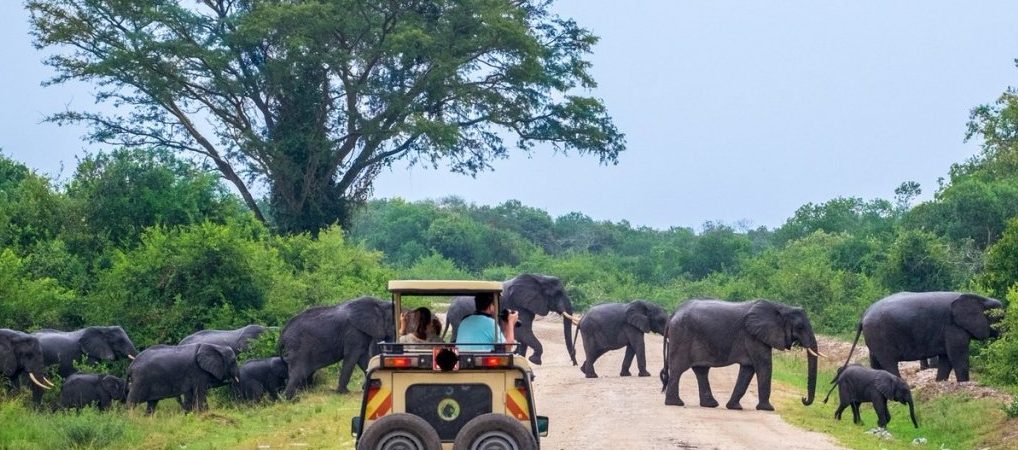
Uganda serves up one of the most varied safari routes on the continent. In a single trip, you can tick off the classic savanna game while trekking deep into the jungle for mountain gorillas and chimpanzees. To truly soak in the country's best reserves without living in your transfer vehicle, a 12-day circuit hits the sweet spot.
12-days-all-inclusive-uganda-wildlife-and-primate-safari
12-days-best-uganda-rwanda-primate-safaris-and-akagera-big-five-safaris
12-days-luxury-safari-in-uganda-parks
12-days-best-uganda-safari-big-five-and-uganda-primate-safari
12-days-perfect-rwanda-uganda-gorilla-trekking-safari-holiday-vacation
12-days-uganda-wildlife-primate-experience-and-lake-mutanda-vacation
12-days-uganda-birding-tour-looking-for-rift-valley-endemic-birds-west-circuit
Days 1–2: The Gateway & Your First Big Game
Your trip starts with a drive north from Entebbe International Airport toward Ziwa Rhino Sanctuary—the only spot in Uganda to see wild southern white rhinos. Guided by an armed ranger, you’ll track these huge mammals on foot to cross off your first major sighting. From Ziwa, press on across the Nile into Murchison Falls National Park, stopping right at the top of the falls to feel the ground vibrate where the entire river squeezes through a tight rocky gap.
Days 3–4: Open Plains & River Cruises
Murchison Falls delivers classic African landscapes. Early morning drives through the northern delta bring encounters with tall herds of Rothschild’s giraffes, elephants, Cape buffaloes, lions, and occasionally a spotted leopard resting in a tree. By afternoon, board a boat cruise up the Victoria Nile toward the base of the waterfall, gliding past pods of hippos, sunbathing Nile crocodiles, and endless birdlife along the banks.
Days 5–6: Into Primate Country
Travel south through rolling green tea fields to Kibale National Park, a lush forest holding the richest concentration of primates in East Africa. On Day 6, hike into the thick canopy for chimpanzee tracking. You'll hear their echoing pant-hoots bouncing through the trees long before you spot them swinging, feeding, and playing overhead.
Days 7–8: Savanna Predators & Tree-Climbing Lions
Drop down into Queen Elizabeth National Park, where crater lakes and golden plains take over. A boat trip down the Kazinga Channel gives you front-row shots of elephants and buffaloes coming down to drink and bathe. Heading south on Day 8 into the quiet Ishasha Sector, keep your eyes trained on the low branches of ancient fig trees—this area is famous for its unusual resident lions that like to sleep off the midday heat up in the canopy.
Days 9–10: The Gorilla Highlands
The roads wind upward into steep, terraced hills as you reach the misty edge of Bwindi Impenetrable National Park. Day 10 is saved for the gorilla trek. You’ll scramble through tangled vine-draped jungle until you come face-to-face with a wild mountain gorilla family. Spending an hour watching them groom, feed, and interact just a few feet away remains one of the most powerful encounters you can have in nature.
Days 11–12: Quiet Walking Safaris & Heading Home
Break up the final leg back to Entebbe with a stop at Lake Mburo National Park. Since large predators aren't around here, you can safely set out on foot with a guide or go horseback riding right alongside herds of zebras, impalas, and topis. On the last day, stop at the Equator line for a quick photo and souvenir pickup before reaching Entebbe for your evening flight out.
🐆 Where the "Big Five" Are Found
- Rhino: Ziwa Rhino Sanctuary (exclusively on foot with rangers).
- Elephant & Buffalo: Murchison Falls NP and Queen Elizabeth NP.
- Lion: Murchison Falls NP, Queen Elizabeth NP (Kasenyi and Ishasha tree-climbing lions).
- Leopard: Elusive, but found across Murchison Falls, Queen Elizabeth, and Lake Mburo
What makes tracking rhinos on foot at Ziwa Rhino Sanctuary such a unique experience compared to traditional vehicle safaris?
Walking up to a wild Southern White Rhino on foot shifts your entire perspective of African wildlife. Instead of observing animals from the elevated, insulated seat of a 4x4 cruiser, you walk quietly through the scrubland with an experienced wildlife ranger who reads every broken twig and footprint. The sheer size of a rhino becomes real when there is only open air between you and a three-ton herbivore grazing on grass. The experience slows you down to the pace of the wild. You learn to step carefully, watch the wind direction, and listen to the subtle sounds of the bush. Beyond the thrill, your visit directly supports Uganda’s rhino breeding and conservation program, which aims to eventually reintroduce these impressive mammals into national parks where they once roamed freely.
Why is Murchison Falls considered the world’s most powerful waterfall, and how do travelers experience it?
Murchison Falls derives its legendary power not from immense height, but from extreme hydraulic pressure. The entire Victoria Nile—a massive body of water stretching over 50 meters wide—is suddenly squeezed through a narrow rocky cleft just 7 meters (23 feet) across. This bottleneck forces millions of gallons of water to plunge violently 43 meters downward into the Devil’s Cauldron below, creating a continuous earth-shaking rumble and a heavy mist that coats the surrounding cliffs. Travelers get to witness this force from two contrasting angles. On a boat safari, you approach the base of the falls from downstream, watching the white water foam as wildlife gathers along the riverbanks. For a close-up perspective, you can hike or drive to the top of the falls, where you stand right at the cliff edge to feel the ground vibrate and watch the river roar through the gap.
What wildlife can travelers expect to spot during a game drive across the northern delta of Murchison Falls National Park?
The northern bank of Murchison Falls National Park consists of open borassus palm savannas, rolling grasslands, and acacia woodlands that support a high density of game. Early morning drives regularly reveal towering herds of Rothschild’s giraffes moving gracefully across the plains, along with heavy herds of Cape buffaloes and African elephants browsing near the river tributaries. The open landscape creates ideal hunting grounds for predators, meaning you have strong chances of spotting prides of lions resting in the tall grass or leopards tucked away in the branches of acacia trees. Jackson’s hartebeests, Uganda kobs, waterbucks, and Oribis populate the tracks, while hyenas often stalk the edges of the meadows. The combination of wide horizons and abundant wildlife makes the northern delta one of East Africa’s prime game-viewing circuits.
What can visitors see during a boat cruise along the Victoria Nile in Murchison Falls National Park?
A afternoon boat cruise along the Victoria Nile offers a relaxed way to view wildlife from the water. As the boat glides upstream toward the base of the falls, you sail past deep pods of hippos bobbing in the current and massive Nile crocodiles sunning themselves on the muddy banks with their jaws resting open. Elephants and buffalo herds frequently come down to the water’s edge during the heat of the day to drink, bathe, and splash in the shallows, giving you close-up photography opportunities from the safety of the deck. The riverbanks are also a paradise for birdwatchers, home to colonies of red-throated bee-eaters nesting in the sand cliffs, African fish eagles scanning for prey from dead branches, giant kingfishers, open-billed storks, and occasionally the prehistoric-looking Shoebill stork hiding among the papyrus reeds.
Why is Kibale National Park nicknamed the "Primate Capital of East Africa"?
Kibale National Park earns its reputation as East Africa's primate capital because it shelters 13 distinct species of primates within its lush tropical rainforest—the highest density and diversity found anywhere on the continent. The headliner is the wild chimpanzee, with a population exceeding 1,500 individuals. Beyond chimps, the canopy is alive with rare red colobus monkeys, L’Hoest’s monkeys, black-and-white colobus, grey-cheeked mangabeys, red-tailed monkeys, and blue monkeys. Nocturnal guided walks reveal smaller species like bushbabies and pottos navigating the darkness. The park’s complex multi-layered forest structure provides an abundant year-round supply of fruits, leaves, and seeds, creating a thriveable ecosystem where research, habitat protection, and primate conservation have succeeded for decades.
What should travelers expect during a chimpanzee tracking excursion in Kibale Forest?
Chimpanzee tracking in Kibale is an energetic, immersive forest adventure that engages all your senses. Led by expert trackers from the Uganda Wildlife Authority, you venture into dense jungle following fresh nests, broken branches, and the loud, echoing pant-hoots of chimps echoing through the trees. Once you locate a habituated troop, you spend one hour observing their complex social world up close. You might watch young chimps wrestle in the lower branches, mothers grooming their babies on the forest floor, or dominant males drumming on the buttress roots of massive fig trees to signal their territory. Chimpanzees move quickly through the canopy, so tracking involves quick footwork over uneven ground and tangled roots, making the encounter feel adventurous and authentic.
What makes the boat safari along the Kazinga Channel in Queen Elizabeth National Park a trip highlight?
The Kazinga Channel is a natural 32-kilometer-long waterway that connects Lake George and Lake Edward, cutting directly through Queen Elizabeth National Park. It acts as an oasis for wildlife, drawing thousands of animals to its shores daily. Boarding a double-decker boat cruise along this channel puts you within meters of large numbers of hippos and heavy Nile crocodiles. Elephants routinely march down to the water in social family groups to cool off, drink, and play in the mud, completely unbothered by passing boats. Buffaloes cool themselves along the muddy shoals, while waterbirds—including white pelicans, yellow-billed storks, African skimmers, and cormorants—gather along the sandbars. The calm waters allow for stable, level-eye wildlife photography against the backdrop of the Rwenzori Mountains.
Why do the lions in the Ishasha Sector climb trees, and how can travelers spot them?
The lions of the Ishasha Sector in southern Queen Elizabeth National Park are world-famous for their unusual habit of spending hot afternoons lounging high in the branches of giant fig and acacia trees. While most lions stay firmly on the ground, Ishasha’s prides climb trees to catch cool breeze, escape the persistent bites of tsetse flies on the ground, and keep a clear lookout over the surrounding plains for passing kob and topi herds. To spot them, game drives navigate through open savanna tracks while guides scan the thick horizontal branches of ancient sycamore fig trees. Seeing a full-grown lion stretched out casually across a limb ten meters above the ground is a rare sight found in only a few places across Africa.
How difficult is gorilla trekking in Bwindi Impenetrable National Park, and how should travelers prepare?
Gorilla trekking in Bwindi can range from moderately challenging to physically demanding, depending on where the gorilla family moved overnight. The terrain consists of steep, terraced mountainsides covered in thick vegetation, tangled vines, and slippery mud without clear footpaths. Treks can last anywhere from 2 to 7 hours round trip at altitudes ranging between 1,160 and 2,600 meters. To prepare, travelers should build basic cardio fitness before the trip. On the day of the trek, wear sturdy waterproof hiking boots with good ankle support, long trousers, tucked-in socks to guard against fire ants, and garden gloves to grip thorny vines. Hiring a local porter at the trailhead is highly recommended; they carry your daypack, assist you up steep inclines, and directly support the local community.
What is the one-hour gorilla encounter like once you find a family in Bwindi?
When your tracking group finally meets the mountain gorilla family, the rainforest seems to quiet down. Your ranger guides clear a light path through the foliage, and suddenly you are standing just a few meters from wild gorillas. For one hour, you quietly watch the daily life of the troop. The massive silverback male sits nearby keeping a watchful eye over his family, while mothers nurse infants and playful juveniles tumble through the vines. The gorillas interact naturally, making gentle grunts, grooming one another, and munching on bamboo shoots. Because gorillas share over 98% of human DNA, looking into their dark brown eyes is a deeply personal and moving moment that remains one of the world's greatest wildlife encounters.
What unique activities does Lake Mburo National Park offer that differ from other savanna parks?
Lake Mburo National Park stands out because its lack of free-roaming lion prides allows for active, out-of-vehicle safari experiences that are not possible in most major game reserves. Instead of watching wildlife strictly from inside a 4x4, visitors can join a guided walking safari with an armed ranger, stepping silently across gentle rolling hills to approach zebras, impalas, elands, and topis on foot. The park also features horseback safaris that allow you to ride quietly alongside herds of wildlife that view horses as non-threatening. Mountain biking trails and night game drives—ideal for spotting nocturnal species like bushbabies, leopards, and porcupines—make Lake Mburo a fresh, action-packed pause on the drive between Bwindi and Entebbe.
Where are the Big Five found across Uganda’s main national parks and reserves?
Uganda’s Big Five are distributed across key protected areas, each offering a distinct habitat for tracking:
- Rhino: Found exclusively at the Ziwa Rhino Sanctuary in Nakasongola, where they are protected and tracked on foot.
- Elephant: Abundant in Murchison Falls National Park and Queen Elizabeth National Park, with smaller populations in Kideopo Valley and Mabamba/Lake Mburo regions.
- Cape Buffalo: Widespread across Murchison Falls, Queen Elizabeth, Lake Mburo, and Kidepo Valley National Parks.
- Lion: Best spotted on the open plains of Murchison Falls National Park, the Kasenyi plains and Ishasha sector of Queen Elizabeth National Park, and Kidepo Valley.
- Leopard: Elusive and secretive, but present across Murchison Falls, Queen Elizabeth, Lake Mburo, and Kidepo Valley.
What is the best time of year to complete a 12-day Big Five and primate safari in Uganda?
Uganda is a year-round travel destination thanks to its equatorial location, but the dry seasons—from June to September and December to February—offer the easiest conditions for a 12-day safari. During these dry months, forest trails in Bwindi and Kibale are less muddy and easier to navigate during gorilla and chimpanzee trekking. Savanna vegetation is thinner, and wildlife tends to gather around predictable water sources like the Victoria Nile, Kazinga Channel, and park waterholes, making game drives highly rewarding. However, the wet seasons (March to May and October to November) offer emerald-green landscapes, fewer crowds at main lodges, excellent birdwatching as migratory species arrive, and lower rates on select accommodations.
What essential packing gear is needed for a multi-day Uganda safari combining savanna and jungle trips?
Packing for a diverse 12-day Uganda itinerary requires preparing for both warm savanna game drives and cool, humid mountain rainforests. Essential items include:
- Footwear: Sturdy, broken-in waterproof hiking boots with good grip for forest trekking, plus light shoes for relaxing at lodges.
- Clothing: Lightweight, neutral-colored long-sleeved shirts and trousers (khaki, green, or tan) to protect against insects and thorns. Avoid blue or black clothing, which can attract tsetse flies in savanna areas.
- Weather Protection: A breathable waterproof rain jacket or poncho, as tropical showers can happen anytime in Bwindi and Kibale.
- Gear: Tough garden gloves (for gripping vegetation on steep climbs), long gaiters or thick socks, a sun hat, high-SPF sunscreen, and insect repellent containing DEET.
- Electronics: A lightweight daypack with a waterproof cover, a camera with a good zoom lens, extra batteries, and a power bank.
Why should travelers book their 12-day Big Five and primate safari with Roads of Adventure Safaris?
Booking your journey with Roads of Adventure Safaris guarantees a seamlessly organized, authentic Uganda expedition backed by local expertise. As a Kampala-based tour operator specializing in custom gorilla trekking, chimpanzee tracking, and Big Five wildlife safaris, our team handles all complicated logistics—from securing hard-to-get gorilla and chimp permits to arranging top-tier eco-lodges. You travel in comfortable, customized 4x4 land cruisers fitted with pop-up roofs for clear 360-degree photography, guided by professional driver-guides who know every corner of Uganda's parks. With personalized round-the-clock service, flexible planning, and a deep commitment to sustainable community tourism, Roads of Adventure Safaris turns your 12-day dream trip into a smooth, unforgettable reality.