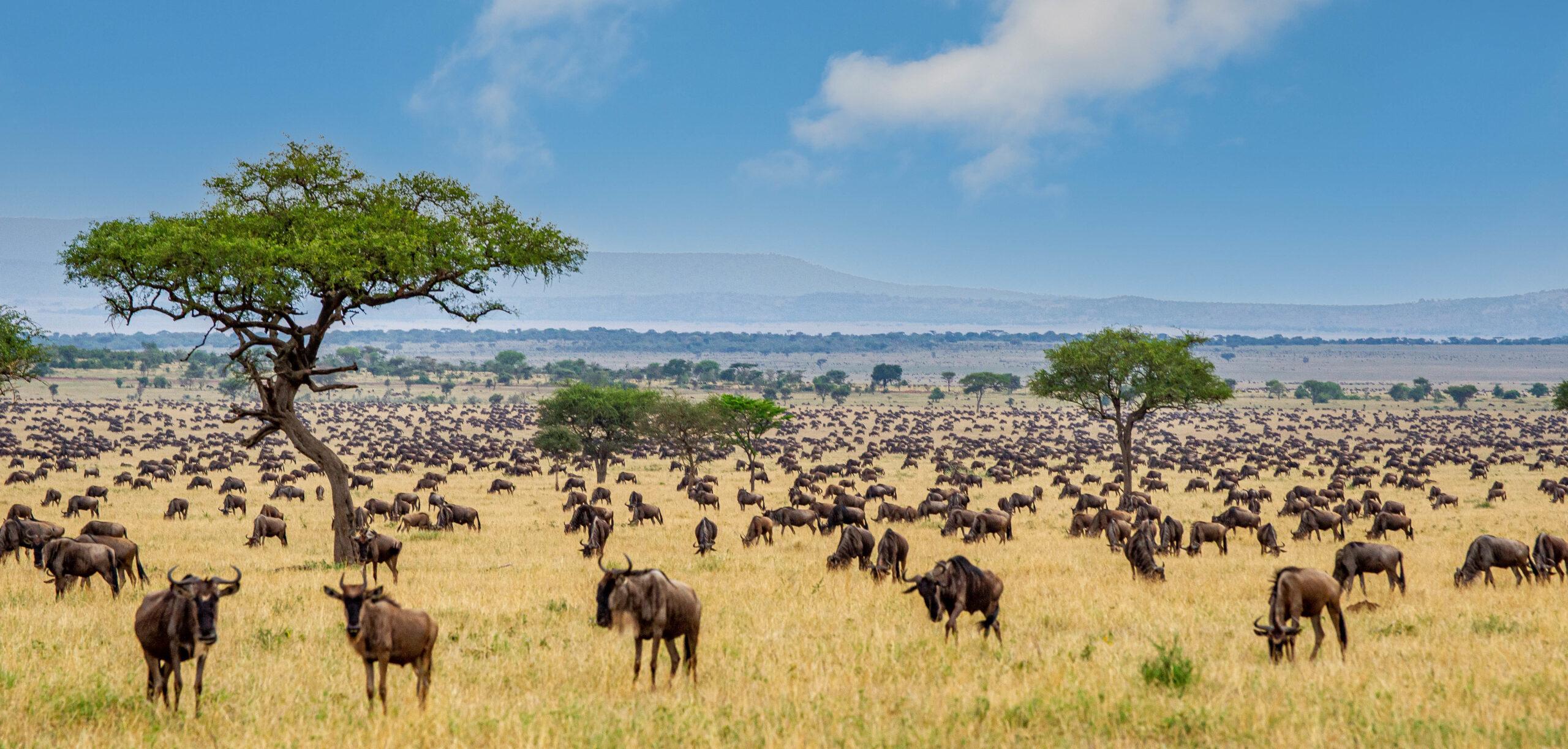
Yes, absolutely! January is a phenomenal and highly underrated month to witness the Great Migration. While many people associate the migration solely with the famous Mara River crossings between July and October, the beginning of the year marks another equally dramatic and profoundly moving chapter of the cycle: the calving season in the southern Serengeti and the Ngorongoro Conservation Area.
During January, hundreds of thousands of wildebeest, zebras, and antelopes gather on the lush, nutritious short-grass plains of the Ndutu and Ndabaka areas. The grasses are rich in vital minerals due to volcanic ash from the nearby craters, making it the ideal nursing ground for the herds. By late January and February, the calving peak begins, with an estimated 8,000 wildebeest calves born every single day.
For a honeymoon safari, this period offers a magical blend of romance and raw wildlife drama. You will witness newborn calves taking their first wobbly steps within minutes of birth, surrounded by eager predators like lions, cheetahs, and hyenas. Because the herds congregate in massive, dense concentrations across the open plains, game viewing is extraordinarily rich, intimate, and active. Furthermore, January falls during the region's "green season" or short dry spell, meaning the landscapes are vibrant, emerald-green, skies are often dramatic for photography, and the crowds are significantly smaller than during the peak migration months, giving you a wonderfully exclusive and private safari experience.
6-days-luxury-tanzania-honeymoon-safari-holiday
What to Expect in January
- Calving Season: Over 8,000 wildebeest calves are born daily in the lush southern short-grass plains.
- Predator Action: Big cats like lions, cheetahs, and leopards actively hunt the vulnerable newborns, offering intense wildlife viewing.
- Weather: January brings warm, generally green landscapes with occasional short rains, making for a scenic and less crowded honeymoon backdrop.
Best Areas to Visit
- Ndutu Region: Straddling the southern Serengeti and Ngorongoro Conservation Area, this is the epicenter for the herds in January.
- Southern Plains: Wide-open grass fields where the mega-herds congregate to graze on nutrient-rich soils.
Where exactly is the Great Migration located in Tanzania during January?
In January, the vast herds of wildebeest and zebras are primarily located in the southern Serengeti ecosystem, particularly around the Ndutu region and the overlapping boundaries of the Ngorongoro Conservation Area. This area is characterized by open, grassy plains rich in volcanic nutrients, which attract the herds as they prepare for the calving season. Unlike the northern Serengeti where river crossings happen, the southern plains offer sweeping, unobstructed views of massive herds spread across the horizon under dramatic skies.
What makes January a unique time for a honeymoon safari in Tanzania?
January strikes a rare and romantic balance between incredible wildlife concentration and peaceful exclusivity. While peak season months bring long queues of safari vehicles and crowded lodges, January sees far fewer travelers, allowing you and your partner to enjoy quiet, intimate game drives. The landscape transforms into a breathtaking, vibrant green following the short rains, providing a stunning backdrop for honeymoon photographs. Above all, you get to witness the tender, life-affirming spectacle of thousands of newborn wildebeest calves taking their first steps.
Will we actually see the calving season if we visit in late January?
Yes, absolutely! Late January marks the very beginning of the explosive calving season, which peaks sharply throughout February. An estimated 8,000 wildebeest calves are born daily during this peak period, and by late January, the pregnant herds have settled solidly onto the Ndutu plains. You are virtually guaranteed to witness pregnant herds, newborn calves, and the intense predator-prey interactions that unfold as lions and cheetahs are drawn to the nurseries.
Are predator sightings common during the migration in January?
January is a paradise for predator enthusiasts. Big cats—particularly cheetahs, lions, and leopards—know precisely when and where the calving season takes place, and they gather in high numbers across the southern plains. You will frequently witness cheetah mothers teaching their cubs to hunt or coalitions of lions keeping watch over the massive nurseries. While witnessing nature can sometimes feel raw and emotional, the sheer volume of life makes every game drive pulse with dramatic energy.
What kind of weather should we expect in Tanzania in January?
January is generally warm and pleasant, though it falls during a transitional climate period often referred to as the "short dry spell" between the short and long rains. Daytime temperatures comfortably hover around 25°C to 28°C (77°F to 82°F), dropping to a comfortable 15°C (59°F) at night on the open plains. You can expect mostly clear, sunny mornings with occasional afternoon clouds or brief tropical showers, which quickly clear up and leave the air feeling fresh and dust-free.
Is January considered peak season or low season for tourism?
January sits in what operators call the shoulder season, though the southern Serengeti experiences a mini peak of its own due to the migration concentration. While iconic northern parks like the Serengeti main sectors or Ngorongoro Crater floor can still attract visitors, the Ndutu plains remain delightfully uncrowded compared to July and August. This means you will enjoy unhurried game viewing, personalized attention from your guide, and better availability at exclusive luxury tented camps.
What types of accommodation are best suited for a honeymoon in January?
For a honeymoon in January, luxury mobile tented camps set up in the Ndutu region are the absolute gold standard. These intimate, eco-conscious camps place you right in the heart of the wilderness where you can hear the distant calls of lions and wildebeest at night. They offer gorgeous canvas suites with king-sized beds, en-suite bucket showers with hot running water, private verandas for morning coffee, and candlelit dinners under the starlit African sky.
Can we combine a wildlife safari with a beach honeymoon in Zanzibar?
Yes, this is the ultimate classic East African honeymoon combination! After spending four to five days tracking the migration and witnessing wildlife drama across the Serengeti and Ngorongoro, you can take a short regional flight directly to the spice island of Zanzibar. Here, you can unwind on powdery white-sand beaches, swim in turquoise Indian Ocean waters, stroll hand-in-hand through historic Stone Town, and indulge in romantic seaside candlelit seafood dinners.
What should we pack for a January safari and beach honeymoon?
Packing for January requires a smart mix of safari neutrals and beachwear. For the bush, bring lightweight, breathable linen or cotton shirts and trousers in khaki, beige, or olive tones to blend into nature and keep mosquitoes at bay. Pack a warm fleece or jacket for chilly early morning game drives on open-sided 4x4 vehicles. Don't forget comfortable walking shoes, a wide-brimmed hat, high-SPF sunscreen, sunglasses, insect repellent, and stylish resort wear for your relaxing days in Zanzibar.
To truly savor both the romance and the wildlife without feeling rushed, we recommend an 8 to 10-day itinerary. A well-balanced schedule includes about 5 days exploring Tarangire, Ngorongoro Crater, and the southern Serengeti (Ndutu) for the migration, followed by 4 relaxing days on the pristine beaches of Zanzibar. This pacing allows you to fully immerse yourselves in adventure before shifting into deep relaxation mode together as newlywed partners.
How do we get around the parks during a January safari?
Your journey will be expertly handled in a dedicated, custom-built 4x4 safari vehicle—typically a Land Cruiser equipped with a pop-up roof hatch for 360-degree wildlife viewing and photography. Roads in the southern Serengeti and Ndutu plains are largely unpaved tracks crossing open soil and seasonal soda lakes. Having an experienced, knowledgeable driver-guide from Roads of Adventure Safaris ensures your safety, smooth navigation through varying terrain, and expert tracking of wildlife movements.
Are mosquitoes a major concern in January, and what about malaria prophylaxis?
January falls shortly after the short rainy season, meaning there can be mosquitoes around water sources and humid areas. However, high-end safari camps provide mosquito nets over beds, window screens, and insect repellent. Malaria prophylaxis is strongly recommended for travel to Tanzania. Consult your travel doctor a few weeks before departure to obtain the appropriate prescription medication, and always practice standard precautions like wearing long sleeves after dusk.
What makes the Ndutu region so special for January safaris?
The Ndutu region sits in the southern part of the Serengeti ecosystem, straddling the border of the Ngorongoro Conservation Area. Unlike the permanent rivers of the north, Ndutu features shallow soda lakes (Lake Ndutu and Lake Masek), acacia woodlands, and vast, open short-grass plains. In January, when the rains stimulate nutrient-dense grass growth here, the area transforms into an aquatic and grazing paradise, drawing hundreds of thousands of animals into a concentrated, highly accessible sanctuary.
Can we experience off-road driving or walking safaris in Ndutu during January?
Unlike the main Serengeti National Park where strict off-road driving regulations apply to protect the environment, parts of the Ngorongoro Conservation Area and Ndutu permit specialized off-road driving under certain conditions, allowing guides to get closer to wildlife sightings. Additionally, guided walking safaris accompanied by an armed park ranger are exceptionally popular in Ndutu. Walking through the wilderness hand-in-hand with your partner, tracking footprints, and learning about flora up close adds a thrilling, intimate dimension to your honeymoon.
What other wildlife can we expect to see alongside the Great Migration?
While the wildebeest and zebras steal the spotlight, the Serengeti-Ndutu ecosystem teems with incredible biodiversity. You will regularly spot majestic giraffes, graceful impalas, Thomson's and Grant's gazelles, large herds of elephants, warthogs, and elusive leopards draped over acacia branches. The soda lakes of Ndutu also attract vibrant flocks of lesser and greater flamingos, pelicans, and hundreds of colorful resident and migratory bird species.
Is Tanzania safe for international honeymoon travelers?
Tanzania is widely recognized as one of the safest, most politically stable, and welcoming destinations in Africa. Tourism is a cornerstone of the economy, and locals are renowned for their incredible warmth, hospitality, and friendliness (frequently greeting visitors with a cheerful "Jambo!" or "Karibu!"). When booking with a reputable local operator like Roads of Adventure Safaris, you are looked after from the moment you land at Kilimanjaro International Airport until your departure.
What kind of romantic touches can we request for our honeymoon lodges?
Safari lodges and tented camps in Tanzania excel at romance and go above and beyond for honeymooners. You can frequently request private candlelit dinners set under the African stars, sparkling wine or champagne waiting in your tent upon arrival, a private bush breakfast or picnic lunch overlooking the savannah, couples' massages in open-air spa tents, and turndown service with flower petals strewn across your bed.
How far in advance should we book a January migration honeymoon?
Because January is a prime window for the southern Serengeti calving season and coincides with global winter holiday travel, top-tier luxury tented camps and lodges in Ndutu book out remarkably fast—often 9 to 12 months in advance. Securing your dates early ensures you get your first-choice boutique camps, preferred room categories with the best views, and seamless domestic flight connections between the parks and Zanzibar.
What is the photographic potential of a January safari?
January is a dream come true for photography enthusiasts and couples wanting stunning keepsakes. The aftermath of the short rains leaves the landscape coated in lush, vibrant greens rather than dry dust, making animal coats pop vividly against the background. Dramatic afternoon storm clouds rolling across the flat plains create magnificent moody lighting for sunset shots, while newborn calves and playful predator cubs offer endless heartwarming photo opportunities.
Are hot air balloon safaris operating in January, and can we do one?
Hot air balloon safaris operate year-round in the Serengeti, though launch locations depend on wind patterns and wildlife concentrations. While most iconic balloon flights center around the central or northern sectors, certain camps in the southern Serengeti or Ndutu areas may offer seasonal flights or coordinate transfers to nearby launch sites. Floating silently above the awakening savannah as the sun rises over thousands of grazing animals is an unforgettable, ultimate honeymoon bucket-list experience.
What vaccinations and health documents do we need to enter Tanzania?
To enter Tanzania, travelers are typically required to present a valid Yellow Fever vaccination certificate if arriving from a country with risk of yellow fever transmission. Depending on your home country and flight routing, routine vaccinations (like Tetanus, Hepatitis A, and Typhoid) should be up to date. It is always wise to check current health regulations with your local health department or travel clinic 4 to 6 weeks before your trip.
What currency is used in Tanzania, and should we bring cash or cards?
The official currency is the Tanzanian Shilling (TZS), but US Dollars (USD) are widely accepted across all safari lodges, parks, and tourist spots. Note that US dollar bills must be series 2013 or newer and in good condition (no tears or heavy markings), as older notes are routinely rejected by local banks and businesses. Major credit cards (Visa and Mastercard) are accepted at most permanent lodges, but carrying cash is essential for tipping guides, purchasing crafts, and settling extras in remote tented camps.
How should we budget for a luxury Tanzania honeymoon safari?
A luxury migration honeymoon in Tanzania is an investment in once-in-a-lifetime memories. Pricing typically encompasses exclusive 4x4 transport, expert private guiding, park conservation fees, domestic bush flights, luxury tented camp accommodations on a full-board or all-inclusive basis, and drinks. While costs vary depending on the exact tier of accommodation and duration, working with a trusted local specialist like Roads of Adventure Safaris ensures transparent pricing tailored precisely to your romantic vision and budget.
What is a typical daily routine on a January safari in Ndutu?
Days on safari are wonderfully immersive and structured around wildlife rhythms. You will wake up around 5:30 AM to the gentle sounds of the bush, enjoying freshly brewed Tanzanian coffee and biscuits on your tent veranda before heading out on an early morning game drive when predators are most active. Return to camp for a hearty cooked breakfast around mid-morning, relax during the warm midday hours with your partner, enjoy afternoon tea, embark on an evening game drive until sunset, and finish with dinner around the campfire.
Can dietary restrictions or preferences be accommodated at the camps?
Yes, absolutely. High-end safari lodges and tented camps in Tanzania are accustomed to catering to all dietary requirements, including vegetarian, vegan, gluten-free, halal, and allergy-specific needs. When booking your honeymoon through Roads of Adventure Safaris, simply share your dietary preferences in advance, and the camp chefs will curate personalized, gourmet menus that combine local ingredients with international culinary flair.
What language is spoken in Tanzania, and will we need to learn Swahili?
The official national language is Swahili (Kiswahili), and English is widely spoken across all hotels, national parks, lodges, and tourist areas. Your driver-guide will be completely fluent in English. However, learning a few polite Swahili phrases like "Jambo" (Hello), "Asante sana" (Thank you very much), and "Karibu" (Welcome) is warmly appreciated by locals and adds a delightful, authentic touch to your cultural interactions.
Are there cultural experiences we can add to our honeymoon itinerary?
Tanzania is home to over 120 vibrant ethnic groups, and adding cultural visits enriches your journey beyond wildlife. Near the Ngorongoro Conservation Area and Serengeti, you can arrange a respectful, guided visit to an authentic Maasai boma (village). Here, you and your partner can learn about traditional pastoralist lifestyles, admire intricate beadwork, watch traditional jumping dances, and gain insight into how local communities coexist harmoniously with wildlife.
What makes booking with Roads of Adventure Safaris ideal for a honeymoon?
Booking with Roads of Adventure Safaris ensures that every single logistical detail—from airport pickups and private 4x4 transfers to hand-picked romantic tented camps and seamless domestic flight connections—is expertly managed by local professionals based right in East Africa. Instead of dealing with impersonal international booking agencies, you receive bespoke, personalized itinerary design tailored specifically to your honeymoon dreams, ensuring complete peace of mind from start to finish.
What power socket types are used in Tanzania, and will we be able to charge our cameras?
Tanzania primarily uses British-style three-pin square plugs (Type G), operating on a 230V supply. Most permanent and mobile luxury safari camps feature charging stations in the main lounge area, and many modern tents are equipped with personal charging USB ports or UK sockets powered by solar generators. Bringing a universal travel adapter ensures you can keep your phones, cameras, and drone batteries fully charged for capturing every magical honeymoon moment.
How does a January safari compare to migrating river crossings later in the year?
While river crossings in July and August offer high-octane drama as wildebeest leap into crocodile-infested waters, January offers an entirely different, more intimate emotional connection to the wilderness. Instead of frantic chaos, January brings the quiet miracle of birth, lush green landscapes, warm weather, and peaceful privacy without tourist crowds. It is less about frantic survival action and more about new beginnings, making it the ultimate symbolic choice for celebrating the start of your life together.
Booking Tanzania honeymoon safari with us Roads of Adventure Safaris
To book a custom Tanzania honeymoon safari with Roads of Adventure Safaris, reach out to their team directly through their official website. Because they specialize in tailor-made luxury and midrange packages combining iconic wildlife parks like the Serengeti and Ngorongoro Crater with beach retreats in Zanzibar, itineraries and exact pricing are customized to your schedule
