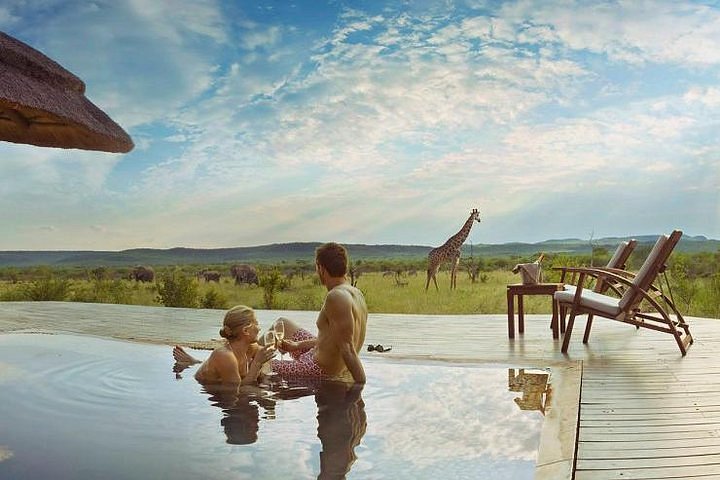
This 6-day private fly-in and luxury Tanzania honeymoon safari lodge honeymoon skips the exhausting 6-hour drives, using internal flights to maximize romantic game viewing in the Serengeti and Ngorongoro Crater, with private bush dinners and sundowners throughout
Tour highlights for 6 Days Tanzania honeymoon safari holiday
Cozy coffee chalets
Scenic chartered flights
Golden-hour game drives
Romantic bush dinners
Majestic Big-Five tracking
Private savannah sundowners
Dramatic crater views
Rare black rhinos
Giant baobab trees
Massive elephant herds
Day by day 6 Days Tanzania honeymoon safari holiday
Day 1: Arusha Coffee Lodge
Your romantic 6 Days Tanzania honeymoon safari holiday begins the moment your flight touches down at Kilimanjaro International Airport. Your private driver will greet you with a warm smile, taking care of your luggage as you transfer to the Arusha Coffee Lodge. Tucked away on one of Tanzania’s oldest working coffee plantations, this beautiful lodge welcomes you with a sense of historic charm. You will settle into a cozy, plantation-style chalet featuring a private split-level living area and a roaring fireplace to take the chill off the African night. Spend your afternoon walking hand-in-hand through the endless, fragrant coffee trees or simply unwinding by the swimming pool after your long flight. As evening falls, enjoy a candlelit dinner featuring fresh, farm-to-table ingredients, celebrating the start of an unforgettable week together under the quiet canopy of Arusha's ancient trees.
Day 2: Fly into the Serengeti
On the second morning of your 6 Days Tanzania honeymoon safari holiday, you will board a private chartered flight from Arusha, soaring directly over the Great Rift Valley into the wide-open plains of the Serengeti. The view from above is spectacular, revealing the vast scale of the wilderness below. Upon landing, a private 4x4 safari vehicle will whisk you away to your luxury camp, where you will unpack at either the Four Seasons Safari Lodge Serengeti or Lemala Kuria Hills. These properties offer incredible comfort right in the heart of the wild. Later in the afternoon, set out on your very first private golden-hour game drive together. As the sun dips low and paints the sky in shades of deep amber and violet, you will toast to your marriage with an intimate, candlelit dinner served deep in the bush, surrounded by the gentle sounds of the African night.
Day 3: Central Serengeti Game Drives
Wake up early to the rich aroma of Tanzanian coffee, ready to spend a full day exploring the central Serengeti. This region is world-renowned for its incredible wildlife, and your private guide will help you track the famous "Big Five"—lions resting on rocky kopjes, leopards hidden in acacia branches, elephants, buffaloes, and if luck is on your side, an elusive rhino. Depending on the exact time of year, you might also find yourselves surrounded by the thundering herds of the Great Wildebeest Migration, a truly breathtaking sight to experience side-by-side. To add a special touch of luxury to your 6 Days Tanzania honeymoon safari holiday, your lodge will arrange a private "sundowner" experience. Sip premium champagne and enjoy gourmet canapés on a scenic ridge overlooking the boundless golden savannah, watching a magnificent sunset before returning to camp for a quiet dinner.
Day 4: Serengeti to Ngorongoro Crater
Enjoy one final morning game drive through the Serengeti, watching predators on their early dawn hunts, before making your way to the airstrip for a quick, scenic flight to the Ngorongoro Conservation Area. Your destination is either the Ngorongoro Serena Safari Lodge or the opulent andBeyond Ngorongoro Crater Lodge. Both properties are perched directly on the edge of the crater rim, offering sweeping views of the massive volcanic caldera below. Stepping out onto your private balcony feels like standing at the edge of the world. Spend your afternoon relaxing in your room, listening to the crackle of a wood fireplace while your personal butler serves hot tea. In the evening, wrap up in warm blankets and watch the sunset cast long shadows across the ancient crater floor, anticipating the incredible wildlife adventure waiting for you the very next morning.
Day 5: Ngorongoro Crater Floor
Today brings one of the most magical experiences of your 6 Days Tanzania honeymoon safari holiday. Early in the morning, your private guide will navigate the vehicle down the steep, mist-covered walls of the Ngorongoro Crater, descending 600 meters into an intact volcanic caldera. The crater floor is an absolute paradise, hosting one of the densest wildlife populations on earth. You will spend the day driving across grasslands and past soda lakes, watching large prides of lions, black-maned jackals, and pods of hippos wallowing in the springs. It is also your best chance to spot the critically endangered black rhino in its natural habitat. Enjoy a private picnic lunch under the shade of a yellow-fever acacia tree by a hippo pool, taking in the raw beauty of this prehistoric world before ascending back to the rim for a relaxing evening together.
Day 6: Tarangire National Park & Departure
The final morning of your 6 Days Tanzania honeymoon safari holiday takes you to Tarangire National Park, a striking landscape famous for its massive elephant herds and giant, ancient baobab trees that dominate the horizon. You will enjoy a final morning game drive along the Tarangire River, watching family groups of elephants bathe and play in the shallow water, creating beautiful final memories of your time in the African bush. After a light lunch, your guide will drive you back to Arusha for your international departure flight home, or help you catch a quick connection to the spice island of Zanzibar if you choose to extend your honeymoon with a relaxing beach getaway. As you say goodbye to the Tanzanian wilderness, you will carry with you a collection of shared stories and incredible moments that will last a lifetime.
What unique physiological and chemical benefits do honeymooners experience when starting a safari in a highland coffee plantation?
Arriving at a high-altitude coffee plantation provides a vital, scientifically backed transition phase for couples beginning their journey. The location rests at roughly 1,400 meters above sea level, allowing the human body to naturally stimulate red blood cell production and adapt to lower oxygen levels before heading deeper into the high-altitude regions of northern Tanzania. This natural adjustment reduces travel fatigue and shields couples from altitude sickness later in the tour.
Beyond altitude adaptation, the plantation environment offers powerful sensory benefits. Walking through lines of Coffea arabica releases natural plant compounds called volatile organic compounds, which have been shown to lower cortisol stress hormones and heart rates in humans. The rich, earthy aroma of roasting coffee beans contains chemical compounds like furans and pyrazines that naturally trigger the brain's pleasure centers, promoting deep relaxation. Starting a honeymoon in this tranquil setting gives couples a peaceful, private space to unwind and connect after months of wedding planning, setting a calm and romantic tone for the adventure ahead.
How does a scenic chartered flight impact wildlife viewing and animal behavior across the Great Rift Valley?
Soaring above the landscape in a private aircraft offers an incredible perspective on the grand scale of East Africa’s geology. Flying over the Gregory Rift reveals the dramatic fault lines, steep escarpments, and volcanic craters that shape this unique terrain, giving couples a clear look at how geographic barriers naturally separate and protect different animal populations.
This aerial journey also serves as a peaceful, stress-free alternative to long, bumpy road transfers, ensuring couples arrive fresh and energetic for their afternoon game drives. By minimizing long hours on dusty tracks, travelers reduce vehicle traffic in fragile environments, which helps prevent soil erosion and keeps tracking areas quiet. From the air, couples can spot the winding paths of seasonal rivers and wide animal trails, illustrating how water and geography guide wildlife across the plains. Landing directly on a remote bush airstrip brings travelers straight into the wilderness with minimal disturbance to the animals, maintaining the peaceful environment that makes the park so special.
What are the ecological dynamics of lion prides in the Central Serengeti, and how do they utilize the landscape?
The central valley of the Serengeti is a premier destination for observing the sophisticated social structures and hunting strategies of the African lion (Panthera leo). This region is shaped by large, open grasslands broken up by granite rock formations known as kopjes. These ancient rocks act as vital tracking and resting points for resident prides, giving them an elevated viewpoint to scan the surrounding plains for potential prey.
The flat grasslands require lions to use highly coordinated ambush strategies. Pride members work together to herd target animals toward hidden strikers waiting in tall grass, using team tactics to overcome the challenges of hunting in open country. Kopjes also provide crucial shelter and deep shade where lionesses can safely hide young cubs away from large predators like hyenas and leopards. Watching these close family bonds firsthand offers an intimate look at animal cooperation, adding a memorable depth to the shared wildlife experience.
How do seasonal migration patterns affect predator-prey dynamics across the vast savannah?
The endless search for green pastures driven by the Great Migration creates a dynamic, shifting environment for local wildlife. Over one million wildebeests and zebras move in a continuous cycle guided by rainfall, completely transforming the ecosystem as they pass through. This massive influx of animals introduces an abundant food supply, triggering increased hunting activity among resident lion prides, leopards, and cheetahs.
This seasonal abundance alters predator behavior in fascinating ways. With prey everywhere, large cats often hunt during the day, giving visitors unique opportunities to witness dramatic, high-speed chases. When the migratory herds eventually move on, the environment shifts back to a quieter state. Resident predators must adapt by targeting smaller, non-migratory animals like impalas and warthogs, or by expanding their territories to find food, illustrating the delicate balance of life on the plains.
What unique geological conditions led to the creation of the Ngorongoro Crater, and how do they support life?
The Ngorongoro Crater is a magnificent natural wonder formed nearly three million years ago when a massive volcano collapsed inward, leaving behind the world's largest unbroken, unfilled caldera. This unique geological event created a completely self-contained ecosystem enclosed by steep walls that rise 600 meters above the crater floor, forming a protective barrier that shelters an incredible variety of wildlife.
The volcanic ash that covers the crater floor has created exceptionally fertile soils, supporting nutrient-rich grasslands that feed over twenty-five thousand large mammals year-round. Mineral-rich springs and fresh water streams flow continuously from the crater walls, feeding permanent wetlands like the Lerai Forest and Lake Magadi. This reliable water supply eliminates the need for animals to migrate, creating a stable, thriving habitat where visitors can observe complex interactions between predators and prey in a spectacular, enclosed arena.
How does the isolated ecosystem of the Ngorongoro Crater affect the genetics and behavior of its black rhino population?
The enclosed environment of the Ngorongoro Crater provides a vital sanctuary for the critically endangered East African black rhinoceros (Diceros bicornis michaeli). The steep, rugged walls form a natural shield against external threats, making it an ideal area for intensive anti-poaching efforts and close monitoring by conservation teams using advanced tracking systems.
However, this isolation presents long-term genetic challenges. Because rhinos rarely climb out of the crater, the small, resident population faces a risk of inbreeding, which can weaken the animals' immune systems over generations. To maintain a healthy gene pool, conservationists implement careful management plans, occasionally introducing rhinos from other reserves like the Serengeti or specialized sanctuaries. This thoughtful approach ensures the survival of healthy future generations, allowing visitors the rare privilege of watching these magnificent, prehistoric creatures roam safely across the crater floor.
What role does the Tarangire River play as a vital sanctuary for wildlife during the annual dry season?
Tarangire National Park is defined by a beautiful, rolling landscape dominated by the life-giving Tarangire River. During the dry season, as surrounding water holes across the Maasai Steppe completely dry up, this permanent river becomes the primary water source for miles around, drawing thousands of animals from across the region.
This seasonal movement creates incredible wildlife concentrations along the riverbanks. Visitors can watch vast herds of elephants, zebras, wildebeests, and various antelope species gather together to drink, bathe, and feed on the remaining green vegetation. The high density of prey animals naturally attracts top predators like lions and leopards, creating an exciting environment for wildlife viewing where dramatic interactions unfold daily against the backdrop of the river.
How do ancient baobab trees impact the ecology and survival of elephants in Tarangire?
The iconic baobab tree (Adansonia digitata) is a striking feature of the Tarangire landscape and plays a crucial role in the survival of the park's large elephant populations. These massive, long-lived trees possess unique, spongy trunks designed to store thousands of liters of water, acting as natural reservoirs during extended droughts.
Elephants have learned to utilize this resource by using their powerful tusks to gouge the soft outer wood, chewing the fibrous bark to extract moisture and essential minerals when surface water is scarce. While this behavior leaves deep, visible scars on the trunks, the resilient baobab trees are remarkably adapted to survive this damage, quickly healing their outer layers. This unique relationship showcases the interconnectedness of the African bush, where plants and animals rely on one another to survive the harsh seasonal climate.
What are the differences in microclimates between the Serengeti plains and the Ngorongoro highlands?
Traveling through northern Tanzania reveals a fascinating variety of microclimates, shifting quickly from the warm, semi-arid plains of the Serengeti to the cool, mist-covered highlands of the Ngorongoro rim. The Serengeti rests at a lower elevation, where warm air currents and open terrain create a classic, sunny savannah environment with higher daytime temperatures.
As you ascend the outer slopes of the Ngorongoro Conservation Area, the climate changes dramatically. The high-altitude rim catches moisture-laden winds, creating a cooler, humid alpine climate characterized by thick montane forests, morning mist, and crisp evening temperatures. This rapid shift in temperature and humidity supports completely different plant communities and wildlife behaviors, offering a refreshing change of pace and a beautiful variety of landscapes to enjoy together throughout the journey.
How do private bush sundowners and intimate dinners support sustainable conservation funding?
Exclusive, low-impact tourism activities like private sundowners and intimate bush dinners offer unforgettable experiences for travelers while providing critical financial support for long-term conservation efforts. These premium services generate significant revenue that goes directly toward funding park management, community development projects, and wildlife protection programs.
By focusing on high-value, low-density tourism, conservation authorities can generate the necessary funds to protect large wilderness areas without the environmental strain caused by overcrowding. These intimate experiences require minimal infrastructure, ensuring that sensitive wildlife habitats remain pristine and undisturbed. This sustainable model ensures that tourism revenue directly protects the spectacular landscapes and wildlife, preserving them for future generations to explore.
What are the behavioral adaptations of leopards, and where are you most likely to spot them?
The leopard (Panthera pardus) is a master of camouflage and stealth, using its beautifully rosetted coat to blend effortlessly into the dappled light of the African bush. Unlike social lions, leopards are solitary, highly independent cats that rely on absolute secrecy to survive and hunt successfully in competitive environments.
They are most frequently spotted in riverine woodlands and areas with large acacia trees or rocky kopjes, where they use thick branches as elevated platforms to rest, scan for prey, and keep their young safe from lions and hyenas. Leopards possess incredible upper-body strength, allowing them to drag heavy prey animals high into the tree canopy to protect their food from scavengers, showcasing the remarkable physical power and resourcefulness of these elusive cats.
How do standard safari activities differ from walking safaris on foot?
Traditional vehicle game drives allow travelers to cover large distances comfortably, using custom-built 4x4 vehicles to safely approach large predators and film sweeping landscapes across the open plains. This classic approach provides an excellent overview of the ecosystem and is ideal for tracking fast-moving wildlife.
In contrast, stepping out of the vehicle for a guided walking safari changes your relationship with the wilderness completely. Moving quietly on foot heightens your senses, allowing you to focus on the smaller details of the bush—identifying animal tracks in the dust, learning about the medicinal uses of local plants, and listening to the complex calls of native birds. Led by an experienced armed ranger, a walking safari offers an educational experience that brings you closer to nature, providing a deep appreciation for the finer inner workings of the African ecosystem.
What is the purpose of a multi-destination circuit, and how does it show ecological diversity?
A multi-destination itinerary is thoughtfully designed to showcase the incredible variety of landscapes, climates, and wildlife communities found across East Africa. By moving from a historic coffee plantation to the open savannahs of the Serengeti, the unique volcanic caldera of Ngorongoro, and the baobab-dotted river valleys of Tarangire, travelers experience a comprehensive overview of Tanzania's natural heritage.
Each destination represents a distinct ecosystem with its own unique soil composition, water sources, and plant life, which in turn shape the behavior of the local wildlife. Exploring this diverse circuit illustrates how changing geology and climate drive different evolutionary adaptations, offering a rich and deeply educational journey through the natural world.
How do community-based tourism partnerships benefit the Maasai communities living in conservation areas?
Sustainable tourism operations within the Ngorongoro Conservation Area and surrounding regions rely heavily on respectful, mutually beneficial partnerships with indigenous Maasai communities. These initiatives ensure that local clans receive a direct share of tourism revenue, helping to improve livelihoods while preserving ancient cultural traditions.
Tourism partnerships provide funding for vital community projects, including drilling clean water boreholes, building modern schools, and improving local healthcare facilities. By creating sustainable jobs for local guides, camp staff, and artisans, tourism transforms wildlife conservation from a potential source of conflict into a valuable community asset, encouraging a harmonious relationship where people and wildlife can thrive together.
What long-term benefits do couples gain from sharing an immersive wilderness safari?
An immersive journey through the African wilderness offers a powerful, transformative experience that creates deep, lasting bonds between couples as they begin their lives together. Disconnecting from the distractions of modern life allows partners to focus entirely on each other and the spectacular natural world around them, fostering deep communication and shared reflection.
Experiencing the raw beauty of a Serengeti sunrise, the excitement of tracking rare wildlife, and the peace of a quiet evening under a star-filled sky creates a collection of unique, shared stories. Navigating the classic rhythms of the African bush together builds a strong foundation of teamwork and shared adventure, leaving couples with beautiful, lifelong memories that will inspire and enrich their relationship for years to come.
To catch a beautiful visual glimpse of the romance, luxury lodges, and magnificent wildlife encounters featured across this itinerary, watch this inspiring showcase of unforgettable Tanzanian safaris. This video highlights the spectacular landscapes and intimate moments that await couples on this ultimate African journey.
Booking 6 Days Luxury Tanzania honeymoon safari holiday with us Roads of Adventure safaris
Booking a luxury Tanzania honeymoon safari with Roads of Adventure Safaris includes a 6-day Northern Circuit package covering the Serengeti, Ngorongoro Crater, and Tarangire. It provides private 4x4 transport, luxury lodge accommodations, all park fees, and expert guides
