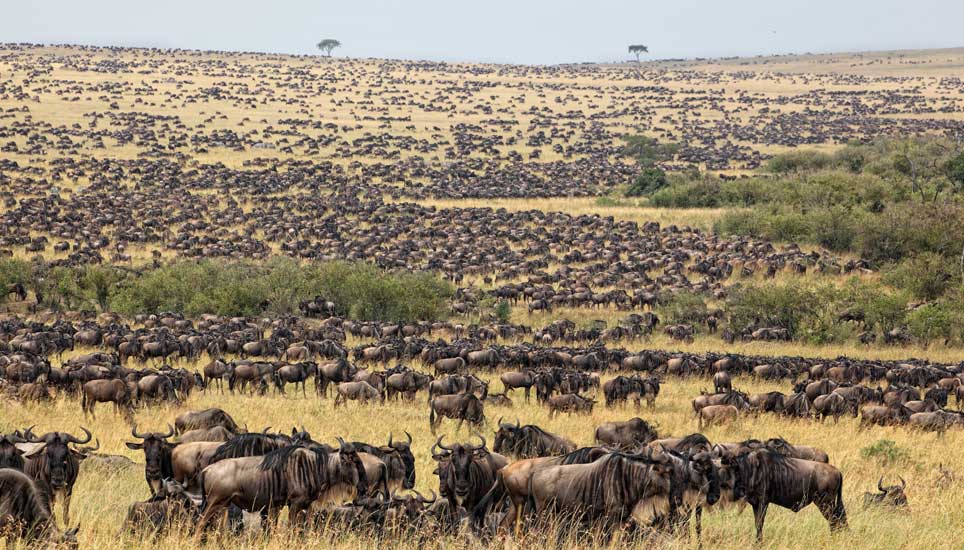
Yes, September is one of the absolute best months to witness the Great Wildebeest Migration in Tanzania. If you're dreaming of witnessing the epic wildebeest migration, September is hands-down one of the most incredible times to pack your bags for Tanzania. By this point in the year, the massive herds have made their way to the Northern Serengeti, setting the stage for nature's ultimate drama. You'll get to see them brave the crocodile-infested waters of the Mara River in a spectacular, heart-pounding leap of faith before finally settling into the surrounding plains to graze. It’s raw, wild, and utterly unforgettable.
4-days-budget-tanzania-safari-tour-to-serengeti-ngorongoro-and-tarangire
4-days-central-serengeti-safari-tour-and-mara-river-crossing-in-northern-serengeti
7-days-tanzania-honeymoon-safari-holiday-vacation-and-hot-air-balloon-safari
7-days-epic-africa-big-five-safari-in-tanzania-top-best-parks
8-days-great-mara-river-crossing-hadzabe-tribe-and-optional-hot-air-balloon-tanzania-safari
The Heart-Pounding Mara River Crossings
There is nothing on earth quite like the tension of standing by the Mara River in September. Thousands of wildebeest and zebras gather at the water’s edge, hesitating for hours as the tension builds. Suddenly, one brave soul takes the plunge, and the rest follow in a chaotic, thundering rush. It’s a brutal, beautiful spectacle of survival. You’ll watch them brave powerful currents, snap judgments against massive Nile crocodiles waiting in the shallows, and hungry big cats lurking on the riverbanks. It’s raw, unfiltered nature that will leave you holding your breath the entire time.
Perfect Weather and Easy Wildlife Spotting
September falls right in the sweet spot of Tanzania’s long dry season, which means the weather is about as close to perfect as it gets. You can look forward to bright, sunny days with comfortable temperatures averaging around 25°C (77°F). Because it hasn't rained in months, the thick bush has withered away into sparse golden grass, and water sources are drying up. This is a massive win for you: the wildlife can't hide easily anymore. Animals are forced to congregate around the remaining rivers and waterholes, making your game drives incredibly rewarding and successful.
Why the Northern Serengeti is the Place to Be
While the migration is famous for crossing into Kenya’s Masai Mara, a massive portion of the herds actually stick around the Northern Serengeti in September. Choosing the Tanzanian side gives you an incredible front-row seat to the action. The landscape here is vast and dramatic, offering a slightly more exclusive feel depending on where you stay. Because the herds are constantly moving back and forth across the border looking for fresh grass, basing yourself in northern Tanzania ensures you are right in the thick of this grand, sweeping ecosystem.
Unforgettable Ways to Experience the Safari
A September safari isn't just about sitting in a 4x4, though the traditional game drives are world-class. Because the herds are so concentrated, it’s also the prime season for a hot air balloon safari. Floating silently above the Serengeti at sunrise as thousands of wildebeest dot the plains below like ants is a core memory experience. Back on the ground, you can spend hours parked near the river, picnic lunch in hand, waiting for the perfect moment of drama to unfold. Every day offers a new perspective on this ancient journey.
Here is a detailed, human look at exactly what to expect when planning this dream safari, answering each of your questions with the real, on-the-ground context you need.
Which specific areas of the Serengeti National Park (like Kogatende) should I target for the best river crossing views?
When it comes to witnessing the river crossings, Kogatende is absolutely the undisputed crown jewel of the Northern Serengeti. This area sits right on the banks of the Mara River and serves as the primary staging ground for the herds in September. What makes Kogatende so special is its unique geography; the river loops and twists through the region, creating multiple crossing points (often referred to by guides as numbered points, like Crossing 1 to 4). Because the banks are highly accessible for safari vehicles here, you get unparalleled, safe vantage points to watch the action unfold. Another phenomenal area to target is the Lamai Wedge, which is the sliver of the Serengeti that sits north of the Mara River, right up against the Kenyan border. Staying in or driving through Lamai gives you a slightly different angle on the herds as they cross back and forth searching for green grass. Together, Kogatende and the Lamai Wedge give you the absolute highest probability of catching that heart-pounding, dramatic river action.
How unpredictable are the Mara River crossings in mid-to-late September?
The honest truth about the migration is that nature doesn’t follow a script, and mid-to-late September is a masterclass in wildlife unpredictability. While the herds are definitely concentrated in the north during this time, predicting exactly when they will jump into the water is an art form, not a science. A herd of ten thousand wildebeest might stand on the riverbank for hours—sometimes even days—just staring at the water, sniffing the air, and letting the tension build. They are hyper-aware of the crocodiles and predators waiting for them. Then, out of nowhere, a single zebra or an anxious wildebeest will make a sudden leap, triggering a massive, chaotic chain reaction where thousands pour across in a matter of minutes. Mid-to-late September is actually a fantastic window because the grass is heavily depleted, forcing the animals to cross back and forth constantly in search of food. However, catching a crossing requires a massive dose of patience. You might spend a few quiet mornings waiting by the riverbanks, but when that chaotic plunge finally happens, every single second of waiting becomes entirely worth it.
What is the likelihood of witnessing predator-prey interactions, such as lions and crocodiles, during this time?
If you are looking to see raw, dramatic predator-prey action, September is arguably the best month of the year to witness it. Because the wildebeest and zebras are concentrated around a single, treacherous water source, the predators are having an absolute field day. The Nile crocodiles in the Mara River are legendary; they have been waiting months for this moment, and they are at their most active and aggressive. Watching a massive crocodile launch itself out of the water to grab a crossing wildebeest is a chilling, unforgettable sight. On the riverbanks, the resident lion prides, leopards, and hyenas are acutely aware that a massive buffet has arrived in their territory. They use the thick riverine vegetation for cover, stalking the exhausted animals that successfully make it across the river. Because the vegetation across the rest of the park is so dry and sparse, your visibility is incredibly high, meaning you have a very high likelihood of witnessing a hunt unfold right before your eyes during your morning or afternoon game drives.
Will I also see other migrating animals, like zebras and gazelles, moving alongside the wildebeest?
Absolutely, the migration is far from a solo act. While the wildebeest make up the thundering majority of the numbers, they are accompanied by hundreds of thousands of zebras and Thomson's gazelles, creating a fascinating, symbiotic relationship. Zebras actually play a crucial role in leading the migration. They have an incredible memory for routes and a sharper eyesight than wildebeest, meaning they often act as the brave trendsetters that initiate the dangerous river crossings. Furthermore, zebras prefer to eat the tall, coarse top grass, which opens up the shorter, sweeter grass underneath for the picky wildebeest to graze on. Following closely behind both of them are the gazelles, who nibble on the fresh new shoots that emerge after the herds have passed. Watching them move together across the plains is a beautiful display of teamwork in the wild. You’ll see them mingled together on the savannah, a massive, multi-species moving carpet of life that truly showcases the grand scale of the East African ecosystem.
How much in advance should I book my safari and accommodations to secure a spot during the peak September season?
Because September is the absolute pinnacle of the safari calendar in East Africa, securing a spot requires serious forward planning. You should ideally look to book your safari and accommodations at least 8 to 12 months in advance. The reason for this urgency isn't just about finding any bed; it’s about securing the high-quality, small-scale luxury lodges and intimate mobile tented camps that sit right in the heart of the Kogatende and Lamai areas. These premier properties often have fewer than ten or twelve tents to preserve an exclusive, low-impact experience, and they sell out incredibly fast to travelers and professional photography groups across the globe. Additionally, park permits, high-quality safari vehicles, and the most experienced local guides are in massive demand during this peak window. If you wait until six months or less before your trip, you will likely face heavily compromised itineraries, long daily drive times from distant lodges outside the prime viewing zones, or missing out on the best sectors of the river entirely.
What is the typical weather like during September, and how does it affect wildlife viewing?
September brings some of the most spectacular, comfortable weather you could ever ask for on a safari. It falls right in the heart of Tanzania's long dry season, which means you can expect consistently clear, bright blue skies and virtually zero rainfall. Daytime temperatures are delightfully warm, averaging around 25°C to 27°C (77°F to 80°F), while the evenings and early mornings drop down to a crisp, refreshing 15°C (59°F)—perfect for enjoying a campfire with a drink in hand. This dry weather has a profound, positive impact on your wildlife viewing. Because it hasn’t rained in months, the lush green bush has completely withered away into short, golden savannah grasses, leaving predators with nowhere to hide and making tracking them significantly easier. Furthermore, seasonal water holes across the park have completely dried up, forcing elephants, giraffes, buffaloes, and the migrating herds to congregate tightly around the remaining permanent water sources like the Mara River. It creates an incredible concentration of wildlife that makes every single game drive incredibly rewarding.
Is it better to stay in a permanent tented camp or a mobile camp near the Mara River?
Choosing between a permanent tented camp and a luxury mobile camp really depends on the kind of experience you want, but both offer incredible advantages near the Mara River. Permanent camps offer a touch more traditional luxury and stability, often featuring solid wooden floors, plunge pools, running plumbed water, and expansive viewing decks built right onto the riverbanks or rocky hillsides. They provide an elegant, deeply comfortable sanctuary to return to after a long day in the bush. On the other hand, a luxury mobile camp offers the ultimate, authentic safari romance. These camps are specifically designed to move two or three times a year to follow the exact rhythm of the wildebeest herds. Staying in a mobile camp in September puts you right in the thick of the action—sometimes just minutes away from key crossing points. You sleep under canvas, listening to the thundering hooves and deep grunts of the wildebeest moving past your tent at night. For the absolute purist safari experience and maximum logistical efficiency, a mobile camp is tough to beat.
How do I travel between the northern Serengeti and other popular parks like the Ngorongoro Crater in September?
Driving between the Northern Serengeti and the Ngorongoro Crater is a long, bumpy, and exhausting journey that can easily swallow up an entire day of your safari, taking anywhere from 7 to 8 hours over rough dirt roads. To maximize your precious time in the bush, the absolute best way to travel between these iconic regions in September is by utilizing a regional "fly-in" bush flight. You can board a comfortable light aircraft from the Kogatende airstrip and take a highly scenic, 45-minute flight down south to the Manyara or Kuro airstrips, which sit just a short, beautiful drive away from the Ngorongoro Crater rim. Flying not only saves your back from the dusty "African massage" roads, but it also treats you to a breathtaking, bird's-eye view of the vast Serengeti plains and the dramatic Great Rift Valley escarpment below. It allows you to wrap up a brilliant morning game drive by the Mara River and be sitting on the rim of the spectacular Ngorongoro Crater by mid-afternoon, completely fresh and ready for your next adventure.
What are the key photography tips for capturing the fast-paced action of the migration in the golden hour?
Capturing the high-octane drama of a river crossing requires a mix of technical prep and patience, especially during the soft, magical golden hour light. First, ensure your camera's shutter speed is dialed up high—aim for at least 1/1000s or faster to sharply freeze the chaotic splashing of water, flying dust, and leaping bodies. Turn on your camera’s continuous high-speed shooting mode (burst mode) and use continuous autofocus (AI Servo/AF-C) with a dynamic tracking zone to keep moving animals sharp as they plunge off the steep banks. Because the action moves incredibly fast, consider shooting with two camera bodies if you can: one paired with a telephoto zoom lens (like a 100-400mm or 200-600mm) to isolate the intense expressions of individual animals or crocodiles, and a second body with a wider lens (like a 24-70mm) to capture the grand, sweeping scale of thousands of animals moving through the golden landscape. Finally, don't just focus on the water; look for the dramatic backlight catching the dust clouds kicked up by the herds on the ridges, which creates an incredibly moody, ethereal African atmosphere.
How do park fees and tourism crowds in September compare to other times of the year, like the green season?
September sits firmly in Tanzania's peak travel season, which means both park fees and tourism crowds are at their absolute highest compared to the quiet, rainy green season (which runs from April to May). During the green season, accommodation rates drop significantly, park fees are sometimes discounted, and you can drive for hours without seeing another vehicle. In September, you will be paying premium, peak-season rates for lodges, and conservation fees are at their maximum structure. Because the river crossings are a world-famous bucket-list event, you will definitely encounter other safari vehicles lined up at the popular crossing points along the Mara River. However, a great guide knows how to navigate the crowds by searching for quieter loops along the river or timing your drives to head out early with a picnic breakfast while others are still at camp. The energy and sheer volume of wildlife in September are so extraordinary that the livelier atmosphere feels like a fair trade-off for witnessing one of the greatest wildlife shows on the planet.
Booking wildebeest migration in Tanzania with us Roads of Adventure safaris
Booking your wildebeest migration safari with Roads of Adventure Safaris means stepping straight into the heart of the action without the stress. We don't just book a trip; we craft a front-row seat to the Serengeti’s greatest spectacles. With our deep regional expertise, handpicked luxury mobile camps, and elite local guides who know the river's rhythm, we position you exactly where the drama unfolds. From securing high-demand permits early to organizing seamless bush flights that bypass long, dusty roads, we handle every detail. Let us bring your African dream to life with passion, precision, and unforgettable adventure.
