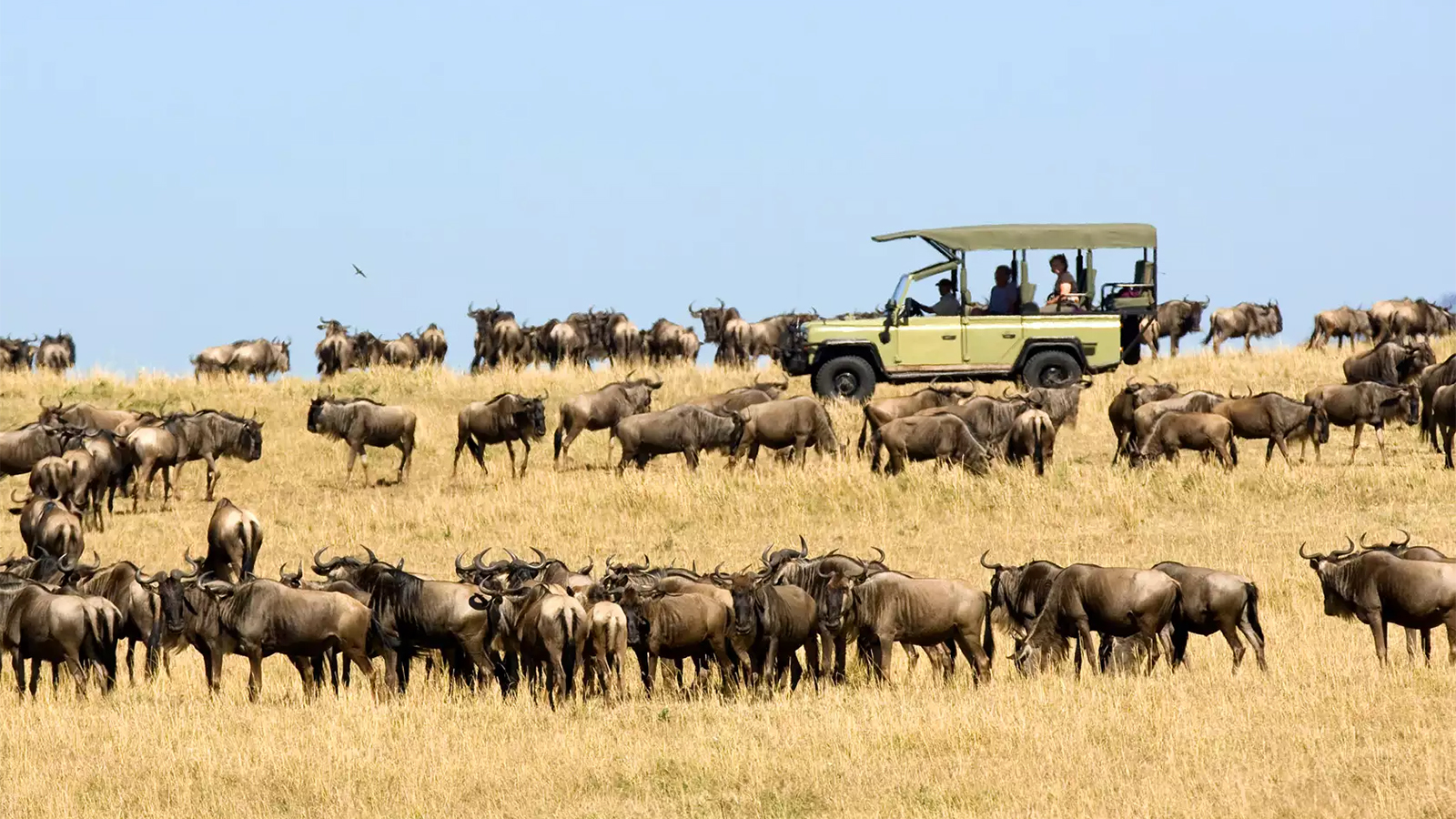
Yes, you can see the Great Migration year-round, as it is a continuous movement of herds, not a single event. While July–October is peak season for Mara River crossings, you can witness distinct phases at other times, including calving season (January–March) and the return journey (November–December).
The Great Migration is a living, breathing cycle that never truly stops. While the dramatic river crossings of the dry season capture the headlines, the "quiet" months offer some of the most profound and intimate wildlife experiences on the planet.
10-days-africa-big-five-kenya-tanzania-safari-and-wildebeest-migration
9-days-best-kenya-and-tanzania-safari-muti-country-combo
8-day-best-kenya-tanzania-safari-vacation
8-days-samburu-special-five-ol-pejeta-and-masai-mara-safari-tour
4-days-masai-mara-and-lake-nakuru-kenya-safari-tour-package
3-days-luxury-masai-mara-kenya-honeymoon-safari-vacation
January – March: The Miracle of the Calving Season
During these months, the Great Migration settles into the short-grass plains of the Southern Serengeti and the Ndutu region. This is the beginning of the cycle—a period of abundance and high-stakes drama. The landscape is a vibrant green, carpeted with nutrient-rich grass that provides the perfect nursery for the herds.
The sheer scale of life here is staggering. Over an approximately three-week window in February, a synchronized birthing event takes place where roughly 500,000 wildebeest calves are born—that is nearly 8,000 new lives every single day. For a traveler, this is a scene of immense tenderness. You’ll see wobbly-legged calves standing within minutes of birth, a necessary survival skill in a land where the air is thick with the scent of opportunity.
Because there is so much "easy" prey, predator activity reaches a fever pitch. This is arguably the best time in Africa to witness a hunt. Lions, cheetahs, and hyenas are constantly on the move, prowling the fringes of the massive nurseries. The Ndutu region, with its alkaline lakes and acacia woodland, becomes a theater of raw survival. It is an emotional rollercoaster; one moment you are captivated by a calf’s first steps, and the next, you are witnessing the calculated precision of a cheetah in full sprint. For photographers, the combination of neon-green grass, dramatic thunderstorms on the horizon, and high-intensity action makes this an unbeatable window.
April – May: The Emerald Solitude
As the rains intensify, the herds begin to drift north and west toward the Central Serengeti (Seronera) and the Western Corridor. This is often referred to as the "Green Season," and for the savvy traveler, it is the Serengeti’s best-kept secret. While some mobile camps close due to the heavy rains, the permanent lodges offer a sense of exclusivity and peace that is impossible to find during the peak season.
The landscape undergoes a radical transformation. The dust of the savannah is replaced by lush, waist-high grasses and wildflowers. The air is remarkably clear, washed clean by the afternoon downpours, making the colors of the African bush "pop" with incredible saturation. This is a dream for landscape photographers and birdwatchers, as migratory birds are in full breeding plumage.
The migration at this time is moving in long, undulating columns known as "lines." Because there are fewer safari vehicles on the road, you often feel as though you have the entire Serengeti to yourself. The herds are relaxed, grazing their way through the central valleys. While the "long rains" can make some tracks muddy, the reward is a private viewing of the greatest show on earth. You aren't just watching the migration; you are experiencing the Serengeti in its most fertile, pristine, and quiet state—a time of "emerald solitude" where the only sound is the low grunt of the wildebeest and the rain hitting the canvas of your tent.
June: The Transition and the Grumeti
June marks the end of the rains and the beginning of the "marching" season. The herds gather momentum as they move into the Western Corridor, following the path of the Grumeti River. This is a pivotal transition month; the grass begins to yellow, the ground hardens, and the atmosphere becomes charged with a sense of purpose.
The highlight of June is the Grumeti River crossing. While it doesn't have the sheer vertical drops of the Mara River, it offers its own brand of terror. The Grumeti is home to some of the largest Nile crocodiles in Africa—ancient, prehistoric giants that have waited all year for this specific moment. Watching a column of wildebeest nervously approach the water’s edge is a masterclass in tension.
June is also a fantastic time for those who want to see the "Rutting Season." The wildebeest bulls are in a frenzy of competition, defending small territories and battling rivals for the right to mate. It is a noisy, dusty, and energetic time. The weather is also near-perfect—mild days and cool nights—providing a comfortable climate for long game drives. Because June sits just before the July rush, you get the benefit of peak-season wildlife activity without the peak-season crowds. It is the bridge between the quiet green months and the frantic energy of the dry season, offering a balanced, high-action safari experience.
November – December: The homeward Journey
After the rains begin in the south, the herds sense the change in the atmosphere and begin their rapid trek back from Kenya’s Maasai Mara into the Northern and Eastern Serengeti. This is the "short rains" period, and the migration is characterized by a sense of urgency. The animals are following the scent of fresh rain, eager to reach the southern plains for the next calving cycle.
Unlike the massive, concentrated mega-herds of the dry season, the migration in November and December is often spread out in smaller, fast-moving groups. This "fragmented" migration means that wildlife can be found in unexpected pockets across the eastern reaches of the park. It is a fantastic time for "out-of-the-car" experiences, such as walking safaris in the private concessions bordering the Serengeti, where you can feel the vibration of thousands of hooves through the soles of your boots.
By December, the herds are typically arriving back in the Seronera and Southern regions, just in time for the festive season. The landscape is refreshing itself, turning green once more. For travelers, this is a time of celebration and renewal. The dust has settled, the temperatures are rising, and the cycle is preparing to reset. It is a poignant time to be on safari; as the year ends, you are witnessing the preparation for new life. The sunsets are particularly spectacular during the short rains, with massive clouds catching the light in shades of bruised purple and burning gold, providing a dramatic backdrop to the returning herds.
The Great Migration is a perpetual loop, a masterpiece of survival that transforms the landscapes of East Africa with every passing month. To see it is to understand the geography of the Serengeti-Mara ecosystem through the eyes of the herds.
Location Breakdown by Season
December – March: The Southern Serengeti (Tanzania)
As the year draws to a close, the vast, short-grass plains of the Southern Serengeti and the Ndutu region become the center of the natural world. This is the time of the "Short Rains," which act as a magical elixir, turning the sun-scorched earth into a lush, emerald carpet. The soil here is uniquely rich in volcanic ash, providing the calcium and minerals necessary for pregnant wildebeest and their nursing young.
This season is defined by the Calving. In a spectacular display of synchronized birth, hundreds of thousands of calves are born within a tiny window, creating a landscape teeming with new life. It is an era of plenty but also of great peril. The open plains offer little cover, making this a prime theater for Africa’s big cats. You will see cheetahs using the slight elevation of termite mounds to scan for wobbly-legged prey, and lions lounging in the shade of acacia trees, their bellies full. For the traveler, this is a time of immense emotional resonance—a place where the fragility of life and the brutality of nature exist in a perfect, sun-drenched balance.
April – May: Central & Western Serengeti (Tanzania)
When the "Long Rains" arrive in April, the southern plains begin to dry, and the herds respond to a primal hum, moving northwest toward the Central Serengeti (Seronera) and the Western Corridor. This is the most transformative time for the landscape; the Serengeti becomes an endless sea of tall, waving green grass.
The migration at this stage is less about a single mass and more about long, flowing columns—sometimes miles long—winding through the valleys. The central region, with its permanent water sources and rocky outcroppings known as kopjes, provides a dramatic backdrop. Because the rains make the ground soft and the vegetation thick, many travelers shy away, but those who venture here find a "Secret Serengeti." It is a time of Emerald Solitude, where you can sit in silence with thousands of animals without another vehicle in sight. The air is crisp, the dust is gone, and the predator-prey interactions around the Seronera River remain intense and frequent, framed by the most spectacular thunderstorms and sunsets you will ever witness.
June – July: The Western & Northern Serengeti (Tanzania)
As the rains subside and the grass turns to gold, the migration gathers momentum, pushing into the Western Corridor and then soaring toward the Northern Serengeti. This is the season of the "March," where the herds face their first major test: the Grumeti River.
In June, the herds congregate along the banks of the Grumeti, where the water is thick with some of the largest crocodiles on earth. While the crossings here are often smaller than the famous Mara crossings to come, they are no less intense. By July, the vanguard of the migration reaches the northern reaches of the park, a land of rolling hills and woodland. The tension begins to build as the animals approach the Mara River. This is the start of the "high drama" season. The weather is dry and cooling, the tracks are easier to navigate, and the anticipation is palpable. You are witnessing the gathering of a million-strong army, prepared to risk everything for the greener pastures that lie just across the water.
August – October: Masai Mara (Kenya) & Northern Serengeti
This is the "Crescendo" of the Great Migration. The herds are now concentrated in the Northern Serengeti and across the border in Kenya’s Masai Mara. This is the season of the world-famous River Crossings. The Mara River becomes a site of chaotic, breathtaking bravery as thousands of wildebeest and zebras plunge into the current, dodging snapping jaws and steep embankments.
During these months, the Masai Mara becomes a vibrant hub of activity. Because the Mara is smaller and more compact than the Serengeti, the density of wildlife is staggering. You can see the "Big Five" and the migration all in a single afternoon. The weather is perfect—clear blue skies and golden light—making it the quintessential African safari experience. While the river crossings are the main event, the plains themselves are alive with the sounds of a million hooves and the constant vigil of predators. By October, as the grass in the Mara is grazed down to the roots, the herds begin to look south again, waiting for the first scent of rain to draw them back to Tanzania, completing the circle once more.
The Southern Nursery: January to March
If you visit the Southern Serengeti and Ndutu between January and March, you are witnessing the world’s most profound celebration of life. This is the calving season, a time when the short-grass plains are carpeted in green. The air is filled with the bleats of thousands of newborns; roughly 8,000 wildebeest are born every single day. It is an incredible sight to see a calf stand and run within minutes of entering the world. However, this abundance of life brings a shadow: predator activity. Lions, cheetahs, and hyenas are at their most active, taking advantage of the vulnerability of the nurseries. It is a raw, emotional, and high-octane experience that defines the start of the migration's loop.
The Southward Shift: November
By November, the "short rains" have usually begun to fall in the south, sending a silent signal to the herds in Kenya. They leave the Masai Mara and begin a rapid, determined march back into the Serengeti. This month is a transition period where the herds are often spread out in long, thin lines, moving through the Eastern Serengeti. It is a time of renewal; the dust of the dry season is washed away, and the landscape begins to glow with new grass. Because the animals are moving quickly, the sightings are dynamic and ever-changing. You get the sense of a great army on the move, driven by an ancient instinct to return to their birthing grounds.
The Hidden Crossings: June
June is a connoisseur’s month for the migration. As the herds push out of the central plains, they enter the Western Corridor. This is where the Grumeti River stands as a formidable barrier. While the Mara River crossings get all the fame, June offers the chance to see dramatic water crossings at the Grumeti. These crossings are often more intimate, with fewer vehicles surrounding the banks. The Grumeti is home to colossal Nile crocodiles, and the tension of the herds as they gather on the banks is palpable. It is a time of golden light and thinning grass, offering excellent visibility for those who want drama without the crowds.
The Grumeti Gamble: Witnessing Crossings in June
Yes, the Grumeti River in the Western Serengeti is the stage for June’s most harrowing scenes. Unlike the sheer cliffs of the Mara, the Grumeti is often a series of pools and channels, but the danger is just as real. The crocodiles here have waited a full year for this protein-rich windfall. Watching a silver-gray line of wildebeest suddenly break into a frantic splash across the water is a heart-pounding experience. June allows you to witness this life-and-death struggle in a way that feels more like a private expedition than a tourist event, as the "Western Corridor" remains one of the Serengeti's more exclusive corners.
The Emerald Transition: April and May
April and May are the heart of the "Green Season." During these months, the "long rains" transform the Serengeti into a lush, tropical paradise. The herds move through the Central Serengeti (Seronera) and toward the West. While it is the rainy season, the rain usually comes in short, dramatic afternoon bursts, leaving the rest of the day clear and crisp. The advantage here is the emerald scenery—the grass is tall, the flowers are in bloom, and the photography is unmatched. With very few other tourists around, you have the luxury of spending hours with the herds in total silence, watching them graze through a landscape that looks like the Garden of Eden.
The Return of the Cycle: December
In December, the migration comes full circle. Driven by the rains, the herds arrive back in the Ndutu and Southern Serengeti area. This is a time of high anticipation. The wildebeest are fat and healthy after months of grazing in the north, and the females are heavily pregnant. By late December, the plains are teeming once more, and the first few calves might even begin to appear. It is a festive time to be on safari; the dust has settled, the air is fresh, and there is a palpable sense that the cycle is about to reset. The holiday season in the southern plains offers a beautiful mix of lush landscapes and high concentrations of wildlife.
The Off-Peak Advantage
Choosing to visit outside the July–October window is perhaps the smartest way to experience the migration. The most obvious advantage is the lack of crowds; you can watch a hunt or a river crossing without thirty other vehicles in your line of sight. Furthermore, costs are often lower, with many luxury lodges offering "Green Season" rates. Beyond the logistics, the landscapes are more diverse—from the neon-green plains of the wet season to the flowering acacias of the calving season. You get to see the "other side" of the migration: the quiet moments of grazing, the tenderness of birth, and the raw power of the predators in a more private setting.
The Early Vanguard: June in the Mara
While the bulk of the migration is still in the Western or Northern Serengeti in June, it is possible to see a "vanguard" of early arrivals in the Masai Mara. These are usually the "scouts"—thousands of zebras and the most energetic wildebeest who have pushed ahead of the main mass. While you won't see the million-strong "super-herds" yet, the Mara is still incredibly vibrant. These early arrivals often have the fresh, ungrazed grass of the Mara all to themselves, providing a peaceful and unique viewing experience before the frantic energy and larger crowds of July take hold.
The Miracle of Calving: January to March
The "calving season" is a spectacle of sheer numbers. Between January and March, the southern plains become the most densely populated wildlife area on earth. Witnessing the birth of half a million calves is a life-affirming experience. The sheer vulnerability of the young attracts every predator in the region, leading to some of the most intense big-cat sightings in Africa. You’ll see pride after pride of lions, often with their own cubs, as they feast on the abundance. It is a period of high drama, where the cycle of life and death is visible in every direction you look across the horizon.
The Great Divide: September
A common misconception is that the migration "moves to Kenya" in September. In reality, the herds are spread across the border. While the Masai Mara is teeming, large portions of the herds remain in the Northern Serengeti (Tanzania). The animals move back and forth across the Mara River based on local rainfall, meaning you can witness river crossings from both the Kenyan and Tanzanian sides. This "trans-border" phase offers incredible flexibility; you can choose the vastness of the Serengeti or the high density of the Mara, knowing that the greatest concentration of wildlife on earth is currently swirling all around you.
The Perpetual Motion: Do they stop?
One of the most beautiful aspects of the Great Migration is that it never stops. It is a 360-degree, year-round journey. While we use names like "calving season" or "crossing season" to describe peak events, the 1.5 million wildebeest, zebras, and gazelles are in constant motion. They are biological machines programmed to follow the rain and the grass. Even when they seem to be "settled" in the south for calving, they are constantly shifting to find the freshest shoots. This means that no matter when you visit East Africa, the migration is happening—you just have to know which part of the map to look at.
The Photographer’s Dream: The Green Season
The "Green Season" of April and May is the preferred time for professional photographers. Why? Because the light and the colors are unparalleled. The dust that usually hangs in the air during the dry season is gone, resulting in incredibly "clean" air and sharp, vibrant photos. The dramatic storm clouds provide a moody, epic backdrop that a flat blue sky simply cannot match. Additionally, the herds are often moving through the Central Serengeti, where the granite kopjes (rock outcroppings) provide stunning focal points for compositions. It is a time of "drama in the sky and life on the ground," without another soul in sight.
The Second Act: November River Crossings
While July to September is the famous time for river crossings, the southward journey in November can offer a "Second Act." As the herds leave the Mara to head back to the Serengeti, they must cross the Mara River once more. These crossings are often less predictable because the herds are moving faster and are more fragmented, but they are just as spectacular. Seeing a crossing in November feels like a lucky bonus—a final burst of drama before the herds settle into the plains for the winter. It’s a reminder that the migration doesn't follow a human calendar; it follows the clouds.
The Gathering: Early May in Seronera
In early May, the Seronera Valley in the Central Serengeti becomes a massive staging ground. As the rains begin to taper off, the herds congregate in this valley before making their move toward the Western Corridor. This is a fantastic time to see the migration in its most concentrated form. The valley's permanent water sources ensure that even if the rains are light, the wildlife stays put. You can find yourself surrounded by a sea of wildebeest that stretches from one horizon to the other, with the Seronera’s famous leopard and lion populations never far behind.
The Master Architect: Weather and Flexibility
The most important thing to understand about the "off-peak" migration is that the weather is the architect. Rainfall dictates every move the herds make. In drier years, they may move faster; in wetter years, they may linger. This means that flexibility is the key to a successful safari outside the peak months. Working with a guide who understands the subtle shifts in wind and grass can lead you to the heart of the action, often miles away from the established tracks. It is a more "active" form of safari, where you aren't just following a map, but following the rhythm of the wild itself.
Booking Great migration with us Roads of Adventure safaris
Booking a Great Migration safari with Roads of Adventure Safaris is best done 6 to 12 months in advance, particularly for peak season (June–October), to secure premier lodges and guides for the Tanzania/Kenya wildebeest herds. They offer tailored, high-end itineraries focusing on exclusive camps and private wildlife viewing experiences in the Serengeti and Mara
