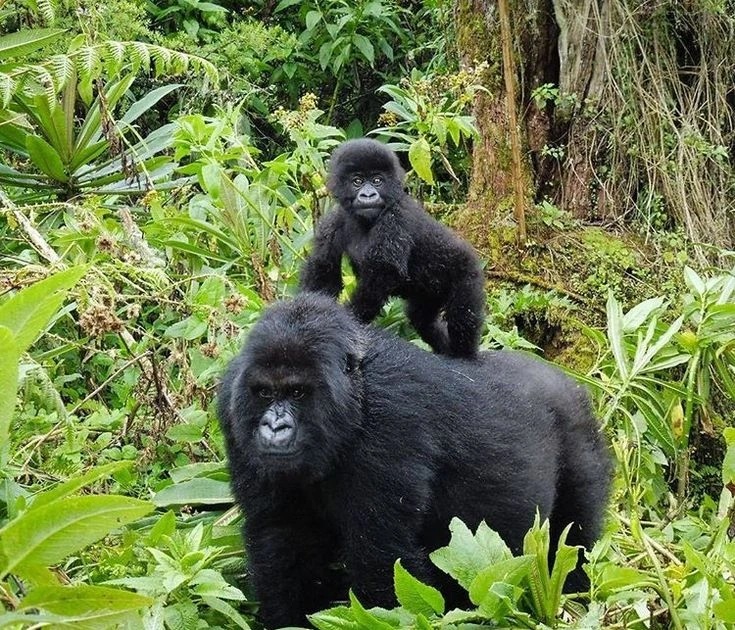
Yes, you can absolutely see mountain gorillas on a 2-day Uganda trekking tour starting from Kigali, Rwanda. This short, intensive trip works because southern Uganda's Bwindi Impenetrable National Park or Mgahinga Gorilla National Park are located only a 4-5 hour drive from Kigali via the Cyanika or Katuna borders.
2-days-best-gorilla-trekking-safari-tour-via-kigali-to-bwindi-impenetrable-forest-park
The Route: Kigali to Uganda’s Gorilla Highlands
The logistics of a 2-day Uganda gorilla trek starting from Kigali are designed for maximum efficiency, capitalizing on the geographical proximity between Rwanda’s capital and southwestern Uganda. Day 1 typically begins with an early morning pickup from Kigali International Airport or a local hotel. The journey involves a scenic 4-to-5-hour drive, crossing the border at either Cyanika or Katuna. This route is significantly shorter than the 8-to-10-hour drive required to reach Bwindi from Uganda’s own capital, Kampala. After clearing customs, you wind through the "Little Switzerland of Africa," characterized by terraced hills and mist-covered volcanoes, arriving at your lodge near Bwindi Impenetrable National Park or Mgahinga in time for lunch and a relaxing evening.
Day 2 is the climax of the journey. Following a pre-dawn breakfast, you head to the park headquarters for a briefing on gorilla etiquette. The trek itself can last anywhere from two to six hours, depending on the movement of the habituated gorilla family you are assigned. After the life-changing hour spent in the presence of the mountain gorillas, you return to the park base to receive your trekking certificate. To complete the circuit, you immediately begin the drive back to Kigali. Most travelers arrive back in Rwanda by late evening (around 7:00 PM or 8:00 PM), making it possible to catch a late-night flight or settle in for a final night in Kigali. This "cross-border" strategy is widely considered the most time-effective way to experience the world’s most iconic primate encounter.
Cost Savings: The Uganda vs. Rwanda Advantage
One of the primary drivers for choosing a Uganda gorilla trek via Kigali is the substantial cost savings regarding permit fees. As of current regulations, a single gorilla trekking permit in Rwanda costs $1,500, positioned as a high-end, luxury conservation model. In contrast, a gorilla permit in Uganda costs $800 for foreign non-residents. For a solo traveler, this is a direct saving of $700, and for couples or families, the savings can amount to thousands of dollars. These funds can then be redirected toward higher-quality luxury lodging, extended safari days, or other "bucket list" activities like chimpanzee tracking or local community tours.
Beyond the permit itself, the overall cost of a 2-day safari is often lower in Uganda due to a wider variety of accommodation options. While Rwanda focuses heavily on ultra-luxury lodges, the southern sectors of Bwindi offer everything from high-end boutique eco-lodges to high-quality mid-range camps. Additionally, by starting in Kigali, you save on the internal flight or long-haul vehicle costs associated with traveling from Entebbe. This allows travelers to enjoy a "premium" experience—including private 4x4 transport and professional guiding—at a total package price that is often still lower than the cost of a Rwanda permit alone. It represents the best value-for-money proposition in the entire East African primate tourism sector.
Requirements: Timing, Flights, and Logistics
Successfully executing a 2-day itinerary requires precise timing and adherence to specific logistical requirements. The most critical factor is your flight arrival and departure schedule. To make Day 1 viable, you must land at Kigali International Airport early in the morning (ideally before 9:00 AM). This ensures enough time to cross the border and reach the lodge before nightfall. If you arrive later, you may need to add a "Day 0" in Kigali to start fresh the next morning. For the return on Day 2, it is highly recommended to book a departure flight that leaves Kigali after 10:00 PM, or better yet, the following morning. This accounts for the time spent trekking and potential delays at the border.
Another essential requirement is the East African Tourist Visa. This $100 multi-entry visa allows you to travel seamlessly between Rwanda and Uganda. It is far more efficient and cost-effective than buying separate single-entry visas for both countries. Furthermore, travelers must be in good physical health; while guides do their best to match groups with gorilla families based on fitness levels, the terrain in Bwindi and Mgahinga is steep and often muddy. Ensuring you have the correct gear—such as waterproof hiking boots, long trousers, and gardening gloves—is vital. Finally, booking your permit at least 3 to 6 months in advance is mandatory, as Uganda’s southern sectors are highly sought after by those utilizing the Kigali route.
Best Parks: Southern Bwindi and Mgahinga
When starting from Kigali, the choice of park is dictated by drive times and accessibility. The "Best Parks" for this route are Southern Bwindi (the Rushaga and Nkuringo sectors) and Mgahinga Gorilla National Park. Mgahinga is the closest option, located just across the Cyanika border from Ruhengeri. It is home to the Nyakagezi gorilla group and offers a unique experience where "Gold meets Silver"—the chance to see both Mountain Gorillas and the rare Golden Monkeys in the same park. The volcanic backdrop of the Virunga Massif makes Mgahinga an exceptionally photogenic destination for those coming from the Rwandan side.
The Rushaga and Nkuringo sectors of Bwindi are equally accessible via the southern border crossings and are favored for having the highest number of habituated gorilla families. Rushaga, in particular, is famous for its diverse terrain and is the only location where the "Gorilla Habituation Experience" (a 4-hour encounter) is offered. Nkuringo is renowned for its world-class views, situated on a high ridge looking out toward the jagged peaks of the volcanoes in the Congo. By focusing on these southern gates, travelers minimize their time in a vehicle and maximize their time in the wild. These sectors provide a seamless transition from the rolling hills of Rwanda into the dense, ancient rainforests of Uganda, ensuring the 2-day journey feels less like a commute and more like an immersive expedition.
Is it truly possible to finish a Uganda gorilla trek in only two days from Kigali?
Yes, it is not only possible but has become the preferred strategy for time-conscious travelers. The primary reason is the geographical advantage of Kigali International Airport. While Entebbe International Airport is located approximately 500 kilometers from the gorilla highlands—requiring a grueling 8-to-10-hour drive—Kigali is a mere 170 kilometers away. This proximity allows for a "transit day" on Day 1 that lasts only 4 to 5 hours, leaving you refreshed for the trek on Day 2.
The "2-day" model works as a precise circuit: Day 1 involves an afternoon arrival at a lodge in the southern sectors of Bwindi or Mgahinga, and Day 2 features the early morning trek followed by an immediate drive back to Kigali. This efficiency eliminates the need for domestic flights or long, exhausting road transfers across the entirety of Uganda. For business travelers or those on a tight East African itinerary, this cross-border shortcut provides a high-impact wildlife encounter without the logistical strain of a week-long safari.
How long is the drive from Kigali airport to the gorilla parks in southwestern Uganda?
The drive from Kigali to the gorilla-tracking trailheads in southwestern Uganda typically takes between 4 and 5 hours, depending on the specific sector of the park you are visiting and the speed of border formalities. There are two primary border crossings: Cyanika, which is ideal for reaching Mgahinga and the Rushaga sector of Bwindi, and Katuna, which is more direct for the Nkuringo and Ruhija sectors. Both routes offer some of the most spectacular scenery in East Africa.
The journey is often called the "Drive of a Thousand Hills." Upon leaving the paved, orderly streets of Kigali, you ascend into the volcanic highlands. The roads on the Rwandan side are generally excellent, while the final stretch in Uganda involves more winding, unpaved roads as you approach the rainforest. While the distance is short, the terrain is mountainous, so the average speed is lower than on a flat highway. However, the constant view of terraced hillsides, local markets, and the towering Virunga volcanoes ensures that the five hours pass quickly, making it a scenic introduction to the region rather than a chore.
Will I need a visa for both Rwanda and Uganda for this two-day tour?
Yes, because you are crossing an international border, you must have valid travel authorization for both countries. The most efficient and cost-effective solution is the East Africa Tourist Visa (EATV). This specialized visa costs $100 and allows for multiple entries into Rwanda, Uganda, and Kenya for up to 90 days. If you apply for this visa through the country you enter first (in this case, Rwanda), it covers your entire 2-day circuit, saving you the hassle of purchasing separate visas at the border.
If you do not opt for the EATV, you would technically need a Rwanda transit or tourist visa and a Uganda ordinary tourist visa. However, the EATV is specifically designed for the Kigali-Uganda gorilla route. It is important to apply for this online in advance through the Rwanda Directorate General of Immigration and Emigration. Having this document ready ensures a smooth transition at the Cyanika or Katuna borders, preventing delays that could eat into your precious 2-day schedule. Additionally, ensure your passport has at least six months of validity and at least two blank pages for the necessary entry and exit stamps.
Are the Uganda gorilla trekking permits cheaper than the gorilla permits offered in Rwanda?
There is a significant price disparity that makes the 2-day Uganda trek via Kigali highly attractive. Currently, a Rwanda gorilla permit costs $1,500 per person, reflecting their "high-end, low-volume" tourism model. In contrast, a Uganda gorilla permit costs $800 for foreign non-residents. This means that by simply crossing the border, you save $700 per person, which is often enough to cover the entire cost of your transport, lodging, and meals for the two days.
Despite the lower price, the experience in Uganda is by no means "inferior." In fact, Uganda hosts more than half of the world's remaining mountain gorilla population and has more habituated families available for tracking. The $800 fee goes directly toward the conservation of the species, ranger salaries, and community development projects surrounding the parks. For many travelers, the Uganda permit offers a more "raw" and authentic forest experience at a price point that is accessible to a wider range of budgets, while still providing the same life-changing one-hour encounter with these gentle giants.
What is the best time of year to undertake a two-day gorilla trip to Uganda?
While gorilla trekking is a year-round activity, the dry seasons—from June to September and December to February—are considered the best times for a 2-day trip. During these months, the forest trails are less muddy, and the steep slopes of Bwindi and Mgahinga are easier to navigate. Additionally, there is less chance of heavy downpours disrupting your travel schedule between Kigali and the park, which is crucial when you only have a 48-hour window.
However, the "wet seasons" (March to May and October to November) have their own advantages. Gorillas often stay at lower altitudes during the rains because food is more abundant there, which can actually result in shorter treks. Furthermore, the parks are less crowded, and some lodges offer discounted rates. If you choose to trek during the rains, you must be prepared for slippery conditions and carry high-quality waterproof gear. Regardless of the month, the gorillas are always there; they do not migrate, so your chance of a successful sighting remains exceptionally high (over 98%) regardless of the season you choose.
Can I land in Kigali, drive to Uganda, and trek on the same day?
While it might look possible on a map, landing and trekking on the same day is not recommended and is rarely offered by professional tour operators. Gorilla trekking briefings start promptly at 8:00 AM at the park headquarters. To make this, you would need to have crossed the border and cleared customs in the middle of the night, which is logistically difficult and leaves no room for delays. Furthermore, trekking is a physically demanding activity; arriving at the trailhead exhausted from a flight and a 4-hour drive significantly diminishes the enjoyment of the experience.
The standard 2-day model is built for success and safety: Day 1 is your travel and "acclimatization" day, where you arrive at your lodge, enjoy a briefing from your guide, and get a good night's sleep. Day 2 is the trek day, where you are fresh and ready for the forest. This schedule also provides a "buffer" in case of flight delays or border queues. Attempting to squeeze the drive and the trek into a single day puts your permit—and your physical well-being—at unnecessary risk. A gorilla trek is a once-in-a-lifetime event; it deserves the 48-hour window to ensure you can appreciate every moment of the encounter.
What kind of vehicle is necessary for the journey from Kigali to the Uganda border?
A 4x4 safari vehicle, such as a Toyota Land Cruiser or a customized Safari Van, is essential for this journey. While the roads from Kigali to the border are well-paved, the terrain in southwestern Uganda is rugged and mountainous. As you move closer to Bwindi or Mgahinga, you will encounter steep gradients, sharp switchbacks, and unpaved "African dirt roads" that can become very slippery, especially after a tropical rain shower.
A vehicle with high ground clearance and a 4WD system ensures that you can reach your lodge and the trekking trailhead regardless of the weather conditions. Furthermore, these vehicles are designed for comfort over long distances, featuring pop-up roofs for better views and reinforced suspension to handle the "African massage" provided by uneven roads. Using a standard 2WD sedan is not only risky in terms of getting stuck but can also lead to mechanical failures on the steep inclines of the gorilla highlands. When booking your 2-day tour, always confirm that a professional 4x4 vehicle is included in the package to guarantee a safe and timely transit.
Is the hiking in Bwindi Impenetrable National Park more difficult than in Rwanda's Volcanoes Park?
Generally, the terrain in Bwindi Impenetrable National Park is considered more challenging than in Rwanda’s Volcanoes National Park. Bwindi’s landscape consists of a series of steep ridges and deep valleys covered in thick, tangled undergrowth (hence the name "Impenetrable"). In contrast, Volcanoes National Park is characterized by more open, bamboo-covered slopes that are often easier to walk through. However, Bwindi’s altitude is slightly lower, which can make breathing easier for those not accustomed to high-elevation hiking.
It is important to remember that park authorities at Bwindi work hard to accommodate different fitness levels. During the morning briefing, trekkers are divided into groups of eight and assigned a gorilla family. If you are concerned about your fitness, you can inform your guide, and they will request a "closer" group that requires less strenuous hiking. Regardless of which park you choose, the hike involves uneven ground, thick vegetation, and potential mud. While Bwindi may require a bit more "scrambling" through the bush, the sense of adventure and the reward of finding the gorillas in such a wild, ancient environment is part of what makes the experience so special.
What happens if I fail to see the mountain gorillas during my 2-day, one-hour trek?
The success rate for seeing mountain gorillas in Uganda is exceptionally high, typically exceeding 98%. This is because "trackers" head into the forest at dawn—well before the tourists—to locate the gorillas' nesting sites from the previous night and follow their trail. By the time you start your hike, the rangers usually have a very good idea of where the family is located. However, they are wild animals, and on very rare occasions, a family may move into an inaccessible area or flee due to an interaction with a wild group.
If you truly fail to see the gorillas, the permit is technically non-refundable according to the Uganda Wildlife Authority (UWA) guidelines. However, in such rare cases, the park authorities usually offer a second chance to trek the following day at no extra permit cost, provided there is availability. On a 2-day Kigali itinerary, this would require you to extend your stay by another night. If you cannot stay, some partial "goodwill" refunds are occasionally negotiated through tour operators, but these are not guaranteed. The most important thing to remember is that the "failure" to see them is almost unheard of; the rangers are masters of their craft and will do everything in their power to ensure you have your one-hour encounter.
Do I need to book my Uganda gorilla permit through a tour operator, or can I do it alone?
While it is technically possible to book a permit directly through the Uganda Wildlife Authority, it is strongly advised to use a reputable local tour operator. Managing the logistics of a 2-day cross-border trip—including border crossings, transport, permit pickup, and lodge coordination—is complex. A tour operator has "boots on the ground" and can monitor permit availability in real-time, which is crucial because permits for the southern sectors (closest to Kigali) sell out months in advance.
A local operator also provides a professional driver-guide who is experienced in the Kigali-Uganda route. They handle the border paperwork, know the best spots for lunch, and understand the nuances of the different trekking sectors. Most importantly, they act as your advocate if things go wrong (such as vehicle issues or permit discrepancies). For a 2-day trip where every hour counts, the peace of mind and logistical efficiency provided by a professional operator are well worth the service fee. They ensure that your only job is to show up, enjoy the scenery, and focus on the incredible experience of meeting the gorillas.
How much walking or trekking is required to find the gorillas on the day of the trek?
The amount of trekking required is entirely unpredictable and can vary from 30 minutes to 6 hours or more. Mountain gorillas are constantly on the move in search of food, and their daily range depends on the season and the size of the family. Some days, they may be found just a short walk from the park boundary; other days, they may have climbed to the top of a distant ridge.
The hike involves navigating through thick forest, crossing small streams, and climbing steep, muddy slopes. You are not walking on a manicured trail; you are following the "paths" cut by rangers using machetes. Because of this unpredictability, you should prepare for a full day in the forest. Even if you find the gorillas quickly, the "face-to-face" hour is followed by a hike back out. The physical effort is part of the pilgrimage; the "struggle" to find them makes the eventual moment of eye contact with a 400-pound silverback even more profound. As long as you maintain a steady pace and use a walking stick, most people of average fitness find the trek manageable and deeply rewarding.
Is it mandatory to hire a porter for my 2-day gorilla trekking safari in Uganda?
Hiring a porter is not mandatory, but it is highly recommended for every trekker, regardless of age or fitness level. Porters are local community members who carry your backpack and provide a "helping hand" during the most difficult parts of the hike. They are experts at navigating the slippery terrain and can literally pull or push you up a steep embankment when your legs start to tire.
Hiring a porter is also one of the most direct ways to support the local economy. For a fee of approximately $15 to $20 (plus an optional tip), you are providing a livelihood for a local family. Many porters are former poachers who have turned to tourism for income, meaning your hire directly contributes to the protection of the gorillas. Furthermore, having someone else carry your water, lunch, and heavy camera gear allows you to focus entirely on the hike and the photography. Most trekkers who initially decline a porter end up regretting it halfway up a mountain—do yourself and the local community a favor and hire one at the start of the trek.
What is the minimum age to participate in a 2-day mountain gorilla trekking tour in Uganda?
The strict minimum age for gorilla trekking in Uganda is 15 years old. This regulation is enforced by the Uganda Wildlife Authority and is based on several factors. First, children under 15 are more likely to carry childhood diseases (like mumps or chickenpox) to which gorillas have no immunity. Because gorillas share about 98% of our DNA, they are highly susceptible to human illnesses, and an outbreak could be devastating for a family.
Second, the trek is physically and mentally demanding. It requires the ability to remain calm and quiet in the presence of large, wild animals, and the endurance to hike for several hours in challenging terrain. While some 13 or 14-year-olds may be physically fit, the age limit is a standard safety and conservation protocol. In very rare cases, if a child is turning 15 in the month of the trek and is physically well-developed, a parent may appeal to the UWA for a special permit, but these are rarely granted. For families traveling with younger children, most lodges offer "kid-friendly" activities or child-minding services while the adults are in the forest.
Is it possible to take a quick 2-day trip to Uganda and see both gorillas and chimps?
No, attempting to see both mountain gorillas and chimpanzees in a 2-day trip from Kigali is not feasible. Both activities require a pre-trek briefing at 8:00 AM and can take a significant portion of the day. To do both, you would need at least three days: Day 1 for travel, Day 2 for gorilla trekking, and Day 3 for chimpanzee tracking (likely in the nearby Kalinzu Forest or Kyambura Gorge) before returning to Kigali.
A 2-day itinerary is a "precision strike" focused solely on the gorillas. Attempting to add chimpanzees would involve rushing through the forest, excessive driving, and a high risk of missing your flight or permit times. Both primates offer completely different experiences—gorillas are calm and stationary, while chimps are loud, active, and fast-moving. To truly appreciate both, you need the extra time to immerse yourself in their respective habitats. If you have only 48 hours, stay focused on the gorillas; they are the primary reason people visit this region, and the encounter is powerful enough to stand on its own without the need for additional activities.
What items should I definitely pack for a short 2-day gorilla trekking experience in Uganda?
Packing correctly is the difference between a comfortable adventure and a miserable one. For a 2-day trip, you should keep it light but functional. The most important item is a pair of sturdy, waterproof hiking boots with good ankle support and grip. The forest floor is uneven and often slick with mud. You should also pack long trousers and a long-sleeved shirt (earth tones like green or khaki are best) to protect your skin from stinging nettles and thorny bushes.
Other essentials include gardening gloves—which sound odd but are vital for grabbing onto vines and branches during the climb—and a high-quality waterproof rain jacket, as it can rain at any time in the rainforest. A refillable water bottle (at least 2 liters) and a packed lunch (usually provided by your lodge) are mandatory. Finally, don't forget a face mask; you will be required to wear one when you are within 10 meters of the gorillas to protect them from human respiratory droplets. A small daypack with a waterproof cover will keep all these items dry and secure while you focus on the trail ahead.
Booking gorilla trekking with us Roads of Adventure safaris
Book your gorilla trekking adventure with Roads of Adventure Safaris for tailored Uganda and Rwanda itineraries. Secure permits 6-12 months in advance, especially for peak seasons (June-September, December-February). Packages include permits ($800+), transport, and lodging. Specialized options range from 3-day treks to 18-day, multi-country adventures
