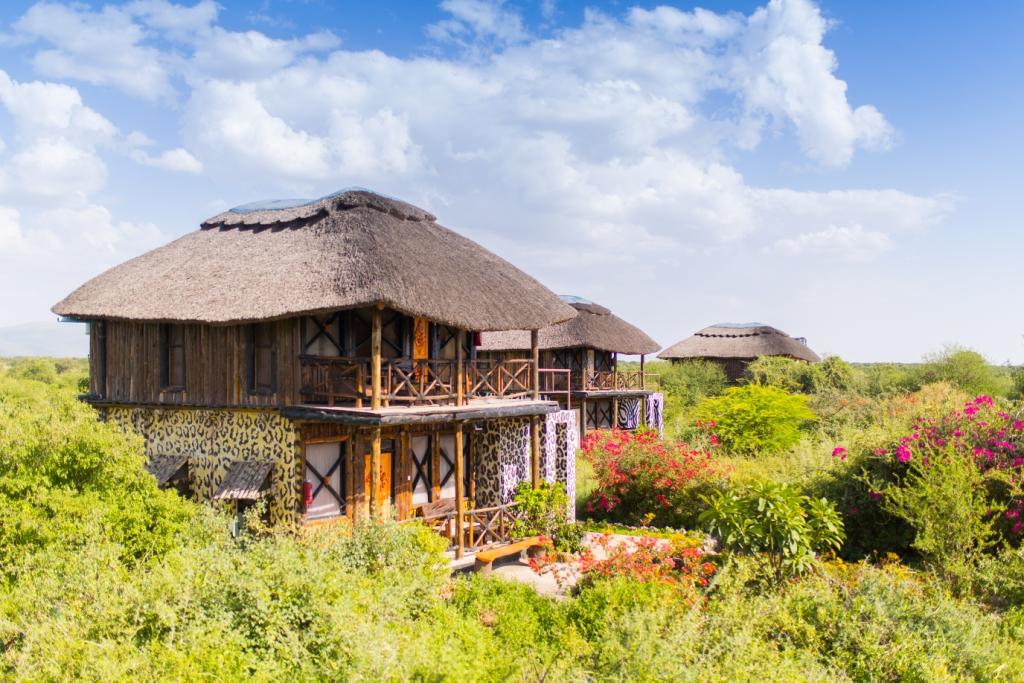
If you're planning a budget-friendly Tanzania wildlife safari at Lake Manyara National Park, your best bet for lodging is around Mto wa Mbu—a lively, colorful market village right outside the northern gate. You can kick back at Twiga Lodge & Campsite for affordable rooms, dorms, and a refreshing pool just five minutes from the entrance, or soak in breathtaking views over the lake from the A-frame tents at Panorama Safari Camp up on the Rift Valley Escarpment. For a cozy, tree-sheltered vibe, Migunga Forest Camp offers charming tented cabins in a mahogany forest, while true outdoor enthusiasts can pitch a tent at the basic TANAPA Public Campsites right inside the park for an authentic, fully immersed bush experience.
2-days-perfect-lake-manyara-and-tarangire-national-park
5-days-tanzania-safari-to-tarangire-serengeti-ngorongoro-and-lake-manyara
7-days-tanzania-wildlife-safari-africa-safari-tour-best-park-visits
1. Twiga Lodge & Campsite
Situated in the heart of Mto wa Mbu village, Twiga Lodge & Campsite is an unbeatable hub for travelers who want convenient access to a Tanzania wildlife safari without sacrificing essential comfort. Located roughly 13 kilometers—a brisk 5-minute drive—from the main northern gate of Lake Manyara National Park, this property caters to all budget levels. Guests can choose from standard rooms set in air-conditioned bungalows, basic budget dormitories, or pitch their own tents in the grassy campsite area. Rooms come equipped with functional private bathrooms, hot-water showers, ceiling fans, and essential mosquito netting.
The property features a large outdoor swimming pool—a huge benefit after a dusty, hot morning game drive—as well as a central lounge bar and an on-site restaurant serving local and international dishes. Prices for camping typically start around $15 to $20 USD per person per night (if bringing or renting basic equipment), while private bungalow rooms generally range between $50 and $90 USD per night depending on the season, making it one of the most value-packed options along the northern circuit. Its location near Mto wa Mbu allows visitors to pair early morning game drives in search of Lake Manyara's famous tree-climbing lions with afternoon cultural market tours, guided bike rides through local banana plantations, or birdwatching outings.
2. Panorama Safari Camp
Perched dramatically high on the Great Rift Valley Escarpment near Karatu, Panorama Safari Camp offers sweeping, unobstructed views across the Lake Manyara basin and surrounding wilderness. Positioned just off the main tarmac road and approximately 2.5 kilometers from Lake Manyara Airport, the camp is an ideal 10-to-15-minute drive from the park entrance gate, placing safari-goers right on the doorstep of early morning game viewing.
Panorama stands out for its unique, budget-friendly accommodation types, including custom-built African "igloo" brick huts, permanently pitched A-frame tents, and traditional self-camping grounds. The igloos and budget tents come furnished with twin or double beds, clean linen, and access to shared, well-maintained shower and toilet blocks. Rates for a night in an igloo hut or permanent tent range between $35 and $60 USD including a full vegetarian-style breakfast, while basic pitch camping starts at approximately $15 USD per night. The camp features a panoramic lookout terrace, a fully stocked bar, and an open-air restaurant serving hearty meals. Guests can often enjoy live cultural dance performances or traditional storytelling around the evening campfire, making it a social, lively choice for group travelers and backpackers alike.
3. Migunga Forest Camp
Nestled inside a private 35-acre acacia and mahogany forest concession on the boundary of the national park, Migunga Forest Camp blends budget affordability with a genuine wilderness vibe. Situated only a 5-minute drive from the park’s main gate and roughly 120 kilometers (a 2-hour drive) from Arusha, this property provides immediate access to game drives while maintaining an exclusive, secluded atmosphere.
The camp features 19 to 21 semi-luxury permanent tented cabins mounted on raised wooden platforms, discreetly spaced around a lush central glade to maximize guest privacy. Each tent includes framed wooden beds, mosquito nets, electric lighting, power outlets, a private en-suite bathroom with hot running water, and a shaded outdoor veranda. Nightly rates generally range from $80 to $140 USD per person (often inclusive of breakfast and dinner), serving as a sweet spot between raw public camping and costly luxury lodges. Because the forest is alive with vervet monkeys, yellow-baboons, butterflies, and over 300 bird species, guests can participate in guided nature walks, mountain bike safaris down to the lake shore, or sundowner drinks right from the property, making it an exceptional base for outdoor enthusiasts.
4. TANAPA Public Campsites
For travelers seeking total wilderness immersion on their Tanzania wildlife safari, the public campsites managed directly by the Tanzania National Parks Authority (TANAPA) inside Lake Manyara National Park are the ultimate budget choice. Situated inside the park boundary near the northern entrance gate—just minutes away from the groundwater forest and the 370-meter Treetop Canopy Walkway—these campsites put you in the middle of the natural habitat.
Official TANAPA public camping fees are fixed at $35.40 USD per non-resident adult per night (plus standard daily park conservation fees of $53 to $59 USD per person). Facilities are basic but functional, providing communal block latrines, simple hot/cold showers, shared cooking shelters for safari chefs, and outdoor fire pits for evening campfires. Staying directly inside the park eliminates early morning driving bottlenecks at the gate, allowing campers to start game viewing at first light (6:00 AM) when wildlife activity is at its peak. It is common to hear grazing hippos, distant hyena calls, or rustling elephants right outside your tent wall overnight, delivering an unforgettable, authentic bush experience that costs a fraction of the park’s high-end $500+ luxury lodges.
Where can budget travelers stay near Lake Manyara?
For budget-conscious travelers, the primary hub is Mto wa Mbu, a vibrant cultural village situated right outside the park’s northern entrance gate. Staying here gives you rapid access to early morning game drives without high lodge price tags. Popular options include Twiga Lodge & Campsite, located roughly 13 kilometers (a 5-minute drive) from the main gate, where pitch camping starts at around $15 to $20 USD per person per night and standard bungalow rooms cost $50 to $90 USD. Perched nearby on the Rift Valley Escarpment, Panorama Safari Camp offers budget A-frame tents and African "igloo" huts from $35 to $60 USD per night, including panoramic basin views. For a closer nature experience, Migunga Forest Camp sits on a 35-acre mahogany forest boundary with tented cabins averaging $80 to $140 USD per night. Finally, true outdoor adventurers can use the TANAPA Public Campsites inside the park for $35.40 USD per night (excluding mandatory park fees), providing basic latrines, shared cooking shelters, and an authentic wilderness setting.
East Africa Gorilla Safaris
How much does a Lake Manyara entry ticket cost?
Lake Manyara National Park entry fees are regulated by the Tanzania National Parks Authority (TANAPA) and charged on a 24-hour basis. For foreign non-resident adults (aged 16 and older), the conservation fee is $59 USD per person per day during peak season (including 18% VAT). For children aged 5 to 15, the cost drops to $17.70 USD per child per day, while kids under age 5 enter for free. Expatriates living in Tanzania with valid work or resident permits pay $30 USD per day, whereas East African Community (EAC) citizens pay 11,800 Tanzanian Shillings (approx. $4.50 USD). If you choose to camp or lodge inside the park boundaries rather than outside in Mto wa Mbu, an additional TANAPA concession fee of $47.80 to $61 USD per adult per night applies. Private or rented safari vehicles also incur entry fees, typically ranging from 23,600 TZS ($10 USD) for standard 4x4s to 41,300 TZS ($20 USD) per day for heavier Land Cruisers. Payments at the gate must be made via Visa, Mastercard, or official TANAPA smart cards.
What makes Lake Manyara National Park famous for wildlife?
Despite its compact size of roughly 325 square kilometers—where water covers nearly two-thirds of the total surface area during high water levels—Lake Manyara delivers an astonishingly diverse ecosystem. The park is most famous for its rare tree-climbing lions, a peculiar behavioral trait shared by only a few African lion populations. Behavioral researchers believe these lions climb ancient mahogany and acacia branches up to 3 meters off the ground to escape annoying fly swarms and catch cool breezes. Additionally, the park shelters one of Africa’s highest concentrations of baboons; mega-troops exceeding 200 olive baboons are regularly spotted along the groundwater forest track. The alkaline lake itself attracts vast flocks of flamingos, alongside over 400 distinct avian species including pelicans, yellow-billed storks, and crowned eagles. Mammal populations are equally dense, featuring over 1,800 elephants, large herds of Cape buffalo, giraffes, hippos crowding the famous Hippo Pool, and elusive leopards lurking in the dense forest canopy.
Can you do a canopy walkway at Lake Manyara?
Yes, Lake Manyara National Park hosts Tanzania’s first and longest treetop canopy walkway, located just inside the park's main northern entrance gate. This thrilling adventure features a continuous series of secure, high-suspension bridges with protective safety netting that stretches 370 meters (1,214 feet) through the evergreen groundwater forest. Suspended up to 18 meters (nearly 60 feet) off the forest floor, the walk gives visitors an extraordinary bird's-eye view of an ecosystem usually hidden from ground level. A complete guided walk takes approximately 30 to 45 minutes, with five custom viewing platforms where expert naturalists point out blue monkeys, vervet monkeys, silver-cheeked hornbills, and colorful butterflies feeding in the tree canopy. The activity costs around $30 to $50 USD per person (excluding required park entrance permits) and is suitable for anyone aged 5 and older who can manage stable, easy walking.
What are the best budget accommodation options in Mto wa Mbu?
Mto wa Mbu is renowned for its welcoming, cost-effective lodging options catered to safari travelers. Twiga Lodge & Campsite stands out as an established favorite, providing air-conditioned rooms from $60 USD, budget dorm beds for $20 USD, and dedicated tent pitches alongside a clean, full-sized swimming pool. Another excellent pick is Panorama Safari Camp, situated up on the escarpment; its unique brick "igloo" rooms cost around $40 USD per night, offering unbeatable sunrise views over Lake Manyara. If you prefer a forest setting, Migunga Forest Camp offers 21 semi-luxury canvas tents on elevated platforms surrounded by native acacia trees starting around $80 USD per night including meals. For backpackers who prefer maximum cultural exposure, Nsya Lodge & Camp offers shaded campsite pitches starting at $10 to $15 USD per night, complete with clean communal bathrooms, electrical charging stations, free Wi-Fi in common areas, and local bicycle rentals for village exploration.
Are night game drives allowed inside Lake Manyara Park?
Yes, Lake Manyara is one of the few national parks in Tanzania’s northern circuit where nocturnal game drives are permitted. Because many ecosystem inhabitants are active primarily after dusk, a night safari provides a totally different perspective than standard daytime game drives. Armed with specialized high-powered spotlights and accompanied by an official TANAPA park ranger, open-top 4x4 vehicles head out around 8:00 PM for a 2.5-hour drive through the groundwater forest and floodplains. nocturnal sightings frequently include elusive predators like leopards, genets, civets, and African wildcats, alongside nocturnal foragers like porcupines, bushbabies, pangolins, and grazing hippos out of the water. The official TANAPA permit for a night game drive costs $59 USD per adult (plus a $55 USD activity fee per person). When factoring in vehicle fees and ranger escorts, total night driver packages usually run between $110 and $140 USD per person.
How far is Lake Manyara from Arusha and Serengeti?
Lake Manyara is conveniently located along Tanzania's famous northern safari circuit, making it an ideal first stop. From Arusha—the regional safari capital—Lake Manyara is approximately 120 kilometers (75 miles) west along a smooth, fully paved tarmac highway. Driving by private 4x4 vehicle or public safari bus takes roughly 2 to 2.5 hours, making day trips from Arusha easily achievable. If you are heading northwest from Lake Manyara toward the world-famous Serengeti National Park, the travel distance to the Naabi Hill Gate entrance is roughly 200 kilometers (124 miles). However, because this journey involves ascending the steep Rift Valley Escarpment and traversing the rough, unpaved gravel tracks of the Ngorongoro Conservation Area, driving time takes between 4 to 5 hours. Alternatively, travelers can fly from the nearby Lake Manyara Airstrip (LKY) to Serengeti airstrips like Seronera (SEU) in just 45 minutes via regional carriers like Coastal Aviation or Regional Air.
What is the best time of year for Lake Manyara safaris?
Lake Manyara is a fantastic year-round destination, but the best time to visit depends heavily on your wildlife priorities. The dry season, running from June through October, is widely considered optimal for general game viewing. During these months, vegetation thins out dramatically and water sources dry up, forcing large concentrations of elephants, giraffes, buffaloes, and tree-climbing lions to gather around predictable waterholes and the lake shore. Temperatures average a comfortable 25°C to 28°C (77°F to 82°F) with virtually no rain. Conversely, the wet season—split between the short rains (November–December) and long rains (March–May)—is the prime period for birdwatchers. The lake swells, attracting over 300,000 migratory birds, including massive pink colonies of lesser and greater flamingos. Furthermore, the wet season brings lush green scenery, lower lodge rates, and fewer safari vehicles inside the park.
Can you go canoeing on Lake Manyara during safari?
Canoeing on Lake Manyara is a seasonal activity that depends entirely on water levels inside the shallow, saline lake. When water levels are sufficiently high—typically during and immediately following the rainy months from late November to May—guided canoe safaris are operated using stable, multi-person two-seater kayaks. Accompanied by a trained wilderness guide, participants paddle gently along the shoreline for roughly 2 to 2.5 hours. This water-level vantage point offers an incredible, quiet approach to wildlife: you can glide past half-submerged hippos, watch wallowing buffaloes, and row right alongside dense flocks of pelicans, flamingos, and herons. The official TANAPA canoeing permit costs $24 USD per adult (plus a $50 USD activity guidance fee per person and standard daily park conservation entrance permits). During dry drought years when the lake recedes significantly, canoeing operations are temporarily suspended for safety.
What cultural activities are available around Mto wa Mbu?
Mto wa Mbu is legendary for its rich cultural diversity, serving as a melting pot where over 120 distinct Tanzanian tribes live together peacefully. Visitors can take guided 2- to 3-hour cultural walking or cycling tours through the village, which typically cost between $30 and $45 USD per person. Key highlights include visiting sprawling red-banana plantations—where guides explain local farming techniques and offer tastings of sweet red bananas—and stopping by local brewing traditional huts to sample Mbege, a fermented banana and millet beer. Tourists can also visit woodcarving workshops of the Makonde tribe to watch artisans hand-carve intricate ebony statues, observe colorful Tingatinga painters creating local canvas art, and tour local rice paddy fields. Most guided cultural tours conclude with a traditional home-cooked lunch served buffet-style at a village family home, featuring authentic dishes like ugali, cooked plantains, pilau rice, and fresh lake tilapia.
Booking budget lodges at lake Mayara on Tanzania wildlife safari
When booking a budget lodge for your Lake Manyara safari, your best bases are Mto wa Mbu, right outside the park gates, or the Karatu highlands, just a 45-minute drive away. Top budget-friendly properties include Migombani Camp, perched on the Rift Valley escarpment with panoramic lake views, campsites, and permanent tented bandas. In Mto wa Mbu village, Nsya Lodge & Camp offers cozy cottages set in lush gardens, while Twiga Lodge and Campsite serves as a lively backpacker hub featuring a swimming pool, chalets, and a bar. Further up in Karatu, Farm of Dreams Lodge provides comfortable rooms, excellent amenities, and a pool.
