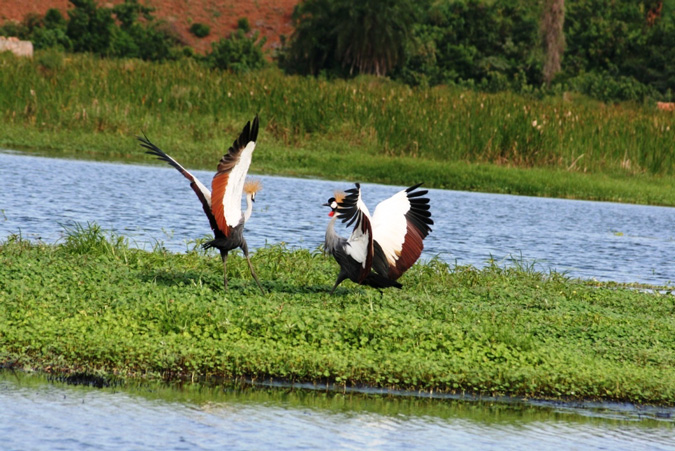
A boat cruise and birdwatching trip at Lutembe Bay Wetland is a relaxing way to explore one of Lake Victoria’s important wetland areas. Located near Entebbe, Lutembe Bay is recognised as a Ramsar site and an Important Bird Area. Its papyrus-fringed channels, open shallows, and mudflats provide habitat for a wide variety of waterbirds.
Local boatmen and guides operate from landing points around Lutembe, including the Dewe and Lutembe areas. Depending on local conditions and availability, you can explore the bay by motorboat or dugout canoe, travelling along the shoreline and through wetland channels. The pace is often unhurried, giving you time to watch birds feeding, resting, or moving across the water.
1-day-perfect-mabamba-swamp-shoebill-stork-uganda-birding-safari
5-days-uganda-bird-watching-safari-lake-victoria-shores-and-lake-mburo
9-days-classic-uganda-birding-safari-tourn
13-days-uganda-birding-safari-and-wildlife
20-days-uganda-birding-safari-to-uganda-national-park
21-days-uganda-birding-safari-extravaganza-to-best-uganda-safari-parks
10-days-best-uganda-birding-safari-and-wildlife-experience
9-days-best-uganda-birding-safari-tour-from-swamps-to-savannah-eastern-route
30-days-best-uganda-birding-safari-extravaganza-and-wildlife-safari
25-days-complete-uganda-birding-safari-extravaganza-with-wildlife-viewing
Birds and Wildlife to Look For
Lutembe Bay is reported to support around 200 bird species, including resident wetland birds and seasonal migrants. Birdwatchers may look out for:
- White-winged Black Terns and Whiskered Terns
- Grey-headed Gulls
- Malachite and Pied Kingfishers
- Papyrus Gonolek
- African Purple Swamphen
- Long-toed Lapwing
- Herons and egrets
Sightings vary with the season, weather, and water conditions, so no particular species is guaranteed. With a little luck, you may also spot wildlife such as otters, monitor lizards, or sitatunga along the swamp fringes.
When to Visit Lutembe Bay
For the best chance of seeing active birdlife, plan an early-morning boat trip, ideally starting between 6:30 and 8:00 AM. The wetland is often quieter at this time, and the cooler morning hours can make for a more comfortable outing.
Migratory birds from Europe and Asia are especially prominent from September to March. Drier periods—roughly December to February and June to September—may make some road approaches easier, although local conditions can change. Check access and boat arrangements before setting off.
Tips for Your Boat Cruise
Bring binoculars, drinking water, sun protection, and a light layer for the morning. Wear comfortable shoes for boarding at the landing point, and ask your boatman about the route, trip length, and safety equipment before departure. A local bird guide can help you identify species and make the most of your time on the water.
Keep noise low and give wildlife plenty of space. Whether you are an experienced birder or simply looking for a peaceful nature outing near Entebbe, a Lutembe Bay boat cruise offers a memorable way to experience Lake Victoria’s wetland landscape.
What can I expect on a boat cruise at Lutembe Bay Wetland?
A boat cruise at Lutembe Bay Wetland offers a close-up look at the papyrus edges, shallow waters, and mudflats along Lake Victoria. Depending on local conditions and your chosen route, a local boatman or guide may take you through quieter channels or along the wetland’s open edges. These habitats attract waterbirds and waders, making the ride a rewarding way to watch birds from the water.
You may travel in a motorboat or a dugout canoe, depending on availability, water conditions, and the experience you want. The pace is often relaxed, with time to scan the water, listen for calls, and observe bird activity without rushing between locations. You may also see floating vegetation and other signs of life around the swamp fringe.
Lutembe is a Ramsar wetland and an Important Bird Area near Entebbe. Bird sightings are never guaranteed, but the combination of open water and wetland habitat gives visitors plenty to look for. Ask your local operator about the route, trip length, safety equipment, and whether a knowledgeable bird guide can join you.
Where is Lutembe Bay Wetland, and how do I get there?
Lutembe Bay Wetland lies along Lake Victoria, near Entebbe in Uganda. Its location makes it a possible nature outing for visitors staying in Entebbe or travelling around the lakeshore. The wetland includes papyrus margins, shallow water, and mudflats, but access points and routes may differ depending on local conditions.
Visitors often refer to landing or beach areas around Lutembe and Dewe when discussing boat trips. Before setting out, confirm the precise meeting point with your boatman or guide. Do not assume that every access point has the same facilities, transport options, or boat services. A local contact can advise on the current road approach and where to meet.
Road conditions may change with weather, and some tracks can be difficult to use after rain. If you are travelling independently, allow extra time and check directions in advance rather than relying on a last-minute search. For a smoother Lutembe Bay birdwatching visit, arrange transport and the boat meeting point before leaving Entebbe. Confirm return transport too, especially if you plan an early-morning departure.
Which birds can I see at Lutembe Bay Wetland?
Lutembe Bay Wetland supports a diverse range of resident and migratory birds. The wetland is reported to hold around 200 species, although the birds you encounter will depend on season, water levels, weather, and disturbance. A boat trip can help you scan several habitats, including papyrus edges, open shallows, and mudflats.
Birds visitors may look for include White-winged Black Terns, Whiskered Terns, Grey-headed Gulls, Malachite Kingfishers, and Pied Kingfishers. Other notable wetland species include Papyrus Gonolek, African Purple Swamphen, and Long-toed Lapwing. Herons and egrets may also be present around suitable feeding areas. Migratory flocks can add variety during part of the year.
Bring binoculars if you have them, and give yourself time to look carefully. Small birds can remain hidden in papyrus, while birds over open water may be easier to spot but harder to identify at a distance. A local guide can help with identification and explain bird behaviour. Treat the species list as a guide, not a promise: no particular bird is guaranteed on an individual visit.
What is the best time of day for birdwatching at Lutembe Bay?
An early start is usually a good choice for birdwatching at Lutembe Bay. Aim to arrange your boat trip for approximately 6:30 to 8:00 AM, when birds may be active and the wetland can be quieter than later in the day. Starting early can also help you avoid some of the daytime disturbance that may affect bird activity.
Confirm your meeting time and landing point with your local operator beforehand. You may need to leave your accommodation before sunrise to reach the shore on time, so plan transport in advance. Bring a light layer for the morning, drinking water, and binoculars if available. Keep your camera ready, but take time to watch rather than trying to photograph every sighting.
Birds are wild, so activity varies from day to day. Wind, rain, water levels, and human activity can all affect what you see. If an early departure is not possible, ask a local guide which time is most suitable on your chosen date. A patient, quiet approach often makes for a more enjoyable Lutembe Bay boat cruise, regardless of the exact hour.
When is the best season for a Lutembe Bay birdwatching trip?
Lutembe Bay can be visited throughout the year, but the seasonal pattern may influence what you see and how easy it is to reach the wetland. Migratory flocks from Europe and Asia are especially prominent from September to March, making this period appealing to visitors hoping to observe seasonal arrivals alongside resident species.
Drier periods, roughly December to February and June to September, may make some road approaches easier. These are broad seasonal guidelines rather than guarantees. Rainfall, local road conditions, water levels, and the birds’ movements vary, so check current conditions before travelling. The best season for your trip may depend on whether you prioritise potential migrant sightings, easier access, or a particular travel schedule.
For a rewarding visit, ask a local guide what birds have recently been reported and whether the landing area is accessible. Bring weather-appropriate clothing and be prepared for changing conditions near the lake. Even outside peak migration months, the wetland’s papyrus edges and open-water habitats offer plenty to observe. Planning around the season can improve your chances, but no month guarantees a specific species or a large flock.
What kind of boat is used for a Lutembe Bay cruise?
Boat options at Lutembe Bay may include a motorboat or a dugout canoe, depending on what local boatmen have available and which route is suitable. A motorboat can cover water more quickly, while a canoe may offer a slower, quieter experience. The right choice depends on water conditions, your comfort, group size, and the type of birdwatching you hope to do.
Ask the operator what boat will be used before confirming your trip. Find out whether the boat has life jackets for everyone, how many passengers it can carry, and whether the route passes through open water or sheltered channels. If you prefer a quieter ride for observing birds, mention that when arranging the trip. Your boatman can advise whether that is practical and safe on the day.
Do not choose solely by speed. A good wildlife outing should allow time to scan the wetland without getting too close to birds or disturbing habitat. Follow the boatman’s instructions when boarding and moving around. If you have mobility concerns, ask about the boarding process in advance, since access may be uneven at a beach or landing point.
How long does a boat cruise and birdwatching trip take?
Trip length at Lutembe Bay can vary, so confirm the duration with your boatman or guide when arranging your visit. The route, boat type, weather, water conditions, and the time you want to spend watching birds can all affect how long you are on the water. Some visitors may prefer a brief introduction to the wetland, while dedicated birders may want more time to explore.
When asking about duration, check whether the quoted time includes boarding, travel to the landing point, and any walk or transfer before the cruise. It is also useful to ask whether the guide will pause when birds are spotted or follow a fixed route. A flexible pace can make the experience more rewarding, especially when scanning papyrus edges or mudflats.
Allow extra time in your overall schedule for getting to the meeting point and returning afterwards. Early starts are recommended for bird activity, so avoid planning a tight connection immediately after the cruise. If you have limited time, tell the operator in advance and ask what route is realistic. Confirming expectations helps you enjoy your Lutembe Bay boat trip without feeling rushed.
Do I need a bird guide for Lutembe Bay?
A specialist bird guide is not the only way to enjoy Lutembe Bay, but having a knowledgeable local guide can make a birdwatching trip more informative. A guide may help identify species by their calls, flight patterns, or field marks, and can explain how birds use the wetland’s papyrus, shallows, and mudflats. They may also know which areas have been active recently.
Ask whether the person guiding your trip is a boatman, a bird guide, or both. These roles may be combined, but it is best to clarify before you book. If you are particularly interested in species such as Papyrus Gonolek or kingfishers, mention your priorities in advance. No guide can guarantee a sighting, but they can help you search carefully and interpret what you encounter.
For independent birders, bring binoculars and a field guide or bird identification app that works offline. Keep a respectful distance from wildlife and follow local instructions. Whether you hire a specialist or not, a calm pace and attentive listening will improve the experience. Ask about the guide’s experience, language, fee, and trip arrangements before confirming.
What other wildlife might I see at Lutembe Bay?
Lutembe Bay is best known for its birdlife, but the wetland fringe may also support other animals. Visitors could occasionally see otters, monitor lizards, or sitatunga around swamp-edge habitat. These sightings are less predictable than simply observing the wetland landscape, and animals may remain hidden or move away before a boat approaches.
Keep your expectations flexible and watch quietly. Scan the shoreline and vegetation without asking the boatman to chase wildlife or approach too closely. A respectful distance gives animals space and makes the outing better for everyone. Binoculars can help you observe without disturbing birds or other wildlife, especially when animals are on the far side of a channel.
Remember that the most memorable part of a nature trip may be the habitat itself, not a rare animal encounter. Lutembe’s papyrus, open shallows, and mudflats support a range of life, and careful observation can reveal details that are easy to miss. Ask your guide what wildlife has been seen recently, but treat reports as possibilities rather than promises. Never feed, handle, or try to attract wild animals.
What should I bring for a Lutembe Bay boat trip?
Pack for a quiet outdoor outing by the lake. Binoculars are useful for identifying birds across open water and along papyrus edges. A camera can help you record sightings, but it is optional; avoid using flash or getting close to wildlife for a photograph. Bring drinking water, sun protection, and a light layer for a cool or breezy morning.
Wear comfortable clothing that suits the weather and is easy to move in when boarding. Shoes with a secure grip can be helpful around an uneven beach or landing area. Keep phones, cameras, and other valuables protected from splashes, and consider bringing a small waterproof bag. If rain is possible, pack a light rain jacket rather than relying on the boat for shelter.
Take any personal medication you may need, and ask the operator whether drinking water or other supplies are provided. Carry only what you can manage safely on the boat. Before departure, check that life jackets are available and listen to the boatman’s safety instructions. A small, practical packing list makes a Lutembe Bay birdwatching cruise more comfortable without adding unnecessary weight.
Is Lutembe Bay suitable for beginner birdwatchers?
Yes. Lutembe Bay can be an enjoyable destination for people who are new to birdwatching, as well as experienced birders. The boat trip introduces visitors to several wetland habitats, including open shallows, mudflats, and papyrus edges. You do not need to know every species in advance to appreciate birds feeding, resting, calling, or moving across the water.
Bring binoculars if possible, but do not worry if you are still learning how to use them. Start by noticing a bird’s size, shape, colour, and behaviour. A local guide can help you identify common species and explain what features to look for. Even a simple sighting of a kingfisher or a flock of terns can make the trip memorable.
Keep a relaxed pace and avoid expecting to identify every bird. Light, distance, and movement can make identification challenging, particularly in dense papyrus. A notebook or offline birding app can help you record sightings for later. Most importantly, be patient and respectful of the wildlife. Lutembe Bay is a rewarding place to begin learning about Uganda’s wetland birds.
Is a Lutembe Bay boat trip suitable for families?
A Lutembe Bay boat trip may suit families who enjoy nature and are comfortable spending time outdoors, but suitability depends on the boat, weather, and individual needs. Before booking, tell the operator the ages of the children in your group and ask about life jackets, seating, boarding, trip duration, and the route. Make sure every passenger has an appropriately fitting life jacket before departure.
Children may enjoy spotting kingfishers, terns, herons, and other birds, especially when the guide makes the outing interactive. Bring water, sun protection, snacks if permitted, and any necessary medication. Explain basic wildlife etiquette before boarding: stay seated when instructed, keep hands inside the boat, speak quietly near birds, and never throw food or objects into the water.
Ask whether the boat is suitable for your group size and whether there is shade or a sheltered option. Conditions can change, and a long, exposed outing may not suit every child. A shorter trip or early start may work better for some families. Confirm arrangements locally rather than assuming facilities are available at every landing point.
How can visitors protect Lutembe Bay Wetland during a visit?
Visitors can help protect Lutembe Bay by keeping a respectful distance from wildlife and following the guide’s instructions. Avoid asking the boatman to chase birds, push into sensitive vegetation, or approach nests. Quiet observation is better for both the animals and the visitor experience. Do not feed wildlife, collect plants, or leave rubbish behind.
Take reusable water bottles where practical, and pack out anything you bring. Keep noise low, especially near papyrus edges and areas where birds are resting or feeding. If you are taking photographs, avoid flash and never risk disturbing wildlife for a closer image. Use binoculars or a zoom lens to observe from the boat instead.
Lutembe Bay is a Ramsar wetland and an Important Bird Area, so responsible tourism matters. Choose a local operator who takes safety and wildlife protection seriously, and ask about their approach to guiding visitors through the habitat. Small choices can reduce disturbance and help keep the wetland enjoyable for future visitors. Respecting local guidance and leaving the area as you found it are simple ways to support conservation.
How do I arrange a boat cruise at Lutembe Bay, and what does it cost?
Boat arrangements and prices may vary according to the landing point, boat type, trip length, group size, and whether a bird guide is included. Because these details can change, contact a local boatman or guide directly for current availability and costs. Confirm the price before travelling rather than relying on an old listing or assuming that all operators offer the same service.
When requesting a quote, ask what is included: boat hire, guide services, safety equipment, waiting time, and any transport to the landing point. Check how payment is handled and whether the operator requires advance notice, especially for an early-morning departure. If you are travelling as a group, confirm the boat’s passenger capacity and whether the quoted fee is per person or per boat.
Also verify the meeting location, expected duration, and cancellation arrangements if weather affects the trip. A clear conversation in advance can prevent confusion on the day. Availability may be informal or seasonal, so allow time to coordinate. Booking locally helps you confirm the practical details of your Lutembe Bay birdwatching cruise before setting off.
What is a good itinerary for a Lutembe Bay birdwatching morning?
A simple Lutembe Bay morning can begin with an early departure from your accommodation, allowing enough time to reach the agreed landing point before your boat trip. Aim to start around 6:30 to 8:00 AM, after confirming the exact meeting time with your guide. Bring binoculars, water, sun protection, and a light layer for changing conditions near the lake.
Once at the shore, listen to the boatman’s safety briefing and ask about the planned route. During the cruise, scan the papyrus edges, open shallows, and mudflats for terns, gulls, kingfishers, herons, and other waterbirds. Pause when it is appropriate to observe, and let the guide explain any sightings. Keep noise low and avoid disturbing wildlife.
After returning to the landing point, allow time for the journey back and for recording the birds you saw. If you are continuing to another activity, leave a generous buffer rather than scheduling a tight connection. The exact itinerary depends on transport, weather, and local arrangements, so confirm details beforehand. A flexible morning is usually more enjoyable than a rushed one.
Why choose Lutembe Bay for a birdwatching trip near Entebbe?
Lutembe Bay is an appealing choice for visitors seeking a wetland birdwatching experience near Entebbe. Its position along Lake Victoria and its mix of papyrus edges, open shallows, and mudflats create varied places to look for birds. A boat trip offers a different perspective from viewing the wetland only from shore, while a local guide can help visitors understand what they see.
The site is recognised as a Ramsar wetland and an Important Bird Area. Around 200 bird species are reported, including resident wetland birds and seasonal migrants. Potential sightings include White-winged Black Terns, Whiskered Terns, Grey-headed Gulls, kingfishers, Papyrus Gonolek, African Purple Swamphen, and Long-toed Lapwing. Which species appear on a particular day depends on the season and conditions.
Lutembe Bay can suit visitors with a few hours to spare, as well as birders who want to explore carefully. Arrange your transport and boat details in advance, start early if possible, and keep expectations flexible. With thoughtful planning and responsible wildlife viewing, a cruise can become a memorable nature outing near Entebbe.
How to plan your Uganda birding safari with us Roads of Adventure safaris
Planning your Uganda birding safari with Roads of Adventure Safaris begins with choosing the regions and species you hope to see. Tell us your dates, group size, preferences, and birding experience, so we can shape an itinerary around your interests. Uganda offers varied habitats, from wetlands and lakeshores to forests and savannahs, each with birdlife. We can help plan routes, accommodation, transport, local guides, and time at birding sites. Share any must-see species, such as the shoebill, and allow flexibility for weather and wildlife sightings. Contact Roads of Adventure Safaris to discuss your plans and create a memorable Uganda birding adventure.