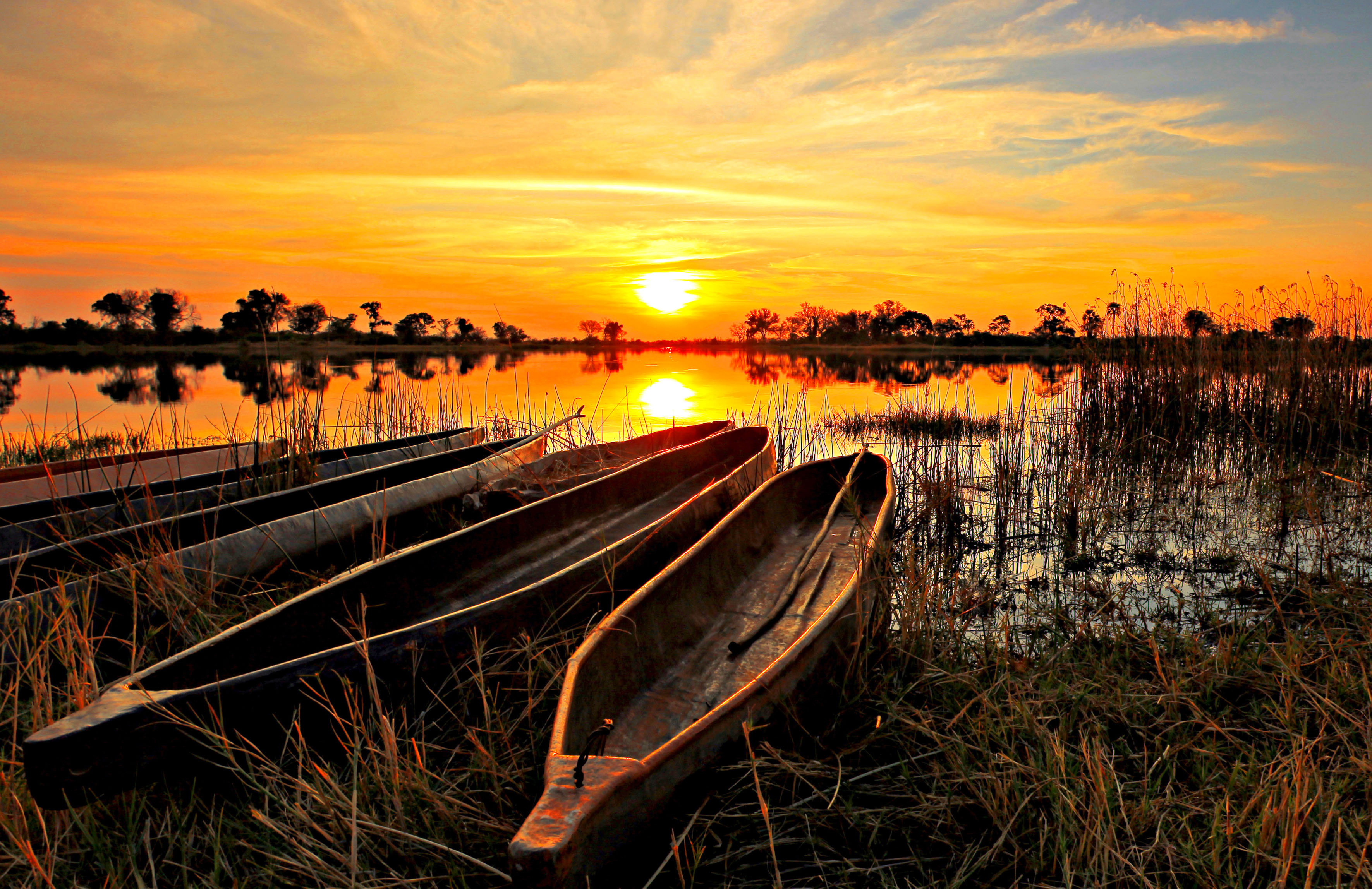
Planning your first trip with Botswana wildlife safaris is all about timing your journey with the movement of the animals. If you want the most rewarding viewing conditions, aim for the dry winter months between June and October. During this window, the bush thins out and regional water holes completely dry up, forcing massive elephant herds, lions, and leopards to gather directly along permanent lifelines like the Chobe River and the Okavango Delta. How you choose to explore this landscape depends entirely on your travel style and budget. If you favor seamless travel and comfort, fly-in lodge safaris utilize small charter planes to hop between isolated, high-end wilderness camps. On the other hand, if you possess a true spirit of adventure and want to keep costs manageable, renting a fully equipped 4x4 vehicle for a self-drive mobile camping expedition lets you pitch your rooftop tent right in the heart of the wild.
21-days-exceeding-botswana-safari-itinerary-all-inclusive-tour-package
19-days-exciting-botswana-photography-safari
18-days-exclusive-botswana-safari-victoria-falls-and-zambia-wildlife-safari-tour
16-days-botswana-safari-hwange-and-victoria-fall-tour
15-days-best-of-botswana-and-zimbabwe-safari-holiday-vacation-southern-africa-safari
13-days-luxury-victoria-falls-to-botswana-safari-tour-package
12-days-exclusive-luxury-botswana-wildlife-safari-vacation
11-days-un-comparable-best-botswana-safari-itinerary-and-optional-victoria-falls-tour
7-days-exclusive-luxury-botswana-safari-tour-package
Top destinations to visit on your first Botswana wildlife safari
For your first wildlife safari in Botswana, prioritize the Okavango Delta and Chobe National Park. They offer the most accessible, high-density wildlife viewing. Combine these with Moremi Game Reserve to experience a perfect blend of lush waterways and predator-rich savannas on your initial trip
Chobe National Park
If you are mapping out your first Botswana wildlife safari, Chobe National Park in the country's northeastern corner is the absolute perfect place to begin. Spanning roughly 11,700 square kilometers, this iconic park is globally celebrated for hosting the largest single concentration of elephants on Earth, with a thriving population estimated at over 120,000 individuals. Watching these gentle giants interact in their natural habitat is an experience that instantly connects you to the raw pulse of the African continent.
The ultimate way to experience Chobe is by splitting your time between traditional land drives and water-based safaris. A Chobe Riverfront boat cruise offers an entirely fresh perspective on classic game viewing, allowing you to glide quietly alongside massive herds of elephants as they swim across the deep channels, trunk-tips raised like snorkels. From your seat on the boat, you will find yourself eye-level with pods of yawning hippos, enormous Nile crocodiles sunning on the sandbanks, and an incredible array of colorful waterbirds like the African skimmer.
Logistically, Chobe is one of the most accessible parks in the region, centered around the bustling safari town of Kasane. Because it sits right near the borders of Zambia and Zimbabwe, it is incredibly easy to pair a few days of game viewing here with a quick trip to see Victoria Falls, located just an hour’s drive away. Whether you are watching a pride of lions track buffalo from a 4x4 or floating down the river as the sun sets over the water, Chobe serves as a spectacular, high-action introduction to the wonders of Botswana.
The Okavango Delta
Often affectionately called the "Jewel of the Kalahari," the Okavango Delta is a breathtaking geographical marvel that completely redefines the concept of a wilderness getaway. This massive inland river system pumps millions of tons of water from the Angolan highlands directly into the dry sands of northern Botswana, creating a sprawling, 15,000-square-kilometer labyrinth of crystal-clear lagoons, hidden islands, and secret channels that stands out as a vibrant green oasis against the surrounding desert.
The true magic of an Okavango Delta Botswana wildlife safari lies in its peaceful, slower pace. Instead of the constant rumble of a diesel engine, your days are spent gliding silently through the papyrus-lined waterways in a mokoro—a traditional dugout canoe propelled by a skilled local poler. Moving at water level allows you to appreciate the finer details of the bush, from tiny reed frogs clinging to lily pads to rare birds like the Pel's fishing owl. For a complete change of scale, taking a doors-off helicopter flight reveals the sheer immensity of the delta, exposing the elaborate network of elephant paths etched into the landscape below.
Despite its watery terrain, the delta is packed with major wildlife. The permanent islands and floodplains serve as vital sanctuaries for massive herds of Cape buffalo, red lechwe antelopes, and a high concentration of apex predators, including legendary, swamp-dwelling lion prides and leopards that excel at hunting in the wet brush. Staying at a remote, water-based camp offers an incredibly intimate connection to nature, where the only sounds at night are the splashing of distant wildlife and the gentle chorus of the African night.
Moremi Game Reserve
Tucked onto the eastern edge of the Okavango Delta, the Moremi Game Reserve is widely considered by safari purists to be one of the most beautiful and ecologically diverse protected areas in all of Africa. Unlike the rest of the delta, which consists largely of private concessions, Moremi was designated as a reserve by the local BaTawana people in the 1960s to protect their ancestral lands from over-hunting, making it a proud monument to community-led conservation.
Covering nearly 5,000 square kilometers, Moremi's landscape is a striking mix of contrast, seamlessly transitioning from dense mopane forests and dry acacia woodlands to wide-open floodplains and reed-fringed lagoons. This incredible variety of habitats supports an astonishingly dense population of wildlife, making it a premier destination for high-quality photographic safaris. It is a place where you can spend the morning tracking a pack of endangered African wild dogs through the woods and the afternoon watching a massive herd of elephants cross a sunny savanna.
The standout star of the reserve is the Khwai Concession area, located along Moremi's northern boundary. Khwai is famous for its exceptional predator viewing, hosting large, highly active prides of lions, leopards that utilize the giant leadwood trees for camouflage, and spotted hyenas. Because the terrain is a mix of land and water, Moremi allows you to enjoy the absolute best of both worlds. It offers a raw, authentic safari experience that appeals deeply to travelers who want to see the complex social dynamics of Africa's iconic wildlife play out across an ever-changing landscape.
Makgadikgadi Pans
To add a completely different flavor to your Botswana wildlife safari, leaving the lush northern waterways behind for the stark, dramatic expanse of the Makgadikgadi Pans is an absolute must. Spanning over 16,000 square kilometers, these vast salt flats are the ancient remnants of a super-lake that dried up thousands of years ago, leaving behind a brilliant white, moon-like crust that stretches out in every direction until it meets the endless blue horizon.
The way you experience this extraordinary landscape shifts dramatically with the changing seasons. During the dry winter months, the pans transform into a minimalist desert wonderland. It is the perfect time to hop onto a quad bike and roar out into the middle of the empty flats, where the complete silence and lack of landmarks create a surreal, humbling sense of space. The dry season is also the perfect time for walking safaris alongside resident, habituated meerkats. These charismatic little creatures have completely lost their fear of humans, and it is not uncommon for one to climb onto your shoulder or head to use you as a higher lookout post.
When the summer rains arrive, the entire region undergoes a spectacular transformation. The dry pans fill with water, causing nutritious grasses to sprout and triggering the second-largest zebra and wildebeest migration in Africa. Thousands of striped herds move across the plains, closely followed by opportunistic predators like lions and cheetahs, while the filled lagoons come alive with thousands of migratory flamingos. The Makgadikgadi Pans offer a beautiful reminder that Botswana's beauty extends far beyond its rivers into the deep, quiet spaces of the desert.
When is the best time to see wildlife?
The peak season for a Botswana wildlife safari falls during the dry winter months from June to October. During this time, temperatures are comfortable, ranging from 20°C to 25°C, and rainfall drops to zero. As smaller bush pools dry up, wildlife is forced to concentrate in massive numbers along permanent water sources like the Chobe River and Okavango Delta. The thinning vegetation also provides excellent visibility, making it easy to spot hidden predators.
Which regions offer the best predator viewing?
For intense predator encounters, the Moremi Game Reserve and its surrounding private concessions, such as Khwai and Linyanti, are premier choices. These areas feature overlapping floodplains and mopane woodlands that support high densities of prey, which in turn attract large prides of lions, leopards, cheetahs, and endangered African wild dogs. Private concessions are especially rewarding for a Botswana wildlife safari because they permit off-road tracking and night drives, allowing you to follow big cats on the hunt.
What should I pack for a Botswana safari?
Your packing list should focus on neutral-colored layers, as winter mornings can drop to a chilly 6°C before warming up by midday. Pack lightweight cotton trousers, long-sleeved shirts for sun and insect protection, a warm fleece, and a windproof jacket. Essential gear includes a wide-brimmed hat, polarized sunglasses, high-protection sunscreen, a high-quality 10x42 binocular set, and a soft-sided duffel bag, which is strictly required to fit into the compact luggage holds of light safari aircraft.
Is it safe to do a self-drive safari?
Yes, a self-drive safari is safe provided you are well-prepared and strictly respect the environment. You must rent a fully equipped, high-clearance 4x4 vehicle with a rooftop tent, recovery gear, and a reliable satellite navigation system. Driving requires navigation through deep sand and river crossings, particularly in Chobe and Moremi. Safety relies on your commitment to stay inside your vehicle at all times, camp only in designated footprints, and keep a safe distance from large animals like elephants.
How much does a typical Botswana safari cost?
Botswana focuses on a high-value, low-density tourism model, making it a more premium destination. A budget-conscious mobile camping or self-drive tour can range from $250 to $500 per person per day. Mid-range options average between $600 and $1,100 per day. For an ultra-luxury fly-in safari to exclusive concessions in the heart of the Okavango Delta, prices frequently range from $1,500 to well over $3,000 per person per night, which includes charter flights, meals, and private tracking.
Do I need malaria medication for this trip?
Most of the prime regions for a Botswana wildlife safari, including the Okavango Delta, Chobe National Park, and the Moremi Game Reserve, are located in high-risk malaria zones, particularly during or immediately following the summer rainy season. It is highly recommended to consult a travel clinic or healthcare professional before your trip to secure preventative antimalarial medications, such as Atovaquone/Proguanil or Doxycycline, and to consistently apply insect repellent containing DEET.
What is the difference between land and water camps?
Land camps are situated in dry savanna or woodland areas, focusing primarily on traditional 4x4 game drives to track big game and large predators. Water camps are built on permanent deep-water channels or isolated islands within the Okavango Delta, specializing in water-based activities like motorized boat cruises and quiet mokoro trips. To experience the full diversity of a Botswana wildlife safari, most travelers choose a combination itinerary that spends two or three nights at each camp style.
How do I book a mobile tented safari?
Booking a mobile tented safari requires choosing between a scheduled group departure or a private, custom-tailored journey. You should reach out to an authorized local tour operator or specialist safari agency roughly 6 to 9 months in advance. The operator manages all logistical components, bundling your professional guide, private 4x4 vehicle, camp crew, park entry permits, and freshly prepared meals into a single all-inclusive itinerary that moves camp every few days to follow wildlife movements.
Are commercial flights available between the safari camps?
No, major commercial airlines do not service the remote wilderness camps. Instead, transport between isolated lodges relies on a specialized network of light charter aircraft, such as the Cessna Caravan, managed by local safari airlines like Wilderness Air or Mack Air. These bush flights operate on a "seat-in-coach" basis, hopping between remote, dirt airstrips to deliver you directly to your camp. These transfers provide spectacular aerial views of the Okavango Delta and Chobe landscapes below.
What photography gear is recommended for capturing wildlife?
To successfully capture the fast-paced action of a Botswana wildlife safari, a versatile camera setup is essential. Bring a DSLR or mirrorless camera body with excellent low-light performance to handle sunrise and twilight drives. Pair it with a telephoto zoom lens, such as a 100-400mm or a fixed 300mm lens, to safely frame distant animals. A secondary wider lens, like a 24-70mm, is perfect for sweeping landscape shots and close-up elephant encounters from a safari boat
Booking Botswana wildlife safari with us Roads of Adventure safaris
Booking a Botswana wildlife safari with Roads of Adventure Safaris is a seamless, completely handled experience. To lock in your travel dates and customized itinerary through world-class destinations like the Okavango Delta, Moremi, and Chobe, you simply place a 30% deposit. From there, their team takes care of every moving part, coordinates your light aircraft bush transfers, assigns expert tracking guides, and secures your stays at premier luxury lodges or mobile wilderness camps. Choosing from their highly-rated tour packages takes the stress out of planning, leaving you completely free to enjoy an unforgettable African adventure.
