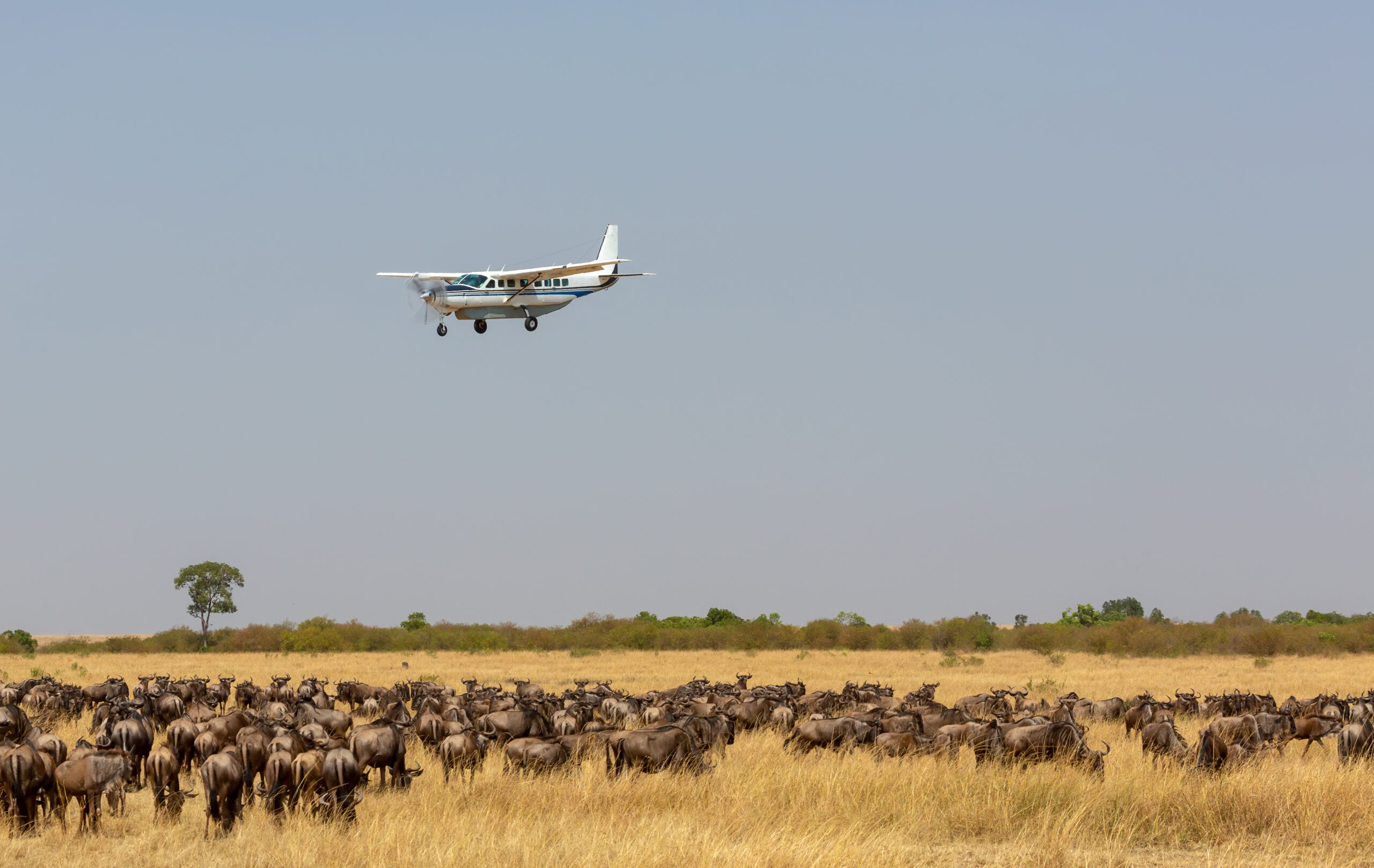
Yes, internal flights are absolutely available as an alternative to driving for a Masai Mara and Lake Nakuru safari. Many operators offer "fly-in" packages that eliminate the long, bumpy road journeys between Nairobi, the Mara, and the Rift Valley.
4-days-masai-mara-and-lake-nakuru-kenya-safari-tour-package
5-days-best-of-kenya-wildlife-safari-to-masai-mara-lake-nakuru-and-amboseli-national-park
5-days-masai-mara-safari-lake-nakuru-and-hells-gate-national-park-kenya-tour
6-days-circuit-kenya-safari-to-masai-mara-lake-nakuru-and-amboseli-park
7-days-incredible-africa-big-five-kenya-tanzania-combined-tour
Flight Options and Routing
- Nairobi to Masai Mara
Daily scheduled flights depart from Nairobi's Wilson Airport (WIL) directly to various bush airstrips inside or bordering the Masai Mara (e.g., Keekorok, Musiara, Ol Kiombo). The flight takes approximately 45–60 minutes.
- Masai Mara to Lake Nakuru
Light aircraft can also transfer you between the Mara and the Nakuru or Naivasha areas (flying takes about 30–45 minutes). However, many of these domestic hops require a brief transit at Wilson Airport in Nairobi depending on your specific airline's route for the day.
- Airlines: The primary carriers operating these routes are Safarilink Aviation and AirKenya Express.
Time-Saving
Opting for a bush flight dramatically compresses your journey, turning a grueling five-to-six-hour overland drive from Nairobi into a swift, 45-minute scenic hop directly into the heart of the Masai Mara. Instead of navigating heavy highway traffic and rough dirt roads, you arrive refreshed and ready for action. By eliminating nearly a full day of road travel across your round trip, you unlock extra hours for early morning and late afternoon game drives when wildlife activity peaks. Flying maximizes every moment of your safari, ensuring your valuable vacation time is spent tracking big cats rather than sitting in transit.
Comfort
Traveling to remote African wilderness areas by air provides an elevated, fatigue-free experience that keeps you energized for your adventures. Long overland journeys across uneven terrain can cause physical strain and travel exhaustion, taking away from your overall enjoyment. Bush flights trade dusty roads for smooth, scenic cruising while offering spectacular aerial views of the Great Rift Valley and rolling savannahs below. Touching down at local airstrips near your safari camp allows for seamless transfers and immediate relaxation. You arrive refreshed, comfortable, and fully prepared to immerse yourself in Africa’s incredible wildlife encounters from the moment you touch ground.
What is a fly-in safari, and how does it work for a Masai Mara and Lake Nakuru itinerary?
A fly-in safari replaces long overland road transfers with short domestic flights aboard light bush aircraft. Instead of spending five to six hours bouncing along highway and dirt routes from Nairobi to the game reserves, you board a small plane that lands directly at remote airstrips near your lodge.
For a combined Masai Mara and Lake Nakuru itinerary, a typical fly-in routing begins at Nairobi’s Wilson Airport (WIL). You fly straight to a localized airstrip inside or adjacent to the Masai Mara National Reserve, such as Ol Kiombo, Musiara, or Keekorok. After completing your time in the Mara, another light aircraft connection takes you toward the Great Rift Valley, landing at airstrips near Lake Nakuru or neighboring Lake Naivasha (such as Naishi or Loldia airstrip). From there, camp drivers meet you on the tarmac in 4x4 safari vehicles to handle park transfers and game drives. This model turns grueling travel days into swift, effortless hops, maximizing time in the bush.
Is Wilson Airport (WIL) or Jomo Kenyatta International Airport (NBO) used for internal bush flights?
Most internal bush flights in Kenya operate out of Wilson Airport (WIL), located roughly 15 kilometers southwest of Jomo Kenyatta International Airport (NBO). While NBO handles major long-haul international flights, Wilson Airport serves as the hub for domestic safari aviation.
When planning a fly-in safari, factor in the ground transfer between NBO and WIL. Depending on Nairobi traffic, moving between the two airports can take anywhere from 30 minutes to over an hour via the Nairobi Expressway. Scheduled air carriers like Safarilink and AirKenya launch multiple daily flights to bush airstrips out of Wilson. The airport offers a streamlined, low-stress check-in process compared to international terminals, with smaller gates and fast boarding. If your international arrival lands at NBO early in the morning, taking a pre-booked private transfer to Wilson Airport allows you to seamlessly board a mid-morning bush flight to the Mara on the exact same day.
How much time do you actually save by flying instead of driving to the Masai Mara?
Opting for an internal flight saves roughly four to five hours of transit time each way. Driving from central Nairobi to the Masai Mara takes between five and seven hours depending on road conditions, traffic exiting the city, and the specific gate of entry into the reserve. The final two hours of the drive cover rough, unpaved terrain that slows travel significantly.
In contrast, a direct flight from Wilson Airport to a Mara airstrip takes approximately 45 to 60 minutes. On a round-trip journey, flying recovers nearly an entire day of your vacation that would otherwise be spent behind the wheel. That saved time directly translates into extra game viewing. Instead of arriving at your camp late in the afternoon feeling exhausted from the road, a morning flight gets you into camp in time for lunch, a quick rest, and a full afternoon game drive on your very first day.
Can you fly directly between the Masai Mara and Lake Nakuru?
Direct flights between the Masai Mara and Lake Nakuru are available, though routing depends on seasonal demand and airline schedules. Scheduled carriers routinely operate flights linking the Mara to airstrips around the Great Rift Valley, such as Naishi Airstrip inside Lake Nakuru National Park or Loldia Airstrip near Lake Naivasha.
These inter-park hops take roughly 30 to 45 minutes. However, depending on flight passenger routing on a given day, some light aircraft may make a brief stop or transit through Wilson Airport in Nairobi before continuing to the Rift Valley. Even with a short layover or touch-and-go stop in Nairobi, total travel time remains under two hours—far faster than navigating the winding, heavily trafficked highways between the Mara and Nakuru on the ground. When booking, confirm whether your flight is a point-to-point connection or a scheduled routing with intermediate stops so you can plan your daily safari activities accordingly.
Which domestic airlines operate scheduled bush flights between Nairobi, the Mara, and Nakuru?
The two primary bush flight operators in Kenya are Safarilink Aviation and AirKenya Express. Both carriers have established fleets of high-performance turboprop aircraft, primarily Cessna Grand Caravans and Dash 8s, specifically equipped for short-takeoff-and-landing operations on unpaved gravel airstrips.
Safarilink and AirKenya maintain daily scheduled services from Nairobi’s Wilson Airport to various sectors of the Masai Mara and Rift Valley regions. Other regional charter operators, such as Scenic Air Safaris and Yellow Wings, offer private charter options for travelers seeking tailored timetables or non-standard routes. Choosing established scheduled carriers ensures rigid adherence to international safety standards, highly experienced flight crews accustomed to wilderness bush conditions, and dependable flight departures that integrate smoothly into standard multi-park safari itineraries.
What airstrips serve the Masai Mara, and how do you choose the right one?
The Masai Mara ecosystem covers a vast area and is serviced by more than a dozen distinct dirt airstrips spread across the national reserve and adjacent private conservancies. Major airstrips include Keekorok in the southeast, Ol Kiombo in the central Mara, Musiara in the north, and Serena Airstrip in the west, along with private conservancy airstrips like Mara North, Naboisho, and Ol Seki.
Choosing the right airstrip depends entirely on the location of your lodge or tented camp. Because driving across the park on unpaved tracks can take several hours, airlines pick up and drop off passengers at the airstrip closest to their specific accommodation—often within a 15- to 30-minute vehicle transfer. When booking your fly-in itinerary, your tour operator or lodge matches your reservation to the correct airstrip so the camp’s 4x4 vehicle is waiting for you when the plane touches down.
What airstrips are used when visiting Lake Nakuru or nearby Lake Naivasha by air?
Travelers visiting Lake Nakuru by air typically land at Naishi Airstrip, located inside Lake Nakuru National Park. Naishi provides immediate access to the park’s rhino sanctuaries, fever tree forests, and lake shorelines, minimizing road transit after touchdown.
Depending on airline schedules and lodge partnerships, some fly-in itineraries use Loldia Airstrip or Naivasha Airstrip near Lake Naivasha instead. Located roughly an hour’s drive south of Lake Nakuru, these airstrips serve as convenient gateways for travelers combining Nakuru game drives with boat safaris or walking tours around Naivasha. If you land at Naivasha or Loldia, your safari vehicle conducts a scenic road transfer up the Rift Valley floor directly into Lake Nakuru National Park for a full day of game viewing.
Are fly-in safaris suitable for travelers prone to motion sickness or fear of small planes?
Fly-in safaris utilize small, single or twin-engine turboprop planes (typically seating 10 to 37 passengers). Because these aircraft fly at lower altitudes than commercial jetliners, they are more susceptible to thermal air turbulence, particularly during hot afternoon flights over the Rift Valley and open savannahs.
Travelers who experience light aircraft anxiety or motion sickness can manage the experience with simple preparations. Booking morning flights is highly recommended, as cooler morning air produces smoother flying conditions with far less thermal disturbance. Packing over-the-counter motion sickness medication or wearing acupressure bands helps mitigate mild nausea. For those uncomfortable with small aircraft, weighing the brief 45-minute flight against a five-to-six-hour bumpy overland drive often yields the conclusion that a quick flight remains the preferred option.
How strict are baggage limits on domestic light aircraft in Kenya?
Baggage limits on internal safari flights are strictly enforced due to light aircraft payload and weight distribution limits. Most bush flight carriers impose a mandatory weight cap of 15 kilograms (33 pounds) per passenger, which must include both checked luggage and personal hand carry items.
In addition to weight limits, airlines mandate that luggage must be soft-sided—such as duffel bags, canvas holdalls, or frameless travel bags. Hard-shell suitcases, rigid rolling bags, and luggage with internal metal frames are prohibited because aircraft belly pods and baggage compartments have irregular shapes that require flexible packing. Bringing a rigid suitcase can result in refused boarding or additional charges to transport the bag separately via ground transport.
What happens if your luggage exceeds the weight limit on a bush flight?
If your luggage exceeds the 15 kg limit, airlines enforce strict protocols to ensure aircraft safety. At check-in desks at Wilson Airport, all bags—including daypacks—are weighed on calibrated scales. If you are over the limit, you may be required to repack and leave non-essential items behind in secure airport storage or pay for an extra seat to cover the additional weight allocation.
Purchasing an additional seat grants an extra weight allowance (typically up to an additional 75 kg), which is a common solution for professional photographers traveling with heavy camera gear and lenses. If you bring a hard suitcase by mistake, staff at Wilson Airport can supply soft duffel bags for you to transfer your belongings into while storing your hard suitcase safely until your return to Nairobi.
Why are soft-sided duffel bags required on internal safari flights?
Soft-sided duffel bags are required on internal safari flights because light aircraft baggage compartments differ significantly from commercial jet cargo holds. On aircraft like the Cessna Grand Caravan, luggage is stowed in small sub-belly pods or narrow rear compartments with tightly constrained access doors.
Rigid, hard-shell suitcases cannot flex or compress to fit through these narrow cargo hatches, leaving wasted space and preventing other passengers' luggage from loading. Soft duffel bags without rigid frames can be molded, stacked, and tightly packed into every available corner of the cargo pod. Additionally, soft bags prevent damage to the aircraft interior and ensure proper, balanced weight distribution across the airframe, which is critical for flight safety on short, unpaved runways.
Can you store excess luggage in Nairobi while on a fly-in safari?
Most safari operators, hotels, and airline offices in Nairobi offer secure luggage storage facilities for travelers taking fly-in safaris. If your total travel luggage exceeds the strict 15 kg limit due to items needed for other legs of your trip—such as city clothing, formal gear, or beachwear for Zanzibar—you can separate your belongings before departing for Wilson Airport.
You pack your safari essentials into a compliant soft duffel bag and leave your primary hard suitcases in storage. Your tour operator or hotel holds your bags in locked storage facilities and arranges for them to be re-delivered to you upon your return flight to Nairobi or transferred to your international departure terminal at Jomo Kenyatta International Airport.
What happens when you land at a bush airstrip in the Masai Mara?
Landing at a wilderness bush airstrip is an exciting part of the fly-in experience. Bush runways consist of open, packed-dirt or gravel strips surrounded by wildlife habitats. Upon touchdown, the pilot taxis the aircraft to a small open-air arrival shelter or designated parking area.
Your camp’s professional guide meets you directly on the tarmac next to an open-sided 4x4 safari vehicle. Camp staff handle offloading your luggage from the plane pod straight into the vehicle. After a brief greeting and safety orientation, your safari begins immediately. In fact, the drive from the airstrip to your camp often doubles as your very first game drive, offering opportunities to spot giraffes, zebras, or elephants before you even reach the lodge check-in desk.
Are game drives included when you take a fly-in safari, or do you need to hire a vehicle?
When you book a fly-in safari package, game drives are included as part of your stay, provided directly by your safari camp or lodge. Unlike overland safaris where your driver-guide stays with you for the entire multi-park drive from Nairobi, fly-in safaris utilize the resident vehicles and guides stationed permanently at each lodge.
Upon landing at the airstrip, your host lodge provides shared or private 4x4 game drives in customized vehicles designed specifically for the local terrain. These vehicles stay at the camp and carry out morning, afternoon, or full-day game drives within the reserve or conservancy. Having localized vehicles and guides ensures you are driven by experts who know the immediate terrain, animal movement patterns, and pride territories around that specific sector of the park.
What is the difference between open-sided 4x4 Land Cruisers and safari minivans?
Overland driving safaris from Nairobi often use closed safari minivans or closed 4x4 Toyota Land Cruisers equipped with pop-up roofs. These vehicles are designed for long highway driving comfort and protection from road dust over hundreds of kilometers.
Fly-in safaris give you access to open-sided 4x4 Land Cruisers stationed permanently inside the parks. These modified vehicles feature open sides, tiered seating, and canvas pop-up tops, providing unobstructed 360-degree views and clear lines of sight for photography. Without window frames or pillars blocking your view, open-sided vehicles offer an immersive wildlife experience, letting you feel closer to the sights, sounds, and scents of the African bush.
How much more expensive is a fly-in safari compared to an overland driving safari?
A fly-in safari carries a higher price tag than an overland driving safari, primarily due to the cost of domestic flight tickets and localized vehicle logistics. Scheduled bush flights typically cost between $200 and $400 per person per leg, adding several hundred dollars per traveler to the baseline itinerary cost.
Additionally, using resident camp vehicles and localized guides on a "package rate" at luxury lodges carries a premium compared to sharing a single private driver-guide who drives you throughout the trip. However, for travelers with limited time, high comfort preferences, or a desire to avoid exhausting road journeys, the significant time saved and elevated vehicle comfort make the added expense a worthwhile investment.
Is a fly-in safari worth the extra cost for a 4 to 5-day itinerary?
For a short 4 to 5-day itinerary covering both the Masai Mara and Lake Nakuru, a fly-in safari offers high value per hour spent on vacation. On a short trip, spending 10 to 12 total hours in transit on highway routes consumes up to 25% of your total safari time.
By flying, you eliminate lengthy road fatigue and gain two additional half-day game drives that would otherwise be lost to highway transit. You arrive at each destination refreshed, maximize golden-hour lighting for morning and evening wildlife drives, and enjoy an elevated travel experience throughout. If your primary goals are maximizing game viewing, maintaining high energy, and enjoying luxury vehicle setups, the investment in flights delivers a superior overall experience.
What is the best time of day to fly between Nairobi and the Masai Mara?
Morning flights are widely considered the ideal time to fly between Nairobi and the Masai Mara. Scheduled bush carriers usually offer early morning departures (around 7:30 AM to 10:30 AM) from Wilson Airport, arriving in the Mara under an hour later.
Morning air conditions are significantly cooler, resulting in smoother flights with minimal thermal turbulence across the Great Rift Valley. Furthermore, arriving at your camp before noon allows you to check in smoothly, enjoy a relaxed sit-down lunch, unpack, and settle into your room before setting out on your first afternoon game drive around 3:30 PM or 4:00 PM, fully rested and ready for action.
How do flight schedules impact your arrival time and afternoon game drive availability?
Flight timing directly dictates how effectively you use your first and last days on safari. Early morning departures out of Nairobi place you on the ground in the Masai Mara before lunch, giving you full access to late afternoon game drives on day one.
Similarly, on your departure day, choosing a late afternoon return flight allows you to conduct an early morning game drive, enjoy breakfast in the bush, and check out around midday without feeling rushed. Conversely, booking mid-day flights can split up your day, requiring you to spend peak afternoon hours handling check-outs and airport transfers rather than watching wildlife. Tailoring your flight selections helps preserve morning and evening game viewing hours.
Can rainy season weather cause delays or cancellations for internal bush flights?
During Kenya’s rainy seasons—the "long rains" in April and May, and the "short rains" in November—weather conditions can occasionally affect bush flight operations. Because bush aircraft operate under Visual Flight Rules (VFR) and land on unpaved dirt airstrips, low clouds, heavy downpours, or muddy runways can trigger temporary flight delays.
Pilots and flight dispatchers prioritize safety above all else. If an airstrip becomes waterlogged or visibility drops below safe thresholds, flights may hold in Nairobi or divert to a nearby paved runway until conditions clear. Experienced safari operators account for potential seasonal weather disruptions by building buffer time into connections, ensuring you reach your international flights safely even during rainier months.
How do children and families adapt to light aircraft bush flights in Kenya?
Families generally find light aircraft bush flights far easier and less stressful for children than long overland drives. Sustained five-to-six-hour drives on bumpy roads can cause travel fatigue, restlessness, and carsickness in young children.
A 45-minute flight turns a challenging travel day into an exciting adventure. Children often enjoy flying aboard small planes, taking in bird’s-eye views of volcanoes, rift valley lakes, and sprawling wildlife landscapes. The short flight duration keeps young travelers energized, allowing them to arrive at camp excited and fresh for their first game drive rather than worn out from a long road trip.
Are private charter flights available if you want customized departure times?
Private charter flights are widely available throughout Kenya for travelers who prefer complete flexibility over fixed airline timetables. Operators utilize high-end turboprop aircraft, allowing you to choose your departure times, bypass airport waiting times, and fly directly between niche airstrips on your preferred schedule.
Private charters are particularly advantageous for larger family groups, VIP travel, or specialized photography safaris carrying extensive equipment. Chartering a plane allows you to link remote parks—such as flying straight from the Masai Mara to Lake Nakuru or Mount Kenya—without stopping in Nairobi. While private charters cost more than individual seats on scheduled flights, dividing the cost across a group makes it a seamless and efficient option.
How do you handle game drives at Lake Nakuru if you fly into Naivasha or Loldia airstrip?
When flying toward Lake Nakuru, aircraft often land at nearby airstrips like Loldia or Naivasha if weather or passenger routing dictates. In these scenarios, your safari logistics transition smoothly into a private road excursion for the Lake Nakuru leg.
Your professional guide meets you at the airstrip in a private 4x4 safari vehicle. From Naivasha or Loldia, you enjoy a scenic one-hour drive up the floor of the Great Rift Valley to Lake Nakuru National Park. You spend the full day exploring Nakuru’s rhino sanctuary, lake shores, and acacia woodlands, enjoying a picnic lunch in the park before returning to your Rift Valley lodge or catching a afternoon connection.
Is it better to drive one way and fly the other way during a Kenya safari?
Combining a one-way drive with a one-way flight—often called a "fly-drive safari"—offers a popular balance between budget, scenic road travel, and time efficiency. A common itinerary involves driving from Nairobi through the Great Rift Valley to Lake Nakuru, continuing overland to the Masai Mara, and then flying back from the Mara to Nairobi at the end of the trip.
This hybrid approach lets you experience the changing rural landscapes, local towns, and Rift Valley viewpoints on the outbound leg while avoiding a long, tiring drive back over the same roads at the end of your holiday. Ending your trip with a quick 45-minute flight back to Nairobi ensures you return rested and ready for your international flight home.
What scenic highlights can you spot from the window of a bush flight over the Great Rift Valley?
A fly-in safari acts as a scenic flight tour over some of East Africa's most dramatic geological formations. Flying between Nairobi, Lake Nakuru, and the Masai Mara offers breathtaking aerial views of the Great Rift Valley escarpment.
Looking out your window, you can spot dormant volcanoes like Mount Longonot and Suswa, sweeping crater floors, and the shimmering surfaces of Rift Valley lakes like Naivasha and Elementaita. As you approach the Mara ecosystem, the landscape transforms into an endless golden horizon of open grasslands crisscrossed by meandering rivers like the Mara and Talek. Spotting wildlife herds or winding rivers from low altitude offers an unforgettable perspective on Kenya’s terrain.
What safety standards and pilot qualifications govern domestic safari aviation in Kenya?
Domestic safari aviation in Kenya is governed by strict civil aviation regulations set by the Kenya Civil Aviation Authority (KCAA), aligning with international ICAO standards. Established airlines like Safarilink and AirKenya maintain rigorous fleet maintenance programs and subject their aircraft to frequent inspections.
Pilots operating bush routes hold commercial pilot licenses with advanced instrument ratings and undergo regular simulator training. More importantly, safari pilots possess thousands of hours of specialized bush-flying experience, navigating localized weather patterns, thermal winds, and unpaved airstrips. Their expertise ensures that every takeoff, route navigation, and dirt runway landing meets uncompromising safety protocols.
How far in advance should you book internal flight tickets during the Great Migration season?
During the peak Great Migration season (July through October), internal bush flights to the Masai Mara sell out months in advance. Because light aircraft have limited seat capacities (typically 10 to 37 seats per plane), demand during high season far exceeds daily supply.
To secure your preferred departure times and airstrip connections, book your internal flights six to nine months ahead of your travel date, alongside your lodge reservations. Booking early ensures you get direct scheduled flights matching your lodge's check-in times, preventing unwanted layovers or expensive last-minute charter upgrades.
How do transfers work between Nairobi’s international airport (NBO) and domestic airport (WIL)?
Transfers between Jomo Kenyatta International Airport (NBO) and Wilson Airport (WIL) are straightforward but require proper time planning. The airports are located about 15 kilometers apart in southern Nairobi.
With the opening of the Nairobi Expressway, transit time between the two airports is typically 30 to 45 minutes, though heavy rush-hour traffic on surface roads can extend this to over an hour. When landing internationally at NBO, allow at least three hours of total buffer time before your domestic flight at Wilson Airport. This accounts for customs clearing, baggage claim, the road transfer between airports, and domestic flight check-in protocols at Wilson.
Are light aircraft flights accessible for travelers with mobility challenges or disabilities?
Fly-in safaris can accommodate travelers with physical disabilities or mobility challenges, provided arrangements are communicated in advance. Bush aircraft do not have jet bridges or motorized boarding staircases; passengers board via short, narrow folding stairs attached to the aircraft door.
Airline ground crews and safari staff are experienced in providing respectful physical assistance to help passengers board and alight safely. Specialized safari camps in the Mara and Nakuru also offer modified open-sided 4x4 vehicles to accommodate wheel chairs or mobility aids. Informing your tour operator in advance ensures dedicated staff are on hand at both Wilson Airport and bush airstrips to make every boarding process comfortable and dignified.
How does a fly-in safari reduce overall physical travel fatigue across a multi-park itinerary?
Multi-park road safaris require hours of sitting in vehicles traveling over rough, unpaved surfaces, colloquially known as an "African massage." Over a 4 to 5-day period, long road journeys can cause muscle strain, posture fatigue, and physical exhaustion.
Replacing long road segments with quick 45-minute flights eliminates hours of physical strain. Instead of arriving at your lodge worn out from the road, you step off the plane feeling refreshed and energized. Reducing physical travel strain allows you to fully enjoy early morning wake-up calls, active game drives, and safari activities throughout your trip, returning home feeling truly recharged.
Booking Masai mara and lake Nakuru safari with us Roads of Adventure safaris
To book your Masai Mara and Lake Nakuru safari adventure with Roads of Adventure Safaris, you can finalize your plans directly through their platform or consult their classic itineraries to tailor your trip
