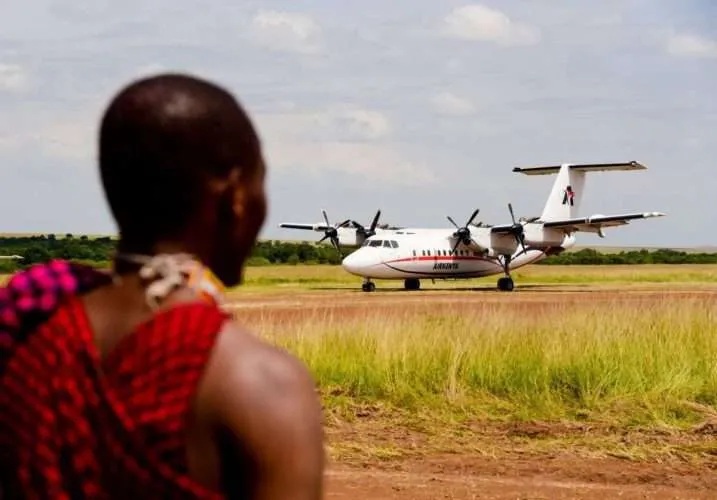
For a 3-day Maasai Mara safari, flying is generally better because it maximizes game-viewing time by avoiding a 5–6 hour, often bumpy road journey from Nairobi. Flights take roughly 45–60 minutes, turning a travel day into an afternoon game drive, while driving causes significant fatigue and reduces activity time.
3-days-fly-in-masai-mara-safari-tour-package
3-days-budget-masai-mara-safari-tour-package-itinerary
3-days-masai-mara-national-reserve-kenya-safari-tour-package
3-days-luxury-masai-mara-kenya-honeymoon-safari-vacation
Key Considerations
1. Time Efficiency
In the context of a 3-day safari, time is your most precious currency. The drive from Nairobi to the Masai Mara typically takes between 5 to 6 hours one way, depending on traffic leaving the city and the condition of the roads. When your account for the round trip, you are spending roughly 12 hours inside a vehicle just to reach the park boundaries. On a 72-hour trip, losing half a day to transit is significant.
Flying, by contrast, takes about 45 to 60 minutes. By choosing to fly, you effectively "buy back" nearly an entire day of your vacation. Instead of arriving at your lodge mid-afternoon, weary from the road and ready for a nap, you land at a bush airstrip by 10:00 AM. This allows for a relaxed lunch followed by an immediate afternoon game drive. Over a 3-day period, this translates to roughly 8–10 additional hours spent tracking the Big Five rather than staring at the tailpipe of a truck. For those on a tight schedule who want to maximize their wildlife encounters, the aerial route is the only way to ensure you aren't spending 30% of your holiday on the highway.
2. Comfort
The "safari massage" is a local term for the bone-rattling vibration of driving on unpaved roads, and while it sounds charming, it can be physically draining. While the road from Nairobi to Narok is paved and relatively smooth, the final two-hour stretch approaching the Mara gates consists of rough, corrugated gravel and deep dust. During the dry season, fine silt permeates everything; during the rains, these roads can become muddy troughs that require expert navigation.
Flying eliminates this physical toll entirely. You trade the heat, noise, and bumps for the pressurized (or at least breezy) cabin of a Cessna Caravan or Dash 8. You arrive at your camp feeling refreshed and "camera-ready" rather than covered in a fine layer of red African dust. For travelers with back issues, families with young children, or those who simply prefer a seamless luxury experience, the comfort of a flight turns the transition into a highlight rather than a hurdle to be cleared.
3. Cost
This is where the road trip wins by a landslide. Driving is the Great Equalizer of Kenyan travel, making the Masai Mara accessible to budget-conscious adventurers. When you drive, the cost of the vehicle and fuel is often shared among a group. A safari-converted Land Cruiser or van serves as both your transport to the park and your vessel for game drives once you arrive. This all-in-one pricing is significantly lower than the combined cost of bush plane tickets and the "stationary" vehicle fees charged by luxury camps.
Flying is a premium service. Between the seat rates (often $300–$500 round trip per person) and the fact that you will then need to pay for "package" rates at a lodge that includes their own vehicles, the price gap can be several hundred dollars. However, the cost of flying also includes an intangible "scenic tour" value. The view of the Great Rift Valley from a low-altitude bush plane is a world-class experience, offering a perspective on the scale of the African continent that no road-level view can replicate.
4. Experience
The choice between driving and flying is ultimately a choice between cultural immersion and cinematic scale. Driving offers a "boots-on-the-ground" look at Kenyan life. You pass through bustling market towns like Narok, see Maasai herders tending cattle along the roadside, and witness the dramatic descent down the escarpment into the Great Rift Valley. It provides context to the geography, showing you exactly how far the wilderness sits from the urban sprawl of Nairobi. It is a gritty, authentic journey that feels like a true expedition.
Flying, however, offers a sense of wonder and exclusivity. There is a specific thrill to landing on a dirt strip in the middle of the savanna with zebras grazing nearby. From the air, you can see the migration patterns, the winding Mara River, and the vastness of the plains in a single glance. While driving is an exhausting "slog," it connects you to the land; while flying is a "shortcut," it provides a breathtaking visual overture to your safari. For many, the ideal compromise is a "fly-drive" package—driving in to see the landscape and flying back to save time and energy.
Verdict
Fly: When Time is the Ultimate Luxury
When you only have a 3-day window, every hour is a commodity. Choosing to fly is a strategic move to prioritize maximum wildlife viewing over cost. The traditional drive from Nairobi to the Mara can swallow up to six hours each way; that is nearly twelve hours of your short trip spent on the tarmac and gravel. By opting for a bush plane, you condense that travel time into a scenic 45-minute flight. This effectively hands you back an extra afternoon and morning that would otherwise be lost to the road. Instead of arriving at your lodge exhausted and covered in dust, you land at a remote airstrip, often greeted by giraffes or zebras near the runway, ready for a game drive before lunch.
Furthermore, flying offers a cinematic perspective that ground travel cannot match. Seeing the Great Rift Valley and the winding Mara River from a low-altitude aircraft provides a sense of scale that is breathtaking. If your goal is to see as many lions, leopards, and elephants as possible in 72 hours, the flight is an investment in opportunity. You are paying for the privilege of being in the heart of the action while others are still navigating the traffic in Narok. For those who value comfort and efficiency, or for whom this is a "bucket list" short break, the premium price of a flight is easily justified by the sheer volume of extra safari time it unlocks.
Drive: The Authentic, Budget-Friendly Expedition
If you are looking to save money or are working with a tight budget, driving is undoubtedly the best route. Ground transport is the most economical way to access the Mara, especially for groups or families where the cost of a vehicle and driver can be split. Beyond the financial savings, driving offers a raw, authentic connection to the Kenyan landscape. As you leave the heights of Nairobi and descend the Escarpment, the geography of the Great Rift Valley unfolds before you in a way that feels earned. You aren't just "teleporting" into a park; you are witnessing the transition from urban life to rural homesteads and, eventually, the wild savanna.
Choosing to drive also allows for a level of spontaneity and cultural immersion. You have the chance to stop at local viewpoints, grab a snack in a bustling town, and see the Maasai people herding cattle along the roadside long before you enter the park gates. It turns the transition into a "road trip" adventure. While the final stretch of the road is famously bumpy and can be physically taxing, many travelers find that this "safari massage" is part of the quintessential African experience. If you have a bit more flexibility and want to keep your costs low so you can perhaps stay an extra night or upgrade your lodge, the drive is a rewarding choice that keeps your feet—and your budget—firmly on the ground.
3 Days Masai mara fly in safari in Kenya?
A 3-day fly-in safari to the Masai Mara is the ultimate expression of efficiency and adventure, designed for those who want to swap the six-hour dusty drive from Nairobi for a breathtaking 45-minute aerial hop. By utilizing the domestic Wilson Airport, you soar over the dramatic Great Rift Valley and land directly in the heart of Kenya’s premier wilderness. This "game-package" style of travel maximizes every hour, ensuring you are tracking the "Big Five" shortly after touchdown. Whether you are coming to witness the thundering herds of the Great Migration or to photograph the Mara's legendary big cats, this3days Masai mara fly in safari iho8giu itinerary bypasses the fatigue of the road. It offers a seamless transition from the urban bustle of the capital to the golden, predator-rich plains of the savanna, all while providing a bird’s-eye view of one of the most iconic landscapes on Earth. It is a compact, high-impact escape into the wild.
Day 1: Aerial Views and First Encounters
Your journey begins at Nairobi’s Wilson Airport, where you board a light aircraft for a scenic flight over the patchwork farmlands and the plunging escarpment of the Rift Valley. Upon landing at a bush airstrip, you are met by a professional guide and whisked away to your lodge or luxury tented camp. After a warm welcome and a relaxed lunch overlooking the savanna, you set out on your first afternoon game drive. The low-angled afternoon sun provides perfect lighting as you search for elephants, giraffes, and the Mara’s famous lion prides. As dusk falls, you return to camp for a "sundowner" drink by the campfire, followed by a gourmet dinner under the stars. The evening ends with the sounds of the African night—the distant roar of a lion or the whoop of a hyena—welcoming you to the wilderness for your first night in the Mara.
Day 2: The Heart of the Savanna
Today is dedicated to a deep exploration of the Masai Mara National Reserve. After an early breakfast, you head out for a full-day game drive with a picnic lunch to maximize your time in the field. You will traverse diverse habitats, from the open plains favored by cheetahs to the riverine forests where leopards hide. A highlight is a visit to the Mara River, where hippos wallow and crocodiles wait for the seasonal crossing of wildebeest and zebras. Your guide will interpret the complex behaviors of the wildlife, helping you spot the "Big Five" and a variety of birdlife. For a different perspective, you might choose an optional sunrise hot-air balloon flight, drifting silently over the plains before a champagne breakfast. You return to camp in the late afternoon, perhaps visiting a local Maasai village to learn about their vibrant culture before dinner.
Day 3: Sunrise Safari and Return to the City
On your final day, you wake early for a "sunrise" game drive, the most active time for the Mara’s apex predators. Witnessing a hunt or seeing a pride of lions returning from a night’s kill is a powerful farewell to the savanna. The early morning light catches the dew on the golden grass, creating a hauntingly beautiful scene as you take your final photographs of the iconic landscape. After a hearty late breakfast back at the lodge, you bid farewell to the camp staff and transfer back to the airstrip. A midday flight returns you to Nairobi, offering one last look at the vast wilderness from above. You arrive at Wilson Airport by early afternoon, feeling refreshed rather than road-weary, with enough time for a final meal at the famous Carnivore Restaurant or a direct transfer to the international airport for your flight home.
Choosing between a flight and a drive for a 3-day Masai Mara safari is a classic traveler's dilemma. To give you the best perspective, here is an in-depth breakdown of each of your questions.
1. Is flying better than driving for a 3 days Masai Mara safari in Kenya?
When you only have a 72-hour window, the "better" option is almost always defined by how much time you spend with the wildlife versus how much time you spend on the road. Flying is considered superior for short-duration trips because it effectively eliminates the "transit fatigue" that comes with a six-hour drive. On a 3-day trip, your goal is to immerse yourself in the savanna as quickly as possible.
Driving consumes roughly 12 hours of your total trip time for the round trip. By flying, you reclaim those hours, converting them into at least two additional game drives. Furthermore, the physical toll of a long drive can leave you exhausted by the time you reach your lodge, whereas a 45-minute flight leaves you energized and ready to head out into the field. While driving has its own charm, for a high-impact, short-duration safari, flying ensures that the focus remains entirely on the experience rather than the logistics of getting there.
2. How much time is saved by flying on a 3 days Masai Mara safari in Kenya?
The math of a Masai Mara safari is simple but impactful. A flight from Nairobi’s Wilson Airport to various Mara airstrips typically takes between 45 and 60 minutes. In contrast, the drive from Nairobi covers approximately 280 kilometers (174 miles) and takes between 5 to 6 hours, depending on traffic and road conditions.
When you look at the round trip, you are comparing 2 hours of flying to 12 hours of driving. This means you save roughly 10 hours of travel time. On a 3-day trip, that is nearly a full day’s worth of daylight. Those who fly can be out on their first game drive by 11:00 AM on Day 1, while those who drive may not arrive, check in, and eat lunch until 3:00 PM or 4:00 PM. That extra time often translates into seeing more rare sightings, such as a morning hunt or a leopard emerging from its midday nap.
3. What is the cost difference for a 3 days Masai Mara safari in Kenya?
The financial gap between these two options is the most significant factor for many travelers. Driving is the "great equalizer," making the Mara accessible to budget-conscious adventurers. A seat in a shared tourist shuttle can cost as little as $75, and even a private safari Land Cruiser, when split between four people, remains relatively affordable.
Flying is a premium logistics service. A one-way ticket on a domestic bush carrier like Safarilink or Air Kenya usually starts around $160 to $250, meaning a round trip can easily cost $400 to $500 per person. Additionally, when you fly in, you typically book a "Game Package" at your lodge, which includes their own vehicles and guides, often at a higher daily rate than a "Full Board" road-safari package. While flying is more expensive, many justify it as a "time-purchase" that ensures they get the maximum value out of their limited vacation days.
4. Is driving safe for a 3 days Masai Mara safari in Kenya?
Driving to the Mara is generally safe in terms of security, but the "safety" of the physical experience depends on your tolerance for rough terrain. The road from Nairobi to the town of Narok is paved and well-maintained. However, the final 50 to 80 kilometers leading to the park gates consist of unpaved, gravel, and corrugated tracks.
These roads can be incredibly dusty during the dry season and slippery or muddy during the rains. The constant vibration and jarring can be exhausting, particularly for older travelers or those with pre-existing back or neck issues. While professional safari drivers are experts at navigating these conditions, the physical "battering" of a 6-hour drive is a real factor to consider. If you choose to drive, it is essential to use a sturdy 4x4 Land Cruiser rather than a standard minivan to ensure better suspension and a safer, more comfortable arrival.
5. What is the advantage of driving on a 3 days Masai Mara safari in Kenya?
While flying is efficient, driving offers a sense of place and context that you cannot get from 10,000 feet. The journey from Nairobi is a geographic adventure in itself. As you leave the city, you stop at the Great Rift Valley viewpoint, where you can see the earth drop away into a massive, ancient trench that stretches across the continent.
Driving also allows for a "lived-in" experience of Kenya. You pass through vibrant towns like Narok, see Maasai warriors herding their livestock along the highway, and witness the changing vegetation as you move from the highlands to the plains. For those who enjoy the "road trip" feel and want to see the cultural transition of the country, driving provides a narrative to the trip. It also offers the flexibility to stop for photos, visit a local market, or enjoy a meal at a roadside restaurant, making the transit part of the vacation itself.
6. Can I get more game drives by flying on a 3 days Masai Mara safari in Kenya?
The short answer is yes. Game drives are usually timed for early morning and late afternoon when predators are most active. If you fly out of Nairobi on a 7:30 AM or 10:00 AM flight, you will land in the Mara in time for a late-morning drive or a dedicated afternoon session.
By contrast, the 5–6 hour drive usually means you depart Nairobi at 8:00 AM and don't reach your camp until well after lunch. By the time you settle in, you really only have time for one game drive on your first day. On the final day, those who fly can enjoy a full sunrise game drive and a leisurely breakfast before a midday flight. Those who drive often have to hit the road by 8:00 AM or 9:00 AM to make it back to Nairobi before dark. Flying essentially converts your transit days into active safari days, often yielding 4 to 5 game drives versus the 2 to 3 typical of a road trip.
7. Is flying recommended for families on a 3 days Masai Mara safari in Kenya?
Flying is highly recommended for families, particularly those with young children. Six hours in a car is a long time for an adult; for a child, it can feel like an eternity, especially when the last two hours are spent on bumpy, dusty roads without air conditioning.
Children are prone to travel fatigue and motion sickness on the winding escarpment roads. By taking a 45-minute flight, you bypass the irritability and exhaustion that long road trips cause, ensuring that your children arrive at the camp excited and ready to see animals. Most bush planes are small, which in itself is a thrilling experience for kids—it feels like a private adventure. Furthermore, arriving at the camp quickly means more time for children to enjoy the swimming pool or participate in "Junior Ranger" programs offered by many luxury lodges, making the overall experience much more harmonious for the parents.
8. Where do flights for a 3 days Masai Mara safari in Kenya depart from?
It is a common mistake for travelers to head to Jomo Kenyatta International Airport (JKIA) for their safari flight. However, almost all domestic bush flights to the Masai Mara depart from Wilson Airport (WIL). Located about 6 kilometers south of the city center, Wilson is a smaller, bustling hub dedicated to regional and private aviation.
Wilson Airport offers a much more "safari-like" atmosphere. The check-in process is quick, the terminals are small, and you can often see your small propeller plane waiting on the apron. Because it is closer to the city center and the popular Karen neighborhood, it is much easier to access than the larger international airport. However, if you are arriving in Kenya on an international flight and heading straight to the Mara, you must account for the transfer time between JKIA and Wilson, which can take anywhere from 45 minutes to 2 hours depending on Nairobi’s legendary traffic.
9. What happens if it rains during a 3 days Masai Mara safari in Kenya?
Rain can transform a Masai Mara road trip into an unintended off-road challenge. The "black cotton" soil in the Mara is famous for becoming incredibly sticky and slippery when wet. During the rainy seasons (April–May and November–December), unpaved roads can become treacherous, and even the most experienced drivers can find themselves stuck in deep mud.
Flying makes your trip weather-proof. While heavy storms might cause short delays, bush planes generally operate reliably in the rain. More importantly, flying lands you directly at an airstrip near your lodge, bypassing the need to navigate the potentially flooded or washed-out "access roads" outside the park. For a 3-day trip, a single afternoon of heavy rain could potentially ruin a road-based itinerary by making the park inaccessible or the drive twice as long. Flying ensures that your schedule remains intact and that your "safari time" isn't spent digging a vehicle out of a ditch.
10. Do I miss scenery if I fly on a 3 days Masai Mara safari in Kenya?
There is a trade-off here: you miss the "ground-level" culture but gain a "god-level" perspective. Driving allows you to see the textures of the land—the dust, the markets, the trees, and the people. You get a sense of the human geography of Kenya.
However, flying offers some of the most iconic aerial scenery in the world. As you soar over the Great Rift Valley, you can see the scale of the tectonic shifts that created the African continent. You see dormant volcanoes, shimmering soda lakes, and eventually, the vast, unbroken golden carpet of the Masai Mara itself. From the air, you can often spot large herds of elephants or buffalo and get a true sense of the Mara River’s winding path. For many, the flight is not just a transit method; it is a "scenic flight" that adds a whole new dimension to the safari, offering photos and memories that a road trip simply cannot provide.
11. How many game drives can I fit into a 3 days Masai Mara safari in Kenya if I fly?
On a standard 3-day fly-in safari, the schedule usually looks like this:
- Day 1: Arrive midday, 1 afternoon game drive.
- Day 2: 1 early morning game drive and 1 late afternoon game drive (or one full-day drive).
- Day 3: 1 early morning "sunrise" game drive before your flight back.
This gives you a total of 4 solid game drives. Because you aren't tired from a 6-hour drive, you are more likely to make it out for every scheduled session. On a road trip, most people are too tired for a drive on the afternoon of Day 1 and have to skip the Day 3 morning drive to start the long journey back to Nairobi. Consequently, road travelers often only manage 2 game drives. For a wildlife enthusiast, those extra 2 or 3 sessions are the difference between seeing a leopard on a kill and just seeing a few lions sleeping in the distance.
12. Is a 3 days Masai Mara safari in Kenya enough time if I drive?
If you drive, 3 days is extremely tight. You effectively spend 12 hours of your 72-hour trip inside a transit vehicle. This leaves you with only one full day in the park. By the time you account for meals, check-ins, and sleeping, your actual "safari time" is quite limited. Many people who drive for a 3-day trip leave feeling like they spent the whole time in a car.
If driving is your preferred or necessary method, it is highly recommended to extend the trip to 4 days. This allows for two full days of game viewing in the middle, which compensates for the long travel days on either end. If you are strictly limited to 3 days, flying is the only way to make the trip feel like a vacation rather than a grueling commute. Flying ensures that even a short stay feels like a deep, immersive dive into the wild.
13. What is the "African massage" mentioned for a 3 days Masai Mara safari in Kenya?
The "African Massage" is a tongue-in-cheek term used by local guides to describe the unrelenting bumping and shaking experienced when driving on Kenya’s unpaved rural roads. While the term is lighthearted, the experience can be quite intense. The roads leading into the Masai Mara are often "corrugated"—meaning they have developed a series of small, hard ridges that cause the vehicle to vibrate violently at certain speeds.
For those in a safari vehicle with good suspension, it’s an adventurous novelty for the first twenty minutes. However, after two hours of being tossed around in your seat, the novelty can wear off. This is one of the primary reasons people choose to fly. Avoiding the "African Massage" means you arrive at your lodge with your back intact and your energy levels high, ready to focus on the animals rather than your sore muscles.
14. Is it worth the extra cost to fly on a 3 days Masai Mara safari in Kenya?
The answer to "is it worth it?" depends on how you value your time. If you have saved for years for a "once-in-a-lifetime" trip to Africa and you only have a few days to see the Mara, then yes, it is absolutely worth it. The extra $400 or so ensures that your limited time is spent watching lions rather than staring at a truck's bumper in Narok traffic.
However, if you are a backpacker, a student, or a long-term traveler with more time than money, the drive is a perfectly valid and adventurous way to see the country. You save enough money by driving to potentially pay for your entire lodge stay or a hot air balloon flight. But for the average vacationer on a one-week or two-week trip to Kenya, the convenience, comfort, and extra wildlife sightings provided by flying usually outweigh the financial cost.
15. Which airlines operate for a 3 days Masai Mara safari in Kenya?
The "bush pilot" industry in Kenya is world-class and highly professional. The three most common airlines operating from Wilson Airport to the Masai Mara are:
- Safarilink: Known for being the premier domestic airline in Kenya, they offer multiple daily flights to various Mara airstrips (such as Keekorok, Olkiombo, and Musiara).
- Air Kenya: A long-standing favorite with excellent reliability and a fleet of sturdy aircraft like the Twin Otter and Dash 8.
- Governors Aviation: Specifically tied to the famous Governors’ Camp properties but available to other travelers as well, providing a highly personalized "boutique" flying experience.
Booking 3 Days Masai mara safari in Kenya with us Roads of Adventure safaris
Book a 3-day Maasai Mara safari with Roads of Adventure Safaris to experience Kenya's top wildlife destination, offering daily game drives focusing on the Big Five and the Great Migration. Options include private 4x4 land cruiser road adventures or fly-in packages from Nairobi, with full-board accommodation at lodges or luxury tented camps.
