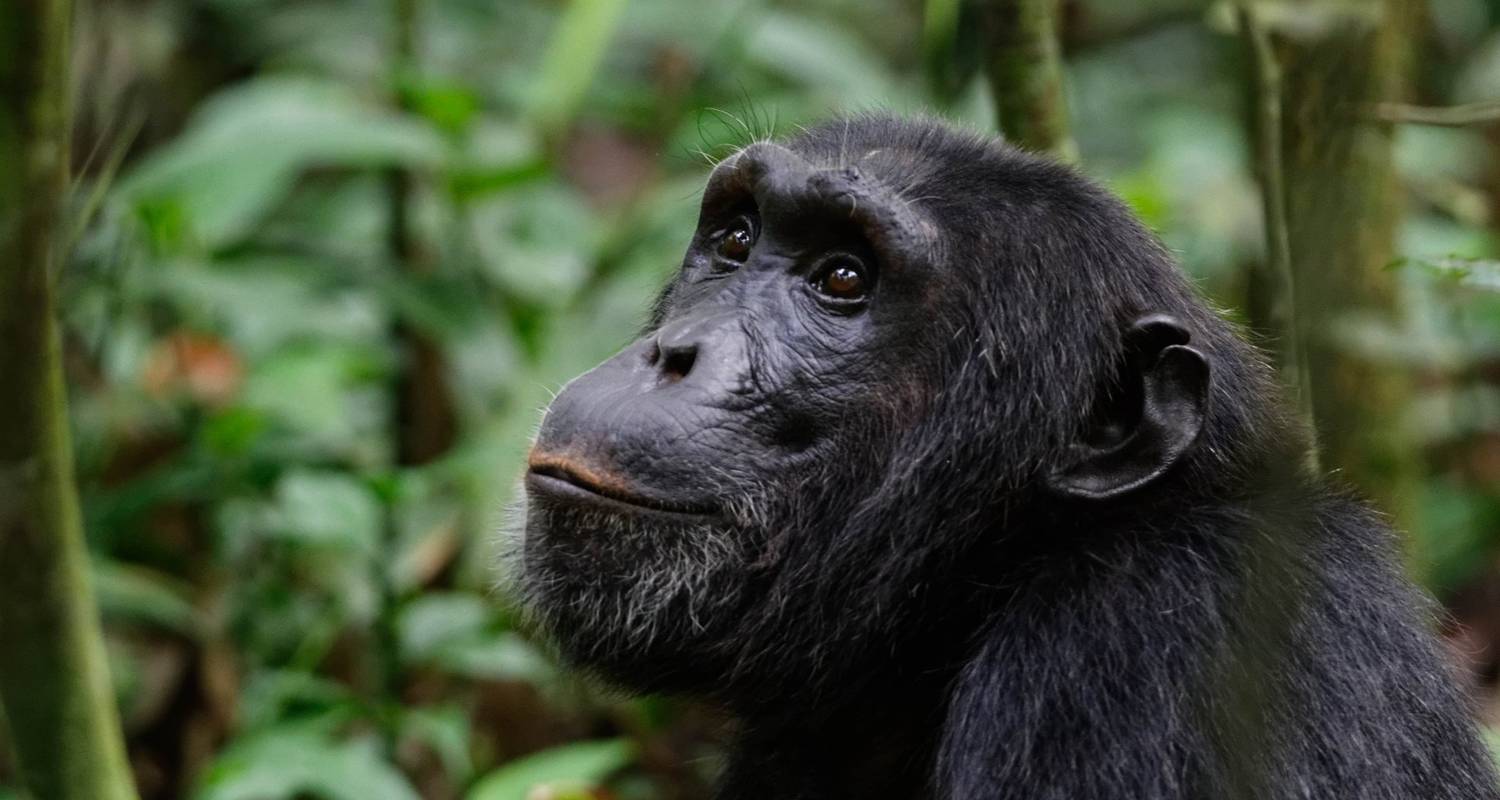
An African photography safari is a specialized wildlife expedition where game drives and waterhole hides are meticulously scheduled around optimal lighting and animal behavior rather than traditional sightseeing. Photographers trade standard itineraries for golden-hour tracking, utilizing custom vehicles with camera mounts to capture iconic species
2-days-chimpanzee-tracking-sleeping-at-budongo-eco-lodge
2-days-best-chimpanzee-tracking-in-kibale-forest-park-tour-package
3-days-trips-to-queen-elizabeth-national-park-for-chimpanzee-tracking-in-kyambura-gorge
3-days-chimpanzee-tracking-to-kibale-forest-national-park
4-days-queen-elizabeth-national-park-and-kyambura-gorge-chimpanzee-tracking
4-days-kibale-forest-chimpanzee-tracking-and-queen-elizabeth-national-park
4-days-chimpanzee-tracking-in-lake-mburo-national-park-and-lake-mburo-safari
4-days-kibale-forest-chimpanzee-tracking-and-queen-elizabeth-national-park
4-days-murchison-falls-and-chimpanzee-tracking-in-budongo-forest
5-days-uganda-big-five-safari-and-chimpanzee-tracking-in-kibale-forest-park
6-days-jinja-white-water-rafting-gorilla-trekking-and-chimpanzee-tracking-adventure
6-days-budget-uganda-safari-and-gorilla-trekking
7-days-perfect-uganda-primate-safari-itinerary
What makes a dedicated photography safari different from a regular wildlife safari?
A dedicated photography safari prioritizes optimal lighting, patient animal tracking, and specialized vehicle setups over covering large distances to check off species lists. Standard tourists often move quickly after spotting a lion, but photography groups stay at a single location for hours—waiting for dramatic light, action, or subtle behavioral interactions like grooming, hunting, or nursing.
Daily schedules are strictly built around golden hour. Photographers head out into the field well before sunrise to capture animals in early morning light and remain in the bush until dusk. Vehicles are modified specifically for shooting, featuring removable windows, drop-down sides, low-angle swivel seats, and built-in camera mounts or beanbag rails.
Crucially, group sizes are kept small—typically two to four guests per vehicle—so everyone has an unobstructed window seat on both sides of the vehicle. Guides on photo safaris are specialized trackers trained to position the vehicle relative to wind direction, animal trajectory, and light angles, ensuring photographers capture clean, background-blurring portraits without disturbing the animals.
What are the best focal lengths for wildlife photography on an African safari?
Selecting the right lenses is essential for a successful safari. A telephoto zoom lens—such as a 100–400mm, 150–600mm, or 200–600mm—is the primary workhorse. These lenses offer the reach needed to capture distant predators, birds, and tight eye-level portraits, while allowing you to zoom out quickly when a large elephant or giraffe approaches the vehicle.
If you use a full-frame camera, having at least 400mm of reach is recommended. Crop-sensor (APS-C or Micro Four Thirds) cameras provide extra effective focal length due to crop factors, turning a 300mm lens into an effective 450mm field of view. A second camera body mounted with a 24–70mm or 70–200mm lens is equally important for capturing animals in their broader landscape environment, wide environmental shots, and sudden close encounters.
Prime lenses with wide apertures (like a 300mm f/2.8 or 400mm f/2.8) excel in low-light early mornings and late evenings, but they lack zoom flexibility and add considerable weight to carry on smaller bush flights.
How do I choose between a full-frame, crop-sensor, or mirrorless camera body for safari?
Mirrorless camera systems are the standard for modern wildlife photography because of their silent electronic shutters, high-speed continuous shooting rates, and subject-detection autofocus systems that track animal eyes through dense grass.
When choosing between full-frame and crop-sensor sensor sizes, both offer distinct benefits. Full-frame cameras deliver superior image quality in low light, wider dynamic range for high-contrast mid-day sun, and cleaner images when pushing ISO levels high during early morning or late evening shoots. However, full-frame setups require longer, heavier, and more expensive telephoto lenses to achieve the same reach.
Crop-sensor (APS-C) bodies apply a magnification factor (typically 1.5x or 1.6x), giving a 300mm lens the effective field of view of a 450mm lens. This extra reach is beneficial for photographing small birds or distant predators without added lens weight. Carrying two camera bodies—ideally a high-resolution full-frame for landscape/low-light shots alongside a crop-sensor or high-megapixel mirrorless body for reach—gives you the best versatility across varied field conditions.
Why is bringing a second camera body recommended for a safari trip?
Carrying two functional camera bodies on a wildlife photography safari is a best practice for two main reasons: preventing missed action and protecting your equipment from environmental elements.
Wildlife encounters unfold rapidly—a quiet lion sleeping under an acacia can burst into a high-speed chase within seconds. If you only have one camera body mounted with a prime 500mm telephoto lens, you will struggle to capture the action if the animal runs close to your vehicle. Having a primary camera fitted with a long telephoto (e.g., 200–600mm) and a secondary camera fitted with a wide-to-medium zoom (e.g., 24–70mm or 70–200mm) allows you to swap instantly without missing critical shots.
Additionally, African savannahs and dust tracks are notorious for fine, powdery dust. Swapping lenses outdoors in a moving, open 4x4 vehicle risks depositing abrasive dust directly onto your camera's exposed sensor and interior glass elements. Using two pre-configured camera bodies minimizes lens changes in dusty field conditions, keeping your equipment safe.
What camera support gear works best inside open-top safari vehicles?
Traditional heavy tripods are impractical inside safari vehicles because their legs take up valuable floor space, block other guests, and transmit engine vibrations directly to your camera setup. Instead, specialized camera supports designed for vehicles are preferred.
The most versatile support is a heavy-duty safari beanbag. Filled with rice, beans, or synthetic plastic pellets, a u-shaped beanbag drapes securely over open vehicle doors, window frames, or pop-up roof rails. Resting your long telephoto lens directly on a beanbag absorbs engine rumbles and provides a stable, flexible shooting platform for tracking moving animals.
A monopod equipped with a smooth tilt or gimbal head is another great option, allowing you to quickly adjust height while keeping weight off your arms during long waits. Some specialized photo vehicles feature built-in adjustable clamp mounts or swing-arms along the sides, allowing you to lock heavy super-telephoto lenses safely at eye level. Always pack an unfilled beanbag shell in your luggage and fill it with rice or grain upon arriving at your local lodge.
What are the advantages and drawbacks of shooting in the dry season (June–October)?
The dry season, running from June through October across East and Southern Africa, is widely considered the peak period for wildlife viewing. As seasonal rainfall vanishes, vegetation thins out and rivers dry up, forcing animals to congregate predictably around permanent waterholes, rivers, and swamps. This makes tracking predators like lions, leopards, and cheetahs much easier.
The dry season also aligns with the iconic Mara River crossings of the Great Wildebeest Migration in Tanzania and Kenya. Dry, firm ground allows safari vehicles to navigate off-road tracks easily without getting bogged down in deep mud.
However, the dry season carries distinct drawbacks for photographers. Landscapes can look harsh, dry, and brown, with pale dusty skies that lack clouds or colorful sunrise backdrops. Dust in the air can create haze, though it sometimes produces dramatic golden-hour light shafts. High tourist volume during peak months means popular wildlife sightings can grow crowded with safari vehicles, making it harder to capture clean, unobstructed shots without other vehicles in your background.
What makes the "Green Season" (November–May) appealing for wildlife photography?
The green season—often referred to as the emerald or wet season—runs from November through May across sub-Saharan Africa. While often overlooked by standard tourists, it offers distinct visual advantages for photographers. Rain transforms dry plains into lush green landscapes, creating rich environmental backgrounds that contrast against dark animal coats.
During this period, many ungulate species give birth, leading to abundant sightings of newborn impalas, zebras, and wildebeest, along with heightened predator interaction. The air is clear and free of dust, resulting in vibrant colors and crisp long-distance shots. Atmospheric conditions produce dramatic storm clouds, rainbows, and colorful sunsets that add drama to wide-angle environmental portraits.
Furthermore, migratory bird species arrive from Europe and Asia, filling wetlands with breeding plumage. Green season travel offers significantly lower lodge rates, discounted private vehicle rentals, and uncrowded game tracks. The trade-offs include unpredictable downpours, slippery mud tracks that can hamper travel, and dense vegetation that makes hiding predators harder to spot.
How do I manage low-light shooting during early morning and late evening game drives?
The most active animal behaviors occur during twilight—dawn and dusk—when light levels are low. Mastering low-light camera settings ensures sharp, noise-free images without motion blur.
First, open your lens to its widest available aperture (such as f/2.8 or f/4) to allow maximum light onto the camera sensor. Keep your shutter speed fast enough to prevent blur caused by subject movement and vehicle vibrations; aim for a minimum of 1/500th of a second for resting animals, and 1/1000th or faster for moving predators.
Do not fear raising your camera's ISO settings. Modern camera sensors handle high ISO levels (ISO 3200 to 12800) remarkably well, and modern AI-powered noise reduction software easily cleans up grain in post-processing. A sharp image with a bit of noise is always preferable to an unusable, blurry photo shot at a low ISO setting. If light drops completely, utilize a beanbag support to drop shutter speeds for stationary, sleeping animals.
What camera settings work best for fast-action wildlife photography like hunting or bird flight?
Photographing fast-paced wildlife action—such as a cheetah sprinting, a bird taking flight, or an antelope leaping—requires specific camera configurations to guarantee pin-sharp focus.
Set your camera to continuous autofocus mode (known as AI Servo on Canon or AF-C on Nikon and Sony). Select a dynamic tracking AF area or animal eye-tracking mode, allowing the autofocus system to lock onto and track the moving subject across your frame. Use high-speed continuous shooting (burst mode) to capture maximum frames per second, increasing your chances of capturing the ideal wing position, paw placement, or water splash.
Maintain a fast shutter speed: a minimum of 1/2000th of a second is required to freeze a sprinting predator, while fast-flying birds need 1/3200th of a second or faster. Keep your aperture slightly closed (around f/5.6 or f/8) rather than wide open to give yourself a deeper depth of field, ensuring the subject's entire body remains within sharp focus during sudden movements.
How do I safely manage camera power and battery charging in remote safari camps?
Managing power for your cameras, laptops, and field drives in remote bush camps requires advance planning. Modern mirrorless cameras consume battery power quickly, especially when using electronic viewfinders, continuous autofocus tracking, and image stabilization. Always pack at least three to four fully charged spare batteries per camera body for a full day out in the bush.
While most established safari camps feature 24-hour solar power or generator systems in guest tents, some remote mobile camps only run generators during specific morning and evening hours. Bring a multi-socket power strip and international wall plug adapters (typically British Type G for East Africa or Type M for South Africa) so you can charge multiple batteries and devices simultaneously during generator operational windows.
Carrying a heavy-duty portable power bank (20,000mAh+) equipped with USB-C Power Delivery (PD) allows you to top up mirrorless camera batteries directly inside your vehicle between game drives. Keep spare batteries stored inside warm insulated bags during cold early morning drives, as low temperatures drain battery reserves rapidly.
What is the best strategy for backing up large image files while on safari?
Photographers shoot thousands of high-resolution RAW files on a safari trip, making a reliable field backup routine crucial. Never rely on a single memory card or laptop drive to store your images.
Implement a 3-2-1 backup strategy: maintain three total copies of your data across two different storage media types, keeping one copy physically separated from the rest. At the end of each afternoon game drive, import your images from your camera memory cards onto a primary portable solid-state drive (SSD) via your laptop. Simultaneously duplicate that folder onto a second independent portable SSD.
Keep one backup SSD stored inside your camera daypack and the secondary SSD stored separately in your main luggage or lodge safe. Do not erase or format your camera memory cards until you have returned home and verified all files on your main home hard drives. Rugged, shock-resistant, and dust-sealed portable SSDs (such as SanDisk Extreme or LaCie Rugged) are ideal for demanding bush travel conditions.
How do I protect sensitive camera gear from dust, heat, and rain on a safari?
African environments subject photographic equipment to fine dust, severe heat, and sudden tropical downpours. Fine dust from unpaved tracks penetrates unsealed lens barrels and camera buttons, so keep your camera gear stored inside a closed, dust-resistant backpack whenever the vehicle is moving at high speeds.
Drape a clean, light-colored pillowcase or specialized microfiber camera cover over your mounted camera and lens setup while sitting in open-top vehicles. This shields your gear from sun exposure and airborne dirt while keeping it accessible if an animal appears unexpectedly. Pack a heavy-duty waterproof rain cover or dry bag for every camera bag to handle sudden downpours.
Avoid leaving camera gear exposed to direct sunlight on vehicle seats, as extreme heat can trigger thermal shutdown warnings in modern camera sensors and drain battery reserves. Carry plenty of lens cleaning cloths, a hand-pump air blower, and a soft sensor brush to clean your gear at the end of each day.
What makes Serengeti National Park in Tanzania a world-class photography location?
Tanzania’s Serengeti National Park offers sweeping savannah views, vast wildlife concentrations, and clear golden-hour light. Spanning nearly 15,000 square kilometers, its open, flat grasslands allow for unobstructed environmental compositions, uncluttered backgrounds, and clean horizon lines that emphasize dramatic African skies.
The primary photographic highlight in the Serengeti is the Great Wildebeest Migration—an ongoing movement of over 1.5 million wildebeest, zebras, and gazelles following seasonal rains. Photographers capture massive herds grazing across open southern plains, dramatic river crossings along the northern Mara River, and intense predator interactions as lions, leopards, cheetahs, and hyenas target young or weak animals.
Granite rock outcrops known as kopjes dot the landscape, providing perches where big cats rest, scan for prey, and pose against warm sunrise backdrops. The Serengeti's established track networks and diverse ecosystems ensure varied photographic opportunities across every month of the year.
What unique photographic opportunities does Kenya’s Amboseli National Park offer?
Amboseli National Park in southern Kenya is globally celebrated for its unique pairing of big game species and dramatic mountain scenery. The park sits directly in the shadow of Mount Kilimanjaro—Africa’s highest peak at 5,895 meters—providing an iconic backdrop for wildlife photography.
Amboseli is famous for its dense, habituated populations of big bull elephants known as "tuskers," which carry long, thick tusks that sweep down toward the ground. Photographers flock to Amboseli to capture images of these massive elephants walking in line across dry, dusty lake beds with the snow-capped peak of Kilimanjaro towering above them in early morning light.
The park's permanent swamps, fed by underground snowmelt from Kilimanjaro, attract large numbers of hippos, water birds, and cape buffalos, offering rich reflection shots along swamp edges. The dusty environment produces dramatic sunbeams and warm golden light during early morning and late afternoon hours, giving photos a classic, atmospheric safari mood.
What are the challenges and rewards of primate photography in Bwindi Impenetrable Forest?
Photographing mountain gorillas in Uganda’s Bwindi Impenetrable Forest presents a sharp contrast to open savannah game drives. Instead of shooting from a vehicle, you hike on foot through steep terrain, thick vines, and dark forest undergrowth. The jungle canopy filters out natural sunlight, creating dark conditions on the forest floor where mountain gorillas forage and rest.
To overcome low light, use fast prime or zoom lenses featuring wide maximum apertures (f/2.8 or f/4) paired with high ISO settings (ISO 3200 to 6400) to maintain adequate shutter speeds. Flash photography is strictly prohibited because bright flashes startle gorillas and can provoke defensive displays from silverbacks.
The rewards are immense: capturing intimate, eye-level portraits of endangered mountain gorillas, playful juveniles, and massive silverbacks framed by lush emerald leaves is a profound experience. Keep your lens front element clear of moisture, use a lens hood to protect against rain drops, and carry a microfiber cloth to wipe fogged glass in the humid jungle environment.
What is the difference between a private safari vehicle and a shared vehicle for photography?
For a serious wildlife photographer, booking a private 4x4 safari vehicle is a worthwhile investment. In a shared safari vehicle with standard tourists, seating is often cramped, views can be obstructed by other passengers, and the vehicle schedule is driven by general group preferences rather than lighting or animal behavior. Standard groups may quickly move on from a sleeping lion that a photographer would prefer to watch until it wakes up.
A private vehicle gives you total control over the itinerary, daily timing, and stopping decisions. You can choose to leave camp before dawn, spend four hours at a single waterhole waiting for a hunt, or stay out through late evening golden hour without needing to negotiate with non-photographers.
Crucially, a private vehicle allows your specialized guide to position the land cruiser specifically for your shooting angle, turning to catch optimal light or dropping down low along tracks for eye-level perspectives. It also provides space to spread out camera gear, lenses, and beanbags comfortably across empty seats.
How do specialized waterhole hides enhance wildlife photography?
Specialized underground or ground-level waterhole hides—popular in destinations like Botswana, South Africa, and Kenya—offer an immersive, low-angle perspective on wildlife photography. Built beneath or directly at the edge of active waterholes, these camouflaged, soundproof structures allow photographers to sit safely at ground level just meters away from wild animals as they drink.
Shooting from a low angle creates a intimate perspective, placing the viewer at eye level with drinking elephants, lions, giraffes, and birds. This low perspective produces soft, pleasing background blur and highlights water splashes, reflection details, and ripples.
Hides shield photographers from wind and scent, allowing animals to act naturally without detecting human presence. Many modern photography hides feature comfortable swivel chairs, rubberized lens rails, battery charging points, and wide tinted glass windows, offering ideal conditions for long, patient sessions during hot mid-day hours when standard game drives slow down.
What gear is needed for night game drives and infrared/low-light safari photography?
Night game drives present opportunities to photograph nocturnal predators like leopards, lions, hyenas, civets, and bushbabies active under cover of darkness. Photographing in near-total darkness requires specialized low-light gear, technique, and light sources.
Standard equipment includes a fast camera body capable of clean images at high ISO levels (ISO 6400 to 12800+) paired with a fast lens (f/1.8, f/2.8). Because built-in camera flashes produce harsh shadows and startle animals, safari guides utilize continuous spotlight beams covered with red filters. Red light minimizes eye strain and disruption to nocturnal animals while providing enough illumination for camera autofocus systems to lock onto subjects.
Advanced wildlife photographers sometimes use continuous LED light panels equipped with diffusers, mounted on vehicle rails to soften shadows. Keep shutter speeds around 1/125th to 1/250th of a second for resting animals, and utilize heavy beanbags or specialized vehicle clamps to hold long lenses steady during exposure windows.
How do I compose compelling wildlife photographs that tell a story?
Creating impactful wildlife photographs goes far beyond centering an animal in your frame; it requires thoughtful composition, environmental context, and patience. Avoid the trap of taking only tight, close-up headshots. Instead, step back and shoot environmental portraits using a wider focal length (like 70–200mm or 35–70mm) to capture the animal within its habitat—whether framed by majestic acacia trees, sweeping savannah plains, or stormy skies.
Utilize fundamental compositional principles: place the animal's eye along the top third grid lines (rule of thirds), and leave negative space in front of the subject in the direction it is walking or looking. Pay attention to background elements; position your vehicle to eliminate distracting branches, horizon lines cutting through heads, or other safari vehicles.
Capture dynamic interactions—such as mother-and-cub grooming, play-fighting, yawning, or direct eye contact—to evoke emotion and tell a clear story about animal behavior.
What are the typical costs associated with an African photography safari?
The cost of an African photography safari varies widely based on destination, season, accommodation style, and vehicle arrangements. Budget photographic trips relying on public campsites, basic entry permits, and shared game drives start around $250 to $400 per person, per day.
Mid-range options—utilizing comfortable permanent tented camps, dedicated photo guides, and small group vehicle shares—typically cost between $500 and $900 per person, per day. High-end or luxury photographic safaris range from $1,200 to over $2,500 per person, per day. These premium rates cover stays at exclusive private conservancies, fly-in bush transfers, top-tier professional photo guides, fully customized private 4x4 photo vehicles, and all-inclusive gourmet dining.
Additionally, factor in extra expenses such as international flights, specialized park or photo-hide fees, gorilla/chimpanzee tracking permits ($150 to $1,500 per permit), gear insurance, and tips for your dedicated driver-guides and camp staff.
How can ethical considerations guide my decisions during a photo safari?
Ethical integrity must always take priority over getting a photo. The safety, stress levels, and natural behaviors of wild animals must come before camera angles or social media shots. Never encourage or allow your driver to off-road illegally, break park boundary rules, or drive too close to animals—especially mothers with young infants, hunting predators, or nervous species like rhinos.
Avoid making loud noises, clapping, or whistling to force an animal to look toward your camera; this disrupts their natural behavior and can alert prey to a hidden predator's position. Respect vehicle limit rules around sensitive sightings to prevent crowding and stress.
When photographing local communities, Indigenous groups, or cultural villages, always seek explicit permission first through your guide, treat individuals with dignity, and support fair local compensation. Leave no trash in national parks, stay inside designated safety zones, and practice non-intrusive observation at all times.
What luggage regulations apply to internal bush flights on a safari?
Internal transfers between remote safari camps often rely on small light aircraft (such as Cessna Caravans) operating out of dirt bush airstrips. These aircraft enforce strict luggage weight limits and size dimensions due to safety regulations and limited cargo pod space. Total luggage allowances typically range from 15 kg to 20 kg (33 lbs to 44 lbs) per passenger, which must include both your main soft-sided duffel bag and your camera daypack.
Hard-shell suitcases are prohibited because they cannot squeeze into the curved cargo holds of small planes. Photographers must choose gear thoughtfully to stay within these weight limits. Wear your heaviest items—such as a multi-pocket photo vest loaded with spare camera bodies, small lenses, and heavy batteries—onto the aircraft cabin floor, as body weight is measured separately from bag limits.
Coordinate with your tour operator in advance if you carry heavy super-telephoto lenses, as you may need to purchase an extra seat on bush flights to accommodate surplus gear allowances safely.
Why are private conservancies often preferred over public national parks for photo safaris?
Private conservancies—lands bordering public national parks owned by local communities or private trusts—offer distinct operational advantages for photography. In public national parks (like the Masai Mara National Reserve or Serengeti National Park), off-road driving is strictly prohibited, night game drives are banned, and vehicles must return to camps by strict sunset gate curfews. Public parks can also grow crowded around big cat sightings.
In contrast, private conservancies cap vehicle and tourist numbers, resulting in uncrowded, exclusive sightings. Guides in private conservancies are permitted to drive off-road carefully to follow high-priority sightings like hunting leopards or cheetahs, allowing you to position your vehicle for clean angles.
Private conservancies also permit night game drives with spotlights, guided walking safaris on foot, and flexible meal times, giving photo groups total freedom to stay out in the field as long as the light and animal action dictate.
What essential non-photographic gear should I pack in my daypack?
Alongside cameras and lenses, packing essential non-photographic items inside your daily safari vehicle bag ensures personal comfort and readiness in the field. Dust protection is paramount: pack a lightweight neck gaiter or bandana to shield your nose and mouth on dry tracks, along with polarized sunglasses to cut glare.
Sun protection requires a wide-brimmed hat, SPF 50+ broad-spectrum sunscreen, and lip balm with sun protection. Carry high-strength insect repellent containing DEET or Picaridin to guard against tsetse flies and mosquitoes. Pack a compact pair of binoculars (such as 8x42 or 10x42) for scanning distant ridges while your long camera lens rests on your lap.
Include a small personal medical kit containing rehydration salts, eye drops (to soothe dust-irritated eyes), pain relievers, blister plasters, and hand sanitizer. Keep a lightweight, packable windproof rain jacket handy for sudden temperature drops during early morning starts or late afternoon downpours.
How do I photograph wide-angle landscape and astrophotography scenes on safari?
While telephoto wildlife shots dominate safaris, Africa's landscapes and dark night skies offer great wide-angle photographic subjects. Wide-angle zoom lenses—such as a 14–24mm or 16–35mm f/2.8—are perfect for capturing dramatic cloudscapes, classic acacia trees silhouetted against red sunsets, and sweeping vistas of the Great Rift Valley.
For astrophotography, remote African safari camps feature little light pollution, offering pristine conditions for photographing the Milky Way, star trails, and night skies. To shoot the night sky, mount your wide-angle lens on a sturdy tripod set up safely within your lodge grounds. Use manual focus locked onto a bright distant star, set your aperture wide open (f/2.8 or wider), select a high ISO (ISO 3200 to 6400), and use an exposure time of 15 to 25 seconds (applying the 500 Rule) to freeze crisp pinpoint stars without trailing.
What health precautions and medical preparations are needed for an African photo safari?
Proper medical preparation ensures a safe, worry-free photographic trip. Visit a travel health clinic at least 4 to 6 weeks before departure to review mandatory and recommended vaccinations. A Yellow Fever vaccination certificate is legally required for entry into several African countries or when crossing borders between East African nations.
Malaria is endemic across many premier safari ecosystems; consult a travel doctor to obtain appropriate malaria prophylactic medication (such as Atovaquone-Proguanil or Doxycycline) and follow the daily dosing regimen consistently. Ensure routine immunizations—including Hepatitis A, Hepatitis B, Typhoid, Tetanus, and Rabies—are fully up to date.
Pack a comprehensive personal prescription medical kit containing broad-spectrum antibiotics, anti-diarrheal medication, motion-sickness tablets for rough tracks, and antihistamines for insect bites. Obtain travel insurance that explicitly covers emergency medical evacuation, gear loss, and trip cancellations before departing.
How does photographing birdlife on safari differ from photographing big game?
Bird photography on safari requires different techniques, camera settings, and field patience compared to tracking large mammals. Birds are smaller, move faster, and often perch in busy foliage, requiring maximum reach—ideally a 500mm or 600mm focal length setup.
Fast shutter speeds are critical: while 1/500th of a second works for a resting lion, capturing sharp images of flying birds or small songbirds requires shutter speeds of 1/2500th to 1/4000th of a second. Precise autofocus point selection is vital; use small single-point or spot AF modes to lock focus through dense branches directly onto the bird's eye, rather than letting auto-area modes focus on nearby leaves.
Pay close attention to background distance—position yourself so the background behind the perched bird is far away, creating a smooth, clutter-free blur (bokeh) that makes the subject pop. Early morning hours offer the best light and highest bird activity, as species sing, display, and forage for food.
What should I expect during a typical day on a dedicated photography safari?
A day on a dedicated photography safari revolves entirely around optimal natural light and animal activity patterns. The day begins before dawn, around 5:00 AM, with quick coffee and biscuits before departing camp at 5:30 AM to catch the first golden morning light.
You spend four to five hours tracking predators, observing morning hunts, and capturing backlit golden-hour portraits. A packed bush breakfast is often enjoyed directly in the field under an acacia tree to maximize time on track. By 10:30 AM or 11:00 AM, as harsh mid-day heat sets in and animals retreat to dense shade, you return to camp for lunch, image downloading, battery charging, and a mid-day siesta.
At 3:30 PM, after afternoon tea, you head out for the evening game drive. You track wildlife through the warm afternoon light, staying out through dusk to capture sunset silhouettes before returning to camp around 7:00 PM for dinner, image backups, and stargazing.
How do I effectively edit and process wildlife photos taken on safari?
Post-processing transforms RAW safari files into clean, polished images. Begin by organizing your images using cataloging software like Adobe Lightroom or Capture One, culling out blurry, out-of-focus, or poorly composed frames.
When editing RAW files, adjust white balance to capture the warm, golden tones of early morning or late afternoon light. Shadow recovery helps bring out subtle details in dark animal fur or feathers without blowing out bright sky highlights. Apply moderate contrast, texture, and clarity to enhance fur detail and eye sharpness, taking care not to over-process.
Modern AI-powered noise reduction tools (such as Lightroom Denoise or Topaz DeNoise AI) work exceptionally well on high-ISO images shot in low light, removing digital grain while retaining crisp edge detail. Finally, crop thoughtfully to refine composition, level horizon lines, and remove distracting elements along the edges of your frame before exporting.
How can I ensure my camera gear is properly insured for an international safari?
Carrying thousands of dollars’ worth of specialized camera gear into remote international environments involves risks, including theft, physical damage, drop impacts, and loss during transit. Standard homeowners or rental insurance policies rarely cover professional camera gear used internationally or during specialized travel.
Before departing, secure a dedicated, worldwide equipment insurance policy through specialist insurers (such as Front Row Insurance, Hill & Usher, or specialized photography organization policies through NANPA or PPA). Ensure the policy explicitly covers full replacement value for accidental drops, water damage, theft, and loss during international air transit and game drives.
Itemize every piece of gear—including camera bodies, lenses, drones, laptops, and hard drives—with accurate serial numbers, original purchase receipts, and current market valuations. Keep digital copies of your equipment inventory list and insurance policy documents stored safely in your smartphone and cloud storage for quick access if you need to file a claim while traveling.
Booking Africa photography safari with us Roads of Adventure safaris
Booking an Africa photography safari with Roads of Adventure Safaris ensures a specialized, highly tailored visual expedition. As an authoritative, local Uganda-based ground safari operator, they design custom photography tours across East and Southern Africa, including Uganda, Kenya, Tanzania, and Botswana
