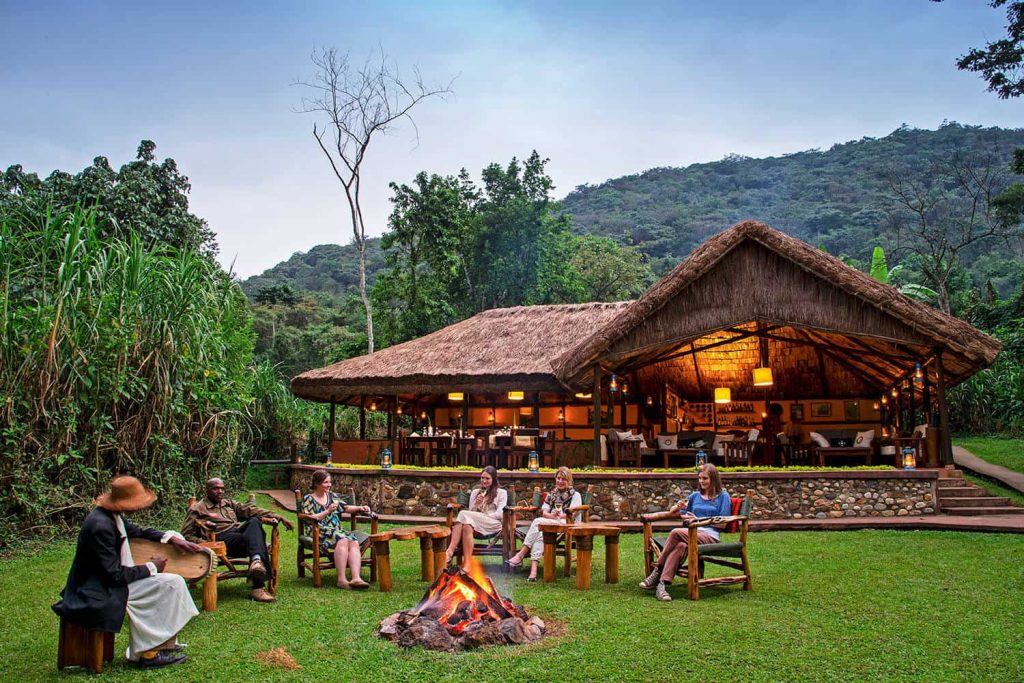
Discover the ultimate 5 Days Uganda luxury primate safari discovery, a highly curated journey through western Uganda's rainforests and savannahs. Travel in a customized, air-conditioned 4x4 Land Cruiser accompanied by professional driver-guides. You will explore prime habitats, staying at premier lodges like Kyaninga Lodge and Buhoma Lodge. This premium itinerary guarantees intimate encounters with wild primates and rare wildlife.
Day 1: Overland Transfer from Entebbe to Kibale Forest
Depart Entebbe early in the morning aboard your private 4x4 Land Cruiser, heading west toward Fort Portal. The 350-kilometer journey takes roughly six to seven hours, traveling along paved highways that cut through the Mityana and Mubende districts. As you leave the urban bustle behind, the landscape shifts into rolling agricultural countryside and small rural towns. Break for a freshly prepared local lunch in Fort Portal, a pleasant town framed by the distant peaks of the Rwenzori Mountains. Afterwards, drive past manicured green tea estates to reach Kyaninga Lodge, perched on the edge of a extinct volcanic crater lake. Complete your check-in, unwind on your private cottage deck, and enjoy peaceful views across Lake Kyaninga as night falls over the western forest region.
Day 2: Kibale Chimpanzee Tracking & Bigodi Swamp Boardwalk
Arrive at the Kanyanchu ranger station in Kibale National Park by 08:00 for your Uganda Wildlife Authority briefing. Guided by experienced forest rangers, head directly into the dense tropical rainforest to track a habituated troop of wild chimpanzees (Pan troglodytes). The hike lasts anywhere from two to four hours as you follow echoing pant-hoots through the thick canopy. After spending time observing the troop feed and groom, return to the lodge for a midday lunch. In the afternoon, take a short drive to the nearby Bigodi Wetland Sanctuary for a two-hour guided walk along timber boardwalks. This community-managed papyrus swamp is home to eight primate species and vibrant birdlife, including the Great Blue Turaco, before you head back to Kyaninga Lodge for dinner.
Day 3: Scenic Drive to Queen Elizabeth & Kazinga Channel Sunset Cruise
Check out of the lodge after breakfast and drive three hours south toward Queen Elizabeth National Park, traveling via Kasese along the base of the Rwenzori range. Enter the park's southern Ishasha sector for an late-morning game drive through open savannah and acacia woodlands. Keep an eye on the high branches of native fig trees, where resident lions routinely climb to escape ground heat and insects. Afterwards, proceed north to Mweya Safari Lodge for lunch. At 15:00, step aboard a two-hour sunset boat cruise along the 32-kilometer Kazinga Channel. Sail past dense pods of hippos, Nile crocodiles, and herds of African bush elephants bathing at the water edge before settling in for the evening at Mweya.
Day 4: Kasenyi Plains Morning Safari & Scenic Drive to Bwindi Forest
Depart the lodge at 06:30 for an early morning game drive across the Kasenyi Plains. The cool morning air provides prime conditions for tracking active predators like lions, side-striped jackals, and leopards returning from night hunts, while large herds of Uganda kob graze nearby. Following the drive, begin the four-hour journey south toward Bwindi Impenetrable National Park. The route climbs through the terraced Kigezi highlands, affectionately called the Switzerland of Africa, offering views over steep hillsides and traditional farming villages. Arrive at Buhoma Lodge, an eco-luxury property situated directly on the forest edge, by late afternoon. Settle into your wooden chalet, listen to the evening sounds of the rainforest canopy, and prepare for your gorilla trek the next morning.
Day 5: Bwindi Mountain Gorilla Trek & Return Transfer to Entebbe
Gather at the Buhoma park headquarters at 08:00 for a safety briefing before stepping into the primeval rainforest. Accompanied by lead rangers and track scouts, hike through steep, foliage-covered terrain between two and six hours to locate your assigned mountain gorilla family. Once found, spend one quiet, regulated hour observing the silverback, mothers, and juveniles going about their natural day. Descend back to the trailhead to meet your driver, then begin the eight-hour return journey toward Entebbe or Kampala. Pause en route at the official Equator mark in Kayabwe for lunch, photographs, and geographical water-flow demonstrations across 0 degrees latitude. Continue through regional market towns, reaching Entebbe International Airport in the late evening for your onward departure flight home.
How does a 5-day Uganda primate safari compare to longer 9-day itineraries?
A 5-day itinerary is a high-impact, condensed version of Uganda’s primate circuit designed for travellers with limited time. While a 9-day safari includes extended rest periods, extra destinations like Lake Bunyonyi, and deeper forest explorations, the 5-day route focuses strictly on core highlights: Kibale Forest, Queen Elizabeth National Park, and Bwindi Impenetrable Forest.
The primary difference lies in the pace of travel. On a 5-day trip, you cover significant ground quickly, transitioning almost daily between tropical rainforests and open savannahs. You still secure full chimpanzee tracking in Kibale and mountain gorilla trekking in Bwindi, alongside savannah game drives and a Kazinga Channel boat safari. However, you trade open leisure afternoons for continuous movement. Travel days are long, but the trade-off means experiencing Uganda’s top three national parks within a short vacation window without sacrificing luxury lodge accommodations or private guide service along the way.
Is driving 6 to 7 hours from Entebbe to Kibale comfortable on Day 1?
The overland journey from Entebbe to Kibale National Park takes between six and seven hours across approximately 350 kilometers, but modern luxury safaris make the drive remarkably comfortable. Guests travel in customized 4x4 Toyota Land Cruisers featuring plush seating, air conditioning, pop-up roofs for ventilation and photos, onboard charging outlets, and refrigerators stocked with cold bottled water and snacks.
Rather than a continuous stretch, the drive is broken into scenic legs. The route passes through the lively towns of Mityana and Mubende before ascending into the lush green countryside of western Uganda. Your private driver-guide schedules regular stops for coffee, stretch breaks, and photography along expansive tea estates. A sit-down lunch in Fort Portal—a pleasant town framed by the Rwenzori Mountains—serves as a refreshing midday break. By the time you arrive at Kyaninga Lodge in the late afternoon, the journey feels less like a commute and more like an immersive road trip through rural Africa.
What should I expect during chimpanzee tracking in Kibale National Park?
Chimpanzee tracking in Kibale begins at 08:00 with a briefing by Uganda Wildlife Authority rangers at Kanyanchu headquarters. Walking through dense rainforest, you follow the calls and pant-hoots of wild chimpanzees echoing through the canopy. The hike takes anywhere from two to four hours depending on where the habituated troop spent the night and where they are foraging for fruit.
Unlike gorillas who spend considerable time resting on the ground, chimpanzees move fast through branches and across the forest floor. You will need to maintain a brisk walking pace across uneven roots and mud. Once located, visitors spend one regulated hour observing them interact, groom, feed, and communicate. Seeing their social dynamics up close is an incredible highlight. Wearing sturdy hiking boots, lightweight long trousers, insect repellent, and carrying a lightweight waterproof jacket makes navigating the humid forest interior far more enjoyable.
What makes the Bigodi Wetland Sanctuary walk worth adding on Day 2?
Located just ten kilometers from Kibale, Bigodi Wetland Sanctuary is a community-run conservation area situated in the Magombe Swamp. Adding this two-hour guided boardwalk tour after lunch offers a peaceful contrast to the high-energy chimpanzee trek earlier in the morning. The swamp protects an exceptionally high biodiversity density, acting as an ecological corridor for forest wildlife.
Walking along elevated wooden planks and dirt paths, you can spot eight distinct primate species, including red colobus, L’Hoest’s monkeys, grey-cheeked mangabeys, and black-and-white colobus. For birdwatchers, Bigodi is exceptional, harboring over 200 recorded species. Local community guides excel at pointing out the Great Blue Turaco, Papyrus Gonolek, Yellow-spotted Barbet, and various kingfishers. Furthermore, all eco-tourism fees from Bigodi directly fund local primary schools, clean water projects, and women’s craft cooperatives, making your visit a direct contribution to local community development right on the park boundary.
What are my chances of spotting tree-climbing lions in the Ishasha sector?
The southern Ishasha sector of Queen Elizabeth National Park is world-famous for its resident lion prides that regularly climb into sycamore fig and acacia trees. Lions adopt this unusual habit primarily to catch cool breezes above the hot savannah floor and to escape swarms of biting insects hiding in the tall grass.
While tree-climbing lions are wild animals that move freely across large territories, your chances of seeing them are high when guided by an experienced driver-guide who understands their daily habits. Game drives focus on known "lion trees" along the Ishasha circuit during the warmer hours between late morning and early afternoon, when the cats retreat to the branches to nap. Looking up into the wide branches often reveals golden fur and swinging tails against green leaves. Combining an Ishasha game drive with the morning Kasenyi safari maximizes your chances of seeing big cats across different habitats.
What makes the Kazinga Channel boat cruise a highlight of Queen Elizabeth National Park?
The Kazinga Channel is a natural 32-kilometer waterway connecting Lake George and Lake Edward, cutting directly through Queen Elizabeth National Park. A two-hour boat cruise along this channel provides one of Africa’s highest concentrations of aquatic wildlife viewing, allowing you to get remarkably close to animals from the safety of a launch vessel.
As you sail along the shoreline, you will pass dense pods of hippos submerged in the shallows and Nile crocodiles sunning on sandbanks. Herds of African bush elephants frequently assemble at the water’s edge to drink, bathe, and play in the mud, while Cape buffaloes cool off along the banks. Birdlife along the channel is extraordinary; expect to see pink-backed pelicans, saddle-billed storks, African fish eagles, grey-headed gulls, and African skimmers. The afternoon light creates ideal photographic conditions as animals gather along the shore before sunset.
How physically demanding is gorilla trekking in Bwindi Impenetrable Forest?
Gorilla trekking in Bwindi is a physical adventure that requires a reasonable baseline of fitness. Bwindi’s terrain consists of steep mountain ridges, dense foliage, muddy slopes, and tangled vines without paved paths. Altitudes range between 1,160 and 2,600 meters, which can make hiking feel more strenuous if you are unaccustomed to elevation.
Treks last anywhere from two to six hours round-trip, depending on where your assigned gorilla family traveled overnight. The reward, however, is unmatched: one quiet hour standing just meters away from a mountain gorilla family. To make the hike significantly easier, hire a local porter at the ranger station for around $20 USD. Porters carry your daypack, pull you up steep ascents, and offer steadying support on slippery terrain. Equipping yourself with worn-in waterproof boots, long socks, gardening gloves, and trekking poles ensures you navigate the forest comfortably.
What packing essentials are required for a 5-day Uganda primate safari?
Packing correctly for a Ugandan primate safari requires preparing for hot savannah sun and cool, wet rainforest conditions on the same trip. Clothing should feature neutral earth tones like khaki, green, or brown; avoid bright colors, as well as blue and black garments which can attract tsetse flies in savannah regions.
Essential gear includes:
- Footwear: Sturdy, waterproof hiking boots with good tread and break-in time before travel.
- Apparel: Lightweight, moisture-wicking long-sleeved shirts and long trousers to protect against nettles, thorns, and insects.
- Weather protection: A high-quality waterproof rain jacket or poncho and a wide-brimmed sun hat.
- Accessories: Tough gardening gloves (vital for gripping prickly vegetation on steep gorilla climbs), tall gaiters, and thick wool socks.
- Personal items: High-SPF sunscreen, insect repellent containing DEET, a lightweight daypack with a water bladder, and binoculars for wildlife viewing.
How do luxury lodges like Kyaninga Lodge and Buhoma Lodge enhance the safari?
High-end luxury lodges elevate a Ugandan safari by offering refined comfort, privacy, and exceptional hospitality right on the edge of wild conservation areas. Properties are intentionally designed to harmonize with their natural surroundings rather than disrupt them, providing exclusive basecamps after active days in the field.
Kyaninga Lodge features handcrafted log chalets set on wooden platforms overlooking a volcanic crater lake, complete with private decks, deep clawfoot tubs, and views toward the Rwenzori Mountains. Meanwhile, Buhoma Lodge is situated steps from the Bwindi park boundary, allowing guests to walk directly into gorilla territory. Luxury lodges provide personalized butler service, multi-course meals using fresh organic local ingredients, cozy evening firepits, and complimentary massages to soothe tired muscles after long mountain hikes. Sleeping comfortably in high-thread-count linens while listening to forest night sounds creates a seamless balance between wild adventure and premium relaxation.
Why is stopping at the Equator in Kayabwe a popular return route activity?
The stop at Kayabwe along the Masaka-Kampala highway marks the official spot where the Equator line divides the Northern and Southern Hemispheres. Pausing here on Day 5 provides a welcome break during the eight-hour drive back from Bwindi to Entebbe International Airport.
Visitors can stand with one foot in each hemisphere for classic photographs at the large circular equatorial markers. Local guides conduct quick, engaging water-drainage demonstrations illustrating the Coriolis effect, showing how water swirls clockwise in the Northern Hemisphere, counter-clockwise in the Southern Hemisphere, and falls straight down directly on the Equator line. The site also features well-curated craft galleries, cafes serving fresh Ugandan coffee, and clean facilities. It serves as a memorable cultural and geographical milestone, allowing you to stretch your legs and pick up handmade souvenirs before heading home.
Booking 5 Days Uganda luxury primate safari with us Roads of Adventure safaris
To book your 5-Days Uganda Luxury Primate Safari with Roads of Adventure Safaris, you can contact their team directly via phone or WhatsApp at +256 773 796 644 or +256 701 041 637, or email them at info@roadsofadventuresafaris.com. As a premier local operator, they will tailor this high-end itinerary with private 4x4 transport, elite luxury lodges, and your mandatory primate trekking permits
