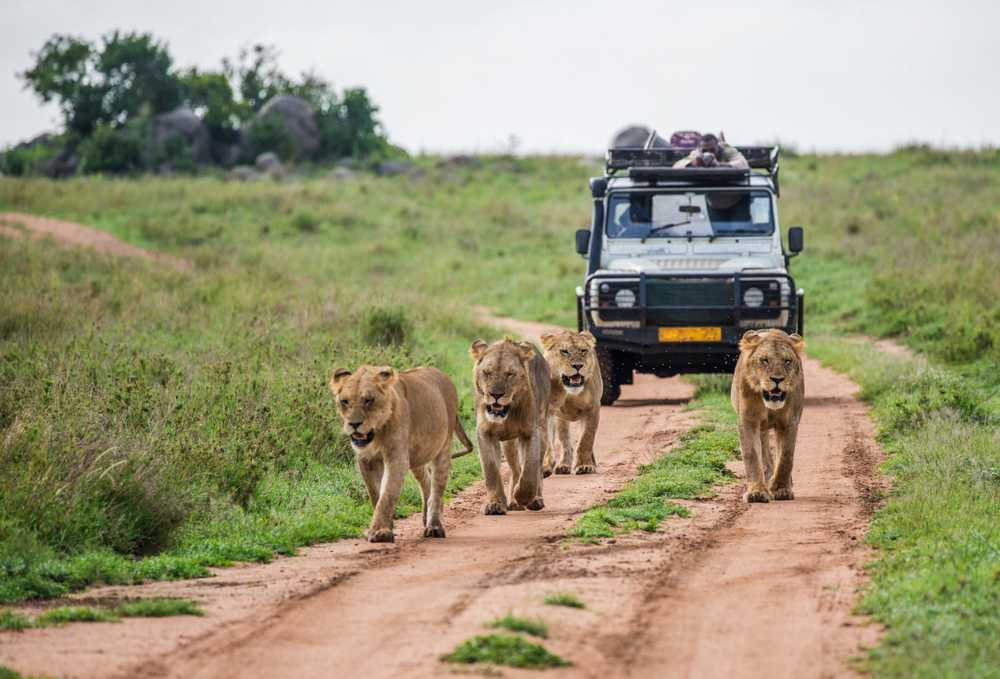
The best 10-day Tanzania safari itineraries focus on the Northern Circuit (Serengeti, Ngorongoro, Tarangire, Lake Manyara) for top-tier wildlife viewing, including the Big Five, with options for cultural experiences and Zanzibar beach relaxation. Key highlights often include migration tracking, the Ngorongoro Crater, and walking safaris.
Popular 10 days Tanzania safari tour itineraries
10-days-perfect-tanzania-safari-itinerary
10-days-tanzania-wildlife-safari-and-optional-visit-to-masai-tribe-or-hadzabe
10-days-luxury-gorilla-trekking-masai-mara-serengeti-and-ngorongoro-crater
10-days-luxury-kenya-tanzania-safari-holiday-high-end-tour-package
10-days-best-tanzania-honeymoon-safari-with-3-days-zanzibar-beach-holidays
10-days-tanzania-safari-to-all-northern-circuit-safari-parks-expedition
10-days-best-tanzania-safari-tour-and-zanzibar-beach-holiday-itinerary
10-days-southern-tanzania-safari-to-nyerere-mikumi-ruaha-and-udzungwa-mountains
12-days-best-tanzania-and-kenya-safari-combo-itinerary
10-day Northern Circuit adventure
This 10-day Northern Circuit adventure is the definitive Tanzanian odyssey, meticulously crafted for the wildlife purist. Starting in the "Safari Capital" of Arusha, you will traverse the baobab-studded plains of Tarangire before immersing yourself in the world-renowned Serengeti. With a dedicated four-day focus on the Serengeti, you maximize your chances of witnessing the dramatic Great Wildebeest Migration and the high-density predator action that defines this ecosystem. The journey culminates in the prehistoric splendor of the Ngorongoro Crater, a natural wonder teeming with the "Big Five." This 10 day itinerary balances the thrill of the chase with the serenity of the African wilderness, moving from lush groundwater forests to endless golden savannas. Designed for those who want more than a glance at nature, it provides ample time for deep exploration, patient photography, and the unforgettable magic of a Serengeti sunset.
Day 1: Arrival in Arusha
Your journey begins in Arusha, the gateway to Tanzania’s wild north. Nestled at the foot of Mount Meru, this vibrant city offers a cool, lush atmosphere to decompress after international travel. After being greeted at Kilimanjaro International Airport, you will be transferred to a boutique lodge nestled within a coffee plantation. The day is yours to relax by the pool, enjoy a fresh farm-to-table meal, or take a short walk through the aromatic coffee trees. Your private guide will meet you for a pre-safari briefing, ensuring all gear is ready for the early start tomorrow. This evening, fall asleep to the sounds of the African night, knowing that the "Endless Plains" are just a drive away. It is the perfect, quiet preamble to the high-energy wildlife encounters waiting on the horizon.
Day 2: Tarangire National Park
Departing Arusha, you head to Tarangire National Park, famous for its colossal elephant herds and ancient, iconic baobab trees. The Tarangire River is the lifeblood of this park, especially during the dry season when thousands of animals migrate to its banks for water. As you descend into the valley, you’ll immediately notice the high concentration of elephants—sometimes hundreds moving together in family groups. Keep your eyes peeled for tree-climbing lions and the elusive leopard hiding in the riverine canopy. The park’s landscape is a photographer’s dream, with the stark silhouettes of baobabs against the fiery Tanzanian sunset. After a full day of game viewing, you will retire to a lodge overlooking the valley, enjoying a sundowner as the evening breeze carries the calls of the wild.
Day 3: Lake Manyara National Park
Today is spent in the diverse habitats of Lake Manyara, a gem tucked beneath the wall of the Great Rift Valley. The park begins with a lush groundwater forest where troops of baboons and blue monkeys play in the canopy. As the forest opens up into floodplains, you’ll see the alkaline lake shimmering with thousands of flamingos. Manyara is famously home to tree-climbing lions and a spectacular variety of birdlife, including the silvery-cheeked hornbill and the great white pelican. After a picnic lunch under the shade of an acacia tree, continue exploring the hippo pools where these giants wallow in the mud. The day offers a stunning contrast to the dry plains of Tarangire, showcasing the incredible ecological variety that Tanzania provides in such close proximity.
Day 4: Journey to Central Serengeti
The adventure shifts gear today as you climb the Ngorongoro Highlands and descend onto the vast, iconic plains of the Serengeti. The name "Serengeti" comes from the Maasai word Siringet, meaning "Endless Plains," and as you drive through the Nabi Hill Gate, the horizon stretches out infinitely. This central region, known as Seronera, is a predator hotspot due to the permanent water source of the Seronera River. You’ll spend the afternoon tracking prides of lions and looking for leopards draped over the branches of sausage trees. The sheer scale of the landscape is humbling, and as you reach your luxury tented camp, you’ll realize you are truly in the heart of the wild. Dinner is served under a canopy of stars, accompanied by the distant roar of a lion.
Day 5: Serengeti – Serengeti Deep Dive
A full day dedicated to the Seronera Valley allows for patient, high-quality wildlife viewing. Without the need to travel to a new destination, you can spend hours observing animal behavior—perhaps witnessing a cheetah hunt on the open plains or a pride of lions guarding a fresh kill. The Central Serengeti is home to the "Big Five" and is particularly famous for its high density of large cats. You’ll visit the Retima Hippo Pool, where hundreds of hippos jostle for space in a noisy, muddy spectacle. Whether you choose a full-day game drive with a packed lunch or split the day with a midday siesta at camp, the focus remains on the rhythm of the wild. Every turn of the trail offers a new discovery in this predator-rich heartland.
Day 6: Serengeti – Following the Migration
Today, your guide tracks the Great Wildebeest Migration, moving toward the Western Corridor or the Northern plains depending on the season. This is nature’s greatest show, as over 1.5 million wildebeest and zebras move in a relentless search for greener pastures. You will witness the "moving city" of animals, a dusty, thundering column that stretches for miles. The energy is palpable, with predators like hyenas and lions shadowing the herds, waiting for an opportunity. You’ll learn about the incredible instincts that drive this circular journey and the obstacles the herds face, from treacherous river crossings to the ever-present threat of crocodiles. It is a visceral, awe-inspiring experience that highlights the raw struggle for survival in the African wilderness, providing memories that will last a lifetime.
Day 7: Serengeti – Exploration & Hidden Gems
On your third full day in the Serengeti, you’ll explore the lesser-known corners of the park, such as the various kopjes—giant granite outcrops that rise like islands from the sea of grass. These ancient rock formations are favorite haunts for lions and leopards, providing shade and elevated vantage points for hunting. Your guide will share insights into the delicate balance of this ecosystem, from the smallest dung beetle to the largest bull elephant. This day is about the "quiet" moments of the safari: a rare bird sighting, a family of bat-eared foxes outside their den, or the light changing over the savanna. By now, the pace of the bush has become your own, and the deep immersion into the Serengeti’s vastness feels complete and profoundly peaceful.
Day 8: Serengeti to Ngorongoro Highlands
Enjoy one final early morning game drive in the Serengeti, catching the predators at their most active before the heat of the day. After a late breakfast, you begin a slow game drive back toward the Ngorongoro Conservation Area. Along the way, you may choose to visit Olduvai Gorge, the "Cradle of Mankind," where the Leakey family discovered some of the earliest hominid fossils. As you ascend from the plains into the cool, misty highlands, the vegetation changes to lush montane forest. You’ll reach the rim of the Ngorongoro Crater in the late afternoon. Standing at the lookout point, you’ll see the 600-meter-deep caldera spread out below you—a lost world of wildlife that you will explore in depth tomorrow morning.
Day 9: Ngorongoro Crater Floor
At dawn, you descend into the Ngorongoro Crater, a UNESCO World Heritage site and the largest inactive, intact volcanic caldera in the world. Often described as a "natural zoo," the crater floor hosts over 25,000 large animals in a 260-square-kilometer space. This is your best chance to see the endangered Black Rhino, which finds refuge within the crater’s steep walls. You’ll explore the Lerai Forest, home to massive bull elephants with giant tusks, and the Magadi Lake, where flamingos congregate. The density of lions here is among the highest in Africa, and they are famously unfazed by vehicles. After a picnic lunch on the crater floor, you’ll ascend back to the highlands, spending your final safari night sharing stories of the incredible sightings from the past ten days.
Day 10: Departure via Mto wa Mbu
On your final day, you descend the highlands and pass through the vibrant village of Mto wa Mbu. This cultural hub is home to over 120 different tribes, and a short tour offers a glimpse into local life, from the colorful markets to the banana plantations. It’s a great opportunity to pick up some authentic Tanzanian crafts or artwork to remember your journey. Afterward, continue the drive back to Arusha. You’ll enjoy a final farewell lunch at a local restaurant before being transferred to Kilimanjaro International Airport for your flight home. As you look out the window at the receding silhouette of Mount Meru, you carry with you the spirit of the Serengeti and the unforgettable roar of the African wild.
10-day "Bush to Beach" Kenya safari
The 10-day "Bush to Beach" adventure is the ultimate Tanzanian journey, seamlessly blending the raw adrenaline of a world-class safari with the serene, turquoise beauty of the Indian Ocean. Your expedition begins in the heart of the Northern Circuit, where the baobab-studded plains of Tarangire and the tree-climbing lions of Lake Manyara set the stage. You will then plunge into the legendary Serengeti to witness the "Endless Plains" and the high-stakes drama of the Great Migration, followed by a descent into the "Eden" of the Ngorongoro Crater. After six days of dusty tracks and majestic "Big Five" encounters, you will trade your safari boots for sandals. A short flight whisks you to the spice-scented island of Zanzibar, where white-sand beaches and the historic charm of Stone Town provide a tranquil finale. This itinerary is perfectly balanced for those seeking both the thrill of the wild and the luxury of total relaxation.
Day 1: Arrival and Tarangire Giants
After landing at Kilimanjaro Airport, your guide whisks you away to Tarangire National Park, the "Land of Giants." The landscape is dominated by massive, prehistoric baobab trees that dwarf even the largest bull elephants. Tarangire boasts one of the highest concentrations of elephants in Africa, and during the dry season, the Tarangire River becomes a magnet for thirsty herds of zebra, wildebeest, and buffalo. You will spend the afternoon navigating the riverine loops, watching families of elephants bathe in the silt. As the golden hour sets in, the park’s silhouettes create a photographer’s paradise. You’ll settle into a lodge nestled among the trees, falling asleep to the distant trumpeting of elephants and the steady hum of the African bush, marking a powerful beginning to your Tanzanian odyssey.
Day 2: Manyara’s Groundwater Forest
Today, you explore Lake Manyara National Park, a diverse ecological gem located at the base of the Great Rift Valley escarpment. The safari begins in a lush, jungle-like groundwater forest where troops of baboons and blue monkeys swing through the canopy. As you emerge onto the floodplains, the view opens to a shimmering alkaline lake fringed by thousands of pink flamingos. Manyara is famous for its unique tree-climbing lions, often found lounging in the branches of ancient mahogany trees to escape the heat. You will also visit the hippo pool, a bustling aquatic theater of grunts and splashes. The compact nature of this park allows for an intimate wildlife experience, where every turn reveals a new habitat—from dense forest to open marshland—all within the shadow of the dramatic rift wall.
Day 3: Serengeti Bound
The journey continues as you climb the Ngorongoro Highlands, passing through high-altitude rain forests before the earth seemingly drops away into the Serengeti. The "Endless Plains" reveal themselves at Nabi Hill Gate, where the horizon stretches as far as the eye can see. This is the world’s most famous wildlife sanctuary, and your entry game drive toward the Seronera Valley will immediately introduce you to the park's resident predators. The Central Serengeti is a haven for large cats; keep your binoculars ready for a leopard draped over a sausage tree or a pride of lions surveying their kingdom from a granite kopje. By sunset, you’ll reach your luxury tented camp, where a campfire awaits. Dining under the vast African sky, you’ll feel the immense scale of the wilderness surrounding you.
Day 4: The Migration Pulse
A full day in the Serengeti is dedicated to tracking the Great Migration. Depending on the month, you will head toward the massive herds of wildebeest and zebra as they traverse the plains in their search for fresh grass. The energy is electric; where there are thousands of herbivores, predators are never far behind. You may witness a cheetah testing a group of gazelles or hyenas shadowing the migration's wake. Your guide will find a scenic spot for a picnic lunch, allowing you to dine in the middle of the action. Beyond the big names, you'll encounter diverse birdlife and smaller mammals like the bat-eared fox. This deep immersion into the Serengeti’s rhythm highlights the raw, unfiltered cycle of life that has remained unchanged for millennia.
Day 5: Ngorongoro’s Lost World
Rising early, you leave the Serengeti and head toward the Ngorongoro Crater, a UNESCO World Heritage site and the world’s largest intact volcanic caldera. Dropping 600 meters down to the crater floor, you enter a "Natural Eden" where 25,000 large mammals reside in a self-contained ecosystem. This is your best chance to see the critically endangered Black Rhino, alongside massive "tusker" elephants and some of the densest lion prides in Africa. The crater floor features a soda lake, a fever tree forest, and open plains, all within a 20-kilometer radius. The sheer concentration of wildlife is staggering; you are often surrounded by zebras and buffalo at every turn. After a breathtaking day in this prehistoric amphitheater, you’ll ascend the rim to enjoy a sunset view that defies description.
Day 6: From Bush to Beach
After a final breakfast in the highlands, you’ll be transferred to an airstrip for your flight to Zanzibar. As the dusty plains of the mainland fade away, they are replaced by the vibrant blues and corals of the Indian Ocean. Upon arrival on the "Spice Island," the change in pace is immediate. The warm, humid air carries the scent of cloves and saltwater. You’ll be driven to your beachfront resort on the island’s northern or eastern coast, where the turquoise water laps against powdery white sand. After a week of early safari starts, this is your time to unwind. Swap your binoculars for a tropical cocktail, feel the sand between your toes, and watch the traditional wooden dhows sail past against a backdrop of a brilliant orange sunset.
Day 7: Zanzibar’s Coastal Bliss
Spend your first full day on the island in total relaxation. Zanzibar is home to some of the world’s most beautiful beaches, and today is about embracing the "Pole Pole" (slowly, slowly) lifestyle. You might choose to lounge by the infinity pool, take a long walk along the pristine shoreline, or indulge in a traditional massage using local spices. For those who want to get back into the water, the coral reefs just offshore offer incredible snorkeling opportunities, where you can swim among schools of tropical fish and perhaps even spot a sea turtle. The afternoon is perfect for a sunset dhow cruise, where you can enjoy the ocean breeze and local music as the stars begin to appear. It is the ultimate antidote to the rugged excitement of the safari.
Day 8: Stone Town and Spices
Today, you delve into the rich cultural tapestry of Zanzibar with a visit to Stone Town and a local spice plantation. Stone Town, a UNESCO World Heritage site, is a labyrinth of narrow alleys, carved wooden doors, and bustling bazaars that reflect its Persian, Indian, and European history. You’ll visit the Sultan’s Palace and the old slave market, gaining a deep understanding of the island's complex past. Afterward, a spice tour takes you into the lush interior, where you can see, smell, and taste fresh cinnamon, vanilla, and nutmeg straight from the tree. You’ll learn why these spices were once as valuable as gold. This sensory journey provides a fascinating contrast to the wildlife-focused days on the mainland, showcasing the vibrant human history of the archipelago.
Day 9: Marine Adventures
Your final full day is dedicated to the wonders of the Indian Ocean. Many travelers opt for the "Safari Blue" excursion, a full-day sailing trip on a traditional dhow. You’ll explore the Menai Bay Conservation Area, stopping at sandbanks that disappear at high tide and snorkeling in crystal-clear lagoons. A highlight is the seafood barbecue served on a remote island, featuring fresh lobster, calamari, and tropical fruits. Keep an eye out for dolphins, which are frequently spotted playing in the wake of the boats. If you prefer a quieter day, the Mnemba Atoll offers world-class diving and snorkeling in a protected marine park. Whether you are underwater or on deck, the day is a celebration of the ocean’s beauty, providing a shimmering final memory of your Tanzanian holiday.
Day 10: Farewell to Paradise
On your final day, enjoy a leisurely morning on the beach, perhaps taking one last dip in the warm waters of the Indian Ocean or picking up some last-minute souvenirs in the hotel boutique. After a final lunch overlooking the sea, your driver will transfer you to Zanzibar International Airport for your flight home. As you look out the window at the turquoise reefs fading into the distance, you’ll carry with you the perfect blend of memories: the roar of a Serengeti lion, the silence of the Ngorongoro Crater at dawn, and the gentle rustle of palm trees. The "Bush to Beach" journey is more than just a vacation; it is a soul-stirring experience that captures the very best of East Africa’s wild heart and coastal soul.
10 Days Tanzania Northern Circuit & Cultural Safari
This 10-day Northern Circuit & Cultural Safari is an expertly curated journey that bridges the gap between Tanzania’s legendary wildlife and its vibrant human heritage. While most safaris focus solely on the "Big Five," this itinerary invites you to step out of the vehicle and into the soul of the Rift Valley. Your adventure begins in Arusha before heading to the lush groundwater forests of Lake Manyara. You will then venture into the iconic Serengeti for three days of world-class predator tracking and migration viewing. The journey takes a unique turn as you head to the dramatic, volcanic landscapes of Lake Natron, home to the Maasai and the primary breeding ground for East Africa’s flamingos. By combining traditional game drives with village visits, bush walks, and crater treks, this safari offers a profound, multi-dimensional perspective of the African wilderness that lingers long after the dust of the savanna has settled.
Day 1: Arrival in Arusha
Your cultural odyssey begins in Arusha, a bustling city nestled under the shadow of Mount Meru. After a warm welcome at the airport, you will be transferred to a quiet lodge where the scent of blooming frangipani fills the air. This afternoon, take a guided walk through a local market to see the vibrant pulse of Tanzanian life, from colorful textiles to fresh mountain produce. Your guide will provide a detailed briefing over a dinner featuring local flavors, preparing you for the transition from urban life to the wild plains. The cool highland air provides the perfect environment for a restful night before your safari officially kicks off. It is a day of gentle immersion, allowing you to synchronize with the slower "pole pole" pace of East Africa while anticipating the adventures ahead.
Day 2: Lake Manyara National Park
Today you drive to Lake Manyara National Park, a scenic gem famous for its diverse ecosystems. You’ll start in a dense groundwater forest where troops of baboons greet you at the gate. As the canopy thins, you’ll reach the expansive alkaline lake, often shimmering with a pink hue from thousands of flamingos. Manyara is one of the best places to see the elusive tree-climbing lions and large herds of elephants. For a cultural twist, you’ll spend the late afternoon in the nearby village of Mto wa Mbu. This melting pot of over 120 tribes offers a fascinating glimpse into Tanzanian rural life. You can visit local farms, see traditional woodcarvings, and enjoy a local lunch, witnessing firsthand how different cultures have harmoniously coexisted in this fertile valley for generations.
Day 3: Journey to the Serengeti
Leaving the Rift Valley wall behind, you ascend the Ngorongoro Highlands, driving through mist-covered forests before the Great Serengeti Plains reveal themselves. The transition from the lush highlands to the "Endless Plains" is one of the most dramatic drives in Africa. Along the way, you’ll pass through Maasai lands where young herders tend to their cattle in the shadow of wild giraffes. Upon entering the Serengeti, your game drive begins immediately. The Seronera Valley, with its permanent water sources, ensures that you are never far from the action. You’ll reach your tented camp by sunset, just as the nocturnal predators begin to stir. This evening, the sounds of the African bush—the distant whoop of a hyena or the chirp of a cricket—provide the soundtrack to your first Serengeti night.
Day 4: Central Serengeti Predators
A full day in the Central Serengeti is dedicated to the big cats. This region is world-renowned for its high density of lions, leopards, and cheetahs. You’ll spend the morning exploring the various kopjes—giant granite islands that serve as lookout points for prides of lions. Your guide will share insights into the complex social structures of these predators and the constant struggle for territory. In the afternoon, you’ll head to the Retima Hippo Pool to witness hundreds of these massive mammals jostling for space in a noisy display of strength. Whether you’re watching a leopard camouflaged in a sausage tree or a family of elephants crossing the plains, the day is a deep dive into the raw beauty of the savanna. It is a masterclass in nature’s balance and the relentless rhythm of survival.
Day 5: Following the Migration
Today is focused on the Great Migration, the largest overland movement of mammals on earth. Depending on the season, you will follow the thundering herds of wildebeest and zebra as they move across the plains. The scale of the migration is difficult to grasp until you are surrounded by a sea of animals stretching to the horizon. This is a high-stakes environment where predators are constantly on the move, shadowing the herds. You’ll learn about the ecological importance of this journey and the remarkable instincts that guide these animals across treacherous terrain. The day provides an unfiltered look at the "Circle of Life," from the birth of a calf to the strategic hunt of a pride. It is an awe-inspiring spectacle that cements the Serengeti’s status as the world’s greatest wildlife theater.
Day 6: Serengeti to Lake Natron
You trade the golden grasses of the Serengeti for the rugged, otherworldly beauty of Lake Natron. This journey takes you off the beaten path, driving through remote landscapes where few tourists venture. As you descend the Rift Valley escarpment, the majestic silhouette of Ol Doinyo Lengai, the "Mountain of God" to the Maasai, dominates the skyline. This active volcano is sacred to the local community and adds an air of prehistoric mystery to the region. The air becomes warmer and the terrain more arid, signaling your arrival in one of the most unique environments in Africa. You’ll settle into your camp near the lake, feeling the profound shift from the wildlife-dense plains to this stark, volcanic wilderness. It is a day of transition into the heart of Maasai territory.
Day 7: Flamingos & Maasai Culture
Wake up before dawn for a walk along the shores of Lake Natron. This highly alkaline lake is the only regular breeding ground in East Africa for 2.5 million Lesser Flamingos. Watching the sun rise over the red-tinted waters as thousands of flamingos take flight is a transformative experience. Afterward, you will visit a local Maasai boma. Unlike more commercialized visits, this is an authentic opportunity to learn about Maasai traditions, their relationship with the land, and their resilient culture. You’ll see their homes, learn about their medicinal plants, and perhaps witness a traditional dance. In the afternoon, take a refreshing hike to the Engare Sero waterfalls. The contrast of the cool, cascading water against the hot, volcanic rock provides a perfect natural spa experience in the middle of the desert.
Day 8: Ngorongoro Highlands Trek
Today you travel back toward the lush Ngorongoro Highlands, leaving the heat of Natron for the cool, misty air of the crater rim. The drive offers incredible views of the Rift Valley floor from above. Upon arrival in the highlands, you will participate in a guided nature walk through the montane forest. This is a chance to see smaller species that are often missed from a vehicle, such as colorful forest birds, chameleons, and unique flora. The walk often leads to hidden waterfalls or elephant caves where the giants come to lick salt from the earth. By late afternoon, you’ll reach your lodge on the crater rim. Looking down into the 600-meter-deep caldera, you’ll get a glimpse of the "Lost World" that you will explore the following morning.
Day 9: Ngorongoro Crater Floor
At first light, you descend into the Ngorongoro Crater, a UNESCO World Heritage site and a self-contained Eden. The crater floor is home to over 25,000 large animals, including the rare Black Rhino. Because the animals are confined by the steep walls, the density of wildlife is unparalleled. You’ll spend the morning navigating the various habitats, from the Lerai Fever Tree Forest to the Magadi soda lake. Seeing a pride of lions stalking through the short grass or a massive bull elephant with tusks reaching the ground is a common occurrence here. After a picnic lunch on the crater floor, you’ll ascend back to the rim. The day offers a spectacular finale to your wildlife viewing, providing a concentrated look at the "Big Five" in one of the world’s most beautiful settings.
Day 10: Karatu to Arusha
On your final day, you pass through the colorful town of Karatu, a hub for local agriculture. You’ll stop at a community-run project or a local school, offering a final point of cultural connection before heading back to Arusha. This is a great time to reflect on the diversity of your journey—from the predator-rich plains of the Serengeti to the sacred volcanic peaks of Lake Natron. Your guide will take you to a local craft center where you can find authentic Maasai beadwork and Tanzanite stones. After a farewell lunch together, you will be transferred to Kilimanjaro International Airport for your departure. As you fly home, you carry with you not just photos of animals, but the stories, smiles, and ancient wisdom of the Tanzanian people.
10 Days Ultimate Northern Circuit Safari with Walking Experiences
This 10-day "Ultimate Northern Circuit" is an immersive masterclass in East African ecology, designed for those who crave a visceral connection to the wild. While traditional safaris confine you to a vehicle, this itinerary breaks the mold by integrating guided bush walks and thrilling night game drives. Your journey begins in the baobab-rich plains of Tarangire, moving through the lush groundwater forests of Lake Manyara, and culminating in a four-day deep dive into the legendary Serengeti. By exploring on foot with expert trackers, you will learn to read the "newspaper of the bush"—interpreting tracks, scents, and bird calls that are often missed from a car. From the prehistoric depths of the Ngorongoro Crater to the nocturnal mysteries of the savanna, this safari offers a rare, multi-sensory perspective. It is a journey of discovery that balances the grand spectacle of the "Big Five" with the intricate, hidden wonders of the Tanzanian wilderness.
Day 1: Arrival and The Baobab Plains
Your adventure begins in Arusha, where you meet your expert guide and drive to Tarangire National Park. Known as the "Land of Giants," Tarangire is famous for its massive elephant herds and ancient baobab trees that dot the landscape. After an afternoon game drive focusing on the Tarangire River—the park's primary water source—you will settle into your lodge. As the sun dips below the horizon, the real adventure begins with a night game drive. Equipped with powerful spotlights and an expert tracker, you will search for nocturnal species rarely seen by day, such as the elusive leopard, aardvarks, and wide-eyed bushbabies. The sights and sounds of the African bush at night offer a mysterious and thrilling introduction to the ecosystem, revealing a hidden world that wakes up just as the rest of the park goes to sleep.
Day 2: Walking Through the Giants
Today, you trade the vehicle for your hiking boots. Accompanied by an armed ranger and a specialized naturalist, you will embark on a morning walking safari through Tarangire’s backcountry. Walking allows you to appreciate the smaller details: the intricate architecture of termite mounds, the medicinal uses of local flora, and the subtle tracks of a passing hyena. Without the hum of an engine, your senses sharpen to the rustle of the wind and the warning calls of birds. In the afternoon, you’ll return to the vehicle to explore the park’s swamps, which attract high densities of buffalo and plains game. This combination of walking and driving provides a comprehensive understanding of Tarangire’s unique topography, ensuring you see both the grandest mammals and the fascinating micro-ecosystems that support them in this rugged northern sanctuary.
Day 3: Lake Manyara and the Rift Wall
Leaving the baobabs behind, you head to Lake Manyara National Park, nestled at the base of the Great Rift Valley escarpment. The day starts in a lush groundwater forest, home to playful blue monkeys and massive troops of baboons. As the forest thins into acacia woodlands, keep a keen eye out for Manyara’s legendary tree-climbing lions. In the afternoon, you will participate in a guided forest walk on the "Treetop Walkway," a series of suspension bridges that allow you to view the ecosystem from the canopy level. This unique perspective is perfect for spotting rare birds and butterflies. As evening approaches, you will ascend the rift wall to a lodge in Karatu. The view looking back over the shimmering alkaline lake and the valley floor provides a stunning visual summary of the day’s ecological transition.
Day 4: Into the Endless Plains
The journey continues into the Serengeti, passing through the Ngorongoro Highlands before the savanna unfolds before you. The transition is dramatic as the moist highland air gives way to the dry, vast plains that support millions of herbivores. Your first game drive in the Central Serengeti focuses on the Seronera River valley, a year-round magnet for wildlife. This region is a predator hotspot, and you are likely to encounter prides of lions or a cheetah surveying the plains from a termite mound. Upon reaching your luxury tented camp, you will enjoy a traditional sundowner by the campfire. The lack of light pollution here makes for incredible stargazing; your guide will help you identify the constellations of the Southern Hemisphere, connecting the celestial patterns to the ancient navigation instincts of the animals surrounding you.
Day 5: Serengeti Walking Experience
On your second day in the Serengeti, you will participate in a specialized walking safari in a designated wilderness area. This is a rare opportunity to walk on the same ground as the Great Migration. Your guide will teach you how to identify animal dung and tracks, explaining the vital roles of insects and soil in sustaining the vast grasslands. Walking in the Serengeti is a humbling experience that places you directly within the food chain, fostering a profound respect for the balance of nature. After a picnic lunch in the shade of an acacia tree, the afternoon is spent on a game drive exploring the various kopjes—giant granite outcrops that act as "islands" for predators. These rocks are the best places to spot leopards and lions waiting for the cooler evening hours to hunt.
Day 6: Following the Great Migration
Today is dedicated to the spectacle of the Great Migration. Depending on the season, you will head toward the massive herds of wildebeest and zebra as they move in their endless search for water and green pastures. The sheer scale of the migration is breathtaking, with lines of animals stretching to the horizon. You will witness the constant movement and the strategic shadowing by predators like hyenas and lions. Your guide will find a safe spot for you to step out of the vehicle and listen to the "thrum" of thousands of hooves and the constant grunting of the wildebeest—a sound that defines the Serengeti. This day highlights the raw energy and desperation of the migration, providing a deep look into the evolutionary pressures that drive this massive seasonal movement across the East African landscape.
Day 7: Serengeti Deep Dive and Night Safari
You spend a third full day in the Serengeti, focusing on the hidden gems of the Central and Western regions. Today is about patience; you might spend time at a waterhole watching a family of elephants interact or tracking a solitary leopard through riverine thickets. The Serengeti’s diversity is immense, and your guide will help you spot smaller residents like the serval cat or the colorful lilac-breasted roller. In the evening, you will head out for another night game drive, this time in the vast open plains. The Serengeti at night is a different world; the air is cooler, and the eyes of predators reflect in the torchlight. Watching a pride of lions prepare for a night hunt is a visceral experience that provides a complete perspective on the 24-hour cycle of the African savanna.
Day 8: Olduvai Gorge and Crater Rim
After a final morning game drive in the Serengeti, you travel back toward the Ngorongoro Conservation Area. You will stop at Olduvai Gorge, the "Cradle of Mankind," where some of the world’s most important hominid fossils were discovered. A short walk and a visit to the museum provide a fascinating look at our own evolutionary history within this landscape. As you ascend to the rim of the Ngorongoro Crater, the environment shifts to a lush, montane forest. You will take a guided "Crater Rim Walk" in the late afternoon. This walk offers spectacular views into the 600-meter-deep caldera while allowing you to spot highland bird species and unique flora. Looking down at the miniature-looking herds on the crater floor, you’ll prepare for tomorrow’s descent into this "Natural Eden."
Day 9: The Ngorongoro Crater Floor
At dawn, you descend the steep walls into the Ngorongoro Crater, a UNESCO World Heritage site and a self-contained ecosystem. The crater floor is a "lost world" where 25,000 large mammals reside, including the endangered Black Rhino. This is your best chance to see the "Big Five" in a single day. You will explore the Magadi soda lake, where flamingos congregate, and the Lerai Forest, home to massive bull elephants. The density of predators here is incredible, and the animals are remarkably habituated to vehicles. After a picnic lunch at the hippo pool, you will spend the afternoon searching for the crater’s famous black-maned lions. The dramatic backdrop of the crater walls makes every sighting feel theatrical. By evening, you will return to the highlands, reflecting on the sheer abundance of life within this volcanic amphitheater.
Day 10: Cultural Immersion and Departure
On your final day, you descend the highlands into the vibrant village of Mto wa Mbu. Here, you will take a guided walking tour through the local banana plantations and rice fields, learning about the irrigation systems that support the community. This cultural interaction provides a wonderful human context to the wilderness you’ve explored. You’ll enjoy a traditional Tanzanian lunch prepared by a local women’s group, tasting the flavors of the region. Afterward, you will make the final drive back to Arusha. Your guide will take you to a local market for last-minute souvenirs before transferring you to Kilimanjaro International Airport. As you depart, you carry with you a profound understanding of Tanzania’s ecosystems—from the smallest track in the dust to the grandest migration on the "Endless Plains."
10 Days Private Photographic Safari
This 10-day Private Photographic Safari is a precision-engineered journey for those who view the world through a lens. Unlike standard tours, this itinerary prioritizes "the shot," offering extended stays in Tanzania’s most photogenic landscapes to ensure you never have to rush a sighting. You will spend two dedicated days in Tarangire to capture the interplay of light on ancient baobabs and massive elephant herds, followed by a deep immersion into the Serengeti’s "Endless Plains." With a private vehicle at your disposal, you have the flexibility to stay at a sighting for hours, waiting for that perfect yawn, hunt, or golden-hour backlight. From the high-contrast caldera of Ngorongoro to the "Ghost Forests" of Manyara, every location is chosen for its unique textures and biodiversity. This is more than a safari; it is a curated portfolio-building expedition that respects the patience, equipment, and artistic vision required to capture the raw essence of the African wild.
Day 1: Arusha to Tarangire – The Golden Hour
Your photographic journey begins with a drive to Tarangire National Park, a land defined by its massive elephant herds and prehistoric baobab trees. Your private vehicle is equipped with beanbags and charging ports, ensuring you are ready the moment you enter the gate. The afternoon is spent near the Tarangire River, where the concentrated wildlife provides endless opportunities for "action" shots as animals congregate to drink. As the sun begins to set, the park’s iconic baobabs cast long, dramatic shadows across the savanna—the perfect time for wide-angle landscape photography. You will settle into a lodge positioned for prime sunset views, allowing you to capture the silhouette of a passing elephant against a fiery Tanzanian sky. This first day sets a high bar for the visual storytelling that will define your trip.
Day 2: Tarangire – Masterclass in Texture
A full second day in Tarangire allows you to venture into the park's quieter southern reaches, away from the main tourist loops. This is the time for "patience photography." You might spend the morning at a single waterhole, waiting for the perfect composition as giraffes awkwardly splay their legs to drink or a leopard descends from a sausage tree. The textures here—the rough bark of the baobabs, the wrinkled skin of old bull elephants, and the golden dry grass—provide incredible material for monochrome or high-detail shots. Your guide, trained in photographic positioning, will ensure the vehicle is always angled for the best light. This deep dive into Tarangire ensures you leave with more than just snapshots; you leave with a high-quality series of images that capture the rugged soul of this "Land of Giants."
Day 3: Lake Manyara – The Canopy and the Lake
Today, you head to Lake Manyara National Park, offering a completely different palette of colors and light. The day begins in the cool, filtered light of the groundwater forest, where long-lens photography is perfect for capturing the expressive faces of baboons and blue monkeys in the canopy. As the forest opens up to the alkaline lake, the "pink fringe" of flamingos provides a stunning contrast against the deep blue water and the dramatic Great Rift Valley escarpment. Manyara is also famous for its tree-climbing lions; capturing a predator lounging in an acacia tree with the lake in the background is a signature shot for any Tanzanian portfolio. The "Ghost Forest" of submerged trees offers haunting, minimalist compositions that look spectacular during the midday light when the sky is reflected in the still water.
Day 4: Journey to Central Serengeti
The drive to the Serengeti is a visual transition from the lush Ngorongoro Highlands to the vast, arid plains. As you cross the Nabi Hill Gate, the "Endless Plains" stretch out, offering a masterclass in minimalist landscape photography. The horizon is broken only by the occasional flat-topped acacia or a solitary kopje. Your game drive toward the Seronera Valley focuses on the big cats that rule this region. Central Serengeti is a predator hotspot, and you’ll be looking for lions or cheetahs positioned on termite mounds—an iconic image of the African savanna. As the day ends, you’ll reach your tented camp. The "Blue Hour" here, just after sunset, provides a soft, ethereal light over the plains, perfect for capturing the quiet, vast atmosphere of the Serengeti as the nocturnal world begins to stir.
Day 5: Serengeti – The Predator Window
A full day in the Central Serengeti is dedicated to the "Predator Window"—the early morning and late afternoon hours when the light is golden and the big cats are most active. You will leave camp at dawn to catch the lions at their most social and the leopards before they retreat into the dense canopy for the day. This region is famous for its granite kopjes, which provide dramatic "natural stages" for wildlife photography. Seeing a pride of lions surveying the plains from a rock formation is a highlight for any photographer. Your private guide will use their knowledge of animal behavior to anticipate movement, helping you capture high-speed action shots or intimate portraits. The midday hours are spent at a hippo pool, where the chaotic energy provides great practice for capturing movement and splashes.
Day 6: Following the Great Migration
Today is about the scale and movement of the Great Migration. Depending on the season, you will follow the thundering herds of wildebeest and zebra. Photographing the migration requires a mix of wide-angle shots to capture the sheer number of animals and telephoto lenses for portraits of the dust-covered travelers. The energy is visceral; you can capture the determination in the animals' eyes and the tension of predators shadowing the herds. This is also a fantastic day for "environmental portraits," showing the wildlife within the context of the vast, shifting landscape. Whether it is a thundering river crossing or a quiet moment of a calf resting in the tall grass, the migration provides a narrative arc for your portfolio that captures the relentless, beautiful struggle for survival on the Serengeti plains.
Day 7: Serengeti – Hidden Details
On your third day in the Serengeti, you focus on the "Hidden Serengeti"—the smaller species and the varied birdlife that are often overlooked. This is the day to use your macro and long lenses for the colorful Lilac-breasted Roller, the secretary bird stalking through the grass, or the intricate patterns on a monitor lizard. The Serengeti is home to over 500 bird species, and the morning light is perfect for capturing the vibrant plumage and sharp eyes of these avian subjects. You might also explore the western or northern corridors, depending on where the light and wildlife are most favorable. This day is about rounding out your portfolio with the diversity that makes the Serengeti a world-class ecosystem, ensuring your collection includes everything from the smallest dung beetle to the largest bull elephant.
Day 8: Olduvai Gorge to Crater Rim
After a final morning session in the Serengeti, you head toward the Ngorongoro Conservation Area. A stop at Olduvai Gorge provides a change of pace, with opportunities to photograph the rugged geological layers of the "Cradle of Mankind." As you ascend the highlands, the air becomes misty and the vegetation lush. You will reach the rim of the Ngorongoro Crater in the late afternoon. This is one of the most iconic landscape shots in Africa—the 600-meter-deep caldera spread out beneath you. The interplay of clouds, sunlight, and the crater walls creates a constantly shifting scene. You’ll spend the evening at a lodge on the rim, capturing the silhouette of the highlands against the twilight sky, preparing for the high-density wildlife photography that awaits on the crater floor at first light tomorrow.
Day 9: The Ngorongoro Crater Floor
You will be among the first to descend into the crater at dawn to catch the best light. The crater floor is a "natural studio" where the steep walls provide a neutral, dramatic background for wildlife portraits. This is your best chance to capture the endangered Black Rhino, as well as the famous black-maned lions of Ngorongoro. The high density of animals means you can move quickly between subjects, from hyenas patrolling the soda lake to massive "tusker" elephants in the Lerai Forest. The reflection of the crater walls in the central Magadi Lake, often dotted with pink flamingos, provides stunning landscape-meets-wildlife compositions. After a full day in this prehistoric amphitheater, you will ascend the rim, having captured the "Big Five" in one of the world’s most unique and photogenic settings.
Day 10: Karatu to Arusha – Final Frames
On your final day, you descend the highlands and pass through the vibrant town of Karatu. This is a great opportunity for some "street" and cultural photography in the local markets, capturing the colorful textiles and the bustle of daily life. The contrast between the wild savanna and the vibrant human culture of Tanzania provides a perfect closing chapter to your photographic story. You’ll enjoy a final lunch together in Arusha, where you can begin the process of reviewing and backing up your thousands of images. Your guide will transfer you to Kilimanjaro International Airport for your departure. As you fly home, you leave with a professional-grade portfolio that captures the light, the life, and the legendary landscapes of Tanzania’s Northern Circuit in exquisite, high-definition detail.
1. What is the best 10-day northern circuit itinerary?
The "best" itinerary is often defined by a logical progression of ecosystems, starting from the lush gateways and culminating in the vast savannas. A premier 10-day Northern Circuit route typically begins in Arusha, serving as a gentle introduction before heading to Tarangire National Park. Spending two days here allows you to witness the massive elephant herds and iconic baobabs. From there, a one-day stop at Lake Manyara offers a stark contrast with its groundwater forests and soda lake.
The heart of the trip should be a four-day immersion in the Serengeti National Park. This duration is critical because it provides enough time to explore the Central Seronera Valley while also chasing the Great Migration in either the Western Corridor or the Northern Kogatende region, depending on the season. Following the Serengeti, the itinerary should move toward the Ngorongoro Conservation Area. A full day dedicated to the crater floor ensures you see the high-density resident wildlife in the world’s largest intact caldera.
The trip often concludes with a night in the Karatu highlands, allowing for a relaxed drive back to Arusha on the final day. This flow is strategically designed to build excitement, moving from the smaller, specialized parks to the grandest wildlife theaters on earth. It also factors in "safari fatigue" by ensuring the most intense game viewing occurs in the middle, with a spectacular volcanic finale. By following this route, travelers maximize their "shutter time" and minimize repetitive transit, ensuring every day reveals a different facet of Tanzania's diverse topography.
2. Tarangire, Serengeti, Ngorongoro Crater, Lake Manyara offer the ultimate wildlife experience.
Combining these four parks creates a comprehensive ecological tapestry that no single park can provide alone. Tarangire is the essential "elephant hub," where the landscape is dominated by prehistoric baobabs and the Tarangire River, a vital dry-season lifeline. It offers a rugged, ancient feel that sets the stage. Lake Manyara then introduces an aquatic and forest element; it is a birdwatcher’s paradise and the best place to see tree-climbing lions against the backdrop of the dramatic Great Rift Valley wall.
The Serengeti is the undisputed centerpiece, offering the scale of the "endless plains" and the high-stakes drama of the Great Migration. Here, the focus shifts to massive prides of lions, elusive leopards, and the sheer volume of herbivores. Finally, the Ngorongoro Crater provides a "Natural Eden" experience. Because the crater acts as a self-contained ecosystem, the density of wildlife is unparalleled, making it the most reliable spot to find the endangered Black Rhino.
Together, these parks cover every major East African habitat: from alkaline lakes and groundwater forests to short-grass plains and montane highlands. This variety ensures that your "Big Five" checklist is completed while also exposing you to rare species like the fringe-eared oryx or the secretary bird. For a 10-day traveler, this quartet represents the "Greatest Hits" of Tanzanian conservation, providing a balanced, high-yield journey that captures the true essence of the wild African interior.
3. Can I combine Serengeti safari with Zanzibar beaches?
The "Bush to Beach" combination is one of the most iconic travel pairings in the world. It offers a perfect emotional and physical arc: the high-adrenaline, dusty, and early-morning intensity of the safari followed by the tranquil, turquoise serenity of the Indian Ocean. In a 10-day window, the most effective split is six days on safari and four days in Zanzibar. This allows you to hit the "Big Three"—Tarangire, Serengeti, and Ngorongoro—before transitioning to the coast.
To make this combination seamless, travelers typically take a "bush flight" directly from a Serengeti airstrip (like Seronera or Kogatende) to Zanzibar’s Abeid Amani Karume International Airport. This 1.5-hour flight saves you a full day of driving back to Arusha and allows you to be on the beach by lunchtime. Zanzibar offers a unique cultural contrast to the mainland; you move from Maasai-influenced savannas to the Arabic and Indian-influenced history of Stone Town.
The final four days on the island are usually spent on the northern or eastern beaches (such as Nungwi or Matemwe), where the tide is less dramatic and the sand is powdery white. Activities shift from tracking lions to snorkeling in coral reefs, sunset dhow cruises, and exploring spice plantations. This combination ensures that you return home feeling both exhilarated by nature and deeply restored by the sea, making it the ultimate comprehensive Tanzanian holiday.
4. Yes, spend six days on safari and four days relaxing in Zanzibar.
A six-day safari is the "Goldilocks" duration—just long enough to reach the deep Serengeti without feeling like you are constantly in a vehicle. By focusing your first six days on the Northern Circuit, you can cover Tarangire, the Serengeti, and the Ngorongoro Crater. This pace allows for two nights in the Serengeti, which is the minimum required to move beyond the central transit paths and find the more elusive predator sightings. You get the "maximum wild" experience before the dusty tracks begin to lose their novelty.
Transitioning to Zanzibar for the final four days provides the necessary decompression. After days of scanning the horizon for movement and waking up at 5:30 AM, the "Island Life" encourages a slower rhythm. Four days is the ideal amount of time to spend two nights in a beachfront resort and perhaps one night in the historic heart of Stone Town. This allows you to experience the island's dual identity: its world-class marine beauty and its rich, complex history as a global spice trading hub.
This 6/4 split is also logistically sound. Most high-end safari operators can arrange the "all-in" logistics, where your safari guide drops you at a remote airstrip and a resort representative meets you in Zanzibar. It prevents the "travel burnout" that often occurs on 10-day trips that are 100% vehicle-based. By the time you reach the beach, you have seen the Big Five and the Great Migration, leaving you free to enjoy the ocean without the nagging feeling that you are missing out on the wildlife action.
5. When is the best time for a 10-day safari?
While Tanzania is a year-round destination, the Dry Season (June to October) is widely considered the peak window for a 10-day safari. During these months, the weather is predictable, with clear blue skies and almost no rain. This has a functional impact on wildlife viewing: the vegetation thins out and turns golden-brown, making predators significantly easier to spot against the backdrop. More importantly, animals are forced to congregate around permanent water sources like the Tarangire River or the Seronera River, leading to spectacular, high-density sightings.
This period also aligns with the most dramatic phase of the Great Migration. From July to September, the herds are typically in the Northern Serengeti, braving the crocodile-infested waters of the Mara River. If your 10-day trip falls in this window, you have a high probability of witnessing a "river crossing," one of nature's most visceral spectacles. The humidity is low, and the risk of malaria is at its seasonal minimum, making for a comfortable experience both in the vehicle and at the camps.
Alternatively, the "Green Season" (November to May) offers its own unique charm. While there is more rain (mostly in short afternoon bursts), the landscape becomes a vibrant emerald green. This is the best time for bird watching, as migratory species from Europe and Asia are present. It is also the "Calving Season" in the southern Serengeti (January–February), where thousands of wildebeest calves are born daily, attracting intense predator action. For those seeking lower prices and fewer crowds, the Green Season is an excellent, albeit more humid, alternative.
6. What is included in a typical 10-day Tanzania tour?
A comprehensive 10-day safari package is designed to be "turn-key," allowing the traveler to focus entirely on the landscape while the operator handles the complex logistics of the African bush. A standard mid-range to luxury package includes a private 4x4 safari vehicle—typically a modified Toyota Land Cruiser with a pop-up roof, long-range radio, and charging points. You are accompanied by a professional English-speaking driver-guide who acts as your navigator, wildlife spotter, and cultural ambassador.
Logistically, the package covers all National Park entrance fees and transit fees, which are substantial in Tanzania. Accommodation is usually "Full Board," meaning all daily meals (breakfast, picnic lunches, and multi-course dinners) are included. Most operators also provide an unlimited supply of bottled water in the vehicle and a selection of coffee or tea during morning game drives. Some higher-end packages may also include "sundowner" drinks, laundry services at the camps, and local alcoholic beverages.
One critical inclusion in reputable tours is emergency medical evacuation insurance (such as AMREF Flying Doctors), which ensures that in the unlikely event of a medical emergency, you can be airlifted to a high-quality facility in Nairobi or Dar es Salaam. What is typically not included are international flights, visa fees (usually $50–$100), tips for your guide (standard is $20–$30 per day per vehicle), and personal items like souvenirs or premium spirits. This comprehensive structure ensures that once you land, your wallet stays in your pocket and your eyes stay on the horizon.
7. Is Serengeti or Tarangire better for wildlife viewing?
Choosing between the two is difficult because they offer different "flavors" of wildlife viewing, and a 10-day itinerary should ideally include both. The Serengeti is the "heavyweight champion" of predators. Its vast, open plains provide the perfect stage for high-speed hunts involving cheetahs and lions. Because the visibility is so high, you can see for miles, making it the best place to witness the sheer scale of the Great Migration. If your goal is to see the "theatre" of the savanna—big cats, huge herds, and endless horizons—the Serengeti is unrivaled.
Tarangire, however, offers a more intimate and "rugged" experience. It is the undisputed king of elephant sightings. During the dry season, the density of elephants in Tarangire is often higher than in the Serengeti. The park’s unique topography—dominated by massive baobab trees and riverine forests—creates a more "closed" environment where sightings feel more exclusive. It is also a stronghold for specialized species like the fringe-eared oryx and the long-necked gerenuk, which are harder to find in the Serengeti.
Ultimately, the Serengeti is better for "The Big Picture"—migration, predators, and vastness. Tarangire is better for "The Giants"—elephants, baobabs, and a sense of ancient wilderness. In a 10-day trip, Tarangire serves as the perfect "appetizer," providing close-up, high-impact elephant encounters that build your confidence before you hit the immense, overwhelming scale of the Serengeti.
8. How much does a 10-day safari package usually cost?
The cost of a 10-day safari is primarily dictated by the "level of pillow" and the time of year. Tanzania is generally more expensive than its neighbors due to high park fees and a "low-impact, high-value" tourism model. A Mid-Range Safari (staying in comfortable, permanent tented camps or lodges with ensuite bathrooms) typically costs between $3,500 and $4,800 per person, based on double occupancy. This level offers excellent service, good food, and great locations near the parks.
A Luxury Safari (staying in world-class, exclusive camps with fine dining, private decks, and high-end amenities) starts at $7,500 and can easily exceed $12,000 per person. These prices often include internal bush flights, which significantly increase the cost but save hours of driving. The most budget-friendly option is a Basic Camping Safari, where you sleep in public campsites in mobile tents; this can bring the cost down to $2,000–$2,800, but it requires a much higher tolerance for heat and shared facilities.
Seasonal fluctuations also play a major role. Prices are highest during the Peak Season (July–August and December). Traveling in the "Shoulder Season" (June or October) or the "Green Season" (March–May) can result in discounts of 20% to 30%. It is important to remember that about 30–40% of your total cost goes directly to government park fees and taxes, which fund the protection of these ecosystems. When comparing quotes, always check if the price includes the 18% VAT and all park fees, as some "budget" operators hide these costs until arrival.
9. Is it better to stay inside or outside the parks?
Staying inside the parks is the gold standard for an authentic safari experience. The primary advantage is the "First Light Advantage." Predators like leopards and lions are most active at dawn; if you are already inside the park, you can be on the tracks at 6:00 AM, while those staying outside are still waiting for the gates to open and driving in. Additionally, staying inside allows you to experience the "sights and sounds" of the bush at night—the roar of a lion or the "whoop" of a hyena is an unforgettable part of the journey.
However, staying outside the parks has practical benefits, primarily affordability. Lodges located just outside the gates (especially in areas like Karatu or Mto wa Mbu) are significantly cheaper because they do not have to pay the daily "Concession Fees" that the government charges lodges inside the park. These lodges often offer more "luxury for less" and provide opportunities for cultural engagement, such as village walks or visiting local markets, which are not possible inside the strictly regulated national parks.
For a 10-day trip, a hybrid approach is often best. Stay outside the park for Lake Manyara and the Ngorongoro Crater (using the town of Karatu as a base), as the drive to the gates is short. But for the Serengeti, it is essential to stay inside. The Serengeti is so vast that if you stay outside, you will spend 4 hours a day just commuting to the wildlife areas. Being inside the Serengeti allows you to truly "unplug" and live in the rhythm of the wild.
10. What is the best way to see the Great Migration?
The Great Migration is a dynamic, year-round cycle, so "the best way" depends entirely on your travel dates. To see the famous River Crossings, you must be in the Northern Serengeti (Kogatende) between July and October. This is the most dramatic phase, where wildebeest brave the Mara River crocodiles. To witness the Calving Season, you should visit the Southern Serengeti (Ndutu) between January and March, where 500,000 calves are born in a few weeks, triggering intense predator-prey interactions.
Logistically, the best way to experience it is to stay in a "Mobile Tented Camp." These are high-quality camps that move two or three times a year to follow the herds. By staying in a mobile camp, you ensure that you are in the heart of the action, reducing the time spent driving to find the migration. This is particularly important in the Serengeti, where the herds can move 30 kilometers in a single day.
It is also vital to have a private vehicle and an experienced guide. The migration is not a single "line" of animals but a scattered series of "mega-herds." A good guide uses radio communications and deep knowledge of water sources to position the vehicle for the best sightings. Patience is key; you might wait 4 hours by a riverbank for a crossing to start, but the payoff—a thundering, dusty, and visceral display of survival—is the single greatest wildlife sight on earth.
11. Do I need a private vehicle for the whole trip?
Yes, a private 4x4 vehicle is highly recommended for a 10-day Northern Circuit safari. While "group-joining" safaris are available and cheaper, they come with significant compromises. In a private vehicle, you have total control over your itinerary. If you want to spend three hours watching a leopard protect its kill from a hyena, you can. In a group safari, you are at the mercy of the collective's interests and may be forced to move on to see a "more popular" animal like a lion.
A private vehicle also allows for a much more intimate and educational experience. Your guide becomes your personal professor of ecology; you can ask a thousand questions about birdlife, botany, or Maasai culture without worrying about annoying other passengers. This is especially important for photographers or families, where the needs and interests of the group are very specific. The comfort of having your own space, with room to move between windows for the best shot, cannot be overstated.
Furthermore, the "Northern Circuit" involves significant driving between parks (Arusha to Tarangire, Manyara to Serengeti). Having a private, well-maintained Land Cruiser with your own space to store snacks, camera gear, and layers makes these transit days a comfortable part of the adventure rather than a cramped chore. While it adds to the cost, the flexibility to start your day whenever you want and focus entirely on your specific wildlife interests makes it the most valuable "upgrade" you can buy.
12. How many days in Serengeti National Park is recommended?
For a 10-day itinerary, you should ideally spend at least three to four days in the Serengeti. The park is nearly 15,000 square kilometers—roughly the size of Belgium—and its different regions offer completely different experiences. Spending only one or two nights is a common mistake; it leaves you rushing through the park and spending more time in transit than in actual wildlife viewing.
With four days, you can spend two nights in the Central Seronera region, which is a year-round predator hotspot, and then move for two nights to the region where the Migration is currently located (the North, West, or South). This "two-region" strategy ensures that you see both the resident "Big Cats" and the thundering migratory herds. It also provides a buffer for the unpredictability of nature; if you have a "quiet" day on the plains, you still have several more opportunities for that "once-in-a-lifetime" sighting.
The Serengeti also has a way of "slowing you down." It takes time to appreciate the subtle changes in the landscape—from the granite kopjes (rocky outcrops) to the acacia woodlands and the vast short-grass plains. Four days allows you to have a midday siesta at your camp, enjoy a sunset sundowner without rushing, and truly absorb the "endless" quality of the landscape that gives the park its name. It transforms the trip from a "checklist safari" into a deep, soul-stirring immersion in the wild.
13. Is the Ngorongoro Crater worth visiting on this trip?
Absolutely. The Ngorongoro Crater is often the highlight of the entire 10-day circuit. While some travelers worry about "crowds" (as it is a small, confined space), the density of wildlife is so extreme that it justifies the popularity. It is the best place in East Africa to see the "Big Five" in a single morning. Because the crater floor acts as a natural enclosure with a permanent supply of water and food, the animals are resident year-round and remarkably habituated to vehicles.
The scenic drama of the crater is also unmatched. The descent down the 600-meter vertical caldera wall is one of the most thrilling drives in Africa. Once on the floor, you are in a "lost world" surrounded by towering volcanic walls, with habitats ranging from fever-tree forests and soda lakes to lush marshes and open plains. It is a photographer's dream, as the crater walls provide a neutral, dramatic background that makes wildlife "pop" in your images.
Beyond the lions and elephants, the crater is a vital sanctuary for the Black Rhino. In the vastness of the Serengeti, finding a rhino is like finding a needle in a haystack; in the Ngorongoro Crater, your chances of a sighting are significantly higher. The crater is a UNESCO World Heritage site for a reason—it is a geological and biological marvel that provides a concentrated "grand finale" to your safari that you simply cannot replicate anywhere else on the continent.
14. Can I visit Lake Manyara within a 10-day limit?
Yes, Lake Manyara is perfectly suited for a 10-day itinerary. Because the park is relatively small and located right on the main safari artery between Arusha and the Ngorongoro Highlands, it doesn't require a massive time commitment. A half-day or full-day game drive is usually sufficient to see the park's highlights. It serves as an excellent "second-day" stop, providing a lush, green contrast to the drier landscapes of Tarangire or the Serengeti.
What makes Manyara worth the stop is its unique biodiversity. It starts with a "Groundwater Forest" that feels like a tropical jungle—thick with mahogany trees, giant figs, and troops of baboons. This is a complete departure from the open savannas you will see later. The park then opens up to the alkaline lake, which is home to thousands of flamingos and pelicans. The "Manyara experience" is more about the scenery and birdlife than the "big predator" action of the Serengeti, making it a great way to "pace" your trip.
Strategically, Manyara is often visited on the way to the Ngorongoro Crater. You can do a morning game drive in Manyara, have a picnic lunch, and then drive the 45 minutes up the escarpment to the town of Karatu by late afternoon. This makes the day highly efficient and ensures that your 10-day trip feels like a constantly evolving journey through different worlds rather than a repetitive series of grassy plains.
15. Is it safe to go on a safari with kids?
Safaris are remarkably safe and transformative experiences for families, provided the children are old enough to follow basic safety rules (usually 6+ years old). Most lodges in the Northern Circuit are family-friendly, offering "Junior Ranger" programs, kids' menus, and fenced grounds to ensure safety from roaming wildlife. The primary "danger" on a safari isn't the animals, but the heat and the long drives; therefore, a private vehicle is essential for families so you can stop for bathroom breaks or end the day early if the kids get tired.
The educational value for children is immense. Seeing a lion in the wild is a powerful lesson in biology and conservation that no classroom can replicate. To keep kids engaged, many guides will focus on the "Little Five" (the ant lion, leopard tortoise, elephant shrew, rhinoceros beetle, and buffalo weaver) or teach them how to identify animal tracks and dung. Many parks, like the Ngorongoro Highlands, offer short nature walks or visits to Maasai villages, which provide a welcome physical break from sitting in the vehicle.
From a health perspective, the Northern Circuit is a malaria-risk zone, so it is essential to consult a travel clinic for pediatric-safe prophylactics and use high-quality insect repellent. However, the higher-altitude areas like Ngorongoro are too cool for most mosquitoes, providing a bit of a "break" from the bugs. If you choose a reputable operator with a family-oriented guide, a 10-day safari can be the most bonding and memorable experience a family can have, fostering a lifelong love for the natural world.
16. What should I pack for a 10-day Tanzania tour?
Packing for a safari is all about layers and "safari colors." The temperature in the Northern Circuit fluctuates wildly; it can be 10°C (50°F) in the Ngorongoro Highlands at dawn and 30°C (86°F) in the Serengeti by midday. You need a mix of lightweight, breathable clothing and a warm fleece or down jacket for the early-morning game drives. Stick to neutral colors like khaki, olive, and tan. Avoid bright white (which gets dusty) and dark blue/black (which attracts Tsetse flies in certain areas).
For gear, the most important items are a high-quality pair of binoculars (8x42 is the standard) and a camera with a decent zoom lens (at least 300mm). Even if your guide has binoculars, having your own ensures you don't miss a fleeting sighting. You will also need a wide-brimmed hat, high-SPF sunscreen, and polarized sunglasses to combat the intense equatorial sun. Because many camps run on solar power, a power bank and extra camera batteries are essential.
Don't forget a "Bush First-Aid Kit" including anti-diarrheal medication, rehydration salts, and insect repellent containing at least 20-30% DEET. Most lodges have a "relaxed" dress code, so there is no need for formal wear; a pair of comfortable walking shoes and some sandals for the camp are all you need. Finally, bring a reusable water bottle. Tanzania is a leader in banning single-use plastics, and most safari vehicles have large water canisters to refill your bottle, helping to keep the parks clean.
17. Is it possible to do a walking safari?
Yes, and a walking safari is the best way to "re-calibrate" your senses after days of being in a vehicle. While walking is strictly prohibited in most high-predator areas of the National Parks for safety reasons, there are specific "Wilderness Zones" in the Serengeti and Arusha National Park where guided walks are permitted. These are always led by an armed National Park Ranger and a specialized walking guide who are trained to read animal behavior and ensure your safety.
Walking allows you to focus on the "micro-ecosystem" that you miss from a car. You learn to identify medicinal plants used by the Maasai, track animals by their footprints and scent, and appreciate the complex architecture of termite mounds. It changes the power dynamic; you are no longer an observer in a metal box, but a participant in the landscape. The thrill of seeing a giraffe or a zebra from ground level, without the barrier of a vehicle, provides a profound sense of scale and connection.
In addition to the National Parks, many private conservancies and the Ngorongoro Highlands offer spectacular walking opportunities. You can hike through montane forests to hidden waterfalls or walk along the rim of the Empakaai Crater. These walks are not "marathons"—they are gentle, educational strolls that provide a much-needed physical stretch. For a 10-day itinerary, adding even a single 2-hour walk transforms the trip from a "tour" into a "discovery," making you feel like a true explorer in the heart of Africa.
Booking Tanzania safari with us Roads of Adventure safaris
Book a personalized Tanzania safari with Roads of Adventure Safaris by contacting their team via email (info@roadsofadventuresafaris.com) or WhatsApp (+256 701041637) to tailor your itinerary. They offer 3–14 day, private, and customizable packages covering the Serengeti, Ngorongoro, and Tarangire, featuring expert guides, 4x4 vehicles, and varied accommodation.
