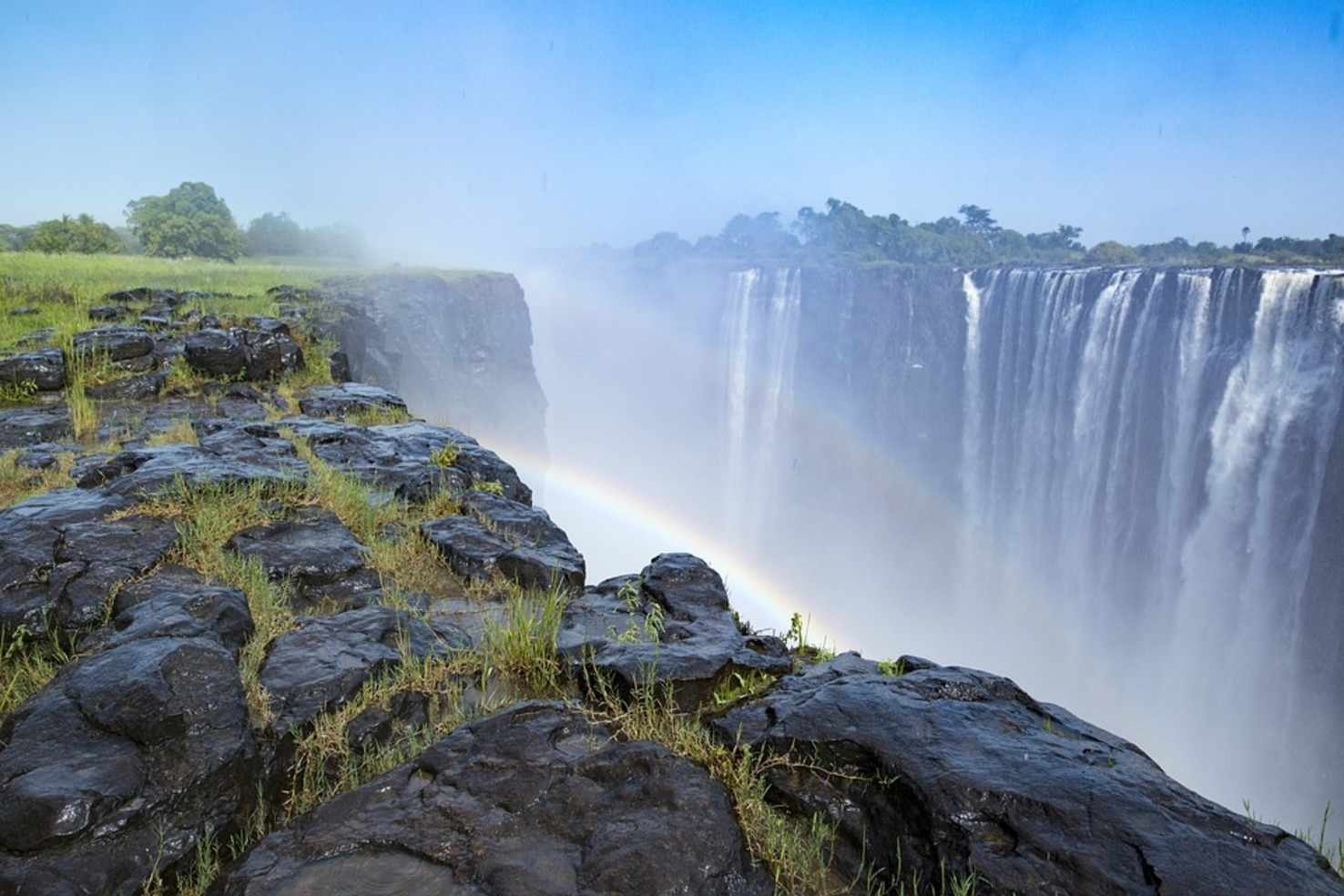
Zambia-Botswana safari combo offers a premier African experience, blending the thundering Victoria Falls with the lush Okavango Delta and high-density game viewing in Chobe. Top highlights include mokoro rides in the Okavango, boat cruises on the Chobe River, and walking with rhinos in Mosi-oa-Tunya.
18-days-exclusive-botswana-safari-victoria-falls-and-zambia-wildlife-safari-tour
15-days-best-of-botswana-and-zimbabwe-safari-holiday-vacation-southern-africa-safari
13-days-best-botswana-tour-to-zimbabwe-safari-holiday-and-zambia-safari-tours
10-days-classic-victoria-falls-tour-and-botswana-wildlife-safari-tour
- Victoria Falls (Livingstone, Zambia)
Victoria Falls, known locally as Mosi-oa-Tunya, “the Smoke that Thunders,” stands as one of Africa’s most spectacular natural wonders. On the Zambia side, the full grandeur of the falls is revealed through a network of viewpoints that line the cliff edges along the Batoka Gorge. The sheer volume of the Zambezi River plummeting into the gorge creates a powerful, lifelong memory—the spray catching the sun to form rainbows that linger in the air and on your skin. The experience is enhanced by the surrounding Bradshaw Trail and rainforest pockets where birds, monkeys, and small mammals skitter through the foliage.
Beyond the spectacle, Victoria Falls offers a spectrum of activities for different travelers. Adrenaline seekers can try bungee jumping from the historic Victoria Falls Bridge, zip-lining above the chasm, or white-water rafting on the upper Zambezi. For those seeking a calmer immersion, interpretive walks with a guide reveal the botanical richness of the area and the wildlife that frequents the downstream plains. Helicopter and microlight tours provide an aerial perspective, letting you see the full scale of the falls and the river’s meanders.
Culturally, the town of Livingstone serves as a gateway to regional heritage. Markets showcase carved wood, beadwork, and crafts from nearby communities, while museums illuminate the Falls’ colonial history and Indigenous narratives. Proximity to Mosi-oa-Tunya National Park allows additional wildlife experiences—rhinos, elephants, and plains game on guided walks or boat safaris along the Zambezi.
The best times to visit balance water volume, weather, and visibility of the surrounding wildlife; dry season (May to October) often provides clearer, cooler days with lion and buffalo sightings more reliable in the park margins. Evening safaris and star-gazing beneath African skies complete a quintessential Victoria Falls visit—the kind of memory that invites a repeat journey.
- Mosi-oa-Tunya National Park (Zambia)
Mosi-oa-Tunya National Park, centered around the Victoria Falls corridor, is a compact jewel of wildlife within easy reach of Livingstone. Despite its modest size, the park showcases a surprising array of habitats—riverine woodlands, granite outcrops, and marshy floodplains—each supporting a diverse resident and migratory fauna. The park’s core is intertwined with the volcanic geology and the spray of the Falls, creating microclimates that nurture birdlife, amphibians, and mammals.
Wildlife viewing here emphasizes intimacy and accessibility. Guided walks along established trails bring you into close contact with elephants, buffalo, and an assortment of antelope species that graze along the riverbanks. The Zambezi River, a lifeline for the park, is a magnet for hippos, crocodiles, and a variety of aquatic birds. For those with a seasonal itinerary, the park can host rhino tracking initiatives in certain periods, reflecting ongoing conservation efforts within the region.
Birdwatching is especially rewarding: eagles, Hollard’s, kingfishers, and the iconic African fish eagle populate the skies and riverine edges. The park’s terrain also offers opportunities for stargazing upon returning from twilight game drives or river cruises, where a quiet slope or viewing deck affords panoramic views of the Victoria Falls mist rising in the distance.
Conservation has a central place in the park’s management. Ongoing community engagement and rhino conservation programs reinforce the dual goals of protecting endangered species while supporting local livelihoods. For visitors, the park provides a relatively compact, high-concentration wildlife experience with the bonus of proximity to the Falls, making it a thoughtful, immersive extension of a Zambia-Botswana safari itinerary.
- Chobe National Park (Botswana)
Chobe National Park anchors Botswana’s northern capstone to the safari experience, renowned for its extraordinary elephant population—the largest on the continent. Spanning roughly 4,500 square kilometers, Chobe encompasses diverse ecosystems, from lush riverine floodplains that glow at dawn to dense acacia woodlands that shelter a spectrum of predators and plains game. The park’s star feature is undoubtedly the Chobe River, which becomes a magnet for wildlife during the dry season as animals converge at the water’s edge.
Game viewing in Chobe unfolds in multiple dimensions. Boat safaris along the river offer intimate, unobstructed glimpses of elephants, hippos, crocodiles, and a tapestry of birdlife unfolding against the water’s shimmering surface. The daytime savannas host herds of buffalo, zebra, and wildebeest, while the woodland margins yield opportunities to spot leopards and lions on the prowl or guarding a cache of prey. In the dry season, the concentrations become truly spectacular, with elephants displaying familial bonds and social rituals that captivate visitors.
If you prefer a more land-centric approach, traditional game drives in the park provide sweeping views across the floodplains, where lions lounge in the shade, hyenas call from distant ridges, and antelope graze. Walking safaris are a rarer but thrilling option in certain seasons, offering a close-to-ground sense of predator-prey dynamics and the footprints that tell tales of the landscape’s recent life.
Chobe’s seasons shape the safari experience. The river is at its most dramatic during the dry months (roughly May through October) when animal sightings are dense and the light lends a cinematic glow to your photographs. The shoulder seasons still deliver excellent wildlife encounters with fewer crowds. For families or first-time safari-goers, Chobe’s approachable accessibility, high wildlife density, and dramatic riverine scenery make it a quintessential Botswana destination within a Zambia-Botswana itinerary.
- Okavango Delta (Botswana)
The Okavango Delta is a UNESCO World Heritage treasure—the world’s largest inland delta, where rain-fed plains and channels create a dynamic, living mosaic of habitats. A journey into the Delta reveals a watery labyrinth of lagoons, papyrus-fringed shallows, and floodplains that support a staggering diversity of wildlife. The contrast between land and water is pronounced, inviting travelers to experience the delta from a variety of angles: mokoro (traditional dugout canoe) rides, vehicle safaris on accessible channels, and exhilarating foot-based explorations.
Mokoro excursions are a highlight for many visitors. Paddled by a poler who knows the hidden channels, these silent journeys offer a perspective of the Delta’s life that terrestrial safaris simply cannot replicate. The glide through glassy waters reveals hippos, crocodiles, sitatunga, and a chorus of waterbirds—ibises, herons, and kingfishers—that punctuate the reeds. For those seeking more robust wildlife encounters, vehicle safaris traverse specific inland delta areas where big cats, plains game, and omnivores roam. Night drives, a trademark experience in Botswana, bring nocturnal species into sharper relief against the stars.
Birdwatching in the Okavango is world-class. The delta hosts a remarkable array of species, including African skimmers and rollers, bee-eaters in夏, and raptors that patrol the skies at sunrise. The diversity of landscapes—open floodplains, palm-dotted islands, and forested channels—produces a recurring sense of discovery, as every bend reveals a new behavior or animal moment.
Conservation and community engagement are central here. Lodges and camps along the delta emphasize sustainable practices and benefit-sharing with local communities, helping to preserve this fragile ecosystem. The Okavango Delta’s ever-changing water levels, seasonal migrations, and predator-prey dynamics create a transformative safari experience—one that lingers in memory long after return flights depart.
- Savuti Channel (Botswana)
Savuti Channel is famed for its dramatic wildlife dynamics and the unpredictable rhythms of one of Botswana’s most storied landscapes. The channel’s history is written in shifting sands and changing watercourses, creating a backdrop where lions, hyenas, and elephants contend with a landscape that can transform from arid savanna to a teeming wetland within a season. It’s the drama of predator-prey interactions, the choreography of migration, and the stark beauty of a region that rewards patience and keen observation.
The Savuti ecosystem is marked by a mosaic of habitats: open grasslands, acacia woodland, and marshy zones where birds and amphibians thrive. The annual zebra migrations bring a sense of urgency and spectacle, while elephant herds plod methodically across the plains, leaving deep footprints and the occasional waterhole detritus that tells stories of days when the springs ran high. Predators—lions, cheetahs, and hyenas—trace the margins, exploiting the opportunities that shifting cover provides as prey animals move between feeding grounds.
Photography enthusiasts relish Savuti’s lighting—the golden hours that paint the landscape with long shadows and a warm palette as elephants silhouette against the horizon. The area’s remoteness adds to its allure: relatively fewer visitors, a more intimate wildlife experience, and a sense of discovery that harkens back to classic safaris. Walking safaris, when offered, provide a tactile sense of the terrain, including the subtle rustle of reeds and the scent of open savanna after rain.
Savuti’s allure also lies in its resilience and change. The channel’s behavior—sometimes dry, sometimes flooded—creates a rolling theater where life’s cycles unfold with every season. For travelers, Savuti delivers a vivid, memory-laden encounter with Botswana’s wild heart: raw, sometimes unpredictable, always unforgettable.
- Linyanti Wildlife Reserve (Botswana)
Linyanti Wildlife Reserve sits to the northwest of Chobe, a less-traveled corridor that rewards patience with intimate, high-quality wildlife encounters and extraordinary scenery. The reserve’s core draws are its quiet riverine landscapes, expansive floodplains, and the emboldened presence of apex predators. Linyanti’s waters carve through a mix of savanna and woodland, supporting a rich tapestry of species—from elephants and buffalo to wild dogs and a healthy population of predators that thrives in the reserve’s edge habitats.
Wildlife viewing in Linyanti is notable for its balance of density and solitude. Boat and land safaris reveal the river’s lifecraft: pods of hippos, waterbirds skimming the surface, and the occasional elephant herd that crosses the water’s edge with slow, deliberate grace. On the land, walking safaris offer a grounded, immersive way to experience the terrain’s scents, tracks, and sounds. The reserve’s predators—lions, leopards, and African wild dogs—often reveal themselves against the backdrop of tall grasses and the shimmering water reflections.
Birdlife flourishes here as well. The limpid waterways attract specials such as African skimmers and various raptors, while the surrounding forests host woodpeckers, cuckoos, and sunbirds. The lodge experiences in Linyanti emphasize comfortable basecamps that blend into the landscape, enabling guests to observe dawn activities, nocturnal calls, and the soft light that makes Botswana’s evenings so memorable.
Conservation in Linyanti is a cornerstone of visitor experiences, with community partnerships and habitat restoration that ensure long-term viability for wildlife populations. For travelers, Linyanti offers a refined, less-crowded alternative to the more famous parks, while delivering a compelling, visually striking, nature-forward safari experience that fits well within a Zambia-Botswana itinerary.
- Lower Zambezi National Park (Zambia)
Lower Zambezi National Park presents a riverside safari experience of exceptional immersion and variety. Nestled on the banks of the Zambezi River, opposite Zimbabwe’s Mana Pools, the park is celebrated for its dramatic scenery—the river cutting through the escarpment, dense riverine forests, and broad floodplains. The park’s terrain supports a robust mix of land and water-based activities, inviting visitors to engage with wildlife in ways that feel both intimate and adventurous.
Game viewing centers on the river and its edges. Dense hippo and crocodile populations populate the deeper channels, while elephant herds roam the banks and occasionally cross the water to access feeding areas. The park’s zebra, impala, and kudu share the plains with predators such as lions and leopards, with night drives revealing the nocturnal life that defines Africa’s late hours. Canoe safaris on the Zambezi offer a rare, tranquil vantage point to observe wildlife from a low, water-level perspective—an iconic experience for many safari-goers.
Birdlife is abundant along the river. Open-water species such as African fish eagle, kingfishers, and various herons punctuate the day, while forest edges host forest-dwelling birds that add to the park’s avian diversity. The scenery—blood-orange sunsets across the river and the distant outline of hills—provides a constant, cinematic backdrop to the wildlife drama.
Cultural and conservation values are integral to the Lower Zambezi experience. Communities around the park benefit from tourism, and conservation initiatives aim to protect habitats from encroachment and promote sustainable livelihoods. For visitors, the Lower Zambezi offers a unique blend of river-life experiences, adventure, and wildlife viewing in a setting that feels both scenic and unhurried—an excellent complement to a broader Zambia-Botswana safari itinerary.
- Liuwa Plain National Park (Zambia)
Liuwa Plain National Park is a remote, pristine landscape that has gained recognition for its dramatic seasonal migrations and the quiet grandeur of its plains. The park’s signature spectacle is the annual wildebeest migration, generated by a confluence of rainfall patterns and grassland dynamics that create a moving tapestry across the season. The plains stretch wide and open, giving visitors a sense of vastness and solitude rarely found in more crowded destinations.
Wildlife in Liuwa is diverse and often encounters are intimate due to the park’s lower visitor numbers. Lions and cheetahs roam the plains alongside large herbivore populations. The lake and river ecosystems within the park attract waders, waterfowl, and a chorus of birdlife that marks Liuwa as a haven for avian enthusiasts. The remoteness means that game viewing is often an exercise in patience and fieldcraft—the rewards come in the form of rare sightings and a sense of the land’s true wilderness.
Accessibility is part of Liuwa’s charm and challenge. Travel typically involves longer overland journeys or light aircraft transfers to nearby airstrips, integrating a touch of adventure into the safari plan. Lodges and camps emphasize blending with the landscape, using sustainable practices that honor the park’s isolation and fragile ecosystems.
Visiting Liuwa Plain is less about ticking species off a list and more about absorbing a rhythm of nature that moves with the seasons. It’s a place for reflection, for watching long horizons glow with sunset light, and for witnessing wildlife in a setting that feels almost untouched by time. It fits a bold, off-the-beaten-path Zambia itinerary that complements Botswana’s more concentrated wildlife experiences.
- Kafue National Park (Zambia)
Kafue National Park stands as one of Africa’s largest and most biodiverse reserves, a sprawling mosaic of ecosystems that range from the Busanga Plains’ flooded grasslands to riverine forests along the Kafue and its tributaries. The park’s scale creates a sense of wilderness that’s difficult to replicate in smaller parks, with diverse habitats supporting a vast array of wildlife, including large herds of antelope, predators like leopards and cheetahs, and a remarkable variety of birds.
The Busanga Plains are a particular highlight, offering a dramatic landscape of open grasslands dotted with acacia islands and seasonal pools that attract a high density of herbivores and their predators. Your safari experience can include boat trips along the Kafue River, giving a different dimension to wildlife viewing as elephants wade through shallows and hippos sun along riverbanks. The diversity of habitats also enables night drives where nocturnal species emerge, complementing daytime game drives with a broader spectrum of life.
Walking safaris are an option in careful, permitted areas, providing intimate encounters with the terrain—the scent of grasses, the texture of soil, and the tracks left by a passing herd. Conservation in Kafue is robust, with community engagement and rangers working to protect fragile wetlands and floodplains while promoting sustainable tourism benefits for local communities.
Visitors to Kafue often describe a sense of extended possibility—down every track, a new encounter, a different angle on the same species. For travelers planning a Zambia-centered leg of a Zambia-Botswana safari, Kafue offers expansive wildlife, quieter camps, and a uniquely epic sense of place.
- South Luangwa National Park (Zambia)
South Luangwa National Park is famed for pioneering walking safaris and for its rich, unhurried wildlife experiences. The Luangwa River, winding through the park, acts as a lifeline for a broad spectrum of species, from large herds of buffalo and elephants to nocturnal predators that emerge after dusk. The park’s terrain—miombo woodland, riverine forests, and open plains—provides a dynamic backdrop that rewards patient observation and expert guiding.
Walking safaris in South Luangwa are a core highlight, offering an intimate way to connect with the land. A guide’s knowledge of tracks, signs, and scents transforms a simple stroll into a storytelling journey—every print and broken blade of grass becomes a clue to the landscape’s living history. Night drives add another layer, revealing creatures that are rarely seen during daytime. Photography thrives here, with light filtering through tree canopies and animals entering clearings at dawn.
The density and variety of wildlife keep the landscape perpetually engaging. Leopards often prowl the edges of reed beds, while elephants and hippos anchor the river’s presence. The park’s smaller predators and an impressive array of birds make South Luangwa a year-round magnet for wildlife enthusiasts and researchers alike.
Conservation in South Luangwa has long been a guiding principle, with community engagement, anti-poaching efforts, and habitat restoration that help sustain both wildlife and livelihoods. This park crystallizes the essence of a classic, impactful African safari—the kind of journey that defines a life lived under expansive skies and among some of Africa’s most enduring wildlife stories.
- Kasane (Botswana)
Kasane is a small border town perched at the northeastern tip of Botswana where the borders of Botswana, Namibia, Zambia, and Zimbabwe converge. It functions as a practical gateway to some of southern Africa’s most famous wildlife destinations, with Chobe National Park just a short drive away and the mighty Chobe River forming a lively hydro-social frontier between land and water. The town’s compact size favors a relaxed pacing, making it an excellent base for travelers who want a concentrated World-Class safari experience without a lot of travel time between activities.
Chobe National Park dominates the Kasane experience. The park’s elephant herds are legendary, and many visitors plan their days around river-based encounters that reveal a near-constant procession of elephants at the water’s edge. Boat cruises on the Chobe River are quintessential Kasane experiences, offering intimate glimpses of elephants, buffalo, and a diverse array of waterbirds as the sun dips toward the horizon and the river glows with golden light. On land, classic game drives traverse floodplains and acacia woodlands where predators and plains game mingle and the landscape shifts with the seasons.
Kasane also serves as a major logistics hub for luxury safari operators, with a range of lodges, camps, and boutique experiences that span from comfortable tented camps to upscale lodges with polished services. The town itself has a surprisingly vibrant cultural scene, with craft markets and local guides eager to share insights about the region’s flora, fauna, and the riverine way of life that has sustained communities for centuries.
Access is straightforward, with good road connections and nearby airstrips that connect Kasane to other Botswana destinations and regional hubs. Dry season (May through October) often produces the most dramatic wildlife spectacles along the river, while the shoulder seasons can deliver quieter, equally rewarding wildlife encounters. Kasane’s blend of wildlife density, riverine charm, and easy access makes it a compelling anchor for a Zambia-Botswana safari itinerary focused on Chobe and the surrounding river systems.
- Makgadikgadi Pans (Botswana)
The Makgadikgadi Pans stand as one of the planet’s most extraordinary desert landscapes, a vast, ethereal salt-flat plain that stretches to the horizon and invites a sense of awe and humility. Located in the center of Botswana, the pans are remnants of a great lake that once covered the region, leaving behind a landscape that is both stark and stunning in its simplicity. The scale is hard to grasp—flat white salt crusts glisten under a sun that never seems to set, while acacia trees punctuate the horizon like solitary sentinels.
Wildlife here is adapted to extreme conditions, and the pans host seasonal migrations that transform the desert into a living tableau. During the dry season, the area feels desolate and beautiful, but after rains the landscape comes alive with zebra, wildebeest, and antelope moving across the white plains. The seasonal rains also draw predators, predators such as lions and cheetahs, which exploit the transient availability of prey as the landscape becomes a moving mosaic of grazing lawns and dust.
Cultural and historical dimensions add depth to the Makgadikgadi experience. The area’s archaeological sites, ancient footprints, and rock art connect visitors with the human histories that have traversed these plains for millennia. The community-based tourism initiatives help conserve the ecosystem while providing livelihoods for local residents, and guide-led excursions can reveal tracks, birdlife, and the subtle signs of life across the flats.
Photography opportunities are legendary. The reflective surfaces of the pans at dawn and dusk create surreal, bleached landscapes that transform every animal encounter into a painterly moment. Night skies above Makgadikgadi are unblemished by light pollution, offering breathtaking stargazing possibilities after a day of wide-open spaces. For travelers seeking an offbeat, large-scale wilderness experience, Makgadikgadi Pans provides a rare combination of stark beauty, seasonal wildlife drama, and cultural richness that is uniquely Botswana.
- Nxai Pan National Park (Botswana)
Nxai Pan National Park is a striking, accessible reserve in Botswana’s northeastern Kalahari region, celebrated for its seasonal rains, expansive Baobab-strewn plains, and dramatic wildlife concentrations when the rains arrive. The landscape is a mosaic of salt pans, grasslands, and riverine pockets where the land responds dramatically to the cycles of rainfall. The park’s signature moments come with the rains: temporary pools fill, the grasses turn green, and a cascade of herbivores and predators gather to exploit the ephemeral resources.
Elephants are among the standout residents of Nxai Pan, often congregating in large herds at water sources and along the edges of the pan during the dry season, and dispersing more widely when the rains come. Zebra, wildebeest, and springbok also migrate across the plains, creating opportunities for spectacular wildlife interactions and dramatic photographic opportunities. Predators—lions, cheetahs, and hyenas—monitor the herds from vantage points on the periphery, using the open terrain to advantage and showcasing classic predator-prey dynamics.
The park supports a range of safari experiences, from traditional game drives to guided walking safaris that emphasize the intimate textures of the landscape—the scent of grasses after rain, the tracks left by a grazing herd, and the constellations that emerge as dusk settles. Birdlife flourishes here as well, with raptors and migratory species adding color and sound to the plains.
Nxai Pan is particularly appealing for photographers and for travelers seeking a more intimate, yet still expansive, wilderness experience. The seasons dictate the tempo: the dry season concentrates wildlife around water sources, while the green season unveils a more dispersed but lush landscape. The park’s proximity to the Makgadikgadi complex makes it an ideal pair for a Botswana safari itinerary focused on dramatic seasonal transformations, wide-open spaces, and memorable elephant spectacles.
- Tsodilo Hills (Botswana)
Tsodilo Hills, a UNESCO World Heritage site in northern Botswana, rises as a dramatic sculpted beacon in the desert landscape. Known as the “Louvre of the Desert,” Tsodilo Hills hosts thousands of ancient rock paintings and engravings, spanning thousands of years of human history. The site is a testament to the enduring cultural legacy of the San people and a window into the spiritual and daily lives of communities that inhabited this arid region long before modern borders.
Visiting Tsodilo is as much about archaeology as it is about scenery. The rock art sites—scattered across different ledges and alcoves—offer insights into ancient rituals, hunting practices, and cosmological beliefs. Guides narrate stories that connect visitors with the people who left their marks on the rock, providing context for the art’s symbolism, materials, and preservation challenges. The physical landscape around the hills is starkly beautiful: wind-sculpted rock formations, sweeping views across the surrounding savanna, and the sense of timelessness that comes from being in a place where nature and culture are deeply interwoven.
For those who combine culture with wildlife experiences, Tsodilo sits off the more traditional safari circuit, offering a complementary reflection on Africa’s human heritage. The terrain around the hills supports wildlife typical of the region—antelopes, small mammals, and birds adapted to arid ecosystems—so visitors can extend their visit with birdwatching or short woodland walks that reveal the area’s ecological richness without the intensity of a big wildlife drive.
A visit to Tsodilo is a reminder that Botswana’s appeal extends beyond the “big-five” experience to include profound cultural significance and the quiet beauty of a desert beacon that has witnessed countless generations come and go. The combination of outdoor exploration, historical discovery, and the serenity of the landscape makes Tsodilo Hills a compelling addition to a Botswana itinerary for travelers who crave a deeper, more reflective travel experience.
- Khwai Community Area (Botswana)
Khwai Community Area sits along the edge of the Okavango Delta, a model of community-led conservation that blends wildlife viewing with cultural immersion. This area is defined not only by its abundant wildlife but also by the local communities whose livelihoods are intertwined with the land’s health and the success of sustainable tourism. The Khwai community’s approach emphasizes involvement in guiding, accommodation, and decision-making, offering visitors a chance to participate in conservation efforts while gaining insight into the daily life, traditions, and values of the local people.
Wildlife in Khwai is superb, with elephants often leading the show as they move through the channels and floodplains that define the area. Predators such as lions and leopards are present, though sightings can be highly dependent on the season and the specific camp’s location. The area is also renowned for its walking safaris, which allow guests to follow animal signs and footprints through the wetlands and woodlands, a format that heightens the senses and fosters a tactile understanding of the landscape.
Birdlife is prolific in Khwai, with a diverse chorus of waterfowl, kingfishers, herons, and endemic species that thrive in the delta’s mosaic of habitats. Boat safaris on the Khwai River offer a different perspective on wildlife interactions, especially for viewing hippos and aquatic birds from a tranquil, water-level vantage point.
Cultural experiences include visits to homesteads, beadwork workshops, and storytelling sessions that reveal the community’s history, cuisine, and adaptive strategies in balancing conservation with traditional life. Conservation initiatives undertaken by the Khwai community focus on rhino protection, habitat restoration, and governance that emphasizes benefit-sharing with residents.
Khwai presents a well-rounded safari experience that combines wildlife richness with meaningful cultural engagement. For travelers seeking authentic, community-driven experiences in the Okavango region, Khwai offers a compelling blend of adventure, learning, and connection to the land and its people.
- Caprivi Strip (Namibia)
The Caprivi Strip (also known as the Zambezi Region) is a slender, zigzag-shaped enclave of Namibia that stretches along the banks of the Zambezi River and links several key wildlife areas. Though technically in Namibia, it is often included in broader Southern Africa safari itineraries due to its proximity to Botswana and its distinctive landscapes, cultures, and wildlife offerings. The Caprivi is a mosaic of wetlands, rivers, and savannas, where the Zambezi’s floodplains nurture a thriving diversity of birds and a range of mammals that are less common in more arid parts of southern Africa.
Wildlife encounters here emphasize water-centric ecosystems. Boat safaris along the Zambezi reveal crocodiles, hippos, and a variety of waterbirds that favor riverine habitats. Land-based safaris explore elephant herds, antelope species, and the region’s predators, which often rely on the patchwork of waterways and floodplains rather than the open savannas that define some other parks. The Caprivi’s ecosystems are shaped by the rhythms of seasonal floods, which create dynamic habitats and a sense of continual renewal across the landscape.
Culturally, the Caprivi region is rich with diverse communities who have long relied on the river for transport, sustenance, and livelihoods. Visitors can engage in community-based tourism initiatives that offer insights into local customs, music, dance, beadwork, and traditional fishing practices, all while supporting conservation and sustainable development. The area’s remote feel and relative quietness—compared with more famous parks—make Caprivi an appealing add-on for travelers seeking a less-traveled, water-rich safari experience.
Travel logistics can be more complex here, given the region’s geography and border arrangements. However, when planned thoughtfully, a Caprivi extension pairs well with Botswana’s rivers and deltas, offering a complementary immersion into southern Africa’s aquatic worlds, birdlife, and the livelihoods of communities living along the Zambezi.
- Livingstone Island (Zambia)
Livingstone Island sits at the edge of the thunderous Victoria Falls in Zambia, delivering a distinctive and adrenaline-charged way to experience one of Africa’s most iconic landscapes. The island is perched in a dramatic location just above the falls, offering vantage points that place visitors within reach of the spray, roar, and mist that define the experience of Mosi-oa-Tunya. The setting combines extreme natural spectacle with a sense of intimacy, as guests are not just observers but participants in a moment nearly every traveler has only seen in photographs or heard in stories.
Activities around Livingstone Island are varied and exhilarating. The Devil’s Pool at the end of the dry season provides a rare opportunity to swim in a natural rock pool that forms just above the falls, protected by a natural rock ledge that creates a dramatic, pool-side basin. For those seeking aerial perspectives, helicopter or micro-light tours offer panoramic views of the falls and the Zambezi Gorge, complementing the on-ground sensations with a sweeping sense of scale.
Dining and luxury experiences have become a signature of the island’s appeal, with exclusive picnics and refined meals framed by the roaring water and the spray. The area around Victoria Falls town offers cultural encounters with nearby markets, museums, and historical sites that contextualize the falls within the broader history of the region and its people. Wildlife viewing from the other side of the river—elephants along the banks, hippos in the water, and birds squabbling over the river’s edge—rounds out the experience for visitors who want a holistic sense of the ecosystem.
Visiting Livingstone Island is a reminder that Africa’s most renowned natural wonders can be explored through dramatic, immersive experiences that fuse nature, culture, and adventure. It’s a splashy, unforgettable moment in a broader Zambia-Botswana safari that emphasizes the raw power of water, rock, and wind in shaping the continent’s landscapes.
- Zambezi National Park (Zimbabwe)
Zambezi National Park sits just downstream from Victoria Falls on the Zimbabwean side of the Zambezi River and offers a wildlife-rich complement to the broader riverine experiences in the region. The park’s scenery is defined by riverine forests, open savannas, and the meandering watercourses that support a diverse array of species. The proximity to the Falls adds a dramatic seasonal context: the river’s levels rise and fall with rainfall, bringing shifts in wildlife movements and activity.
Wildlife viewing here emphasizes traditional safari experiences—drives that traverse riverine woodlands and floodplains where elephants, buffalo, giraffes, and antelope gather along water sources. Leopards and lions also inhabit the park, though sightings can be more dependent on luck and patience than in some of the larger Botswana reserves. The Zambezi’s lifeblood also supports aquatic species and a chorus of birds, including kingfishers, fish eagles, and shoreline waders that brighten the days and create dynamic foregrounds for photographers.
Water-based activities offer a complementary dimension. Boat safaris along the river provide a relaxed vantage point to observe hippos, crocodiles, and waterbirds from a low, water-level perspective, while canoe trips may be offered in select areas to connect visitors with the river’s quiet pace and its wildlife. Night drives reveal nocturnal species that emerge with the turning of the stars, adding a nocturnal lens to the park’s wildlife ecosystem.
Cultural aspects in the region include interactions with local communities, conservation initiatives, and the history of the Zambezi basin as a corridor for people and wildlife. A visit to Zambezi National Park can pair nicely with a Victoria Falls itinerary, offering a broader sense of the river’s influence on the ecosystem and the region’s human stories. It’s a fitting inclusion for travelers who want a river-focused wildlife experience that sits just beyond the city’s edge.
- Chobe River (Botswana)
The Chobe River is the artery that sustains the thriving ecosystem of northern Botswana and a magnet for wildlife viewing, particularly during the dry season when the river becomes a pivotal gathering point for elephants, buffalo, and myriad waterbirds. The river’s life is a continuous, shimmering ballet: hippos surface and subside in slow motion, crocodiles bask on sunlit banks, and birds skitter along reed beds that line the water’s edge. Boat safaris along the Chobe River are among the most popular activities, offering an intimate, up-close perspective on large mammals and the social dynamics of elephants as they swim, splash, and interact in the shade of riverine trees.
Land-based game drives add a complementary vantage point, revealing predators like lions and leopards that exploit river margins and floodplains. The variety of habitats along the river—from riparian woodlands to expansive floodplains—ensures consistent, high-quality wildlife viewing across different times of day and seasons. Photography thrives here, with dramatic silhouettes at sunset, reflections on the water, and the possibility of capturing elephant pinwheels against the river’s surface.
Crucially, the Chobe River corridor forms a bi-national and cross-border experience, linking Botswana with neighboring countries through shared wildlife destinies. The river is also a cultural and historical focal point for local communities, whose livelihoods and traditions are interwoven with riverine ecosystems. Stewardship and community-based tourism initiatives help ensure that visitors’ presence contributes to conservation and sustainable development in the Chobe basin.
Chobe River is more than a scenic backdrop; it’s a dynamic stage where wildlife, water, and people intersect in some of Africa’s most iconic riverine safaris. It’s an essential feature for travelers who want a concentrated, water-centered wildlife experience in Botswana and the broader region.
- Mudumu National Park (Botswana)
Mudumu National Park, though located in Namibia’s Caprivi/Zambezi region rather than Botswana proper, often becomes part of comprehensive safari itineraries for travelers exploring Botswana, Zambia, and Zimbabwe. The park is renowned for its serene landscapes, broad floodplains, and a high density of elephants that browse along riverine forests and grassy byways. Its setting along the Kwando River provides a tranquil environment where wildlife movements are guided by the river’s bends and seasonal floods, creating a sense of natural rhythm that is both calming and deeply engaging for travelers seeking quiet wilderness immersion.
Wildlife viewing in Mudumu is characterized by a balance of accessibility and abundant encounters. The park supports a mix of herbivores and predators, with elephants often being the most conspicuous inhabitants during visits. Other mammals—buffalo, antelope, and smaller species—use the riverine corridors and woodland edges that define Mudumu’s landscape. Birdlife is strong here as well, with waterbirds and forest species filling the skies and wetlands, especially during or after rains when the park’s habitats become more vibrant.
Walking safaris can offer an intimate way to engage with the terrain, emphasizing footprints, spoor, and the textures of the Kwando’s floodplains. Boat trips along the Kwando River introduce a water-based dimension to game viewing, providing opportunities to observe hippos, crocodiles, and a range of water-dependent birds from a gentle, low vantage point. Conservation in Mudumu is a shared endeavor with local communities, many of whom participate in tourism initiatives that provide livelihoods while supporting habitat protection and wildlife management.
Mudumu’s appeal lies in its unhurried tempo and the chance to experience Botswana’s broader southern African wilderness through an area that feels comparatively less crowded. It complements a circuit that includes Botswana’s famous parks by offering a more intimate, reflective, and quietly powerful landscape where elephants and birds define the daily rhythm.
- Kafue River (Zambia)
The Kafue River is a lifeline that flows through one of Zambia’s most expansive and biodiverse wilderness areas: Kafue National Park. As you drift along its broad, sinuous channels or paddle a shallow backwater, the river becomes a living artery that nourishes habitat for an astonishing array of wildlife. The riverine forest edges, open floodplains, and occasional miombo woodlands create a tapestry of microhabitats where elephants, hippos, crocodiles, antelope, and a vast avian chorus converge with the seasonal rhythms of the water.
Fishing and boating on the Kafue offer a tonic blend of relaxation and adventure. Anglers find both common and elusive species within reach, while boat-based safaris allow observers to study the interests and interactions of animals without the intrusions of engine noise. On calm mornings, the mist rising from the water can turn the river into a living mirror, reflecting treetop silhouettes and the early light of day as birds call from sandy banks. For wildlife enthusiasts, viewing from a boat or a small craft provides a different perspective on predator-prey dynamics, workaday behaviors of elephants at water’s edge, and the intimate moments of hippos pairs and crocodile sunbathers.
The Kafue’s landscapes are not static; they shift with the seasons. The Busanga Plains, a region within the broader park ecosystem, come alive during the annual rains, transforming the scene into a mosaic of green that draws zebra, lechwe, and predators into concerted activity. Walking safaris near the river give visitors an up-close sense of the land’s textures—the scent of damp earth after rain, spoor on sandy trails, and the delicate interplay of light and shade in the riverine corridors.
Culturally, the Kafue region bears the marks of local communities whose livelihoods intertwine with river health. Conservation initiatives emphasize sustainable use of the riverine resources, community-led tourism, and the protection of habitats vital for maintaining birdlife and aquatic species. A visit to the Kafue River isn’t just a wildlife experience; it’s an education in how waters shape landscapes, ecosystems, and human stories across this part of Zambia. It invites a slower pace, patient observation, and a deep appreciation for the subtle drama that unfolds along a great African river.
- Chipata (Zambia)
Chipata sits as a welcoming gateway to Eastern Zambia, a town where markets, culture, and the rhythms of everyday life mingle with the surrounding wildlife-rich landscapes. Set at the edge of the highlands and near the border with Malawi, Chipata is a hub for travelers who want to dip into both the cultural pulse of Zambia and the accessible natural wonders nearby. The town itself pulses with energy—from bustling craft markets to lively music venues—creating an atmosphere that feels both traditional and refreshingly contemporary.
As a base for exploring the Eastern Province’s parks and landscapes, Chipata offers proximity to a constellation of attractions. The nearby Nyika Plateau, a rolling highland ecosystem with sweeping vistas, wildflower meadows, and unique montane birdlife, provides a dramatic contrast to the savanna plains of other parts of the country. From Chipata, day trips can lead to game viewing in nearby reserves, or to adventures in the rugged, scenic countryside where locals preserve age-old farming practices and knowledge of the land.
Cultural immersion is a highlight of any visit to Chipata. The town provides opportunities to engage with Senga, Tumbuka, and other local communities through markets, traditional dances, beadwork, and storytelling. Visitors can explore rural homesteads, sample regional cuisine, and learn about traditional music and crafts that have shaped Chipata’s identity. The marketplaces brim with carved wood, woven baskets, and vibrant textiles—handmade items that carry the memory of generations and become meaningful mementos for travelers.
Wildlife experiences in Eastern Zambia often focus on the mosaic of protected areas that lie within a short drive of Chipata. Parks and reserves around the region protect diverse ecosystems, from forested foothills to open savannas, where elephants, antelope, and a host of bird species can be encountered in relatively intimate settings. A visitor to Chipata can balance cultural exploration with nature adventures, savoring the sense of discovering a less-traveled portion of Zambia that rewards curiosity with authentic encounters and serene landscapes.
- Sesheke (Botswana)
Sesheke, a town perched near the Angolan border in the western reaches of Botswana, offers a gateway to an area defined by riverine beauty, seasonal floodplains, and proximity to Botswana’s western wildlife corridors. The Zambezi River shapes Sesheke’s landscapes, providing both a lifeline for communities and a drawing card for travelers seeking fishing, birdwatching, and close encounters with the region’s biodiversity. The town’s relaxed pace invites visitors to savor the simplicity of life along the river while using Sesheke as a launch point for broader explorations into nearby parks and reserves.
Fishing is a centerpiece of the Sesheke experience, with river angling offering a peaceful, hands-on way to connect with the rhythm of the Zambezi. The river’s edge supports a variety of fish species, and guided fishing trips often pair patient casting with expert local knowledge about the best spots and conditions. Beyond fishing, Sesheke provides access to wildlife viewing opportunities in surrounding landscapes where elephant herds, hippos, and an assortment of waterbirds periodically reveal themselves along the water’s edge.
Birding around Sesheke is rewarding, especially for those who appreciate waterfowl and riverine specialists. The river’s floodplains attract stampeding flocks during seasonal rains, creating a dynamic spectacle of color and sound. For more active travelers, boat safaris on the Zambezi or nearby channels expose visitors to the intimate drama of hippos and crocodiles, along with occasional sightings of crocodiles basking on sunlit banks and birds skimming the surface.
Culturally, Sesheke reflects the resilience and warmth of river-adjacent communities. Interactions with residents—who speak a mix of Setswana and local dialects—often include music, dance, and storytelling that illuminate daily life, traditional livelihoods, and the region’s changing relationship with tourism. Conservation efforts in and around Sesheke emphasize sustainable river use, habitat protection, and community-based initiatives that ensure tourism benefits reach local households while preserving the river’s ecological integrity.
- Lilonda River (Zambia)
Lilonda River, a notable watercourse in Zambia, offers a tranquil wilderness experience rooted in fishing, scenic picnics, and the enjoyment of pristine riverine environments. The river’s banks host an array of wildlife, from waterfowl and waders to more elusive land mammals that rely on the watercourse for drinking and foraging. The Lilonda’s calm waters and surrounding landscapes invite visitors to slow their pace, observe the behavior of birds at the shore, and appreciate the quiet drama of riverlife in a relatively undeveloped setting.
Fishing on the Lilonda River is a centerpiece activity, attracting anglers who relish the chance to cast a line in a serene, less-crowded environment. Guided fishing excursions often combine practical techniques with natural history notes about the river’s inhabitants and seasonal changes in water levels. The river’s edges also offer opportunities for relaxed walks, picnic moments, and gentle kayaking or paddling for those seeking a more intimate contact with the water.
Wildlife viewing along Lilonda is best experienced through patient observation. The river attracts a variety of species, including some of Zambia’s common mammals that come to drink and graze along the banks, as well as a range of reptiles and amphibians that inhabit the damp edges. The surrounding landscape—muted greens, the ripple of water, and the distant silhouettes of trees—contributes to a sense of tranquil immersion in nature.
Culturally, the Lilonda region reflects rural life in Zambia’s diverse ecosystem networks. Visitors can engage with local communities to learn about traditional fishing practices, seasonal harvests, and the cultural symbolism attached to the river and its wildlife. Conservation efforts in and around Lilonda prioritize habitat protection, clean waterways, and sustainable use of river resources, ensuring that future visitors can continue to experience the river’s beauty and abundance.
- Kakuli Camp (Zambia)
Kakuli Camp on the Luangwa River offers a refined, immersive wildlife experience in South Luangwa National Park, blending luxury accommodation with proximity to one of Africa’s most celebrated safari regions. The camp’s design harmonizes with the riverine setting, using elevated decks, open-fronted rooms, and locally crafted furnishings to create an atmosphere of elegant simplicity that never distracts from the surrounding wildlife drama. Kakuli serves as a serene base for exploring the Luangwa’s renowned walking safaris, game drives, and night drives, each activity delivering a different lens on the landscape’s life.
Accommodations at Kakuli emphasize comfort after days spent in the bush. Thoughtful touches—soft lighting, comfortable bedding, and gracious service—enhance the experience without overshadowing the sense of wild space. The camp’s location along the Luangwa River places guests within reach of wildlife-rich oxbow lagoons, floodplains, and woodlands where elephants, hippos, and a diverse array of birds frequent the shoreline. Guides at Kakuli excel at reading animal sign, tracking behaviors, and creating safe, educational, and exhilarating encounters that appeal to families and seasoned safari lovers alike.
Walking safaris from Kakuli are a highlight, offering a chance to learn the land through pace, footprints, and subtle sounds—the rustle of grasses, the snap of a twig under a predator’s approach, and the scent of rain-damp earth after a passing storm. Game drives provide broader vistas across the Busanga Plains’ edges and Luangwa’s riverine corridors, revealing large herds, prides, and nocturnal activity when the stars begin to glitter in the sky.
Community and conservation engagement are integral to Kakuli’s ethos. Sustainable tourism practices support rangers, local employment, and habitat protection, ensuring that the Luangwa’s enduring wildlife spectacle remains for future generations. A stay at Kakuli Camp thus embodies a balance of luxury, adventure, and responsible travel, anchored in one of Zambia’s most treasured wildlife landscapes.
- Camp Zambezi (Zambia)
Camp Zambezi embodies the confluence of riverine scenery and luxury safari living along the Zambezi River. The camp’s architecture and service ethos are oriented toward seamless immersion in the surrounding wildlife while delivering the comforts that discerning travelers expect. Its riverside setting invites guests to unwind after exhilarating days of game viewing, canoeing, fishing, or guided walks, all within a landscape that pulses with the activity of elephants, hippos, and a chorus of birds along the water’s edge.
Accommodation at Camp Zambezi centers on spacious, well-appointed tents or suites that blend into the riverine environment. Large decks enable prime wildlife watching from the comfort of a private space where amazing sunsets, river reflections, and the occasional splash of a passing pod of hippos frame the evening. The camp’s dining experiences highlight regional flavors, fresh ingredients, and an atmosphere of conviviality that complements the day’s adventures. Service emphasizes attentive, unobtrusive care designed to enhance relaxation and immersion.
Activities at Camp Zambezi span a broad spectrum. On the water, guests can partake in canoeing or boat safaris that traverse the Zambezi’s calm channels and eddies, offering intimate glimpses of elephants and aquatic birds. On land, guided game drives, walking safaris, and birdwatching excursions showcase the area’s biodiversity, from riverine species to savanna-dwelling antelope and predators. Night drives reveal nocturnal life—hyenas, owls, and other creatures that emerge after dusk.
Cultural connections are woven into the experience as well. The region surrounding the camp supports communities whose livelihoods intersect with tourism, and responsible operators partner with these communities to share knowledge, stories, and traditional practices. Conservation is a shared priority, with efforts focused on habitat preservation, anti-poaching, and sustainable tourism that benefits both wildlife and local residents. A stay at Camp Zambezi thus offers a balanced, immersive experience that captures the river’s life from both intimate and expansive perspectives.
- Bushman Rock Art (Botswana)
Bushman Rock Art sites across Botswana stand as enduring windows into the continent’s earliest cultural expressions. These ancient paintings and engravings, created by the San people—often referred to as Bushmen—tell stories of hunt, ceremony, and daily life that stretch back thousands of years. Visiting these sites is a journey into a past that shaped how people understood the land, animals, and celestial patterns, making it a meaningful complement to the wildlife-centric safari experience.
Exploring Bushman Rock Art involves guided treks or drives to panels perched on cliff faces, boulder coves, and sheltered outcrops. Guides provide context about the materials used, the symbolism of the figures, and the different phases of artistic creation. The art is more than decoration; it’s a ledger of human interaction with the landscape, a visual narrative of the San’s relationship with game, water, and the seasonal cycles that governed food, shelter, and movement.
The sites themselves are set within Botswana’s diverse landscapes, from arid desert pockets to riverine zones where life flourishes despite harsh conditions. The scenery around the rock art—wind-swept plains, acacia groves, and dramatic horizons—adds a powerful sense of place to the cultural experience. Observers often come away with a deeper appreciation for how humans have read the land over millennia, and how modern travel intersects with ancient routes and stories.
Culturally respectful visits emphasize minimal intrusion and preservation. Access is typically controlled to protect the artwork from damage, and visitors are encouraged to stay on designated paths, avoid touching the art, and follow guide instructions. In combining Bushman Rock Art with a wildlife itinerary, travelers gain a holistic sense of Botswana—its natural wonders and its enduring human heritage. These sites invite reflection on time, memory, and the shared human urge to interpret the world through art.
- Kasane (Botswana)
Kasane sits at the confluence of some of Botswana’s most celebrated natural features, serving as a vibrant gateway to the region’s wildlife riches. Nestled near the northern border where Botswana meets Namibia, Zambia, and Zimbabwe, Kasane’s location concentrates world-class safari experiences within easy reach. The town is a launching pad for exploring Chobe National Park, where the Chobe River becomes a living stage for elephants, hippos, and a dazzling array of birds, particularly during the dry season when water draws wildlife into spectacular congregations along the river’s edge.
A Kasane itinerary typically combines river-based and land-based encounters. Boat safaris on the Chobe River are iconic: long, slow viewing moments that reveal the social dynamics of elephants—ears flapping, trunks entwined, and playful interactions that epitomize their complexity. The river also offers sightings of buffalo, crocodiles, and a rich diversity of jauntily colored waders and waterbirds that punctuate the surface with flashes of color. Sunsets on the water—gilded horizons reflected in the river—become moments of quiet awe and are among the region’s most photographed scenes.
On land, game drives traverse floodplains, woodlands, and riverine pockets where predators like lions and leopards lurk, and herbivores graze in the morning light. Kasane’s lodges and camps range from luxurious to intimate, each providing a comfortable base from which to explore the surrounding wildlife. The town itself offers cultural flavor in markets, craft shops, and guided encounters that illuminate the region’s indigenous heritage and the everyday life of river communities.
Logistics in Kasane are straightforward, with good air and road connections to other Botswana destinations and regional hubs. The locale’s accessibility makes it an ideal anchor for combining a Botswana river safari with a broader circuit that includes neighboring parks and cross-border explorations. Kasane’s appeal lies in a potent mix of wildlife intensity, river ambiance, and the ease with which travelers can transition from river experiences to more terrestrial adventures, all within a compact, richly rewarding microcosm of southern Africa.
- Lake Kariba (Zambia/Zimbabwe)
Lake Kariba stands as one of Africa’s iconic and expansive artificial lakes, created by the Kariba Dam on the Zambezi River. Though the lake straddles the border between Zambia and Zimbabwe, its scenic appeal and recreational possibilities make it a compelling addition to a Zambia-Botswana safari itinerary. The lake’s broad expanse, set against a backdrop of rugged hillside and open savanna, creates a setting where water-based activities meet dramatic wildlife viewing and striking sunsets.
Fishing, boating, and houseboat experiences define Kariba’s allure. Anglers pursue a variety of species in the lake’s depths, while boat trips offer a comfortable platform from which to observe hippos, crocodiles, and waterbirds that populate the shoreline. The lake’s vegetation and the surrounding hills provide habitat for elephants, buffalo, and a range of antelope, which sometimes venture to the water’s edge to drink, creating memorable silhouettes against the evening light.
The cultural and historical layers around Kariba add depth to the experience. Fishing communities and towns along the lakeshore carry stories of the lake’s construction, the dam’s role in regional development, and the interplay between human livelihoods and the river’s seasonal rhythms. Wildlife viewing can be combined with visits to nearby game reserves and national parks on either side of the border, enabling a broader exploration of the Zambezi basin’s biodiversity.
Sunsets over Lake Kariba are among the travel highlights: skies flush with pinks and oranges reflecting off the water, with silhouettes of baobabs, hills, and distant boats carving a timeless scene. A stay on Kariba’s shore, whether at a lodge, camp, or on a houseboat, offers a tranquil counterpoint to the more intense wildlife encounters found in inland parks, providing a relaxing, scenic, and culturally rich complement to a Zambia-Botswana safari experience.
- Okavango Delta Airstrip (Botswana)
Okavango Delta airstrips are integral to the delta’s signature travel experience. These airstrips serve as lifelines for a smooth, efficient safari, enabling rapid transitions between camps, concessions, and national parks that define Botswana’s most celebrated wilderness. Flying into and out of the Okavango through a network of light aircraft routes creates a sense of anticipation, as each takeoff and landing offers glimpses of the mosaic of lagoons, channels, islands, and papyrus-fringed wetlands below.
The aerial perspective is itself a highlight. From the air, the delta appears as an ever-shifting map of green and pale blues, where channels braid through broad floodplains and the occasional landmass rises as a green mosaic among water. This vantage point helps travelers appreciate the scale and complexity of the Okavango Delta, where seasons and rainfall sculpt the movement of wildlife—elephants wading through shallows, leopards along riverine edges, and a profusion of birds taking advantage of the delta’s abundant resources.
Ground experiences in the delta remain the heart of the safari: mokoro rides along tranquil waterways, game drives on dry-season islands, and guided walks that reveal spoor, plant uses, and bird behaviors. The combination of aerial and terrestrial perspectives creates a holistic sense of the delta’s life, highlighting how geography shapes the distribution and behavior of species, from predators to herbivores and everything in between.
Operationally, Okavango Delta airstrips are serviced by a range of lodges and safari operators who coordinate transfers with camp schedules, ensuring efficiency and reliability. The travel rhythm—fly-in, stay in a delta camp, embark on guided adventures, and repeat—becomes a cadence that defines a modern, luxurious Botswana safari. For many travelers, the Okavango Delta airstrip is not merely a transit point but a gateway to a world where water, land, and air converge in a dynamic, unforgettable ecosystem.
How to Choose the Best Place to Visit on a Zambia-Botswana Safari Tour Combo
Choosing the best places for a Zambia-Botswana safari tour combo involves considering your interests and priorities. Start by identifying key highlights like Victoria Falls for its stunning natural beauty, and the Okavango Delta for unique wildlife experiences. Research the top national parks, such as Chobe for elephants and South Luangwa for walking safaris. Additionally, consider the type of activities you want—whether it's game drives, boat cruises, or cultural experiences. Consult travel guides, reviews, and local tour operators for insights on lodging and accessibility. Diversifying your itinerary with a mix of adventure and relaxation will ensure a fulfilling experience. Ultimately, your choice should reflect your passions and create a balanced safari journey in Southern Africa.
How to Combine a Zambia-Botswana Safari Tour Combo
Combining a Zambia-Botswana safari tour involves carefully planning your itinerary for seamless travel between both countries. Begin in Livingstone, Zambia, to visit Victoria Falls before heading to Chobe National Park in Botswana. Consider using light aircraft for quick transfers, maximizing wildlife viewing time. Include renowned locations like the Okavango Delta for unique experiences, such as mokoro rides, alongside major parks like Kafue and South Luangwa. Planning a mix of activities, such as walking safaris and boat cruises, enriches your adventure. Consulting a knowledgeable tour operator can simplify logistics, ensuring a smooth flow between parks. Ultimately, a well-crafted plan enhances your experience in these stunning destinations.
When is the Best Time for a Zambia-Botswana Safari Tour Combo
The best time for a Zambia-Botswana safari tour combo is during the dry season, from May to October. This period offers optimal wildlife visibility as animals congregate around water sources, making game viewing much easier. The cooler temperatures of the dry months provide a comfortable climate for outdoor activities like game drives and walking safaris. Additionally, less thick vegetation enhances your chances of spotting animals in their natural habitats. The peak months of June to September are especially popular, with vibrant wildlife activity; however, shoulder months like May and October can also offer fewer crowds and lush landscapes. Timing your trip during these months ensures a fulfilling and memorable experience.
Booking a Zambia-Botswana Safari Tour Combo with Roads of Adventure Safaris
Booking your Zambia-Botswana safari tour combo with Roads of Adventure Safaris guarantees a well-organized and tailored experience. Their expert team specializes in creating customized itineraries that blend the best of both countries' wildlife and landscapes. From arranging accommodations in luxurious lodges to ensuring seamless transfers between parks, they handle all logistical aspects. Additionally, they provide valuable insights into seasonal wildlife movements and recommend activities suited to your interests, such as game drives, walking safaris, or cultural visits. With a commitment to customer satisfaction and local expertise, Roads of Adventure Safaris ensures you enjoy a memorable and enriching journey through Zambia and Botswana's breathtaking natural beauty.
