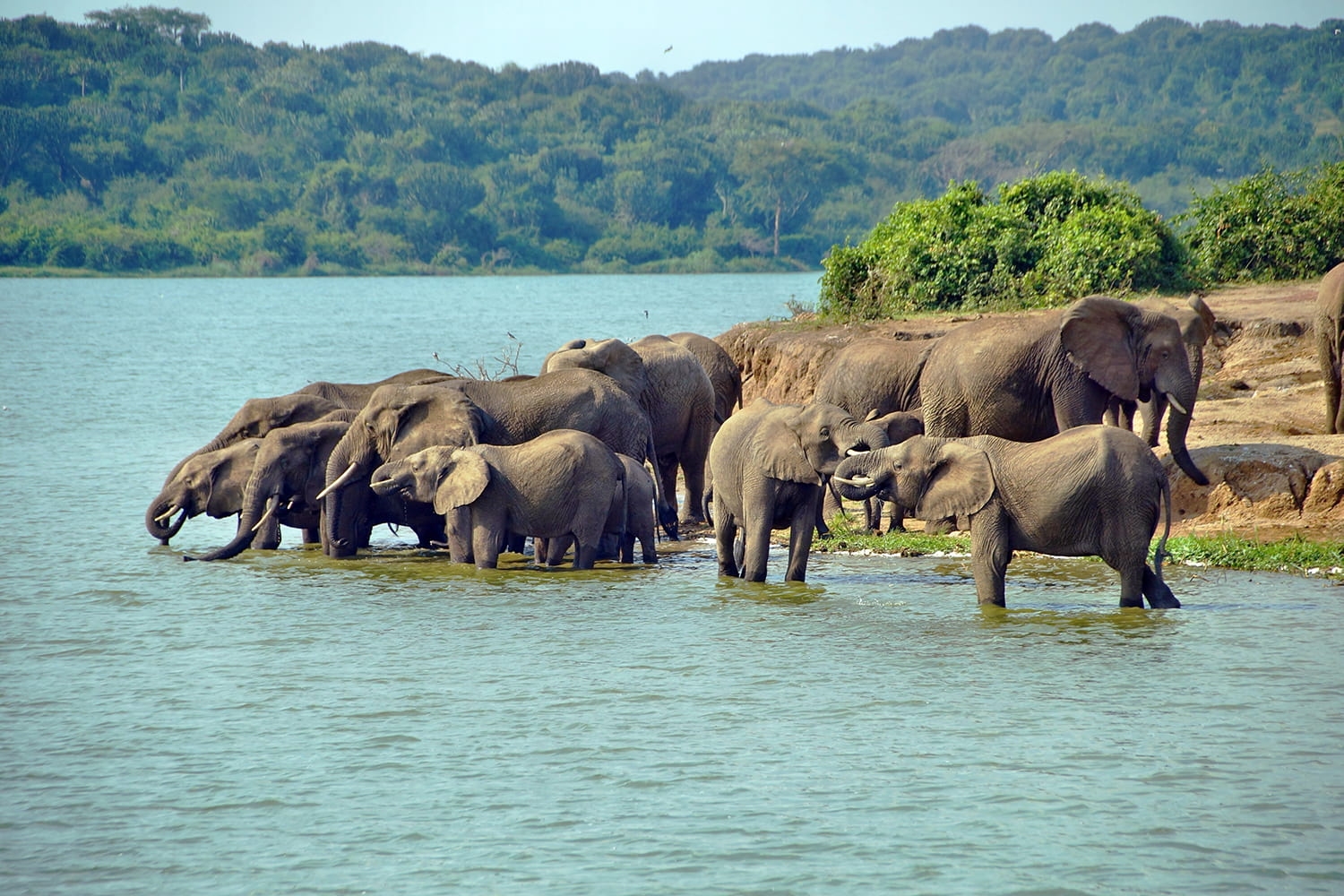
Our 3 Days tour to Queen Elizabeth Park takes you to Queen Elizabeth National Park, famously dubbed the "Medley of Wonders," is Uganda’s premier savanna destination, cradled between the shimmering waters of Lake Edward and Lake George. Set against the jagged, snow-capped backdrop of the Rwenzori Mountains, this diverse ecosystem spans nearly 2,000 square kilometers of sprawling savanna, humid rainforests, and sparkling crater lakes. A 3-day expedition offers a concentrated burst of biodiversity, from the legendary tree-climbing lions of the Ishasha Sector to the massive pods of hippos lining the Kazinga Channel. This journey is a masterclass in African scenery, blending traditional big-game tracking with unique aquatic safaris. Whether you are navigating the ancient "explosion craters" or tracking chimpanzees in the sunken forest of Kyambura Gorge, Queen Elizabeth provides an intimate and unforgettable encounter with the wild heart of the Albertine Rift Valley, making it an essential chapter in any Ugandan adventure.
3-Day Queen Elizabeth Park Highlights
- Tree climbing lion sightings
- Massive river hippo pods
- Scenic Rift Valley descent
- Ancient volcanic explosion craters
- Majestic Rwenzori Mountain backdrop
- Sunrise Kasenyi savanna drives
- Kazinga Channel boat cruise
- Giant Nile crocodile encounters
- Diverse tropical bird watching
- Sunken Kyambura Gorge forest
- Intelligent chimpanzee trekking adventures
- Equator crossing photo opportunity
Day 1: The Rift Valley Descent and Explosion Craters
This 3 Days tour to Queen Elizabeth Park begins with a scenic drive from Kampala, descending into the dramatic Great Rift Valley. Upon arrival, the focus shifts to the park's geological marvels: the Katwe Explosion Craters. These ancient volcanic calderas offer some of the most breathtaking panoramic views in East Africa, with the massive Rwenzori range looming in the distance. A late afternoon game drive through the Kasenyi Plains introduces you to the park’s residents, including herds of elephants, Cape buffaloes, and the elegant Uganda Kob. As the sun dips, predators like lions and hyenas begin to stir, providing a thrilling introduction to the savanna. The day concludes at a lodge perched on the escarpment, where the sounds of the African bush provide a rhythmic soundtrack to your first night in the wilderness.
Day 2: Kasenyi Savanna and the Kazinga Channel
Day two is dedicated to the park’s most iconic wildlife experiences. An early morning game drive in the Kasenyi sector maximizes your chances of witnessing a lion hunt or spotting an elusive leopard. This area is a primary breeding ground for kobs, making it a hotspot for feline activity. In the afternoon, the tempo shifts with a boat cruise on the Kazinga Channel. This 40-kilometer waterway connects Lake Edward and Lake George and boasts the highest concentration of hippos in the world. From the water, you will observe Nile crocodiles, elephants cooling off at the banks, and a dizzying array of birdlife, including African fish eagles and pelicans. The boat provides a unique, eye-level perspective of the wildlife, offering world-class photographic opportunities that land-based drives simply cannot replicate.
Day 3: Primate Tracking and the Journey Home
On the final morning of 3 Days tour to Queen Elizabeth Park, the safari transitions from the open plains to the subterranean mystery of the Kyambura Gorge. Known as the "Valley of Apes," this 100-meter-deep tropical rainforest is a sunken paradise and home to a habituated community of chimpanzees. Tracking these intelligent primates through the lush canopy is a thrilling physical and sensory experience. Alternatively, a visit to the Maramagambo Forest offers serene walks through ancient ironwood trees and visits to "bat caves" where pythons often lurk. After this primate encounter, the journey concludes with a drive back to Kampala, crossing the Equator for a final photo opportunity. This 3-day circuit leaves you with a profound appreciation for Uganda’s ecological diversity, having bridged the gap between the world of the savanna and the world of the great apes.
1. How long does it take to travel from Kampala to the park?
The road journey from Kampala to Queen Elizabeth National Park typically takes 6 to 7 hours, covering a distance of approximately 400 km. Most travelers take the route via Masaka and Mbarara, which is well-paved and offers several interesting stopovers. A highlight of this drive is the Equator crossing at Kayabwe, perfect for photography and a coffee break. As you continue toward Bushenyi, the landscape transforms from lush central plateaus into rolling tea plantations and eventually drops into the dramatic Albertine Rift Valley. While the drive is substantial, the final approach offers breathtaking views of the Rwenzori Mountains and the sparkling crater lakes, making the transit an integral part of the adventure.
2. Can I travel to the park by air?
For those looking to maximize their time in the wild, traveling by air is a highly efficient alternative. Daily scheduled and chartered flights operate from Entebbe International Airport or Kajjansi Airfield, landing at Kasese, Mweya, or Ishasha airstrips. The flight takes approximately 60 to 90 minutes, bypassing the 7-hour road journey. This option is particularly popular for luxury safaris, as it allows you to arrive at your lodge in time for a gourmet lunch and an afternoon boat cruise on the Kazinga Channel. Domestic carriers like Aerolink and Bar Aviation offer reliable service, providing a stunning aerial perspective of the crater lakes and the Rwenzori "Mountains of the Moon" during the descent.
3. What is included in a 3-day tour price?
A standard 3-day safari is designed as an all-inclusive experience, ensuring you don’t have to worry about logistics. The price typically covers 4x4 safari transport (usually a Land Cruiser or customized van with a pop-up roof), the services of a professional English-speaking driver-guide, and two nights of accommodation. All meals (breakfast, lunch, and dinner) are included on a full-board basis. Crucially, the cost also incorporates park entrance fees, which are valid for 24-hour cycles, and the core activities: a sunrise game drive in the Kasenyi Plains and the Kazinga Channel boat safari. Some operators also include bottled water in the vehicle and transit stops like the Equator crossing.
4. What is the best time to visit?
The Dry Seasons (June to September and December to February) are widely considered the best times for wildlife viewing. During these months, the savanna grass is short, which significantly improves your chances of spotting predators like lions and leopards. Furthermore, as water becomes scarce inland, animals congregate in massive numbers along the banks of the Kazinga Channel, providing guaranteed sightings from the boat. The "Wet Seasons" (March to May and October to November) are beautiful for birdwatching and landscape photography, as the park is vibrant and green. While rain can make some tracks slippery, the park remains open year-round, and the lower number of tourists during these months offers a more private experience.
5. What animals can I see?
Queen Elizabeth National Park is home to an incredible 95 mammal species and over 600 bird species. During a 3-day tour, you are likely to encounter four of the "Big Five": elephants, buffaloes, lions, and leopards. The park is also a stronghold for the iconic Uganda kob, waterbucks, and giant forest hogs. In the water, you will see some of the highest concentrations of hippos in Africa alongside giant Nile crocodiles. For primate lovers, the park offers chimpanzees, black-and-white colobus monkeys, and baboons. Birders will be in paradise, with frequent sightings of the African fish eagle, various kingfishers, and the prehistoric-looking Shoebill stork in the swampy fringes.
6. Where can I find tree-climbing lions?
The world-famous tree-climbing lions are found in the Ishasha sector, located in the southern part of the park. Unlike most lions, the prides here have developed the unique habit of spending their afternoons draped over the sprawling branches of ancient fig trees. This behavior is thought to be a way to escape the heat of the ground and avoid biting tsetse flies. Finding them requires a dedicated game drive through the Ishasha plains. While it is about a 2-hour drive from the main Mweya sector, the sight of a full pride lounging in the canopy is one of the most iconic wildlife images in Africa and a major highlight for photographers.
7. What is the Kazinga Channel boat cruise?
The Kazinga Channel boat cruise is a 2-hour aquatic safari along a 32km natural channel that links Lake Edward and Lake George. It is often cited as the highlight of the entire trip. From the safety of the boat, you get an up-close view of incredible wildlife density; hippos huddle in the water just meters away, while elephants and buffaloes come to the banks to drink and bathe. The channel is also a magnet for water birds, including pelicans, cormorants, and storks. The cruise offers a relaxed, low-angle perspective for photography that is impossible to achieve from a vehicle, making it an essential activity for any visitor.
8. Is chimpanzee tracking possible in 3 days?
Yes, chimpanzee tracking is a popular addition to a 3-day itinerary. This activity usually takes place in Kyambura Gorge or the nearby Kalinzu Forest. Kyambura Gorge, known as the "Valley of Apes," is a dramatic 100-meter-deep tropical chasm carved into the savanna, home to a habituated community of chimps. Kalinzu Forest, located just outside the park boundary, is often favored for its higher sighting success rates. Tracking is typically scheduled for the morning of Day 2 or Day 3. It adds a thrilling primate dimension to your safari, allowing you to transition from the open plains to the humid, vocal world of the chimpanzees.
9. What are the best areas for game drives?
The Kasenyi Plains, located in the northeastern part of the park, are the primary destination for morning game drives. These vast grasslands are the main breeding grounds for Uganda kobs, which naturally attracts prides of lions and the occasional leopard. For a more scenic drive, the Channel Track offers beautiful views of the Kazinga Channel and is a great spot to find elephants and warthogs. The Mweya Peninsula is also excellent for spotting banded mongooses and waterbucks. Your guide will typically navigate these loops at sunrise, which is the most active time for predators and the best light for photography.
10. What is the Lion Tracking Experience?
The Lion Tracking Experience is a unique research-based activity that offers a deeper look into the park’s predator conservation. Accompanied by researchers from the Uganda Carnivore Program, you head off-track in a vehicle equipped with radio-telemetry equipment to locate lions that have been fitted with tracking collars. This allows for incredibly close and guaranteed encounters while contributing to vital scientific data. Unlike a standard game drive, this activity is restricted to a small number of participants to minimize disturbance to the animals. The fees paid for this experience go directly toward the monitoring and protection of the park’s lion and leopard populations.
11. What are the accommodation options?
Accommodation in Queen Elizabeth National Park caters to all budgets and styles. Luxury options like Mweya Safari Lodge or Kyambura Gorge Lodge offer world-class service, swimming pools, and stunning views. Mid-range travelers often choose Kasenyi Safari Camp or Elephant Hab, which provide comfortable en-suite cottages and a true "bush" feel. For budget travelers, The Bush Lodge or Pumba Safari Cottages offer cozy, affordable bandas and tents. Many of the budget and mid-range lodges are located just outside the park boundary, ensuring you are still close to the action while keeping costs manageable.
12. Are meals provided?
Yes, almost all 3-day safari packages are sold on a full-board basis. This means your breakfast, lunch, and dinner are included from the time you start your journey until you return to Kampala. Lodges serve a mix of international and local Ugandan cuisine, with breakfast often being a hearty affair before your morning game drive. Lunch can be a hot meal at the lodge or a packed picnic box if you are out on a full-day exploration. Dinners are typically three-course meals enjoyed at the lodge. Most accommodations are very accommodating with dietary restrictions like vegan, gluten-free, or halal, provided they are notified at the time of booking.
13. Is it safe?
Queen Elizabeth National Park is very safe for tourists. The park is managed by the Uganda Wildlife Authority (UWA), and rangers are stationed throughout the various sectors. However, because it is a wild environment, safety depends on following strict regulations. You must always stay inside your vehicle during game drives, as animals like elephants and buffaloes can be unpredictable if approached on foot. While at your lodge, especially those that are unfenced, you should never walk alone at night; most lodges provide "askaris" (guards) to escort you to and from your room. Following your guide’s advice and respecting the wildlife ensures a safe and enjoyable trip.
14. Can I do night game drives?
Yes, night game drives are an optional but thrilling addition to a 3-day tour. These are conducted in the Mweya Peninsula or the Kasenyi area with a specialized UWA ranger and powerful spotlights. The goal is to spot nocturnal species that are rarely seen during the day, such as hyenas, owls, nightjars, and the elusive serval cat. It is also the best time to see leopards on the hunt. The savanna takes on a completely different atmosphere after dark, filled with unique sounds and the glowing eyes of hidden creatures. It is a highly recommended experience for those who want to see the "full cycle" of the African bush.
15. Are there age restrictions for chimpanzee tracking?
Yes, there is a strict minimum age of 15 years for chimpanzee tracking in both Kyambura Gorge and Kalinzu Forest. This rule is enforced by the Uganda Wildlife Authority to protect the health of the primates (who are susceptible to human childhood diseases) and to ensure the safety of the trekkers, as the terrain can be steep and the chimps can be unpredictable. There are, however, no age restrictions for standard game drives or the Kazinga Channel boat cruise, making the rest of the park very family-friendly. If traveling with younger children, your tour operator can usually arrange for a child-minder at the lodge while the adults go tracking.
16. What should I pack?
Packing for a 3-day safari requires a mix of comfort and protection. You should bring lightweight, neutral-colored clothing (khaki, tan, or green) to blend in with the environment and avoid attracting tsetse flies. A warm sweater or light jacket is essential for the chilly morning game drives. Sturdy walking shoes or hiking boots are necessary for any forest walks or gorge explorations. Other essentials include a camera with a zoom lens, binoculars, high-SPF sunblock, a wide-brimmed hat, and insect repellent. It’s also wise to carry a small personal first aid kit and a refillable water bottle to stay hydrated during the warm afternoon hours.
Booking 3 days Queen Elizabeth park with us Roads of Adventure safaris
To book a 3-day Queen Elizabeth National Park safari with Roads of Adventure Safaris, you can contact them directly via their official website or phone. They are a reputable operator based in Kampala that specializes in personalized itineraries and wildlife experiences across East Africa.
