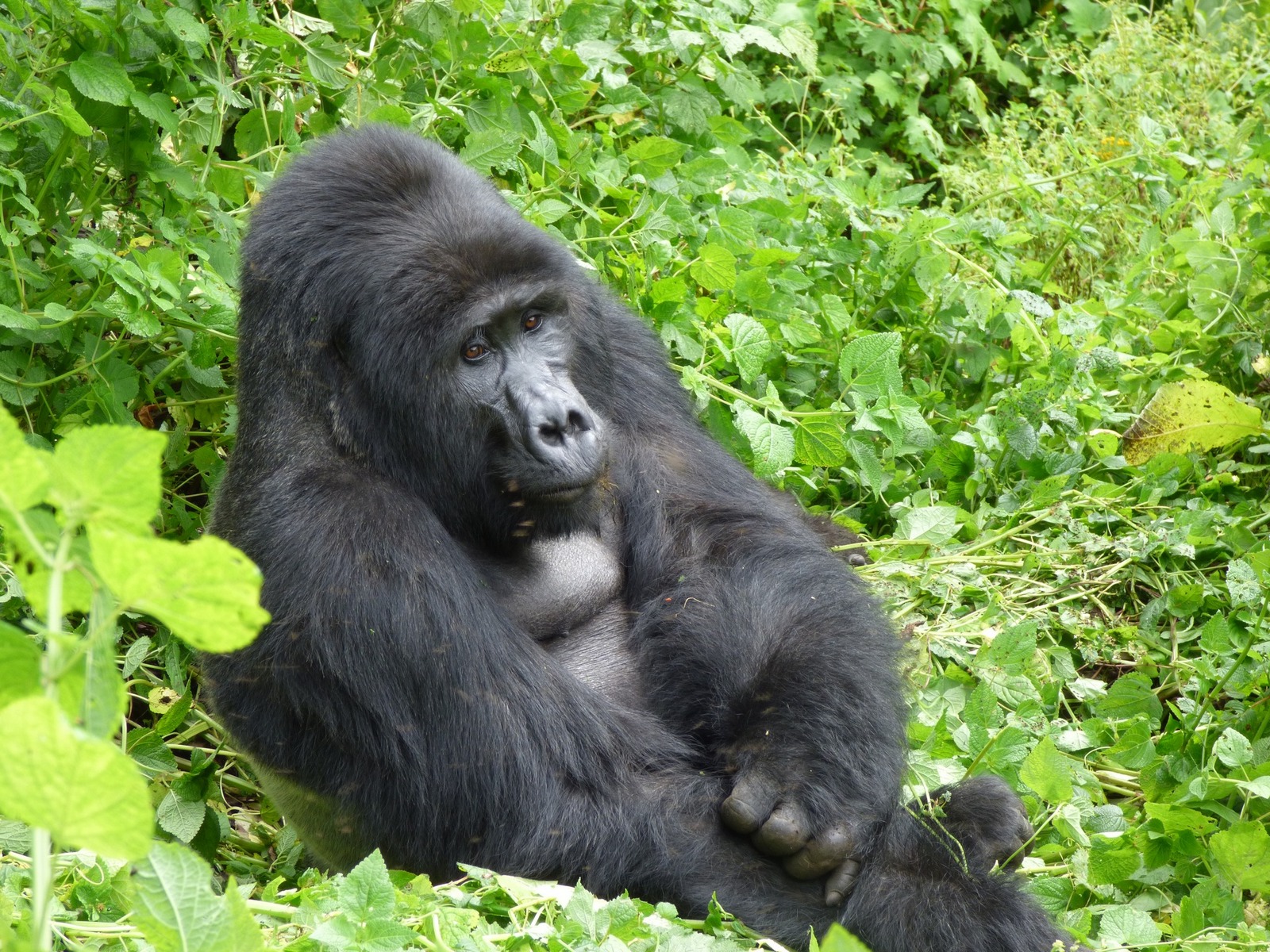
Pulling off a 3-day gorilla trekking trip from Johannesburg is a high-speed logistical sprint that requires precise timing, but it works perfectly if you pick the right runway. Your choice between Uganda and Rwanda dictates your entire transit strategy.
Option A: Volcanoes National Park, Rwanda You will board a 4-hour direct flight from O.R. Tambo International Airport (JNB) to Kigali International Airport (KGL) on carriers like RwandAir. Once you land, a 70-mile paved highway gets you to the park gates in exactly 2.5 hours. While the convenience keeps transit stress low, the premium pass sets you back $1,500.
Option B: Bwindi Impenetrable National Park, Uganda You will fly 4 hours from JNB to Entebbe International Airport (EBB). Because the overland drive from Entebbe to Bwindi takes 9 grueling hours, a 75-minute domestic flight via Aerolink to the Kihihi or Kisoro airstrip is mandatory to save your schedule. This option reduces your primate pass cost to $800, though the bush flights add roughly $500 in airfare.
Popular 3 Days gorilla trekking safari holidays
3-days-fly-in-uganda-gorilla-habituation-africa-safari-tour-package
2-days-best-gorilla-trekking-safari-tour-via-kigali-to-bwindi-impenetrable-forest-park
3-days-gorilla-trekking-safari-and-lake-bunyonyi-relaxation-itinerary
3-days-affordable-uganda-budget-gorilla-trekking-via-kigali
4-days-ultimate-gorilla-and-uganda-safari-and-chimpanzee-tracking
4-days-ultimate-gorilla-and-uganda-safari-and-chimpanzee-tracking
4-days-uganda-gorilla-safari-with-golden-monkey-tracking-from-rwanda
4-days-luxury-gorilla-trekking-safari-in-bwindi-fly-in-all-inclusive-tour
5-days-gorilla-and-uganda-safari-and-golden-monkey-trekking-tour-from-kigali
5-days-un-matched-uganda-gorilla-safari-and-chimpanzee-tour-itinerary
6-days-gorilla-and-uganda-safari-to-see-big-five
7-day-ultimate-uganda-primate-safari-chimpanzees-and-game-drives
Day 1: Travel Day & Arrival
Your day starts with a morning flight out of Johannesburg. If you choose Rwanda, you will land in Kigali by mid-afternoon, clear customs, and immediately hop into a 4x4 for the 2.5-hour drive northwest. You will check into a lodge like Five Volcanoes by 6:30 PM. If you choose Uganda, you will connect from Entebbe to your bush flight, landing at the dirt airstrip by 2:00 PM, followed by a 90-minute bumpy road transfer to a lodge like Mahogany Springs. Dinner is served early because your wake-up call comes before dawn.
Day 2: Gorilla Trekking
The alarm rings at 5:30 AM for a quick breakfast. By 7:00 AM, you are at the park headquarters for a mandatory safety briefing where rangers allocate you to one of the habituated gorilla families, capping groups at 8 people. You will enter the dense forest canopy by 8:30 AM. Depending on where the primates nested, the hike can last from 2 to 6 hours, climbing elevations up to 9,000 feet. When you find them, you get exactly 60 minutes to watch the family eat and interact while maintaining a strict 32-foot safety distance. You will return to the lodge by mid-afternoon to clean your muddy gear.
Day 3: Departure
After a 6:30 AM breakfast, you will pack your bags and check out of the lodge. For the Rwandan route, you will trace the RN4 highway back down to Kigali, arriving at the airport by 10:30 AM to catch your early afternoon flight. For the Ugandan route, your driver will transfer you back to the airstrip for your 9:45 AM domestic flight to Entebbe, connecting directly to your regional carrier. You will land back at O.R. Tambo International Airport in Johannesburg by late evening, wrapping up a cross-continental trek in under 72 hours.
What are the passport and visa rules for this trip?
Executing a three-day international journey requires immaculate paperwork to avoid border delays. First, your passport must have at least six months of validity left from your date of entry. Bureaucratically, immigration officers are unyielding about pages: you must have at least two completely blank pages for entry and exit stamps, or airlines will legally deny you boarding at O.R. Tambo.
For the destination, your visa strategy depends entirely on the country you pick. If you choose Rwanda, you can obtain a 30-day tourist visa on arrival for $50, or pre-arrange it online.
If you choose Uganda, you must apply online in advance for an e-Visa ($50) as they no longer issue standard tourist visas on arrival. However, if you plan to mix destinations later, the $100 East Africa Tourist Visa is a joint option covering Rwanda and Uganda simultaneously. On the health front, South African customs requires a valid Yellow Fever vaccination certificate upon your return if you spent time in Uganda, which is a recognized transmission zone. You must get this shot at least 10 days before travel so the certificate is legally valid.
How far in advance must I secure gorilla permits?
Securing your gorilla permit is the single most time-sensitive element of planning this trip. Because human contact with wild mountain gorillas is heavily regulated to protect their health and natural habits, the wildlife authorities in both countries enforce strict caps. Only eight people are permitted to visit a single habituated gorilla family for exactly one hour per day.
Because of this limited supply, permits sell out months ahead, particularly during the peak dry seasons of June to September and December to February.
For these high-demand months, you should ideally book your permits six to nine months in advance. If you are traveling during the rainy low seasons of April, May, or November, you might find availability two to three months out, or occasionally last-minute openings, but relying on that is a massive gamble for a tight three-day trip. In Rwanda, the Rwanda Development Board issues these permits for $1,500. In Uganda, the Uganda Wildlife Authority issues them for $800. Because these permits are non-refundable and tied strictly to your passport number, operators require full upfront payment to lock down your specific tracking date.
What specific clothing layers should I pack for trekking?
Packing for a quick mountain trek requires highly technical, durable gear rather than standard casual vacation clothes. The climate inside the rainforests is humid and unpredictable, while high elevations mean temperatures swing from cold mornings to hot afternoons. Your base layer should be a lightweight, moisture-wicking long-sleeve shirt and durable hiking trousers.
Avoid short sleeves and shorts because the forest floor is packed with stinging nettles, sharp thorns, and biting ants that will easily tear up exposed skin.
You need broken-in, waterproof hiking boots with deep ankle support and excellent grip to handle steep, muddy volcanic slopes. A critical insider tip is to pack thick gaiters to wrap around your lower legs; this stops mud from flooding your boots and prevents red ants from crawling up your pants. Bring thick gardening gloves to protect your hands when grabbing onto branches for balance. Finally, roll up a high-quality, lightweight waterproof rain jacket into your daypack, as tropical downpours happen suddenly in these montane forests regardless of the official season. Stick to earth tones like khaki or green, and avoid dark blue, which attracts biting flies.
Is malaria a serious concern in these forest regions?
Malaria is a real risk in both Uganda and Rwanda, meaning medical prevention is a necessary part of your pre-trip planning. The national parks themselves sit at high altitudes—often between 7,000 and 10,000 feet above sea level—where the cool air slows down mosquito breeding cycles. However, the transit hubs, airport cities, and lower valley regions surrounding the parks are prime environments for malaria-carrying mosquitoes.
You should visit a travel clinic or your doctor at least four weeks before leaving Johannesburg to discuss prescription prophylaxis.
Medications like Malarone, Doxycycline, or Mefloquine are highly effective when taken according to the strict daily schedule. Beyond pills, physical prevention is your best line of defense. Mosquitoes are most active during the hours of dawn and dusk, which corresponds perfectly with your early morning travel and lodge dinners. Apply a high-quality insect repellent containing at least 30% DEET to any exposed skin, and wear long sleeves and long pants after sunset. Most luxury and mid-range safari lodges provide mosquito netting over the beds and spray the rooms nightly, but carrying your own travel-sized repellent spray ensures you are protected during transport.
How physically fit do I need to be to trek?
Gorilla trekking is a demanding outdoor activity that requires a solid baseline of physical endurance and mental determination. This is not a predictable walk on a paved path; it involves hiking completely off-trail through dense undergrowth, scrambling over fallen trees, crossing small streams, and navigating slippery, steep mud banks.
The park elevations range from 6,000 to over 9,000 feet, meaning the air is thin, which causes your heart rate to spike and lungs to tire much faster than at sea level.
The total time spent hiking is completely unpredictable because it depends entirely on where the wild gorillas traveled overnight to forage. Some tracking groups find their assigned gorilla family within a relatively easy 45-minute walk from the park boundary. Other groups might spend five to seven grueling hours tracking the family up steep volcanic ridges. Rangers match trekking groups based on general physical ability, and they pace the hike to accommodate the slowest person. You can also hire a local porter at the trailhead for $20 to carry your heavy backpack and provide a steady physical push up the steepest mud slopes.
Which airline options fly directly from Johannesburg to Kigali?
When time is limited to a strict three-day window, optimizing your flight schedule is critical to maximize your time on the ground. For the Rwandan route, the most efficient option is booking a direct commercial flight from O.R. Tambo International Airport to Kigali International Airport. RwandAir, the national carrier of Rwanda, operates regular direct flights on this specific route, utilizing modern aircraft that complete the cross-continental journey in roughly under four hours.
Flying direct eliminates the risk of missing connections, luggage loss, and airport delays associated with layovers.
These flights typically depart Johannesburg in the morning and touch down in Kigali by mid-afternoon, allowing you to clear immigration, meet your private 4x4 guide, and complete the 2.5-hour drive to Musanze before darkness sets in. If RwandAir schedules do not align with your specific dates, alternative carriers like Kenya Airways or Ethiopian Airlines service this route, but they require layovers in Nairobi or Addis Ababa. These connections push your total travel time to 7 or 10 hours, which drains precious daylight and makes a three-day itinerary incredibly difficult to pull off without adding extra transit days.
What happens during the one hour with the gorillas?
The moment your tracking group locates the gorilla family, the physical exhaustion of the hike disappears. Your lead park ranger will instruct the group to drop their walking sticks and backpacks in a central pile, leaving you with only your camera and phone. You will approach the family calmly, maintaining a strict 32-foot safety distance to protect the primates from human pathogens and respect their personal space.
The clock starts immediately, giving you exactly 60 minutes of contact time.
During this hour, you will witness the normal daily routines of a wild primate family. You might observe a massive, 400-pound silverback lounging peacefully while stripping bark from wild celery, blackbacks wrestling in the leaves, or mothers grooming tiny infants dangling from bamboo branches. The gorillas are completely habituated to human presence, meaning they generally ignore you, though they may look directly into your eyes with profound intelligence. You are permitted to take photos and videos, provided your camera flash is turned off, as bright, sudden flashes can easily startle the animals and trigger a defensive charge from the silverback. The hour passes quickly, and rangers strictly enforce the exit deadline.
Why are domestic bush flights necessary inside Uganda?
If you choose to track mountain gorillas in Uganda’s Bwindi Impenetrable National Park for your three-day trip, domestic bush flights are an absolute necessity. Entebbe International Airport is located in the central region of the country, while Bwindi sits tucked away in the remote southwestern corner along the borders of Rwanda and the Democratic Republic of Congo.
The overland drive between Entebbe and Bwindi covers roughly 300 miles of winding, heavily congested, and partially unpaved roads.
Driving this route takes nine to ten hours of grueling travel each way. On a tight three-day schedule, driving would completely consume Day 1 and Day 3, leaving you zero time to complete the actual trek. To solve this logistical hurdle, domestic flight operators like Aerolink run scheduled daily bush flights using small turboprop aircraft, such as Cessna Caravans. These flights take off from Entebbe and land at regional dirt airstrips like Kihihi or Kisoro in just 75 minutes. From the runway, a pre-arranged 4x4 vehicle can transfer you to your forest lodge in under two hours, preserving your short itinerary.
What is included when booking through a tour operator?
Attempting to book all the individual components of a short cross-continental safari independently introduces high logistical risks. Booking a comprehensive package through an established tour operator streamlines the entire process into a single, cohesive itinerary. A standard professional package covers the upfront acquisition of your official gorilla trekking permits, which operators buy directly from government wildlife authorities using your passport credentials.
Additionally, the booking includes a private, customized 4x4 safari vehicle equipped with a pop-up roof and heavy-duty suspension to handle the rough terrain.
Crucially, you get the services of a dedicated, English-speaking driver-guide who manages airport pickups, handles lodge check-ins, and navigates the local roads efficiently. The package also covers your accommodation at a mid-range or luxury forest lodge, along with three daily meals. By bundling your ground transport, permits, accommodation, and regional flights into one managed reservation, you ensure that if a commercial flight is delayed or a road is blocked, the operator can instantly alter the logistics on the ground to save your trek, providing security that independent travel cannot offer.
Can I track gorillas during the tropical rainy season?
Yes, gorilla trekking operates every single day of the year, regardless of weather conditions, though tracking during the wet seasons requires extra mental and physical preparation. The regional rainy seasons run from April to May and again during the shorter rains of October and November. During these months, the rainforests experience frequent, heavy tropical downpours that can last for hours, turning the steep hillsides into thick, incredibly slick mud tracks.
The vegetation grows dense and lush, which can occasionally block clear sightlines for photography, and the gorillas often move down to lower, warmer ridges to forage.
Despite the damp conditions, traveling during the wet months offers unique structural benefits. Because tourist numbers drop significantly, the parks are quiet and uncrowded, allowing for a more intimate forest experience. Lodges frequently offer steep discount rates on rooms to fill empty beds, and gorilla permits are much easier to secure at short notice without booking a year in advance. If you pack high-quality waterproof gear, heavy trail boots, and dry bags to protect your electronics, a rainy season trek is highly rewarding.
Booking 3 Days gorilla trekking with us Roads of Adventure safaris
Locking in this 3-day Bwindi expedition through Roads of Adventure Safaris takes the stress out of intense logistics. Starting from Entebbe or Kampala, their packages range from $1,300 to $1,800, packing your $800 tracking permit, 4x4 transport, and lodge stays into one price.
Your first day is a 9-hour scenic drive across the countryside, splitting the journey with a lunch stop right at the Kayabwe Equator line. Day two is all about the forest, climbing steep ridges for that unforgettable one-hour encounter with a wild gorilla family. On day three, you will head back, arriving in the city by late evening.
