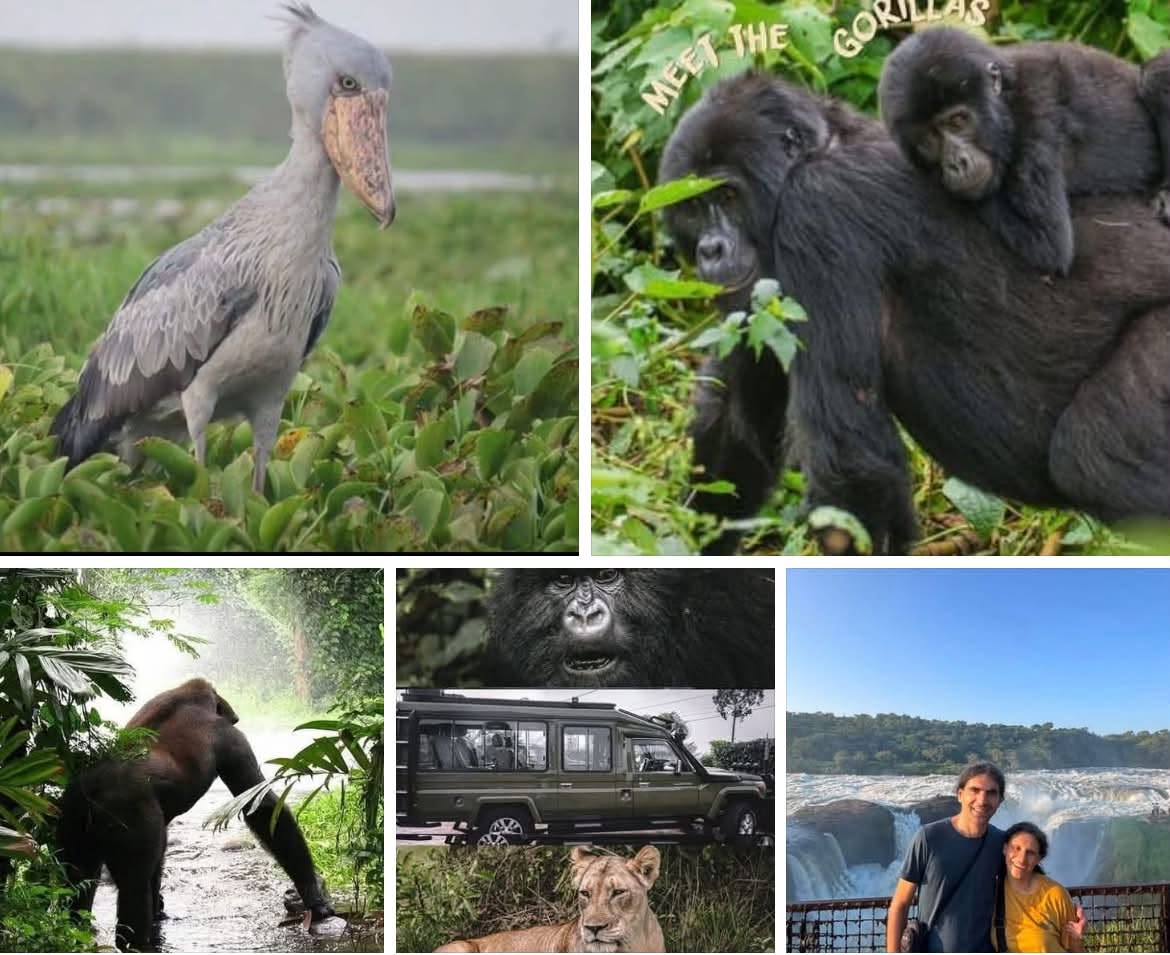
If you’re looking to see mountain gorillas in Africa, Uganda, Rwanda, and the Democratic Republic of Congo (DRC) are the only countries where mountain gorillas occur naturally in the wild.
In Uganda, most gorilla trekking is done in Bwindi Impenetrable National Park. It’s known for having a strong gorilla population (more than half of the worlds remaining mountain gorillas) and for the dramatic, jungle-style feel of the trek—so the whole experience feels real and adventurous. Many travelers also add chimp trekking and savanna safaris to complete the trip.
In Rwanda, gorillas are tracked mainly in Volcanoes National Park. It’s often chosen by travelers who want a well-organized trekking experience that still feels special and close to nature. Many people fly into Kigali, trek shortly after, and then continue their safari holiday in other nearby destinations.
In the DRC, mountain gorillas can be found in Virunga National Park. While the wildlife experience is possible here, the area has major security challenges, so travel conditions can be unpredictable and guidance can change. If someone wants to go, it must be planned with extra caution and through trusted, informed partners.
14-days-luxury-rwanda-primate-safari-and-uganda-safari-tour-combo
12-days-classic-rwanda-uganda-africa-safari-tour-package-combo
11-days-best-africa-big-five-safari-in-rwanda-and-gorilla-trekking-in-uganda
10-days-best-of-luxury-iconic-rwanda-safari-holiday-ultimate-vacation
9-days-8-nights-midrange-rwanda-wildlife-safari-vacation-trip
6-days-5-nights-rwanda-midrange-itinerary-nyungwe-volcanoes
5-day-akagera-bwindi-gorilla-trekking-lake-bunyonyi-and-batwa-experience
3-days-rwanda-gorilla-trekking-safari-itinerary-in-volcanoes-park
Which country is best for the most gorilla sightings?
If your priority is seeing mountain gorillas, Uganda and Rwanda are usually the easiest countries to plan for. Gorilla trekking there is generally straightforward, with established park operations and clear day-to-day schedules. The DRC (Virunga) can offer an unforgettable gorilla experience, but it often requires extra caution and careful planning due to changing conditions. The “best” choice also depends on when you’re traveling and how important permit availability is to you. Share your travel dates, preferred country, and group size, and we can guide you toward the smoothest option for your trip.
Is it hard to trek for gorillas, and how long does it take?
Gorilla trekking is challenging for many people, but it’s manageable with the right mindset and pace. The trek distance and difficulty depend on where the gorilla family is located that day. Some treks are shorter and move slowly through vegetation, while others are steeper and take longer through uneven, muddy forest trails. Even when the walk is tough, you still stop frequently to rest and adjust. Trek times can vary from one day to another, so it’s smart to prepare for both light and moderate conditions. Tell us your fitness level and comfort needs, and we’ll plan a pace that fits you.
What should I pack for gorilla trekking?
Packing well makes gorilla trekking more comfortable and safer. Plan for rain, wet ground, and insects. Bring rain protection (a light rain jacket is best), closed waterproof shoes/boots, long sleeves, and insect repellent. A small daypack helps you carry water, snacks if allowed, and a towel or extra socks if you get muddy. If you’re photographing, bring your camera setup and keep it protected in a waterproof cover or bag. Keep the load light because you’ll need to move through dense terrain. Share your travel month and whether you’ll be using lenses or just a phone, and we’ll tailor the packing list.
Do I need gorilla permits before I travel?
Yes. Gorilla trekking permits are limited, and you generally need to arrange them in advance. The number of permits issued depends on the park and the gorilla family available for trekking on your planned day. Permit availability can change with season, demand, and scheduling, so waiting until the last minute can be risky—especially if you’re traveling with a group or during peak periods. If you tell us your travel month, your group size, and your preferred country, we can help you plan early and secure the correct trekking arrangements so your safari stays on track.
Can I combine gorilla trekking with chimp trekking?
In many cases, you can combine gorilla trekking with chimp tracking, especially on itineraries that include the right parks and enough time. The main factor is scheduling—chimp tracking days and gorilla trek days need to fit smoothly with permits and travel times between locations. This combination works well for travelers who want both forest primate experiences and different “wildlife moods” in one trip. If you share your starting city, your preferred country, and your travel dates, we can suggest the best route and daily plan. That way, you don’t end up with tight timing or unnecessary long transfers.
What’s the difference in the trekking experience between Uganda and Rwanda?
Both Uganda and Rwanda offer incredible gorilla encounters, but the trekking atmosphere can feel different. Uganda (Bwindi) often feels more rugged and jungle-like, with a dense forest setting and trails that may feel steeper or more physically demanding. Rwanda (Volcanoes National Park) is known for dramatic scenery around the park area and can feel more structured visually, with the volcanic landscape often part of the bigger experience. Neither is “better” overall—it’s more about what you’re looking for: trail intensity, surrounding views, and your preferred travel flow. Tell us what matters most to you, and we’ll guide you to the best match.
Is it safe to visit the DRC for gorilla trekking?
Gorilla trekking in the DRC (Virunga) can be possible, but safety conditions can change, so planning needs to be handled carefully. It’s important to travel with trusted local partners who know the current situation and can adjust plans when conditions require it. If you’re considering Virunga, we’ll talk through safety considerations clearly, including how transfers are handled and what support is in place while you’re there. Your comfort level matters, too—some travelers prefer the more predictable planning of Uganda or Rwanda. If you want to go to DRC, share your dates and preferences, and we’ll advise based on what’s realistic for that period.
What wildlife else can I see during the rest of my safari?
While gorillas are the main highlight, your safari can include many other wildlife experiences. Depending on your itinerary and the parks you visit, you may see other primates, a wide variety of birds, and classic safari animals like elephants, giraffes, zebras, buffalo, and sometimes predators. The exact animals depend on the region and habitat—forest areas will naturally focus more on primates and birds, while savanna parks are better for large mammals. If you tell us which animals you most want to photograph or see, we can shape the rest of the itinerary around those targets. This helps your trip feel complete and not only centered on gorillas.
Will I actually get good photos of gorillas?
Yes—many travelers come back with strong photos because the experience is close-up and full of natural expressions. The real challenge is timing: gorillas move quickly through the forest, and you may have limited time to react once you’re with the family. Preparation helps a lot. Bring a camera setup you’re comfortable using, use settings that handle low light, and be ready to shoot without fumbling with controls. Also, focus on capturing behavior—face expressions, hands, movement, and family interactions—rather than only trying to get “one perfect shot.” Tell us what camera/phone you’re bringing and we’ll share practical photo tips.
How do I book my gorilla trekking with Roads of Adventure Safaris?
To book your gorilla trekking with Roads of Adventure Safaris, share your travel month (or exact dates), the number of travelers, and whether you prefer Uganda, Rwanda, or DRC. Then we help you confirm permit planning, organize the trekking schedule, and build a smooth itinerary around your pace and interests. We also guide you on the best trekking arrangements so you don’t face last-minute issues. If you already have dates, send them as soon as possible because permits can fill quickly during busy seasons. Once we have your details, our team will plan the full experience end-to-end.
