An extended expedition across East Africa’s most diverse country reaches its pinnacle with a comprehensive, four-week loop. The 29 Days best of Uganda safari exploring wildlife, primates and culture is the definitive itinerary for travelers who refuse to compromise, offering an unmatched deep-dive into the country's ecological and human heritage. This epic journey traces a grand loop from the rushing cascades of the Nile to the remote, semi-arid plains of the northern frontier, before descending along the dramatic Albertine Rift valley. Over nearly a month, you will traverse sun-bleached savannahs, dense tropical rainforests, and misty mountain cloud forests. This 29 Days best of Uganda safari exploring wildlife, primates and culture is meticulously designed to balance high-adrenaline adventure, iconic big-game drives, world-class tracking of chimpanzees and mountain gorillas, and immersive cultural connections with ancient communities, revealing exactly why Uganda is celebrated as the Pearl of Africa.
29-days-uganda-primate-safari-adventure-exploration
Days 1–5: Central Gateways & Eastern Adrenaline
Day 1: Arrival at Entebbe International Airport
Your 29 Days best of Uganda safari exploring wildlife, primates and culture officially begins as your aircraft glides down over Lake Victoria to land in Entebbe. Your professional driver-guide will greet you warmly at the arrivals terminal and manage your smooth transfer to a tranquil boutique hotel. Take this opening afternoon to rest after your long international flight, adjust to the tropical climate, and unpack your gear. You can spend a relaxing evening strolling through the nearby Entebbe Botanical Gardens, listening to the calls of black-and-white casqued hornbills echoing through the ancient canopy, before enjoying a welcome dinner.
Day 2: Mabamba Swamp Shoebill Quest & Jinja Transfer
The active chapters of your 29 Days best of Uganda safari exploring wildlife, primates and culture launch at dawn with a drive to Mabamba Wetland. Here, you will step into a traditional wooden canoe to navigate a labyrinth of narrow papyrus channels, searching for the prehistoric-looking Shoebill stork. Watching this rare bird hunt lungfish in the shallows is an incredible experience for any wildlife enthusiast. Afterward, you will drive eastward through lush tea estates and the dense canopy of Mabira Forest, arriving by late afternoon in the historic town of Jinja, the celebrated adventure capital of East Africa.
Day 3: White-Water Rafting on the Victoria Nile
High-octane adventure takes center stage today on your 26 Days ultimate Uganda safari adventure as you confront the mighty Victoria Nile. You will hit the water for an exhilarating day of white-water rafting, tackling legendary, thundering Grade 4 and Grade 5 rapids under the watchful guidance of expert river pilots. If you prefer to stay dry, you can substitute the rafting with an action-packed quad biking trail or a scenic horseback riding safari along the riverbank villages. Wrap up the afternoon with a peaceful boat cruise to the official geographic Source of the Nile.
Day 4: Drive to Sipi Falls & Local Coffee Experience
The journey snakes northeastward today on your 29 Days best of Uganda safari exploring wildlife, primates and culture toward Mount Elgon. You will wind up steep mountain roads to Sipi Falls, a breathtaking series of three waterfalls cascading down the volcanic foothills. You will embark on a scenic ridge hike to stand behind the thundering 100-meter primary drop. Afterward, enjoy an interactive cultural coffee tour with local Sabiny farmers, learning how they grow, hand-roast, and grind some of the finest Arabica beans on earth, finishing with a fresh, aromatic cup.
Day 5: Scenic Transfer to Pian Upe Game Reserve
Your 29 Days best of Uganda safari exploring wildlife, primates and culture heads deep into the remote Karamoja sub-region today as you enter the sprawling Pian Upe Game Reserve. As Uganda’s second-largest protected area, this untouched gem features vast, golden wooded savannah plains overlooked by the jagged silhouette of Mount Kadam. The drive itself offers an insightful look into rural pastoralist landscapes. You will arrive at your classic tented camp in time to enjoy a sundowner drinks session, listening to the unique sounds of the wild night coming alive.
Days 6–10: The Untamed Northern Frontier
[Day 6: Pian Upe Wildlife] ──> [Day 7: Transit via Nyero Rock Paintings]
└───> [Day 8: Arrive in Kidepo Valley Wilderness]
Day 6: Wildlife Spotting & Exploration in Pian Upe
An early morning safari drive across the endless plains reveals why Pian Upe is a vital piece of your 29 Days best of Uganda safari exploring wildlife, primates and culture. This pristine reserve hosts rare wildlife species found nowhere else in Uganda, making it your best opportunity to spot wild cheetahs sprinting across the terrain. With the help of sharp-eyed rangers, you will scout for the elusive roan antelope, massive common elands, zebras, and herds of Jackson’s hartebeest. The evening features a peaceful nature walk around the base of the rocky kopjes.
Day 7: Journey North via Nyero Rock Paintings
Cultural heritage highlights day seven of your 29 Days best of Uganda safari exploring wildlife, primates and culture. You will travel north through Kumi District, stopping to explore the ancient Nyero Rock Paintings. These historic rock shelters feature geometric and solar motifs painted in red pigment, dating back centuries to early hunter-gatherer civilizations. After learning about these archaeological treasures from a local site guide, you will continue your journey north through Soroti town, watching the landscape transform into the rugged, open bushland of the Karamoja region.
Day 8: Drive to Kidepo Valley National Park
Today features a long, scenic transit as your 29 Days best of Uganda safari exploring wildlife, primates and culture pushes into the northernmost frontier of Uganda. You will traverse rugged, unpaved tracks through changing landscapes to reach Kidepo Valley National Park, which borders South Sudan. Kidepo is widely praised as Africa's most stunningly visual wilderness, where raw savannah plains are completely ringed by soaring, jagged mountain ranges. You will reach your remote safari lodge by late afternoon, feeling completely disconnected from the modern world.
Day 9: Full Day Safaris in Narus & Kidepo Valleys
Wake up to the crisp mountain air for a thrilling game drive through the wildlife-rich Narus Valley on your 29 Days best of Uganda safari exploring wildlife, primates and culture. Because this valley holds water year-round, it draws massive concentrations of wildlife, including spectacular herds of Cape buffaloes numbering in the hundreds, alongside elephants, giraffes, and prides of lions lounging on smooth granite kopjes. An afternoon drive into the drier Kidepo Valley takes you across the seasonal sand river to look for ostriches and elegant secretary birds.
Day 10: Immersive Karamojong Cultural Manyatta Visit
Human connection highlights day ten of your 29 Days best of Uganda safari exploring wildlife, primates and culture. You will spend the day visiting a traditional, fortified Karamojong village, locally known as a manyatta. These proud, nomadic pastoralists have fiercely guarded their ancient cattle-centric lifestyle against modern influences. You will step through the thorny branch barriers to learn about their architecture, traditional body scarification, and intricate beadwork before watching a high-energy jumping dance performed by the village warriors.
Days 11–15: Savannahs & Waterways of Murchison Falls
[Day 11: Kidepo to Murchison] ──> [Day 12: Delta Game Drive & Roaring Launch Cruise]
└───> [Day 13: Top of Falls Hike & Community Walk]
Day 11: Drive to Murchison Falls National Park
Your 29 Days best of Uganda safari exploring wildlife, primates and culture turns southwest today, leaving the dry northern plains behind to travel toward Murchison Falls National Park. You will drive past local homesteads and small trading centers, entering the park from its northern gates. The landscape transforms into beautiful rolling green hillsides dotted with Borassus palm trees. As you transition toward your lodge near the banks of the Nile, you will catch your first glimpses of Uganda's oldest and largest wildlife sanctuary.
Day 12: Delta Game Drive & Nile Launch Cruise
Your morning game drive on this leg of the 29 Days best of Uganda safari exploring wildlife, primates and culture focuses on the fertile delta tracks, yielding views of lions, leopards, Rothschild’s giraffes, and elegant Uganda kobs. In the afternoon, you will board a launch cruise sailing up the Victoria Nile to the base of Murchison Falls. You will watch hippos and giant Nile crocodiles line the banks before stepping off the boat to hike up the gorge ridge, witnessing the Nile force its way through a narrow 7-meter rock gap.
Day 13: Top of the Falls Hike & Boomu Community Walk
Experience the raw power of the Nile today on your 29 Days best of Uganda safari exploring wildlife, primates and culture by driving to the Top of Murchison Falls. Standing on the cliff edge, you can feel the ground vibrate as the entire river plunges into a rocky abyss. In the afternoon, shift your focus to local culture by visiting the Boomu Women’s Group. This community initiative provides an authentic look into rural Ugandan life, where you can participate in traditional basket weaving, garden harvesting, and cooking demonstrations.
Day 14: Ziwa Rhino Sanctuary Foot Tracking
Southward bound, your 29 Days best of Uganda safari exploring wildlife, primates and culture stops at the Ziwa Rhino Sanctuary. This crucial breeding project is home to Uganda's only wild southern white rhinos. Accompanied by armed wildlife rangers, you will track these multi-ton giants on foot through the thick woody brush, getting close enough to take incredible photos and hear them stripping leaves from the branches. Afterward, you will continue your drive down to the historic town of Hoima for a relaxing evening.
Day 15: Scenic Transit to Hoima Cultural Town
Your 29 Days best of Uganda safari exploring wildlife, primates and culture enjoys a relaxed pacing today as you travel down to Hoima. This agricultural town serves as the historical seat of the Bunyoro-Kitara Kingdom. The journey takes you along smooth roads passing through vibrant trading centers and extensive tobacco fields. Upon arrival, you will check into your hotel and take an afternoon walking tour to learn about the kingdom's history, royal burial grounds, and cultural traditions, providing a wonderful human contrast to your wildlife encounters.
Days 16–20: Primate Capital & Western Rift Valley
[Day 16: Hoima to Kibale] ──> [Day 17: Chimpanzee Tracking & Bigodi Primate Walk]
└───> [Day 18: Semuliki Hot Springs Side Trip]
Day 16: Drive to Kibale Forest National Park
Today's leg of your 29 Days best of Uganda safari exploring wildlife, primates and culture takes you along the scenic Albertine Rift escarpment, passing endless rows of bright green tea plantations that carpet the hillsides. Your destination is the lush rainforest of Kibale National Park, globally recognized as the primate capital of East Africa. As the modern paved roads give way to red dirt forest tracks, the humid air fills with the calls of forest birds, welcoming you to the jungle ecosystem.
Day 17: Chimpanzee Tracking & Bigodi Primate Walk
Primate tracking takes the spotlight today on your 29 Days best of Uganda safari exploring wildlife, primates and culture. Following an informative briefing by park rangers, you will step into the dense tropical canopy of Kibale Forest to track wild chimpanzees. You will follow the loud echoes of pant-hoots and tree drumming until you locate a habituated troop. Spend an unforgettable hour watching them groom, play, and swing through the branches. In the afternoon, explore Bigodi Wetland Sanctuary to spot rare monkeys and Great Blue Turacos.
Day 18: Geothermal Exploration at Semuliki National Park
Your 29 Days best of Uganda safari exploring wildlife, primates and culture takes a fascinating geothermal side trip today to Semuliki National Park, a unique forest that represents the eastern edge of the vast Central African Congo basin. You will hike along a boardwalk trail through swampy forests to witness the thundering Sempaya Hot Springs, where water boils naturally above 100 degrees Celsius. This specialized ecosystem provides an amazing opportunity to look for rare Central African forest birds and black-and-white colobus monkeys.
Day 19: Drive to Queen Elizabeth National Park
You will travel south today on your 29 Days best of Uganda safari exploring wildlife, primates and culture, driving directly alongside the snow-capped Rwenzori Mountains—the legendary "Mountains of the Moon." You will cross the Equator line as you enter Queen Elizabeth National Park, a beautifully diverse reserve shaped by ancient volcanic activity. Keep your eyes peeled for elephants and waterbucks right along the roadside as you transfer to your safari lodge, which commands panoramic views over the vast African Rift Valley floor.
Day 20: Kasenyi Plains Game Drive & Kazinga Channel Cruise
An early start on this day of your 29 Days best of Uganda safari exploring wildlife, primates and culture takes you across the Kasenyi plains, a prime hunting ground for lions tracking herds of Uganda kob. In the afternoon, you will board a double-decker boat for a launch cruise down the Kazinga Channel. This natural waterway connects Lake George and Lake Edward, hosting one of the world's highest concentrations of hippos, alongside hundreds of elephants, buffaloes, and colorful waterbirds cooling off along the shoreline.
Days 21–25: Tree-Climbing Lions & The Great Apes
[Day 21: Ishasha Sector] ──> [Day 22: Enter Bwindi Jungles] ──> [Day 23: Gorilla Trekking]
└───> [Day 24: Batwa Walk]
Day 21: Search for Tree-Climbing Lions in Ishasha
Your 29 Days best of Uganda safari exploring wildlife, primates and culture journeys into the remote southern Ishasha sector of Queen Elizabeth National Park today. This region is famous for its unique population of tree-climbing lions, which spend the hot afternoon hours lounging lazily up in the branches of old fig trees. You will spend the day searching the sprawling canopy structures for these big cats. This sector also offers excellent sightings of massive topi antelopes and elephants moving back and forth across the border into the Democratic Republic of Congo.
Day 22: Scenic Drive to Bwindi Impenetrable National Park
Leaving the savannah flatlands behind, your 29 Days best of Uganda safari exploring wildlife, primates and culture climbs up into the dramatic, terraced Kigezi highlands, often called the "Switzerland of Africa." You will wind along steep mountain ridges until you reach the edge of Bwindi Impenetrable National Park, an ancient rainforest wrapped in a thick blanket of morning mist. The air turns beautifully cool and crisp here, setting the stage for the definitive, bucket-list mountain gorilla encounter scheduled for tomorrow morning.
Day 23: Mountain Gorilla Trekking in Bwindi Rainforest
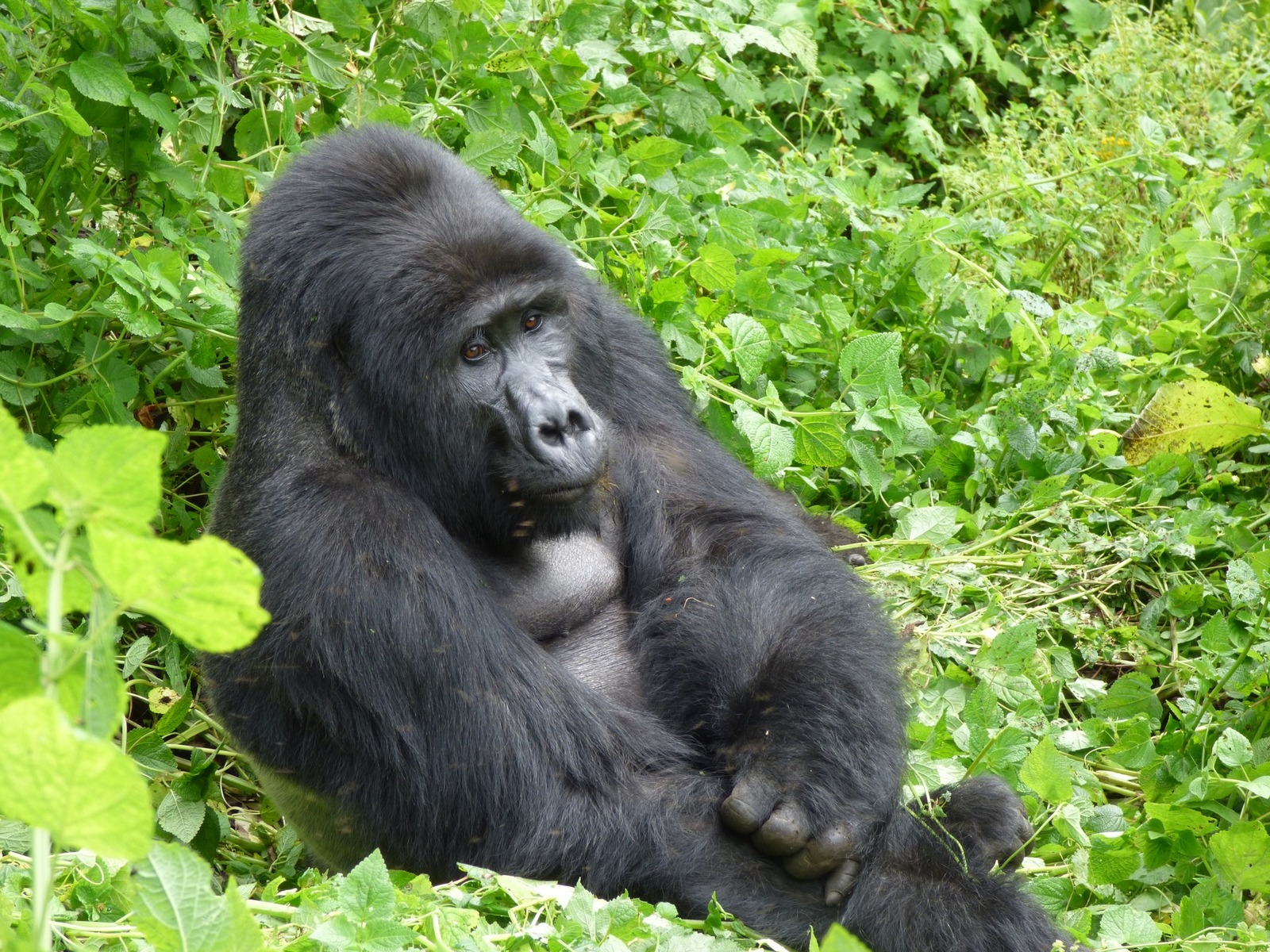
Today brings the absolute crown jewel of your 29 Days best of Uganda safari exploring wildlife, primates and culture. After an early safety briefing at the park station, you will hike into the thick, tangled jungles of Bwindi alongside expert trackers and rangers. The hike up the steep, muddy slopes can be physically demanding, but all fatigue instantly disappears the moment you find your assigned family. You will spend one magical hour sitting quietly just meters away from a massive silverback, observing his peaceful family life.
Day 24: Ancient Batwa Forest Heritage Experience
Cultural history takes center stage today on your 29 Days best of Uganda safari exploring wildlife, primates and culture as you meet the indigenous Batwa people. These forest hunters and gatherers lived inside the borders of Bwindi for thousands of years before the park was gazetted for gorilla conservation. On a guided walk through the forest edge, the Batwa elders will demonstrate how they used to hunt with bows and arrows, harvest wild honey, gather medicinal plants, and make fire using simple sticks.
Day 25: Transfer to Mgahinga Gorilla National Park
Your 29 Days best of Uganda safari exploring wildlife, primates and culture continues southward to Mgahinga Gorilla National Park, a striking reserve that protects the Ugandan slopes of three dramatic Virunga Volcanoes: Muhabura, Gahinga, and Sabyinyo. The scenic drive takes you past beautiful volcanic crater lakes and intensively cultivated mountain plots. Mgahinga offers a completely different atmosphere than Bwindi, featuring beautiful bamboo zones and unique high-altitude afro-alpine vegetation that is spectacular to photograph.
Days 26–29: Volcanic Primates, Highland Lakes, & Return
[Day 26: Golden Monkeys] ──> [Day 27: Lake Bunyonyi Relaxation]
└───> [Day 28: Lake Mburo Walking Safari]
└───> [Day 29: Equator & Entebbe Departure]
Day 26: Mgahinga Golden Monkey Tracking
Primate tracking returns today on your 29 Days best of Uganda safari exploring wildlife, primates and culture as you head into Mgahinga’s bamboo forests to find endangered golden monkeys. These beautiful, playful primates are endemic to the Albertine Rift and live in large social troops. You will watch them leap through the bamboo canopy, chatter excitedly, and dig for fresh bamboo shoots right along the forest floor. The trek is visually stunning, offering clear views of the volcanic peaks stretching across the Rwandan border.
Day 27: Relaxation & Canoeing on Lake Bunyonyi
After days of intense jungle tracking, your 29 Days best of Uganda safari exploring wildlife, primates and culture drops you off at Lake Bunyonyi for some well-deserved relaxation. As Africa’s second-deepest lake, Bunyonyi is completely free of bilharzia, hippos, and crocodiles, making its calm waters incredibly peaceful. You will board a traditional dugout canoe to explore some of the lake's 29 islands, learning about the dark history of Punishment Island before spending a relaxing afternoon reading on a lakefront terrace.
Day 28: Bush Walking Safari in Lake Mburo National Park
Your 29 Days best of Uganda safari exploring wildlife, primates and culture moves eastward toward Lake Mburo National Park, a charming savannah sanctuary defined by rolling acacia woodlands and a cluster of quiet lakes. Because Mburo does not host elephants or lions, it is the premier destination for an authentic walking safari. You will stretch your legs alongside an armed ranger, walking within meters of plains zebras, impalas, elands, and giraffes before enjoying a peaceful sunset boat ride on the lake.
Day 29: Equator Photography & Departure from Entebbe
On the final day of your 29 Days best of Uganda safari exploring wildlife, primates and culture, you will embark on a brief morning game drive out of Lake Mburo before starting your return drive to the capital. You will make a classic stopover at the Equator line crossing for fun photos, curio shopping, and a celebratory lunch. Your guide will then drive you straight to Entebbe International Airport, wrapping up your comprehensive, three-week exploration of the Pearl of Africa.
1. How far in advance do I need to secure primate permits for this itinerary?
Securing permits for the 29 Days best of Uganda safari exploring wildlife, primates and culture requires deep foresight, ideally six to twelve months before your scheduled touchdown in Entebbe. Primate tracking is the foundational pillar of this month-long loop, featuring chimpanzee tracking in the moist evergreen canopy of Kibale National Park, mountain gorilla trekking in the rugged cloud forests of Bwindi Impenetrable National Park, and endangered golden monkey tracking along the bamboo-clad volcanic slopes of Mgahinga Gorilla National Park. The Uganda Wildlife Authority (UWA) strictly limits daily visitation to habituated primate families to safeguard their health and minimize behavioral disruption. For instance, only eight travelers are permitted to visit a single gorilla family for exactly one hour per day.
Because your comprehensive expedition spans peak and shoulder travel months, attempting to book these permits on short notice is a recipe for logistical heartbreak. If you delay, you risk missing out on tracking entirely or being forced to completely upend the chronological flow of your grand loop, which spins seamlessly from the northern frontier down to the southwestern volcanic rim. A professional safari operator manages these moving parts by purchasing your permits the moment your booking deposit is confirmed. This guarantees your encounters with the great apes are locked into your itinerary before the physical lodge spaces and specialized safari vehicles are assigned.
2. What are the passport, visa, and entry documentation requirements?
Crossing the border into the Pearl of Africa for your 29 Days best of Uganda safari exploring wildlife, primates and culture demands careful attention to official entry protocols well before you head to the departure terminal. First and foremost, your passport must possess a minimum validity of six months beyond your planned departure date from Entebbe, and it must contain at least three blank pages to accommodate immigration stamps. Uganda has fully transitioned away from issuing visas upon arrival; therefore, you must apply for and secure an Electronic Visa (e-Visa) online through the official government portal prior to boarding your international flight.
Because this comprehensive four-week journey keeps you within Ugandan borders without entering neighboring Kenya or Rwanda, a standard single-entry tourist visa is perfectly sufficient. Alongside your digital visa approval, health security documents are mandatory for entry. You will be required to present an official, valid Yellow Fever vaccination certificate at the Entebbe immigration desk. This is a strict entry requirement for anyone entering the country, and failure to produce this yellow card will result in denied entry or mandatory, on-site quarantine vaccination. Ensure all digital approvals are printed out in hard copy, keeping them easily accessible alongside your physical vaccination card in your travel hand luggage.
3. How does internal flight logistics compare to overland driving on this loop?
Choosing between domestic scheduled flights and an all-overland journey is a major design consideration for the 29 Days best of Uganda safari exploring wildlife, primates and culture. This massive itinerary covers immense geographic ground, tracing a path from the urban center of Kampala out to the eastern waterfalls of Sipi, up to the isolated northern wilderness of Kidepo Valley, and down the length of the western Albertine Rift Valley. An all-overland safari utilizes a custom-built, 4x4 land cruiser with a pop-up roof. This approach offers an incredibly intimate, raw connection to the landscape. It allows you to watch the country transform from central urban centers to remote Karamojong pastoral communities and terraced mountain ridges. However, overland travel means enduring several long transit days, particularly the ten-hour drive separating the northern frontier from Murchison Falls.
Alternatively, integrating domestic flights via regional bush carriers like AeroLink can fundamentally alter the pacing of your month-long trip. Flying from Entebbe directly to Kidepo’s remote airstrip, or skipping the long drive from Murchison Falls down to Kibale Forest, compresses grueling full-day road journeys into scenic, one-hour aerial transits. This saves your physical energy for the demanding foot treks ahead. The trade-off is entirely financial and structural: internal flights significantly increase the total tour cost and introduce strict luggage limits, forcing you to pack light. Most travelers choose a hybrid approach, using a domestic flight to conquer the distant northern gap, then utilizing an overland vehicle to navigate the tightly clustered parks of the western circuit.
4. What vehicle type is required for a month-long national loop?
A rigorous road journey like the 29 Days best of Uganda safari exploring wildlife, primates and culture demands a heavy-duty, highly reliable vehicle. Standard multi-purpose vehicles or two-wheel-drive vans are completely unsuited for this expedition. Your vehicle must be a specialized, custom-engineered 4x4 extended safari land cruiser. This vehicle must feature a heavy-duty suspension system, high ground clearance, a dual battery setup, and a reliable snorkel attachment for wading through swollen river crossings or seasonal mud tracks. The extended chassis ensures that every traveler enjoys a guaranteed window seat, providing unobstructed views of the landscape and incoming wildlife.
The interior of your safari land cruiser serves as your mobile living room for a month, meaning specific comfort and functional features are necessary. The vehicle must be outfitted with an overhead pop-up roof structure, which is opened during game drives through Kidepo Valley, Murchison Falls, and Queen Elizabeth National Park to allow for standing, panoramic photography. Additionally, the vehicle should feature built-in electronic charging points (fitted with UK-standard three-pin plugs) linked to an inverter system, allowing you to charge camera batteries, smartphones, and tablets directly while on the move. A built-in mini-refrigerator is equally vital, keeping a steady supply of fresh, cold drinking water readily available throughout long, sun-drenched transits across the northern plains.
5. What are the operational booking terms and cancellation policies?
Committing to an extended regional expedition like the 29 Days best of Uganda safari exploring wildlife, primates and culture involves a significant financial investment, making a clear understanding of your tour operator's operational booking terms essential. Most reputable destination management companies require a non-refundable commitment deposit ranging from 30% to 40% of the total safari value at the time of booking. This upfront capital is immediately utilized to purchase your time-sensitive primate tracking permits from the Uganda Wildlife Authority and to place firm financial holding reservations on boutique eco-lodges, which often feature fewer than ten luxury tents and fill up many months in advance.
The remaining balance of your tour package is typically due sixty to forty-five days prior to your arrival date in Entebbe. Cancellation policies for an extensive four-week itinerary are strictly structured due to the rigid nature of permit allocations and lodge booking terms. While your general lodge and transport costs may follow a tiered refund schedule based on how close you are to the departure date, your primate permits are 100% non-refundable under UWA regulations. Because of these strict operational guidelines, it is highly recommended that you purchase a comprehensive comprehensive travel insurance policy. This coverage should include a "Cancel For Any Reason" clause to protect your financial investment against unexpected medical emergencies, flight cancellations, or sudden personal interruptions.
6. What physical fitness level is required for the primate treks?
The physical demands of the 29 Days best of Uganda safari exploring wildlife, primates and culture vary dramatically across the four-week timeline, reaching a clear physical peak during your deep-forest primate tracking days. Walking through the open savannahs of Lake Mburo or strolling through the historic manyattas of Karamoja requires basic, accessible walking endurance. However, tracking wild chimpanzees in Kibale and, most notably, trekking mountain gorillas through Bwindi Impenetrable National Park demands a moderate to high level of physical conditioning. Bwindi lives up to its name; you will hike through thick, tangled undergrowth with no cleared walking paths, navigating steep, slippery mountain ridges at elevations ranging from 1,190 to 2,600 meters above sea level.
A typical gorilla trek can last anywhere from two to eight hours depending entirely on the movement of the wild primate family since they nested the previous night. You must be physically prepared to hike up mud-covered inclines, step over fallen forest giants, and steady yourself on slippery root systems, all in a humid, high-altitude rainforest environment. To prepare for this, focus on cardiovascular training and leg strengthening exercises, such as stair climbing and trail hiking with a weighted daypack, in the months leading up to your trip. If you have mobility concerns, your guide can arrange for local porters at the park trailhead to carry your daypack and provide a steadying hand on steep slopes, or help arrange a traditional sedan chair service to ensure you can experience this bucket-list encounter safely.
7. What specific gear and clothing should I pack for this diverse trip?
Packing for the 29 Days best of Uganda safari exploring wildlife, primates and culture requires a versatile wardrobe that can handle both hot, semi-arid savannah plains and cold, damp mountain rainforests. For hot game drives in Kidepo Valley and Murchison Falls, pack lightweight, breathable, moisture-wicking technical clothing in neutral earth tones like khaki, olive green, and tan. Avoid bright whites, which quickly become covered in red dust, and dark blue or black colors, which actively attract biting tsetse flies in woody bush areas.
Savannah Safari (Hot/Dry) ──> Lightweight, breathable clothing in khaki, tan, & olive.
Rainforest Trek (Wet/Cold) ──> Long sleeves, sturdy hiking boots, & thick garden gloves.
When transitioning to the primate jungles of Kibale, Bwindi, and Mgahinga, your clothing priorities must shift toward full physical protection. You will need a pair of sturdy, well-broken-in waterproof hiking boots featuring deep tread lug soles to prevent slipping on steep, muddy forest paths. Pair these with long-sleeved shirts and durable canvas trousers tucked directly into long gaiters or thick socks to protect your skin from biting safari ants. A high-quality, breathable, waterproof rain jacket is essential, as tropical downpours can happen at any moment. Finally, bring a pair of thick, heavy-duty gardening gloves; these will allow you to safely grab onto thorny branches and wild vines for balance while scrambling up steep forest ridges.
8. What camera gear and photography etiquette are recommended?
Capturing visual memories on your 29 Days best of Uganda safari exploring wildlife, primates and culture requires specialized photographic equipment capable of handling wildly contrasting environments. For wide-open savannah game drives in Kidepo and Queen Elizabeth National Park, a camera body paired with a versatile telephoto zoom lens (such as a 100-400mm or 200-600mm) is ideal for capturing distant lions, leopards, and birds without disturbing their natural behavior. However, when you step into the deep, dark understory of Bwindi or Kibale for primate tracking, the photographic conditions change dramatically. You will be operating under a dense, multi-layered forest canopy that blocks out a significant amount of natural sunlight.
To capture sharp images of gorillas and chimpanzees in low-light forest environments, utilize a fast telephoto lens with a wide maximum aperture, such as a 70-200mm f/2.8, which allows you to maintain fast shutter speeds without relying on an excessively high ISO setting. The use of a camera flash is strictly prohibited during all primate tracking encounters, as sudden bright light flashes can easily startle, blind, or provoke an aggressive response from a wild silverback or chimpanzee. Always carry plenty of spare, fully charged batteries and multiple high-speed memory cards inside a dust-proof, waterproof dry bag. When photographing local people during cultural visits, always ask for explicit permission first through your driver-guide out of respect for their personal privacy.
9. What comprehensive health, malaria, and medical precautions are necessary?
Maintaining excellent personal health over the course of your 29 Days best of Uganda safari exploring wildlife, primates and culture requires proactive medical planning and close collaboration with a travel medicine physician well before your departure date. Because your four-week journey covers diverse ecosystems—ranging from low-lying wetlands to high-altitude mountain forests—you will be exposed to varying environmental health factors. Malaria is endemic throughout most regions of Uganda, particularly around water sources like Murchison Falls and the Kazinga Channel. You must consult your doctor to select an appropriate malaria prophylactic medication, such as Atovaquone/Proguanil (Malarone) or Doxycycline, and commit to a strict daily dosage schedule.
Beyond taking oral prophylactics, practice personal bite prevention by applying a high-quality insect repellent containing at least 30% to 50% DEET to exposed skin, and wearing long-sleeved clothing during the peak mosquito feeding hours of dawn and dusk. To maintain gastrointestinal health over your month-long trip, never drink untreated tap water. Use purified, bottled water for drinking, brushing your teeth, and ice cubes. Carry a well-stocked personal medical kit containing broad-spectrum antibiotics, rehydration salts, anti-diarrhea medication, antihistamines, painkillers, antiseptic wipes, and blister treatments. Finally, because you will be spending time close to wild primates who share over 98% of our DNA, you must be entirely free of transmissible human illnesses, like a common cold or flu, to participate in tracking.
10. What are the strict rules and protocols for gorilla and chimp tracking?
To ensure the long-term conservation of the great apes, the Uganda Wildlife Authority enforces strict operational protocols during the primate chapters of your 29 Days best of Uganda safari exploring wildlife, primates and culture. Before entering the forest canopy of Bwindi or Kibale, you will attend a mandatory safety briefing led by senior park rangers. A primary rule is maintaining a strict physical distance of at least seven meters (approximately twenty-three feet) from the primates at all times. This boundary is crucial not only to prevent provoking a defensive response from the animals but also to protect them from cross-species transmission of human respiratory diseases, to which they have no natural immunity.
┌────────────────────────────────────────────────────────┐
│ PRIMATE TRACKING RULES (UWA) │
├────────────────────────────────────────────────────────┤
│ • Keep a strict 7-meter minimum physical distance. │
│ • NO camera flash allowed under any circumstances. │
│ • Keep your voice lowered to a quiet whisper. │
│ • pack out all personal trash and waste. │
└────────────────────────────────────────────────────────┘
When you are with a habituated primate family, your viewing time is limited to exactly one hour. During this window, you must keep your voice lowered to a quiet whisper, avoid making sudden, erratic gestures, and never eat, drink, or smoke within sight of the animals, as this can disrupt their natural foraging patterns. If a curious young gorilla or playful chimpanzee intentionally moves toward you, stay perfectly still, avoid direct, prolonged eye contact, and allow your ranger guide to quietly step in and adjust your position. Always follow your ranger’s real-time instructions without hesitation, as they are expert trackers who understand the subtle behavioral cues of these incredible animals.
11. Can I expect to see the complete "Big Five" on this national loop?
Tracking down Africa's legendary "Big Five"—lions, leopards, elephants, Cape buffaloes, and rhinos—is a classic safari goal that is thoughtfully integrated across the expansive timeline of the 29 Days best of Uganda safari exploring wildlife, primates and culture. Unlike countries where these species are confined to a single massive reserve, Uganda's unique conservation history means your search will unfold across several distinct, specialized ecosystems. You will encounter massive herds of Cape buffaloes and African savannah elephants throughout your game drives in Murchison Falls, Queen Elizabeth National Park, and the scenic valleys of Kidepo. Prides of apex lions are regularly spotted resting on rock kopjes in Kidepo or hunting across the Kasenyi plains, while the elusive leopard requires a sharp eye during early morning drives through dense thickets.
Rhinos ──────> Ziwa Rhino Sanctuary (Foot Tracking)
Lions ───────> Kidepo Valley & Queen Elizabeth National Park
Leopards ────> Murchison Falls & Queen Elizabeth National Park
Elephants ───> Murchison Falls, Queen Elizabeth, & Kidepo
Buffaloes ───> Murchison Falls, Queen Elizabeth, Kidepo, & Mburo
The final piece of the puzzle—the rhino—is tracked in a highly unique and thrilling way. Because wild rhinos were historically wiped out by poaching within national park borders, your itinerary includes a dedicated stop at the Ziwa Rhino Sanctuary. Here, you will track southern white rhinos on foot alongside armed wildlife rangers, completing your Big Five list in a safe, controlled breeding environment. By combining this foot tracking experience with traditional vehicle-based game drives across three different national parks, this comprehensive month-long loop offers an incredible opportunity to check off every single member of the Big Five.
12. How are cultural encounters with the Karamojong and Batwa managed?
The cultural dimensions of the 29 Days best of Uganda safari exploring wildlife, primates and culture are designed to be deeply immersive, educational, and respectful, avoiding the feel of artificial tourist performances. Your visits to the Karamojong communities in the north and the Batwa people in the southwest provide direct insight into two distinct cultures that have shaped Uganda's heritage. Your visit to a Karamojong manyatta introduces you to a proud, pastoralist society that has preserved its cattle-centric traditions amidst an increasingly modern world. You will step inside their fortified mud-and-wattle homesteads, speak with village elders through your guide, and learn about their traditional lifestyle.
In contrast, your encounter with the Batwa people along the edge of Bwindi provides a look into the history of an indigenous forest community. As the original hunters and gatherers of the rainforest, the Batwa lived in harmony with the mountain gorillas for generations before the forest became a protected national park. On the Batwa Heritage Trail, elders demonstrate traditional forest survival skills, such as harvesting medicinal plants, starting fires with friction sticks, and building temporary shelters. These cultural exchanges are run as community-based tourism initiatives, ensuring that a significant portion of your tour fees goes directly toward local education, healthcare, and sustainable community development.
13. What are the seasonal weather variations across this four-week timeline?
Embracing a comprehensive month-long journey like the 29 Days best of Uganda safari exploring wildlife, primates and culture means you will likely experience a variety of seasonal weather patterns as you move between different regions. Uganda’s climate is primarily equatorial, but its varied topography creates distinct microclimates. The country experiences two primary dry seasons: from December to February and from June to August. These months are generally considered the best time for wildlife viewing, as animals gather around permanent water sources, and forest paths are firmer for primate tracking. However, even during these drier periods, afternoon rain showers can occur in the southwestern rainforests.
Conversely, the wet seasons span from March to May and from September to November. Traveling during these shoulder months offers unique advantages, such as lush green landscapes, excellent bird-watching opportunities as migratory species arrive, and fewer crowds on the trails. Savannah game drives remain highly productive, though heavy downpours can occasionally turn unpaved dirt tracks muddy, requiring your driver's 4x4 skills. Because your 29-day trip covers a wide geographic range—from the hot, semi-arid plains of Kidepo to the cool, high-altitude ridges of Bwindi—you should pack for a mix of warm savannah sunshine and cool forest rains, regardless of your departure month.
14. What tipping guidelines and local currency protocols should I follow?
Navigating financial transactions and tipping etiquette on your 29 Days best of Uganda safari exploring wildlife, primates and culture is straightforward with a bit of advance preparation. The official currency is the Uganda Shilling (UGX), which is best used for everyday personal expenses like purchasing local handicrafts, tipping camp staff, or buying drinks at safari lodges. You can exchange major foreign currencies, such as US Dollars, Euros, or British Pounds, at foreign exchange bureaus in Entebbe or Kampala upon arrival. If you are bringing US Dollar banknotes, they must be crisp, clean, and printed after 2013; local banks and bureaus routinely reject older, torn, or wrinkled bills due to counterfeiting concerns.
Tipping is a customary way to show appreciation for excellent service on safari, though it remains entirely at your discretion. For your dedicated professional driver-guide, who stays with you throughout the entire 29-day journey, a tip of $10 to $20 USD per day from the group is standard practice. For specialized site guides, such as park rangers, chimpanzee trackers, and gorilla guides, a tip of $10 to $20 USD per tracking session is highly appreciated. For general lodge staff, most properties feature a communal tipping box located at the main reception desk, where a contribution of $10 to $15 USD per day covers the behind-the-scenes team, including chefs, waiters, and housekeeping staff.
15. How do I choose between luxury, midrange, and budget accommodation tiers?
Selecting the right accommodation tier is a key factor in tailoring the 29 Days best of Uganda safari exploring wildlife, primates and culture to your personal style and budget. The budget tier utilizes simple, clean safari tents or local guesthouses located just outside national park borders. While these properties offer essential amenities like flushing toilets and mosquito nets, they may have scheduled generator hours for electricity and limited hot water access. This tier is perfect for independent travelers who prioritize a true, back-to-basics wilderness experience and want to keep costs to a minimum.
┌────────────────────────────────────────────────────────┐
│ ACCOMMODATION TIER MATRIX │
├────────────────────────────────────────────────────────┤
│ • LUXURY: High-end eco-lodges, fine dining, plunge │
│ pools, and spectacular private views. │
│ • MIDRANGE: Comfortable en-suite cottages, solar │
│ power, hot showers, and great service. │
│ • BUDGET: Simple safari tents/guesthouses, shared │
│ facilities, and essential amenities. │
└────────────────────────────────────────────────────────┘
The midrange tier strikes an excellent balance between cost and comfort. It features charming, en-suite canvas cottages or permanent stone chalets equipped with 24-hour solar power, reliable hot showers, and on-site restaurants serving fresh meals. For a month-long trip, this option provides plenty of comfort to help you recharge after active days in the field.
Finally, the luxury tier elevates your journey with stays at world-class eco-lodges and exclusive safari camps positioned in prime locations inside or right along the park boundaries. Here, you can enjoy beautifully designed private chalets, fine multi-course dining, private plunge pools, and exceptional personalized service. Choosing the luxury tier turns your 29-day expedition into an elegant, high-end adventure, ensuring you can unwind in complete comfort after every rewarding day of exploration.
Booking 29 Days best of Uganda safari with us Roads of Adventure safaris
Booking your 29-day "Best of Uganda" safari with Roads of Adventure Safaris offers an immersive and comprehensive journey through the Pearl of Africa. The 29-day itinerary covers everything from gorilla and chimpanzee trekking to birding and savannah game drives across all major national parks
