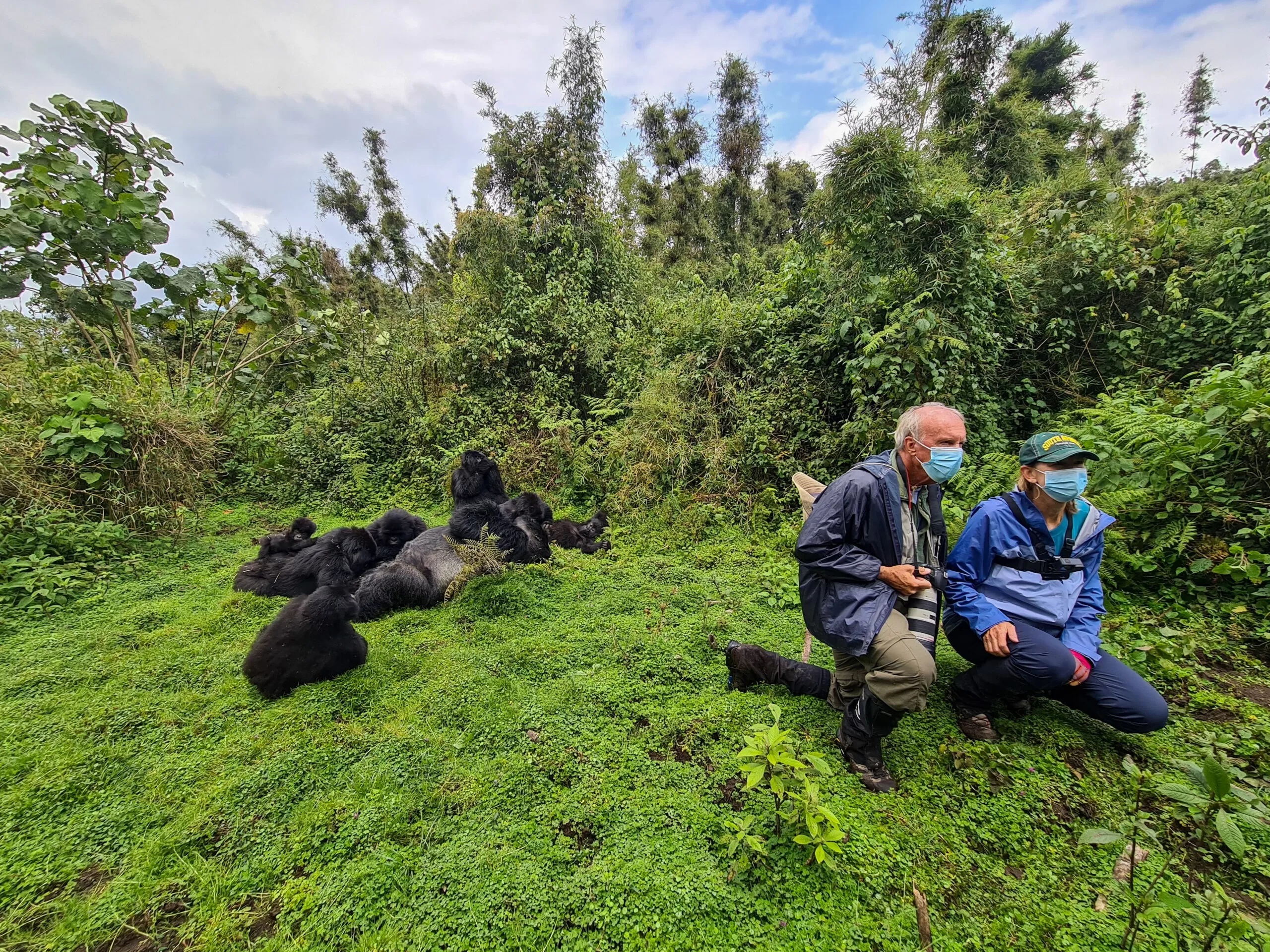
Going on your first primate safari in Rwanda is an unforgettable adventure. Imagine standing just feet away from a massive mountain gorilla in Volcanoes National Park, or watching playful golden monkeys leap through the bamboo. Rwanda is safe, clean, and remarkably easy to navigate compared to other safari destinations. However, trekking through dense tropical rainforests at high altitudes requires good preparation. The terrain can be steep, muddy, and unpredictable. Knowing what to expect makes the difference between an exhausting struggle and a magical wildlife encounter. From booking your permits months in advance to packing the right waterproof gear, a little bit of planning ensures you enjoy every single moment in the Land of a Thousand Hills. These twenty practical tips will help you prepare, stay comfortable, and respect the incredible wildlife and local communities you visit along the way.
2-days-luxury-rwanda-gorilla-trekking-safari-from-kigali-city
3-days-rwanda-gorilla-trekking-and-golden-monkey-tracking-in-volcanoes
3-days-rwanda-gorilla-trekking-safari-itinerary-in-volcanoes-park
4-days-rwanda-golden-monkey-tracking-and-bisoke-hiking-tour-package
4-days-best-volcanoes-and-bwindi-impenetrable-national-park-double-gorilla-trekking
4-days-rwanda-primates-safari-gorilla-trekking-and-chimpanzee-all-inclusive-package
5-days-best-chimpanzee-tracking-golden-monkey-tracking-and-visit-to-lake-kivu
5-days-rwanda-double-gorilla-trekking-and-golden-monkey-tracking
5-days-uganda-gorilla-trekking-chimps-and-rwanda-golden-monkey-tracking-combo
6-days-gorillas-trekking-chimpanzee-tracking-and-golden-monkeys-safari-in-rwanda
7-days-best-gorilla-trekking-and-other-highlights-of-rwanda-tour
8-days-best-of-rwanda-uganda-safari-volcanoes-to-best-uganda-safari-parks
List 0f 20 practical tips for Rwanda primate safari and wildlife for first timers
1. Secure Your Gorilla Permits Months in Advance
Planning a primate safari to Rwanda’s Volcanoes National Park (Parc National des Volcans) requires early preparation because the Rwanda Development Board strictly limits permits to protect the endangered mountain gorillas. For a first-timer, trying to book these permits at the last minute is a recipe for heartbreak. Each permit costs a significant fee, which directly funds local community development and anti-poaching conservation efforts across the misty slopes of the Virunga Mountains. If you are aiming to track a specific habituated family like the Susa group or the Amahoro group, your tour operator must lock in your dates up to six months ahead. For example, if you dream of visiting during the dry windows of June to September, availability vanishes almost instantly. When your confirmation finally arrives, keep digital and physical copies handy. This proactive approach ensures your entire itinerary falls smoothly into place without last-minute scrambling.
2. Prepare for the Altitude and Physical Demands
Many first-time visitors underestimate the physical exertion involved in tracking primates through high-elevation tropical rainforests. Volcanoes National Park and Nyungwe National Park sit at altitudes ranging from 2,000 to over 3,000 meters above sea level, meaning the air is noticeably thinner than what you might be used to. Hikes can last anywhere from 30 minutes to over four hours depending on where the habituated troops have roamed. Before traveling, incorporate simple cardiovascular exercises like stair-climbing or brisk walking into your routine. Once you are on the trail, pace yourself and do not hesitate to pause for breath. Local park rangers and guides are exceptionally patient, frequently checking in and adjusting the group's speed. Remember that staying well-hydrated and maintaining a steady rhythm will transform what could feel like a grueling climb into an deeply rewarding adventure through ancient, moss-covered volcanic terrain.
3. Hire a Local Porter at the Trailhead
When you arrive at the park headquarters for your morning briefing—such as at Kinigi for Volcanoes National Park—you will have the opportunity to hire a local porter. Never skip this option! Porters are local community members, often former poachers turned conservationists or young adults supporting their families near the park boundary. For a modest tipping fee, a porter will carry your heavy daypack containing water, rain gear, and camera equipment. More importantly, they act as your personal mountain-climbing assistant, offering a steady, reassuring hand when you navigate slick volcanic mud, steep ravines, or dense tangles of roots. Working with a porter named Jean or Bosco not only lightens your physical burden but directly injects vital income into the local economy, embodying the true spirit of responsible, community-led tourism in Rwanda.
4. Invest in Heavy-Duty Gardening Gloves
One of the best-kept secrets for first-time primate trekkers is packing a sturdy pair of gardening or work gloves. As you hike through the dense undergrowth of Volcanoes National Park or Nyungwe Forest, the terrain often forces you to grab onto thick vines, stinging nettles, bamboo stalks, and rough tree branches to keep your balance on muddy slopes. Without hand protection, your palms can quickly become scratched, raw, or irritated by sharp foliage and biting insects. Breathable canvas gloves with rubberized palms give you an ironclad grip when hauling yourself up a steep volcanic embankment. They may look a bit utilitarian paired with your safari gear, but you will thank yourself the moment you comfortably steady your footing next to a giant silverback without worrying about thorns or sharp twigs.
5. Master the Art of Layering and Neutral Colors
The clothing you pack can completely make or break your Rwandan safari experience. Because you will traverse shifting microclimates—ranging from chilly, misty morning starts at high altitudes to humid, sunlit afternoon rainforests—layering is essential. Wear breathable, moisture-wicking long-sleeved shirts and long trousers to protect your skin from sharp briars, safari ants, and mosquitoes. Stick strictly to neutral safari colors like olive green, khaki, and earthy brown. Bright colors like neon blue or hot pink can startle wildlife, while dark black or navy blue attracts tsetse flies. Additionally, tuck your trousers firmly into your high wool socks. This old-school safari trick creates an impenetrable physical barrier against ground-dwelling safari ants and crawling insects looking to explore your ankles while you walk through the thick brush.
6. Protect Your Feet with Broken-In Hiking Boots
Your footwear is arguably your most critical piece of equipment for a Rwanda wildlife trip. Never embark on a primate trek or a nature walk in brand-new hiking boots straight out of the box, as they will almost certainly give you severe blisters. Invest in waterproof, ankle-high hiking boots with deep, aggressive treads well before your trip, and wear them around your neighborhood for a few weeks to break them in properly. Trails in Nyungwe and Volcanoes National Park become slick, greasy slides of volcanic mud during sudden downpours. Good ankle support prevents sprains when stepping over hidden roots or unstable rocks. Pair your boots with moisture-wicking merino wool socks to keep your feet dry, comfortable, and blister-free throughout your multi-hour journeys into the deep wilderness.
7. Pack Indestructible Rain Gear
Rwanda is known as the "Land of a Thousand Hills," and its equatorial mountain ecosystems experience highly unpredictable weather patterns year-round. A brilliant, sunny morning can transform into a torrential downpour within minutes as storm clouds roll over the peaks of the Virunga volcanoes. Always pack a lightweight, durable waterproof rain jacket or a heavy-duty poncho in your daypack, regardless of whether you are traveling during the dry or wet season. Furthermore, buy a waterproof cover for your camera bag or line your backpack with a heavy-duty plastic trash bag to protect your electronics, spare batteries, and passports. Staying dry in the forest preserves your body temperature and keeps your mood high, ensuring a sudden rain shower feels like just another exciting chapter of your rainforest expedition.
8. Strict Etiquette: The Seven-Meter Rule with Primates
Encountering mountain gorillas or chimpanzees in the wild is a profound, emotional experience, but it comes with strict behavioral guidelines designed to protect the animals. You must maintain a strict distance of at least seven meters (about 23 feet) from the primates at all times. Because humans share roughly 98% of our DNA with chimpanzees and gorillas, they are highly susceptible to human respiratory illnesses like the common cold or flu. If a curious juvenile or a massive silverback approaches you, remain calm, avoid direct eye contact, and slowly back away or crouch down as instructed by your UWA or RDB guide. Never attempt to touch, feed, or mimic the vocalizations of the animals. Respecting their space ensures these endangered populations remain wild, safe, and free from human disease transmission.
9. Turn Off Flash Photography Completely
Capturing memories of your primate encounter is essential, but flash photography is strictly prohibited across all Rwandan national parks. A sudden, bright flash of light can severely startle a wild silverback gorilla or a troop of chimpanzees high up in the mahogany trees, potentially triggering an aggressive defensive reaction or causing them to retreat into the deep brush. Before you step into the forest canopy, adjust your camera settings to a higher ISO or utilize natural lighting modes suited for shaded environments. If you are using a smartphone, ensure the flash setting is toggled permanently off. A telephoto or zoom lens allows you to capture stunning, intimate portraits of a mother grooming her infant without invading their personal space or altering their natural daily behaviors.
10. Stay Home If You Feel Unwell
Conservation authorities in Rwanda enforce a zero-tolerance health policy to safeguard the fragile primate populations. If you wake up on the morning of your trek exhibiting any symptoms of a communicable illness—such as a cough, sneezing, fever, or a runny nose—you must voluntarily step aside and inform the park wardens. While missing a long-awaited gorilla trek is devastating, introducing a common human virus to a wild gorilla family can wipe out an entire troop that lacks natural immunity. Tour operators and the Rwanda Development Board typically offer flexible rescheduling options or permit fee refunds under strict medical circumstances. Prioritizing the biological safety of the animals over individual desires is the ultimate hallmark of an ethical, responsible wildlife traveler.
11. Experience the Canopy Walkway in Nyungwe Forest
While gorilla trekking often steals the spotlight, do not miss the chance to explore Nyungwe National Park in the country's rugged southwest. Nyungwe is an ancient, pristine montane rainforest sheltering thirteen different primate species, including playful L'Hoest's monkeys, colobus monkeys, and large habituated chimpanzee communities. A major highlight here is the famous Nyungwe Canopy Walkway, suspended 70 meters above the forest floor on a 160-meter-long steel bridge. Walking across this high-altitude suspension bridge offers a breathtaking bird's-eye view of the emerald jungle canopy, where you can spot exotic forest birds like the blue turaco and watch colorful butterflies darting through the mist. It adds an entirely different, exhilarating dimension to a first-timer's Rwandan wildlife itinerary far beyond ground-level tracking.
12. Combine Primate Trekking with a Classic Savanna Safari at Akagera
To round out your first-time journey, balance the lush rainforests of the west with a classic open-savanna safari in Akagera National Park located in eastern Rwanda. Managed in partnership with African Parks, Akagera has transformed into a thriving Big Five destination boasting roaming lions, black rhinoceros, elephants, leopards, and buffaloes. Spend a couple of days embarking on morning and evening game drives across rolling hills, shimmering lakes like Ihema, and sprawling acacia woodlands. You can even book a guided boat safari on Lake Ihema to spot massive Nile crocodiles and pods of hippos wallowing in the shallows alongside vibrant water birds like the elusive shoebill stork. This diverse combination proves that Rwanda offers a complete, multi-ecosystem wildlife portfolio.
13. Savor Local Rwandan Cuisine and Traditional Coffee
Immerse yourself in Rwandan culture by exploring traditional local dishes and world-class regional coffee during your downtime between safaris. In towns like Musanze or Huye, stop by a local restaurant to sample Ugali (a dense maize porridge), sweet plantains known locally as Matooke, fresh tilapia from regional lakes, and nutrient-rich peanut sauce (Isombe or bean dishes). Rwanda's high-altitude volcanic soils produce some of the finest specialty arabica coffee beans on earth. Visit a local washing station or a coffee shop in Kigali to taste a rich, bright cup of single-origin Rwandan brew. Engaging with culinary traditions connects you deeply to the warmth and daily rhythms of the local communities you encounter along your travel route.
14. Embrace the Cleanliness and Efficiency of Kigali
Your safari will likely begin or end in Kigali, the country's sparkling, safe, and impeccably clean capital city. Rwanda banned single-use plastic bags years ago, so customs officials at Kigali International Airport will strictly inspect your luggage for plastic carriers upon arrival—make sure to pack eco-friendly ziplock alternatives or fabric pouches. Spend a peaceful afternoon exploring the Kigali Genocide Memorial in Gisozi to understand the nation's profound history of resilience, reconciliation, and unity. Afterward, wander through vibrant community spaces like the Kimironko Market, where local vendors sell colorful kitenge fabrics, fresh avocados, and handmade crafts. Kigali serves as an inspiring, sophisticated urban anchor that highlights Rwanda's modern cultural renaissance.
15. Choose Eco-Friendly Lodges That Empower Communities
Where you sleep matters immensely on a sustainable wildlife holiday. Rwanda features a remarkable collection of eco-lodges and luxury camps—ranging from high-end properties near Volcanoes National Park to tented camps overlooking Akagera's lakes—that actively prioritize environmental stewardship. Many of these lodges source their ingredients directly from neighboring agricultural cooperatives, employ local staff from surrounding villages, and utilize solar power or rainwater harvesting systems. When booking your trip, ask your tour operator about properties committed to community-based tourism. Staying at these lodges ensures that your financial investment directly translates into improved local healthcare, schools, and long-term wildlife habitat protection.
16. Carry Rwandan Francs (RWF) for Small Purchases
While major hotels, upscale restaurants, and safari lodges accept international credit cards and US dollars, carrying local currency—the Rwandan Franc (RWF)—is essential for daily expenses. You will need cash to tip your drivers, park rangers, and porters, as well as to buy souvenirs from local artisan cooperatives or rural roadside markets. Ensure your US dollar bills are dated 2013 or newer in pristine condition, as older or slightly torn bills are universally rejected by local banks and exchange bureaus. Stop by a reliable ATM in Kigali or Musanze to withdraw local currency upon arrival. Having crisp Rwandan Francs on hand ensures smooth, stress-free tipping and small-scale transactions throughout your journey.
17. Respect Local Customs, Etiquette, and Photography Laws
Rwandans are remarkably warm, polite, and welcoming people who take immense pride in their cultural traditions, community unity, and public safety. When greeting locals, a friendly smile and a polite "Mwaramutse" (Good morning) or "Amakuru" (How are you?) goes a long way. Always ask for explicit permission before taking photographs of local residents, market vendors, or children, as respectful interaction is deeply valued. Furthermore, littering is strictly illegal across the country, and community-wide clean-up days known as Umuganda take place on the last Saturday of every month. Being a mindful, respectful guest ensures harmonious cross-cultural exchanges wherever you travel.
18. Partner with Reputable Local Tour Operators
Navigating permit allocations, cross-country park transfers, and lodging reservations independently can quickly become an organizational nightmare for a first-timer. Partnering with a licensed, experienced local tour operator based in Kigali guarantees a seamless, stress-free itinerary tailored to your specific preferences and budget. Local operators possess insider knowledge regarding shifting park regulations, weather conditions, and optimal route planning between Volcanoes, Nyungwe, and Akagera. They also provide knowledgeable driver-guides who double as expert wildlife spotters and cultural translators. Booking through a trusted local agency safeguards your financial investment and elevates your entire safari experience from standard tourism to an expertly curated adventure.
19. Pack High-Energy Snacks and Rehydration Salts
Trekking through thick rainforests or spending long hours bouncing across dusty game tracks in Akagera can rapidly drain your physical energy levels. Pack a selection of compact, high-energy snacks in your daypack, such as trail mix, protein bars, energy gels, or locally sourced dried mangoes. Additionally, drop a few oral rehydration salts or electrolyte powder packets into your reusable water bottle. High humidity, physical exertion, and altitude changes can easily lead to mild dehydration if you only drink plain water. Keeping your blood sugar stable and your electrolytes balanced will keep you feeling strong, alert, and fully present during thrilling wildlife encounters.
20. Maintain Flexibility and Patience in the Wilderness
Wildlife safaris operate entirely on nature's unpredictable terms rather than human schedules. A gorilla family might choose to nest deep up a steep ridge, heavy morning fog may temporarily delay a game drive, or a leopard might remain completely hidden within the acacia trees. Approach your Rwandan adventure with an open mind, boundless patience, and a flexible attitude. Trust the expertise of your trackers and rangers, who dedicate their lives to interpreting subtle forest signs and tracking animal movements. Embracing the unexpected spontaneity of the wild ensures that every single moment—whether it is a quiet second of eye contact with a silverback or a breathtaking African sunset over the savanna—becomes an unforgettable memory.
Booking your first Rwanda safari with us Roads of Adventure safaris
Welcome to Roads of Adventure Safaris! Embarking on your first Rwandan journey with us means stepping into a world of seamless luxury, expert local guidance, and unforgettable wildlife encounters. Whether you are tracking endangered mountain gorillas through the misty peaks of Volcanoes National Park, walking above the ancient canopy in Nyungwe, or spotting lions across Akagera's sweeping savanna, we handle every logistical detail from permits to eco-lodges. Let our experienced team craft a personalized itinerary that guarantees comfort, safety, and authentic cultural immersion. Contact us today to start planning your dream African getaway!
