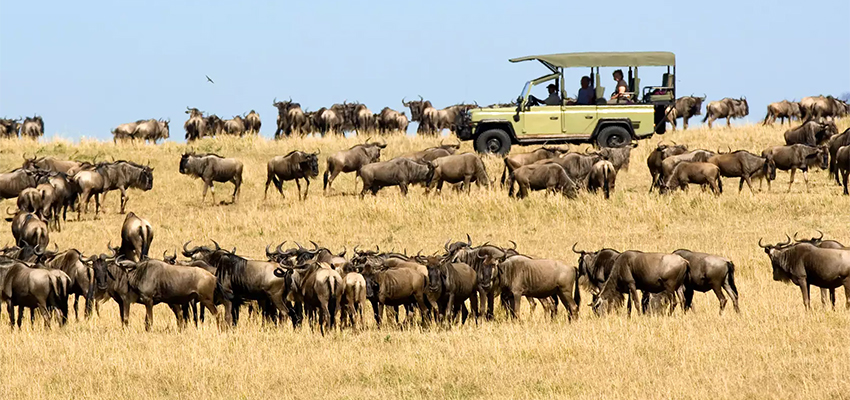
The Wildebeest migration in Kenya and Tanzania is an annual, year-round, clockwise, circular journey of over 1.5 million wildebeest, zebras, and gazelles covering roughly 1,800 km between Tanzania’s Serengeti and Kenya’s Masai Mara. Driven by rainfall, this spectacle involves dramatic river crossings from July to October in the Mara and calving in the southern Serengeti from January to March
Popular related tour packages
10-days-ultimate-budget-tanzania-safari-holiday-vacation
8-days-great-mara-river-crossing-hadzabe-tribe-and-optional-hot-air-balloon-tanzania-safari
8-days-tanzania-honeymoon-safari-holiday-vacation-and-wildebeest-migration
7-days-best-of-tanzania-safari-grumetimara-river-crossing-and-masai-warrior-homestay
13-days-best-tanzania-kenya-safari-combined-tour-package
What is the Wildebeest Migration in Kenya and Tanzania?
The wildebeest migration is recognized as the world's largest overland mammal movement, a spectacular natural phenomenon that captivates wildlife enthusiasts globally. Each year, over 1.5 million wildebeests, accompanied by approximately 250,000 zebras and thousands of gazelles, embark on a perilous journey across the plains of East Africa, primarily between the Serengeti in Tanzania and the Masai Mara in Kenya. This migration represents not just a movement but a saga of survival, driven by instinctual patterns that have evolved over centuries.
The animals traverse vast distances in search of fresh grazing grounds and reliable sources of water, following established routes dictated by seasonal rainfall. This cyclical pattern of migration has profound ecological implications, influencing the availability of resources for various wildlife species and maintaining the balance of the ecosystem. The migration typically unfolds in a circular pattern, with distinct phases, including calving and river crossings, each attracting significant predator attention and creating a dynamic interplay between prey and hunters.
Witnessing this incredible event provides a unique glimpse into the life cycles of these magnificent animals. The migration is not merely about movement but embodies the resilience of wildlife against the backdrop of the stunning landscapes of East Africa, making it one of the most sought-after experiences in wildlife tourism.
Why Does the Wildebeest Migration in Kenya and Tanzania Happen?
The wildebeest migration is primarily driven by the animals’ instinctual need to find fresh pastures and adequate water sources, with their journey dictated largely by seasonal rainfall patterns. As the dry season sets in, grazable grasslands quickly diminish, prompting the massive herds to adapt by moving to greener pastures. This instinctual behavior ensures their survival and prepares them for the reproductive cycle.
Throughout the year, the migration unfolds in a circular pattern, with distinct phases. Typically, the herds start in the southern Serengeti, where they gather for calving during the rainy season from late January to mid-March. During this time, over 8,000 calves are born daily, providing food sources for predators such as lions and hyenas.
As the dry season approaches, the animals begin their northwestern journey, eventually gravitating toward the central Serengeti and beyond into the Masai Mara in Kenya. Rainfall is a critical cue; when the conditions improve in the north, the wildebeests instinctively follow the moisture to ensure the availability of fresh grass.
The migration's timing is finely tuned, allowing the animals to exploit the land's resources effectively while minimizing the risks associated with predation and environmental challenges. Through this natural instinct and adaptability, the wildebeests ensure their populations thrive in an ever-changing landscape.
When is the Best Time to See the Wildebeest Migration in Kenya and Tanzania?
The wildebeest migration occurs year-round, making it an incredible spectacle for wildlife enthusiasts, but certain times are peak for witnessing dramatic events. The best times to see the migration vary based on the specific activities of the herds.
From June to October, the focus is on the Mara River crossings, a highlight of the migration that attracts numerous tourists and avid photographers. During these months, the herds move into Kenya, where they face the treacherous rivers. Observing the wildebeests as they courageously plunge into the water while navigating submerged obstacles and evading predators is a riveting experience.
On the other hand, the calving season occurs from late January to mid-March in the southern Serengeti. This period sees over 8,000 calves born daily and presents another opportunity to witness breathtaking wildlife action, as increased prey availability draws various predators to the area, fostering an intense battle for survival.
Adventurous travelers looking to plan their visits should consider these seasonal highlights carefully, as each offers unique opportunities to observe the nuances of the migration. Whether your interests lie in witnessing the vulnerable newborns of the calving season or the thrilling river crossings, timing your visit can significantly enhance the adventure of this extraordinary natural event.
Where Can I See the Wildebeest Migration in Kenya and Tanzania in January?
In January, the wildebeest migration is primarily centered in the southern Serengeti and the Ngorongoro Conservation Area in Tanzania. During this time, the herds congregate in lush, green pastures that are ideal for calving, making it one of the most fascinating months to observe these incredible animals in their natural habitat.
The southern Serengeti is specifically popular for its high concentration of wildebeests, with over 8,000 calves born daily. Witnessing this event is nothing short of extraordinary as the mothers tend to their newborns, providing a unique glimpse into the nurturing behavior of wildebeests. This calving season typically draws a significant number of predators, such as lions and hyenas, who capitalize on this vulnerable time to hunt, creating dynamic predator-prey interactions.
As visitors track the migration, various accommodations and guided tours are available, offering easy access to the best viewing points. Many safari companies provide tailored packages that focus on calving and the associated predator activity, ensuring that travelers have ample opportunities to witness these events.
Outside of Tanzania, the migration is accessible from nearby locations in Kenya, allowing for an integrated travel experience. With guided excursions catered to various interests, January presents a unique opportunity for wildlife enthusiasts to see migratory dynamics at work, enriching the safari experience through close encounters with both the newborn wildebeests and the predators that follow them.
What is the Calving Season of the Wildebeest Migration in Tanzania?
The calving season for the wildebeest migration in Tanzania occurs between late January and mid-March, marking a critical time for the largest terrestrial mammal migration. During this period, an astonishing average of over 8,000 calves are born daily, which serves as a crucial survival mechanism for the species. The soft grass and abundant water sources available in the southern Serengeti provide ideal conditions for the pregnant females to give birth.
This natural phenomenon creates a spectacular sight as thousands of newborns take their first steps, quickly drawing attention from predators lurking nearby. The calving season is often characterized by increased predator activity, including lions and hyenas that strategically position themselves to capitalize on the vulnerabilities of the newborns. The heightened drama of mother and calf interactions in the presence of threats creates a thrilling wildlife spectacle for observers.
Travelers visiting during this season are treated to unforgettable experiences, witnessing not only the tender moments between mothers and their young but also the harsh realities of predator-prey dynamics. Safari options are abundant, ranging from guided game drives to walking safaris to observe these interactions up close.
For those looking to understand the ecology of the migration, the calving season presents a unique opportunity to appreciate the intricacies of animal behavior and survival strategies in the wild. The excitement and unpredictability of nature during this time make it an essential phase in the migration narrative.
What Happens During the Wildebeest Migration in Kenya and Tanzania from April to June?
From April to June, the wildebeest migration unfolds as the herds continue their journey northward and westward through the central Serengeti. This phase of the migration is often referred to as the "green season," characterized by abundant rainfall, lush landscapes, and a rich array of grasslands that attract the migrating animals.
During this period, the herds experience tremendous nutritional benefits, as the fresh grass promotes health and vitality for both the adult wildebeests and the calves that have recently been born. This season offers a unique atmosphere, as the landscape transforms with vibrant green pastures, creating stunning backdrops for wildlife viewing.
In addition to the improving conditions for the wildebeests, fewer tourists are present, allowing for a more intimate wildlife experience. The central Serengeti provides excellent opportunities to observe various wildlife beyond just the migration, including different species of antelope, elephants, and a variety of bird species that thrive during the wet season.
As the herds begin to gather in preparation for their journey north toward the Mara River, they often exhibit intriguing social behaviors and interactions. This period serves as a time of recuperation and bonding among the animals prior to the upcoming challenges they will face—like river crossings—in the months ahead. For travelers, witnessing this phase provides insights into the resilience and adaptability of animals in the wild, making it a rewarding time to visit the migration.
When Do the River Crossings Occur in the Wildebeest Migration in Kenya and Tanzania?
The wildebeest migration's most iconic and dramatic river crossings typically occur from late July to September, as the herds move northward into Kenya. These crossings, primarily at the Mara River, are among the most thrilling spectacles in the natural world, drawing wildlife enthusiasts and photographers from around the globe.
During this period, the wildebeests gather on the riverbanks, often exhibiting hesitance as they assess the perilous waters filled with crocodiles waiting to strike. The decision to cross is fraught with tension, and often, the sheer size of the herd creates a natural pressure that compels them to plunge into the water. This moment is dynamic, filled with high stakes, as herd instincts prevail, with many animals dropping into the river's currents.
The Mara River crossings are famous not only for the dramatic struggles of survival but also for the unpredictable nature of the crossings themselves. Factors such as weather conditions, herd sizes, and predator presence all play crucial roles in determining when and how the animals choose to cross.
While many travelers aim to witness these river crossings during their safari, it is essential to note that they are not guaranteed. Some herds may linger by the riverbanks for days before making the leap, while others may wait for favorable conditions. Thus, securing accommodations and guides in the region during this peak time is important for maximizing the chances of witnessing this extraordinary natural event.
Are River Crossings Guaranteed During the Wildebeest Migration in Kenya and Tanzania?
No, river crossings during the wildebeest migration are not guaranteed, even during peak months when crossings are more likely to occur. The dynamics of the migration and crossing events are influenced by a range of unpredictable factors. While experienced guides utilize their knowledge of the animals' behaviors and preferences, the crossing decisions ultimately depend on variables such as herd pressure, weather conditions, and the presence of predators.
During the river crossings, wildebeests face not only the challenges posed by the turbulent waters of the Mara River, which can be wide and swift, but also the lurking dangers of crocodiles waiting for vulnerable animals to enter the water. Herds may gather along the banks, hesitating to leap into the unpredictable currents. This leads to instances where multiple herds may wait several days or longer before successfully navigating across, particularly when conditions are less favorable.
Wildlife enthusiasts and safari-goers should remain flexible and patient. While many visitors are hopeful to witness the river crossing spectacle, it is essential to approach these events with realistic expectations. Guides will position visitors for optimal viewing based on the latest information about herd movements, but nature can be unpredictable. Despite the uncertainties, the excitement of witnessing potentially dramatic moments can make the experience all the more gratifying, revealing the raw, untamed essence of wildlife migration.
Which River is Most Famous for the Wildebeest Migration in Kenya and Tanzania?
The Mara River is the most iconic river associated with the wildebeest migration, garnering worldwide recognition due to the dramatic river crossings that occur during this time. Spanning the border between Kenya and Tanzania, the Mara River serves as a critical passage for wildebeests as they move from their calving grounds in the southern Serengeti to the lush pastures of the Masai Mara.
During the peak migration months from late July to September, the river becomes the focal point of the migration saga, as thousands of wildebeests must navigate its treacherous waters laden with dangers, particularly from crocodiles. This high-stakes crossing is a breathtaking event, showcasing the relentless drive for survival as the wildebeests navigate the obstacles in their path in search of greener pastures.
While the Mara River is the most well-known for its dramatic crossings, the Grumeti River in the Western Corridor also plays a significant role in the migration cycle, particularly during April to June when the herds transition northward. The Grumeti River crossings can be equally thrilling, offering a different backdrop for wildlife viewing.
Both rivers hold ecological importance, not just for the migration but also for various other wildlife and plant species that depend on these water bodies. As a result, each river embodies a unique natural narrative within the more extensive tapestry of the migration, providing travelers with remarkable experiences regardless of which river they visit.
Is the Wildebeest Migration in Kenya and Tanzania Better in One Country?
Determining whether the wildebeest migration is better in Kenya or Tanzania largely depends on what aspects of the migration you hope to witness. Tanzania hosts the herds for about nine months of the year and is renowned for its extensive landscapes, including the southern Serengeti and Ngorongoro Conservation Area, where calving occurs. Visitors to Tanzania enjoy unique experiences during the calving season, gathering near the lush pastures that provide sustenance for newborns and attract a variety of predators.
Conversely, Kenya offers travelers the most concentrated river crossing action during the peak dry season, showcasing the best opportunities to witness the dramatic and perilous crossings at the Mara River. The more rapidly shifting landscape in Kenya can create visually stimulating experiences during the migration, making it a fantastic destination for those specifically interested in those high-stakes moments.
Ultimately, many travelers may benefit from experiencing both countries to appreciate the full migration spectacle fully. Combining the lush landscapes and calving dynamics found in Tanzania with the thrilling river crossings in Kenya offers a comprehensive perspective on one of nature's most incredible events. Selecting a suitable itinerary that encompasses both countries can lead to a well-rounded adventure, enhancing the overall enjoyment of this wildlife phenomenon.
How Long is the Route for the Wildebeest Migration in Kenya and Tanzania?
The wildebeest migration follows an approximate 3,000-kilometer (1,800-mile) clockwise loop each year, characterized by its dynamic and fluid nature. This incredible journey takes the animals across vast expanses of the Serengeti in Tanzania and into the Masai Mara in Kenya. The migration is not merely a random wandering; it follows established routes based on instinctual behavior and seasonal changes that have been honed over generations.
The route is dictated by the search for fresh grazing lands and water, deeply influenced by rainfall patterns throughout the year. Starting in the southern Serengeti, where the calving season occurs between late January and mid-March, the herds gradually move northward as the grass grows and the rains advance. The trek takes them through the central Serengeti as they build strength for the next challenges, eventually arriving at the crucial Mara River for the dramatic crossings from July to September.
This extensive, cyclical movement highlights the interconnectedness of the wildlife and the intricate ecosystems they inhabit. Each year, travelers eagerly anticipate witnessing various stages of this migration, from the birth of calves to the heart-stopping river crossings, all of which take place along this remarkable route. This natural wonder showcases not only the perseverance of the wildebeests but also the delicate balance of nature in the heart of East Africa.
What Predators Follow the Wildebeest Migration in Kenya and Tanzania?
The wildebeest migration is not just a tale of the herbivores; it is equally about the predators that closely follow the herds. As the wildebeests move through the plains of Tanzania and Kenya, a range of formidable predators shadow them, always on the lookout for their next meal. Among the main predators are lions, leopards, cheetahs, and hyenas.
Lions are perhaps the most iconic predators associated with the migration. They often lie in wait, taking advantage of the density of the migrating herds to hunt more efficiently. Their social structure allows them to coordinate attacks, increasing their chances of catching a wildebeest or zebra. Cheetahs, on the other hand, rely on their speed and agility to catch isolated calves or weaker individuals, making swift sprints to secure their meals.
Hyenas are opportunistic feeders and will scavenge from the kills of other predators as well as hunt small prey. Their presence enhances the complex food web surrounding the migration. In addition to these land predators, massive Nile crocodiles wait patiently at the river crossings, poised to ambush unsuspecting wildebeests as they navigate the challenges of river migration.
The dynamic between migratory herbivores and their predators adds a layer of excitement and unpredictability to the migration spectacle. Witnessing these interactions provides a fuller understanding of the ecosystem's balance, showcasing the raw and often harsh realities of life in the wild.
Can I See the Big Five During the Wildebeest Migration in Kenya and Tanzania?
Yes, both the Serengeti and Masai Mara are home to the Big Five: lions, leopards, elephants, buffalo, and rhinos, and you can expect to see them year-round. The presence of these iconic animals enhances the allure of the wildebeest migration, offering visitors a chance to witness diverse wildlife interactions in a single safari experience.
Lions, known for their dominance, can frequently be observed stalking prey during the migration. A pride's presence often indicates good hunting conditions, especially when the wildebeests are concentrated near water sources or during river crossings. Because leopards are elusive, spotting them may require patience, but their populations in both parks make sightings possible.
Elephants roam the savannahs freely, and you may encounter them in large herds, often near water holes. Their magnificent size and social structures offer guests a captivating glimpse of life in the African bush. Meanwhile, buffalo can often be seen grazing alongside the wildebeests, adding to the diverse ecosystem.
Though encountering black rhinos may be less common, they can be found in specific areas, particularly in the Ngorongoro Crater and some parts of the Serengeti. Finding these majestic animals enriches the safari experience, allowing guests to fully appreciate the intricate relationships between various species and their shared habitat.
The Big Five not only symbolize Africa’s rich wildlife heritage but also provide thrilling moments for visitors as they engage with nature in some of the world's most iconic landscapes.
How Far in Advance Should I Book a Wildebeest Migration in Kenya and Tanzania Safari?
Booking a Wildebeest migration safari in Kenya and Tanzania requires careful planning, particularly because the peak season—spanning from July to October—sees a significant influx of tourists. To ensure you secure optimal lodging and permits, it is advisable to book your safari 6 to 12 months in advance. This time frame allows for better price options and increases the likelihood of obtaining accommodations close to the rivers, where the dramatic river crossings occur.
During peak season, accommodations—whether luxury lodges or mid-range tented camps—tend to fill up quickly. Moreover, safari vehicles and ranger guides also experience high demand during these months, so early planning is essential to ensure all logistics are arranged smoothly.
Additionally, planning early allows travelers to better tailor their itineraries to individual preferences. You can select from various safari packages that may include additional experiences such as cultural visits to local Maasai communities or optional hot air balloon rides over the Serengeti.
For those preferring to travel during the less crowded “shoulder” months, such as late April to June, you may find it easier to secure reservations with less advance notice. However, booking well in advance remains a wise strategy for securing a spot during any season to truly immerse yourself in this extraordinary migration phenomenon.
What Should I Pack for a Wildebeest Migration in Kenya and Tanzania Safari?
Packing for a wildebeest migration safari in Kenya and Tanzania requires thoughtful consideration to ensure comfort and practicality for variable conditions encountered during the journey. Essential gear includes high-quality binoculars for spotting wildlife from a distance and a camera equipped with a 300mm-plus telephoto lens to capture close-up shots of the migrating animals without disturbing them.
Dress in layers with neutral colors, such as khaki, brown, or green, which blend well into the environment. Lightweight clothing is advisable for daytime activities, while warmer layers are necessary for cooler mornings and evenings, especially near areas like the Ngorongoro Crater. A good scarf or baseball cap can also help protect against dust during game drives.
Footwear is crucial; pack durable walking shoes for potential guided walks and comfortable sandals for leisure periods. Alongside these, don’t forget sunscreen to shield your skin from UV rays and insect repellent to ward off bugs.
Additionally, travelers should include essential supplies such as a refillable water bottle, portable snacks, and a small medical kit for any unforeseen circumstances. Travel documents, including passports and necessary permits, should be readily accessible. By preparing thoroughly, you can ensure a rewarding, enjoyable, and comfortable safari experience during this magical migration.
Is the Wildebeest Migration in Kenya and Tanzania Suitable for Children?
Yes, the wildebeest migration in Kenya and Tanzania can be suitable for children, particularly during the calving season from January to March. During this time, the herds are situated in the southern Serengeti and Ngorongoro Conservation Area, usually resulting in shorter travel distances and more predictable wildlife viewing opportunities. The sight of newborn wildebeests captivatingly taking their first steps offers a memorable experience for the family.
When planning a trip with children, it’s essential to consider a few factors. Many safari lodges and tented camps cater to families, offering child-friendly accommodations and activities that keep younger travelers engaged while learning about wildlife. Furthermore, private safari vehicles allow for flexible scheduling, which can be beneficial when accommodating children’s needs.
Safety measures are prioritized during family safaris, and operators often have guidelines or restrictions regarding age limits for walking safaris or certain game drives. It’s advisable to check with the tour operator about age-appropriate activities and any special provisions they may have.
Engaging children in wildlife conservation discussions during the safari can enrich their experience, fostering a deeper appreciation for nature. Overall, the wildebeest migration provides a fantastic opportunity for families to bond over awe-inspiring wildlife encounters in a unique and educational environment.
What is the "Mara Triangle" in the Wildebeest Migration in Kenya and Tanzania?
The "Mara Triangle" is a stunning, lesser-crowded section of the Masai Mara National Reserve in Kenya that offers exceptional opportunities for wildlife viewing, particularly during the wildebeest migration. This area, located to the western part of the Masai Mara, is bordered by the Mara River and features breathtaking landscapes of rolling savannahs, acacia trees, and abundant wildlife, making it a premier destination for safari-goers seeking an immersive experience.
During the migration, the Mara Triangle becomes an essential focal point for witnessing dramatic river crossings, where wildebeests risk crossing the crocodile-infested waters in their quest for greener pastures. The scenic access to key crossing points enables visitors to observe these high-stakes moments from advantageous vantage points, often with fewer crowds than found in other parts of the reserve.
In addition to the migration, the Mara Triangle is also known for its resident populations of lions, leopards, and cheetahs, providing year-round wildlife viewing opportunities. The area is fundamental to ensuring the biodiversity and ecological balance of the Masai Mara ecosystem.
Visitors to the Mara Triangle can also engage with local Maasai communities, learning about their culture and traditions. This combination of mesmerizing landscapes, dynamic wildlife interactions, and cultural experiences makes the Mara Triangle an essential stop for anyone interested in the wildebeest migration and African wildlife.
How Does Climate Change Affect the Wildebeest Migration in Kenya and Tanzania?
Climate change poses significant challenges to the wildebeest migration in Kenya and Tanzania by disrupting the traditional patterns that dictate when and where the herds move. Variability in rainfall patterns due to climate change can lead to unpredictable droughts or excessive rainfall, affecting the growth of grasslands that the wildebeests rely on for sustenance and hydration.
As temperatures rise and rainfall becomes increasingly irregular, the timing of the migration may shift, making it difficult for herds to locate optimal grazing areas and freshwater sources. This may prompt the animals to adapt their migration routes, possibly straying from traditional pathways that have been established over generations. As such, the synchronicity between the herds and natural environmental cues that guide their movements may weaken.
Moreover, changes in vegetation and grazing quality could also influence the overall health and survival rates of the wildebeests. A less predictable migration can create higher mortality rates among calves, which are more vulnerable during their early days.
The impact of climate change extends to the broader ecosystem, affecting not only the migratory patterns of the wildebeests but also the predators that follow them and the numerous other species that share the same habitat. Conservationists and wildlife management organizations are increasingly focused on understanding these evolving dynamics to ensure the long-term survival of this extraordinary migration amidst the challenges posed by a changing climate.
Can I Fly Between Parks to See the Wildebeest Migration in Kenya and Tanzania?
Yes, you can fly between parks to see the wildebeest migration in Kenya and Tanzania, making it a convenient option for travelers looking to maximize their time and reach the herds quickly. Domestic flights operate regularly between major airstrips in the region, allowing for swift transfers between key locations.
For instance, flights can be booked from Nairobi to the Masai Mara, significantly reducing travel time compared to road journeys that might take several hours. Similarly, flights from Arusha to the Serengeti are available and provide swift access to the heart of the migration. These air services remove the potential challenges associated with road travel, such as long travel times or rough terrains.
Flying also offers passengers stunning aerial views of the magnificent landscapes of East Africa, giving a unique perspective on the sprawling savannahs and varying ecosystems. This option is particularly advantageous during peak migration months when maximizing opportunities for wildlife viewing is paramount for travelers.
However, it’s advisable to book these flights well in advance, especially during peak season, when demand for seats is high. By utilizing flights to traverse between parks, travelers can enjoy a comprehensive experience of the wildebeest migration while minimizing transit time, allowing for more time spent observing the incredible wildlife that inhabits this beautiful region.
Why Are Zebras Part of the Wildebeest Migration in Kenya and Tanzania?
Zebras play a crucial role in the wildebeest migration in Kenya and Tanzania due to their symbiotic relationship with the wildebeests. Their presence is beneficial for several reasons, as both species have evolved to adapt and thrive together in this unique ecosystem.
Zebras primarily feed on longer, tougher grasses, which allows them to graze in areas that wildebeests might typically overlook. By consuming these tougher grasses, zebras help expose shorter, greener shoots that are more palatable for wildebeests. This behavior fosters a mutually beneficial relationship, where each species helps enhance the grazing conditions for the other while foraging for food.
In addition to optimizing grazing, zebras bring significant advantages in terms of safety. Their unique black-and-white coloration creates confusion for predators, making it harder for them to target individual animals among the herds. When combined with wildebeest herds, zebras contribute to a larger group, further enhancing safety in numbers.
Moreover, zebras and wildebeests often migrate together, which enhances their chances of survival amid the dangers of the migration route—such as river crossings and predator encounters. Their partnership exemplifies the delicate balance of nature in the wild, highlighting the interconnectedness of species and the complexities of wildlife behavior within this extraordinary migration event.
Booking Wildebeest migration in Kenya and Tanzania with us Roads of Adventure safaris
Experience the breathtaking Great Migration in Kenya and Tanzania with Roads of Adventure Safaris. Witness dramatic Mara River crossings (July–October) or the Serengeti calving season (January–March) with our expert guides. We provide tailored, comfortable itineraries, including 4x4 vehicles and strategic accommodation, ensuring you are at the heart of the action. Book early (12–18 months in advance) to secure the best spots during peak season. Let us guide you through an unforgettable adventure in East Africa's premier wildlife spectacle
