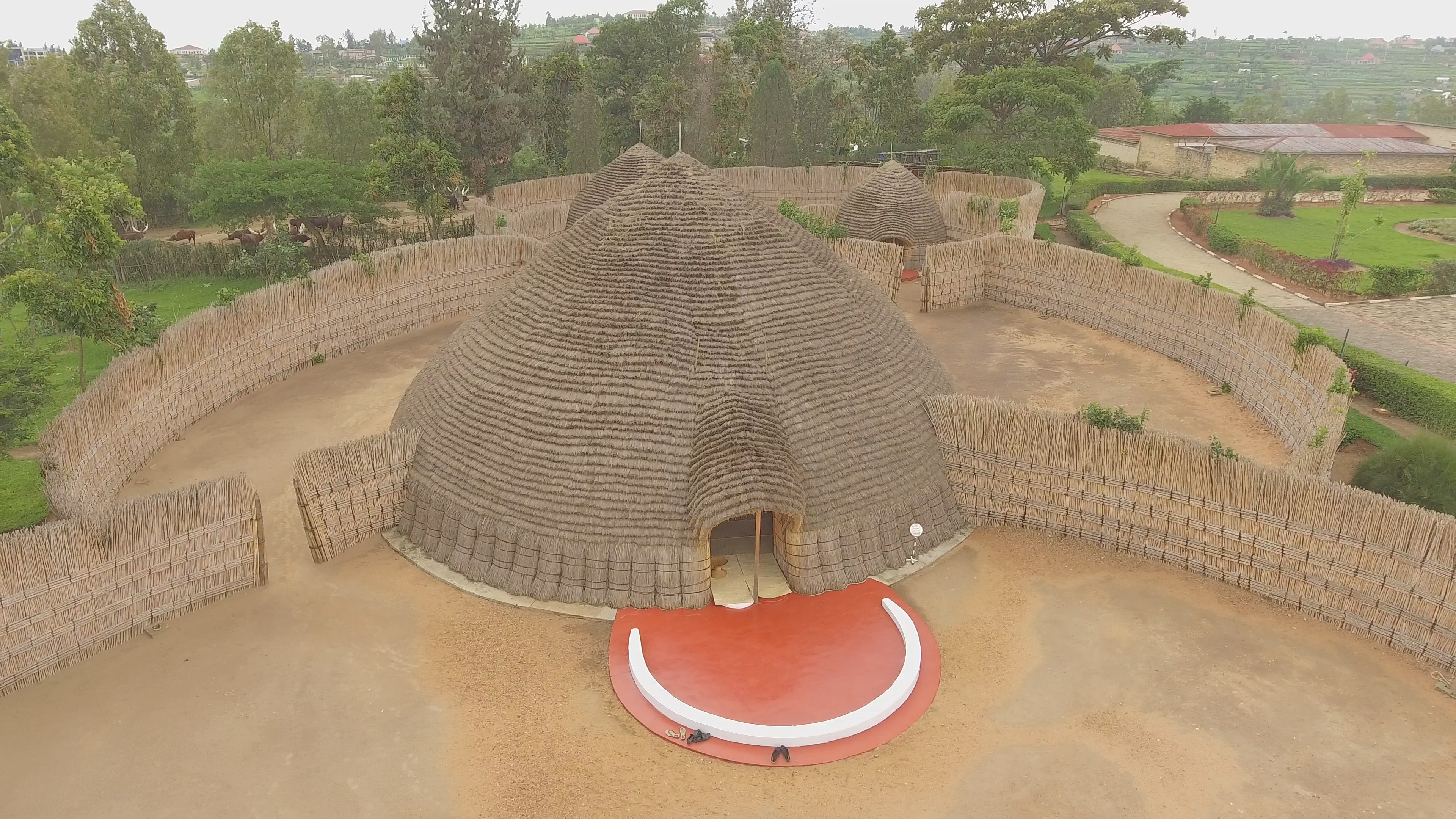
The King’s Palace Museum in Nyanza, Rwanda, offers an immersive journey into pre-colonial and monarchical Rwandan history. Located approximately 88km (2 to 3 hours) south of Kigali, it features a recreated traditional beehive palace, the modern colonial palace of King Mutara III, and the majestic Inyambo (sacred long-horned) cows
21-days-rwanda-primate-safari-culture-history-and-wildlife-holiday
14-days-magical-rwanda-photography-safari
12-days-best-rwanda-wildlife-safari-and-rwanda-primate-safari-vacation
9-days-best-family-rwanda-safari-holiday-big-five-canopy-walk-and-chimpanzee
7-days-family-rwanda-safari-holiday-vacation
4-days-akagera-safari-and-chimpanzee-tracking-rwanda-safari
3-days-best-rwanda-canopy-walk-and-nyungwe-chimpanzee-tracking-adventure
1. What is the historical significance of the King's Palace Museum?
The King's Palace Museum, located in Nyanza, serves as a primary window into the traditional monarchy of Rwanda. Before the colonial era, Nyanza was the capital of the kingdom, acting as the center of political and cultural power. This site does not just display artifacts; it represents the seat of the "Mwami," or the King, who was the central authority figure in Rwandan society. By visiting, you explore how the monarchy functioned, its social hierarchies, and the complex traditions that governed life under royal rule. It is a place where you can see the intersection of history and governance, providing a stark look at the power structures that existed long before modern administration. The museum stands as a physical reminder of the prestige associated with the monarch, detailing a time when the king’s court was the heartbeat of the nation's identity, traditions, and collective history.
2. Can I see the traditional Rwandan royal hut at the site?
Yes, a prominent feature of the King's Palace Museum is the reconstructed royal residence. This structure is a faithful replica of the traditional huts used by the monarchy, built using local, sustainable materials like grass and wood. Entering this space allows you to understand the scale and the daily environment of the king. The layout of the residence was highly deliberate, reflecting the king’s status and the privacy required for his royal duties. Seeing the interior layout gives you a practical sense of how the monarchy lived, removed from the modern architectural standards we are used to today. It is a hands-on history lesson where you step back into a centuries-old way of life. The craftsmanship involved in the construction is a testament to the skill of the artisans of that era, showcasing the architectural ingenuity used to create a palace without the use of nails or modern materials.
3. What is the story behind the Inyambo cattle at the museum?
One of the most unique aspects of the King's Palace Museum is the presence of the Inyambo, or "cows with large horns." Historically, these cattle were sacred to the Rwandan monarchy and were bred for their impressive physical appearance. They were kept at the royal court to symbolize the king’s wealth and his closeness to his people, who largely based their prosperity on livestock. Today, the museum maintains a small herd to preserve this cultural heritage. These cows are not merely livestock; they are living artifacts. You will notice that they are often adorned with jewelry and handled with special care. Watching them allows you to see the deep connection that the Rwandan culture has traditionally had with cattle, viewing them as a vital part of social status and national pride. The museum staff often performs traditional songs for the cows, which is a rare, fascinating display of living history.
4. How does the museum reflect traditional Rwandan architecture?
The architecture at the King's Palace Museum highlights the mastery of traditional Rwandan building methods. The royal huts are built in a beehive shape, a design specifically adapted to the local climate. The use of woven grasses, bamboo, and wood beams creates a structure that is both cool during the heat of the day and warm during the cooler nights. Walking around these buildings, you gain an appreciation for the lack of metal or cement in their construction. It is a study in natural engineering, where builders relied on their knowledge of geometry and the local environment to provide shelter. This architectural style was standard for the elite and the commoners alike, though the scale and the decorative elements in the royal court were significantly more intricate. Studying these buildings helps you understand how the landscape directly influenced the way people lived and how they utilized the resources around them to establish a stable and comfortable residence.
5. Why is Nyanza considered the historical center of the kingdom?
Nyanza is historically vital because it functioned as the political and spiritual center for several of Rwanda’s kings. Moving away from the nomadic traditions of earlier periods, the monarchy established a fixed royal court here, which stabilized the kingdom and allowed for the development of complex social systems. By maintaining a permanent residence, the king could better govern his people, manage land distribution, and oversee the administration of justice. The museum is located on the very ground where these significant decisions were made. Being at the King's Palace Museum puts you at the nexus of ancient Rwandan politics. It helps you see how the kingdom operated as a centralized state, where power was concentrated and maintained through tradition and public ceremonies. Understanding Nyanza’s historical importance is fundamental to grasping why the kingdom remained so cohesive and why this specific location was chosen as the permanent seat of power for so many generations of monarchs.
6. Are there guided tours available at the King's Palace Museum?
Participating in a guided tour is the most recommended way to experience the King's Palace Museum. The site is rich with subtle cultural and historical meanings that might not be immediately apparent to a casual visitor. Your guide will explain the layout of the palace, the significance of the Inyambo, and the personal histories of the kings who resided there. These guides are usually locals who are deeply invested in their history, providing personal context that goes beyond what you might read in a guidebook. They facilitate the flow of information, ensuring that you understand the transition from traditional life to the colonial period and how those shifts affected the monarchy. If you are part of a larger group or visiting as part of a cultural safari, having a dedicated guide helps you navigate the site efficiently and ensures that your questions are answered by someone with a deep, authoritative knowledge of Rwanda's royal past.
7. What can visitors learn about the daily life of the King?
The King's Palace Museum offers a detailed look at the daily routines and responsibilities that defined the king’s life. Beyond the grand ceremonies, the museum sheds light on how the king managed his court, interacted with his advisors, and observed the customs of his people. You learn about the dietary habits, the traditional clothing, and the tools used in the palace. For instance, the exhibits detail the types of vessels used for milk and local beverages, highlighting the central role of dairy in the royal court. You see the spaces dedicated to meditation, decision-making, and public interaction. It is not just about the pomp and circumstance of royalty; it is about the practical aspects of living in a high-status role within a traditional society. Understanding this daily reality helps to humanize the monarchy, shifting the focus from an abstract historical figure to a leader who was deeply embedded in the social and economic rhythms of his nation.
8. Is the museum accessible to international travelers?
Yes, the King's Palace Museum is highly accessible and is a frequent stop on cultural itineraries across Rwanda. The museum is equipped to handle international visitors, with signage and descriptions provided in both Kinyarwanda and English. The pathing around the grounds is well-kept, making it easy for you to walk between the different exhibits, the hut replicas, and the stable for the Inyambo cattle. Because it is located on a main transit route between the capital and the southern provinces, it is an easy inclusion for anyone traveling through the region. The staff are accustomed to receiving guests from all over the world and are prepared to explain the complex history of the Rwandan monarchy in a way that is clear and engaging for those who are not familiar with the details of East African royal history. It is a smooth, informative experience that fits well into any travel schedule focused on deep cultural immersion.
9. What should I expect to see at the King's Palace Museum gift shop?
The gift shop at the King's Palace Museum provides an opportunity to purchase items that are representative of Rwandan craftsmanship. You will find items such as traditional hand-woven baskets, wood carvings, and jewelry that mimic the styles worn by royalty in the past. Buying from this shop is also a way to support local artisans, as much of the inventory is sourced from community cooperatives in the surrounding area. These souvenirs are grounded in the history of the region and are more meaningful than mass-produced items you might find in airports or urban shopping centers. While the shop is modest in size, the quality of the items is quite high, offering you a piece of the culture to take home. It is a good place to find authentic tokens of your visit, ensuring that your financial contribution to the site also has a positive impact on the livelihoods of the local people who keep these traditional crafts alive.
10. How long should I allocate for a visit to the King's Palace Museum?
Allocating roughly sixty to ninety minutes is usually sufficient to thoroughly explore the King's Palace Museum. This duration gives you time to walk through the reconstructed huts, spend a moment observing the Inyambo cattle, and walk the grounds to appreciate the setting of the old royal court. If you are particularly interested in the detailed history, you might want to spend a bit more time speaking with your guide or reading the placards in the exhibition areas. Many people combine this visit with a trip to the nearby Ethnographic Museum in Butare, as both sites provide complementary looks at Rwandan culture and history. By not rushing, you allow yourself the space to absorb the atmosphere of the site and ask the necessary questions to fully grasp the information presented. It is a focused, efficient visit that provides a high level of educational value without requiring an entire day of travel or exploration.
11. How has the monarchy’s legacy influenced modern Rwanda?
The legacy of the monarchy remains a subject of intense study and reflection in modern Rwanda. Even though the kingdom came to an end during the twentieth century, its impact on the nation’s social structure and identity is still visible. The King's Palace Museum helps visitors understand how the concepts of national unity, organized governance, and traditional etiquette were shaped during the reign of the kings. Many of the values—such as a strong emphasis on community and a shared sense of identity—are roots that can be traced back to the time of the monarchy. Visiting the museum allows you to see the foundations upon which contemporary Rwandan society is built. It shows that even as the country has modernized, the connection to its historical roots remains strong. This understanding is key for anyone trying to navigate the complexities of modern Rwanda and its drive to balance progress with the preservation of its ancient, rich cultural traditions and values.
12. Are there any restrictions on taking photographs at the museum?
Taking photographs at the King's Palace Museum is generally permitted, which is great for those who want to capture the unique architecture and the beautiful Inyambo cattle. However, it is standard practice to ask your guide for permission before taking close-up shots of people or specific sensitive artifacts inside the exhibits. It is important to remember that this is a site of historical importance and, for many locals, a place of significant cultural pride. Being respectful with your camera—avoiding intrusive shots and maintaining a polite demeanor—is appreciated. You will find that the exterior of the royal huts and the cattle stables are some of the most photogenic spots on the site. Just be mindful of your surroundings and the privacy of other visitors or staff members. As with any historical site, the primary goal is to respect the sanctity of the location while allowing visitors to document their own educational experience through personal photography.
13. What is the difference between this museum and the Ethnographic Museum?
While the King's Palace Museum is specifically dedicated to the history of the monarchy and the royal court, the Ethnographic Museum in Butare provides a broader overview of general Rwandan culture. The King's Palace Museum is a deep dive into one specific aspect of the nation's past—the royal system—giving you a focused look at governance and elite traditions. In contrast, the Ethnographic Museum offers a wide-reaching look at daily tools, traditional agriculture, social customs, and the history of various communities across the country. Many travelers choose to visit both, as they offer complementary narratives. If the King's Palace Museum shows you how the kings lived, the Ethnographic Museum shows you the broader context of how the average person lived, farmed, and interacted with their environment. Visiting both sites ensures that you leave with a comprehensive understanding of the diverse history and the evolving cultural narrative that defines the identity of modern-day Rwanda.
14. What were the king’s duties in traditional Rwandan society?
In traditional Rwandan society, the king held a multifaceted role that went beyond simple political rule. As the head of the state, he was the supreme authority in legal matters, the protector of the people, and the symbol of national health and prosperity. He was expected to manage the distribution of land and cattle, resolve disputes among high-ranking clans, and perform the necessary ceremonies to ensure the favor of the ancestors. The King's Palace Museum illustrates these duties through displays of symbols of authority, such as royal drums and traditional weapons. You learn that his role was deeply spiritual; his well-being was thought to be linked to the prosperity of the land. His responsibilities were heavy, as he acted as the ultimate bridge between the past, present, and future of the people. This insight into his duties helps you understand why the court was so central to the life of the kingdom and why the monarchy was able to hold the country together for so many centuries.
15. Are there facilities for visitors at the King's Palace Museum?
The King's Palace Museum provides basic facilities to make your visit comfortable. There are designated parking areas, a reception zone where you can buy tickets, and access to clean restroom facilities. Because the museum is set in an open-air environment, you will find it helpful to be prepared for the weather; bringing a hat or light raincoat is useful, as you will be walking between the various buildings across the grounds. There is no large-scale restaurant on the immediate premises, so it is often better to plan your meals around the visit, perhaps grabbing lunch in the nearby town of Nyanza. The museum staff are very welcoming and can provide guidance on where to find local dining options nearby. Overall, while the amenities are simple and functional, they are well-maintained and sufficient for the time you will spend exploring the site, ensuring that your primary focus remains on the history and the educational value of the royal court.
16. What kind of ceremonies were held at the royal court?
The royal court was a hub for various ceremonies that reinforced the power and the religious significance of the monarchy. Events included celebrations of harvest, coronations, and rituals intended to protect the nation. These ceremonies often involved traditional music, dance, and the presentation of gifts to the king. The King's Palace Museum displays some of the instruments, such as royal drums, which were vital components of these public spectacles. These events were not just for entertainment; they were vital social functions that brought together the aristocracy and the common people under the gaze of the king. By understanding these ceremonies, you learn how the monarchy used public displays to demonstrate strength and continuity. The museum exhibits help you reconstruct these events in your mind, providing a sense of the scale and the communal spirit that characterized the life of the royal court, showcasing how these gatherings served to solidify the ties between the leadership and the citizenry.
17. How is the museum maintained for future generations?
Maintaining the King's Palace Museum is a collaborative effort involving the Rwandan government and local cultural preservation experts. Because many of the structures are built from natural, perishable materials like grass and wood, they require periodic rebuilding and maintenance to remain safe and representative of the originals. This process is actually a part of the museum’s educational value, as it preserves the traditional building techniques that might otherwise be lost to modern construction methods. The government invests in these efforts because the museum is seen as a vital component of the nation’s cultural identity. By keeping the site active, Rwanda ensures that younger generations have a direct link to their ancestors. Your visit supports this process, as ticket fees and donations are directed toward the maintenance of the facilities. This commitment to ongoing restoration proves that the preservation of history is a priority, ensuring that the legacy of the monarchy remains visible for those who will visit in the future.
18. What role did the royal court play in Rwandan judicial matters?
The royal court was the ultimate venue for justice in the kingdom. The king, or his designated representatives, held court to resolve serious disputes that could not be settled at the local level. This system of justice was rooted in traditional laws and customs. The King's Palace Museum gives you a glimpse into this legal environment, showcasing how decisions were made and how conflicts were handled within the structure of the kingdom. It shows that even in a society ruled by a single monarch, there were systems in place to ensure a level of order and predictable legal outcomes. Understanding this judicial role is important because it highlights that the monarchy was not just about absolute power; it was also about the management of a complex society with its own set of rules and social expectations. The court in Nyanza was the final point of appeal, making it a place where the stability of the entire kingdom was constantly being tested and reinforced through the resolution of its most difficult internal disagreements.
19. How does the site connect to the broader history of East Africa?
The history of the monarchy at the King's Palace Museum provides a fascinating case study when compared to other East African kingdoms. Similar to the kingdoms found in parts of modern-day Uganda and Tanzania, Rwanda had a highly organized central government and a culture of cattle-based wealth. By visiting this museum, you can draw parallels and contrasts between the Rwandan monarchy and other regional powers. This context is helpful for history enthusiasts who want to see how East African societies developed independently and how they compared in terms of their social organization, military structures, and economic foundations. The museum acts as a starting point for understanding how Rwanda fits into the larger tapestry of the Great Lakes region. It invites you to think about the interconnectedness of regional trade, cultural exchange, and the long-term political trends that shaped the continent before the influence of European colonial powers drastically altered the political and administrative landscape of East Africa.
20. Why should a visitor to Rwanda include this museum in their cultural safari?
Including the King's Palace Museum in your Rwanda trip is essential for anyone who wants a well-rounded understanding of the country. It is easy to focus only on the famous wildlife, such as the gorillas or chimpanzees, but Rwanda’s history is just as complex and engaging as its biodiversity. This museum provides the necessary human context to the landscapes you are traversing. By learning about the traditional governance, the architectural skills, and the social values that defined the kingdom, you gain a deeper appreciation for the resilience of the people you meet today. A cultural safari is meant to provide a multi-dimensional view of a destination, and this site delivers exactly that. It takes you past the surface and introduces you to the core of Rwanda’s identity. When you leave the museum, you will find that you have a much stronger connection to the country and its history, making the rest of your travel experiences in the region feel more meaningful, educated, and authentic.
Booking King's Palace Museum on Rwanda cultural safari us Roads of Adventure safaris
To book a cultural safari that includes the King's Palace Museum in Nyanza, contact Roads of Adventure Safaris or SafariBookings to customize your trip. They organize guided itineraries originating from Kigali or Kampala, inclusive of transportation, guides, and entry fees to the museum's royal grounds
