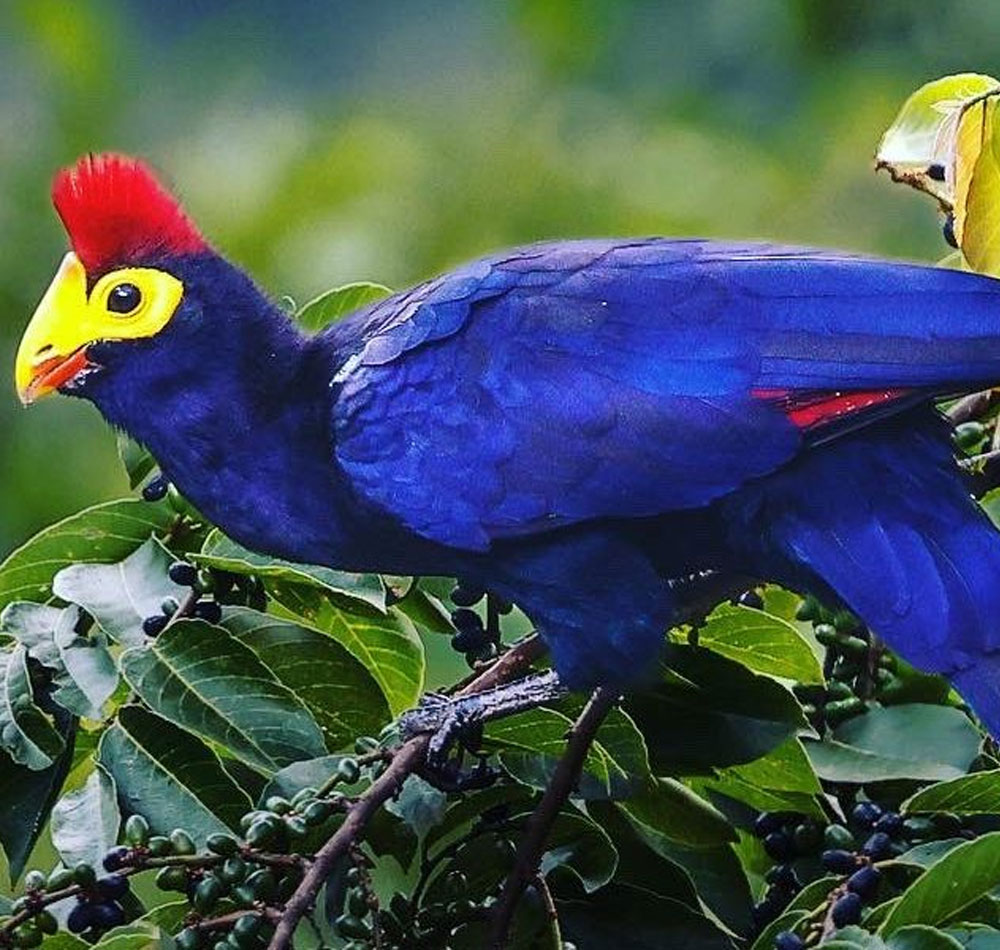
Uganda hosts over 1,090 bird species, making it a premier global birding destination. Whether searching for Albertine Rift endemics, rare waterbirds, or vibrant forest species, these top 20 birding locations across the country offer an unparalleled avian experience
36-days-grand-uganda-bird-watching-safari
30-days-best-uganda-birding-safari-extravaganza-and-wildlife-safari
25-days-complete-uganda-birding-safari-extravaganza-with-wildlife-viewing
22-days-best-uganda-primate-and-birding-safari-adventure
20-days-uganda-birding-safari-wildlife-gorilla-and-chimpanzee-tracking
10-days-best-uganda-birding-safari-and-wildlife-experience
1-day-perfect-mabamba-swamp-shoebill-stork-uganda-birding-safari
1. Mabamba Bay Wetland
For many avitourists, a Uganda birding safari truly begins at Mabamba Bay Wetland. Situated on the edge of Lake Victoria near Entebbe, this sprawling, 2,424-hectare Ramsar site consists of extensive marshes choked with papyrus and water lilies. It is globally renowned as the most reliable and accessible location to catch a glimpse of the prehistoric Shoebill (Balaeniceps rex).
Navigating the narrow, maze-like channels is done via traditional motorized wooden canoes. Local guides work closely with the fishing community to track these solitary, giant birds as they stand entirely motionless for hours, waiting to scoop up lungfish in the shallow waters.
Beyond the jaw-dropping Shoebill, the marsh supports a vibrant community of water-loving species. Serious birders can tick off the radiant Papyrus Gonolek, Lesser Jacana, Malachite Kingfisher, African Pygmy Goose, and the globally threatened Blue Swallow. The proximity of Mabamba to Entebbe International Airport makes it the perfect, high-impact introductory stop or final excursion for any birding itinerary.
2. Bwindi Impenetrable National Park
While internationally famous for its mountain gorillas, Bwindi Impenetrable National Park is equally a holy grail for a bird watching safari in Uganda. This ancient, UNESCO World Heritage-listed rainforest blankets rugged ridges along the Albertine Rift Valley, spans an altitudinal range from 1,160 to 2,607 meters, and protects a massive array of biodiversity. Out of Bwindi's 350 recorded bird species, an astounding 23 are strictly endemic to the Albertine Rift.
The epicentre of Bwindi birding is the high-altitude Ruhija sector, where the Mubwindi Swamp trail beckons serious listers. This challenging trail is the most reliable place on Earth to spot the critically vulnerable African Green Broadbill (Pseudocalyptomena graueri).
As you walk underneath the thick, primary canopy, expert local guides can help distinguish a dizzying array of mixed feeding flocks. Key targets include the Grauer's Swamp Warbler, Shelley’s Crimsonwing, Handsome Francolin, Rwenzori Batis, and Stripe-breasted Tit. The cooler, misty climate and deep valleys offer an immersive, unmatched forest birding environment.
3. Queen Elizabeth National Park
Boasting East Africa's highest park bird list, Queen Elizabeth National Park is an absolute powerhouse for a Uganda birding safari. The park features a diverse mosaic of ecological zones, including open savannahs, crater lakes, humid tropical forests, and extensive papyrus swamps. This incredible diversity allows the park to harbor over 600 distinct avian species.
The absolute highlight here is a launch cruise along the natural Kazinga Channel, a 32-kilometer-long waterway connecting Lake Edward and Lake George. From the safety of the boat, birders get remarkably close-up views of huge waterbird congregations lined up along the muddy banks. Expect to see Great White and Pink-backed Pelicans, African Skimmers, Saddle-billed Storks, and dozens of colorful kingfishers.
Further inland, the isolated Maramagambo Forest provides a completely different experience. Underneath its dark canopy, you can search for secretive forest dwellers like the Black-bee eater and the rare Yellow-throated Cuckoo. Meanwhile, the remote marshlands of the Ishasha sector offer another pocket of habitat where lucky birders occasionally spot the Shoebill hunting in the quiet oxbow lakes.
4. Murchison Falls National Park
As Uganda's oldest and largest protected conservation area, Murchison Falls National Park serves up a spectacular blend of big game wildlife and extraordinary birding. The park is bisected by the Victoria Nile, which forces its way through a narrow, 7-meter gorge before emptying out into the calm waters of Lake Albert, creating a paradise of over 450 recorded bird species.
The primary birding excursion here is taking a boat downstream toward the Albert Nile Delta. This swampy delta area where the river splits is a phenomenal habitat for the Shoebill, which is regularly sighted resting on floating mats of vegetation. The boat trip itself passes massive colonies of Red-throated and Swallow-tailed Bee-eaters nesting in the sandy river cliffs.
Along the riverbanks, you will encounter pairs of giant Goliath Herons, African Fish Eagles calling from wood perches, and multiple raptors scanning the plains. On the northern savannah tracks, birding drives reveal dry-country icons like the Abyssinian Ground Hornbill, Denham's Bustard, Secretary Bird, and a variety of nightjars that emerge just as dusk falls across the park.
5. Kibale National Park
Shifting from open water to deep tropical rainforest, Kibale National Park is widely celebrated as the primate capital of East Africa, hosting 13 different species including habituated chimpanzees. However, for those embarking on a focused bird watching safari in Uganda, Kibale's true fame rests on a single, legendary jewel: the rare and brilliantly colored Green-breasted Pitta (Pitta reichenowi).
Finding this elusive forest ground-dweller requires waking up before dawn to catch its brief, architectural display flight inside the dark undergrowth of the forest floor. Beyond the pitta, Kibale protects more than 350 bird species within its mid-altitude evergreen environment.
Walking along the well-maintained forest trail networks provides exceptional canopy and understory viewing. Birders can look forward to ticking off magnificent forest indicators like the Great Blue Turaco, Black-billed Turaco, Purple-breasted Sunbird, and the spectacular Black-bee-eater. The rich mix of West African forest species and Albertine Rift influences ensures that every trail walk feels rewarding and full of surprises.
6. Lake Mburo National Park
As the closest savannah park to Kampala, Lake Mburo National Park is a compact gem dominated by rich acacia woodlands, open valleys, and a cluster of tranquil lakes. This unique mix of dry bush and permanent water makes it a vital inclusion on any comprehensive Uganda birding safari, offering a home to over 350 avian species.
The park's ultimate prize is the mysterious African Finfoot (Podica senegalensis), a shy, water-dwelling bird that resembles a cross between a duck and a rail. Guided boat trips along the quiet fringes of Lake Mburo afford excellent chances of spotting the finfoot as it glides silently under overhanging tree roots.
On dry land, walking safaris—which are a specialty of Lake Mburo—allow you to stroll through the acacia groves to seek out localized woodland species. Birders can find the Red-faced Barbet (found nowhere else in Uganda), Coqui Francolin, Tabora Cisticola, and the striking Long-tailed Starling. The swampy fringes also support papyrus specialists, including the cryptic Papyrus Yellow Warbler.
7. Semuliki National Park
For hardcore birders seeking unique additions to their life list, Semuliki National Park is an absolute necessity. Tucked away in the remote isolation of the Western Rift Valley, Semuliki represents the easternmost extension of the vast, lowland Guinea-Congo dense rainforest biome. This means it harbors dozens of Central African bird species found nowhere else in East Africa.
The park boasts an impressive checklist of over 440 species, including 40 Congo-Basin specials. Exploring the humid trails around the Sempaya hot springs or walking down the Kirumia River trail can feel like stepping directly into a West African jungle.
Your top targets here are highly localized, secretive species such as the Nkulengu Rail, Yellow-throated Cuckoo, Piping Hornbill, and the Congo Serpent Eagle. The forest is also rich in hornbills, with the spectacular Black-casqued Wattled Hornbill frequently seen flying over the dense forest canopy. Semuliki offers a raw, wild, and incredibly rewarding challenge for any dedicated enthusiast.
8. Kidepo Valley National Park
Isolated in the far northeastern corner of Uganda along the borders of South Sudan and Kenya, Kidepo Valley National Park is a rugged, semi-arid wilderness that feels completely detached from the rest of the country. This spectacular park provides a unique ecosystem, resulting in a checklist of over 470 bird species, many of which are completely absent from Uganda's wetter southern parks.
A bird watching safari in Uganda that reaches Kidepo targets specialized dry-savannah and arid-zone birds. The open plains, punctuated by dramatic rocky kopjes and the sand-bedded Kidepo and Narus rivers, are home to the Common Ostrich, Secretary Bird, and the elegant Kori Bustard.
Crucially, Kidepo is the only place in Uganda where you can search for the localized Karamoja Apalis (Apalis karamojae), an endangered, warbler-like bird that occupies the whistling thorn acacia thickets. The park is also famous for its high concentration of raptors, with over 50 species recorded, including the colorful Pygmy Falcon and the massive Verreaux's Eagle.
9. Mgahinga Gorilla National Park
Perched high in the clouds in southwestern Uganda, Mgahinga Gorilla National Park protects the Ugandan slopes of three dramatic, conically shaped Virunga Volcanoes. This high-altitude Afro-montane environment, which ranges from bamboo zones to alpine moorlands, offers a completely different suite of species for a Uganda birding safari.
Mgahinga is one of the premier locations to look for high-altitude Albertine Rift endemics, with over 115 forest species recorded. Birding along the dramatic Gorge Trail that winds between Mount Sabinyo and Mount Gahinga is an invigorating experience.
The undisputed star of the park is the spectacular Rwenzori Turaco (Gallirex johnstoni), a bird with vibrant green, blue, and red plumage that calls from the high bamboo canopies. Other rare targets include the elusive and highly endangered Shelley's Crimsonwing, the handsome Archer's Robin-Chat, Mountain Masked Apalis, Kivu Ground Thrush, and the iridescent Malachite Sunbird feeding on giant lobelias.
10. Mabira Forest Reserve
If you are looking for exceptional birding without traveling deep into the countryside, Mabira Forest Reserve is the perfect urban antidote. Located along the main highway between Kampala and Jinja, Mabira is one of the last remaining semi-deciduous tropical rainforest blocks in central Uganda, covering roughly 300 square kilometers.
Despite its proximity to urban areas, Mabira holds an incredible avian diversity of over 310 species. The forest features an excellent, well-maintained network of trails that cater nicely to day-trippers. Thanks to a relatively open canopy in certain sections, viewing conditions are excellent.
Walking through the forest gives birders a great chance to see the magnificent Great Blue Turaco bouncing along the branches, alongside the Nahan's Francolin and the elusive African Pitta during its migratory movements. Canopy towers and forest edges also yield excellent sightings of the Jameson's Wattle-eye, Grey Parrot, and various forest sunbirds and illadopsises, making it a highly productive day stop.
11. Budongo Forest Reserve – The Royal Mile
Budongo Forest Reserve, situated on the boundaries of the Albertine Rift Valley near Murchison Falls, contains one of the most legendary birding tracks in the world: the "Royal Mile." This historic forest track was originally cleared by a traditional king to create a wide, straight walking path through the ironwood forest, resulting in a spectacular, unobstructed window into the rainforest canopy and understory.
Budongo is home to over 360 species, and walking the flat, open Royal Mile allows birdwatchers to spot birds that are typically hidden by thick jungle foliage. It is widely considered one of the finest places in Africa to see the Chocolate-backed Kingfisher (Halcyon badia), which sits quietly on mid-level branches.
Other highly sought-after specialties along this route include the rare Cassin's Hawk-Eagle, Sabine's Spinetail, White-thighed Hornbill, and the tiny African Dwarf Kingfisher. The forest undergrowth also shelters the localized Puvel's Illadopsis, making Budongo an indispensable pilgrimage site for any comprehensive birding itinerary.
12. Ziwa Rhino Sanctuary
Primarily established to reintroduce the southern white rhino back into Uganda's wild ecosystems, Ziwa Rhino Sanctuary has quietly evolved into an outstanding destination for a bird watching safari in Uganda. Located midway between Kampala and Murchison Falls, its 70 square kilometers of protected woodlands, dry savannah, and extensive marshes shelter over 300 bird species.
The sanctuary's most exclusive avian experience is exploring the Lugogo Swamp. Birders can embark on early morning canoe trips specifically designed to search for the prehistoric Shoebill, which uses the undisturbed swamp as a breeding and hunting ground.
Away from the swamps, walking through the broad-leaved woodlands provides fantastic opportunities to spot savannah and woodland birds. You can expect to encounter the White-crested Turaco, Bruce's Green Pigeon, Meyer's Parrot, and the African Grey Hornbill. The unique safety of the fenced sanctuary means birders can track these species leisurely on foot alongside experienced sanctuary rangers.
13. Bigodi Wetland Sanctuary
Located just a few kilometers outside the boundaries of Kibale National Park, Bigodi Wetland Sanctuary is a community-run conservation success story. This long, narrow strip of papyrus swamp and riverine forest acts as an essential wildlife corridor and holds an impressive registry of around 200 bird species.
Bigodi is affectionately known as the "Home of the Great Blue Turaco." It is common to see multiple individuals of these giant, bright blue and yellow birds crashing through the forest canopy along the edge of the swamp.
Because the sanctuary is managed by the local community, the trail system features elevated wooden boardwalks that allow you to walk directly into the heart of the papyrus reeds without getting wet. This makes it an incredibly comfortable place to seek out secretive wetland weavers, the Papyrus Gonolek, White-winged Warbler, and the Great Sparrowhawk. Primate sightings, like the Red Colobus monkey, add extra magic to the walk.
14. Echuya Forest Reserve
Tucked away in the scenic, steeply terraced hills of Kigezi in southwestern Uganda, Echuya Forest Reserve is a hidden gem that is often overlooked by mainstream tourist itineraries. This high-altitude, dense montane forest sits at over 2,200 meters above sea level and is dominated by a unique mixture of bamboo and alpine vegetation types.
Echuya is a critical habitat for Albertine Rift endemics, making it highly prized by experienced birders. The forest surrounds the beautiful, high-altitude Muchuya Swamp, which provides a specialized microhabitat.
Visiting Echuya gives you a great opportunity to track down the rare Grauer's Swamp Warbler, a species restricted to these isolated mountain wetlands. As you navigate the steep forest trails, look out for the Rwenzori Apalis, Archer's Robin-Chat, Regal Sunbird, and the Strange Weaver. The relative lack of crowds ensures a peaceful, slow-paced birding experience amid breathtaking scenery.
15. Mount Elgon National Park
Straddling the border between Uganda and Kenya in the eastern part of the country, Mount Elgon National Park protects the massive caldera of an extinct shield volcano. The park features an incredible altitudinal sequence of vegetation zones, shifting from montane rainforests to dense bamboo belts, and finally up to Afro-alpine moorlands adorned with giant groundsels.
This vast wilderness hosts over 300 bird species, including several montane specialists that are difficult to find anywhere else in western Uganda. The lower forest trails around the dramatic Sipi Falls are excellent for spotting the Jackson's Francolin and the beautiful Hartlaub's Turaco.
For adventurous birders who trek into the higher, rocky alpine zones, the ultimate prize is the Lammergeier, also known as the Bearded Vulture. Watching this massive, bone-dropping raptor soar effortlessly across the volcanic cliffs of the caldera is an unforgettable sight. Other high-altitude targets include the Tacazze Sunbird and the Moorland Francolin.
16. Rwenzori Mountains National Park
Known legendary as the "Mountains of the Moon," Rwenzori Mountains National Park protects Africa's highest permanent mountain range. This rugged, glaciated wonderland features an extreme altitudinal zonation that creates isolated ecological islands, supporting over 217 bird species, including 19 Albertine Rift endemics.
Birding in the Rwenzoris involves hiking through otherworldly landscapes of giant heathers and moss-draped trees. The lower montane forest zones are rich with activity, where the Rwenzori Batis and the colorful Rwenzori Turaco can be seen moving through the lower forest layers.
As you ascend into the montane valleys, look out for the stunning Malachite Sunbird and the Golden-winged Sunbird darting between flowering plants. The high cliffs are also excellent for spotting the rare Alpine Swift and the African Long-eared Owl. It is a physically demanding birding environment, but the dramatic, misty mountain backdrops make it incredibly rewarding.
17. Lutembe Bay Wetland
Situated just off the main highway between Kampala and Entebbe, Lutembe Bay Wetland is a secluded, shallow bay of Lake Victoria that has been designated as an internationally recognized Ramsar site. This expansive wetland is a crucial geographical stopover point along the African-Eurasian flyway system.
Lutembe Bay is famous for hosting massive congregations of migratory waterbirds during the Palearctic winter months (typically between October and March). During this peak period, the mudflats and open waters can hold hundreds of thousands of birds, turning the bay into a shifting sea of feathers.
It is a world-class destination for observing Gull-billed Terns, White-winged Black Terns, and Lesser Black-backed Gulls. Taking a small boat out onto the bay allows you to drift closely past these immense flocks. Resident wetland birds, such as the African Openbill, Greater Flamingo, and various sandpipers, ensure that Lutembe remains a spectacular birding spot all year round.
18. Lake Bunyonyi
Famed as one of the deepest and most visually stunning lakes in Africa, Lake Bunyonyi translates directly from the local language as "the place of many little birds." Surrounded by steep, intensely terraced hillsides and dotted with 29 green islands, the lake lacks crocodiles and hippos, making it an incredibly peaceful location for water-based birding.
The extensive papyrus swamps that line the edges of the lake provide an excellent sanctuary for a wide variety of waterbirds and terrestrial species. Exploring the calm waters by a traditional dugout canoe allows you to quietly approach the shoreline vegetation.
Key avian residents to watch for include the African Kingfisher, Pied Kingfisher, Swamp Flycatcher, and the elegant Grey Crowned Crane—Uganda's national bird. The surrounding terraced gardens and patches of forest also attract an array of colorful weavers, sunbirds, and bronze mannikins, making it an easygoing and highly photogenic birding stop.
19. Katonga Wildlife Reserve
For birdwatchers who want to escape the well-trodden tourist circuits, Katonga Wildlife Reserve offers a tranquil, off-the-beaten-path savanna experience. Located in western Uganda along the banks of the Katonga River, this reserve is characterized by a mix of riverine woodlands, open grasslands, and extensive papyrus swamps.
Katonga is an exceptional haven for papyrus-dwelling specialists and wetland birds, hosting over 150 recorded species. Because the reserve is less visited, exploring the wetlands via guided walking trails or canoe trips feels like a private expedition.
Your primary targets here include the rare Papyrus Yellow Warbler, the striking Papyrus Gonolek, and the African Finfoot along the quiet river stretches. The open savannah sectors also support a variety of raptors, francolins, and kingfishers. Katonga provides a raw, quiet setting where you can slowly track down specialized birds at your own pace.
20. Pian Upe Wildlife Reserve
Concluding this grand loop in the remote east, Pian Upe Wildlife Reserve is Uganda's second-largest protected conservation area, preserving a vast expanse of semi-arid wooden savannah and grassland in the Karamoja region. This raw wilderness is dominated by dramatic views of Mount Kadam and features a unique climate that attracts a highly specialized group of birds.
Pian Upe is one of the few places in Uganda where you can observe wild populations of the Common Ostrich roaming across the open plains. The reserve is a premier destination for spotting a massive variety of raptors and birds of prey, which thrive on the open visibility of the plains.
Birders exploring the sweeping grasslands can look forward to ticking off the Secretary Bird, Jackson's Hornbill, Fox's Weaver (Uganda's only true endemic bird, occasionally sighted here), and the Abyssinian Ground Hornbill. The unique, wild atmosphere of the Karamoja plains makes Pian Upe a thrilling and distinctive finale for any dedicated bird watching safari in Uganda.
1. What is the single most sought-after bird on a Uganda birding safari, and where can I reliably find it?
The undisputed holy grail of any serious bird watching safari in Uganda is the prehistoric, enigmatic Shoebill (Balaeniceps rex). Standing nearly five feet tall with a massive, bulbous, shoe-shaped bill, this solitary bird looks like a living dinosaur. It is classified as vulnerable and is highly sought after by avitourists worldwide.
The single best and most reliable place to spot the Shoebill is the Mabamba Bay Wetland, located on the edge of Lake Victoria near Entebbe. Mabamba is a sprawling Ramsar site choked with papyrus and water lilies. Here, you navigate the narrow channels in traditional motorized wooden canoes. Local community guides track the birds in real-time, giving you an unparalleled 85–90% chance of watching a Shoebill stand completely motionless before dropping like a stone to scoop up lungfish.
Another phenomenal location to add to your itinerary is the Murchison Falls National Park delta area, where the Victoria Nile flows into Lake Albert. Taking a private sunrise boat trip downstream to the delta provides spectacular opportunities to see Shoebills patrolling the floating vegetation mats against a backdrop of wild savannah.
Finally, Ziwa Rhino Sanctuary offers an intimate, off-the-beaten-path Shoebill encounter. In the sanctuary’s Lugogo Swamp, you can canoe through the marshes early in the morning to seek out resident Shoebills in complete isolation. Combining Mabamba, Murchison Falls, and Ziwa guarantees that you will tick this legendary species off your life list.
2. Where should I go to see Albertine Rift endemics, and why are they so important?
Albertine Rift endemics are birds restricted entirely to the unique mountain chain running along the borders of western Uganda, Rwanda, Burundi, and the Democratic Republic of Congo. Because these birds evolved in isolated montane cloud forests over millions of years, they cannot be found anywhere else on Earth. Sighting them is a major milestone for world listers on a Uganda birding safari.
The absolute premier destination to see these endemics is Bwindi Impenetrable National Park, which holds an astounding 23 of the 24 Albertine Rift endemics recorded in Uganda. The high-altitude Ruhija sector of Bwindi is the most famous hotspot. Walking the steep trail down to the misty Mubwindi Swamp is an essential pilgrimage, as it is the world’s most reliable location to find the critically endangered, bright green African Green Broadbill (Pseudocalyptomena graueri).
To round out your Albertine Rift collection, you must visit Mgahinga Gorilla National Park, located further southwest on the slopes of the Virunga Volcanoes. Walking Mgahinga’s Gorge Trail allows you to target high-altitude specialists that are tough to find in Bwindi. Here, you can easily spot the spectacular, neon-colored Rwenzori Turaco and the rare Archer's Robin-Chat feeding among the giant bamboo stalks.
Lastly, Echuya Forest Reserve, a high-altitude montane forest nestled between Bwindi and Mgahinga, is a critical stopover. Echuya is one of the few strongholds for the highly localized Grauer's Swamp Warbler, making it an indispensable addition for a truly comprehensive endemic-focused tour.
3. Which Ugandan Park holds the highest bird count, and what makes it so biodiverse?
If your primary goal on a bird watching safari in Uganda is to maximize your total species count in a single location, Queen Elizabeth National Park is your ultimate destination. This extraordinary park boasts East Africa's highest park bird list, with over 600 distinct avian species recorded within its boundaries.
The incredible species wealth of Queen Elizabeth National Park is driven by its dramatic ecological diversity. The park acts as a giant crossroads where open acacia savannahs, humid tropical forests, freshwater lakes, alkaline crater lakes, and vast riverine swamps all converge in one geographical area. This provides a perfect home for waterbirds, forest dwellers, and plains species alike.
The single best birding activity here is a boat launch cruise along the Kazinga Channel, a natural 32-kilometer waterway linking Lake Edward and Lake George. This boat trip allows you to drift within feet of massive, bustling riverbank congregations, including thousands of Pink-backed Pelicans, African Skimmers, Gull-billed Terns, Saddle-billed Storks, and multiple kingfisher species.
To sample the forest species, you can head directly into the dark understory of the Maramagambo Forest on the southern side of the park. Maramagambo offers a complete contrast to the open wetlands, allowing you to tick off cryptic forest specialists like the Black Bee-eater, Yellow-throated Nicator, and the secretive White-tailed Lark. The sheer variety ensures a non-stop, high-reward birding experience.
4. How can I see the legendary Green-breasted Pitta, and what is its primary habitat?
The Green-breasted Pitta (Pitta reichenowi) is famously regarded as one of Africa’s most difficult, enigmatic, and stunningly beautiful forest birds. It is a holy grail for forest birding enthusiasts on a Uganda birding safari. This small, ground-dwelling bird is known for its brilliant green breast, bright red vent, and striking blue wing patches, making it masterfully camouflaged against the dark leaf litter of the rainforest floor.
The absolute best and most famous place in Africa to see this bird is Kibale National Park. Kibale’s mid-altitude evergreen tropical rainforest provides the exact dense understory, damp soil, and undisturbed canopy that the pitta requires to feed on earthworms and insects.
To successfully spot the Green-breasted Pitta, your bird watching safari in Uganda must include an ultra-early pre-dawn trek out of the Kanyunchu Tourism Centre. The bird is incredibly secretive and is typically only located during its brief breeding season (primarily May to September) when the males perform an architectural, mechanical "display flap" on low perches just as the first morning light breaks. You must sit silently in the dark forest undergrowth, listening for its low, explosive display whistle.
While Kibale is the main hotspot, you can excellently complement your primate and forest birding by visiting the adjacent Bigodi Wetland Sanctuary. Bigodi is a community-run papyrus swamp that offers easy, open boardwalk viewing along the forest edge. Here, you can effortlessly spot giant forest indicators like the Great Blue Turaco and the Papyrus Gonolek, creating a perfect balance to the intense search for the pitta.
5. What Central African bird species can I find in Uganda that are absent elsewhere in East Africa?
Uganda’s unique geographical positioning places it at the ecological intersection where the East African savannah meets the vast, lowland Guinea-Congo rainforest biome of Central Africa. This means a Uganda birding safari can deliver "Congo-Basin specials"—species that are abundant in the deep jungles of Central Africa but completely impossible to see anywhere else in East Africa.
The ultimate destination for these rare additions is Semuliki National Park, located in the remote, hot lowlands of the Western Rift Valley. Semuliki represents the literal easternmost tip of the massive Ituri Forest belt from the Democratic Republic of Congo. Out of the 440+ bird species recorded in Semuliki, over 40 are true West/Central African forest specials.
The prime birding track here is the legendary Kirumia Trail, a 13-kilometer route that cuts deep through the humid, primary ironwood forest. Walking this wild trail allows you to search for highly localized, extraordinary species such as the Nkulengu Rail (famous for its loud, duetting calls at dawn), the Lyre-tailed Honeyguide, the Congo Serpent-Eagle, and the tiny African Piculet.
Semuliki is also an absolute paradise for hornbills. By scanning the high canopy, you can tick off spectacular, heavy-billed species found nowhere else in the region, including the Piping Hornbill, Black-casqued Wattled Hornbill, and Red-billed Dwarf Hornbill. Including Semuliki on your itinerary transforms a standard trip into an elite, continent-spanning birding adventure.
6. What makes "The Royal Mile" in Budongo Forest so famous among international birders?
Ask any veteran tour leader about the single best forest trail for a bird watching safari in Uganda, and they will immediately point you toward the "Royal Mile" in the Budongo Forest Reserve. Historically, this one-mile stretch of dirt road was cleared and maintained by the traditional King of Bunyoro as a private royal walking path, creating a perfectly straight, wide avenue through a pristine primary rainforest block.
What makes the Royal Mile globally famous is its exceptional visibility. Rainforest birding is notoriously difficult because thick undergrowth and dense leaves block your line of sight. However, because the Royal Mile is a wide, flat, wide-open track with a completely clear understory underneath massive, towering mahogany and ironwood trees, it acts as a perfect natural viewing gallery.
Walking slowly down this flat mile allows you to easily spot canopy, mid-tier, and ground-dwelling birds that would typically be invisible in dense jungle. Budongo holds over 360 species, and the Royal Mile is the absolute premier location to find the stunning, localized Chocolate-backed Kingfisher (Halcyon badia), which sits perfectly still on open, mid-level branches.
As you stroll along this shaded avenue, you can also look forward to excellent, clear views of the rare Cassin's Hawk-Eagle, Ituri Batis, Sabine's Spinetail, White-thighed Hornbill, and the tiny, colorful African Dwarf Kingfisher. It provides the most comfortable, high-yield forest birding environment anywhere on the African continent.
7. Where should I go to target dry-savannah and specialized arid-zone birds?
While much of southern and western Uganda is lush, forested, and wet, the remote northeastern frontier of the country features a rugged, semi-arid climate. A Uganda birding safari that heads northeast targets an entirely different suite of birds—specialized dry-savannah and desert-fringe species that cannot survive in the damp rainforests.
The crown jewel of dry-country birding is Kidepo Valley National Park, isolated on the border of South Sudan and Kenya. Kidepo’s vast plains, rocky granite kopjes, and dry sand rivers support over 475 species, with roughly 60 species completely unique to this park within Uganda.
Exploring the Narus and Namamukweny Valleys in Kidepo allows you to easily find magnificent plains icons like the Common Ostrich, the elegant Secretary Bird, Kori Bustard, and Fox Kestrel. It is also the premier global hotspot for the massive, ivory-billed Black-breasted Barbet.
To complement your arid-zone checklist, you must visit the Pian Upe Wildlife Reserve, located further south in the Karamoja plains. Pian Upe consists of expansive, undisturbed grasslands dominated by whistling thorn acacias.
This specific habitat is critical because it is one of the best places to find the rare, vulnerable Karamoja Apalis (Apalis karamojae), an incredibly localized warbler. Pian Upe also boasts a phenomenal concentration of raptors, allowing you to tick off Pygmy Falcons, Lappet-faced Vultures, and the majestic Bateleur eagle soaring over the pristine wilderness.
8. Where can I find Uganda's only true endemic bird, and what is its current status?
For decades, international listers on a Uganda birding safari noted that while Uganda had the highest bird concentration in Africa, it technically lacked a widely recorded, accessible true endemic—a bird found 100% exclusively within its national borders. That changed with the historic rediscovery and tracking of Fox's Weaver (Ploceus spekeoides).
Fox's Weaver is a stocky, heavy-billed weaver where the male displays a bold black face mask, yellow eyes, and a distinct olive-yellow back. It is currently listed as Endangered/Near-Threatened due to its highly restricted, specialized habitat requirements. It breeds exclusively in seasonally flooded wooded grasslands and wetlands dominated by whistling thorn acacias.
The primary, most successful places to find Fox's Weaver are the remote, papyrus-fringed lakes of Lake Bisina and Lake Opeta, located in the eastern Teso-Karamoja region. Navigating these flooded wetlands requires local expertise, but it rewards you with views of their colonial, oval-shaped nests hanging directly over water pools.
Excitingly, recent expeditions have confirmed that Fox's Weaver can also be found reliably within the protected boundaries of the Pian Upe Wildlife Reserve, particularly around the whistling acacia stands near the reserve's airstrip. Visiting Pian Upe on your bird watching safari in Uganda gives you the extraordinary double-win of targeting Uganda’s only true endemic, Fox's Weaver, alongside the near-endemic Karamoja Apalis in a single, undisturbed location.
9. What is the best destination for montane and high-altitude Afro-alpine birding?
High-altitude birding requires exploring rugged mountain ranges where freezing nights, thin air, and unique volcanic or glaciated soils create specialized vegetation belts like giant heather zones and alpine moorlands. For a bird watching safari in Uganda, targeting these mountain specialists requires heading to the eastern and western highlands.
In the far east along the Kenyan border, Mount Elgon National Park is an outstanding destination. Mount Elgon is an extinct shield volcano boasting a massive caldera. Hiking through the montane forests around the spectacular Sipi Falls allows birders to easily spot beautiful highland residents like the Hartlaub's Turaco, Jackson's Francolin, and the Tacazze Sunbird feeding on flowering shrubs.
For the ultimate alpine thrill, hiking into Mount Elgon’s higher caldera cliffs offers a chance to watch the legendary Lammergeier (Bearded Vulture) soar effortlessly on thermal currents.
On the western side of the country, Rwenzori Mountains National Park—the famous "Mountains of the Moon"—offers an equally dramatic, glaciated montane environment. The extreme altitudinal zonation of the Rwenzoris protects over 177 species, including 19 Albertine Rift endemics.
Hiking along the lower mountain trails gives you exceptional access to the beautiful Rwenzori Batis, Strange Weaver, and Mountain Sooty Boubou. Higher up, among otherworldly giant lobelias, you can find the iridescent Golden-winged Sunbird and Malachite Sunbird, making the physical trek an unforgettable ornithological highlight.
10. Where should I go to witness massive congregations of migratory waterbirds?
Uganda sits right in the heart of the African-Eurasian flyway system, making its extensive freshwater lakes an invaluable refueling station for millions of migratory birds fleeing the harsh Palearctic winters of Europe and Asia. Witnessing these massive seasonal concentrations is a breathtaking highlight of a Uganda birding safari.
The premier, internationally recognized Ramsar site for migratory waterbirds is Lutembe Bay Wetland, located along the mouth of Lake Victoria between Kampala and Entebbe. Between October and March, Lutembe Bay transforms into a spectacular, shifting sea of wings.
Taking a small boat out onto the shallow mudflats allows you to drift past staggering congregations of hundreds of thousands of birds. Lutembe is world-famous for hosting immense, dizzying flocks of White-winged Black Terns, Gull-billed Terns, and Lesser Black-backed Gulls resting along the shores.
Another exceptional, highly scenic location to observe diverse waterbirds is Lake Bunyonyi in the southwestern highlands. Surrounded by steep, terraced green hills, Bunyonyi features extensive papyrus swamps along its fringes.
Because the lake is completely free of dangerous hippos and crocodiles, you can leisurely paddle a traditional dugout canoe right up to the reed beds. This allows you to smoothly spot a dense mix of migratory sandpipers and plovers alongside iconic African residents like the Pied Kingfisher, Swamp Flycatcher, Malachite Kingfisher, and Uganda's national emblem, the Grey Crowned Crane.
11. Which Park is best for acacia-woodland specialists and the elusive African Finfoot?
Acacia woodlands represent a highly specific, dry-savannah ecosystem characterized by thorny trees, broad-leaved bushes, and open valley floors. This habitat attracts a specialized group of birds that thrive on acacia seeds, ants, and bark insects.
The single best place to experience this habitat on a bird watching safari in Uganda is Lake Mburo National Park. As Uganda’s premier acacia-dominated park, Mburo acts as a vital sanctuary for over 350 bird species.
Because Lake Mburo lacks elephants, the acacia thickets remain incredibly dense and undisturbed. Taking a guided walking safari—a specialty of this park—allows you to stroll through the woodlands to target localized specialties like the Red-faced Barbet (which cannot be found anywhere else in Uganda), the Coqui Francolin, Tabora Cisticola, and the striking Long-tailed Starling.
However, Lake Mburo’s greatest ornithological prize hides on the water. The park features a cluster of tranquil lakes, and taking a morning launch cruise is the absolute best way in East Africa to spot the mysterious, highly elusive African Finfoot (Podica senegalensis).
The finfoot is a shy, secretive water bird that looks like a cross between a duck and a rail, featuring bright red webbed feet. Guided boats glide silently along the quiet, forested margins of the lake, allowing you to catch glimpses of the finfoot as it swims underneath overhanging tree roots and dead branches.
12. How can I combine a primate tracking tour with a high-yield bird watching safari?
One of the greatest advantages of a Uganda birding safari is that Uganda’s premier birding hotspots overlap perfectly with its world-famous primate conservation areas. This allows travelers to seamlessly experience gorilla trekking and chimpanzee tracking without compromising on an elite birding checklist.
To combine chimpanzee tracking with world-class forest birding, your itinerary must lead directly to Kibale National Park. Known as the primate capital of East Africa, Kibale protects 13 different primate species.
You can spend your morning tracking habituated chimpanzee troops through the primary forest, and your afternoon walking the forest trail networks to seek out the rare Green-breasted Pitta, Grey Parrot, and the stunning Purple-breasted Sunbird.
For the ultimate double-bill, Bwindi Impenetrable National Park is unmatched. Bwindi is globally famous for protecting half of the world's mountain gorillas, but it was also voted Africa’s number one birding spot by the African Bird Club.
You can book a gorilla trekking permit in the Buhoma or Ruhija sectors, allowing you to hike through the ancient canopy in search of a gorilla family. As you track the gorillas, your birding guide will help you spot Albertine Rift endemics like the Handsome Francolin, Rwenzori Batis, and Blue-headed Sunbird moving within the very same bamboo thickets, creating a thrilling, multi-dimensional wildlife safari.
13. What are the best community-led wetland sanctuaries for birding, and why should I visit them?
While national parks offer massive wilderness areas, small, community-run wetland sanctuaries provide some of the most intimate, low-impact, and rewarding birding encounters on a Uganda birding safari. Visiting these sanctuaries directly supports local communities, funding schools and healthcare, which incentivizes communities to protect vital wetlands from agricultural reclamation.
The absolute gold standard for community conservation is the Bigodi Wetland Sanctuary, located just outside Kibale National Park. Bigodi is a long, narrow strip of papyrus marsh and riverine forest managed entirely by the local community.
The community has constructed an excellent system of elevated wooden boardwalks, allowing you to walk right into the heart of the papyrus reeds. Bigodi is world-famous for its abundance of the giant Great Blue Turaco; it is common to see dozens of these massive, bright blue and yellow birds bouncing through the canopy. It is also an exceptional spot for the Papyrus Gonolek and White-winged Warbler.
Another spectacular community initiative is the Mabamba Bay Wetland swamp-canoe system. The site is entirely protected by local fishermen who once hunted the Shoebill, but who now operate as highly skilled birding guides.
By paying for a community canoe in Mabamba, your safari directly funds local livelihoods, ensuring that the iconic Shoebill and the rare, globally threatened Blue Swallow retain a permanently protected, cherished home on Lake Victoria.
14. Where can I find an exceptional forest birding destination close to Kampala for a day trip?
Many travelers arriving in Uganda have a spare day in the capital city before their main safari begins, or a free day before their departure flight. A bird watching safari in Uganda does not require traveling across the country to experience primary tropical rainforest; excellent birding sits right on the doorstep of the capital.
The absolute best destination for a high-yield forest day trip is the Mabira Forest Reserve, located just 54 kilometers east of Kampala along the main highway to Jinja. Mabira is one of the last remaining semi-deciduous tropical rainforest blocks in central Uganda, covering roughly 300 square kilometers.
Mabira features an outstanding, well-maintained network of walking trails designed specifically for independent day-trippers and birdwatchers. Despite its proximity to urban centers, Mabira holds an incredible avian registry of over 310 species.
Walking under its towering canopy provides a fantastic opportunity to see the magnificent Great Blue Turaco, the Grey Parrot, and the highly endangered, localized Nahan's Francolin. The relatively open forest edges also allow for crystal-clear, comfortable viewing of the radiant Jameson's Wattle-eye, Toro Olive Greenbul, and various forest illadopsises.
Another brilliant, quick alternative is the Mpanga Forest Reserve, located just an hour's drive southwest of Kampala. Mpanga is a compact, beautiful pocket of primary forest famous for its massive, old-growth dragon trees. Walking through Mpanga quickly yields spectacular canopy species like the Narina Trogon, African Green Pigeon, and flocks of raucous Black-and-white Casqued Hornbills.
15. What are the top off-the-beaten-path reserves for rare papyrus specials?
For elite world birders on a Uganda birding safari, ticking off "papyrus specials"—cryptic, highly specialized birds that spend their entire lives hidden deep inside dense, permanent papyrus swamps—is a primary objective. Because these swamps are physically challenging to access, finding these birds requires visiting quiet, off-the-beaten-path wildlife reserves.
An exceptional, untouched destination to target is the Katonga Wildlife Reserve, located in western Uganda along the banks of the Katonga River. Katonga remains completely free of mass tourism, offering a raw, silent wilderness experience.
The reserve features a unique network of riverine woodlands and deep papyrus marshes. Exploring Katonga via guided walking trails or specialized canoe trips allows you to quietly slip past the reed beds to spot the highly endangered, secretive Papyrus Yellow Warbler (Calamonastrides gracilirostris) and the brilliant, red-crowned Papyrus Gonolek in complete peace.
Another phenomenal, secluded gem is the Kyambura Wildlife Reserve, situated on the eastern boundary of Queen Elizabeth National Park. Kyambura encompasses a dramatic landscape of deep volcanic crater lakes and papyrus swamps linking directly to Lake George, an internationally recognized Ramsar site.
Kyambura’s specialized wetland barriers protect a thriving community of over 332 bird species. It is an absolute haven for waterbirds of global conservation concern, offering unmatched, crowd-free opportunities to track down the Greater Flamingo, Lesser Flamingo, and secretive papyrus weavers along the pristine crater rims.
Booking bird watching safari in Uganda with us Roads of Adventure safaris
Booking your bird-watching safari with Roads of Adventure Safaris gives you access to a massive variety of trips targeting over 1,065 bird species in Uganda. You can choose from day trips to Mabamba Swamp to see the rare Shoebill to massive multi-week Grand Uganda Birding Safaris
