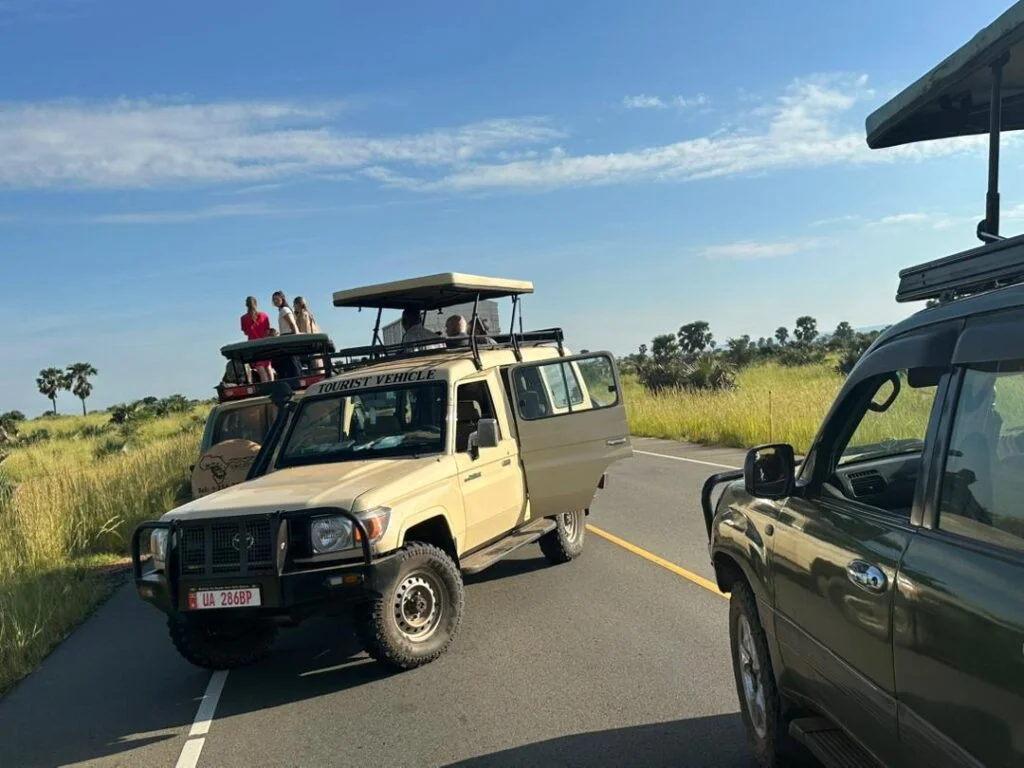
Welcome to the ultimate 12-day Uganda road trip. This comprehensive, high-impact loop takes you from the shores of Lake Victoria deep into the heart of Africa’s most diverse ecosystems. You will track mountain gorillas, look for tree-climbing lions, boat past pods of hippos, and trek through dense rainforests.
12-days-all-inclusive-uganda-wildlife-and-primate-safari
12-days-best-uganda-rwanda-primate-safaris-and-akagera-big-five-safaris
12-days-luxury-safari-in-uganda-parks
12-days-best-uganda-safari-big-five-and-uganda-primate-safari
12-days-perfect-rwanda-uganda-gorilla-trekking-safari-holiday-vacation
12-days-uganda-wildlife-primate-experience-and-lake-mutanda-vacation
12-days-uganda-birding-tour-looking-for-rift-valley-endemic-birds-west-circuit
Day 1: Entebbe Town Exploration
Your adventure begins upon landing at Entebbe International Airport, perched along the quiet banks of Lake Victoria. After meeting your safari guide, check in to your hotel and unwind after your flight. Spend the afternoon strolling through the green, tranquil avenues of Entebbe Town or visiting the quiet Entebbe Botanical Gardens. The air here carries the fresh scent of Africa’s largest tropical lake, filled with the calls of native bird species. Enjoy a fresh, locally caught tilapia dinner at a lakeside restaurant as you relax, shake off any travel fatigue, and look forward to the wild interior awaiting you tomorrow.
Day 2: Murchison Falls NP via Ziwa Rhino Sanctuary
Leave Entebbe early in the morning and drive north toward Murchison Falls National Park. Your first stop is the Ziwa Rhino Sanctuary, the only place in Uganda where wild white rhinos thrive. Set off on foot alongside an expert ranger to track these heavy mammals grazing in the thick bush. After a close encounter with the rhinos, enjoy a warm lunch before continuing your drive through rural trading centers and open woodlands. Arrive at Murchison Falls National Park late in the afternoon, just as the sun sets over the iconic Nile River.
Day 3: Murchison Falls NP Game Drive & Nile Boat Cruise
Rise at dawn for a game drive across the northern savannah plains of Murchison Falls National Park. Scan the tall grasses for giraffes, elephants, lions, buffaloes, and various antelopes. In the afternoon, board a launch cruise up the historic Nile River toward the base of Murchison Falls. Watch giant Nile crocodiles sunning on the banks and hippos resting in the shallows. The trip reaches its highlight at the base of the falls, where the entire river forces itself through a tight seven-meter gap, roaring loudly into the canyon below.
Day 4: Drive South to Kibale Forest National Park
Depart Murchison Falls and drive south toward Fort Portal, a town set beneath the shadow of the Rwenzori Mountains. You pass through tea plantations that blanket the rolling hills like green carpets. Continue your drive into Kibale Forest National Park, globally recognized as the primate capital of the world. As you enter the rainforest canopy, the air grows cool and fresh. Check into your forest lodge, listen to the calls of nocturnal wildlife echoing through the dense trees, and prepare for tomorrow's primate tracking adventure.
Day 5: Chimpanzee Tracking & Bigodi Wetland Walk
Step into the dense jungle of Kibale Forest early in the morning with a tracker to find wild chimpanzees. Listen for their loud hoots echoing through the trees before spending a full hour observing them grooming, feeding, and swinging through the high canopy. In the afternoon, head to the nearby Bigodi Wetland Sanctuary. Walk along wooden boardwalks through papyrus swamps to spot colorful Great Blue Turacos, red colobus monkeys, and grey-cheeked mangabeys. Return to your lodge to relax as dusk falls over the forest.
Day 6: Drive to Queen Elizabeth NP & Kazinga Channel Cruise
Leave the rainforest behind and drive south toward Queen Elizabeth National Park. Make a brief stop at the Equator for photo opportunities before descending into the Great Rift Valley. The landscape changes into wide open savannahs dotted with euphorbia trees. In the afternoon, take a boat cruise along the Kazinga Channel, a natural waterway connecting Lake Edward and Lake George. Glide past large herds of bathing elephants, hundreds of hippos, and a high concentration of waterbirds lining the muddy banks.
Day 7: Ishasha Tree-Climbing Lions to Bwindi Impenetrable NP
Begin your morning with a game drive through the northern sector of Queen Elizabeth National Park in search of leopards and Uganda kobs. Afterward, head south into the remote Ishasha sector, world-famous for its tree-climbing lions. Search the low branches of large fig trees to see lions resting above the heat. Leave the savannah behind and drive into the Kigezi highlands. The road winds up misty mountains toward Bwindi Impenetrable National Park, home to mountain gorillas.
Day 8: Mountain Gorilla Trekking in Bwindi Impenetrable NP
Gather at the park headquarters for an early morning briefing before entering the thick rainforest of Bwindi. Accompanied by rangers, trek up steep, vegetation-covered slopes to locate a habituated mountain gorilla family. Once you find them, spend one hour watching the dominant silverback, females, and young gorillas interact, play, and feed in their natural habitat. The trek requires physical effort over rough ground, but coming face-to-face with these gentle giants is an unforgettable wildlife encounter. Return to your lodge to rest after your trek.
Day 9: Golden Monkey Tracking in Mgahinga Gorilla NP
Drive south to Mgahinga Gorilla National Park, located in the shadow of the Virunga Volcanoes. Today, trek through bamboo forests to track the rare, fast-moving golden monkeys. These energetic primates are found only in this high-altitude volcanic range. Follow your ranger through the dense bamboo as the monkeys leap between branches, feed on fresh shoots, and play in the canopy. After spending an hour observing their colorful coats and quick movements, hike back down to the vehicle and transfer toward scenic Lake Bunyonyi.
Day 10: Batwa Cultural Tour & Lake Bunyonyi
Spend your morning on a guided walk with members of the local Batwa community. Learn about their traditional forest heritage, ancient hunting techniques, and medicinal plant use through firsthand demonstrations and storytelling. Afterwards, drive to Lake Bunyonyi, a deep freshwater lake ringed by terraced agricultural hills. Check into your resort overlooking the water. Spend the afternoon unwinding, taking in views of the 29 islands scattered across the lake, and enjoying the quiet atmosphere.
Day 11: Lake Bunyonyi Dugout Canoeing & Relaxation
Spend a full day resting and exploring around Lake Bunyonyi. Board a traditional wooden dugout canoe in the morning to paddle across the calm, clear waters as the mist lifts. Learn about local island histories, including the background of Punishment Island, or visit local lakeside villages. The rest of the day is free to swim in the bilharzia-free water, read by the shore, or hike up to a hilltop viewpoint for wide vistas over the terraced hills.
Day 12: Lake Mburo NP Game Drive & Return to Entebbe
Depart Lake Bunyonyi early for Lake Mburo National Park, Uganda’s smallest savannah reserve. Enjoy an en-route game drive through the park to spot impalas, zebras, topis, and elands, which are not seen in the other northern parks. Afterward, continue your drive back toward central Uganda, stopping at the Equator crossing for lunch and souvenir shopping. Arrive in Kampala or Entebbe in the late afternoon, where your guide transfers you to the airport for your onward flight.
What makes the Ziwa Rhino Sanctuary tracking experience on Day 2 unique compared to standard game drives?
Ziwa Rhino Sanctuary offers one of Uganda’s most immersive wildlife encounters because tracking is conducted entirely on foot rather than from inside a safari vehicle. Located in the Nakasongola District, Ziwa is the only site in Uganda where wild southern white rhinos thrive following their historical reintroduction after regional extinction.
When you arrive, expert wildlife rangers conduct a safety briefing detailing animal behavior and distance protocol before leading you into the bush. Armed rangers guide you through mixed woodland and tall grass, tracking foot impressions, dung trails, and fresh foliage breaks. Walking on the same ground as these massive, prehistoric-looking herbivores—which can weigh up to 2,300 kilograms—creates a thrilling connection that a standard game vehicle cannot match.
You typically approach within 10 to 30 meters of a family group or solitary bull, spending an hour observing them graze, rest under acacia shade, or interact. Beyond the rhinos, the sanctuary's 70-square-kilometer enclosed habitat supports over 300 bird species, bushbucks, and monkeys, offering a complete micro-safari on foot while directly supporting Uganda’s long-term rhino breeding and reintroduction conservation efforts.
Why is the boat cruise to the base of Murchison Falls considered a highlight of the national park on Day 3?
The afternoon launch cruise along the Victoria Nile in Murchison Falls National Park provides an unparalleled vantage point for both aquatic wildlife viewing and dramatic geological landscape features. As the vessel navigates upstream from Paraa toward the base of the falls, the riverbanks teem with diverse wildlife. You will encounter vast pods of hippos resting in the shallow channels, massive Nile crocodiles basking along the sandy banks, and elephants bathing alongside herds of buffaloes and waterbucks.
The dramatic climax occurs as the boat approaches the roaring gorge where the 50-meter-wide Nile River compresses itself through a narrow seven-meter gap in the Rift Valley escarpment. The raw power of the water forcing its way through this rock bottleneck creates a thunderous roar, churning mist, and permanent rainbows visible from the river below.
Unlike land game drives where animals can be scattered across vast savannahs, the permanent water source draws concentration straight to the banks, offering exceptional photo opportunities. The combination of dense riverine wildlife, historic Nile navigation, and the magnificent sight of the world’s longest river squeezing into a turbulent canyon makes this boat trip an indispensable safari experience.
How does the landscape shift as you drive south from Murchison Falls toward Kibale Forest on Day 4?
The transit south from Murchison Falls to Kibale Forest National Park showcases Uganda’s ecological diversity, transitioning from open tropical savannah into lush, high-altitude rainforest. Leaving behind the dry, golden plains, baobab trees, and Borassus palm landscapes of the northern Albertine Rift, the road winds into the fertile regional hub of Fort Portal, nestled at the foothills of the snow-capped Rwenzori Mountain range.
As elevation increases, the topography becomes dramatically rolling and hilly. Golden grasses give way to sprawling, emerald-green tea estates that cover the hills like manicured carpets. The air temperature noticeably cools as you approach the Rwenzori foothills, replaced by crisp mountain breezes and frequent mist.
Continuing past Fort Portal toward Kibale, the agricultural tea estates transition into dense primary rainforest canopy. The roadside becomes hemmed in by massive mahogany trees, tree ferns, hanging lianas, and thick underbrush. The scent shifts from dry earth to damp moss, damp soil, and flowering vegetation, while distant bird calls and primate chatter signify your transition into Central Africa’s richest primate ecosystem, setting the stage for chimpanzee tracking the following day.
What should travelers expect during chimpanzee tracking in Kibale Forest on Day 5?
Chimpanzee tracking in Kibale Forest National Park is an energetic, sensory-rich jungle trek. The experience begins early at the Kanyanchu Visitors Centre with a briefing on forest etiquette, safety guidelines, and habituation rules. You are grouped into small parties led by experienced Uganda Wildlife Authority (UWA) guides equipped with radio communications and machetes for clearing light trails.
Unlike mountain gorillas, which tend to move slowly on the ground, wild chimpanzees are agile, vocal, and often canopy-dwelling. Rangers listen for high-pitched "pant-hoot" calls echoing through the high branches to track the community’s direction. Treks range from 1 to 3 hours through dense foliage, damp soil, and exposed root networks.
Once located, you spend a managed hour observing the community. You might see them grooming on the forest floor, screeching during territorial displays, or swinging effortlessly through high fruit trees. Chimps move quickly, requiring visitors to keep a nimble pace through the brush to keep up. Seeing our closest living relatives display human-like facial expressions, tool use, and complex social interactions makes the physical effort through Kibale’s tropical rainforest immensely rewarding.
Why is the Bigodi Wetland Sanctuary an essential complement to Kibale’s chimpanzee tracking?
Located outside Kibale National Park, the Bigodi Wetland Sanctuary offers an impactful community-run eco-tourism initiative that perfectly balances the intense morning forest trek. Managed by the Kibale Association for Rural and Environmental Development (KAFRED), Bigodi is a biodiversity hotspot located within the Magombe swamp, famous for its rich flora, primates, and avian life.
A guided walk along elevated wooden boardwalks and dirt paths takes you deep into papyrus swamps and lush canopy margins. While Kibale focuses on chimpanzees, Bigodi showcases eight distinct primate species, including red colobus, black-and-white colobus, grey-cheeked mangabeys, vervet monkeys, and L'Hoest's monkeys. It is also an aviary paradise home to over 200 bird species, most notably the giant, vibrant Great Blue Turaco.
Crucially, Bigodi demonstrates how community conservation directly benefits local populations. Tour fees directly finance local primary schools, clean water projects, health clinics, and women’s craft cooperatives. Visiting Bigodi allows travelers to experience fragile swamp ecosystems while directly supporting rural community livelihoods, creating a economic barrier against deforestation and illegal poaching in surrounding buffer zones.
What wildlife and geography highlights make the Kazinga Channel boat trip on Day 6 unique?
The Kazinga Channel is a 32-kilometer-long natural freshwater waterway connecting Lake George and Lake Edward within Queen Elizabeth National Park. The afternoon launch cruise along this channel is widely considered one of the finest birding and mammal-viewing experiences in East Africa due to its unmatched density of riverine wildlife.
Geographically, the channel cuts across the Great Rift Valley floor, acting as a permanent oasis in an otherwise dry savannah landscape. During the hot afternoon, animals stream from the dry hinterlands toward the water. The channel hosts one of the world's largest permanent concentrations of hippos, as well as massive herds of African elephants that wade into the water to drink, bathe, and play alongside water buffaloes.
For birdwatching enthusiasts, the shores host an astonishing variety of avian species, including yellow-billed storks, African skimmers, pink-backed pelicans, saddle-billed storks, and kingfishers hunting along the banks. The low-profile cruise boats allow close, non-intrusive approaches to animals on the shore, providing phenomenal eye-level photographic opportunities against the backdrop of the Rwenzori Mountains and open Rift Valley plains.
Why do lions climb trees in the Ishasha Sector on Day 7, and how do you spot them?
The Ishasha sector in southern Queen Elizabeth National Park is world-renowned for its rare populations of tree-climbing lions—a behavioral phenomenon observed in only a few locations across Africa. While lions occasionally climb trees elsewhere, Ishasha's pride regularly spends the heat of the day lounging aloft in the sturdy limbs of low-slung fig and acacia trees.
Wildlife biologists attribute this behavior to two primary factors: heat avoidance and pest relief. By ascending 3 to 6 meters into shady trees, lions escape the oppressive ground heat and catch cooling breezes blowing across the savannah. Furthermore, staying elevated protects them from swarms of biting tsetse flies and ground insects abundant in the long grass.
Spotting tree-climbing lions requires careful scanning of low-hanging, broad branches of umbrella fig trees (Sycomorus) scattered across the open grassland. Guides look for hanging tails, resting paws, or golden fur silhouetted against dark green foliage. Finding a full pride stretched out lazily along thick branches offers a fascinating behavioral contrast to typical savannah predators and stands out as a true safari highlight.
How should travelers physically prepare for gorilla trekking in Bwindi Impenetrable NP on Day 8?
Gorilla trekking in Bwindi Impenetrable National Park is a physically demanding activity that requires adequate preparation. Bwindi’s terrain consists of steep, muddy ridges, dense underbrush, tangled vines, and high elevations ranging from 1,160 to 2,607 meters above sea level. Treks can last anywhere from 2 to 7 hours depending on where the habituated gorilla family slept the previous night.
To physically prepare, travelers should focus on cardiovascular conditioning and leg strength training—such as stair climbing, hiking with a loaded daypack, and lunges—in the weeks leading up to the trip. Being comfortable walking on uneven, slippery, and unmaintained terrain is crucial for safety and endurance.
Proper equipment is equally essential. Sturdy, waterproof hiking boots with ankle support and deep tread are mandatory to navigate muddy slopes. Long-sleeved shirts, long trousers tucked into socks, and gardening gloves help protect against stinging nettles, thorny vines, and biting ants. A lightweight rain jacket, trekking poles, and hiring a local porter at the park headquarters (who carries gear and provides physical support on steep inclines) significantly reduces fatigue during the trek.
What rules and conservation guidelines govern mountain gorilla interactions during a trek?
To protect the endangered mountain gorilla population from disease transmission and stress, the Uganda Wildlife Authority enforces strict conservation protocols. Humans share roughly 98% of their DNA with gorillas, making the animals highly susceptible to human respiratory illnesses like colds, flu, and Covid-19.
Key rules during a gorilla encounter include:
- Distance: Maintaining a strict minimum distance of 7 meters (approx. 23 feet) from the gorillas at all times.
- Time Limit: Limiting total observation time to exactly 1 hour once the family is located, minimizing disturbance to their wild behavior.
- Health Restrictions: Anyone showing signs of contagious illness (fever, coughing, flu) is prohibited from trekking.
- Group Size: A maximum of 8 tourists are permitted to visit a single habituated gorilla family per day.
- Behavior: Visitors must lower their voices, avoid sudden movements, refrain from eating or drinking near the animals, and turn off camera flashes entirely.
If a gorilla approaches you, rules mandate standing still, lowering your gaze, and following your ranger's instructions without running. These measures ensure long-term gorilla health and maintain safe human-wildlife habituation.
How does golden monkey tracking in Mgahinga differ from gorilla trekking on Day 9?
While both experiences take place within high-altitude volcanic rainforests, golden monkey tracking in Mgahinga Gorilla National Park offers a visually distinct, faster-paced wildlife interaction compared to mountain gorilla trekking. Golden monkeys (Cercopithecus kandti) are an endangered primate species endemic to the high-altitude bamboo zones of the Virunga Volcanoes range.
Unlike gorilla treks—which involve slow, deliberate tracking through dense underbrush toward a grounded family group—golden monkey treks ascend into striking bamboo forests. Once found, golden monkeys are fast, inquisitive, and high-energy creatures. They constantly leap between bamboo stalks, harvest fresh shoots, and scamper along the forest floor, requiring trackers to move quickly and keep their eyes upward.
Because golden monkeys live in habituated troops numbering up to 100 individuals, the sighting is full of dynamic motion, chattering calls, and bright visual color. Their striking orange-gold coats contrast beautifully against dark bamboo leaves, presenting a lively photography challenge. The terrain is generally less steep than Bwindi’s deep valleys, making the physical ascent through Mgahinga’s bamboo zone slightly lighter while delivering an exhilarating primate encounter.
Who are the Batwa people, and what cultural insight does the Batwa tour on Day 10 provide?
The Batwa are an indigenous hunter-gatherer ethnic group who lived in harmony with the ancient mountain rainforests of Southwestern Uganda (including Bwindi and Mgahinga) for thousands of years. Known historically as the "Keepers of the Forest," they relied entirely on forest resources for food, shelter, clothing, and medicine without disturbing the ecological balance.
When Bwindi and Mgahinga were gazetted as national parks in 1991 to protect endangered mountain gorillas, the Batwa were evicted from their ancestral lands. Because they had no land titles, they transitioned to the margins of modern agrarian society, facing severe socio-economic challenges and loss of cultural identity.
The Batwa Cultural Experience is a community-led eco-tourism initiative that allows Batwa elders to guide visitors along forest trails outside or adjacent to park boundaries. They demonstrate traditional bushcraft skills, including friction fire-making, wild honey harvesting, bow-and-arrow hunting techniques, constructing leaf huts, and harvesting medicinal plants. The experience concludes with traditional music and dance, providing travelers with authentic historical context while generating vital income for Batwa development initiatives.
What makes Lake Bunyonyi ideal for relaxation, dugout canoeing, and swimming on Day 11?
Lake Bunyonyi is celebrated as one of Uganda’s most peaceful and scenic destinations, offering an ideal setting to unwind after strenuous gorilla and monkey treks. Nestled at an elevation of 1,962 meters among terraced agricultural hills in the Kigezi Highlands, "Bunyonyi" translates to "Place of Little Birds," reflecting its rich birdlife and tranquil environment.
Two features make Lake Bunyonyi particularly famous for recreation:
- Safe Swimming: Unlike many African lakes, Lake Bunyonyi is free from bilharzia (schistosomiasis), hippos, and crocodiles, making it one of the few high-altitude lakes in East Africa safe for wild swimming.
- 29 Islands & Culture: Its waters are dotted with 29 distinct islands, each with rich local folklore. For instance, Punishment Island (Akampene) carries a poignant history where unwed pregnant girls were historically abandoned.
Exploring the lake in a traditional wooden dugout canoe (bwato) allows visitors to glide across calm waters, navigate morning mist, visit island villages, and observe local fishermen. The combination of serene waters, luxury hillside lodges, temperate weather, and scenic terraced views makes Bunyonyi a perfect leisure stopover.
How does Lake Mburo National Park differ ecologically and in terms of species from the other parks visited on Day 12?
Lake Mburo National Park presents a distinct ecological contrast to the rainforests of Kibale/Bwindi and the vast Albertine Rift Valley savannahs of Murchison and Queen Elizabeth. As Uganda’s smallest savannah park, Lake Mburo is characterized by rolling acacia woodlands, open grasslands, rocky ridges, and a cluster of five freshwater lakes within its borders.
Ecologically, Lake Mburo supports several key mammal species that are absent or extremely rare in Uganda’s northern and western parks:
- Eland & Impala: It is the only national park in southern/western Uganda with a population of impalas and the large eland antelope.
- Burchell’s Zebra: Lake Mburo hosts the largest zebra population in western Uganda.
- Topi & Klipspringer: Healthy populations of topis, bushbucks, and specialized klipspringer antelopes thrive among its rocky outcrops.
Unlike Murchison or Queen Elizabeth, Lake Mburo lacks lions and wild elephants, which allows for unique activities like guided walking safaris, horseback riding, and mountain biking through the park. Its intimate scale, dense acacia cover, and abundance of hooved grazers make it a distinct safari finale.
What packing essentials and clothing are required for a 12-day mixed savannah and rainforest road trip in Uganda?
A 12-day Ugandan road trip covers contrasting environments—ranging from hot, dry savannahs to cold, wet mountain rainforests—requiring a versatile, carefully layered wardrobe.
Clothing Essentials:
- Rainforest Gear (Bwindi, Kibale, Mgahinga): Sturdy waterproof hiking boots with deep traction, long-sleeved lightweight moisture-wicking shirts, long trousers, thick tall socks (to tuck pants into against driver ants), and durable gardening gloves for grabbing thorny vines. A breathable waterproof rain jacket is mandatory year-round.
- Savannah Gear (Murchison, Queen Elizabeth, Mburo): Neutral-colored (khaki, tan, olive) breathable clothing. Avoid dark blue and black attire, which attract biting tsetse flies. A wide-brimmed sun hat, sunglasses, and light layers for early morning game drives are vital.
Equipment & Health:
- Gear: Lightweight 20L daypack, reusable water bottle, dry bag for electronics, high-SPF sunscreen, insect repellent containing DEET, and camera gear with spare batteries/memory cards.
- Health Essentials: Yellow Fever vaccination certificate (required for border entry), prescription anti-malarial medication, a basic personal first-aid kit, and personal rehydration salts for long road travel days across rural regions.
What are the primary logistical considerations, driving conditions, and optimal seasons for this loop?
Executing a 12-day road trip across Uganda requires careful planning regarding timing, road conditions, and transport logistics.
Best Seasons to Visit:
Uganda can be visited year-round, but the dry seasons—June to August and December to February—are optimal. During these months, forest trails in Bwindi and Kibale are less muddy, gorilla treks are easier to navigate, and savannah animals concentrate around water sources in Murchison, Queen Elizabeth, and Lake Mburo.
Road Conditions & Vehicle Selection:
A high-clearance 4x4 safari vehicle (such as a Toyota Land Cruiser or converted safari van) with a pop-up roof is essential. While major highways connecting Kampala, Fort Portal, and Kabale are paved, park entry roads, sector linkages (like Ishasha), and mountain passes near Bwindi consist of rough dirt, murram, and gravel that become slippery during rainstorms.
Logistical Tips:
- Distances & Drive Times: Daily transit times can take 4 to 8 hours due to winding mountain roads, traffic in trading centers, and reduced driving speeds on dirt tracks.
- Permit Pre-booking: Gorilla tracking ($800 USD) and chimpanzee permits ($250-$300 USD) must be booked months in advance through the Uganda Wildlife Authority due to strict daily caps.
Booking 12 Days Uganda safari with us Roads of Adventure safaris
To book your 12-day Uganda wildlife and gorilla trekking safari with Roads of Adventure Safaris, contact their team via email at info@roadsofadventuresafaris.com or call +256 701041637. This comprehensive 12-day journey covers iconic highlights including rhino tracking at Ziwa, game drives and boat cruises in Murchison Falls, chimpanzee tracking in Kibale Forest, tree-climbing lions in Queen Elizabeth National Park, mountain gorilla trekking in Bwindi Impenetrable National Park, canoeing on Lake Bunyonyi, and a final wildlife walk in Lake Mburo before returning to Kampala. Securing your spot requires a 30% deposit with the balance due 60 days prior to departure.