Start a 12-Day Gorilla & Chimpanzee Tracking Safari in Uganda, where thick rainforests meet wide-open savannahs. This classic itinerary combines deep primate tracking encounters with rich wildlife viewing and authentic cultural stops. From tracking wild rhinos on foot and watching the Nile force its way through a narrow rock gap to walking alongside wild chimpanzees in Kibale and meeting gentle mountain gorillas in Bwindi, this trip highlights the best of the Pearl of Africa. You will cross rolling crater lake landscapes, cruise along the famous Kazinga Channel, search for tree-climbing lions in Ishasha, and wind down along the calm shores of Lake Bunyonyi. Prepare for a natural, grounded, and deeply rewarding adventure through East Africa’s most diverse ecosystems.
12-days-all-inclusive-uganda-wildlife-and-primate-safari
12-days-best-uganda-rwanda-primate-safaris-and-akagera-big-five-safaris
12-days-luxury-safari-in-uganda-parks
12-days-best-uganda-safari-big-five-and-uganda-primate-safari
12-days-perfect-rwanda-uganda-gorilla-trekking-safari-holiday-vacation
12-days-uganda-wildlife-primate-experience-and-lake-mutanda-vacation
12-days-uganda-birding-tour-looking-for-rift-valley-endemic-birds-west-circuit
Tour highlights for 12-Day Gorilla & Chimpanzee Tracking Safari in Uganda
Track wild rhinos on foot.
View crashing Nile falls.
Cruise past giant hippos.
Walk with wild chimpanzees.
Explore Bigodi Wetland birds.
Track lions on foot.
Boat along Kazinga Channel.
Spot tree-climbing lions daily.
Meet mountain gorilla families.
Paddle calm Lake Bunyonyi.
Detailed Itinerary for 12-Day Gorilla & Chimpanzee Tracking Safari in Uganda
Day 1: Arrival in Entebbe & Transfer to Kampala
Your guide meets you at Entebbe International Airport, setting a friendly tone for your East African journey. Depending on your flight schedule, you can take a brief city drive to soak in the local vibe or head straight to your hotel to unpack. The air carries a cool breeze from nearby Lake Victoria, offering an easy transition into the rhythm of Uganda. Use this afternoon to rest and enjoy a cold local drink on the terrace as the slow-paced evening settles around you. In the evening, meet your driver guide over a hearty dinner to go over the upcoming road trip, check your gear, and discuss the days ahead.
Day 2: Transfer to Murchison Falls via Ziwa Rhino Sanctuary
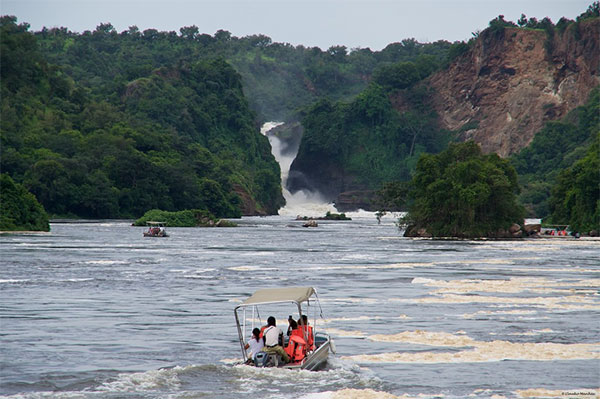
After an early morning breakfast, you leave the city and journey north toward Ziwa Rhino Sanctuary, the only place in Uganda where southern white rhinos roam freely in a protected haven. Together with a ranger guide, you set off on foot through thick bushland to track these impressive, quiet creatures up close. After a restful lunch break, your drive continues into Murchison Falls National Park. Before heading to your lodge, you visit the top of the falls, where the entire Victoria Nile squeezes violently into a narrow seven-meter gap, creating a loud roar and mist-filled air. You then check in to your lodge for a quiet evening along the riverbanks.
Day 3: Morning Game Drive & Afternoon Nile Boat Cruise
Rise early as the savanna wakes up under soft morning light. You head out across the northern plains for a game drive, scanning the tall grass for Rothschild giraffes, elephant herds, Jackson's hartebeests, and lions resting in the shade. After a midday rest and lunch, you board a boat for a safari cruise upstream to the base of Murchison Falls. The riverbanks overflow with life—large Nile crocodiles sunbathe while hippos nudge each other in shallow pools and elephant families step down to bathe. The boat stops right in front of the rushing water, offering clear photo views before you return to camp for dinner under the stars.
Day 4: Scenic Journey to Kibale Forest National Park
Say goodbye to the dry northern plains as you head southwest toward Fort Portal, a pleasant town sitting right under the shadow of the Rwenzori Mountains. The landscape shifts along the drive, turning into rolling green hills, local farming villages, and wide tea plantations. You stop in town for a relaxed lunch before continuing into the dense canopy of Kibale Forest, widely known as the primate capital of East Africa. You arrive at your rainforest lodge by late afternoon, where the sounds of birds and forest insects welcome you. Spend your evening unwinding on your private balcony, listening to distant monkey calls as dusk falls.
Day 5: Chimpanzee Tracking & Bigodi Swamp Walk
Today brings one of the main highlights of your trip—tracking wild chimpanzees in Kibale Forest. Following an early briefing, you venture deep into the humid green forest with an experienced ranger. High-pitched calls echo through the trees long before you spot them swing from branch to branch, groom each other, and feed on fresh fruit. After spending a full hour in their loud, busy company, you return to the lodge for lunch. In the afternoon, take a guided nature walk through Bigodi Wetland Sanctuary, a community-run area known for gray-cheeked mangabeys, red colobus monkeys, and colorful birds like the Great Blue Turaco.
Day 6: Scenic Drive to Queen Elizabeth National Park
Enjoy a peaceful morning before setting off toward Queen Elizabeth National Park. Your route winds past dozens of clear volcanic crater lakes set against steep green hills. As you drop into the floor of the Great Rift Valley, open savanna plains open up, framed by the Rwenzori peaks in the distance. You enter the park in time for lunch and an afternoon rest at your lodge. As the temperature drops in the late afternoon, head out on a game drive across the Kasenyi plains, tracking Uganda kobs, cape buffaloes, and hungry predators beginning their evening hunts. Return to your lodge for dinner and a quiet evening.
Day 7: Kasenyi Lion Tracking & Kazinga Channel Boat Safari
Set out before sunrise for a specialized game drive across the Kasenyi plains. Joined by a researcher, you use radio tools to locate resident lion prides and learn about local carnivore conservation efforts up close. Return to your lodge for lunch, then head to the Mweya Peninsula for an afternoon boat safari along the Kazinga Channel. This natural waterway links Lake George and Lake Edward and holds one of Africa’s highest concentrations of hippos. Drifting near the shore, you will see waterbucks, buffaloes, and elephant families cooling off along the water’s edge while fish eagles call overhead, making for a smooth, memorable afternoon.
Day 8: Tree-Climbing Lions of Ishasha & Bwindi Forest
Check out after breakfast and drive south through the remote Ishasha sector of Queen Elizabeth National Park. Keep your eyes trained on the wide branches of giant fig trees, where resident lions routinely climb to escape ground insects and catch cool breezes. After exploring the plains and enjoying a picnic lunch in the wild, you exit the park and begin climbing into the mist-covered Kigezi highlands. The roads wind past terraced farmlands until the thick wall of Bwindi Impenetrable Forest comes into view. Check in to your lodge, settle into the cooler mountain air, and rest up for tomorrow's big hike.
Day 9: Mountain Gorilla Trekking in Bwindi Impenetrable Forest
Wake up early to an atmosphere filled with quiet expectation. After a park ranger briefing on forest safety and gorilla rules, you enter the thick ancient jungle alongside trackers and porters. The trek can take anywhere from two to six hours, cutting through vines, bamboo thickets, and steep ridges until you finally locate the gorilla family. Standing just feet away from a large silverback and watching juveniles play in the leaves is a personal, grounding moment. You have one uninterrupted hour to observe their quiet bonds before heading back down the trail. Return to your lodge to rest and share stories around a warm fire.
Day 10: Scenic Transfer to Lake Bunyonyi & Canoeing
Leaving the high forest behind, take a short drive to Lake Bunyonyi, known as one of Africa’s deepest and most peaceful freshwater lakes. Nestled between terraced mountains, its calm surface is dotted with 29 green islands. Arrive in time for lunch at your island or lakeside resort. In the afternoon, step into a wooden dugout canoe and glide quietly across the water, visiting historic spots like Punishment Island while learning about local stories from your boatman. The lake has no bilharzia, hippos, or crocodiles, making it a safe, calm spot for an afternoon swim or a relaxing evening on the shore.
Day 11: Transfer to Lake Mburo National Park & Evening Walk
Enjoy a relaxed morning breakfast overlooking the foggy lake before driving east toward Lake Mburo National Park. The terrain gradually flattens into rolling acacia woodland, home to large herds of zebras, impalas, and long-horned Ankole cattle. Arrive at your lodge for lunch, then join an armed ranger for an afternoon guided walking safari. Moving on foot gives you an entirely different perspective on the wild, letting you smell the sweet acacia blossoms, examine animal tracks up close, and approach giraffes quietly without the hum of an engine. End the night with a peaceful dinner at your lodge.
Day 12: Morning Game Drive & Return to Entebbe
On your final day, take a short early morning game drive through Lake Mburo to spot grazing zebras, elands, and colorful woodland birds in the soft dawn light. Check out of your lodge and begin the smooth return journey toward Kampala and Entebbe. You break up the drive with a stop at the Equator line in Kayabwe for a warm lunch, fun water demonstration, and a chance to buy handmade crafts from local artisans. Afterward, continue onward to the airport, arriving in good time for your flight home as your African safari comes to a close.
How does chimpanzee behavior in Kibale compare to mountain gorilla behavior in Bwindi?
Chimpanzees and mountain gorillas offer completely distinct tracking experiences due to their social structures, diets, and movement patterns. Chimpanzees in Kibale Forest are high-energy, vocal, and fission-fusion primates that spend a significant amount of time high up in the dense canopy. They communicate across long distances using loud pant-hoots, drum on giant buttress roots, and move rapidly through the trees, making their tracking fast-paced and dynamic. In contrast, mountain gorillas in Bwindi live in stable, cohesive family groups led by a dominant silverback. Because their diet consists mostly of abundant foliage, bamboo shoots, and herbaceous stems on the forest floor, gorillas move at a much slower, calmer pace. A gorilla encounter is generally quiet, ground-based, and peaceful, where you spend your hour observing quiet family interactions, grooming, and play. Experiencing both back-to-back showcases two entirely different evolutionary paths and social behaviors among our closest living relatives.
What specialized camera equipment and technique work best for rainforest photography?
Photographing primates in dense rainforests like Bwindi and Kibale requires specific camera setups due to low light and fast-moving subjects. Bring a camera body that handles high ISO settings well (ISO 1600 to 6400) without generating excessive digital noise, as flash photography is strictly banned around wild primates. A fast zoom lens, such as a 70–200mm f/2.8, is ideal because it allows you to adjust quickly from a nearby gorilla on the ground to a chimpanzee high in the canopy while letting in maximum light. Avoid relying on heavy tripods, as rainforest terrain is too uneven and space is tight; a lightweight monopod or simple handheld technique works far better. Keep a clean microfiber cloth in an easily accessible pocket to wipe moisture off your lens, as humidity and mist are constant. Finally, carry waterproof camera covers or dry-bags to protect your gear during sudden downpours.
What is the significance of the Batwa cultural experience near Bwindi Impenetrable Forest?
The Batwa indigenous people are the original hunter-gatherer inhabitants of the ancient Bwindi forest, where they lived in harmony with wildlife for thousands of years. When Bwindi was established as a protected national park and UNESCO World Heritage site in 1991 to save the endangered mountain gorillas, the Batwa were evicted from their ancestral lands. Because they could no longer hunt or gather inside the forest, community-led cultural tours were developed outside park boundaries to preserve their heritage and generate income. Visiting the Batwa offers a rare look into their traditional medicinal plant usage, ancient survival skills, fire-making techniques, shelter construction, and traditional folk songs. Engaging in these community visits provides direct financial support to Batwa families, fosters cultural preservation, and adds meaningful human connection to your primate tracking adventure.
How do habituation processes work for wild gorilla and chimpanzee groups before tourists visit them?
Habituation is a careful, years-long process where wild primate groups are gradually accustomed to the peaceful presence of human observers without changing their natural wild behaviors. A dedicated team of Uganda Wildlife Authority (UWA) researchers, trackers, and rangers visits a selected wild primate group daily at dawn. Initially, the animals react with defensive displays, fear, or hiding. Over a period of two to five years, rangers consistently demonstrate non-threatening body language, make soothing vocalizations, and maintain a respectful distance until the group realizes humans pose no danger. Only after a group consistently remains relaxed during close observations is it declared "habituated" and opened for tourist tracking. This gentle, scientific approach protects both the primates' mental well-being and visitor safety while making close encounters possible.
What unique bird species can avian enthusiasts expect to see across these varied biomes?
Uganda is widely considered Africa's premier birding destination, holding over 1,000 species across rainforests, wetlands, and open savannahs. In Kibale Forest and the adjacent Bigodi Wetland Sanctuary, birders can spot the iconic Great Blue Turaco, Black-and-white-casqued Hornbill, African Green Broadbill, and Papyrus Gonolek. Moving into the open savannahs and waterways of Murchison Falls and Queen Elizabeth National Parks, you will see African Fish Eagles, Pied Kingfishers, Carmine Bee-eaters, Saddle-billed Storks, and Goliath Herons. Lake Bunyonyi—whose name translates to "place of little birds"—hosts weaver birds, sunbirds, and kingfishers along its shores. Meanwhile, Lake Mburo’s acacia woodlands shelter the African Finfoot, Red-faced Barbet, and Crested Francolin. The country’s diverse biomes mean your species list grows rapidly every single day of the trip.
How does the Kazinga Channel function as an ecological corridor within Queen Elizabeth National Park?
The Kazinga Channel is a natural 32-kilometer-long freshwater waterway that connects Lake George to the east with Lake Edward to the west. Functioning as the ecological heart of Queen Elizabeth National Park, it draws thousands of animals daily from the surrounding dry rift valley plains. During the hot afternoon hours, the channel becomes a critical sanctuary where elephants, buffaloes, waterbucks, and giant herds of hippos congregate to drink, bathe, and regulate their body temperatures. Because it never dries up, it also attracts vast populations of waterbirds and aquatic predators like Nile crocodiles. The high concentration of wildlife along its narrow banks makes the Kazinga Channel one of the most productive, concentrated ecosystems for aquatic and land animal viewing anywhere on the continent.
What is the geological history behind the volcanic crater lakes in the Fort Portal and Rubirizi regions?
The striking crater lakes dotted around Fort Portal, Kibale, and Queen Elizabeth National Parks were formed roughly 8,000 to 10,000 years ago during intense volcanic activity along the Western Rift Valley branch. Known as "maars," these natural features were created by violent subterranean gas and steam explosions when magma came into contact with deep underground water sources, blowing open wide basins without forming high volcanic cones. Over centuries, these deep basins filled with rainwater and natural runoff, creating emerald-green, freshwater lakes surrounded by steep, fertile slopes. Today, these crater lakes provide breathtaking scenic drives, rich agricultural soils for tea and coffee production, safe freshwater spots for canoeing, and unique microclimates that support diverse local bird and plant life.
What ecological role do tree-climbing lions play in the Ishasha sector's ecosystem?
The famous tree-climbing lions of Ishasha represent a rare, learned behavioral adaptation found in very few lion populations across Africa. Ecologically, resting high in the sprawling branches of giant fig and acacia trees serves several key functions. First, rising 10 to 20 feet off the ground allows lions to escape the intense heat of the savannah soil and catch cool, refreshing breezes during mid-day hours. Second, it keeps them away from biting ground insects, such as tsetse flies and irritating mosquitoes lurking in the grass. Finally, the elevated vantage point allows pride members to scan the surrounding plains for potential prey, such as Uganda kobs and topis, as well as monitor competing predators. This unique behavioral trait highlights the intelligence and adaptability of big cats in East Africa's complex savannah biomes.
How do community conservation initiatives around Bigodi Wetland Sanctuary support local development?
Bigodi Wetland Sanctuary is a shining example of successful community-based conservation in Uganda, managed entirely by the Kibale Association for Rural and Environmental Development (KAFRED). Revenue generated from guided swamp walks, traditional craft sales, and homestays goes directly toward local community infrastructure rather than distant corporations. Profits have funded the construction of local primary and secondary schools, clean water sanitation projects, healthcare clinics, and micro-loan programs for local women farmers. By directly tying tourism revenue from monkeys and birds to community development, local residents view the wetland and its wildlife as valuable assets to protect rather than land to drain for farming. This partnership has drastically reduced illegal poaching and habitat encroachment around Kibale Forest.
Why is Lake Bunyonyi free from bilharzia, hippos, and crocodiles compared to other Ugandan lakes?
Lake Bunyonyi’s unique biological composition makes it one of the very few lakes in Uganda that is completely safe for swimming. Located high in the Kigezi highlands at an altitude of nearly 1,960 meters above sea level, its water temperatures are significantly cooler than low-altitude rift valley lakes. These low water temperatures, combined with the lake's incredible depth—reaching up to 900 meters in certain spots—create an environment inhospitable to the freshwater snails that host the parasitic bilharzia flatworm. Furthermore, its high-altitude mountain setting and steep, enclosed terraced walls mean large aquatic animals like hippos and Nile crocodiles were never able to colonize or survive in its deep, cool waters, leaving it a tranquil, safe freshwater haven.
What is the conservation story behind the return of white rhinos at Ziwa Rhino Sanctuary?
Southern white rhinos were declared completely extinct in Uganda by 1983 due to heavy poaching and political instability during the 1970s and early 1980s. To restore the country's native megafauna, the Rhino Fund Uganda and the Uganda Wildlife Authority established Ziwa Rhino Sanctuary in 2005 as a secure, 7,000-hectare breeding sanctuary. Starting with just six re-introduced rhinos from Kenya and the United States, the sanctuary implemented 24-hour ranger monitoring, secure perimeter fencing, and anti-poaching patrols. Thanks to these strict security measures, the population has successfully grown to over 30 healthy rhinos. The ultimate goal of this long-term breeding program is to reintroduce white rhinos back into their original national park habitats, such as Murchison Falls, once wild populations reach sustainable numbers.
How does the Nile River's compression at Murchison Falls generate such immense hydraulic energy?
At Murchison Falls, the full volume of the Victoria Nile—draining water from massive African lakes—suddenly encounters a tight geological fault line in the rift valley escarpment. The river, which is over 50 meters wide just upstream, is violently forced into a narrow rocky gap only seven meters (23 feet) wide. As millions of gallons of water per second compress into this tiny outlet, immense hydraulic pressure builds up, thrusting the river downward over a 43-meter cascade into the Devil's Cauldron below. This sudden compression creates a continuous 10-meter plume of spray, permanent rainbows, and a thunderous roar that can be felt in the ground kilometers away, making it one of the most powerful natural water displays on the African continent.
What seasonal shifts occur during game drives in Lake Mburo National Park?
Lake Mburo National Park experiences distinct seasonal changes that dramatically alter wildlife viewing patterns across its acacia woodlands and open wetlands. During the dry season (June to August and December to February), interior water holes dry up, forcing large herds of zebras, impalas, topis, elands, and giraffes to move toward the central shores of Lake Mburo and permanent swamp edges. This concentration of wildlife makes animals easier to spot along established game tracks and boat safaris. During the rainy season (March to May and September to November), fresh green pastures and seasonal water pockets spread throughout the park's hilly acacia interior. Wildlife disperses widely across the hills, offering lush, scenic backdrops for photography and active walking safaris.
What are the passport, visa, and entry protocol requirements for traveling between Uganda's parks?
To enter Uganda, international travelers must hold a valid passport with at least six months of validity remaining from their planned date of departure, along with at least two blank pages. An e-Visa must be applied for and approved online prior to travel via the official Ugandan immigration portal. If you are visiting neighboring Kenya or Rwanda on the same journey, the East Africa Tourist Visa is an ideal, cost-effective option that allows multi-entry travel across all three countries. Upon entering individual national parks in Uganda, your driver-guide handles park entry clearance, permit validations, and vehicle registration at Uganda Wildlife Authority (UWA) gates using pre-booked official paperwork, ensuring a seamless transition through all park checkpoints.
How do I book this 12-day safari directly with Roads of Adventure Safaris Ltd.?
Booking your dream 12-day Ugandan adventure with Roads of Adventure Safaris Ltd. is a seamless, highly personalized process. You can reach out directly through our official website or send an inquiry via email to connect with one of our expert safari planners based in Kampala. We begin by discussing your preferred travel dates, group size, accommodation style (ranging from mid-range eco-lodges to luxury tented camps), and any special dietary requirements or interests.
Once your custom itinerary is finalized, our team immediately secures your official mountain gorilla and chimpanzee tracking permits directly from the Uganda Wildlife Authority (UWA) to lock in your tracking dates. We provide transparent pricing, flexible booking terms, and secure payment options. From the moment you land at Entebbe International Airport, you will be in the dedicated hands of your professional Ugandan driver-guide and custom 4x4 safari vehicle. Contact Roads of Adventure Safaris Ltd. today to begin tailoring your ultimate East African primate journey!