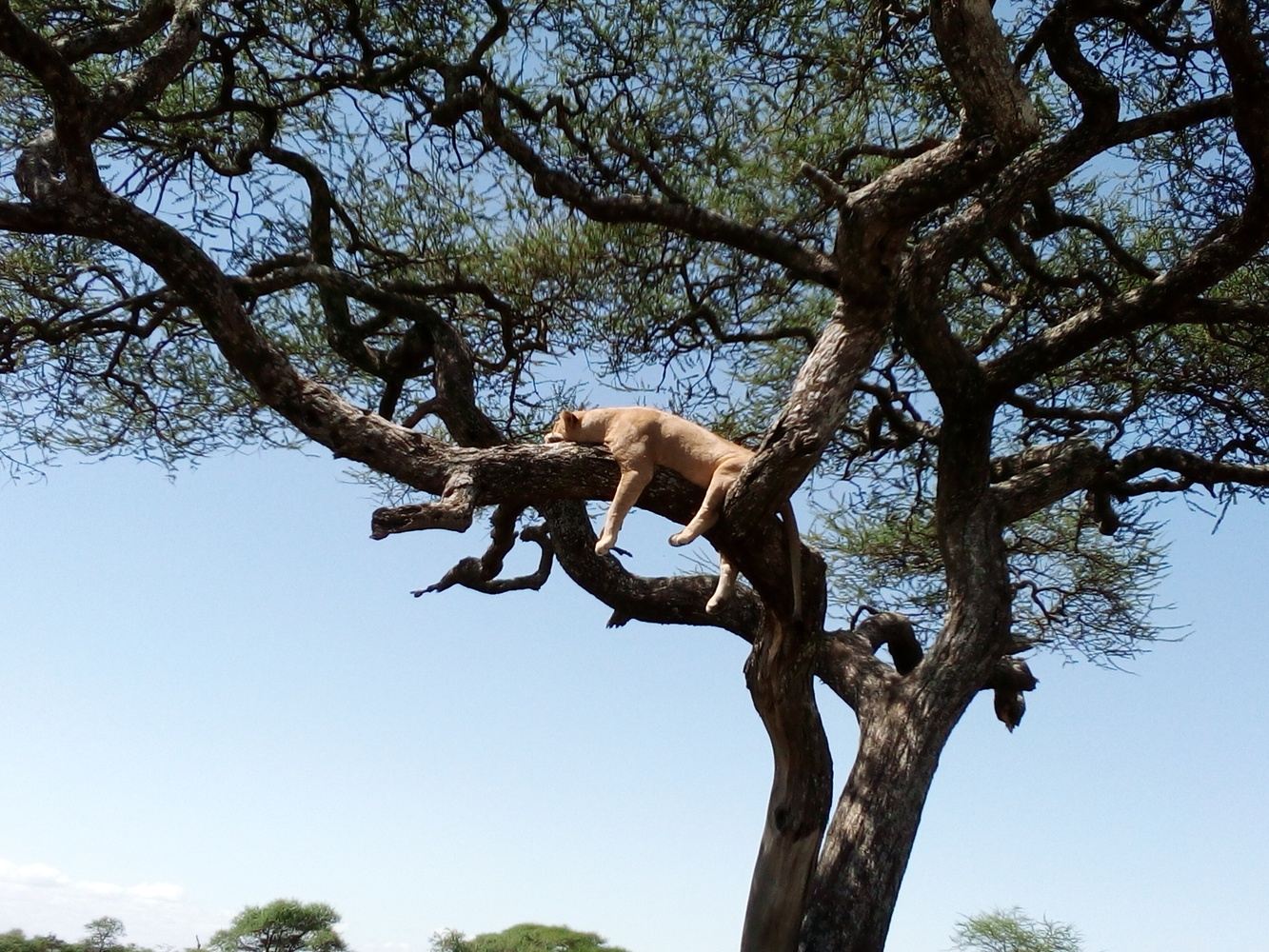
For a Lake Manyara Tanzania wildlife safari, must-do activities include spotting the famous tree-climbing lions, birdwatching for flamingos and hornbills, exploring diverse habitats from groundwater forest to lake shores, taking the Treetop Walkway, game drives for elephants and baboons, guided nature walks, canoeing the lake, seeing hippos, visiting the hot springs, and experiencing its rich biodiversity in a compact park setting.
2-days-perfect-lake-manyara-and-tarangire-national-park
5-days-budget-tanzania-safari-tour-package
4-days-best-tarangire-ngorongoro-and-serengeti-safari-itinerary
3-days-amazing-serengeti-safari-to-ngorongoro-crater-tanzania-tour
10 Must-Do Activities in Lake Manyara National Park on a Kenya Wildlife Safari
Spot Tree-Climbing Lions
A truly unique highlight on any Kenya wildlife safari that includes a visit to Manyara is the chance to witness the famous tree-climbing lions. This behavior is incredibly rare, and the park is one of the few places in Africa where these majestic predators regularly haul themselves onto the branches of acacia trees, often after a rain shower or to escape the heat and ground insects. Spotting a pride draped over the limbs of a tree is an iconic photographic moment and a behavior that guides will eagerly help you find. This distinctive sight offers a fascinating look into the adaptability of these big cats, making it an essential and memorable part of your adventure. The best chances of seeing them are usually in the middle of the day when they are most likely to be resting and avoiding the heat on the cool branches.
Bird Watching
Lake Manyara is a fantastic destination for bird watching, a must-do for enthusiasts on their Kenya wildlife safari. The park is home to a staggering nearly 400 different bird species within its small area, supported by the diverse habitats. The lake shores are particularly vibrant with thousands of pink-hued flamingos creating a stunning spectacle, along with a multitude of other water birds like pelicans, storks, and cormorants. The groundwater forest and the acacia woodland areas provide excellent opportunities to spot forest species, crowned eagles, and various rollers. Whether you are a dedicated twitcher or just appreciate the beauty of nature, the sheer variety and abundance of birdlife here, from large raptors to tiny, colorful residents, add a rich layer of biodiversity to your safari experience. The wet season (November to April) typically offers the best birdwatching opportunities as migratory birds arrive.
Treetop Walkway
Experience the forest from a different perspective by taking a stroll on the Treetop Walkway, a unique activity for any Kenya wildlife safari. This suspended canopy tour is the first of its kind in Tanzania and offers a thrilling aerial adventure through the dense groundwater forest. Walking at height gives you a spectacular vantage point for spotting wildlife you might otherwise miss. You'll be eye-level with the dense canopy, providing excellent opportunities to see blue monkeys, vervet monkeys, and baboons as they move through the trees. The walkway also offers an incredible view of the diverse birdlife that inhabits this unique ecosystem. It's a peaceful and elevated experience, far from the noise of a safari vehicle, allowing you to immerse yourself in the lush surroundings and appreciate the park's varied habitats from above. The gentle swaying of the bridge adds a touch of excitement to this tranquil activity.
Game Drives
Game drives are the cornerstone of any Kenya wildlife safari and the best way to explore the varied ecosystems of Lake Manyara National Park. The park's relatively small size belies its incredible diversity, which you can traverse in a single drive. From the dense groundwater forest at the entrance to the open grasslands and the lake itself, you will encounter a wide array of animals. Expect to see large herds of elephants and buffalo, a healthy population of giraffes and zebras, and numerous troops of mischievous baboons. The drives offer excellent photographic opportunities with the Rift Valley escarpment providing a stunning backdrop. Experienced guides will navigate the trails, helping you locate elusive species and interpret animal behaviors, making each drive a thrilling and educational adventure tailored to your interests and the day's sightings.
Explore the Groundwater Forest
The lush groundwater forest is one of the first areas you enter in Lake Manyara and is a crucial part of any Kenya wildlife safari itinerary through the park. This dense, cool, and shady environment is a stark contrast to the open plains often associated with safaris. The abundance of water creates a unique ecosystem that is a sanctuary for diverse wildlife. This is the best place to see the park’s numerous primate populations, including large troops of olive baboons, as well as blue and vervet monkeys swinging through the canopy. The forest is also a haven for unique birdlife and provides a cool, tranquil setting for a nature walk or a drive. The tall trees and lush vegetation make for a beautiful and refreshing start to your adventure.
Visit the Lake Shores
The shores of Lake Manyara are a vibrant hub of activity and a mandatory stop on your Kenya wildlife safari. This is where the park's name originates, and its alkaline waters attract an incredible array of wildlife. The most famous sight is the enormous gathering of pink flamingos that can number in the thousands, creating a stunning pink ribbon along the water's edge. Beyond the birds, you'll see hippos wallowing in the shallows and large herds of elephants and buffalo making their way to the water for a drink or a mud bath. The interface between the water, the open plains, and the escarpment creates a breathtaking panorama and offers some of the best photographic opportunities in the park. The dynamic ecosystem at the lake shore is a testament to the park's rich biodiversity.
Guided Nature Walks
To truly appreciate the nuances of the African bush, guided nature walks are a wonderful addition to your Kenya wildlife safari. Accompanied by an armed ranger or knowledgeable guide, you can follow trails such as the Iyambi River Trail or the Msara Trail. Walking on foot allows you to engage with the environment on a more intimate level, focusing on the smaller, intricate details often missed from a vehicle. You will learn about the different flora, understand animal tracks and droppings, and enjoy the sounds and smells of the wilderness. These walks offer a unique perspective and a chance for close-up wildlife and bird encounters in a safe and exhilarating way, providing a peaceful and educational break from the traditional vehicle-based safari.
Canoeing on the Lake
For a peaceful and unique perspective of the park, consider a canoeing excursion on Lake Manyara when water levels permit. This offers a tranquil break from the traditional land-based Kenya wildlife safari. Gliding across the water allows you to approach wildlife from a different angle, without the noise of an engine. You can get closer views of the many water birds, watch hippos surface and submerge, and sometimes even spot elephants and buffalo grazing near the shore. The serene experience on the water, with the Rift Valley escarpment as your backdrop, provides a beautiful and calming contrast to the excitement of game drives, making it a highly recommended activity for a varied itinerary.
Discover the Maji Moto Hot Springs
A visit to the Maji Moto (Swahili for "Hot Water") Hot Springs offers a fascinating natural detour during your exploration of the lake shore. This is a unique geological feature that can be reached via a scenic trail along the lake. The springs create warm pools in a beautiful setting, a relaxing spot to take a break and appreciate the unique environment. While you can't swim due to the high temperature of the water, the walk itself is rewarding and offers a chance to see more wildlife on the way. It's a nice change of pace from constant game viewing and highlights the geological activity of the Great Rift Valley, adding a different kind of interest to your Kenya wildlife safari.
Experience Diverse Habitats
One of the greatest appeals of Lake Manyara on a Kenya wildlife safari is how its small size allows for easy exploration of an incredibly diverse range of habitats in a single day. From the groundwater forest to the open plains and the alkaline lake, the park offers a remarkable concentration of ecosystems. This diversity is what allows for the wide array of wildlife, from the canopy-dwelling monkeys to the plains game and aquatic birds. Appreciating this rapid change in scenery and the corresponding shift in wildlife is an experience in itself, showcasing the richness of the Tanzanian wilderness in a manageable and comprehensive way. This compact diversity makes the park a perfect starting or ending point for the larger Northern Circuit safaris.
What is Lake Manyara popular for?
Lake Manyara is popular for its exceptional biodiversity packed into a small area, offering a complete Tanzanian safari experience. It is most famous for its unique population of tree-climbing lions, a rare behavior rarely seen elsewhere. The park is also renowned for its vast elephant herds and the incredible sight of thousands of pink-hued flamingos and other water birds along the lake shore. Its diverse habitats, ranging from a dense groundwater forest to open savannah and the alkaline lake, mean you can encounter a wide variety of wildlife and stunning landscapes, including the dramatic Rift Valley escarpment, all in one day.
Can I see tree climbing lions on a Tanzania wildlife safari in Lake Manyara National Park?
Yes, absolutely. Lake Manyara National Park is one of the very few places in Africa where you are highly likely to see the famous tree-climbing lions. Guides specialize in locating these unique big cats as they lounge on the branches of the park's acacia trees. This unusual behavior, thought to be for escaping ground insects or cooling off in the breeze, is a major highlight for visitors and a truly memorable sight on a Tanzanian wildlife safari. Seeing them perched in the trees makes for fantastic photographic opportunities and a unique safari story.
Can I see Pink flamingos on a Tanzania wildlife safari in Lake Manyara National Park?
Yes, you can see large numbers of pink flamingos in Lake Manyara National Park. The alkaline lake attracts thousands of both lesser and greater flamingos, which feed on the algae in the water. They create a stunning pink spectacle along the lake's edge, visible from various vantage points within the park and even from the top of the Rift Valley escarpment. The number of flamingos fluctuates with the water levels and seasons, but they are a consistent and beautiful feature of the park's avian life, making bird watching a must-do activity.
Can I have the view of the rift valley on a Tanzania wildlife safari in Lake Manyara National Park?
Yes, the Great Rift Valley escarpment forms a dramatic and beautiful backdrop to Lake Manyara National Park. The park sits at the base of this massive geological feature. The drive down from the escarpment offers panoramic, breathtaking views of the entire lake and surrounding plains. Within the park itself, the sheer cliff face is constantly in view, adding a spectacular dimension to the landscape and your game drives. The contrast between the flat lake basin and the towering escarpment is a key part of the park's scenic beauty.
Is it true that Lake Manyara has the highest populations of Baboons in Tanzania?
Yes, it is widely claimed that Lake Manyara National Park has one of the highest concentrations of baboons in all of Africa, and certainly in Tanzania. You will almost certainly encounter large, active troops of olive baboons in the groundwater forest area near the park entrance. Their playful and complex social interactions are a constant source of entertainment for visitors on a safari. The abundance of food and water in the forest makes it an ideal habitat for these primates, ensuring frequent and close-up sightings.
Which other parks can I explore after a Tanzania wildlife safari in Lake Manyara National Park?
Lake Manyara is conveniently located as part of Tanzania's Northern Safari Circuit. After exploring Manyara, you can easily continue your adventure to the nearby Ngorongoro Crater, famous for its dense wildlife population within a stunning volcanic caldera. From there, the vast plains of the Serengeti National Park, home to the Great Migration, are accessible. You can also visit Tarangire National Park, known for its huge elephant herds and baobab trees. These parks combine to offer a comprehensive and diverse Tanzanian safari experience.
When is the best time for a Tanzania wildlife safari in Lake Manyara National Park?
The best time to visit Lake Manyara depends on what you want to see. The dry season (July to October) is ideal for large mammal viewing, as animals concentrate around the permanent water sources and the vegetation is less dense. However, for bird watching, the wet season (November to April) is better, as migratory birds arrive and the flamingos are in full display. The "green season" also offers lush landscapes and is a great time for photography. Ultimately, the park offers excellent wildlife viewing year-round.
Where to stay on a Tanzania wildlife safari in Lake Manyara National Park?
There are a variety of excellent accommodation options around Lake Manyara National Park to suit different budgets and preferences. You can choose from luxurious lodges perched on the Rift Valley escarpment, offering breathtaking views of the lake below (e.g., Lake Manyara Serena Safari Lodge, Escarpment Luxury Lodge). Alternatively, there are mid-range tented camps and lodges closer to the park entrance in Mto wa Mbu town. Budget campsites are also available. Staying outside the park in Mto wa Mbu also gives you access to cultural village tours and other activities.
Booking a Tanzania wildlife safari in Lake Manyara National Park with us Roads of Adventure Safaris
Plan your unforgettable Tanzania wildlife safari to Lake Manyara National Park with us at Roads of Adventure Safaris. We specialize in crafting tailor-made itineraries that showcase the best of Manyara and the entire Northern Circuit. Our expert guides will ensure you have the best opportunities to see the tree-climbing lions, vast elephant herds, and pink flamingos, while our diverse accommodation options cater to your specific needs. Contact us today to start planning your dream African adventure and discover the magic of Lake Manyara with our experienced team.
