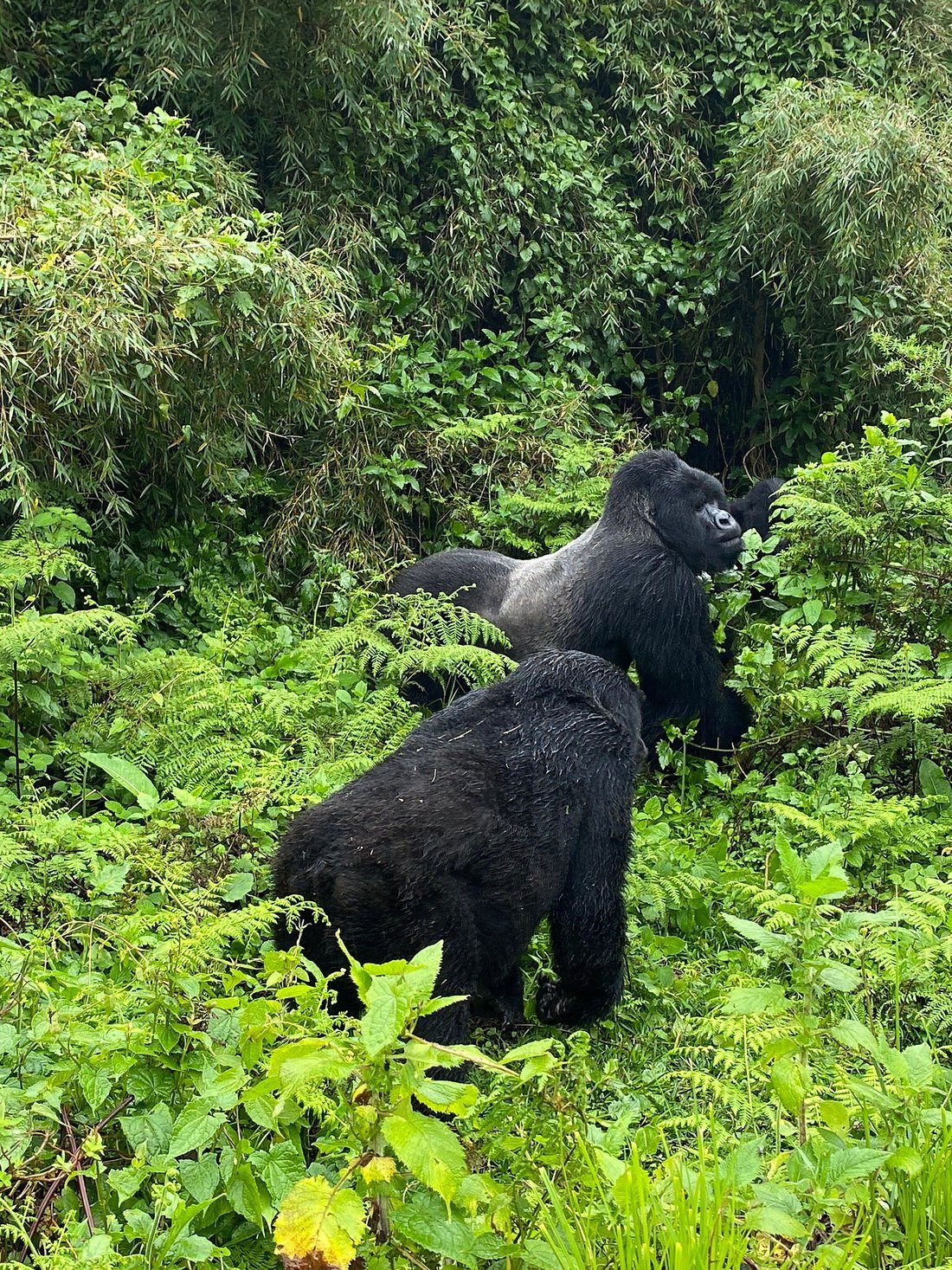
Yes, a 10-day safari is the perfect amount of time to visit all three of Rwanda’s national parks—Volcanoes National Park (gorillas), Nyungwe Forest National Park (chimpanzees), and Akagera National Park (savannah wildlife)—in a single trip. This itinerary typically covers the country's main attractions, including primate trekking, scenic drives, and Kigali city highlights
10-days-best-photography-uganda-wildlife-safari-holiday-and-gorilla-trekking
10-days-luxury-uganda-gorilla-trekking-safari-and-big-five-safari-vacation
10-days-budget-uganda-safari-holiday-vacation-tour-road-trip
10-days-best-honeymoon-uganda-safari-tour-vacation-holiday
10-days-best-uganda-birding-safari-and-wildlife-experience
10-days-best-of-uganda-and-rwanda-all-big-five-animal-and-gorilla-trekking
10-days-uganda-gorilla-trekking-and-safari-tour-vacation-holiday
10-days-9-nights-midrange-uganda-wildlife-safari-and-cultural-experience
10-days-uganda-safari-all-big-five-gorilla-and-chimpanzee-tracking-adventure
10-days-uganda-rwanda-primate-safari-vacation-and-game-drive-safari
10-days-exclusive-family-uganda-safari-with-kids
Typical 10-Day Rwanda Safari Highlights
Volcanoes National Park: The Realm of the Great Apes
Volcanoes National Park, situated in the dramatic Virunga Massif, serves as the prestigious "anchor" for a 10-day Rwandan circuit. The primary draw is Mountain Gorilla trekking, an emotionally profound encounter with some of our closest living relatives in their high-altitude rainforest habitat. In a 10-day itinerary, you typically spend two to three days in this region, which allows for a secondary, equally charming activity: Golden Monkey trekking. These rare, ginger-hued primates are endemic to the Virunga volcanoes and are known for their playful, high-energy antics in the bamboo forests. The park’s mist-covered peaks—Karisimbi, Bisoke, and Sabyinyo—provide a breathtaking backdrop. Beyond primates, the area offers historical depth through visits to the Ellen DeGeneres Campus of the Dian Fossey Gorilla Fund, where travelers can learn about the pioneering conservation work that saved the mountain gorilla from the brink of extinction.
Nyungwe National Park: Primates and Ancient Canopies
Located in the southwest, Nyungwe National Park is one of Africa’s oldest and most biodiverse Afro-montane rainforests. For a 10-day safari, Nyungwe provides a lush, emerald contrast to the savanna. The signature activity here is Chimpanzee tracking, often taking place in the Cyamudongo forest patch or the main forest block, where you can witness these intelligent apes feeding and socializing. Another non-negotiable highlight is the Canopy Walk, a 160-meter-long suspended bridge hanging 70 meters above the forest floor. It offers a literal "bird’s-eye view" of the ancient treetops and the 13 different primate species that call Nyungwe home, including massive troops of Rwenzori colobus monkeys. The park is a haven for birdwatchers and hikers alike, featuring over 130 kilometers of trails that lead to hidden waterfalls and panoramic views of the distant Lake Kivu and the hills of neighboring Burundi.
Akagera National Park: The Big Five Savanna
To complete the 10-day journey, Akagera National Park offers a classic African safari experience on the country’s eastern border. After a successful reintroduction program, Akagera is now a "Big Five" destination where you can track lions, leopards, rhinos, elephants, and buffaloes across rolling highlands and acacia-dotted plains. A 10-day trip allows for a full day of game drives in the northern sector, where wildlife density is highest. Complementing the land-based safari is a boat trip on Lake Ihema, Rwanda’s second-largest lake. From the water, you can safely observe large pods of hippos, massive Nile crocodiles, and a staggering array of birdlife, including the rare shoebill stork. The park’s unique landscape—a labyrinth of lakes and papyrus swamps—makes it one of the most scenic savanna reserves in East Africa, providing a serene, wide-open balance to the dense jungles of the west.
Additional Stops: Culture and Lakeside Serenity
A well-structured 10-day Rwandan odyssey integrates vital cultural and relaxation stops to enrich the wildlife encounters. The journey almost always begins or ends with a Kigali city tour, including the Kigali Genocide Memorial, which provides the essential historical context of Rwanda's resilience. For relaxation, a stop at Lake Kivu (specifically the towns of Gisenyi or Kibuye) offers a coastal atmosphere in the heart of the continent. Here, you can enjoy sunset boat cruises, kayaking, or visits to coffee plantations on the lake’s islands. Cultural immersion is further enhanced by visits to the Iby’Iwacu Cultural Village (Gorilla Guardians) near Volcanoes National Park, where former poachers now showcase traditional dances, archery, and medicine. These stops transform the 10-day safari from a mere wildlife tour into a holistic celebration of Rwanda’s natural beauty and the vibrant spirit of its people.
1. Can I really visit all three national parks in 10 days?
Ten days is the "Goldilocks" duration for Rwanda. It is long enough to cover the three distinct ecological zones—Akagera (Savanna), Nyungwe (Montane Rainforest), and Volcanoes (Alpine/Bamboo Forest)—without the exhausting "one-night stand" lodge hopping that ruins shorter trips. In a 10-day window, you can afford two to three nights at each location. This is crucial because it allows for "buffer time" in case of rain or delayed animal sightings.
Visiting all three parks provides a holistic view of the "Land of a Thousand Hills." You aren't just seeing gorillas; you are seeing the successful reintroduction of lions and rhinos in Akagera and the ancient botanical wonders of Nyungwe. Logistically, Rwanda’s infrastructure supports this timeline perfectly. The drives between parks rarely exceed five or six hours, meaning your "transit days" still allow for afternoon activities like boat cruises or community walks. It is the definitive way to experience the full spectrum of Rwanda's conservation success story.
2. What is the best route for this safari?
The most logical flow is a clockwise or counter-clockwise loop starting and ending in Kigali. Most operators recommend heading east to Akagera first. This "starts with the savanna," which is generally hotter and lower in altitude. It allows you to check off the "Big Five" and enjoy a more traditional safari pace before moving into the more physically demanding primate trekking.
After Akagera, you return through Kigali and head south to Nyungwe Forest. This segment introduces the rainforest and chimpanzees. From Nyungwe, the route follows the scenic shores of Lake Kivu to the north, providing a necessary day of relaxation in Kibuye or Gisenyi. The journey culminates in Volcanoes National Park for the mountain gorillas. This "crescendo" itinerary ensures that the most anticipated event—the gorilla trek—is the grand finale of your trip. Finishing in the north also leaves you with a short, two-hour drive back to Kigali for your departure flight.
3. Will I see gorillas and chimpanzees in the same trip?
Yes, and this is the primary reason many choose the 10-day route over shorter stays. By visiting both Nyungwe and Volcanoes, you get a "Great Ape Double Feature." However, the two experiences are vastly different. Chimpanzee tracking in Nyungwe is often more athletic and unpredictable; chimps are highly mobile and vocal, often leading you on a high-speed chase through the canopy.
In contrast, mountain gorilla trekking in Volcanoes National Park is a more stationary and intimate encounter. Once the trackers find the family, the gorillas typically stay in one area, allowing you to observe their quiet, social interactions from a close but respectful distance. Seeing both in one trip allows you to compare the high-energy, social complexity of our closest relatives (the chimps) with the peaceful, majestic gravity of the gorillas. It provides a complete primate education that most African destinations cannot offer in such a short geographical span.
4. What wildlife can I see in Akagera National Park?
Akagera is a miracle of conservation. After being nearly decimated in the 1990s, it has been restored through a partnership with African Parks and now hosts the "Big Five." On a 10-day trip, Akagera provides the "classic Africa" imagery. You will see lions and black rhinos (both reintroduced in the last decade), alongside massive herds of elephants and buffaloes.
The park is also unique for its wetland system. A boat cruise on Lake Ihema reveals one of the highest concentrations of hippos in East Africa and enormous Nile crocodiles. Because Akagera sits at a lower altitude than the rest of Rwanda, it attracts different birdlife, including the prehistoric-looking shoebill stork. You will also see "plains game" that you won't find in the rainforests, such as Masai giraffes, zebras, topis, and defassa waterbucks. It is the perfect savanna counterpoint to the jungle-heavy western leg of the trip.
5. Is a canopy walk included in the 10 days?
Almost certainly. The Nyungwe Canopy Walkway is one of the park’s signature attractions and is typically scheduled for the afternoon after your chimpanzee trek. It consists of a 160-meter-long suspension bridge hanging 70 meters above the forest floor. It is one of only a few such walkways in Africa and offers a perspective of the rainforest that you simply cannot get from the ground.
From the bridge, you are at eye-level with the upper canopy, where many of the park’s 13 primate species and 300+ bird species reside. It’s an incredible spot for seeing blue monkeys, L'Hoest's monkeys, and the colorful Great Blue Turaco. Even for those with a slight fear of heights, the bridge is highly engineered and stable. It serves as a fantastic "botanical" experience, allowing you to appreciate the massive ancient ferns and mahogany trees from above, making it a non-negotiable highlight of the mid-point of your safari.
6. How are the roads in Rwanda?
Rwanda is famous for having some of the best paved roads in East Africa. The main arteries connecting Kigali to the park headquarters are smooth and well-maintained. You won't find the same level of "pothole fatigue" here as you might in neighboring countries. However, once you leave the main highways to enter the national parks or reach certain lodges, the roads transition to volcanic rock or red clay (murram).
Because of this, a 4x4 vehicle is still a requirement. In Volcanoes National Park, the tracks to the trekking start points can be exceptionally rugged and muddy, especially after a rainstorm. In Akagera, the game drive tracks require high clearance to navigate the savanna terrain. While you might spend less time "bouncing" on the way to the parks, the final approach always requires a sturdy vehicle and an experienced driver who understands the steep, winding mountain passes that characterize the "Land of a Thousand Hills."
7. What is the best time to visit all three parks?
The "best" time is the Long Dry Season from June to September. This is the peak window for trekking; the trails in Nyungwe and Volcanoes are less slippery, and the vegetation is slightly less dense, making photography easier. In Akagera, the dry weather forces animals to congregate around the lakes, making game viewing much more predictable.
The Short Dry Season (mid-December to February) is also excellent and popular for holiday travelers. However, don't completely discount the "Green Season" (March-May and October-November). While it will rain, the landscape is incredibly lush, the air is clear of dust (perfect for photography), and the parks are much quieter. Furthermore, the gorillas often descend to lower altitudes during the rainy season to feed on fresh bamboo shoots, which can actually result in shorter, easier treks. If you don't mind a bit of mud, the wet season offers a more private, moody, and verdant experience.
8. What is the cost of a 10-day Rwanda safari?
Rwanda has intentionally positioned itself as a high-end, low-impact tourism destination. A 10-day trip is a significant investment. The "fixed" costs are high: a single gorilla permit is $1,500, and a chimpanzee permit is $150 (to increase to $250 in some zones). When you add in luxury lodging, which can range from $600 to $2,500 per person per night, the total can escalate quickly.
A mid-range 10-day safari typically starts around $6,000–$8,000 per person, while a high-end luxury trip featuring lodges like Bisate or One&Only can easily exceed $15,000–$20,000. These costs generally include all permits, 4x4 transport, a professional guide, and all-inclusive meals. While expensive, the revenue is heavily reinvested into conservation and local community projects. Most travelers find that the "exclusivity"—the small group sizes and the pristine condition of the parks—justifies the premium price tag.
9. Do I need a separate permit for golden monkeys?
Yes. Tracking the Golden Monkeys is a distinct activity with its own permit (currently $100). These monkeys are endemic to the Virunga Volcanic range and are known for their striking orange-gold fur and high-energy behavior. They live in the bamboo forests at the base of the volcanoes, which usually makes for an easier, flatter hike than the gorilla trek.
Most 10-day itineraries schedule the golden monkeys for the final morning in Volcanoes National Park. It is the perfect "farewell" activity because the monkeys are incredibly playful and habituated to humans, often jumping between bamboo stalks just feet away from you. Because the permit is significantly cheaper than the gorilla permit and the encounter is so visually different, it is highly recommended to add this to your itinerary to round out your primate checklist.
10. What is the best way to experience Lake Kivu?
Lake Kivu is the "reset button" of the 10-day safari. After the humidity of Nyungwe and before the altitude of Volcanoes, a night or two on the lake is essential. The best way to experience it is via Kibuye or Gisenyi. Kibuye is more scenic, with steep hills and emerald islands, while Gisenyi offers more of a beach-resort vibe.
A sunset boat cruise is the classic Kivu experience. You can visit Napoleon Island to see a massive fruit bat colony or hike to the top of the island for a view of the lake's vastness. For the more active traveler, kayaking along the coast provides a quiet way to see local life, from fishermen in their traditional three-hulled boats to women washing clothes on the banks. It is a beautiful, tranquil interlude that prevents "safari fatigue" and allows you to absorb the natural beauty of the Rwandan countryside at a slower pace.
11. Is the Kigali City Tour included?
Most 10-day safaris begin or end with a half-day or full-day tour of the capital. This is not just "filler" time; Kigali is a crucial part of the Rwandan story. The centerpiece of the tour is the Kigali Genocide Memorial, which provides a deeply moving and necessary education on the 1994 tragedy. Understanding this history is vital to appreciating the incredible progress and unity you will witness throughout the rest of the country.
Beyond the memorial, a city tour usually includes the Kimironko Market, a sensory explosion of colorful textiles, local produce, and Rwandan crafts. You might also visit the Inema Arts Center to see the burgeoning contemporary art scene or have lunch at the "Hotel des Mille Collines" (the real-life Hotel Rwanda). Kigali is one of the safest and most pleasant cities in Africa to explore on foot or by vehicle, and a guided tour ensures you see the nuances of its rapid development.
12. What should I pack for the 10 days?
Packing for Rwanda requires preparing for "four seasons in one day." For Akagera, you need light, breathable savanna wear. For Nyungwe and Volcanoes, you need technical trekking gear. The most important item is a pair of sturdy, waterproof hiking boots that have been broken in; do not bring brand-new boots to the jungle.
You also need long, thick trousers (to protect against stinging nettles) and long-sleeved moisture-wicking shirts. Many trekkers bring gardening gloves to help them grab onto branches and vines during steep climbs. A lightweight, high-quality rain jacket is essential regardless of the season. Because Volcanoes National Park is at a high altitude, the evenings are surprisingly cold, so bring a warm fleece or down jacket. Finally, don't forget high-quality insect repellent and a "dry bag" to protect your camera gear from the inevitable mountain mists and rain showers.
13. Are children allowed on this safari?
There is a strict age limit of 15 years old for gorilla and chimpanzee trekking. This is enforced by the Rwanda Development Board to protect the primates from childhood diseases to which they have no immunity and to ensure that all participants are physically capable of handling the rigors of the trek without disruption.
However, Rwanda can still be a family destination. Children under 15 can enjoy game drives in Akagera, the canopy walk in Nyungwe (usually ages 6+), and cultural village visits. Many luxury lodges offer specialized "kids' clubs" or educational walks to keep younger children engaged while parents are out trekking. If you are traveling with children near the age limit, ensure you bring their passports, as park officials will verify birth dates before allowing entry to the primate treks.
14. Is it better to visit Uganda as well?
This is a common debate. Rwanda’s main advantage is efficiency and luxury. You can reach the gorilla forest in just two hours from the airport. Uganda’s advantage is cost and variety. A gorilla permit in Uganda is $800 (vs $1,500 in Rwanda), and Uganda has more savanna parks (like Murchison Falls) and more varied trekking terrain.
If you have 10 days, you could combine the two—for example, flying into Kigali, trekking in Volcanoes, then driving across the border to Bwindi in Uganda for a second trek. This "Cross-Border" safari is popular because it allows you to compare the two experiences and potentially save money on the second permit. However, if you prefer a seamless, high-end experience with less time spent at border crossings and on long drives, sticking to the Rwanda "Big Three" is often more relaxing and logistically straightforward.
15. What is the focus of the safari?
A 10-day Rwanda safari is a "Best Of" tour that focuses on Resilience, Primate Heritage, and Eco-Luxury. While wildlife is the primary focus, the underlying theme is always conservation. You are witnessing how a country has used high-value tourism to protect endangered species and uplift local communities.
The tour is balanced: you get the adrenaline of the chimpanzee chase, the profound emotion of the gorilla encounter, the classic vastness of the savanna, and the cultural richness of the Iby'Iwacu Village. It is an itinerary designed for the traveler who wants to see it all—the big cats, the great apes, and the human story. By the end of the 10 days, you won't just have a camera full of photos; you will have a deep understanding of why Rwanda is considered one of the most successful and inspiring travel destinations in the world.
Booking 10 days Uganda safari with us Roads of Adventure safaris
Book a 10-day Uganda safari with Roads of Adventure Safaris to experience a curated journey covering gorilla trekking in Bwindi, chimpanzee tracking in Kibale, and wildlife viewing in Queen Elizabeth and Murchison Falls. Packages typically include accommodation, 4x4 transport, permits, and expert guides, customizable to luxury or mid-range preferences.
