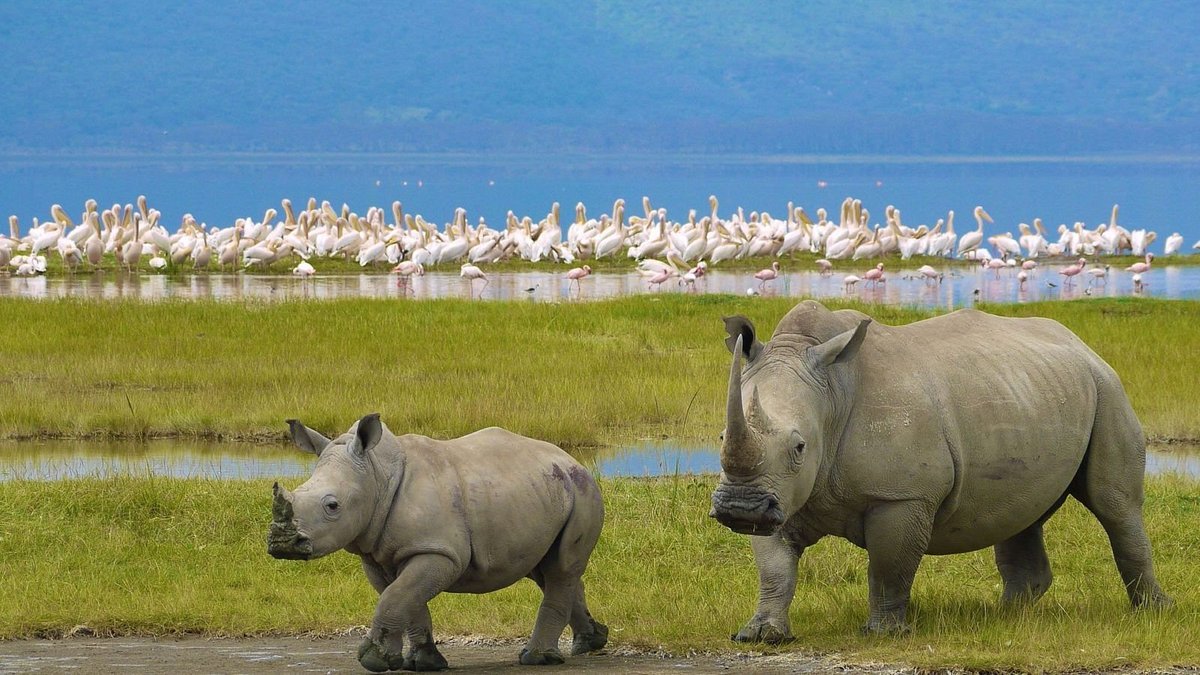
The 4-day Masai Mara and Lake Nakuru safari is incredibly popular because it perfectly pairs the world-class savannah predator viewing of the Mara with the endangered rhino sanctuaries and birdlife of Nakuru. This compact, time-efficient circuit offers a comprehensive "Big Five" safari experience in just a few days.
4-days-best-luxury-kenya-safari-to-lake-nakuru-and-masai-mara-safari-tour
4-days-budget-masai-mara-safari-and-lake-nakuru
Unmatched Predators: High-Density Big Cat Sightings in the Masai Mara
The absolute crown jewel of any premier Kenya safari is the legendary Masai Mara National Reserve. This world-renowned wilderness is globally celebrated for supporting the highest concentration of large predators on the African continent, making it an essential destination for enthusiasts eager to witness big cats in action. The reserve's vast, open savannah plains create an ideal environment for apex predators like lions, leopards, and cheetahs. The short grass and expansive plains offer little cover for prey, forcing carnivores into highly strategic, visible hunting behaviors. This incredible wildlife density is what originally inspired the BBC’s iconic Big Cat Diary television series, which documented the daily survival struggles of the Mara's resident prides and solitary leopards for an international audience.
When embarking on a Kenya safari through the Masai Mara, predator sightings are remarkably frequent and reliable. Travelers routinely observe large, healthy lion prides lounging under acacia trees, cheetahs scanning the horizon from the top of termite mounds, and elusive leopards draped over thick tree branches with their kills. The reserve operates as a highly dynamic ecosystem where the sheer volume of herbivores ensures that predators remain active and visible throughout the day. For photographers and wildlife enthusiasts, this means your game drives are consistently filled with dramatic, high-stakes wildlife interactions. This exceptional predator activity provides a thrilling, fast-paced introduction to the untamed wild that few other destinations on earth can replicate.
Epic Wildlife Migration: Witnessing the Great Mara River Crossings
No discussion of a classic Kenya safari is complete without highlighting the Great Wildebeest Migration, a natural phenomenon widely regarded as the "Eighth Wonder of the World." This annual, circular journey involves more than 1.5 million wildebeest, 400,000 zebras, and hundreds of thousands of gazelles moving across the East African ecosystem in a relentless search for fresh green pastures and clean water. Depending on the season—typically between July and October—this massive column of animals arrives in Kenya's Masai Mara from the neighboring Serengeti, blanketing the rolling grasslands in a sea of moving life.
The absolute climax of this migration occurs at the banks of the Mara River, where the herds must gather their courage to face the ultimate survival test. To reach the lush grazing grounds on the other side, the animals must plunge into the turbulent, fast-flowing waters, which are heavily patrolled by massive Nile crocodiles and surrounded by waiting riverbank predators. Watching thousands of wildebeest hesitate at the river's edge before a single brave individual leaps in—triggering a thunderous, chaotic stampede across the water—is an intensely dramatic and unforgettable sight. Even outside the peak river-crossing months, the sheer volume of resident wildlife left in the wake of the migration makes the Masai Mara a spectacular cornerstone of any short-duration tour.
Guaranteed Rhino Sightings: The Protected Haven of Lake Nakuru
While the vast, unfenced spaces of the Masai Mara provide an incredible arena for big cats, tracking rarer, highly threatened megafauna requires a more specialized conservation environment. This is exactly where Lake Nakuru National Park steps in to completely transform your Kenya safari. Situated within the dramatic floor of the Great Rift Valley, this compact and fully fenced sanctuary was specifically established to shield endangered species from external threats. Because the park's boundaries are securely managed, it has grown into one of Kenya's most successful and vital black and white rhino sanctuaries, offering visitors virtually guaranteed sightings of these magnificent, armored giants.
Unlike the open plains of the Mara, where a small population of rhinos can easily remain hidden across thousands of square kilometers, Lake Nakuru’s organized layout and dense network of tracks allow expert safari guides to locate them with remarkable ease. Visitors frequently spot large white rhinos grazing peacefully in family groups along the open lakeshore meadows, while the more elusive, solitary black rhinos can be seen browsing on the thick shrubs of the higher ridges. This predictable access is a massive benefit for travelers on a tight schedule, allowing them to cross off a notoriously difficult member of the famous "Big Five" within a single afternoon game drive.
Spectacular Birding: The Dynamic Avian Wonder of Lake Nakuru
For decades, Lake Nakuru National Park has maintained a legendary reputation as a world-class paradise for birdwatchers and nature photographers alike. Historically celebrated for its iconic "pink fringe"—where millions of lesser and greater flamingos gathered along the shallow shoreline to feed on alkaline algae—the lake remains an absolute hotspot for extraordinary avian biodiversity. While fluctuating water levels over recent years have caused the flamingo populations to naturally shift and travel between various Rift Valley soda lakes based on seasonal algae blooms, Lake Nakuru continues to host spectacular, vibrant clusters of these elegant birds during stable dry periods.
Crucially, the ecological evolution of the lake has opened the door for an incredible surge of other massive bird species, most notably the Great White Pelican and pink pelicans. These large, dramatic birds now gather in massive numbers along the partially submerged acacia trees, putting on a spectacular show as they hunt for fish in synchronized groups. With over 450 distinct bird species recorded within the park boundaries, the variety is staggering. Visitors can photograph elegant fish eagles nesting on high branches, colorful kingfishers diving into the shallows, and massive flocks of storks wading through the marshy wetlands. This rich diversity creates a visually stunning backdrop that adds immense depth and contrast to a standard wildlife-viewing itinerary.
Rothschild's Giraffes: Spotting an Endangered Giant on High Ground
One of the most unique and rewarding highlights of incorporating Lake Nakuru into your Kenya safari is the rare opportunity to encounter the endangered Rothschild’s giraffe. Originally translocated to the safety of this fenced national park in the late 1970s to protect them from severe poaching and habitat loss in western Kenya, this distinct population has thrived under the careful protection of the Kenya Wildlife Service. The Rothschild’s giraffe is easily distinguished from the more common Masai giraffe by its lighter coat pattern and its highly unique "white stockings"—legs that are completely solid white with no spots from the knees down to the hooves.
In response to the rising water levels of Lake Nakuru, which flooded the low-lying yellow-fever acacia forests, these intelligent giants have successfully adapted by moving their feeding grounds up into the higher, rocky basalt ridges and the lush Naishi Plains. Spotting a herd of these remarkably tall giraffes browsing among the high trees against the dramatic backdrop of the Rift Valley escarpment is a profound wildlife experience. Because they are near-threatened and restricted to a few highly protected pockets across East Africa, observing them in their natural habitat adds an exclusive, conservation-focused dimension to your trip that elevates it far beyond a standard vacation.
Time Efficiency: Maximizing the Value of a 4-Day Expedition
The ultimate reason this specific itinerary has become an absolute fan favorite among global travelers is its extraordinary time efficiency. Planning an extended, multi-week vacation can be highly challenging for busy professionals, yet no one wants to travel all the way to East Africa and feel like they missed out on the true essence of the wilderness. This high-performance four-day circuit solves that dilemma perfectly by packing two completely distinct, contrasting, and iconic ecosystems into a single, seamless travel window.
Your journey transitions beautifully from the structured, heavily protected lakeside sanctuary of Lake Nakuru—with its guaranteed rhinos, unique Rothschild's giraffes, and rich avian displays—directly into the raw, vast, and predator-dominated savannahs of the legendary Masai Mara. By utilizing well-maintained highways and highly optimized driving routes, the transit time between these two world-class destinations is kept short and engaging. Travelers enjoy maximum time out on game drives and minimum time stuck in transit, experiencing a remarkable variety of landscapes, tracking the complete "Big Five," and gathering a lifetime of safari memories all within a crisp, highly manageable four-day adventure.
1. Why is this specific 4-day combination considered the ultimate introduction to Kenya?
First-time travelers often face a classic dilemma: they want to experience the legendary African savannah, but they also want to see a diverse range of landscapes and species without spending weeks on the road. This 4-day itinerary has become the gold standard because it perfectly balances these desires by pairing two of East Africa's most famous, contrasting ecosystems into a single, high-efficiency travel window.
The journey kicks off with Lake Nakuru National Park, a compact, heavily protected sanctuary nestled in the dramatic floor of the Great Rift Valley. Here, the landscape is dominated by a shimmering alkaline lake, fever-tree forests, and rocky escarpments. The tour then transitions seamlessly into the Masai Mara National Reserve, which offers the classic, boundless, rolling grasslands that people visualize when they think of an authentic Kenya safari. By combining a specialized lakeside sanctuary with an expansive, unfenced savannah, travelers get a complete, multi-dimensional overview of Kenya’s natural heritage in under a week, making it an unbeatable introductory package.
2. How does the compact size of Lake Nakuru optimize a short 4-day schedule?
When you only have four days for a wildlife expedition, every single hour counts. You cannot afford to spend days driving across massive, empty parks searching for animals that might be hidden over the horizon. This is where the unique geography of Lake Nakuru National Park provides a massive structural advantage to the itinerary.
Lake Nakuru is a relatively small, fully fenced park wrapped entirely around a central lake. Because the wildlife cannot migrate out of the park, and because the total surface area is highly manageable, animal tracking is incredibly fast and predictable. Safari vehicles do not need to roam for hours to find major highlights; instead, a single afternoon game drive is usually more than enough to explore the lakeshore, the woodlands, and the cliffside viewpoints. By placing this high-yield, compact park at the start of the trip, travelers check off a huge variety of specialized species quickly, leaving them with plenty of time to dedicate the remaining three days to the vast plains of the Masai Mara.
3. Why does this circuit guarantee a "Big Five" checklist better than other routes?
The "Big Five" (lion, leopard, elephant, buffalo, and rhino) are the historic holy grail of African wildlife viewing. While many large parks across Africa boast these species, actually spotting all five on a short trip can be incredibly frustrating, primarily because rhinos are critically endangered, highly reclusive, and heavily poached.
This 4-day Kenya safari solves the rhino problem completely through its strategic layout. The Masai Mara is arguably the finest place on earth to view massive lion prides, elusive leopards, large herds of elephants, and thousands of cape buffaloes. However, finding a rhino in the Mara's vast grasslands can be like searching for a needle in a haystack. By stopping at Lake Nakuru first—which functions as a highly successful, tightly guarded government rhino sanctuary—travelers are virtually guaranteed up-close sightings of both black and white rhinos along the lakeshore. By combining Nakuru’s guaranteed rhinos with the Mara’s overwhelming predator and megafauna density, this itinerary delivers a complete "Big Five" checklist with unmatched reliability.
4. How does the geographic proximity of these parks reduce transit fatigue?
A common complaint among safari-goers in Africa is "transit burnout"—the exhaustion that comes from spending 8 to 10 hours bouncing around in a vehicle on rough dirt roads just to move between destinations. The Nakuru-Mara circuit is heavily marketed precisely because its geographic flow is exceptionally smooth, logical, and physically forgiving.
Departing from the capital city of Nairobi, the drive to Lake Nakuru takes roughly 3 to 4 hours along a fully paved, smooth tarmac highway that descends beautifully down the side of the Great Rift Valley escarpment. After spending a night at Nakuru, the drive down into the Masai Mara takes about 4 to 5 hours, cutting through scenic local towns and agricultural lands. Finally, the return drive from the Mara back to Nairobi wraps up the loop in about 5 to 6 hours. Because the driving segments are broken up into manageable, half-day blocks, passengers never experience grueling, all-day highway marathons. This keeps energy levels high, minimizes physical fatigue, and ensures everyone arrives at the lodges refreshed and ready for game drives.
5. What makes Lake Nakuru an essential hotspot for specialized bird watching?
While big game and large predators naturally capture the headlines, a truly holistic Kenya safari should also showcase the continent's incredible avian biodiversity. Lake Nakuru has been recognized globally for decades as an absolute paradise for birdwatchers, ornithologists, and wildlife photographers due to its unique water chemistry and diverse habitats.
The lake is a shallow, alkaline soda lake that creates the perfect breeding ground for specialized microscopic blue-green algae. This abundance of food attracts spectacular flocks of lesser and greater flamingos, which line the shallows in vibrant, pink clusters. In addition to the flamingos, the lake has seen a massive influx of Great White Pelicans, which fish in synchronized groups along the shore. With over 450 resident and migratory bird species recorded within the park—including soaring fish eagles, colorful kingfishers, elegant herons, and rare martial eagles—the visual tapestry of the lakeside is stunning. It introduces a brilliant, colorful, and dynamic dimension to the safari that perfectly complements the mammal-heavy focus of the Masai Mara.
6. How does the presence of Rothschild’s giraffes elevate Lake Nakuru’s appeal?
Not all giraffes are the same, and a premier Kenya safari offers a rare chance to see one of the most endangered subspecies in the world. The Rothschild's giraffe (also known as the Baringo giraffe) faced near-extinction in the late 20th century due to severe habitat destruction and poaching in its native western Kenyan ranges.
In a major conservation triumph, a small population was translocated to the safety of Lake Nakuru National Park, where they have thrived under the constant protection of the Kenya Wildlife Service. These giraffes are easily distinguished from the common Masai giraffe by their broader, less jagged spot patterns and their signature "white stockings"—their legs are solid, creamy white with absolutely no markings from the knees down. Because they are highly protected and restricted to only a few fenced sanctuaries in East Africa, watching a herd of these towering, rare giants move through the yellow-fever acacia forests adds an exclusive, conservation-minded highlight to the first leg of your 4-day tour.
7. Why is the Masai Mara globally unmatched for big cat and predator sightings?
The second leg of this 4-day tour takes travelers into the legendary Masai Mara National Reserve, a wilderness that needs no introduction. If Lake Nakuru is the warm-up for specialized conservation, the Mara is the main event for raw, untamed predator action. It holds the highest hourly concentration of large carnivores in Kenya, making it an absolute magnet for wildlife documentarians.
The Mara's landscape consists of wide, rolling savannah grasslands with minimal thick bush cover. This open terrain forces apex predators like lions, cheetahs, and leopards to rely on strategy, speed, and visibility to hunt the millions of grazing herbivores. Visitors routinely encounter massive lion prides numbering up to twenty individuals resting in the shade, cheetahs using safari vehicle hoods or termite mounds as lookout points, and leopards moving gracefully along the riverine forests. The sheer abundance of resident prey ensures that these predators are active, well-fed, and highly visible, providing travelers with front-row seats to dramatic, real-life hunting sequences that are rarely seen in less populated parks.
8. How does the Great Wildebeest Migration influence the popularity of this 4-day trip?
Between the months of July and October, this 4-day Kenya safari transforms from an excellent wildlife tour into a journey to see one of the greatest natural wonders on Earth: the Great Wildebeest Migration. This annual, cyclic movement involves over 1.5 million wildebeest, hundreds of thousands of zebras, and gazelles charging across the Mara River from the Serengeti in search of fresh green grass.
The Masai Mara becomes a chaotic, thriving theater of life during these months. The highlight for most tourists is witnessing a dramatic river crossing, where massive herds gather on the cliffs before plunging into the fast-flowing, crocodile-infested waters of the Mara River. Watching this thundering display of raw survival instinct is a profoundly moving experience. Because this 4-day itinerary spends two full nights directly inside the Mara ecosystem during the migration season, it offers the perfect, highly focused window for travelers to position themselves along the riverbanks and witness this spectacular event without needing to commit to an expensive, multi-week expedition.
9. Why is the 4-day duration considered the ultimate "sweet spot" for busy global travelers?
In the modern travel industry, time is often the most restricted luxury. Many international business professionals, families, or couples traveling on tight budgets cannot afford the time or financial commitment required for a traditional 10 to 14-day African safari. This 4-day package was engineered specifically to address this gap, offering a high-impact, short-duration "sweet spot."
A 2 or 3-day safari to a single park often feels rushed and incomplete, leaving travelers wanting more variety. Conversely, a week-long driving safari can become repetitive for those who aren't die-hard wildlife fanatics. This 4-day loop hits the perfect note: Day 1 gives you a scenic drive and a focused afternoon introduction to rhinos and birds at Nakuru. Days 2 and 3 provide a deep, immersive dive into the predator-rich plains of the Masai Mara. Day 4 returns you smoothly to Nairobi for your evening flight home. It maximizes wildlife viewing variety, keeps accommodation costs tightly managed, and fits perfectly into a standard extended long weekend or a brief vacation window.
10. How does the high quality of guiding on this route enhance the visitor experience?
Because the Nakuru-to-Mara highway corridor is the single most popular tourism circuit in Kenya, it serves as the primary training ground for the country’s most elite, professional safari driver-guides. A safari is only as good as the person behind the wheel, and on this route, travelers benefit from an exceptional level of guiding expertise.
These professional guides possess an intimate, deep understanding of animal behavior, seasonal migration movements, and the specific territories of resident predator prides. They don't just drive; they read track signs, listen to animal alarm calls, and communicate via long-range bush radios to ensure their guests are always positioned at the heart of the action. Furthermore, because they navigate these specific parks week after week, they know exactly how to avoid the heavy vehicle crowds in the Mara, guiding you to secluded loops where you can enjoy private, quiet wildlife encounters. Their expert commentary on local ecology, Masai culture, and bird identification turns a simple sightseeing drive into a deeply educational adventure.
11. What makes the Naishi Plains and baboon cliffs in Lake Nakuru so unique?
While the lake itself is the central geographic feature of Lake Nakuru National Park, the surrounding terrestrial landscapes offer incredible variety and dramatic scenery that add immense value to your first day on safari. Two specific geographic highlights stand out: the expansive Naishi Plains and the iconic Baboon Cliffs.
The Naishi Plains, located in the southern sector of the park, consist of beautiful, open grasslands that provide a vital grazing area for large herds of defassa waterbucks, impalas, Rothschild's giraffes, and inquisitive warthogs. This open area provides a stunning contrast to the dense woodlands nearby. Further along the western ridge lie the Baboon Cliffs, a high-altitude lookout point that offers a spectacular, panoramic view over the entire lake and the surrounding escarpment. Climbing up to this viewpoint allows travelers to fully appreciate the volcanic geography of the Great Rift Valley, while sharing the rocky ledges with playful baboons and rock hyraxes, creating fantastic landscape photography opportunities.
12. How does an optional cultural visit to a Masai village enrich the Mara segment?
A truly rewarding Kenya safari is never just about tracking animals; it is also about connecting with the rich cultural heritage of the communities that have coexisted with these wild ecosystems for centuries. This 4-day itinerary offers a seamless opportunity to incorporate a cultural excursion into a traditional Maasai village (Manyatta) during your time in the Mara.
The Maasai people are world-famous semi-nomadic pastoralists who continue to maintain their ancestral customs, vibrant red dress, and traditional livestock-herding lifestyles directly along the borders of the reserve. During a village visit, elders welcome travelers with traditional jumping dances and rhythmic songs. Visitors are invited inside their mud-walled homesteads to learn about their social structures, ancient survival skills, and their unique philosophy of wildlife conservation. This profound cultural interaction provides vital context to the safari, showing how human heritage and wilderness preservation can intertwine, while ensuring that tourism dollars directly benefit the local community.
13. How does a hot air balloon safari over the Mara create an unforgettable upgrade?
For travelers looking to elevate their 4-day itinerary into a truly once-in-a-lifetime luxury experience, the Masai Mara segment offers an optional hot air balloon safari upgrade that is widely considered the absolute pinnacle of African tourism.
This optional excursion begins in the chilly, pre-dawn darkness as the massive balloons are inflated. Bounding into the air just as the sun breaks over the horizon, travelers enjoy a peaceful, silent, bird's-eye view over the boundless savannah. From above, you can trace the winding paths of the Mara River, spot elephant herds moving through the trees, and watch shadows of running giraffes stretch across the plains. The flight wraps up with a classic, luxurious champagne bush breakfast cooked right on the open savannah. While it represents an additional financial investment, integrating this aerial adventure into a tight 4-day timeline ensures that your short trip leaves an indelible, magical impression.
14. Why do global tour operators and travel agencies prioritize marketing this circuit?
From a commercial perspective, international travel agencies and Kenyan tour operators heavily prioritize marketing the 4-day Nakuru-Mara package because it is a highly stable, reliable, and universally successful tourism product that consistently yields glowing customer reviews.
For operators, this route offers minimal operational risk. The road infrastructure connecting Nairobi, Nakuru, and the Mara is well-established, reducing vehicle wear-and-tear compared to more remote northern frontier parks. Because Lake Nakuru features guaranteed rhinos and the Mara features unmatched big cat density, client satisfaction is almost guaranteed regardless of the weather or season. Operators can offer this package across a wide variety of price points—ranging from budget overland camping trucks to mid-range safari vans and ultra-luxury 4x4 land cruisers—making it an incredibly flexible, easy-to-sell itinerary that appeals to every demographic in the global travel market.
15. How does the wide range of luxury and budget lodging along this route cater to all?
A major reason behind the universal popularity of this 4-day Kenya safari circuit is the incredible maturity and diversity of the hospitality infrastructure found in both Lake Nakuru and the Masai Mara. Accommodations along this route are designed to cater beautifully to every financial comfort level without compromising on comfort.
Budget-conscious backpackers and group travelers can choose from high-quality canvas tented camps located just outside the park gates, which provide hot bucket showers, clean beds, and delicious local meals at incredibly affordable rates. Mid-range travelers can enjoy gorgeous, full-service safari lodges featuring swimming pools, panoramic views, and evening campfire entertainment. For those seeking ultra-luxury, the Mara boasts some of the world's most exclusive, award-winning tented glamping resorts, complete with private butlers, gourmet fine dining, and secluded riverfront decks. This broad spectrum of lodging options allows tour companies to custom-tailor the exact same 4-day route to match your precise budget, ensuring that Africa's spectacular wildlife remains accessible to all.
Booking Kenya safari to Masai mara and lake Nakuru with us Roads of Adventure safaris
Booking a safari to Masai Mara and Lake Nakuru with Roads of Adventure Safaris offers seamless planning. They handle park fees, 4x4 transportation, and lodges. Their popular standard itinerary spans 4 to 5 days, making it perfect to view the Great Migration and spot rhinos
