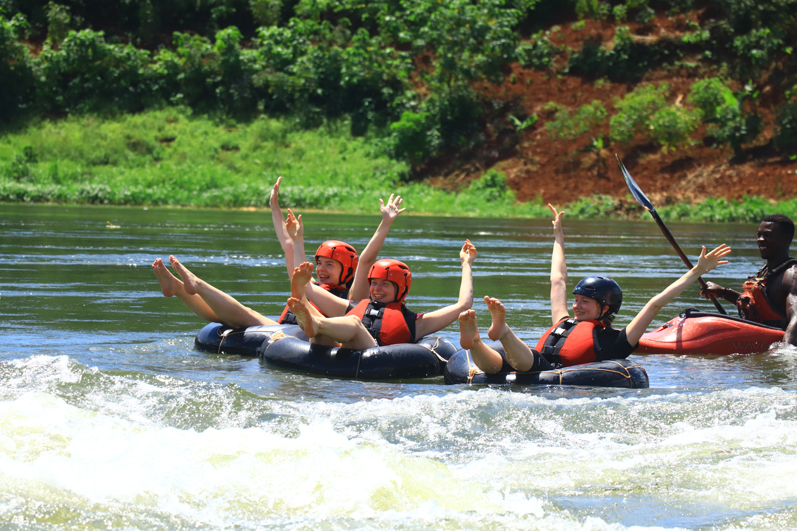
Looking for an unforgettable splash of adrenaline without breaking the bank? White water tubing on the River Nile in Jinja, Uganda, is easily one of Africa’s coolest river adventures. Floating right on a heavy-duty inner tube, you’ll tackle rapids at eye level, swapping heart-pounding waves for peaceful drifts past lush tropical islands. Whether you opt for a budget-friendly 2-hour standard float with fresh local pineapple or an intense Grade 5 extreme run, top local outfitters like Tubing the Nile, Nile River Explorers, and White Nile Rafting have you covered with packages from $45 to $120 USD. Best of all, no swimming skills are required—you’re fully geared up with high-flotation life jackets and helmets, while expert safety kayakers track your every move so you can focus entirely on the fun.
Here is a complete, human-friendly guide covering everything you might wonder about white water tubing on the River Nile in Jinja.
Popular Jinja tour packages
2-days-jinja-white-water-rafting-tour-package
3-days-jinja-white-water-rafting-and-fishing-uganda-safari-tour
5-days-gorilla-trekking-and-jinja-white-water-rafting
5-days-perfect-uganda-honeymoon-safari-in-jinja
1-day-tubing-and-water-massage-jinja-tour-package
What exactly is white water tubing, and how is it different from raft paddling?
If you’ve ever relaxed on a pool floatie, imagine taking that concept, amping it up with heavy-duty commercial-grade vulcanized rubber, and placing it right on the legendary River Nile. That is white water tubing in a nutshell!
The main difference between tubing and traditional raft paddling comes down to control, perspective, and personal involvement. In a standard raft, you share space with a group, listening to a guide shouting commands as you all paddle together to navigate the waves. You’re positioned high up on the boat's outer tubes.
Tubing, on the other hand, is an intimately solo affair. You sit directly inside your own single inner tube (though some outfitters offer double tubes for pairs or parent-child combos). Sitting low in the center hole means you’re tackling the river completely at eye level. When a five-foot wave crests over your head, you feel every splash, drop, and swirl in a way that big rafts simply absorb. You don't hold a paddle; instead, you rely on specialized webbing straps, your arms for steering, and the raw power of the current to push you downstream. It feels far more immediate, raw, and playful than group rafting.
Is it safe for people who don’t know how to swim?
The quick answer is a resounding yes! You absolutely do not need to be an Olympic swimmer—or even know how to doggy paddle—to enjoy white water tubing safely on the Nile.
Before your feet even touch the water, the professional ground crew fits you with a certified, high-flotation personal flotation device (PFD) and a heavy-duty helmet. Unlike standard life jackets used on calm lakes, these specialized river PFDs carry immense buoyancy. If your tube flips over in a rapid—which happens to almost everyone at least once—the physics of the life jacket automatically pop you back up to the surface in seconds, floating you safely on your back in the standard "river safety position" (feet downstream, toes pointed to the sky).
Beyond your personal gear, you are never alone out on the water. Every single tour is closely shadowed by a vigilant team of professional safety kayakers and motor rescue boats. These guides spend their lives on the Nile; they read the river currents like a book. If you get separated from your tube, a safety kayaker will instantly paddle over, extend their kayak toggle for you to grab, and tow you right back to your float without you needing to swim a single stroke.
What are the main outfitters offering this, and how do their options differ?
Jinja is famous as the adventure capital of East Africa, and three primary licensed outfitters dominate the white-water tubing scene, each catering to slightly different vibes, budgets, and adrenaline thresholds.
- Tubing the Nile: Located right along Kimaka Road, this is the dedicated local specialist. They charge around $55 USD for a classic 2-to-3-hour standard run covering Class I to III rapids. Their package is fantastic value because it comes fully loaded with safety gear, mid-river drinks, fresh snacks, and complimentary professional photography so you don't risk drowning your phone.
- Nile River Explorers: Launching out near the iconic Bujagali area, these river pioneers offer a super popular 5 km, 2-hour white water float. At $45 USD for adults and $35 USD for children, it’s heavily family-focused. The highlight here is their mid-trip island stop for fresh, ultra-sweet Ugandan pineapple, plus free access to their massive 25-meter water slide back at camp.
- White Nile Rafting Ltd: For true adrenaline junkies, these guys run an Extreme Grade 5 trip priced at $120 USD. Lasting 4 to 5 hours, this intense expedition takes on monster waves, includes a full buffet breakfast, and provides round-trip transfers from Kampala.
How scary are the rapids, and can I skip a rapid if I feel terrified?
It’s completely normal to feel a butterfly knot in your stomach when you hear the distant roar of white water for the first time! The intensity of the experience really depends on the package you choose. Standard trips stick to Class I through Class III rapids, which feel like a thrilling, bouncy rollercoaster ride with plenty of big splashes, followed immediately by long, tranquil pools where you can float lazily and catch your breath.
However, if you approach a rapid and your gut says "no way," you never have to force it. The river guides practice what’s known in the whitewater world as taking the "Chicken Line."
Because the Nile is a vast, wide river with multiple channels, guides can easily steer your tube along the calm, shallow edges away from the heavy hydraulic surges. If even the outer edge looks too intimidating, the crew will simply pull your tube over to the riverbank, let you take a short scenic stroll along the tropical shoreline around the white water, and pop you back in below the rapid where the water is calm again. Your comfort level always dictates the pace of the day.
What should I wear and bring for a day on the river?
Dressing properly makes a world of difference when you’re spending several hours floating under the equatorial sun. Your main goal is sun protection, secure footwear, and lightweight materials that won't weigh you down when wet.
- Clothing: Avoid heavy cotton clothes or denim jeans at all costs—they soak up massive amounts of water, get heavy, and take forever to dry. Instead, wear quick-drying synthetic athletic wear. Boardshorts or swim trunks paired with a long-sleeved rash guard (UV swim shirt) are ideal. The long sleeves protect your arms from sunburn and guard against minor scrapes from your tube's rubber webbing.
- Footwear: Leave your flip-flops at home! They will instantly float away the second you tumble into a rapid. Wear secure water shoes, chacos, or old sneakers with solid straps.
- Sun & Skin Care: The sun over the Nile is deceivingly strong because of the water's reflection. Apply reef-safe, high-SPF water-resistant sunscreen generously before putting on your life jacket, paying extra attention to the tops of your thighs and your face.
- Valuables: Keep your phone, wallet, and passport locked away at the outfitter's base camp. Outfitters provide dry bags for small essentials, but taking electronics into rapids is always a gamble best avoided.
What is a typical day’s itinerary like from start to finish?
A day on the Nile follows a smooth, well-organized rhythm designed to take you from nervous excitement to total relaxation.
Your day usually begins at the outfitter’s base camp in Jinja. After filling out basic safety waivers, you meet your guide crew for a comprehensive safety briefing. Here, they fit you with helmets and flotation jackets and demonstrate how to lean, lock your legs, and hold the tube handles when riding through waves.
Next, you hop into a transport truck to the river launching point. Stepping into the water, you'll do a quick practice float in calm water to get comfortable steering and flipping back over. Then, the real journey begins!
Over the next 2 to 4 hours, your trip alternates between heart-pumping white water drops and peaceful, lazy drifting. Halfway through, most outfitters pull the group over to a secluded, lush river island or sandbar. Here, you get to kick back, eat fresh Ugandan pineapples, sip cold drinks, and chat with fellow travelers. Afterward, you tackle the remaining stretch of river before reaching the haul-out point, where trucks take you back to camp for hot showers, a cold drink, and a photo viewing session.
Is the water in the Nile clean, and are there crocodiles or hippos to worry about?
It’s the single most common question people ask, usually accompanied by wide eyes: "Wait, aren't there massive crocodiles in the Nile?!"
While it's true that the Nile River across Africa is famous for wildlife, the specific stretch of the Victoria Nile in Jinja where white water sports take place is remarkably free of dangerous megafauna like crocodiles and hippos. The combination of high-volume, fast-moving rapids, heavy human river traffic over the last three decades, and nearby hydro-electric dams creates an environment that Nile crocodiles and territorial hippos naturally avoid. They prefer the calm, shallow, marshy waters of lakes or downstream national parks like Murchison Falls.
As for water quality and health risks like Bilharzia (schistosomiasis)—a parasite found in some calm, stagnant African lakes—the risk on this section of the river is extremely low. Bilharzia-carrying snails require slow-moving, muddy, vegetated shoreline water to thrive. The white water tubing sections are deep, highly oxygenated, fast-flowing water masses that sweep parasites away. Outfitters have safely guided hundreds of thousands of international tourists down these exact waters for decades without incident. It is crisp, refreshing, and wonderful for swimming!
Can kids and older adults do white water tubing?
Absolutely! One of the absolute best features of river tubing is its incredible versatility across different age groups and fitness levels.
For families traveling with young children or older adults looking for a scenic day out rather than extreme sports, outfitters offer specialized "Flat Water" or "Lazy River" floats. Instead of tackling big Grade 3 waves, these tours stick strictly to gentle Class I sections of the river. Nile River Explorers, for example, welcomes kids as young as 4 or 5 years old on their calm river floats, often tethering a child’s tube directly to a parent’s tube or a guide’s kayak for absolute safety and peace of mind.
For older adults, as long as you can comfortably sit down in a rubber ring and stand up again without severe back or neck pain, you're set. There are no heavy physical demands like continuous paddling or heavy lifting required—you simply lean back, hold onto the safety handles, and let gravity and the mighty Nile do all the heavy lifting for you!
When is the best time of year to go tubing in Jinja?
Jinja is a true year-round adventure destination thanks to its location right along the equator and the steady water outflow managed by Lake Victoria. However, your experience can vary depending on Uganda's distinct dry and wet seasons.
- Dry Seasons (December to February & June to September): This is generally considered the absolute prime time for water sports. The weather is sunny and warm, making a day soaking in the river feel incredible. Water levels are stable, visibility is high, and the river water runs relatively clear, making island fruit breaks and swimming super pleasant.
- Wet Seasons (March to May & October to November): Don't write off the rainy season! Rain in Uganda usually comes in short, heavy tropical bursts rather than all-day drizzles, leaving plenty of sunshine in between. The extra rain swells the river, creating bigger, punchier waves and faster currents that adrenaline junkies love.
No matter when you go, water temperatures on the Nile remain warm and comfortable year-round (around 23°C to 26°C / 73°F to 79°F), so you'll never have to worry about shivering in a wetsuit!
How do I get to Jinja from Kampala or Entebbe Airport?
Reaching Jinja is a straightforward journey, whether you're landing fresh off an international flight at Entebbe International Airport (EBB) or departing from central Kampala. Jinja sits approximately 80 kilometers (50 miles) east of Kampala, along the main northern corridor highway.
- Direct Outfitter Shuttles: The easiest, stress-free option is booking a direct transfer through your tubing outfitter (such as White Nile Rafting or Nile River Explorers). Most companies offer daily pickup shuttles from major hotels or backpacker lodges in Kampala and Entebbe for a small add-on fee.
- Private Taxis: If you prefer flexibility, hiring a private driver costs around $60 to $80 USD from Kampala or $80 to $100 USD directly from Entebbe Airport. The drive typically takes between 2 to 3.5 hours, depending heavily on Kampala's famous traffic jams.
- Public Transport (Matatus): Budget travelers can take a shared public mini-bus (matatu) from Kampala’s Taxi Park to Jinja town for around 10,000 to 15,000 UGX ($3 to $4 USD), then hop on a local boda-boda (motorcycle taxi) to reach the outfitter's river base.
What other fun things are there to do in Jinja nearby?
While white water tubing is a huge highlight, Jinja didn't earn its title as East Africa's adventure capital on just one activity! It’s worth spending at least two or three days in the area to experience the full menu of outdoor thrills and rich local culture.
- Bungee Jumping & Quad Biking: Test your nerves with a 44-meter plunge over the Nile from a dedicated jump tower, or rent a quad bike/ATV to ride through remote farming villages and along scenic river bluffs.
- Stand-Up Paddleboarding (SUP) & Kayaking: If you want a full-body workout, rent a paddleboard or take a beginner kayak lesson in the calm bays near Bujagali.
- The Source of the Nile Boat Cruise: Take a peaceful motorized wooden boat trip out to the exact historic spot where Lake Victoria overflows to form the start of the 4,000-mile Nile River—a iconic bucket-list landmark for geography lovers.
- Horseback Riding Safaris: Take a guided horse trail along the riverbanks, riding through local sugar plantations and quiet rural hamlets as the sun sets.
How does tubing in Jinja support the local community and environment?
Choosing to go white water tubing in Jinja does far more than just give you an adrenaline rush—it directly fuels the sustainable eco-tourism economy of local Ugandan river communities.
When hydro-electric dam projects along the Victoria Nile altered parts of the original river landscape over the past two decades, eco-tourism became a crucial economic lifeline for nearby villages like Buwenda, Budondo, and Kimaka. Outfitters hire local Ugandans almost exclusively as river guides, safety kayakers, drivers, chefs, and base staff, providing stable, well-paying careers and professional certifications in swift-water rescue and first aid.
Furthermore, outfitter fees help support community projects, including local primary schools, clean water initiatives, and tree-planting programs along the riverbanks to prevent soil erosion. By purchasing fresh pineapples and meals from local farmers and vendors, outfitters ensure that tourist dollars flow straight into the local economy. Participating in these low-impact, non-motorized water sports encourages the protection and preservation of the Nile's natural ecology for generations to come.
Booking White Water Tubing in Jinja with us Roads of Adventure safaris
To book a white water tubing adventure on the Nile River in Jinja with Roads of Adventure Safaris, you can coordinate directly with their main office located on Entebbe Road, Kampala
