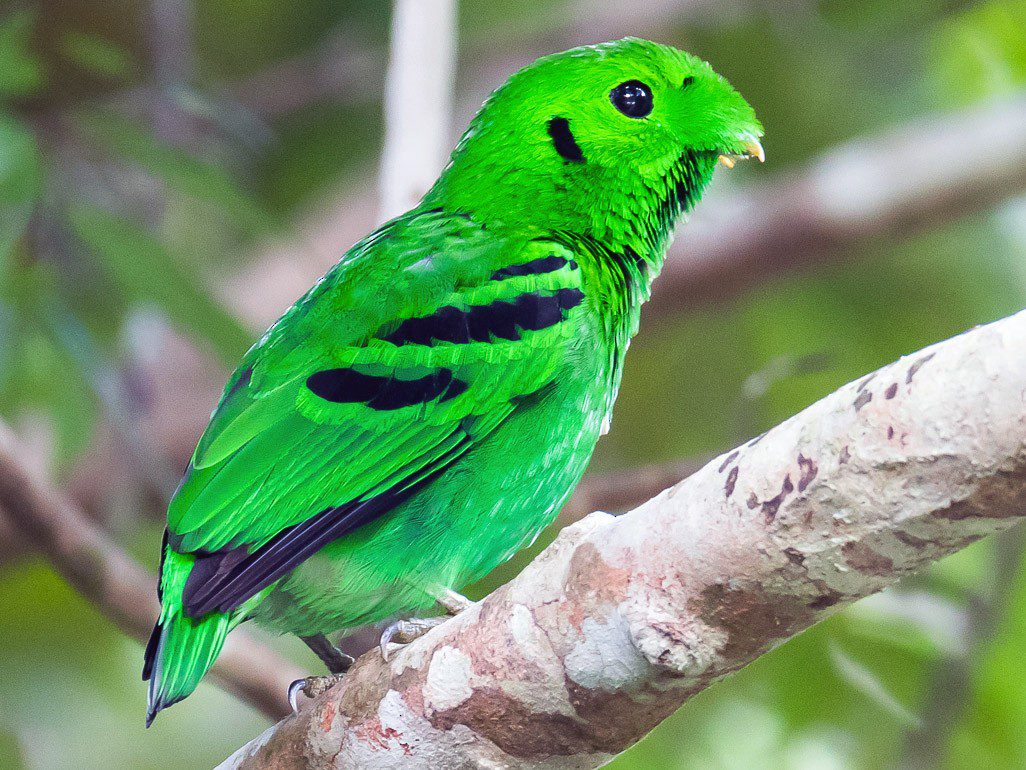
While Puvel's Illadopsis (Illadopsis puveli) and the Yellow-footed Flycatcher (Muscicapa sethsmithi) are famously restricted to Budongo Central Forest Reserve within East Africa, Puvel's Illadopsis is widely recognized as the star endemic species whose Ugandan range is virtually exclusive to Budongo.
1-day-perfect-mabamba-swamp-shoebill-stork-uganda-birding-safari
5-days-uganda-bird-watching-safari-lake-victoria-shores-and-lake-mburo
30-days-best-uganda-birding-safari-extravaganza-and-wildlife-safari
11-days-uganda-birding-safari-and-primate-experience
20-days-uganda-birding-safari-wildlife-gorilla-and-chimpanzee-tracking
21-days-uganda-birding-safari-extravaganza-to-best-uganda-safari-parks
25-days-complete-uganda-birding-safari-extravaganza-with-wildlife-viewing
Key Endemic & Exclusive Birds
Puvel's Illadopsis: This vocal, brightly colored understorey bird occurs nowhere else in East Africa and is commonly tracked along forest paths
Yellow-footed Flycatcher: A rare, high-canopy specialist found exclusively in this forest within the region, though it can be quite difficult to spot.
Nahan’s Partridge: An endangered, ground-dwelling forest francolin that makes Budongo one of its few reliable viewing locations.
Best Birding Spots in Budongo
- The Royal Mile: Located in the Busingiro sector, this famous straight dirt path offers the highest concentration of rare forest specials and kingfishers.
- Kaniyo Pabidi: Set in the eastern part of the reserve, it is an ideal trail zone for hearing and seeing Puvel's Illadopsis near chimpanzee tracking paths
Which single bird species is the most celebrated endemic localized to Budongo Forest in East Africa?
Puvel's Illadopsis (Illadopsis puveli) stands out as the premier avian specialty. In East Africa, it relies almost entirely on the dense understory of Budongo Central Forest Reserve. This secretive terrestrial species belongs to the babbler family (Pellorneidae) and thrives in low-altitude tropical rainforest floor habitats rich in leaf litter. Finding it requires a quiet approach along forest trails, making it a high-value species on regional birding itineraries.
Why is Puvel's Illadopsis considered a key target for birdwatching in Budongo Forest?
Puvel's Illadopsis holds high status among ornithologists because its East African distribution is restricted to Budongo. Beyond this forest patch, the species occurs further west in Central and West Africa, but within East Africa's safaris, Budongo is the sole reliable location. Its cryptic brown plumage and ground-foraging habits make visual identification a rewarding challenge for seasoned birders.
Which other bird species is exclusive to Budongo Forest Reserve within East Africa?
Alongside Puvel's Illadopsis, the Yellow-footed Flycatcher (Muscicapa sethsmithi) is considered an East African forest specialty virtually restricted to Budongo. Occupying the mid-canopy and lower branches of mature mahogany stands, this small insectivore picks off flying insects. Birders target the famous Royal Mile trail specifically to cross both the flycatcher and the illadopsis off their life lists.
Where in Budongo Forest is Puvel's Illadopsis most frequently recorded?
The Royal Mile in the Busingiro sector is the single best location to spot Puvel's Illadopsis. This wide, maintenance track cut through primary mahogany forest offers an open line-of-sight into the dark understory. Guides track its distinct vocalizations, guiding visitors to listen for rustling leaves along the forest floor where the bird searches for invertebrates.
What physical features help identify Puvel's Illadopsis in the field?
Puvel's Illadopsis is a plain, medium-sized songbird measuring roughly 18 cm. It features warm brown upperparts, a dull greyish-white throat, pale buff chest, and a slightly pinkish-grey bill and legs. Its understated coloration provides camouflage in forest floor shade, so guides often identify it first by its steady, melodious whistled call.
How do expert guides locate Puvel's Illadopsis during a forest trail walk?
Professional birding guides rely primarily on playback calls, song recognition, and ground movement cues. Because Puvel's Illadopsis rarely flies high into the canopy, guides scan thick tangles, rotting logs, and dense leaf-litter. Early morning walks offer the best chance, as the bird actively sings before the day warms up.
What role does the "Royal Mile" play in spotting Budongo's forest endemics?
The Royal Mile is widely regarded as one of East Africa's top forest birding tracks. Originally cleared for Royalty to hunt, this flat, wide avenue allows birders to look deep into the forest layers without stepping into dense brush. The open canopy gap lets light hit the trail, attracting understory species like Puvel's Illadopsis to the edge zones.
Are there any Guinea-Congo forest biome species found alongside Puvel's Illadopsis?
Yes, Budongo marks the easternmost limit for many Guinea-Congo biome species. Alongside Puvel's Illadopsis, visitors can spot Nahan's Francolin, Chocolate-backed Kingfisher, White-thighed Hornbill, and Cassin's Spinetail. This overlapping biome creates exceptional species density, elevating Budongo to a global birding destination.
Is Puvel's Illadopsis an Albertine Rift endemic species?
Technically, no. Puvel's Illadopsis is classified as a West/Central African forest specialist whose eastern edge reaches Budongo. While often listed alongside Albertine Rift endemics like the Grauer's Swamp Warbler or Ruwenzori Batis on Uganda itineraries, its uniqueness stems from being localized strictly to Budongo within the entire East African safari circuit.
How does Budongo's mahogany forest structure support Puvel's Illadopsis?
Budongo contains massive, old-growth Entandrophragma utile and Khaya anthotheca (mahogany) trees. The dense canopy overhead maintains high humidity, cool temperatures, and thick leaf litter underneath. This microclimate fosters an abundance of beetles, ants, and larvae, providing a stable food source for ground-foraging birds like Puvel's Illadopsis.
What is the preferred diet and foraging style of Puvel's Illadopsis?
Puvel's Illadopsis is insectivorous, feeding primarily on spiders, beetles, ants, snails, and larvae found in the upper soil layer. It searches methodically, flipping fallen leaves with its bill or scratching the ground. It usually stays within two meters of the forest floor, rarely venturing higher unless singing from a low branch.
What acoustic cues indicate the presence of Puvel's Illadopsis in Budongo?
The bird produces a distinct, rhythmic series of clear, melancholic whistles that rise and fall in pitch. Because visual contact in dense brush is difficult, guides rely on its early morning territorial calls to locate active pairs before stepping off the trail for closer views.
How does the call of Puvel's Illadopsis differ from the Scaly-breasted Illadopsis?
While both inhabit Budongo's understory, the Scaly-breasted Illadopsis (Illadopsis albapex) has a higher-pitched, more varied song and displays distinct crescent patterning on its breast. Puvel's Illadopsis has a smoother, lower whistled cadence with an unpatterned, pale grey-buff chest, helping guides distinguish between the two during sightings.
What time of day offers the highest success rate for viewing Puvel's Illadopsis?
Dawn between 6:30 AM and 9:30 AM is ideal. During early hours, ground humidity keeps insects active, and males sing actively to establish territory. As afternoon temperatures rise, understory birds retreat deep into dense vegetation and fall silent, making visual sightings far more difficult.
Does seasonality impact the chances of spotting Puvel's Illadopsis in Budongo?
While Puvel's Illadopsis is a resident, non-migratory species present year-round, the dry seasons (December to February and June to September) offer easier walking conditions along forest trails. Dry leaf litter also makes the bird easier to detect by sound as it rustles through the underbrush.
How does Puvel's Illadopsis cope with eco-tourism along the Royal Mile?
Because the Royal Mile sees steady, low-impact birdwatching groups, Puvel's Illadopsis has become relatively accustomed to human presence along trail edges. Visitors who remain quiet and stay on marked paths can often observe natural foraging behaviors without disturbing the birds.
What gear is recommended for birders targeting Puvel's Illadopsis?
High-grade binoculars with strong low-light performance (such as 8x42 or 10x42) are essential for seeing details in the dim understory. A small flashlight or laser pointer used responsibly by professional guides aids in locating the bird, while sturdy waterproof boots and leech socks ensure comfort in humid conditions.
Are there conservation concerns surrounding the habitat of Puvel's Illadopsis?
Yes. Although Budongo is a protected Central Forest Reserve, surrounding agricultural expansion, illegal logging, and charcoal burning pose ongoing threats to habitat continuity. Protecting Budongo's old-growth mahogany stands is essential for preserving the microclimates this ground-dwelling species needs to survive.
What makes the Busingiro sector superior to Kaniyo Pabidi for seeing Puvel's Illadopsis?
While Kaniyo Pabidi is famous for chimpanzee tracking, Busingiro houses the Royal Mile, where forest structure, lower canopy heights, and trail access align perfectly for understory birding. Busingiro also experiences lower mammal tracking traffic, reducing disturbances for understory birds.
How does the Yellow-footed Flycatcher complement a Puvel's Illadopsis search?
Searching for both species maximizes the birding experience, as they occupy complementary forest strata. While scanning the ground for Puvel's Illadopsis, birders can look up into the lower branches (3–8 meters) for the Yellow-footed Flycatcher hawking insects, ticking off two East African regional endemics along the same stretch.
Which other illadopsis species coexist with Puvel's Illadopsis in Budongo Forest?
Budongo hosts three main illadopsis species: Puvel's Illadopsis, Scaly-breasted Illadopsis, and Brown Illadopsis. They divide forest floor resources by micro-habitat and prey size. Skilled local guides help visitors distinguish subtle differences in plumage tones, leg colors, and vocal patterns.
What nesting and breeding habits are typical for Puvel's Illadopsis?
Puvel's Illadopsis builds a cup-shaped nest close to the ground, usually concealed inside small shrubs, root tangles, or low palm fronds. They lay 2 to 3 eggs. Both parents care for the young, remaining in tight-knit family groups that forage together within defined territorial boundaries.
Why is Budongo Forest considered an Important Bird Area (IBA) in Uganda?
BirdLife International designates Budongo as an Important Bird Area (UG008) due to its high concentration of biome-restricted species. Hosting over 360 bird species—including East African endemics like Puvel's Illadopsis and rare species like Nahan's Francolin—Budongo plays a crucial role in international conservation efforts.
How do local Uganda Wildlife Authority (UWA) rangers assist in birdwatching excursions?
UWA rangers provide armed security, trail maintenance, and site navigation. When paired with specialized local birding guides, they ensure safety while traversing deep forest sectors, keeping visitors on designated tracks to protect delicate nesting areas.
Can Puvel's Illadopsis be photographed successfully in the forest?
Yes, but it requires patience and proper camera settings. Because the forest floor is shaded, photographers need fast lenses (f/2.8 or f/4), elevated ISO settings (3200–6400), and fast shutter speeds to catch quick movements. Using a monopod provides extra stability on uneven terrain.
What other notable bird species share the habitat with Puvel's Illadopsis?
While tracking Puvel's Illadopsis along the Royal Mile, birders frequently spot Chocolate-backed Kingfishers, Blue-breasted Kingfishers, African Dwarf Kingfishers, Chestnut-capped Flycatchers, Fire-crested Alethes, and Ituri Batises. This incredible species diversity makes every step along the trail rewarding.
How does habitat fragmentation affect Puvel's Illadopsis populations?
Because Puvel's Illadopsis relies on continuous forest cover and rarely flies across open spaces, habitat fragmentation isolates populations. Unbroken forest corridors between Budongo's sectors are vital for maintaining genetic diversity and preventing localized extinctions.
What is the recommended duration for a dedicated birding excursion in Budongo?
A minimum of two full days is recommended. Spending two mornings on the Royal Mile gives birders sufficient time to locate secretive understory targets like Puvel's Illadopsis and Yellow-footed Flycatcher while leaving time for canopy searches and chimpanzee trekking.
How does birdwatching in Budongo support local community conservation?
Eco-tourism fees generate direct revenue for the Uganda Wildlife Authority and local community-based tourism associations. Hiring local guides from surrounding villages creates sustainable livelihoods tied directly to forest preservation, discouraging illegal snaring and deforestation.
How can birders prepare for a successful trip to see Puvel's Illadopsis with Roads of Adventure Safaris?
Work with specialized tour operators like Roads of Adventure Safaris to book expert birding guides who know Budongo's vocalizations and territory hotspots. Pack lightweight neutral-colored clothing, sturdy footwear, insect repellent, and rain gear to ensure a comfortable and productive forest expedition.
Booking Uganda bird watching safari with us Roads of Adventure safaris
You can book a custom bird-watching safari in Uganda through Roads of Adventure Safaris with itineraries ranging from 1 to 36 days
