On a 10-day birding safari in Uganda, your accommodations depend on the parks on your specific route. Key stops like Mabamba Wetland, Murchison Falls, Kibale Forest, Queen Elizabeth, Bwindi, and Lake Mburo offer excellent lodges suited to birders
10-days-best-uganda-birding-safari-and-wildlife-experience
9-days-classic-uganda-birding-safari-tour
11-days-uganda-birding-safari-and-primate-experience
12-days-uganda-birding-tour-looking-for-rift-valley-endemic-birds-west-circuit
1. Entebbe / Mabamba Swamp
Your 10 Days Uganda birding safari begins and ends in the lakeside town of Entebbe, the ultimate staging ground for exploring the famous Mabamba Wetland. Mabamba is a massive, labyrinthine bay of papyrus and miscanthus grass on the shores of Lake Victoria, globally renowned as one of the best places to view the prehistoric-looking Shoebill stork. Navigating the narrow water channels in a traditional motorized wooden canoe early in the morning provides your best chance of spotting this bucket-list bird as it stands motionless, hunting for lungfish in the shallows.
Beyond the Shoebill, the wetland is a haven for water-associated species. You can expect to tick off the Lesser Jacana, African Pygmy-Goose, Blue-breasted Bee-eater, Papyrus Gonolek, and Swamp Flycatcher. Overhead, African Fish Eagles and Winding Cisticolas provide a constant soundtrack.
Where to Stay
- Luxury / Mid-range: Papyrus Guesthouse or The Boma Hotel Entebbe. Both are charming, colonial-style boutique options with lush, mature gardens that host an array of garden birds (like the Double-toothed Barbet and Ross's Turaco), offering a peaceful retreat before and after your swamp excursion.
- Budget: Airport Guesthouse Entebbe. Known for its friendly service, cozy courtyard, and willingness to provide early-morning packed breakfasts so you can hit the swamp at first light.
2. Budongo Forest & Murchison Falls National Park
Moving north, your 10 Days Uganda birding safari ventures into a highly diverse ecological zone. Budongo Forest features some of the finest mahogany woodlands in East Africa, most notably the "Royal Mile"—a wide, flat forest track widely considered one of the premier birding walking trails on the continent. Budongo is famous for its Albertine Rift endemics and West African forest species. Birders flock here to find the elusive Chocolate-backed Kingfisher, White-thighed Hornbill, Sabine's Spinetail, and the rare Puvel's Illadopsis.
As the forest gives way to the open savannahs of Murchison Falls National Park, the birding landscape shifts dramatically. A boat cruise along the Nile River toward the base of the explosive falls reveals massive colonies of Red-throated Bee-eaters nesting in the cliff faces, along with Goliath Herons, Saddle-billed Storks, and Rock Pratincoles.
Where to Stay
- Mid-range to Luxury: Murchison River Lodge. Situated directly on the southern bank of the Nile, its sweeping views and riverine thickets are excellent for spotting local weavers, sunbirds, and nocturnal nightjars right from your porch.
- Budget / Mid-range: Budongo Eco Lodge. Nestled deep within the forest canopy, this eco-lodge offers direct walk-out access to the forest trails and the Royal Mile, cutting out commute times for early-morning forest birding.
3. Kibale Forest & Bigodi Wetland Sanctuary
Heading West, the itinerary leads to the primate capital of the world, which doubles as an exceptional forest birding hotspot. Kibale Forest is home to over 335 bird species, but it holds one particular holy grail for avian enthusiasts: the Green-breasted Pitta. Tracking this colorful, elusive bird requires entering the forest at the break of dawn, listening for its distinct mechanical wing-flap display in the dense undergrowth.
Directly adjacent to the forest is the community-run Bigodi Wetland Sanctuary. A 4.5-kilometer boardwalk trail winds through this rich swamp, offering completely different viewing conditions than the dark forest canopy. Bigodi is famous for its abundance of Great Blue Turacos, which hop lazily among the fruiting trees. It is also an excellent site for the Papyrus Canary, White-winged Warbler, and several species of illadopsis and barbets.
Where to Stay
- Luxury: Primate Lodge Kibale. Located directly inside the national park next to the briefing point, it offers an immersive forest experience where black-and-white colobus monkeys and forest birds move through the trees overhead.
- Mid-range: Isunga Lodge or Kibale Forest Camp. Positioned on the fringes of the park, these lodges feature elevated views of the forest canopy and surrounding volcanic crater lakes, providing excellent edge-of-forest birding.
4. Queen Elizabeth National Park
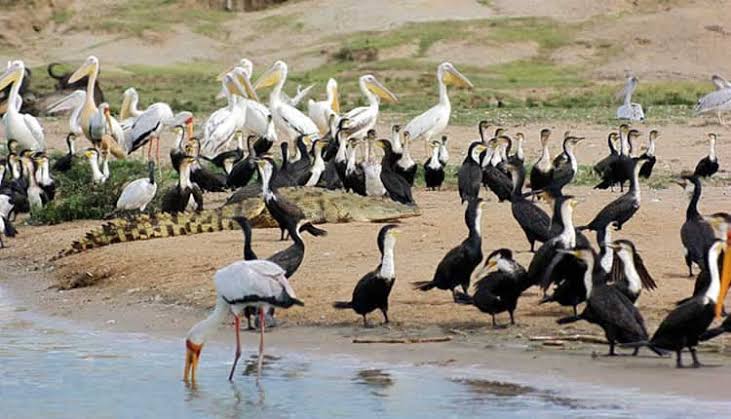
The next leg of the 10 Days Uganda birding safari brings you to the sweeping savannahs, crater lakes, and rich wetlands of Queen Elizabeth National Park. Boasting an incredible checklist of over 600 bird species—one of the highest totals for any protected area in Africa—this park is a dream destination. The crown jewel of birding here is the Kazinga Channel boat safari. This natural waterway connecting Lake Edward and Lake George brings you within meters of hundreds of waterbirds.
You will glide past dense concentrations of Great White and Pink-backed Pelicans, African Skimmers skimming the water's surface, Yellow-billed Storks, and various kingfishers. On the open savannah tracks of Kasenyi, the focus shifts to raptors, including the Martial Eagle and Bateleur, alongside terrestrial specialists like the Common Buttonquail, African Crake, and Temminck's Courser.
Where to Stay
- Luxury: Mweya Safari Lodge. Perched on a high peninsula commanding panoramic views of the Kazinga Channel, you can literally sit on the deck with binoculars and tick off dozens of waterbirds and raptors riding the thermals below.
- Mid-range / Budget: Kasenyi Safari Camp or Enganzi Game Lodge. Kasenyi puts you right in the heart of the lion-frequented savannah tracks for early starts, while Enganzi is perched on a volcanic rift valley scarp, offering great vistas and bush birding.
5. Bwindi Impenetrable National Park (Buhoma & Ruhija Sectors)
No 10 Days Uganda birding safari is complete without tackling the steep, mist-shrouded hillsides of Bwindi Impenetrable National Park. While famous for mountain gorillas, Bwindi is a UNESCO World Heritage site primarily recognized by birders for its astonishing collection of Albertine Rift endemics. The park is split into different altitudinal sectors; the lower-elevation Buhoma sector and the high-altitude Ruhija sector (reaching over 2,300 meters).
In the montane forests of Ruhija, the ultimate target is the critically endangered African Green Broadbill, found near the remote Mubwindi Swamp trail. Other high-altitude specialties include the Regal Sunbird, Archer's Robin-Chat, Rwenzori Apalis, and Grauer's Warbler. Down in Buhoma, walking trails yield views of the Short-tailed Warbler, Black Bee-eater, and Bar-tailed Trogon.
Where to Stay
- Luxury: Mahogany Springs Lodge (Buhoma) or Clouds Mountain Gorilla Lodge (Nkuringo). Mahogany Springs overlooks the pristine forest river, where sunbirds and weavers frequent the gardens. Clouds offers dramatic, high-altitude luxury on a ridge looking over the Virunga volcanoes.
- Budget / Mid-range: Gorilla Friends Lodge or Gorilla Mist Camp (Ruhija). These properties provide close, immediate access to the high-altitude trailheads of Ruhija, ensuring you can start the grueling mountain hikes early without long drives.
6. Lake Mburo National Park
The final avian gem on your 10 Days Uganda birding safari is Lake Mburo National Park, a compact park dominated by acacia woodlands, rocky ridges, and a string of tranquil lakes. This landscape hosts species that are difficult to find in western or northern Uganda. The prime habitat here is the tangled riverine swamp bordering the lake, which is the best place in the country to find the secretive African Finfoot.
Taking a quiet boat trip along the eastern fringe of Lake Mburo allows you to look under overhanging branches for the Finfoot, alongside the elusive White-backed Night-Heron. The surrounding acacia savannah and dry hillsides are excellent for finding the Red-faced Barbet (a localized specialty), Tabora Cisticola, Coqui Francolin, and the spectacular Long-tailed Starling. Because Mburo lacks elephants and lions, it is one of the few parks where you can do guided walking bird safaris.
Where to Stay
- Luxury: Mihingo Safari Lodge. An exquisite, eco-friendly luxury lodge built tastefully into a granite kopje (rocky hill). The infinity pool and open-air dining decks offer panoramic views across the park's valleys, making it easy to spot raptors at eye level.
- Mid-range: Rwakobo Rock. Set on a rocky ridge just outside the park gates, this lodge offers comfortable cottages and superb woodland birding directly on the property, where freckled nightjars regularly call at dusk.
10 Days Uganda birding safari tour
Welcome to 10 Days Uganda birding safari tour, a carefully planned journey built around Uganda’s most rewarding bird habitats. From freshwater wetlands and papyrus swamps to acacia savannas and deep forest ecosystems, this safari focuses on practical birding experiences with expert local guidance. Your schedule connects the best birding locations efficiently, so each day contributes real additions to your bird list. You will spend time where birds are most active, learning how to read habitat, observe behavior, and identify species using both sight and sound. The route includes classic wetland birding in Entebbe (Mabamba), diverse savanna birding at Lake Mburo, endemic-rich bird walks in Bwindi, and high-bird-diversity cruising and viewing in Queen Elizabeth National Park. Throughout the trip, we keep the pacing comfortable, allow time for rest and photography, and adjust plans based on daily conditions. If you are interested in Uganda’s signature species and forest endemics, this 10 Days Uganda birding safari tour is designed for a productive and well-guided experience.
Day 1: Entebbe Arrival & Mabamba Swamp
Start your 10 Days Uganda birding safari tour with arrival at Entebbe International Airport, followed by a smooth transfer to Mabamba Wetland. This area is well known for papyrus-lined channels and calm water where birds gather in predictable spots. After settling in, you will take a dugout canoe ride with your guide, using quiet movement and careful scanning to search for target wetland species. The main focus today is the Shoebill Stork, along with other papyrus-edge birds such as Papyrus Gonolek and African Jacana, depending on conditions. Your guide will explain how to approach birding on water—watching feeding zones, observing flight directions, and learning which sounds often indicate nearby birds. The day is planned to be active without being rushed, giving you time for photos, notes, and comfortable breaks. Evening wrap-up includes a short review of sightings and guidance for the next route toward Lake Mburo.
Day 2: Lake Mburo National Park
On Day 2 of your 10 Days Uganda birding safari tour, you travel south to Lake Mburo National Park. The journey includes birding stops that help you start building your species list before you arrive at the park. Once inside, you focus on acacia woodland and open savanna habitats where many birds appear throughout the day. Lake Mburo supports a mix of land and water birdlife, so your guide will plan viewing points with the best visibility and walking routes based on your interests. Expect to look for savanna favorites and water-associated species around the lake edges. Your guide will help you identify key targets such as Red-faced Barbet, Crested Francolin, and Brown-chested Lapwing, plus additional birds likely in the same habitats. The schedule includes short guided walks and longer scanning sessions from strategic viewpoints. By the end of the day, you should have several reliable sightings and a stronger understanding of how to spot birds in acacia environments.
Day 3: Lake Mburo National Park (Full Birding Day)
Day 3 continues your 10 Days Uganda birding safari tour with a full day dedicated to birding around Lake Mburo. Today’s plan focuses on repeated habitat coverage, which often improves results because birds can move between feeding and roosting areas. Your guide will concentrate on acacia-linked birds and seasonal water movements around the lake. You will spend time in areas where calls are common, using listening techniques to locate birds even when they remain partially hidden. The day is structured around multiple short sessions rather than one long outing, helping you maintain energy for field conditions. Targets remain centered on species such as Crested Francolin, Brown-chested Lapwing, and Red-faced Barbet, while also adding other savanna and waterbirds that appear with similar habitat preferences. When a new sighting happens, your guide will slow down the pace to allow proper observation, photography, and note-taking. In the evening, you will prepare for the forest section ahead by reviewing expected bird families and habitat cues.
Day 4: Bwindi Impenetrable National Park (Ruhija Sector)
Today begins the forest portion of your 10 Days Uganda birding safari tour as you transfer to Bwindi Impenetrable National Park, starting in the Ruhija Sector. Bwindi is one of Uganda’s strongest areas for forest-dependent bird species, with dense vegetation and varied microhabitats that influence what you see. After settling in, you will go for guided bird walks designed for optimum sightings in humid forest edge zones and quieter understory areas. Because forest visibility can be limited, your guide will emphasize how to identify birds by silhouette, movement, and calls. You will also learn how to pick good viewing positions so you do not miss birds passing through dense cover. The day is focused on building your endemic bird list early, with attention to Albertine Rift endemics and high-value forest species. Depending on timing and bird activity, you may also connect with swampy or stream-side pockets where bird diversity increases. The night is for rest and reviewing forest identification points before deeper walks tomorrow.
Day 5: Bwindi (Mubwindi Swamp Bird Walks)
On Day 5 of your 10 Days Uganda birding safari tour, you spend time around Mubwindi Swamp and nearby forest habitats. This area supports a concentration of forest birds and offers chances to observe species that are most active in swamp-edge vegetation. Your guide will plan routes that balance walking time with observation time, so you can watch feeding behavior and listen for calls in the most productive spots. The key focus includes searching for Grauer’s Broadbill, African Green Broadbill, and Regal Sunbird, depending on daily conditions and bird movement. Your guide will use habitat cues to guide you to likely perching and feeding areas, helping you improve identification accuracy during repeated sightings. The day also includes time for recording notes and taking photos when birds are in view. Because forest birds do not appear on a fixed schedule, patience and careful observation are part of the process, and your guide will manage timing to keep the outing productive. By evening, you should have new additions and clearer confidence with forest bird identification.
Day 6: Bwindi (Endemic Bird Focus in Ruhija/Buhoma Areas)
Day 6 continues your 10 Days Uganda birding safari tour with more guided bird walks in the Ruhija and Buhoma surrounding areas. The objective is to increase your forest species coverage by targeting different microhabitats rather than repeating the same locations. Your guide will concentrate on Albertine Rift endemics and other high-value forest birds that may be easier to detect in specific canopy levels, understory pockets, or humid trail sections. The pace is steady and field-practical, with frequent short stops for observation and note-taking. Listening remains important, and you will be encouraged to track calls before visual confirmation. Depending on movements and your sightings from earlier days, your guide may adjust the route to maximize chances of the most desired species. This is also a good day for refining techniques like spotting subtle differences in plumage and understanding how birds move through forest layers. Your day ends with a calm review of your bird list so far and preparation for the transition to savanna habitats in Queen Elizabeth National Park.
Day 7: Optional Gorilla Trekking or Additional Birding
Today offers flexible choices during your 10 Days Uganda birding safari tour. You can include an optional mountain gorilla trek in Bwindi, or choose to continue focused birding along forest edges. If you select gorilla trekking, your day still supports your birding goals by planning timing and route choices that keep field time balanced. If you prefer additional birding, you will spend the day in habitats where birds are likely to be active earlier in the day and where forest-edge views support better sightings. Your guide will choose routes based on bird activity and your prior sightings, focusing on adding new species and improving your identification of forest groups. In both options, the guiding principle is to keep the experience structured and safe while allowing quality observation time. Late afternoon is used for final scans and checking nearby viewpoints for any last-day forest birds. At the end of the day, you will review what you saw and confirm the next route to Queen Elizabeth National Park for aquatic and savanna birding.
Day 8: Queen Elizabeth National Park (Kazinga Channel Cruise)
On Day 8 of your 10 Days Uganda birding safari tour, you travel to Queen Elizabeth National Park and focus on birding around the Kazinga Channel. The cruise is one of the best ways to see waterbirds, raptors, and kingfishers concentrated along shorelines and feeding areas. After settling in, you will board for the boat cruise, scanning carefully for African Fish Eagle and other water-associated species. The channel also supports many pelican and kingfisher sightings, with daily results depending on bird movement and water conditions. Your guide will help you interpret behavior, such as where birds perch between flights and how they respond when prey is active. Photography stops and identification checks are built into the cruise plan so you do not miss brief sightings. After the boat time, you may add short birding sessions depending on your energy and schedule, using nearby viewpoints for additional observation. The day closes with a species list review, highlighting aquatic birds you may want to focus on more during the next day’s game drive.
Day 9: Queen Elizabeth National Park (Ishasha Birding-Linked Game Drive)
Day 9 continues your 10 Days Uganda birding safari tour with time in the Ishasha sector of Queen Elizabeth National Park. Ishasha is known for distinct landscapes, and it also offers birding opportunities where habitat variation supports different bird types. After breakfast, you will head out for a guided game drive that includes deliberate bird viewing stops. Your guide will keep the focus on birds by scanning trees, open areas, and field edges where species often call or perch. You will likely see raptors and other savanna birds, with the exact species depending on the day’s activity and weather. Instead of only driving between animal sightings, your guide plans pause to check for birds in likely habitats. This approach helps you remain productive even when wildlife movement is limited. If you already have strong coverage from earlier days, today becomes useful for adding savanna specialists and improving your confidence with raptors and open-country birds. The day ends with relaxed time to compile your notes and compare your sightings with the targets you wanted during the 10 Days Uganda birding safari tour.
Day 10: Departure (Maramagambo Forest Morning Birding)
Your final day of the 10 Days Uganda birding safari tour includes a morning birding walk in Maramagambo Forest. Starting early improves chances because many forest birds are active in morning light, and you have more manageable walking conditions. Your guide will tailor the walk based on your previous sightings, focusing on any remaining targets and habitat types that may still produce new additions. Maramagambo offers a supportive forest environment for last checks of bird calls and possible canopy movement. You will use observation methods from earlier forest days, including listening for calls, scanning likely perching zones, and tracking bird movement along trails. The session is designed to be productive while keeping the pace comfortable since you will be transferring to the airport afterward. After the morning birding, you will return for departure preparations and drive back to Kampala or Entebbe Airport, depending on your flight schedule. Before leaving Uganda, you’ll review highlights from your safari list, confirm the next steps for any optional add-ons, and share your most memorable species records.
Best Time for 10 Days Uganda Birding Safari Tour
The absolute best time for a 10 Days Uganda birding safari tour is during the dry seasons from December to February and June to September. These months provide optimal forest trail conditions in Bwindi and Kibale, making it much easier to track elusive forest specialties like the Green-breasted Pitta and various Albertine Rift endemics without heavy mud disruptions.
For birders wishing to maximize their species checklist, the November to April window is highly recommended. This period introduces a massive influx of Palearctic migratory birds from Europe and Northern Africa, which brilliantly overlap with Uganda's resident species. If your primary target is the spectacular breeding plumage and intense vocal displays of resident birds, the shoulder months of March and September offer incredible rewards, though you should prepare for occasional tropical showers. Throughout the year, early mornings remain the prime time for viewing the iconic Shoebill stork at Mabamba Wetland.
What to Pack for 10 Days Uganda Birding Safari Tour
Packing correctly ensures comfort across Uganda’s diverse habitats, from humid wetlands to high-altitude montane forests. High-quality optics are non-negotiable; bring a robust pair of waterproof binoculars (8x42 or 10x42 are ideal) and a camera with a powerful telephoto zoom lens, complete with spare batteries and extra memory cards for low-light forest photography.
For your wardrobe, pack lightweight, quick-drying clothing in neutral safari colors (greens, khakis, and browns). Long-sleeved shirts and long trousers are essential to protect against thick vegetation and stinging insects. You will absolutely need sturdy, broken-in waterproof hiking boots for forest trails, along with a wide-brimmed sun hat, high-SPF sunscreen, and an effective insect repellent containing DEET. Because equatorial weather is famously unpredictable, always keep a lightweight, packable rain jacket or poncho inside a waterproof daypack to shield your delicate electronics and field guidebooks from sudden, unexpected downpours during your daily excursions.
Booking 10 Days Uganda Birding Safari Tour with Roads of Adventure Safaris
Booking your 10 Days Uganda birding safari tour with us at Roads of Adventure Safaris guarantees a masterfully orchestrated, seamless avian expedition across East Africa’s premier birding corridors. As trusted ground handling experts based right here in Kampala, we design custom, tailor-made itineraries that precisely match your pace, budget, and specific target species lists.
We pair you with Uganda’s top-tier, certified local specialist birding guides who possess an uncanny ability to identify rare species by calls alone. You will traverse the country in extreme comfort inside our custom-built 4x4 safari vehicles, featuring pop-up roofs optimized for unobstructed photography. From securing competitive primate tracking permits in Kibale and Bwindi to handpicking eco-conscious luxury or mid-range lodges with high bird activity right on the property, we handle every logistical detail. Partner with us to transform your East African birding dreams into an unforgettable, bucket-list reality.
