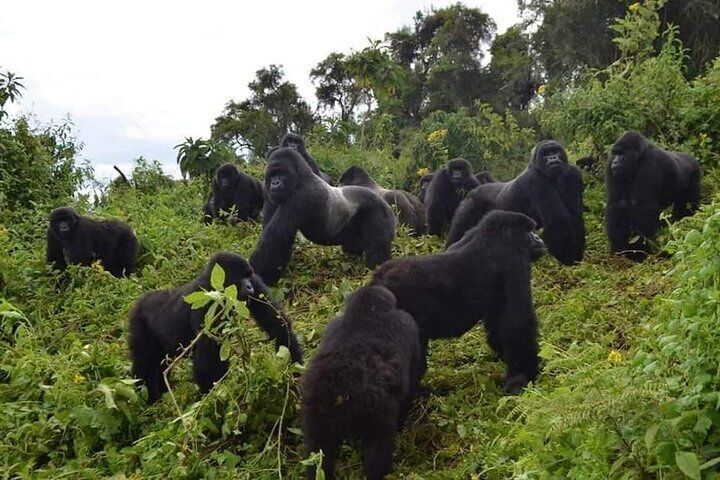
The best time for a 14-day Rwanda gorilla trekking and wildlife safari is during the long dry season from June to September or the short dry season from December to February. These periods offer drier hiking trails for gorilla trekking in Volcanoes National Park and improved wildlife viewing in Akagera National Park.
14-days-luxury-rwanda-primate-safari-and-uganda-safari-tour-combo
14-days-magical-rwanda-photography-safari
14-days-uganda-and-rwanda-safari-tour-itinerary
14-days-of-rwanda-uganda-gorilla-safari-and-zanzibar-beach-holidays
Best Time Breakdown:
- Long Dry Season (June–September): This is considered the best time for trekking as trails are less slippery and vegetation is less dense, making it easier to navigate, though gorilla movements may be deeper into the forest.
- Short Dry Season (December–February): Another excellent time, offering drier conditions and low malaria risk.
- Best for Wildlife (Akagera): Game drives are best during dry months because wildlife tends to congregate around water sources
Other Considerations:
- Wet Season (March–May, October–November): These months bring heavy rain, making trekking more challenging, but the landscapes are lush, fewer tourists are present, and it is a good time for bird watching.
- Booking: It is highly recommended to book your gorilla permits at least 12 months in advance, especially for travel during the June–September peak season
14-day Rwanda Gorilla Trekking and Wildlife Safari
This 14-day Rwanda Gorilla Trekking and Wildlife Safari is a curated odyssey through a nation defined by its vertical landscapes and remarkable conservation success. In 2026, Rwanda stands as the pinnacle of sustainable luxury, offering a sophisticated "low-volume, high-impact" safari model. Your journey begins in the visionary capital of Kigali before traversing the eastern savannas of Akagera National Park for "Big Five" encounters. You will then descend into the ancient depths of Nyungwe Forest, a prehistoric sanctuary for chimpanzees and rare primates. The narrative culminates in the mist-shrouded Virunga Mountains, the sacred grounds of the mountain gorilla. Between these wild landmarks, you will find tranquility on the emerald shores of Lake Kivu, experiencing the "thousand hills" as a living story of renewal. This two-week adventure is designed for the discerning traveler seeking a profound, soul-stirring connection with the natural world in its most pristine and protected form.
Day 1: Arrival and Kigali Immersion
Your Rwandan journey commences in Kigali, celebrated as Africa’s cleanest and most organized city. Upon arrival at Kigali International Airport, you will be met by a private guide and transferred to your boutique hotel. The afternoon is dedicated to a guided city tour, including a visit to the Kigali Genocide Memorial. This site provides a somber but vital understanding of the nation’s history and its inspiring path toward reconciliation. Later, explore the vibrant Nyamirambo neighborhood, visiting the Women’s Center for a glimpse into local life and artisanal crafts. The evening concludes with a welcome dinner at a restaurant offering panoramic views of the city’s illuminated hills, introducing you to the sophisticated culinary scene that blends traditional Rwandan ingredients with international flair.
Day 2: Transfer to Akagera National Park
Leaving the urban energy of Kigali behind, you head east toward the border with Tanzania. The landscape shifts from terraced highlands to the expansive, rolling savannas of Akagera National Park. As Rwanda’s only savanna park, Akagera is a testament to successful restoration, now hosting all members of the "Big Five." You will arrive at your lodge in time for a late lunch, followed by an afternoon game drive. The park’s northern sector is particularly rich in wildlife; keep your eyes peeled for lions, giraffes, and large herds of buffalo. The scenery, characterized by acacia woodlands and a chain of spectacular lakes, provides a beautiful contrast to the mountainous regions you will visit later. Dinner is served under the vast African sky.
Day 3: Full Day "Big Five" Safari
Today is dedicated to exploring the diverse ecosystems of Akagera. A morning game drive focuses on the Mutumba Plains, where you have the best chance of spotting the reintroduced black and white rhinos grazing in the tall grass. The park’s predator population, including lions and leopards, is most active in the early hours. In the afternoon, you will transition to the water for a boat safari on Lake Ihema. This provides a unique vantage point to observe massive pods of hippos and some of the largest Nile crocodiles in Africa. Bird enthusiasts will be delighted by sightings of the African fish eagle and the rare, prehistoric-looking shoebill stork. This full day highlights the successful return of biodiversity to this region.
Day 4: Akagera to Nyungwe Forest
A scenic transit day takes you from the eastern plains across the southern heartland of Rwanda. Along the way, you will visit the King’s Palace Museum in Nyanza, an architectural reconstruction of a traditional royal residence. Here, you can meet the sacred, long-horned Inyambo cattle, known for their impressive size and the rhythmic songs their keepers sing to them. The journey continues through emerald tea plantations that cling to the steep hillsides. By late afternoon, the air becomes cool and misty as you enter the fringes of Nyungwe Forest National Park. This ancient montane rainforest is one of the oldest in Africa, serving as a sanctuary for 13 primate species. You will check into your forest-edge lodge as the sounds of the jungle begin.
Day 5: Chimpanzee Tracking and Canopy Walk
The day begins before dawn with an adrenaline-filled trek to find habituated chimpanzees. Accompanied by expert trackers, you will plunge into the thick undergrowth, listening for the thunderous "pant-hoot" calls that echo through the canopy. Finding a community of these energetic primates as they feed and socialize is a raw and thrilling experience. After the trek, return to the lodge for lunch. The afternoon features the famous Nyungwe Canopy Walkway. This 160-meter-long suspended bridge hangs 70 meters above the forest floor, offering a dizzying perspective on the rainforest’s upper layers. From this height, you can spot rare monkeys and endemic birds that rarely descend to the ground, all while surrounded by the vast, undulating sea of emerald green.
Day 6: Colobus Monkeys and Forest Trails
Today you explore the quieter side of Nyungwe’s biodiversity. You will trek to see the Angolan Colobus monkeys, which are unique for their striking black-and-white coats and their tendency to move in massive troops—sometimes numbering over 300 individuals. The sight of hundreds of monkeys leaping through the trees simultaneously is a spectacular display of forest life. In the afternoon, take a guided hike on the Isumo Waterfall Trail. This route winds through fragrant tea fields before descending into a deep rainforest ravine filled with giant ferns and orchids, culminating at a powerful 17-meter waterfall. The combination of primate encounters and the serene beauty of the forest’s interior provides a restorative experience, allowing you to fully absorb the prehistoric energy of one of Africa’s most vital watersheds.
Day 7: Transfer to Lake Kivu (Karongi)
After a final breakfast overlooking the forest, you head north along the "Kivu Belt," a scenic road that hugs the jagged coastline of Lake Kivu. You will arrive at the lakeside town of Karongi, often considered the most picturesque point on the lake. After checking into your resort, enjoy an afternoon boat trip to Napoleon Island, named for its resemblance to the emperor's hat. The island is home to a massive colony of fruit bats, and a short hike to the summit offers a panoramic view of the lake’s emerald islands and the distant, smoking volcanoes of the Congo. As evening falls, watch the "singing fishermen" head out in their traditional three-hulled canoes; their rhythmic chants drifting across the water provide a peaceful coastal soundtrack.
Day 8: Relaxation and Rubavu
Continuing north along the lake, you reach Rubavu (Gisenyi), a town with a relaxed, Mediterranean atmosphere and palm-fringed sandy beaches. This day is designed for decompression and leisure. You can explore the local markets, visit a coffee washing station to learn about the "seed-to-cup" process, or simply enjoy a swim in the clear, bilharzia-free waters of the lake. For the more active, kayaking along the shore offers a quiet way to observe lakeside life and the vibrant birdlife. Rubavu is also a hub for the Congo Nile Trail, and a short walk along the trail provides spectacular vistas of the lake and the surrounding terraced hills. The evening is spent enjoying fresh tilapia, preparing for the high-altitude volcanic adventures tomorrow.
Day 9: Journey to Volcanoes National Park
Leaving the lake behind, the landscape becomes more dramatic as the five massive peaks of the Virunga Massif come into view. You are entering the realm of the mountain gorilla. Upon arrival in Musanze, you will check into your lodge and visit the Ellen DeGeneres Campus of the Dian Fossey Gorilla Fund. This world-class facility provides a deep dive into the history of gorilla conservation and the legendary work of Dian Fossey. Understanding the science and the struggle behind the survival of these great apes adds immense emotional weight to the encounter you will have tomorrow. The evening is spent by the fireplace, listening to the mountain mists settle over the bamboo forests as you prepare for the trip's pinnacle.
Day 10: Mountain Gorilla Trekking
This is the pinnacle of your Rwandan adventure. After a morning briefing at the park headquarters, you will be assigned to a gorilla family and head into the forest with expert rangers. The trek through the bamboo thickets can be physically demanding, but all effort is forgotten the moment you find them. Spending one hour in the presence of a silverback and his family is a silent, spiritual experience. Watching them groom, play, and forage just meters away is a rare privilege that defies description. You will return to the lodge for a celebratory lunch and a restorative "post-trek" massage. The afternoon is dedicated to reflection, allowing the magnitude of the connection you’ve just made with our closest wild relatives to truly sink in.
Day 11: Golden Monkey Tracking
Return to the forest today to track the endangered Golden Monkeys. These primates are endemic to the Virunga woods and are known for their vibrant orange-gold fur and playful, energetic nature. Unlike the stoic gorillas, golden monkeys are constantly in motion, leaping through the bamboo and foraging on the forest floor. The trek is generally shorter and stays at lower elevations, providing a lighter but equally charming wildlife experience. In the afternoon, visit the Iby’Iwacu Cultural Village (Gorilla Guardians). Here, former poachers have been transformed into conservation ambassadors. You will witness traditional dancing, learn about ancient medicine, and see how tourism revenue has revitalized the local community. It is a powerful demonstration of how people and wildlife can thrive together in modern Rwanda.
Day 12: Dian Fossey Hike or Mount Bisoke
For your final day of mountain activity, you have a choice of legendary treks. The Dian Fossey hike leads to the ruins of her Karisoke Research Center and her grave, situated in the high saddle between Mount Bisoke and Mount Karisimbi. It is a pilgrimage for any conservationist. Alternatively, for those seeking a physical challenge, the hike up Mount Bisoke leads to a stunning crater lake at the summit. Both treks offer incredible views and the chance to see forest elephants or rare birds. The high-altitude environment is exhilarating, providing a rugged and rewarding conclusion to your time in the Virungas. The evening is spent back at the lodge for a farewell "mountain dinner," celebrating the endurance and beauty of the Rwandan wilderness.
Day 13: Twin Lakes and Return to Kigali
Before heading back to the capital, take a scenic drive to the Twin Lakes, Burera and Ruhondo. These deep blue lakes are separated by a narrow strip of land and offer some of the most dramatic vistas in the country, with the volcanoes as a constant backdrop. A boat trip on the lakes reveals a quiet, pastoral side of Rwanda. After lunch overlooking the water, you begin the drive back to Kigali. The terraced hillsides provide a final, lasting image of why this is called the "Land of a Thousand Hills." Upon arrival in Kigali, you can enjoy some last-minute souvenir shopping at the Caplaki Craft Village before a final celebratory dinner at one of the city's top-rated restaurants.
Day 14: Final Souvenirs and Departure
On your final day, enjoy a leisurely breakfast before exploring Kigali’s thriving art scene. Visit the Inema Arts Center to see how contemporary Rwandan artists are interpreting their country's journey. This is also a great time to pick up world-class Rwandan coffee or hand-woven Agaseke baskets to take home. Your guide will provide a transfer to Kigali International Airport for your departure flight. You leave Rwanda not just with a collection of wildlife sightings, but with a deep respect for a nation that has mastered the art of resilience, conservation, and hospitality. The memories of the mist-covered volcanoes and the eyes of a silverback will stay with you long after you’ve left the hills behind.
14-day Rwanda safari offers a deep dive into the "Land of a Thousand Hills," transitioning from the low-lying savannas of the east to the high-altitude rainforests of the west. Because Rwanda is small and well-connected, 14 days allows for an unhurried, comprehensive exploration of its three major national parks and its poignant cultural history
When is the absolute best time for a 14-day Rwanda safari?
The absolute best time for a comprehensive Rwanda safari is during the long dry season from June to September. During these months, the country experiences its most stable weather, with clear skies and minimal rainfall. For a traveler spending 14 days in the country, this stability is crucial because it affects every leg of the journey differently. In the mountainous northwest, dry weather makes the steep slopes of the Volcanoes National Park much safer and easier to navigate.
In the east, the dry weather causes the thick vegetation of Akagera to thin out, concentrating wildlife around permanent water sources. Furthermore, the dry season is the best time for exploring the canopy walks and tea plantations around Nyungwe. While rain is always a possibility in a tropical rainforest, the dry season significantly reduces the chance of "washout" days, ensuring that your photography and outdoor activities proceed as planned. A secondary dry window occurs from December to February, which is also excellent, particularly for those looking to escape the northern hemisphere's winter.
What is the peak travel season in Rwanda?
The peak season coincides with the long dry season, spanning June, July, August, and September. During this time, the demand for gorilla permits and high-end lodge accommodation reaches its zenith. Because Rwanda limits gorilla trekking to small groups to protect the primates, permits for these months often sell out six months to a year in advance.
The atmosphere in Kigali and the national parks is vibrant during the peak season, with many international travelers and researchers active in the field. It is also the time when the "Kwita Izina" gorilla naming ceremony usually takes place, attracting global conservationists and celebrities. While the trails are at their busiest, the "busy" in Rwanda is still very controlled compared to other African destinations, as the government prioritizes high-value, low-impact tourism. If you choose to travel during this peak window, your 14-day itinerary must be locked in early to ensure you secure the specific sectors and lodges you desire.
Is it possible to go gorilla trekking in the wet season?
Yes, gorilla trekking is open year-round, including during the "long rains" of March to May and the "short rains" of October to November. Trekking in the wet season is a visceral, adventurous experience, but it requires a higher level of physical fitness and mental preparation. The trails in Volcanoes National Park become extremely muddy and slippery; a 2-hour hike in the dry season can easily turn into a 4-hour ordeal in the mud.
However, there is a silver lining. During the rainy season, gorillas often descend to the lower slopes of the volcanoes to feed on fresh bamboo shoots, which are abundant at that time. This can actually lead to shorter overall treks from the park headquarters. You will need high-quality waterproof gear and a sense of humor, but the reward is an intimate encounter with the Great Apes in a misty, ethereal forest that feels like a scene from Gorillas in the Mist.
Are there benefits to visiting during the rainy season?
While the dry season is the most "optimal" for hiking, the rainy season (the "Green Season") offers distinct advantages for the savvy traveler. First and foremost is the aesthetic beauty of the country. Rwanda’s terraced hills and rainforests turn an impossibly vibrant shade of emerald, providing a stunning backdrop for landscape photography. The air is exceptionally clear as the rain washes away dust and haze, allowing for crisp views of the volcanic chain.
From a logistical standpoint, the rainy season is the best time for budget-conscious travelers. Many luxury lodges offer significant "low season" discounts, sometimes dropping their rates by 20–40%. Additionally, the parks are far less crowded, giving you a more private and exclusive feel during game drives and forest walks. For those interested in chimpanzees in Nyungwe, the rainy season is often better because fruit is abundant, meaning the chimps don't have to travel as far or as high, making them easier to locate.
How is the weather in Volcanoes National Park?
The weather in Volcanoes National Park is best described as unpredictable and Afro-montane. Even during the "absolute best" dry months, the park’s high altitude (ranging from 2,400m to over 4,500m) means that clouds can roll in at any moment. The temperatures are significantly cooler than in Kigali; early mornings at the trekking briefings can be quite chilly, often dipping to 10°C (50°F).
As you ascend into the forest, the humidity increases. The park is characterized by frequent "mists" that cling to the volcanic peaks of Karisimbi, Bisoke, and Sabyinyo. Because it is a rainforest, sudden afternoon downpours are common. Travelers should expect a "four seasons in one day" experience. This climate is what supports the dense bamboo and hagenia forests that the gorillas call home. For a 14-day trip, it is wise to schedule your Volcanoes segment toward the middle or end, giving yourself time to acclimate to the Rwandan climate before tackling the high-altitude humidity.
Are gorillas easier to find in the dry season?
In terms of physical access, yes, they are easier to reach because the trails are stable. You can move faster, and the guides can navigate the terrain with more agility. However, in terms of wildlife behavior, the gorillas can actually be more mobile in the dry season. When food is scarce at lower altitudes, they may climb higher into the sub-alpine zones to find specific roots and bark.
This means that while the walking is "easier" because the ground is dry, the duration of the trek might be longer if the family has moved deep into the interior. Conversely, in the wet season, they are often "lazy" and stay near the bamboo zones at the base. Regardless of the season, Rwanda uses a sophisticated tracking system where advance teams locate the gorillas at dawn, ensuring a 99% success rate for visitors. The "ease" of the dry season is primarily about your own comfort and the stability of your footing.
Do gorillas move more in the wet or dry season?
Gorilla movement is dictated primarily by the availability of food. During the dry season, the lack of rain can cause some of the lower-altitude vegetation to dry out, prompting the silverback to lead his family higher up the slopes in search of succulent wild celery and thistle. These treks can be long, but the dry ground makes the journey manageable for tourists.
In the wet season, the abundance of food—specifically the highly prized, protein-rich bamboo shoots—keeps the families relatively stationary at the lower boundaries of the park. While they move less, the thick mud and dense, wet foliage can make following them through the brush more difficult. For a 14-day safari, the dry season remains the winner for most people because the human effort required to keep up with a moving group is much lower when you aren't fighting the mud.
When is the best time for photography?
Photography in Rwanda is a tale of two seasons. Professional wildlife photographers often prefer the "Green Season" (March–May) despite the logistical hurdles. The soft, diffused light from the overcast sky eliminates the harsh shadows found in the midday sun of the dry season, which is crucial when photographing the dark, textured fur of a gorilla. The lack of dust also ensures that your equipment stays cleaner and your "long shots" are sharper.
In contrast, the dry season (June–September) offers the "golden hour" light that many travelers love. The sunsets over the Twin Lakes (Burera and Ruhondo) are spectacular when the sky is clear. However, the dry season can sometimes bring a "haze" from regional agricultural burning. For a 14-day trip, if photography is your primary goal, consider the shoulder months of June or September, which offer a balance of manageable trails and lush, vibrant colors.
When is the best time for other primates?
For chimpanzee tracking in Nyungwe National Park, the rainy season is actually often superior. Chimpanzees are highly active when fruit is ripening, which happens following the rains. In the dry season, they may retreat deep into the forest interior or high into the canopy to find moisture, making them harder to spot and follow.
Other primates, such as the Golden Monkeys in Volcanoes National Park or the Colobus monkeys in Nyungwe, are active and visible year-round. However, for the most comfortable experience walking through the dense canopy of Nyungwe—especially if you want to do the famous Canopy Walk—the dry months are better to avoid slippery metal bridges and misty views. For a 14-day itinerary, Nyungwe is a highlight that benefits from the same June–September window as the gorillas.
When is the best time to visit Akagera National Park?
Akagera National Park, Rwanda's only savanna park, is best visited during the long dry season (June to September). This is because Akagera's landscape is characterized by thick acacia woodland and tall grass. During the rainy season, the grass can grow several meters high, making it very difficult to spot lions, leopards, or the smaller serval cats.
As the dry season progresses, the grass dies back and the water holes shrink. Wildlife is forced to congregate around the shores of Lake Ihema and the northern swamps. This makes game viewing much more predictable and productive. If you are doing a 14-day safari, Akagera is usually your first stop. Seeing the "Big Five" (rhino, lion, leopard, elephant, and buffalo) is much easier when the vegetation is sparse. The heat in Akagera is also more manageable in the dry season, as the humidity is lower than in the forest regions.
When is the Kwita Izina gorilla naming ceremony?
Kwita Izina is Rwanda’s most famous cultural and conservation event, typically held in September. Based on a centuries-old Rwandan tradition of naming human children in the presence of family and friends, this event sees the naming of all infant gorillas born in the previous year. It is a massive celebration featuring traditional music, dancing, and speeches from global conservation leaders.
For a 14-day safari traveler, timing your trip to coincide with Kwita Izina adds a profound cultural layer to your experience. However, be aware that this is the busiest week of the year for the tourism industry. Hotels in Musanze and Kinigi will be fully booked months in advance, and traffic around the park headquarters will be heavy. If you want to attend, you must plan your 14-day itinerary at least 9–12 months in advance to secure your spot in the festivities.
Are there any times to avoid visiting Rwanda?
There are no times when Rwanda is "closed," but April requires a specific kind of sensitivity. Meteorologically, it is the peak of the long rains, which can make travel slow. More importantly, April 7th marks the start of Kwibuka, the national commemoration of the 1994 Genocide against the Tutsi. For the following 100 days, but particularly in the first week of April, the country is in a state of solemn mourning.
While tourism continues, some entertainment venues may be closed, and the atmosphere is very quiet. It is a time for reflection rather than loud celebration. Many travelers find visiting the Kigali Genocide Memorial during this time to be a deeply moving and educational experience, but it is important to be respectful of the national mood. If you are looking for a high-energy, festive safari, you might prefer to avoid the first half of April and instead target the drier, more celebratory months of the mid-year.
How far in advance should I book my 14-day trip?
For a 14-day safari that includes gorilla trekking, the "Gold Standard" for booking is 6 to 10 months in advance. While you can sometimes find last-minute permits in the rainy season, the peak dry season permits (June–August) are strictly limited and sell out rapidly.
Because a 14-day trip involves multiple high-demand activities—gorilla trekking in Volcanoes, chimpanzee tracking in Nyungwe, and specific luxury lodges—you are essentially trying to align several "moving parts." Booking early ensures you get the best permit slots (some gorilla families are easier to reach than others) and ensures your domestic logistics, such as helicopter transfers or specific 4x4 vehicles, are guaranteed. If you are planning a trip for the December holidays, 12 months in advance is not too early to start the process.
What should I pack for the dry season?
Packing for Rwanda is a challenge because of the diversity of the 14-day route. Even in the dry season, you need a "dual-wardrobe" approach.
- For Akagera/Kigali: Light, breathable cotton clothing in neutral colors (khaki, tan, green) is best. Avoid blue and black, as they attract tsetse flies in the savanna.
- For Volcanoes/Nyungwe: You need technical layers. Even if it doesn't rain, the forest is damp. Pack moisture-wicking base layers, a fleece for the cold nights, and a high-quality, breathable rain shell.
- The Essentials: Gaiters and gardening gloves are the "secret weapons" of gorilla trekking; gaiters keep mud and ants out of your boots, and gloves protect your hands from stinging nettles. Don't forget sturdy, broken-in hiking boots with deep lugs for grip. Even in the dry season, the forest floor is rarely "flat."
Is 14 days enough for a full Rwanda safari?
Yes, 14 days is the perfect duration for a comprehensive Rwanda safari. Rwanda is roughly the size of Maryland or Albania, meaning drive times between major hubs are usually only 3 to 5 hours. A 14-day itinerary allows you to avoid the "one-night stand" travel style.
A typical 14-day breakdown looks like this:
- Days 1-3: Kigali (Memorial, markets, and food scene).
- Days 4-6: Akagera National Park (Savanna Big Five and boat trips).
- Days 7-10: Nyungwe National Park (Chimpanzees, canopy walk, and tea estates).
- Days 11-14: Volcanoes National Park (Gorillas, Golden Monkeys, and Twin Lakes).
Booking 14 Days Rwanda gorilla trekking with us Roads of Adventure safaris
Book a 14-day Rwanda gorilla trekking safari with Roads of Adventure Safaris for a tailored experience including Volcanoes NP, Akagera National Park (Big Five), and Nyungwe Forest. They offer mid-range to luxury logistics, securing Gorilla/Chimpanzee permits, 4x4 transport, and lodge bookings. Contact them at info@roadsofadventuresafaris.com
