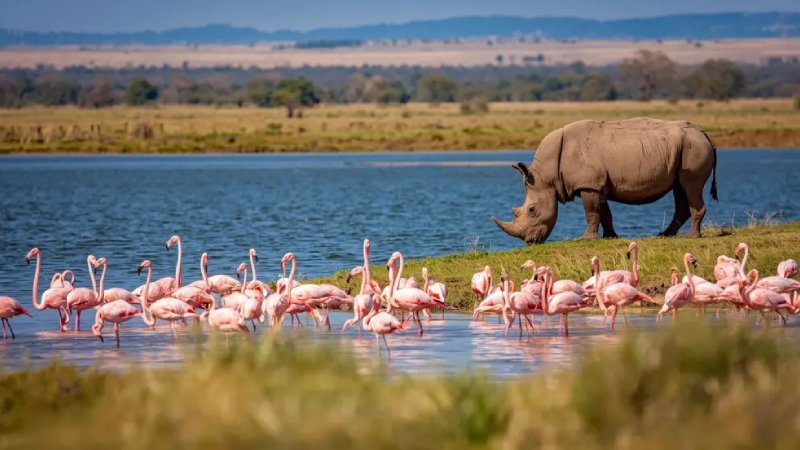
Imagine standing on the edge of the Great Rift Valley, watching a sea of pink flamingos stretch across the water while a pride of lions rests in the shade nearby. That’s the magic of Lake Nakuru National Park. Unlike massive, sprawling reserves where you can drive for hours seeing only brush, this compact paradise packs an entire bucket-list safari into one incredible view. It’s an absolute must-see on any Kenya tour, giving you the rare chance to spot both black and white rhinos, the endangered Rothschild’s giraffe, and elusive leopards, all without the endless driving.
3-days-lake-nakuru-safari-in-kenya
3-days-lake-nakuru-and-lake-naivasha-africa-safari-tour-package
4-days-budget-masai-mara-safari-and-lake-nakuru
5-day-best-luxury-kenya-safari-to-amboseli-lake-nakuru-and-maasai-mara-safari-tour
6-days-maasai-mara-nakuru-amboseli-affordable-budget-kenya-safari
7-days-perfect-kenya-wildlife-safari-and-optional-hot-air-balloon-safari
The Rhino Sanctuary
One of the most compelling reasons to include Lake Nakuru National Park on your Kenya tour is its status as a world-class haven for rhinos. Established as the country’s first official National Rhino Sanctuary, this heavily protected zone has become an extraordinary conservation success story. For travelers, this means Lake Nakuru is one of the absolute best and most reliable places in East Africa to view these magnificent, prehistoric creatures in the wild.
Unlike larger parks where tracking rhinos can feel like searching for a needle in a haystack, the compact layout of Lake Nakuru highly concentrates your chances. On a typical game drive, you have a fantastic opportunity to see both the critically endangered black rhino and the more social Southern white rhino.
Distinguishing between the two is a thrilling highlight of any safari. Your guide will point out the hooked lip of the black rhino, adapted for browsing on thick acacia bushes, and contrast it with the wide, square jaw of the white rhino, which acts like a lawnmower on the park's open grasslands. Watching a crash of white rhinos graze peacefully against the backdrop of the fever trees, or spotting a solitary black rhino emerging from the dense thickets, offers a profound glimpse into a world that passionate conservationists have fought hard to protect. It’s an intimate, impactful wildlife encounter that defines the spirit of a true Kenyan safari.
Predators
No Kenya tour is complete without the adrenaline rush of tracking Africa’s big cats, and Lake Nakuru National Park delivers big thrills in a small package. The park’s diverse terrain—ranging from dense acacia woodlands to dramatic rocky escarpments—creates the perfect hunting ground for stealthy predators. While the open savannahs elsewhere require hours of driving to spot a pride, Lake Nakuru’s unique geography forces wildlife into a smaller radius, making predator sightings remarkably frequent.
Lions are the undisputed royalty here. They can often be seen resting in the shade of the fever trees or lounging along the rocky ridges of Lion Hill, surveying the plains below for their next meal. Because the park's lion population is accustomed to safari vehicles, visitors are often treated to up-close views of these magnificent pride leaders.
Even more exciting for seasoned safari-goers is Lake Nakuru’s reputation as an excellent spot for viewing the elusive leopard. These solitary, spotted cats love the park’s dense yellow-barked acacia trees, where they frequently drape themselves over high branches to sleep off a meal or keep their kills safe from hyenas. Scanning the tree canopies with your binoculars is a thrilling exercise in patience that often rewards you with a glimpse of a dangling tail or a pair of golden eyes. Keep your eyes on the open plains too, as the occasional cheetah can be spotted putting its unmatched speed to the test.
Rare & Grazing Wildlife
Beyond the big cats and rhinos, Lake Nakuru National Park is a thriving ecosystem bustling with an incredible variety of grazing herbivores. A major highlight for any traveler on a Kenya tour is the chance to see the majestic Rothschild’s giraffe. This is one of the most endangered giraffe subspecies in the world, easily recognizable by its unique coat pattern and its distinct white "socks" that stop at the knees. Introduced to the park in the 1970s for their protection, these towering giants have thrived here, and watching them gracefully browse the tops of the acacia trees is a mesmerizing sight.
As you navigate the park’s well-maintained tracks, you’ll find yourself surrounded by a vibrant tapestry of African wildlife. Massive herds of Cape buffalo—one of the legendary "Big Five"—roam the marshy edges of the lake, their formidable horns and intense gazes making for incredible photographs.
The grasslands are constantly alive with movement. You’ll encounter dazzles of zebras trotting alongside elegant waterbucks, as well as family groups of warthogs trotting with their tails pointed straight up in the air like radio antennas. Skittish impalas leap effortlessly through the brush, while Defassa waterbucks, with their long shaggy coats, stay close to the water source. The sheer volume of grazing animals ensures that every turn of the safari vehicle reveals a new scene of wild harmony, offering a deeply satisfying wildlife-viewing experience.
Birdlife
For decades, Lake Nakuru National Park has held a legendary status among birdwatchers and photographers worldwide. It is best known for the breathtaking spectacle of its flamingo populations. Depending on water levels and algae blooms, massive flocks of both lesser and greater flamingos can gather along the shallows, turning the shoreline into a vibrant, shimmering ribbon of pink. Watching thousands of these elegant birds filter-feeding simultaneously, or taking flight in a synchronized rush of pink wings against the blue Kenyan sky, is an unforgettable highlight of any Kenya tour.
However, the park's avian wonders extend far beyond its famous pink residents. The lake and its surrounding wetlands, woodlands, and cliffs host a staggering 400 recorded bird species, making it a certified birdwatcher’s paradise.
As you drive along the water’s edge, you will encounter massive great white pelicans working together in fishing fleets, alongside elegant grey herons and colorful yellow-billed storks wading through the shallows. Look up into the dead trees bordering the lake, and you are highly likely to spot the majestic African fish eagle perched on a high branch, throwing its head back to unleash its iconic, piercing call. From brilliant little malachite kingfishers darting across the streams to massive martial eagles soaring over the cliffs, the sheer density and diversity of birdlife here adds a rich, colorful layer to the safari experience that captivates even casual travelers.
Primates
While the big game and birds often steal the headlines, the primates of Lake Nakuru National Park add a delightful element of energy and entertainment to your Kenya tour. The park’s varied habitats—ranging from sheer rocky cliffs to lush, dense riverine forests—provide the ideal home for several distinct primate species, each with its own unique social dynamics and behaviors.
The most visible and famous of these residents are the olive baboons. They are particularly fond of Baboon Cliff, a popular elevated viewpoint that offers travelers a stunning panoramic gaze over the entire lake. Here, you can watch entire baboon troops interacting; mischievous juveniles chase each other around the rocks, mothers fiercely guard their tiny infants, and powerful alpha males keep a watchful eye on the perimeter. They are highly habituated to humans, making them fascinating (and often comical) to observe up close, though keeping your vehicle windows rolled up is a wise choice!
In the greener, forested sections of the park, a quieter look into the canopy will reward you with different sightings. Vervet monkeys, with their distinctive black faces and cheeky personalities, dart through the lower branches, occasionally dropping down to forage. If you look higher up into the ancient fever trees, you might catch a glimpse of the strikingly beautiful black-and-white colobus monkeys. Watching these elegant primates leap effortlessly between high branches, their long, flowing white tails trailing behind them like capes, is a magical safari moment.
What are the popular activities to do at lake Nakuru on Kenya tour
Popular activities at Lake Nakuru National Park in Kenya include birdwatching tours to view millions of vibrant flamingos, guided nature walks along the Makalia Falls Trail, and game drives to spot endangered black and white rhinos, lions, and leopards
Birdwatching
For decades, Lake Nakuru has been heralded as a world-class birding destination. The star attractions are the millions of Greater and Lesser Flamingos that blanket the shallow, alkaline waters, creating a shifting, brilliant mosaic of bright pink along the shoreline. Beyond this iconic spectacle, the park's diverse wetlands, forests, and acacia woodlands provide a sanctuary for over 450 distinct avian species.
As you navigate the lake's edges, you will encounter massive great white pelicans working in unison to fish, alongside elegant grey herons and colorful yellow-billed storks wading through the shallows. Look skyward or toward the dead trees framing the water, and you are highly likely to spot the majestic African fish eagle, easily identifiable by its striking white head and piercing, iconic call. From vibrant little malachite kingfishers darting across the streams to massive martial eagles soaring high over the cliffs, the sheer density and diversity of birdlife here adds a rich, colorful layer to the safari experience that captivates even casual travelers.
Wildlife Game Drives
Taking part in morning and afternoon game drives is the classic way to explore Lake Nakuru’s diverse habitats. Because the park packs an entire safari experience into a relatively compact area, your time spent driving between wildlife sightings is drastically reduced. These drives offer exceptional opportunities to view four of the legendary "Big Five"—lions, leopards, Cape buffaloes, and rhinos—all thriving within a single, interconnected ecosystem.
The early morning drive is particularly magical; as the mist rises off the lake, predators like lions are often seen active or resting along the rocky ridges of Lion Hill. Your expert guide will also scan the high branches of the yellow-barked acacia trees, where elusive leopards are known to drape themselves safely away from ground threats. As you transition into the open grasslands, you'll encounter herds of zebras, waterbucks, and the endangered Rothschild’s giraffe. For the sharp-eyed adventurer, the dense woodlands occasionally reveal massive African rock pythons resting quietly in the undergrowth.
Rhino Tracking
Lake Nakuru National Park is one of Kenya’s most successful conservation stories, serving as a premier, heavily protected sanctuary for both black and white rhinoceroses. Tracking these magnificent, prehistoric creatures is a cornerstone of any itinerary here. Because the park is completely fenced to deter poachers, the rhino populations have flourished, offering visitors one of the highest success rates for sightings anywhere in East Africa.
Guided safaris regularly take you through the open acacia forests and lakeside grasslands where these giants love to feed. Your guide will teach you how to distinguish between the two species: the critically endangered black rhino, a solitary browser with a hooked lip meant for eating twigs, and the more social Southern white rhino, featuring a wide, square jaw perfect for grazing on grass. Watching a mother white rhino graze peacefully with her calf against the dramatic backdrop of the Great Rift Valley is a profound, unforgettable wildlife encounter that highlights the vital importance of modern conservation.
Makalia Waterfall Hiking
Tucked away at the quiet southern tip of the park lies the Makalia River and its hidden gem: Makalia Waterfall. Fed by waters originating in the Mau Forest, this seasonal waterfall drops roughly 10 meters off a sheer cliff into a large plunge pool below. The surrounding area offers a stark, refreshing contrast to the open lakeside savannahs, wrapped in lush green vegetation and unique rock formations.
Unlike the main wildlife zones where you must remain inside your safari vehicle, the Makalia Falls trail allows for guided nature walks and light hiking. Accompanied by an armed park ranger, you can step out onto the trail to stretch your legs and experience the African wilderness on foot. The area is highly scenic, where the thunderous roar of rushing water perfectly blends with the sounds of local birds and the distant bark of baboons. It is a favorite spot for travelers to enjoy a shaded bush picnic, snap dramatic photographs of the landscape, or simply relax in a more rustic, untouched corner of the park.
Scenic Viewpoints
To truly appreciate the dramatic geography of the Great Rift Valley, you must visit the park's elevated vantage points. Towering high above the plains, viewpoints like Baboon Cliff and Lion Hill offer breathtaking, panoramic vistas of the entire alkaline lake and the massive escarpments that border the horizon. They provide the perfect opportunity to pause, step out of the vehicle, and take in the sheer scale of the landscape.
From Baboon Cliff, the lake looks like a giant mirror, often ringed by a vibrant pink ribbon of feeding flamingos. True to its name, this cliff is also home to large, highly interactive troops of olive baboons. You can safely watch the juveniles chase each other over the rocks and mothers tend to their young, though keeping your distance is always advised. Lion Hill offers an equally spectacular perspective from the eastern side of the park. Visiting these lookouts during the golden hours of early morning or late afternoon rewards photographers with spectacular natural light, framing the wild Kenyan terrain in unforgettable gold and pink hues.
Which predators and big cats are commonly spotted during a safari in Lake Nakuru?
The most commonly spotted big cats in Lake Nakuru National Park are lions and leopards. Lions are highly visible, often found lounging in large, relaxed prides along the rocky ridges of Lion Hill or resting beneath the shade of yellow-barked acacia trees. Because the park's lions are entirely habituated to vehicles, safari-goers frequently enjoy remarkably close views.
Leopards are also a major highlight here. While famously elusive elsewhere, Lake Nakuru boasts a high density of these spotted cats, which favor the thick branches of the park's prominent fever trees to rest and protect their kills. Spotted hyenas are the most active mammalian carnivores after dark and are frequently seen patrolling the boundaries between the woodlands and grasslands during day drives. While cheetahs prefer massive, open savannahs, they are occasionally seen putting their speed to the test on the park's flatter, southern plains.
Where can I best spot both black and white rhinos in Lake Nakuru National Park?
Because Lake Nakuru is a completely fenced, compact sanctuary, your chances of encountering rhinos are exceptionally high across the entire park. However, to spot specific species, you should target their preferred feeding habitats. For the Southern white rhino, focus your game drives on the wide-open, grassy floodplains flanking the northern and western shores of the lake. These social grazers prefer wide-open spaces where they can feed on short grasses in family groups called "crashes."
If you are tracking the critically endangered black rhino, look closely along the dense, brush-heavy acacia woodlands and the rugged thickets bordering the base of the escarpments. Black rhinos are solitary browsers that utilize their hooked lips to feed on twigs and leaves, making them much fonder of thick cover. Driving slowly along the transition zones where the forest meets the open plains gives you the absolute best chance to see both species in a single morning.
What is the likelihood of seeing the endangered Rothschild's giraffe on a Kenya tour?
Your likelihood of seeing the endangered Rothschild’s giraffe while visiting Lake Nakuru is near 100%. Introduced to the park in the late 1970s as a vital conservation safeguard, this specific population has flourished brilliantly within the fully protected ecosystem. Because they cannot migrate out of the park, these towering giants have become permanent residents that are encountered on nearly every standard game drive.
Unlike the more common Reticulated or Maasai giraffes found in other regions, the Rothschild's giraffe is distinguished by its broader, less defined coat markings and its clean, white "socks" that extend from the knees down. Watching them move with effortless grace as they strip leaves from the tops of the tall acacia trees—often against the shimmering backdrop of the alkaline lake—is an incredibly reliable and unforgettable highlight of a modern Kenya tour.
What bird species, including pelicans and flamingos, inhabit the Lake Nakuru ecosystem?
The Lake Nakuru ecosystem is an international birding paradise home to over 450 avian species. Among its most famous residents are the Lesser and Greater Flamingos, which filter-feed on the lake's specialized blue-green algae. Alongside them, massive fleets of Great White Pelicans congregate in the shallows, often working together in synchronized groups to herd and scoop up small fish.
Wading through the marshy edges, you will easily spot elegant grey herons, yellow-billed storks, African spoonbills, and various ibises. The dead trees lining the flooded margins serve as prime perches for the majestic African fish eagle, whose piercing call defines the sound of the lake. Moving inland to the forests and cliffs, the diversity expands to include colorful malachite kingfishers, brilliant superb starlings, hornbills, and massive martial eagles soaring over the higher escarpments.
How does the lake's fluctuating water level impact the flamingo population at Lake Nakuru?
Lake Nakuru is a closed-basin soda lake, meaning its depth and water chemistry are entirely dependent on rainfall and evaporation. In recent years, sustained heavy rains and catchment runoff have caused the lake's water levels to rise significantly, flooding the surrounding terrain. This sudden influx of fresh water dilutes the lake’s natural salinity and alkalinity, which directly disrupts the delicate growth of Spirulina—the specialized microscopic blue-green algae that Lesser Flamingos rely on for food.
Furthermore, deeper water makes it impossible for these shallow-water wading birds to reach the lake bed to feed. When the algae blooms collapse and the water rises too high, the flamingos dynamically migrate across a network of other Rift Valley soda lakes, such as Lake Bogoria or Lake Natron, searching for better feeding conditions. When the water recedes and the salinity balances out, the iconic pink ribbon returns to Nakuru's shores.
Which large herbivores share the open plains and acacia woodlands of Lake Nakuru?
The grasslands and forests of Lake Nakuru support a rich, tightly packed tapestry of grazing and browsing herbivores. Sharing the open plains are large dazzles of plains zebras, which move alongside herds of Cape buffalo—one of the legendary "Big Five" that thrives in the marshy lakeside soils. Elegant Defassa waterbucks, identifiable by their long, shaggy coats, stay close to the water, while skittish impalas and Thomson’s gazelles dot the busier woodland edges.
Within the dense acacia forests, you will spot small family groups of warthogs trotting with their tails pointed straight up in the air, alongside pairs of cautious elands. Towering above them all are the herds of Rothschild's giraffes. This intense concentration of herbivores within a relatively small area ensures a highly dynamic, non-stop viewing experience where different species are constantly interacting.
Are leopard and lion sightings a frequent occurrence during game drives in Lake Nakuru?
Yes, cat sightings are remarkably frequent here compared to many larger African reserves. Because Lake Nakuru National Park spans a relatively small geographical footprint, predators and their prey are naturally concentrated within a shorter radius. This significantly reduces the time guides spend scanning empty bush, making tracking much more efficient.
Lions are spotted on a regular basis, particularly during early morning drives when they are active along the main roads or resting on the rocks near Lion Hill. Leopards, though naturally secretive, are also seen with impressive regularity. The park’s abundant yellow-barked acacia trees feature perfect, horizontal branches where leopards love to lounge during the day. An experienced safari guide knows exactly which tree canopies to scan, giving travelers a highly competitive edge for spotting these elusive, spotted predators.
How does the wildlife viewing in Lake Nakuru compare to a larger reserve like the Masai Mara?
Wildlife viewing in Lake Nakuru offers an intimate, fast-paced, and highly concentrated safari experience, which stands in stark contrast to the vast, open savannahs of the Masai Mara. In the Masai Mara, the sheer scale of the landscape means you can drive for miles across wide horizons to track migratory herds or find a specific lion pride. It is the ultimate destination for witnessing raw, expansive wilderness dramas like the Great Migration.
In contrast, Lake Nakuru functions as a highly accessible, condensed sanctuary. Within a single morning game drive, you can loop the entire lake and check off rhinos, flamingos, lions, and rare giraffes without the long transit times. While it lacks the sheer, infinite scale and massive predator numbers of the Mara, Nakuru excels at providing effortless, up-close encounters with highly sought-after species like the black and white rhino, which are much harder to track in the Mara's endless plains.
What makes the Lake Nakuru sanctuary one of the best rhino conservation success stories in Kenya?
Lake Nakuru’s status as a premier rhino sanctuary stem from pioneering, aggressive conservation strategies launched in the 1980s. Following a devastating poaching crisis that decimated Kenya's wild rhinos, the government established Lake Nakuru as the nation's first official, fully enclosed National Rhino Sanctuary. By enclosing the entire perimeter with high-security electric fencing and deploying highly trained, around-the-clock anti-poaching patrol units, they created a secure fortress.
This zero-poaching framework allowed a small initial group of translocated rhinos to breed safely and thrive. Over the decades, the population grew so successfully that the sanctuary has routinely served as a vital "source population," allowing healthy rhinos to be translocated outward to restock other emerging reserves across East Africa. It remains a global model for intensive, hands-on wildlife preservation.
Which months offer the best weather and visibility for spotting wildlife in Lake Nakuru?
The dry season months—specifically January to March and July to October—offer the best weather and optimal visibility for a safari in Lake Nakuru. During these periods, rainfall is minimal, causing the park's dense vegetation to thin out significantly, which makes spotting hidden predators like leopards in the trees or rhinos in the thickets much easier. Furthermore, as seasonal water holes throughout the woodlands dry up, animals are forced to gather predictably around the permanent banks of the lake and major springs, resulting in spectacular wildlife concentrations.
Traveling during these dry months also ensures that the park’s dirt tracks remain easily passable for safari vehicles, allowing you to seamlessly navigate the entire circuit. The days are bright, sunny, and clear, providing photographers with the absolute best natural lighting to capture the stunning landscapes of the Great Rift Valley.
To see how environmental experts monitor the dramatic landscape shifts and shifting ecosystems across these unique Rift Valley water bodies, watch this Report on the Expansion of Kenya's Rift Valley Lakes. This news clip highlights how changing water boundaries impact local geography and conservation efforts in the region.
Booking Kenya tor to Lake Nakuru Park with us Roads of Adventure safaris
To book a Kenya tour to Lake Nakuru National Park with us Roads of Adventures Safaris, navigate directly to our official booking page to explore or request custom dates for their dedicated multi-day packages. Booking a trip with us is highly straightforward and ensures you'll experience a mix of great game drives and pink flamingos
