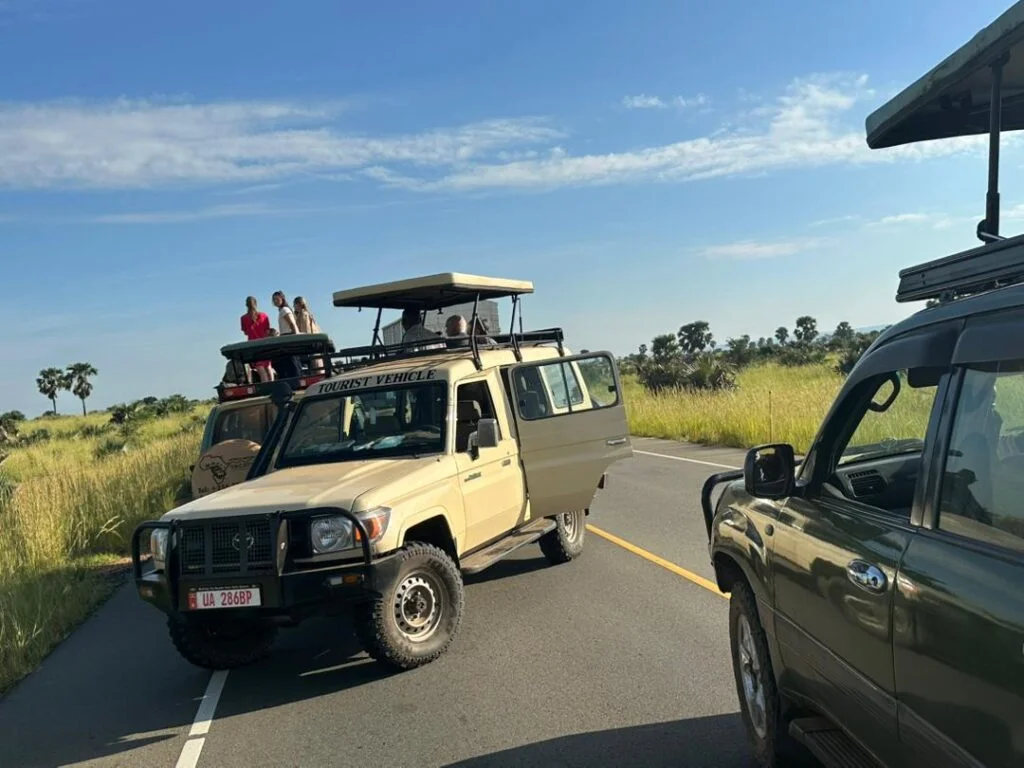
Planning a safari tour in Rwanda? Navigating the country’s stunning landscapes—from the savanna of Akagera to the misty mountain tracks of Volcanoes and Nyungwe—requires the right ride. Rwanda safari tours primarily use customized 4x4 vehicles like the extended Toyota Land Cruiser, Toyota Prado TX, and modified 4x4 safari vans. Outfitted with high ground clearance, pop-up roofs for 360-degree wildlife viewing, large sliding windows, and onboard charging ports, these vehicles are specially built to maximize comfort, visibility, and safety on East Africa's rugged terrains.
3-days-rwanda-gorilla-trekking-safari-itinerary-in-volcanoes-park
4-days-volcanoes-national-park-and-akagera-rwanda-wildlife-safari
4-days-rwanda-primates-safari-gorilla-trekking-and-chimpanzee-all-inclusive-package
5-days-best-gorilla-and-uganda-safari-holiday-from-kigali
6-days-luxury-rwanda-gorilla-trekking-safari-tour-vacation
7-days-6-nights-midrange-rwanda-gorilla-trekking-holiday
Toyota Land Cruiser (Extended & Prado TX)
When you are spending six to eight hours a day navigating African dirt roads, the vehicle beneath you matters just as much as the wildlife in front of you. That is why the Toyota Land Cruiser—specifically the Prado TX and the iconic stretched 70 Series—remains the undisputed king of the safari circuit.
These vehicles are engineered like tanks. Their robust 4x4 drive systems handle deep mud, loose gravel, and steep mountain inclines effortless, which is a lifesaver when you are driving through places like Volcanoes National Park or bouncing over rough tracks in Akagera. What really sets them apart, though, is the heavy-duty suspension. It softens the relentless "African massage"—that constant bumpiness of unpaved roads—so you arrive at your lodge feeling energized rather than exhausted.
Inside, they are designed for flexiblity. Standard Prado models easily accommodate smaller groups or independent self-drive travelers, while the custom-extended Land Cruisers can comfortably seat up to seven passengers. Crucially, every single seat gets a full, unrestricted window view. When you are paying for the trip of a lifetime, you do not want to be stuck in a middle seat squinting over someone's shoulder. It is raw durability meets practical comfort, making it worth every penny.
Customized Safari Vans
For travelers who want a genuine safari experience without paying premium 4x4 prices, customized safari minivans are the ultimate unsung hero. Built primarily on reliable Toyota HiAce chassis, these vans are a staple across East Africa for a reason: they are surprisingly tough, remarkably spacious, and incredibly cost-effective.
While they may not look as rugged as a Land Cruiser, safari vans are heavily modified to handle the bush. Mechanics fit them with raised suspensions, heavy-duty shock absorbers, and reinforced all-terrain tires, allowing them to navigate standard dirt tracks and national park routes with relative ease. For budget-conscious families or small groups traveling together, the internal layout is a massive selling point. The high roofline and wide, clear aisles give you plenty of legroom to stretch out during long transfers between parks.
The true magic of a customized safari van lies in its functionality. Modern conversions feature high-mounted pop-up roofs, meaning you get the exact same panoramic wildlife-viewing opportunities as guests in far more expensive vehicles. You get to watch a pride of lions lounge in the grass or spot birds high in the canopy without feeling cramped or shortchanged. It is smart, comfortable, budget-friendly travel at its absolute best.
Pop-Up Roofs & Hatches
You never fully appreciate a pop-up roof until you are standing on your seat in the middle of the savannah, cold breeze in your face, watching a herd of elephants cross the trail thirty feet away. In the context of an African game drive, a openable hatch or pop-up roof is not just a nice extra—it is the single most critical feature of the vehicle.
Wildlife viewing is all about vantage points. When you are sitting down at eye level with tall grass, you miss half of what is happening. A pop-up roof raises your line of sight, giving you an unobstructed, 360-degree view of the landscape. It allows multiple travelers to stand up simultaneously, safely inside the vehicle's frame, with their cameras rested on padded roof edges for steady photography.
Beyond optics, there is the safety and comfort factor. Apex predators like lions and leopards view a closed vehicle as one single, non-threatening object. Standing up through the roof allows you to observe these powerful animals from a position of security, keeping you safely contained while feeling completely immersed in the wild. Plus, on hot afternoon game drives, popping the top lets the stifling cabin air escape, replaced by a cooling breeze as you cruise along the tracks.
Onboard Comforts
Gone are the days when going on safari meant enduring a sweaty, dusty, bare-bones car ride across the savannah. Today’s safari vehicles—especially high-end, custom-built Land Cruisers—are essentially mobile basecamps packed with thoughtful creature comforts designed to keep you happy on long drives.
The most welcome feature is dual air conditioning. Mid-day temperature spikes in open national parks can be brutal, and being able to quickly cool down the entire cabin after a dusty game drive completely changes the mood of the trip. Equal in importance are the electrical setups. Modern safari rigs come equipped with power outlets and USB ports powered by onboard inverters. You never have to worry about your camera battery dying right before a leopard sighting, or your phone running out of juice while filming a lion hunt.
Then there is the small luxury that feels like a miracle in the middle of the bush: the onboard fridge. Having a built-in mini refrigerator stocked with cold water, soft drinks, or a chilled beer for a late-afternoon sunset stop turns a good day into an unforgettable one. These amenities might sound like extra fluff, but when you are hours away from civilization, they keep you refreshed, connected, and focused entirely on the wildlife.
Should I choose a Land Cruiser or a safari van for a gorilla trekking trip?
Choosing between a Land Cruiser and a safari van often comes down to your budget and the specific terrain you will encounter. Volcanoes National Park, where gorilla trekking takes place, sits at a high altitude surrounded by steep, winding volcanic slopes. While the main highways from Kigali to Kinigi are smooth, paved tarmac, the final access roads leading to the park headquarters and lodge trailheads consist of rough, unpaved gravel and mud. A 4x4 Toyota Land Cruiser offers superior ground clearance and a heavy-duty four-wheel-drive system designed to navigate these steep, slippery stretches effortlessly, especially during the rainy season. On the other hand, a customized 4x4 safari van is a capable and cost-effective option if you are traveling on a budget. These vans handle the paved highway transfers comfortably and can manage standard dirt access roads in dry weather. However, if your itinerary includes extended drives through rugged terrain or multiple parks like Akagera, the enhanced suspension, traction, and power of a Land Cruiser deliver a smoother ride and greater reliability on challenging tracks.
What is the difference between a Toyota Prado TX and an Extended Land Cruiser?
The main differences between the Toyota Prado TX and the Extended Land Cruiser lie in size, passenger capacity, and interior customization. The Prado TX is a mid-sized, four-wheel-drive SUV designed for up to four or five passengers. It is agile, fuel-efficient, and highly maneuverable, making it a popular choice for couples, small families, or self-drive travelers who want a comfortable ride without operating a large, heavy vehicle. The Extended Land Cruiser, typically built on the heavy-duty 70 Series chassis, is a purpose-built safari machine stretched to accommodate up to seven or eight passengers. Every traveler gets an individual window seat, eliminating middle seats entirely. The extended version also offers significantly more cabin space, larger storage areas for bulky luggage and camera equipment, and often includes dual air conditioning systems and secondary battery setups for charging electronics. While the Prado TX feels like a sturdy personal SUV, the Extended Land Cruiser functions as a high-capacity mobile safari station tailored for group comfort and maximum visibility.
Are safari vans reliable on steep or muddy mountain roads in Rwanda?
Customized safari vans, typically built on the durable Toyota HiAce platform, are surprisingly resilient workhorses across East Africa. However, their performance on steep or muddy mountain tracks depends heavily on their drivetrain conversion and weather conditions. Standard two-wheel-drive minivans can struggle on wet, unpaved inclines, where loose gravel and deep mud reduce traction. To overcome this, reputable safari operators use four-wheel-drive converted vans fitted with raised suspensions, heavy-duty shock absorbers, and reinforced all-terrain tires. These modifications allow them to handle standard dirt tracks, moderate inclines, and light mud reliably. During heavy downpours in mountainous regions like Nyungwe or Volcanoes National Park, a full-sized 4x4 Land Cruiser still provides superior torque and wheel grip. Nevertheless, for standard routes, dry-season travel, and budget-conscious itineraries, a well-maintained 4x4 safari van offers a solid, dependable ride capable of getting you to major park gateways safely.
Can I hire a safari vehicle for a self-drive tour in Rwanda?
Yes, self-drive safari rentals are increasingly popular in Rwanda, giving independent travelers the freedom to explore the country at their own pace. Most rental agencies offer Toyota Prado TX models or standard 4x4 SUVs for self-drive trips, as these vehicles strike a balance between rugged capability and ease of handling. Operating a self-drive vehicle in Rwanda is straightforward on major highways, which are generally well-paved, clearly signposted, and well-maintained. However, driving inside national parks like Akagera requires caution, as off-road tracks can feature deep ruts, sharp rocks, and muddy stretches. Before setting out, ensure your rental includes comprehensive insurance, unlimited mileage, and emergency roadside assistance. You will also need a valid international driving permit alongside your national license. While self-driving gives you full schedule flexibility, hiring an experienced driver-guide remains a recommended option for first-time visitors who prefer to focus on wildlife spotting rather than navigating unfamiliar terrain and park regulations.
How many passengers can comfortably fit into an Extended Land Cruiser?
An Extended Land Cruiser is designed to seat up to seven or eight passengers, depending on the specific interior configuration. Unlike standard passenger vehicles, safari-extended Land Cruisers feature three rows of individual, forward-facing seats arranged to ensure every guest enjoys an unobstructed window view. This layout prevents passengers from feeling squeezed into middle seats, which is crucial during long transfers or multi-hour game drives. The extended chassis provides generous legroom and high ceilings, allowing adults to sit comfortably without feeling cramped. Additionally, there is ample space behind the rear row for luggage, cooler boxes, and daypacks. For photography-focused groups, limiting occupancy to four or five passengers allows extra room to move between windows and spread out camera gear. Overall, the vehicle effortlessly accommodates full families or small tour groups while maintaining personal space, easy access to the pop-up roof, and high comfort levels throughout long travel days across Rwanda.
Why is high ground clearance necessary for safari vehicles in Rwanda?
High ground clearance is vital for safari vehicles because Rwanda's diverse geography includes uneven dirt tracks, rocky mountain passes, and muddy forest trails. Inside national parks like Akagera, game drive routes often feature deep tire ruts, exposed tree roots, loose boulders, and waterlogged depressions. A vehicle with low ground clearance risks scraping its undercarriage, damaging critical components like the oil pan or exhaust system, or getting stuck in soft mud. High-clearance vehicles elevated on heavy-duty suspension systems easily clear these obstacles, protecting the vehicle and preventing travel delays. Furthermore, elevated ground clearance raises the entire passenger cabin, placing travelers higher off the ground. This elevated position significantly improves sightlines over tall savannah grasses, thick bushes, and roadside embankments, making it much easier to spot wildlife, take clear photographs, and enjoy panoramic views of the surrounding landscape.
How do pop-up roofs work during a game drive?
Pop-up roofs feature a broad canopy section of the vehicle's roof that lifts upward on hinged hydraulic struts or manual locking arms. Once unlatched and pushed open, the roof elevates roughly two feet above the cabin, creating a wide opening above the seats. Passengers can easily stand up on the vehicle's floor or seat frames, bringing their upper body above the roofline for an open-air, 360-degree view of the surrounding wilderness. The raised canopy remains fixed directly overhead, providing shade from the midday sun and protection from light rain showers. The perimeter edges of the opening are typically fitted with soft, padded vinyl cushions, allowing photographers to rest heavy telephoto lenses comfortably while stabilizing their shots. During long highway transfers between parks, the roof is securely locked back down, sealing the cabin against wind, dust, and highway noise.
What is the difference between a pop-up roof and a roof hatch?
While both features provide open-air wildlife viewing, they differ significantly in size, structure, and functionality. A pop-up roof covers almost the entire length of the passenger cabin. When elevated, it creates a continuous open space where all passengers can stand up simultaneously without crowding one another. The lifted roof panel acts as a protective ceiling, offering constant shade overhead. In contrast, a roof hatch consists of one or two smaller removable or hinged glass panels, similar to large sunroofs. Hatches allow only one or two people to stand up at a time, making them better suited for smaller vehicles or private couples. Because hatches lack an overhead canopy, standing through them exposes you directly to full sunlight or rain. Pop-up roofs are the preferred standard on group safari vehicles, while hatches are commonly found on smaller, standard-length 4x4 SUVs like the Toyota Prado TX.
Are large sliding windows standard on all Rwanda safari vehicles?
Yes, large sliding windows are a standard feature on almost all custom safari vehicles operated in Rwanda. Unlike standard automotive roll-down windows, safari sliding windows are wide, single-pane glass panels that slide horizontally across a smooth track. This design creates a broad, unobstructed opening that makes taking photos and scanning the landscape quick and effortless. Sliding windows allow passengers to capture low-angle wildlife photos without standing up through the pop-up roof, which is especially useful when animals are close to the track or when weather conditions force the main roof to stay closed. Many custom vehicles fit tinting or drop-down dust curtains over these windows to reduce interior glare and solar heat gain during hot afternoon drives. The wide opening also maximizes cross-ventilation, ensuring fresh air flows continuously throughout the cabin when driving through national parks.
How do safari vehicles protect travelers from rain and dust?
Safari vehicles use a combination of sealed cabin construction, weather-stripping, and flexible ventilation controls to protect passengers from rain and airborne dust. During transit on unpaved roads, high-grade rubber seals around doors, pop-up roofs, and sliding windows prevent fine dust from entering the cabin. When the pop-up roof is raised, it acts as a wide umbrella, sheltering standing passengers from light downpours while keeping the interior dry. If heavy rain or intense dust storms occur, the roof latches down quickly and securely, converting the vehicle into a fully enclosed, weather-tight space. Dual air conditioning and climate control systems allow driver-guides to keep windows closed without letting the interior overheat or fog up. Additionally, many vehicles feature heavy-duty floor rubber mats that trap tracking mud and dust, making the cabin easy to sweep clean at the end of each daily outing.
Do safari vehicles in Rwanda have air conditioning?
Yes, modern safari vehicles operating in Rwanda come equipped with air conditioning, though its use varies based on terrain and travel conditions. Standard 4x4 SUVs and extended Land Cruisers feature dual climate-control systems with separate vents distributed throughout the front and rear passenger sections. This setup ensures cool air reaches every row during long transfers along dusty highways or open savannah roads. However, during slow-speed game drives inside national parks like Akagera, guides frequently switch off the engine-driven air conditioning and open the pop-up roof or sliding windows instead. Opening the vehicle allows natural cross-breezes to cool the cabin while providing an immersive, open-air wilderness experience. On high-altitude mountain drives near Volcanoes or Nyungwe National Parks, temperatures remain cool and comfortable, making air conditioning unnecessary for much of the journey.
Can I charge my camera and smartphone inside a safari vehicle?
Yes, charging electronic devices inside a safari vehicle is straightforward. Custom safari Land Cruisers and modern safari vans feature built-in power inverters and auxiliary battery systems designed specifically to keep equipment charged in the field. These setups typically include multi-socket power strips, standard multi-country wall outlets (AC 220V), and multiple USB ports positioned near passenger seats. You can easily charge camera batteries, smartphones, tablets, and power banks directly while driving between park destinations or during game drives. Because the charging outlets draw power from a dedicated secondary battery or the engine generator, charging your devices will not drain the vehicle's primary starter battery. To maximize convenience, carry a multi-plug adapter or a compact USB hub so you can charge multiple devices simultaneously without competing with fellow passengers for outlets.
Are mini-fridges common in Rwanda safari vehicles?
Mini-fridges or electric cooler boxes are increasingly common amenities in high-end, custom-built safari Land Cruisers in Rwanda. Powered by the vehicle’s electrical system, these compact units keep drinking water, fruit juices, soft drinks, and evening sundowner beverages refreshingly cold throughout long game drives. Having a cold drink readily available in the middle of a hot afternoon in Akagera National Park is a welcome comfort after hours in the sun. In budget safari vans or standard rental SUVs where built-in electric fridges are absent, operators typically provide heavy-duty insulated ice chests packed with ice and bottled water each morning. Whether through an integrated electric fridge or a reliable insulated cooler box, staying hydrated with cold drinks is standard practice across almost all professional safari tours in Rwanda.
What kind of seating and legroom can I expect in a custom safari vehicle?
Custom safari vehicles are built specifically for long-distance comfort, offering generous legroom, wide aisles, and ergonomic seating. In extended Land Cruisers and modified safari vans, standard bench seats are replaced with individual, high-backed bucket seats fitted with thick padding and durable synthetic leather or canvas covers. Each seat features recline adjustments, armrests, seatbelts, and dedicated storage pockets behind the row in front. Seats are spaced far enough apart that even tall travelers can stretch out their legs without pressing against the seat ahead. Furthermore, seating layouts prioritize direct aisle access, making it simple to stand up to use the pop-up roof or step outside without squeezing past other passengers. This spacious configuration minimizes fatigue during long travel days on unpaved roads.
How is luggage stored in a safari vehicle during long transfers?
Luggage storage in a safari vehicle is located behind the rear row of seats in a dedicated cargo compartment. Extended Land Cruisers and safari vans offer deep rear boot spaces capable of holding multiple large, soft-sided duffel bags, daypacks, and camera cases. To keep equipment clean and dust-free, cargo areas feature heavy-duty floor lining and secure cargo nets or straps that keep bags stable on bumpy tracks. For full-capacity group tours, operators may use roof racks fitted with waterproof tarpaulins to transport extra luggage securely. Travel experts strongly advise using soft-sided duffel bags rather than rigid, hard-shell suitcases, as soft bags compress easily and pack much more efficiently into the vehicle's cargo hold. Smaller daypacks and personal camera bags can be kept inside the passenger cabin under your seat or in overhead storage nets for quick access.
Are safari vehicles in Rwanda safe for families traveling with children?
Safari vehicles in Rwanda are very safe for families traveling with children when operated by professional guides and reputable companies. Custom safari Land Cruisers and vans feature sturdy steel roll cages, heavy-duty chassis designs, and modern three-point lap-and-shoulder seatbelts at every passenger seat. The enclosed cabin structure keeps children secure inside the vehicle during game drives, preventing direct contact with wild animals while still offering full visibility through high windows and pop-up roofs. For infants and toddlers, child safety seats can be installed using standard seatbelts upon advance request with your tour operator. Professional driver-guides maintain sensible speeds, enforce safe vehicle behavior, and carry first-aid kits, fire extinguishers, and emergency communication equipment. The stable ride, comfortable seating, and elevated vantage points make safari vehicles a secure, engaging environment for young travelers exploring the African bush.
What emergency equipment is carried inside a safari vehicle?
Professional safari vehicles in Rwanda carry a comprehensive suite of emergency equipment to handle mechanical issues and medical situations in remote locations. Standard gear includes a fully stocked first-aid kit, a rated fire extinguisher, heavy-duty hydraulic jacks, wheel braces, and at least one full-sized spare tire (often two on long bush itineraries). For off-road recovery in soft mud or deep ruts, vehicles are equipped with tow straps, steel recovery shackles, sand tracks, and occasionally front-mounted electric winches. Onboard power systems ensure driver-guides can maintain radio communications, GPS tracking, and cellular contact with emergency services and company headquarters. Driver-guides also undergo regular safety and basic mechanical training, ensuring they can fix minor issues quickly on the road and keep your safari running smoothly and safely.
How do safari vehicles navigate rough, unpaved national park roads?
Safari vehicles navigate rough, unpaved tracks using heavy-duty four-wheel-drive systems, specialized suspension setups, and skilled driving techniques. When moving from smooth tarmac onto loose gravel, mud, or steep inclines, drivers engage 4WD modes—such as 4-High for speed on slippery tracks or 4-Low for maximum torque on steep, muddy slopes. Upgraded shock absorbers and heavy-duty leaf or coil springs absorb high-impact bumps, stabilizing the chassis and keeping tires firmly planted on uneven ground. Reinforced all-terrain tires with deep tread patterns provide strong traction and resist punctures from sharp rocks or thorns. Crucially, experienced driver-guides know how to read terrain, selecting optimal driving lines, managing vehicle momentum, and adjusting tire pressure to navigate difficult stretches safely without jarring passengers or getting stuck.
Are safari vehicles equipped with GPS and communication devices?
Yes, safari vehicles operating in Rwanda are equipped with reliable navigation and communication tools to ensure safety and smooth logistics. Most fleet vehicles carry built-in GPS tracking units that allow tour company headquarters to monitor the vehicle’s location, speed, and route in real time. Driver-guides utilize smartphone navigation apps alongside traditional topographical knowledge to navigate national parks and remote country roads efficiently. For communication, guides use multi-network mobile phones and two-way radios to stay in constant contact with park rangers, lodge managers, and other safari guides. This communication network allows drivers to share real-time wildlife sightings, check road and weather conditions ahead, and request immediate mechanical or medical assistance if an unexpected emergency arises in remote areas.
What is the average speed of a safari vehicle on game drives?
During official game drives inside national parks like Akagera, safari vehicles travel at very low speeds, typically averaging between 15 and 30 kilometers per hour (9 to 18 miles per hour). Driving slowly is essential for spotting well-camouflaged wildlife, reducing engine noise, and minimizing dust generation on unpaved tracks. Slow speeds also ensure safety for animals that may cross paths suddenly and prevent excessive vehicle sway on uneven terrain. On transit drives between national parks via paved national highways, vehicles travel at standard highway speeds, usually ranging from 50 to 80 kilometers per hour (31 to 50 miles per hour), adhering strictly to national speed limits and speed governor regulations enforced across Rwanda.
Do safari vehicles come with an experienced driver-guide in Rwanda?
Yes, the vast majority of safari vehicle rentals and tour packages in Rwanda include a professional, licensed driver-guide. Having an experienced driver-guide adds immense value to your journey beyond basic transportation. Professional guides possess deep knowledge of local ecology, animal behavior, bird species, and conservation history, transforming standard drives into rich educational experiences. They are skilled at spotting wildlife hidden in dense foliage that untrained eyes would easily pass by. Furthermore, guides are highly experienced in navigating challenging off-road conditions, managing daily travel logistics, handling park entrance formalities, and maintaining the vehicle. Hiring a vehicle with a guide allows you to sit back, relax, take photographs, and fully immerse yourself in the landscape without the stress of navigating unfamiliar routes.
How far in advance should I book a safari vehicle for a Rwanda trip?
It is best to book your safari vehicle at least three to six months in advance, especially if you plan to travel during peak tourist seasons. Rwanda’s peak dry seasons run from June to September and December to February, coinciding with high demand for gorilla trekking permits and wildlife safaris. During these months, high-quality 4x4 vehicles—particularly Extended Land Cruisers—are in high demand and sell out quickly across major operators. Booking early ensures you secure your preferred vehicle type, necessary child safety seats, and top-tier driver-guides. If your itinerary involves specialized requirements, such as wheelchair-accessible modifications or specific photography mounts, reserving six to nine months ahead is highly recommended to give operators enough time to prepare your vehicle.
Can safari vehicles accommodate travelers with mobility challenges?
Yes, safari vehicles can accommodate travelers with mobility challenges, though advance planning with your tour operator is essential. Standard Land Cruisers and safari vans feature high ground clearance, which requires climbing up two or three steps to enter the cabin. To assist guests with limited mobility, operators provide sturdy portable step stools, grab handles, and personalized physical assistance from guides. For wheelchair users, specialized custom modifications can be arranged, such as removable seats to anchor a wheelchair safely inside the cabin or specialized ramp/hoist systems. Additionally, customized seating layouts allow passengers with joint stiffness or reduced movement to stretch out comfortably. Communicating mobility needs early ensures operators assign the most accessible vehicle, plan step-free lodge transfers, and tailor the itinerary for a comfortable journey.
What should I pack inside the cabin for a day-long safari drive?
When preparing for a full day on safari, keep a small daypack inside the passenger cabin containing essentials you will need throughout the drive. Important items include high-SPF sunscreen, a wide-brimmed hat, sunglasses, insect repellent, and personal medications. Bring your camera gear, extra memory cards, spare batteries, and a lens cleaning cloth, along with a power bank or charging cable to plug into the vehicle's outlets. Binoculars are essential for spotting distant wildlife. Dress in lightweight, breathable layers, and keep a light rain jacket or windbreaker nearby, as weather conditions can change quickly. Finally, pack hand sanitizer, lip balm, wet wipes to clear off road dust, and favorite personal snacks to enjoy between meals while exploring the parks.
How do fuel availability and vehicle maintenance work on long safaris in Rwanda?
Fuel availability and vehicle maintenance are carefully managed by tour operators and driver-guides to ensure seamless travel. Rwanda has a well-distributed network of modern service stations in major towns like Kigali, Musanze, Rubavu, and Kayonza. Before entering remote areas or national parks like Akagera and Nyungwe, driver-guides fill up main and auxiliary fuel tanks to ensure ample range for multi-day game drives. Safari vehicles undergo rigorous mechanical inspections and routine servicing—including brake checks, fluid top-offs, and tire rotations—before departing on any trip. In the rare event of a mechanical breakdown, tour operators maintain support networks across the country to dispatch mechanics or send a replacement 4x4 vehicle promptly, minimizing disruption to your safari itinerary.
Booking Rwanda safari tour with us Roads of Adventure safaris
You can book your Rwanda safari tour directly online through the official Roads of Adventure Safaris Website. This premier East African tour operator specializes in tailor-made primate trekking and wildlife safaris
