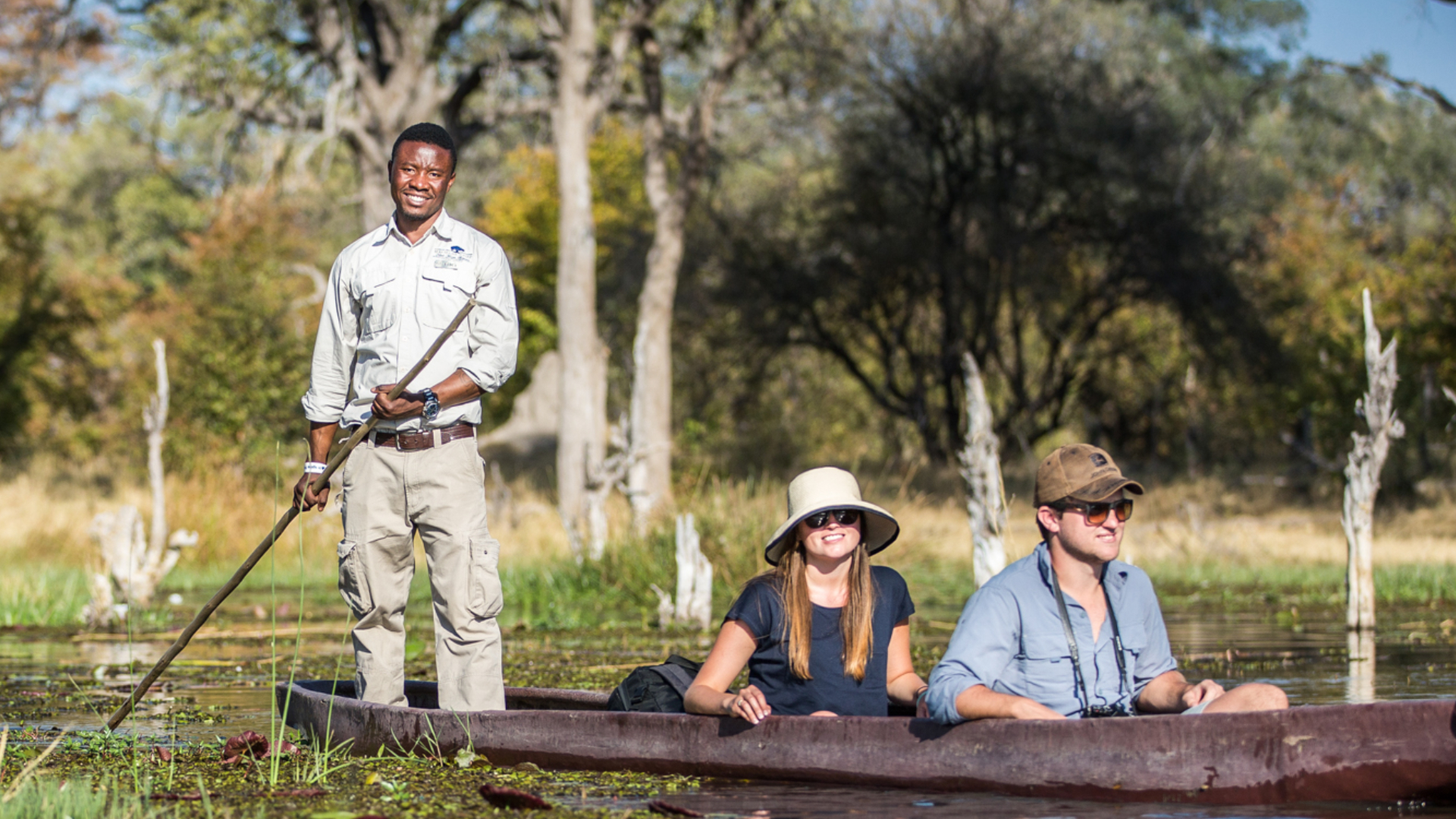
A mokoro boat ride on your Botswana safari will offer a serene, intimate way to explore the Okavango Delta. You can expect a silent glide through shallow, reed-lined waterways guided by a local poler, which will put you at eye-level with breathtaking aquatic wildlife like hippos, elephants, and rare water birds in a truly tranquil setting.
3-days-best-mokoro-safari-in-okavango-delta
3-days-luxury-okavango-delta-fly-in-botswana-safari-itinerary
5-days-mokoro-safari-and-moremi-game-reserve-tour
5-days-classic-botswana-safari-tour-in-chobe-river-and-okavango-delt
6-days-affordable-chobe-and-delta-budget-botswana-safari
7-days-best-botswana-safari-to-makgadikgadi-pans-okavango-delta-and-chobe
Key Highlights to Expect on Mokoro boat ride on Botswana safari trip
The Vessel
Your journey through the Okavango Delta will be spent aboard a traditional dug-out canoe known as a mokoro. While these vessels were historically carved by hand from the massive trunks of straight-growing trees like the sausage tree or real fan palm, modern conservation efforts have gracefully shifted the practice. To protect the delta’s delicate riverine forests from deforestation, you will likely step into a sleek, eco-friendly fiberglass replica. These modern iterations perfectly mimic the buoyant, hydrodynamic design of the originals while ensuring the local ecosystem remains completely untouched.
The design of the mokoro is a masterclass in minimalist utility. It is crafted to hold a maximum of two passengers, who sit comfortably on low cushions placed directly on the floor of the boat. This seating arrangement places you just inches above the waterline, offering an extraordinarily intimate connection to the passing currents.
Meanwhile, your expert guide will take up a commanding position standing at the very rear of the narrow craft. From this vantage point, they will seamlessly propel and steer the boat using a long, sturdy wooden pole known locally as a ngashi. This pole is traditionally cut from the resilient branches of the silver terminalia tree, chosen for its strength and flexibility. As the ngashi bites into the sandy bottom of the shallow channels, your guide will navigate the intricate, labyrinthine paths carved through the reeds, effortlessly gliding you across the water with a fluid grace that has been perfected over centuries of delta life.
The Atmosphere
The moment your mokoro leaves the riverbank, you will experience an immediate, profound shift in your surroundings. Because the vessel is entirely human-powered and relies on no mechanical components, the ride is virtually silent. The jarring rumble of a traditional 4x4 safari engine is replaced by a symphony of pure nature. The only sounds that will accompany your journey are the gentle, rhythmic slosh of the ngashi cutting through the current, the soft rustle of papyrus stalks brushing against the hull, and an uninterrupted chorus of distant birdsong ringing out across the floodplains.
This absence of mechanical noise transforms the safari from a standard sightseeing tour into a deeply relaxing, immersive, and meditative expedition. As you drift effortlessly along the water, the frantic pace of the modern world completely melts away, replaced by the vast, tranquil stillness of the Botswana wilderness.
The slow, unhurried pace allows you to truly take in the immense scale of the Okavango Delta, noticing the subtle nuances of the environment that are usually missed at higher speeds. You will find yourself mesmerized by the crystal-clear clarity of the water, watching the gentle sway of aquatic grasses beneath you and the vibrant reflections of the African sky mirroring perfectly on the glassy surface. It is a sensory experience that invites introspection, encouraging you to breathe deeply, sit back, and harmonize with the peaceful rhythm of one of the planet's last untouched natural sanctuaries.
Wildlife Viewing
Sitting so incredibly low to the water provides a completely revolutionary perspective on wildlife viewing, entirely unlike the elevated vantage point of a standard 4x4 safari vehicle. From this eye-level position, the delta’s inhabitants appear much larger, more majestic, and intensely captivating. You will find yourself drifting past massive, grazing elephants as they wade through the deep channels, showering themselves with water just a short distance from your boat.
The shallows are teeming with specialized fauna, and you can expect to spot elegant red lechwe and the elusive sitatunga antelope—species that have adapted specifically to thrive in this marshy paradise. Looking closely along the reed beds, you might catch the watchful eyes of a sunbathing crocodile or the tiny, vibrant flash of a Malachite Kingfisher darting after its prey. The delta is an absolute haven for birdwatchers; you will be surrounded by an abundance of colorful birdlife, from majestic African Fish Eagles soaring overhead to delicate African Jacanas walking gracefully on floating lily pads.
To enrich the adventure even further, your guide will often steer the mokoro toward isolated, sandy islands scattered throughout the waterways. Here, you will hop off the boat to stretch your legs and engage in short, thrilling guided nature walks. On foot, your guide will show you the micro-ecosystems of the delta, tracking animal footprints in the mud, explaining the medicinal uses of local plants, and safely approaching larger game from an exhilaratingly intimate ground perspective.
Safety and Stability
Stepping into a mokoro for the first time can feel a bit daunting, as the narrow, low-slung craft can naturally feel quite tippy and sensitive to movement when you are getting in and out. However, any initial apprehension you might feel will quickly evaporate once you realize you are in the hands of an absolute master of the craft. Your local poler is highly skilled, having typically grown up on the fringes of the delta and learned to navigate these complex, winding waterways since early childhood. Their sense of balance, core strength, and understanding of fluid dynamics are second nature, allowing them to stabilize the canoe with remarkable ease.
Safety on a mokoro safari is built entirely on a partnership of mutual respect between you, your guide, and the environment. While the water is incredibly shallow in most areas, balance remains the absolute key to a smooth and secure ride. Before pushing off, you will be advised by your guide to simply sit still, keep your center of gravity low, relax your body, and enjoy the passing scenery.
There is no need for sudden movements or leaning over the edge, as your guide will flawlessly handle all the steering and stabilization. Furthermore, these experienced polers possess an intimate knowledge of animal behavior; they know exactly which channels to avoid, how to read the warning signs of a nearby pod of hippos, and how to maintain a perfectly safe, respectful distance from all wildlife, ensuring your journey is as secure as it is breathtaking.
When to Go for Morkoro boat ride
Planning the timing of your mokoro safari is crucial, as the availability of these iconic rides depends heavily on seasonal water levels. The Okavango Delta is a dynamic oasis that experiences dramatic annual transformations. While the local weather fluctuates between dry and rainy seasons, the true lifeblood of the delta actually originates thousands of miles away in the highlands of Angola. These distant summer rains take months to slowly trickle southward, finally spilling into the delta's parched channels right when Botswana is in the midst of its dry winter.
Consequently, the optimal time to experience consistent, high-quality mokoro conditions is typically during the high-water season, which runs from July to October. During these months, the floodwaters reach their peak, filling the labyrinth of channels to the brim and opening up expansive, pristine watery highway systems that are completely inaccessible during the rest of the year.
Navigating the delta during this peak flood provides the quintessential safari experience, characterized by lush, vibrant greenery and an unparalleled concentration of wildlife drawn to the life-giving water. While some permanent water camps can offer shorter mokoro rides year-round, traveling during the winter flood ensures you will experience the delta at its most majestic, dramatic, and navigable, allowing you to venture deep into the heart of this flooded wilderness exactly as nature intended.
Practical Tips for Mokoro boat ride on Botswana safari
Sun Protection & Weather
When you step into a mokoro, you are stepping into a world where you are completely exposed to the elements. Unlike standard 4x4 safari vehicles that often come equipped with canvas canopies, a traditional canoe offers absolutely no shade or overhead protection from the intense African sun. As you glide along the open water, the sun’s rays beat down directly from above while simultaneously reflecting off the glassy surface of the waterways, effectively doubling your exposure. To safeguard your skin and eyes during the excursion, it is absolutely essential to pack a high-SPF, broad-spectrum sunscreen and apply it generously to all exposed areas—including easily forgotten spots like the tops of your feet, your ears, and the back of your neck—before you push off from the bank.
In addition to sunscreen, a wide-brimmed hat with a secure chin strap is a non-negotiable item for your gear list, ensuring your face and neck stay shaded even if a sudden breeze picks up across the floodplains. To truly appreciate the vibrant beauty of the delta, you will also want to bring along a pair of high-quality polarized sunglasses. Standard lenses simply dim the light, but polarized optics actively cut through the intense, blinding glare reflecting off the water's surface. This glare reduction does not just prevent eye strain over a multi-hour trip; it actually allows you to look directly into the crystal-clear water, opening up a whole hidden world of swimming fish, trailing lily roots, and aquatic vegetation that would otherwise remain completely invisible to the naked eye.
What to Wear
Dressing correctly for a mokoro ride requires a thoughtful balance between comfort, climate control, and wildlife etiquette. Because you will be sitting completely still on a low cushion for hours at a time, your body temperature can fluctuate depending on the breeze and the sun. The best approach is to dress in light, breathable layers that can be easily added or removed as the temperature shifts throughout the morning or afternoon. Long-sleeved shirts and lightweight trousers made from technical, moisture-wicking fabrics are highly recommended. Not only do they keep you cool in the heat, but they also provide a physical barrier against both the burning sun and the sharp blades of papyrus and reeds that will occasionally brush against the side of the boat as you navigate narrow channels.
Color choice is equally critical when selecting your safari wardrobe. You should opt for muted, neutral tones such as beige, khaki, tan, or olive green. These natural shades allow you to blend seamlessly into the surrounding riverine environment, making you appear less threatening to the wildlife and significantly increasing your chances of close-up animal encounters. Conversely, you should completely avoid bright colors like red or yellow, which can startle animals, as well as pure white, which acts as a visual flag in the bush. Furthermore, it is wise to steer clear of dark blue and black, as these specific colors are known to actively attract biting tsetse flies, ensuring your tranquil ride remains completely uninterrupted by pests.
Camera Safety
A mokoro safari is an absolute paradise for photography, offering a unique, low-angle perspective that makes wildlife images look incredibly dramatic and professional. However, because you are sitting practically at water level, your expensive electronics are constantly exposed to moisture risks. Even though the ride is incredibly smooth and stable, water can find its way into the boat from a variety of unexpected sources. The rhythmic dripping of the guide's ngashi pole as it transitions from the riverbed to the air, sudden splashes from a nearby bird taking flight, or the accidental tilt of the boat as you lean to look at a passing flower can all introduce water into the seating area.
To protect your valuable cameras, lenses, and smartphones, you must bring a high-quality, roll-top waterproof dry bag. This bag should stay securely sealed at your feet, housing your gear whenever you aren't actively taking a photo. When you do bring your camera out, always keep the neck strap or wrist lanyard firmly secured to your body—if a camera slips from your hands into the deep silt of a delta channel, it can be incredibly difficult to recover. For those using larger DSLR or mirrorless setups, consider bringing a simple plastic rain sleeve or a soft microfiber cloth. This allows you to quickly wipe away any stray droplets of river water from your lens element, ensuring your shots stay perfectly crisp and your gear remains entirely functional.
Standard Duration
The time you spend out on the water can vary depending on your itinerary, but a standard mokoro excursion typically lasts between 2 to 3 hours. This duration is generally considered the sweet spot for most travelers. It provides ample time to venture deep into the quiet channels, observe an array of birds and wildlife, and completely sink into the meditative rhythm of the delta without overexposing yourself to the midday heat or experiencing physical fatigue from sitting in a low, fixed position. These shorter trips are usually scheduled for the cool, golden hours of the early morning or the late afternoon, concluding with a peaceful glide back to camp just as the sun begins to set over the horizon.
For those who want a deeper, more immersive wilderness experience, full-day mokoro expeditions are an incredible option. These extended journeys allow you to travel much further into remote, untouched corners of the Okavango ecosystem that standard tours never reach. A highlight of the full-day trip is the midday stop, where your guide will steer the canoe onto a secluded, wild island for an island picnic. After enjoying a packed lunch under the shade of an acacia tree, you will typically embark on an exhilarating guided bush walk to track larger game on foot. After the heat of the day passes, you will climb back into the mokoro for a relaxed, slow journey home, making it a comprehensive, unforgettable day of African exploration.
Booking Mokoro boat ride with us Roads of Adventure safaris
To book your unforgettable Okavango Delta mokoro experience, simply reach out to us at Roads of Adventure Safaris directly. Our experienced team will handle all your booking logistics, seamlessly securing your expert local polers and tailored delta entry. We will provide you with a comprehensive standard itinerary that perfectly balances tranquil water glides with optional guided island walking safaris. Whether you are looking for a magical morning excursion or a full-day delta expedition, we customize the journey to match your travel style. Contact Roads of Adventure Safaris today to lock in your seat just inches above the water.
