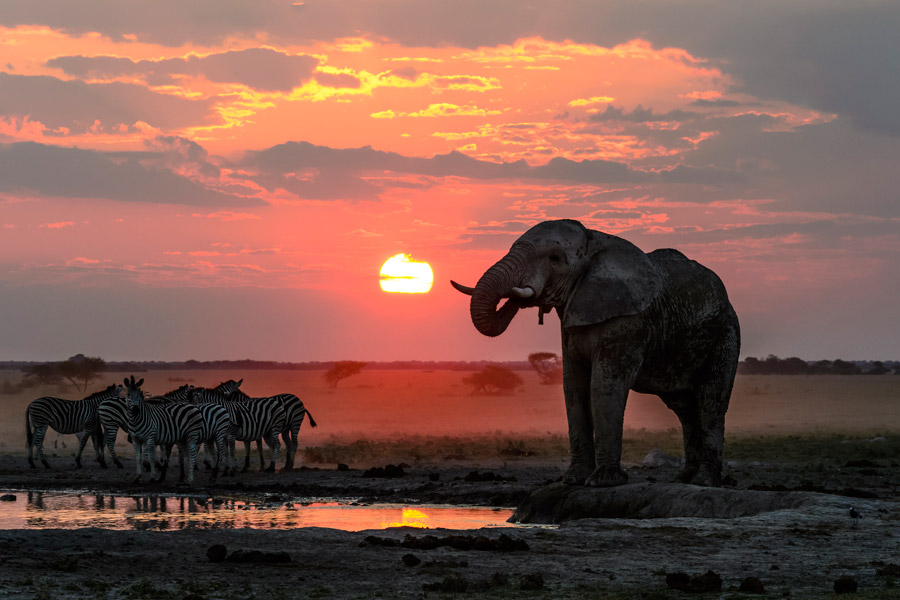
A 9-day Botswana safari offers an immersive journey through diverse ecosystems—usually combining the Okavango Delta, Chobe National Park, and the Savuti region. You will experience land and water-based game viewing, massive elephant herds, luxury tented camps, and thrilling predator sightings
Chobe National Park
Chobe National Park is the grand opener to your safari and a place defined by raw scale and incredible wildlife density. Expect mornings that start early with a guided 4x4 game drive, when the floodplains and river edges are at their most productive for spotting predators and big-game movement. Your guides will track signs of lions and leopards through changing vegetation, while elephants often cluster near the water, creating constant opportunities for close, dramatic sightings. Because Chobe’s ecosystem concentrates animals around key resources, the action can feel continuous—one drive flowing into the next sighting, with photography-ready moments often appearing around every bend.
As the day warms, plan for a relaxed return to camp—where you’ll typically enjoy a hearty brunch or downtime before the next highlight. Then, late afternoon becomes the showpiece: a sunset river cruise. Chobe’s riverfront is one of Africa’s most reliable stages for observing elephants in impressive numbers, along with hippos hauling out to sunbathe and birds erupting into flight as the light fades. The experience is immersive and unhurried, letting you watch animals move at their own pace—sometimes from shoreline platforms, sometimes from the water, with the sky turning into a living canvas of oranges and purples.
Evenings are usually reserved for guided storytelling, sundowners, and dinner in a comfortable camp setting, with the satisfaction of a day spent actively exploring and an evening spent reflecting on what you saw. Chobe’s combination of drive-and-cruise rhythm, elephant-heavy wildlife, and predator potential makes it a perfect first act in your journey.
Okavango Delta
The Okavango Delta is your transition from terrestrial intensity to immersive, watery wilderness—an oasis where the landscape itself seems to breathe. Here, you’ll trade your 4x4 vehicle experience for the distinctive rhythm of traditional travel: gliding by mokoro (a dugout canoe). Instead of scanning open bush for movement, your senses shift to the stillness of channels—listening for ripples, bird calls, and the occasional splash that hints at hippos nearby. Your guides will help you understand the Delta’s seasonal logic, explaining how water flow shapes where wildlife concentrates.
Mornings often begin with a calm guided start from camp, followed by mokoro travel through narrow waterways where you may spot rare aquatic antelope (often seen in the right conditions), hippos emerging to breathe, and crocodile activity along bank edges. You’ll also encounter vibrant birdlife—kingfishers, herons, and other Delta specialists—creating a constantly moving tapestry even when mammals are quiet.
Between excursions, expect luxury and comfort in a bush setting. Your lodge or camp base typically offers a warm return after time on the water: shaded resting areas, refreshing drinks, and meals designed around the pace of Delta living. Wildlife viewing transitions from “hunt-and-find” to “observe-and-wonder,” with moments of stillness becoming as memorable as sightings. The Delta rewards patience—one minute a channel looks empty, the next it reveals tracks, feeding activity, or sudden movement through reeds.
Because the Okavango is remote and water-based, your schedule is also shaped by logistics and flight connections between camps. But once you arrive, the experience feels beautifully contained: fewer roads, more water, and a sense that you’ve stepped into one of Africa’s most pristine natural systems. It’s a safari chapter defined by tranquility, rarity, and the magic of being surrounded by living water.
Moremi Game Reserve / Savuti
Moremi Game Reserve and Savuti are where your safari shifts into high-octane wildlife territory. These are landscapes that challenge both your eyes and your anticipation—where sightings can happen fast, and where the predators feel permanently on the edge of your plans. Expect early starts and long, action-filled game drives with expert guides who know how to read the terrain: floodplain lines, dry channels, and shifting vegetation all point to where animals will move next.
Moremi often delivers rich biodiversity and intense encounters, especially where water and habitat create concentrated “hot spots.” You’re likely to pursue the Big Five—lion, leopard, elephant, rhino, and buffalo—when the conditions align, with elephants and buffalo frequently acting as anchors for predator behavior. Leopards may appear unexpectedly in dense cover, while lions can show themselves around strategic routes where prey is most predictable.
Savuti adds a different intensity: a more rugged, dramatic environment that can produce memorable “surprise” sightings. This is where elusive predators may make rare appearances, including the African wild dog, whose sightings often depend on luck, timing, and the skill of your tracking team. Even when the full cast of iconic species doesn’t reveal itself immediately, the reserve’s energy keeps the game-drive pace engaging—every turn can bring a new sign, a new chase, or a new herd pattern that tells a story.
Between drives, camp life typically balances comfort with readiness: quick refreshments, packed breaks for viewing, and time to review tracks and memories with guides. Because these regions are remote, you’ll also move between camps by light aircraft on a multi-stop itinerary, positioning you for optimal daily viewing rather than exhausting road travel. The result is a safari finale defined by adrenaline—days that feel like wildlife narratives unfolding in real time, with the thrill of trying to outthink the wild.
9 Days Botswana wildlife safari trip
Join our 9-day Botswana wildlife safari designed for maximum sightings, comfort, and unforgettable scenery. This9-day Botswana wildlife safari itinerary blends three of the country’s most iconic wilderness regions—Chobe National Park, the Okavango Delta, and the Moremi Game Reserve / Savuti—so you experience different ecosystems and wildlife styles within a single journey. Chobe brings elephant-heavy floodplains and dramatic predator potential, while sunset river cruising adds a slower, atmospheric rhythm. The Okavango Delta offers a true change of pace as you glide through water channels by mokoro, trading 4x4 tracks for canoe quietness and birdlife richness. Finally, Moremi and Savuti deliver thrilling, high-energy game drives where you’ll chase the Big Five and search for elusive predators like African wild dog. Travel between remote camps is supported by scenic light-aircraft charter flights, with strict luggage weight limits for safety and flight efficiency.
Day 1: Arrive & Chobe Setup
Arrive in Botswana and transfer to your Chobe-area camp, settling into luxurious comfort before your first wildlife-focused outing. In the afternoon, you’ll ease into the experience with a guided orientation and a chance to meet your safari team and learn how sightings work across the floodplains and river edges. Once conditions are right, enjoy your first 4x4 game drive or, depending on timing, a short wildlife viewing session with your guide. Expect the landscape to feel alive—near-water habitats attract elephants, buffalo, and a range of predators tracking prey movement. After your drive, return to camp for sundowners and dinner in a relaxed, bushsetting atmosphere. You’ll likely notice how Chobe’s concentrated ecosystem creates frequent viewing opportunities, even on early days. Overnight at your Chobe accommodation with all daily guided activities included, so your focus stays on wildlife and comfort.
Day 2: Chobe Morning Game Drive + Sunset Cruise
Today is a full wildlife day shaped around Chobe’s best rhythm: morning game drive followed by an immersive sunset river cruise. Early in the morning, set out in your open 4x4 to scan the floodplains for moving herds and predator activity. Your guide will position the vehicle strategically, reading tracks, call patterns, and waterline movement. Lions and leopards may appear when prey is active, while elephants often draw attention for their numbers and behavior near the river system. After the drive, return to camp for breakfast/brunch, time to relax, and time to enjoy the comfort of your en-suite canvas tent or bush lodge. Later, step onto the boat for a golden-hour cruise. Watch elephants feed and move along the banks, hippos submerge and rise, and birds cluster along reed beds. Enjoy the shifting light as the day ends in calm, cinematic scenery.
Day 3: Second Chobe Drive + Optional Birding
Continue Chobe with another guided viewing day that balances excitement and variety. Start with a morning 4x4 game drive, this time focusing on changing areas of habitat as animals shift with temperature and water availability. You may encounter different herds, fresh predator movement, and classic river-edge sightings. Chobe’s strength is consistency—if you saw elephants yesterday, today may reveal new groupings, juveniles, or different feeding patterns that create fresh photo opportunities. Midday brings a comfortable break back at camp, where meals and drinks are included and you can recharge for the afternoon. If you prefer a slower pace, this is often the perfect time for optional birding walks or guided nature observation, depending on your camp’s schedule and conditions. Otherwise, you’ll continue with game viewing or an additional short excursion. Overnight remains in the Chobe region, keeping you close to peak viewing areas.
Day 4: Fly to Okavango Delta + Mokoro Introduction
After the Chobe highlights, travel to the Okavango Delta by scenic light-aircraft charter flight. Expect charter-style convenience: brief transfers, a focus on safety, and strict luggage caps (typically 15–20 kg / 33–44 lbs for soft-sided bags). On arrival, you’ll be welcomed into Delta territory—where the wildlife feels less “road-driven” and more channel-driven. In the afternoon, enjoy an orientation to the water environment and how mokoro travel works. Then experience your first time gliding through the channels with a guide in a mokoro (traditional dugout canoe). This is a quieter, more intimate way to view wildlife. Look out for hippos surfacing, signs of aquatic movement, and the constant soundtrack of birds calling from reeds. You’ll also start to notice how the Delta landscape reshapes your safari—more patience, more observation, and more “wait for the moment” viewing. Return to camp for a relaxing dinner and overnight in a luxury Delta setting.
Day 5: Full Mokoro Day + Delta Wildlife Viewing
Today is dedicated to the Okavango’s natural rhythm. After breakfast, head out for a full session of mokoro-based exploration, drifting through quieter corridors where animals often appear unexpectedly. Your guide will choose channels based on water depth, wildlife activity, and best chances for sightings of aquatic and semi-aquatic species. Expect to look for rare aquatic antelope where conditions allow, along with hippos moving near the edges of reeds. Birdlife typically takes center stage—vibrant colors, constant motion, and frequent flyovers that make the Delta feel alive even when the mammals stay hidden. Your pace remains unhurried, with time to stop, listen, and photograph when a moment opens up. Later, return to camp for a warm meal, refreshing drinks, and downtime. In the evening, you may enjoy a guided discussion of Delta ecology and wildlife patterns. Overnight remains in the Okavango, with inclusive meals and daily guided activities.
Day 6: Fly to Moremi/Savuti & Evening Drive
This morning brings another scenic transfer by light aircraft as you move deeper into the action toward Moremi Game Reserve and/or Savuti. The goal is simple: position you for the best daily viewing without losing daylight to long road travel. Upon arrival, meet your safari crew and settle into your bush camp. Depending on the timing of your flight, you’ll enjoy an evening game drive when conditions favor predator activity. Early dusk can bring impressive encounters—predators become more active, and prey begins to move more confidently in the fading light. Look for the kind of signs that indicate bigger sightings ahead: tracks, fresh kills (where permitted), and herd movement patterns. This is also a time to scan for elephants and buffalo concentrations that often shape predator behavior. Return to camp for dinner, and take time to review the day’s sightings with your guides. Overnight in the Moremi/Savuti area, ready for full days of high-intensity wildlife searching.
Day 7: Moremi Focus—Big Five Pursuit
Today is about intensity and probability—Moremi Game Reserve is one of Botswana’s most rewarding landscapes for sustained wildlife sightings. Set out early for a full 4x4 game drive, with expert guiding that prioritizes strategic positioning. Your objective is to encounter the Big Five—lion, leopard, elephant, rhino, and buffalo—when the environment aligns. While rhino sightings can be more dependent on specific locations and timing, elephants and buffalo often offer strong chances of seeing multiple groups. Lions may appear in short bursts around prey movement corridors, and leopards can reveal themselves when they decide to move between cover edges. Keep your eyes on secondary clues too: bird behavior changes, alarm calls, and the presence of fresh tracks. Midday break at camp provides a comfortable reset, while your guide and tracker may continue scanning from vantage points. Resume drives later if conditions are right. Overnight at your Moremi/Savuti camp.
Day 8: Savuti Action + Wild Dog Search
Move into a Savuti-focused day for dramatic landscapes and high-energy encounters. Savuti is known for wildlife drama—moments can escalate quickly, and predator behavior can be thrilling even when sightings are brief. Start with a morning drive searching for the movement patterns that lead to Big Five moments. Savuti can produce excellent elephant and buffalo viewing, which in turn supports predator opportunities. Keep watch for lions and leopards in the cover and along water-linked areas. This is also one of your best chances for elusive predators such as African wild dog. A wild dog sighting often depends on perfect timing and teamwork—so your guide will look for clues and position you to respond fast. Midday includes a camp break with included meals and drinks, then you’ll return to the vehicle for an afternoon drive that may extend into late viewing depending on sightings. The excitement builds as the day progresses, often ending with memorable “stand and watch” moments. Overnight in the Savuti area.
Day 9 : Final Game Drive & Depart
On your final day, enjoy a last burst of Botswana wildlife viewing before your departure. Start with an early morning game drive, keeping the schedule optimized for the highest probability encounters while avoiding unnecessary rush. Use the morning to look for any missing highlights—whether it’s a final elephant group, a predator you haven’t seen yet, or an iconic bird-and-landscape moment you want to capture one last time. Your guide will adapt the plan based on tracks and herd movements, so the safari remains responsive and natural rather than rigid. After the drive, return to camp for brunch, collect your belongings, and prepare for your final transfers. If your flight or onward connection allows, you may enjoy a short last viewing stop on the way to the airstrip. Then depart from Botswana with a strong sense of closure—your safari spanning river drama, Delta serenity, and the high-intensity action of Moremi and Savuti. This concluding day wraps up the journey with maximum wildlife value and comfort
When is the best time for a 9 Days Botswana wildlife safari trip?
The best time depends on what you want most, but dry season (approximately May to October) is usually the top choice for wildlife viewing in northern Botswana. During these months, animals concentrate around water sources—meaning better chances for elephants, buffalo, and predators—especially in Chobe, Moremi, and Savuti. June to September often offers excellent game-viewing conditions and cooler mornings/evenings. If you want a greener landscape and quieter Delta scenery, consider the shoulder months (April/October) when conditions can still be very favorable. The Okavango Delta is water-dependent, so timing affects channel depth and wildlife distribution; your operator will tailor activities to current water conditions. If you want consistent clarity for flying between camps, dry season typically provides smoother travel days.
Where to stay on a 9 Days Botswana wildlife safari trip?
On a classic 9-day itinerary covering Chobe → Okavango Delta → Moremi/Savuti, you’ll typically stay in safari camps that combine comfort with an immersive bush setting. In Chobe, expect luxury en-suite canvas safari tents or intimate lodge accommodations positioned near prime viewing areas for both game drives and river activity. In the Okavango Delta, camps often place you close to channels for mokoro experiences, with beautiful terrace views, shaded lounges, and fully inclusive meals. In Moremi and Savuti, lodges or tented camps are chosen for proximity to the best drive routes, so you can spend more time on the vehicle and less time traveling. Across the trip, activities, guided safaris, and meals are commonly included, with only flights and personal items varying by package.
Booking 9 Days Botswana wildlife safari trip with us — Roads of Adventure Safaris
When you book the 9 Days Botswana wildlife safari with Roads of Adventure Safaris, you’re choosing a trip built around real safari flow: fewer wasted hours, strong guiding, and camp selections designed for wildlife access. We plan itineraries that match each region’s style—Chobe game drives and sunset cruises, Okavango Delta mokoro outings, and high-intensity drives in Moremi/Savuti—so your days feel full and purposeful. We also coordinate remote logistics, including scenic light-aircraft transfers between camps where needed, with clear guidance on the typical 15–20 kg soft-luggage weight caps. With us, accommodations are carefully selected for comfort in truly wild settings, while daily guided activities and meals are structured for an easy, inclusive experience. If you tell us your travel month and travel preferences, we’ll tailor the best timing and camp placements for your goals.
