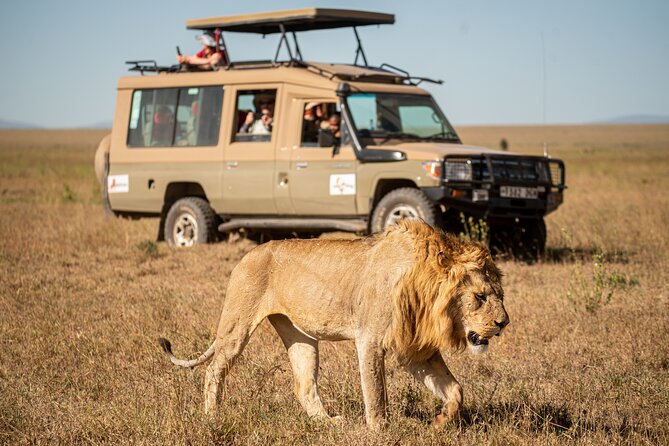
The 2-day Masai Mara safari is a condensed, fast-paced adventure. You will spend about 5-6 hours driving from Nairobi (or 1 hour flying) to reach the park, followed by thrilling afternoon and morning game drives to search for the famous "Big Five" (lion, leopard, elephant, buffalo, rhinoceros) across the iconic savanna
Tour highlights for 2 Days Masai mara safari
Iconic "Big Five"
Thrilling savanna drives
Scenic morning sunrise
Incredible predator encounters
Traditional Maasai village
Spectacular wildlife viewing
Breathtaking African landscapes
Memorable safari memories
Day by day 2 Days Masai mara safari
Day 1: The Journey & Afternoon Game Drive
You depart Nairobi early (or fly from Wilson Airport) and arrive at the reserve around midday. After lunch and a brief rest at your lodge or camp, you will head out on an afternoon game drive from roughly 3:30 PM to 6:30 PM to spot lions, giraffes, and vast herds of grazers.
Day 2: Morning Game Drive & Departure
An early wake-up call (around 6:00 AM) brings you the best chance to see predators hunting before the sun gets too hot. After the drive and a late breakfast, you will check out. Many itineraries offer an optional cultural visit to a traditional Maasai village before beginning the journey back to Nairobi.
10 top things to expect on 2 Days Masai mara safari
1. Fast-Paced Itinerary
When embarking on a 2-day Masai Mara safari, expect a highly condensed timeline where every hour counts. The journey begins with a very early departure from Nairobi to beat the notorious city traffic. You will spend roughly five to six hours on the road, watching the urban landscape transition into the dramatic drop of the Great Rift Valley before finally hitting the rough, unpaved roads leading to the reserve. If you choose to fly into a bush airstrip instead, you will save time but still land right into a buzzing schedule.
Because you only have 48 hours, there is no time to waste lounging around. You will check into your camp or lodge, eat a quick lunch, and immediately head out for your first game drive. The pace requires you to keep your camera gear charged, your sunblock applied, and your safari clothes ready. It can feel exhausting, but the sheer thrill of packing a classic African adventure into a single weekend keeps your adrenaline pumping. This itinerary is perfect for travelers with limited time who still want a world-class wildlife experience.
2. Expert Safari Guiding
Your driver-guide is the absolute linchpin of your short Masai Mara safari. On a tight schedule, you cannot afford to drive around aimlessly hoping to stumble across animals. These local experts have spent years studying the layout of the reserve, tracking animal behavior, and understanding seasonal wildlife migration patterns. They know exactly which dry riverbeds the leopards favor, which rocky outcrops are preferred by pride of lions, and where elephants gather to drink.
Furthermore, safari guides stay in constant communication via high-frequency valley radios. When a guide spots a rare black rhino or a cheetah on a kill, they share coordinates with fellow drivers. This real-time network ensures that even on a brief two-day trip, your chances of major wildlife sightings skyrocket. Beyond just finding the animals, your guide provides rich context, explaining everything from symbiotic bird behavior to the complex social structures of spotted hyena clans, turning a simple drive into an educational journey.
3. Iconic Savanna Landscapes
The physical backdrop of your Masai Mara safari is just as breathtaking as the animals inhabiting it. Expect to see the quintessential African landscape you have viewed in documentaries: vast, golden grasslands stretching out to a distant, flat horizon, occasionally dotted with solitary, umbrella-shaped acacia trees. The sheer openness of the plains creates an overwhelming sense of space and freedom that is hard to find anywhere else on Earth.
This unique topography is actually the secret to the reserve's incredible wildlife viewing. Because the grass is kept short by millions of grazing herbivores, predators have fewer places to hide, making them significantly easier to spot from an open-top safari vehicle. You will drive through distinct ecological zones, from the open plains to dense riverine forests along the Mara and Talek rivers. The changing light throughout the day paints the savanna in shifting hues of bright gold, deep amber, and dusty red, making the landscape a photographer's dream.
4. Afternoon Game Drive
Your first real taste of the wilderness happens during the day one afternoon game drive, typically lasting from 3:30 PM until dusk. After a long journey to get to the park, stepping into the safari vehicle breathes new life into you. As the intense midday heat begins to subside, the savanna slowly wakes up from its afternoon slumber. Zebras, topis, and gazelles dot the plains, lifting their heads warily as your vehicle passes.
The late afternoon provides some of the most beautiful photographic light, often referred to as the "golden hour." Your guide will navigate the dirt tracks, searching for elephants moving in family herds or giraffes browsing on the high acacia branches. This initial drive serves as a thrilling introduction, building your anticipation for the next day. As the sun begins to dip below the horizon, casting long shadows across the grass, you will head back to camp under a canopy of stars, completely captivated by the wild.
5. Early Morning Wilderness
The second day of your Masai Mara safari kicks off with an early wake-up call, often around 5:30 AM. Expect a chilly start to the day, requiring heavy layers, a warm jacket, and perhaps a scarf. Leaving camp in the dark, you will watch the sun rise over the horizon, painting the sky in brilliant shades of pink, purple, and orange. The air is crisp, fresh, and filled with the morning calls of hidden birds.
This early start is vital because morning is the most active time for the reserve's wildlife. Herbivores graze actively while the dew is still on the grass, and predators take advantage of the cool temperatures to move around before the scorching sun forces them into the shade. You will see baboons warming themselves on rocks, hippos returning to the deep water after a night of grazing on land, and plains game standing alert in the cool morning air, making it the most magical time of the trip.
6. Predator Encounter Opportunities
The Masai Mara is world-famous for its exceptionally high concentration of large carnivores, and a short Masai Mara safari gives you an excellent shot at seeing them in action. Lions are the undisputed kings here, and you are highly likely to encounter large prides resting together in the grass, playful cubs tumbling over one another, or a dominant male guarding his territory. The reserve is one of the few places where predators feel entirely comfortable around vehicles, allowing you to watch them from just a few yards away.
If luck is on your side, you may spot a cheetah using a termite mound as a lookout point, scanning the plains for a vulnerable gazelle, or a leopard hauled up in the branches of a fig tree. Because your time is limited, your guide will specifically focus on tracking these apex predators during the prime hunting hours of the early morning. Watching a pride of lions stalk through the tall grass is an intense, heart-stopping experience that defines the true spirit of an African safari.
7. Diverse Bird Watching
While massive mammals get most of the attention, your Masai Mara safari will expose you to an astonishing variety of birdlife. The reserve boasts over 470 recorded bird species, ranging from massive, ground-dwelling giants to tiny, iridescent insect-hunters. Even if you are not a dedicated birdwatcher, the sheer variety, size, and vibrant colors of the avian population are bound to catch your eye as you cruise through the grasslands.
You can expect to see prehistoric-looking southern ground hornbills walking through the grass, secretary birds hunting for snakes, and elegant grey crowned cranes dancing in pairs. Overhead, the skies are constantly patrolled by numerous raptors, including martial eagles and bateleurs. Around river crossings, massive vultures gather in large, raucous groups on the branches of dead trees, waiting for predators to leave behind scraps. The flashes of brilliant blue from a lilac-breasted roller flying past add a striking pop of color to the golden landscape.
8. Comfortable Bush Accommodations
Even on a brief 2-day Masai Mara safari, your overnight stay is bound to be a memorable highlight. Accommodations range from mid-range permanent luxury tents built on wooden platforms to high-end luxury lodges. Don't let the word "tent" fool you; most safari camps feature comfortable canvas structures complete with proper beds, crisp linens, flush toilets, and hot running water, perfectly blending old-world safari romance with modern comfort.
These camps are strategically placed along the park borders or tucked deep inside the reserve itself, often situated along rivers where wildlife gathers. At night, the true magic happens. After a hot dinner, you will sit around a roaring campfire, listening to the nocturnal sounds of the bush. The distant roaring of lions, the deep grunting of hippos in the river, and the eerie laugh of hyenas create a wild, natural lullaby, reminding you that you are sleeping in the heart of untamed Africa.
9. Cultural Maasai Visit
On the second day, before making the journey back to Nairobi, many short itineraries offer an optional cultural visit to a traditional Maasai village, known locally as a Manyatta. This experience provides a unique window into the lives of the iconic pastoralist community that has coexisted with the region's wildlife for centuries. You will be welcomed into the village by vibrant, energetic singing and the famous jumping dance, known as the Adumu.
Inside the village, local hosts will show you how their homes are constructed from mud, sticks, and thatch, and explain their traditional way of life, which revolves deeply around cattle. You will learn about their customs, ancient warrior tracking skills, and traditional medicine. While these visits are structured for tourism, they offer a vital human element to your Masai Mara safari, illustrating the delicate balance between modern conservation and ancestral heritage, while providing a chance to buy handmade beadwork directly from local artisans.
10. Unpredictable Wildlife Action
The most exciting thing to expect on your Masai Mara safari is the absolute unpredictability of nature. There are no enclosures or fences here; the animals move entirely at their own will across an open ecosystem. This means that no two safaris are ever identical, and a single minute can completely transform your entire trip. You might turn a sharp corner and find a massive herd of elephants blocking the dirt road, or stumble upon a mother cheetah teaching her young cubs how to hunt.
This element of chance keeps you on the edge of your seat throughout the journey. You could witness a dramatic crocodile ambush near a riverbank, watch a newborn giraffe taking its very first shaky steps, or observe a tense standoff between a pride of lions and a defensive herd of buffaloes. This raw, unscripted drama ensures that even though you are only spending two days in the wilderness, you will leave with stories and memories that feel like they took a lifetime to gather.
Best Time for a 2-Day Masai Mara Safari
When planning a condensed 2-day Masai Mara safari, timing is absolutely critical. Because your hours on the ground are limited, you want to visit when wildlife visibility is at its peak and travel logistics are seamless. The optimal window for this short adventure is during the dry season, which runs from July to October. This period coincides with the world-famous Great Migration, when millions of wildebeests, zebras, and gazelles flood the plains from the Serengeti. For a traveler on a tight schedule, this means the savanna is packed with animals, drastically reducing the time your guide needs to spend searching for wildlife and ensuring action-packed game drives from the moment you enter the reserve.
Beyond the migration, the dry weather creates ideal viewing conditions. The grass is short, removing natural hiding spots for apex predators like lions, leopards, and cheetahs. Water sources also shrink, forcing large concentrations of wildlife to gather around predictable rivers and waterholes. This predictability is a massive advantage for a 2-day itinerary. Additionally, the dirt roads within the reserve are dry and easily navigable, ensuring your safari vehicle can move quickly between wildlife sightings without the risk of getting stuck in deep mud.
If you prefer to avoid the peak season crowds and high prices, the short dry spell in January and February is another fantastic window. The weather is beautiful, wildlife is resident and plentiful, and the clearer skies offer stunning photography conditions. Conversely, it is generally best to avoid the long rainy season of April and May for a 2-day trip; heavy downpours can wash out tracks, delay travel times from Nairobi, and make a short turn-around schedule highly unpredictable.
Where to Stay on a 2-Day Masai Mara Safari
Choosing the right accommodation for a 2-day Masai Mara safari requires a strategic balance between comfort, budget, and—most importantly—location. Because you only have one night in the bush, you cannot afford to waste precious hours commuting. Staying inside the reserve or in a private concession immediately adjacent to the main gates is highly recommended. This ensures that when your morning game drive starts at 6:00 AM, you are already on the savanna watching the sunrise, rather than waiting in a long queue at the park entrance gate.
For budget-conscious travelers and those looking for a classic African experience, mid-range tented camps located just outside the eastern gates (like Sekenani or Talek) offer the perfect solution. Don't let the word "tent" mislead you; these are permanent canvas structures set on elevated wooden platforms, featuring comfortable beds, en-suite bathrooms, flush toilets, and hot showers. They provide an authentic "bush feel" where you can hear the nighttime calls of hyenas and hippos while enjoying modern comforts.
If you are looking to maximize luxury and minimize driving, high-end luxury lodges and boutique camps situated deep within the reserve or in exclusive private conservancies are exceptional. These properties offer opulent amenities, fine dining, and unparalleled privacy. More importantly, staying deep inside the park means your game drives begin the exact moment you step out of your tent. For a 2-day safari, spending a bit more on a well-located lodge saves invaluable transit time, turning a brief stay into a seamless, high-value wildlife immersion.
Booking a 2-Day Masai Mara Safari with Roads of Adventure Safaris
Booking your 2-day Masai Mara safari with Roads of Adventure Safaris guarantees a flawless, stress-free execution of a highly demanding itinerary. Managing a 48-hour safari requires precision logistics, deep local knowledge, and an unwavering commitment to guest satisfaction. Our experienced team handles every moving part—from securing park entry permits and coordinating seamless border or airport transitions to selecting the most strategically located lodges—ensuring that you don't waste a single moment worrying about logistics. You simply show up, and we take care of the rest.
