A 16-day Uganda safari offers the ultimate, comprehensive journey through the "Pearl of Africa". You can expect to experience diverse ecosystems, including sweeping savannahs and dense equatorial jungles. Highlights include gorilla trekking in Bwindi, chimpanzee tracking in Kibale, and wildlife drives to spot the Big Five
Some of the popular 16 days Uganda safari trips
16-days-classic-uganda-wildlife-safari-and-gorilla-trekking-tour
16-days-classic-uganda-wildlife-safari-and-gorilla-trekking-tour
16-days-ultimate-uganda-safari-to-rwanda-safari-tour-package-combo
🦍 Prime Primate Encounters
Gorilla Trekking in Bwindi Impenetrable Forest
Deep within the southwestern corner of the country lies Bwindi Impenetrable Forest, an ancient, biophysically isolated rainforest that serves as the setting for the absolute crown jewel of your 16 days Uganda safari trip. Navigating the steep, tangled slopes can be physically demanding, but all exhaustion instantly vanishes the moment you locate a habituated mountain gorilla family. Watching these gentle giants interact, play, and groom just meters away is a deeply profound, almost spiritual experience. You are permitted one magical hour to quietly observe their human-like expressions and complex social bonds. This encounter offers a fleeting look into the lives of one of the world's most endangered primates, deeply hidden away in the misty, emerald hills.
Chimpanzee Tracking in Kibale National Park
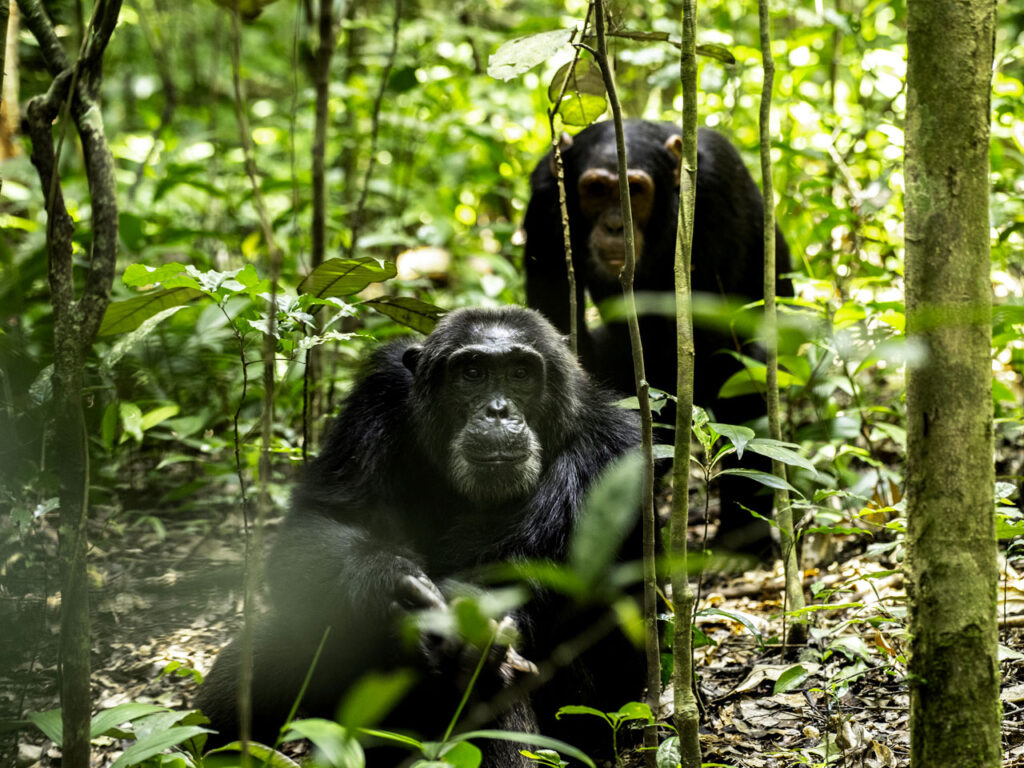
Kibale National Park stands undisputed as the primate capital of East Africa, boasting the highest density and diversity of primates on the continent. As you walk beneath the dense canopy on your 16 days Uganda safari trip, the forest comes alive with a chaotic symphony of pant-hoots, screams, and the thumping of tree trunks. Tracking our closest living relatives through the undergrowth is an exhilarating, fast-paced adventure. Once you locate the troop, you can observe them swinging effortlessly through the treetops, grooming one another, and playing on the forest floor. The sheer energy and human-like intelligence of these playful primates offer a fascinating, wild contrast to the quiet majesty of gorilla trekking.
Golden Monkey Trekking in Mgahinga Gorilla National Park
High up in the cloud forests of the Virunga Volcanoes, Mgahinga Gorilla National Park offers a completely unique and lively primate encounter. Golden monkey trekking takes you through dense bamboo zones to spend time with these rare, strikingly beautiful monkeys. With their rich orange-gold coats and expressive faces, these playful primates are a joy to watch as they jump nimbly from branch to branch and forage in the bamboo canopy. They move quickly, creating a fun challenge for photographers trying to capture their constant movement. This high-altitude trek perfectly rounds out the primate portion of your journey, introducing you to an endangered species found nowhere else but this unique volcanic region.
🦁 Big Game Safaris & Boat Cruises
Murchison Falls National Park
As Uganda's largest protected conservation area, Murchison Falls National Park delivers classic African savannah game drives teeming with wildlife. Across the sweeping grasslands north of the Nile River, you will search for majestic lions, massive herds of elephants, elegant Rothschild’s giraffes, and various antelope species. The absolute highlight, however, is a thrilling boat ride along the Victoria Nile to the base of Murchison Falls itself. Here, the entire Nile River is forced through a narrow 7-meter gap in the rocks, plunging 43 meters down with explosive power. The cruise offers exceptional views of giant Nile crocodiles, pods of hippos, and vibrant birdlife lining the riverbanks.
Queen Elizabeth National Park
Framed by the jagged Rwenzori Mountains, Queen Elizabeth National Park features a stunning variety of habitats, from open savannah to crater lakes. A central highlight of your 16 days Uganda safari trip here is the famous Kazinga Channel boat cruise, which features huge concentrations of hippos, bathing elephants, and an incredible array of water birds. Further south lies the remote Ishasha sector, world-renowned for its unique tree-climbing lions. Witnessing these large predators lounging lazily high up in the branches of old fig trees is a spectacular sight. The park effortlessly blends classic big game tracking with tranquil water safaris, making it an essential pillar of any comprehensive Ugandan itinerary.
Lake Mburo National Park
As one of Uganda's smaller yet most charming destinations, Lake Mburo National Park provides a refreshing change of pace from traditional vehicle safaris. This park is a peaceful haven for zebras, impalas, and massive elands, which are notably absent from many other western parks. Because there are no elephants or lions here, you can safely explore the wild terrain on foot during an intimate walking safari or on a thrilling horseback riding adventure. Quietly moving past herds of zebras while on horseback allows you to blend seamlessly into the environment, offering a peaceful, low-impact connection to the wilderness that perfectly balances the high-intensity adventures of the trip.
🏞️ Adventure & Cultural Highlights
The Nile River in Jinja
Located at the edge of Lake Victoria, Jinja is widely celebrated as the adventure capital of East Africa and the historic Source of the Nile. Your 16 days Uganda safari trip stops here to let you witness the exact point where the world's longest river begins its long journey north. For adrenaline seekers, the turbulent waters of the Nile offer world-class white-water rafting through intense, crashing rapids. If you prefer a more relaxed experience, a tranquil sunset boat cruise allows you to drift past beautiful islands, spot unique waterfowl, and quietly absorb the historical significance of this legendary geographic landmark.
Cultural Interactions
Uganda's warmth extends far beyond its wildlife, rooted deeply in its diverse and welcoming communities. This itinerary offers profound cultural interactions, such as an authentic Batwa Pygmy experience. The Batwa, the original hunter-gatherer inhabitants of the ancient southern forests, will guide you through the woods while sharing traditional survival skills, ancient songs, and medicinal plant secrets. In contrast, visiting the Ankole long-horned cattle keepers in the central plains introduces you to a proud pastoralist lifestyle centered entirely around their magnificent, iconic cattle. These personal stories and deep cultural exchanges add unmatched depth and perspective to your entire African adventure.
Scenic Landscapes
Uganda’s geography changes dramatically as you travel across the country, offering stunning visual backdrops at every turn. You will drive past rolling crater lakes and look up at the majestic Sipi Falls as it cascades down the slopes of Mount Elgon. To relax after your intensive hikes, nothing beats spending a few tranquil days on the idyllic islands of Lake Bunyonyi. Believed to be one of the deepest lakes in Africa, its calm, bilharzia-free waters are dotted with 29 terraced islands and framed by steep, misty hillsides. It is the ultimate place to rest your muscles, canoe in traditional dugouts, and quietly reflect on an extraordinary journey.
16 days Uganda safari trip
Embarking on a 16 days Uganda safari trip is an unparalleled journey into the heart of the "Pearl of Africa." This comprehensive expedition is designed to immerse you in a landscape of dramatic contrasts, ranging from the misty, verdant rainforests of the southwest to the sprawling, sun-drenched savannahs of the north. Over these two weeks and two days, you will witness the raw power of Murchison Falls, navigate the wildlife-rich Kazinga Channel, and stand in awe before the majestic mountain gorillas in Bwindi. Beyond the spectacular wildlife, your 16 days Uganda safari trip bridges the gap between human and natural history through authentic cultural engagements with the Batwa people and the Ankole cattle keepers. Whether you are seeking the adrenaline of the Nile or the serenity of Lake Bunyonyi’s islands, this meticulously curated itinerary promises a profound, transformative experience, leaving you with memories of an Africa that is wild, vibrant, and utterly unforgettable.
Day 1: Arrival in Entebbe
Your 16 days Uganda safari trip begins as you land at Entebbe International Airport, the gateway to the country. A warm welcome from your private guide marks the start of your journey. After clearing customs, you will be transferred to your boutique hotel overlooking the serene Lake Victoria. The remainder of the day is yours to settle in and recover from your flight. If time permits, enjoy a short, peaceful stroll through the Entebbe Botanical Gardens, where you might spot your first monkeys and tropical birds. This initial day is a vital period of acclimatization, allowing you to breathe in the fresh Ugandan air and prepare for the exhilarating wildlife adventures that await you in the coming days across this beautiful, diverse nation.
Day 2: Journey to Murchison Falls
We depart early for the drive to Murchison Falls National Park. As we travel north, the landscape shifts from lush greenery to drier, open plains. Along the way, we stop at the Ziwa Rhino Sanctuary. Here, you will join rangers on a walking safari to track endangered white rhinos—a thrilling experience that helps support ongoing conservation efforts to reintroduce these magnificent creatures to the wild. After a satisfying lunch, we continue our journey, arriving at Murchison Falls in the late afternoon. As you check into your lodge, listen to the distant, rhythmic roar of the Nile, a constant reminder of the park's centerpiece. This evening, we enjoy a quiet dinner under the stars, setting the stage for the big-game action that defines your 16 days Uganda safari trip.
Day 3: Wildlife and the Mighty Waterfall
Today, the true scale of Murchison Falls National Park reveals itself. We start with an early morning game drive, crossing the vast savannah where lions, elephants, leopards, and Rothschild’s giraffes roam freely. The golden light of the morning makes for spectacular wildlife photography. In the afternoon, we trade our vehicle for a boat cruise along the Victoria Nile. Navigating toward the base of the falls, you will be humbled by the sheer power of the water as it forces itself through a narrow 7-meter gorge, creating a thunderous spectacle. Along the riverbanks, pods of hippos and massive Nile crocodiles lounge, undisturbed by our approach. This day perfectly balances the intensity of predator tracking with the awe-inspiring geological beauty that is a hallmark of your 16 days Uganda safari trip.
Day 4: Drive to Kibale Forest
We leave the plains of Murchison and embark on a scenic drive toward the lush highlands of the west, heading toward Kibale National Park. This journey takes us through winding roads, passing traditional homesteads, tea plantations, and stunning mountain vistas. It is a long drive, but the changing scenery keeps it engaging as we approach the "Primate Capital of the World." Upon arrival in the Kibale region, we check into a lodge nestled on the edge of the forest, where the sounds of cicadas and nocturnal animals create a wild soundtrack for the night. This transition marks the shift in your 16 days Uganda safari trip from savannah ecosystems to the dense, biodiverse rainforests that house our closest living relatives, building anticipation for the morning trek.
Day 5: Chimpanzee Tracking
Today is dedicated to an unforgettable encounter with chimpanzees. After a morning briefing, we head into the dense Kibale forest. Tracking these intelligent primates is an exhilarating experience; you listen for their characteristic pant-hoots echoing through the canopy, signaling their location. Once we find a habituated troop, you are permitted one hour to observe them as they forage, play, and interact in their natural habitat. Seeing the intricate social bonds they share is a highlight of your 16 days Uganda safari trip. In the afternoon, we explore the Bigodi Wetland Sanctuary, a community-led initiative that offers fantastic bird watching and a chance to see more primates, including red colobus monkeys. It is a day deeply connected to the rhythms of the forest and the intricacies of primate life.
Day 6: Queen Elizabeth National Park
We drive southward to Queen Elizabeth National Park, located in the shadow of the Rwenzori Mountains. As we enter the park, we traverse the crater-filled landscape before reaching the plains. In the late afternoon, we embark on a game drive in the Kasenyi sector, renowned for its dense populations of Ugandan kob, buffalo, and predators like lions and hyenas. The backdrop of the "Mountains of the Moon" adds a dramatic layer to the scenery. Checking into your lodge, you will enjoy views over the savannah, knowing that we are perfectly positioned for a full day of exploration tomorrow. This day acts as a thrilling bridge in your 16 days Uganda safari trip, connecting the lush primate forests to the wide-open, wildlife-packed plains of the Rift Valley.
Day 7: Kazinga Channel and Ishasha
The day begins with the iconic Kazinga Channel boat cruise. This natural waterway connects Lake George and Lake Edward and acts as a magnet for wildlife. From the safety of the boat, you will see hundreds of hippos, bathing elephants, and crocodiles, as well as a prolific variety of water birds. After lunch, we drive toward the Ishasha sector, famous for its unique tree-climbing lions. These lions spend their afternoons resting high in the branches of old fig trees to escape the heat and flies. Watching these regal predators from the comfort of our vehicle is a surreal experience. This day serves as a brilliant highlight of your 16 days Uganda safari trip, showcasing the incredible diversity of predator behavior and riverine ecosystems found in western Uganda.
Day 8: Into the Impenetrable Forest
We depart Ishasha and head deep into the southwest toward the Bwindi Impenetrable Forest. The road winds through stunning terraced hillsides, often called the "Switzerland of Africa," providing constant, breathtaking photo opportunities. As we approach Bwindi, the air grows cooler and the vegetation becomes increasingly dense. This ancient forest is a UNESCO World Heritage site and home to roughly half of the world's remaining mountain gorillas. Arriving at the edge of the forest, we check into our lodge to prepare for the main event of the entire 16 days Uganda safari trip. The anticipation is palpable tonight; being this close to the majestic mountain gorillas, hidden away in the mist, is a rare privilege that will stay with you forever.
Day 9: Gorilla Trekking
Today is the cornerstone of your 16 days Uganda safari trip. After an early breakfast, we head to the park headquarters for a briefing. We then venture into the Bwindi Impenetrable Forest, following expert trackers who guide us through the thick undergrowth. The trek can be demanding, but the reward is incomparable: a face-to-face encounter with a mountain gorilla family. Spending one hour with these gentle, intelligent giants—watching them groom, play, and forage just meters away—is a deeply emotional, life-changing experience. You leave the forest with a newfound appreciation for conservation and the fragile beauty of these creatures. The rest of the afternoon is spent reflecting on this encounter, relaxing at your lodge as the jungle mist begins to settle over the ancient trees.
Day 10: Lake Bunyonyi
After the intensity of gorilla trekking, we travel a short distance to Lake Bunyonyi, often called the "Place of Little Birds." This tranquil, bilharzia-free lake, dotted with 29 islands and surrounded by steep, terraced hills, is the perfect sanctuary for relaxation during your 16 days Uganda safari trip. We take a boat to one of the islands, where you can swim, canoe in a traditional dugout, or simply enjoy the absolute silence of the surroundings. The lake’s calm atmosphere offers a much-needed break for your muscles and mind. As the sun sets over the terraced hills, reflecting on the water, you will find it easy to see why this is one of Uganda’s most beloved and beautiful gems.
Day 11: Lake Mburo National Park
Today, we drive toward Lake Mburo National Park, a smaller but equally enchanting wilderness. Known as the best place to see zebras, impalas, and the massive eland antelopes, the park’s unique landscape of rolling hills and acacia woodlands sets it apart. Because Lake Mburo lacks elephants or big cats, it is one of the few places in Uganda where you can safely enjoy a walking safari or even explore on horseback. Getting out of the vehicle and walking alongside zebras provides a visceral, intimate connection to the wildlife that a drive simply cannot match. This day of your 16 days Uganda safari trip offers a peaceful, low-impact perspective on the African wilderness, allowing you to focus on the smaller details of the ecosystem.
Day 12: Towards the Nile
We bid farewell to Lake Mburo and embark on a longer drive heading east toward Jinja, the adventure capital of the country. This transit day allows us to experience the changing landscapes of central Uganda, passing through vibrant markets and bustling roadside towns. It is a chance to observe daily life in the countryside, seeing how the locals live and trade. We stop for lunch at a local restaurant, sampling authentic Ugandan flavors. By late afternoon, we reach the banks of the Nile, where your accommodation awaits. As you settle into your room, the sound of the Nile flowing nearby signals the beginning of the final, action-packed chapter of your 16 days Uganda safari trip.
Day 13: Jinja and the Nile
Jinja is the source of the Nile, and today you experience its power firsthand. Depending on your preference, you can choose between a high-adrenaline white-water rafting adventure through the world-class rapids of the Nile or a tranquil boat cruise to the official "Source of the Nile" marker. The contrast between the roaring rapids and the peaceful waters near the source is striking. Visiting the spot where the river leaves Lake Victoria to begin its long journey to the Mediterranean is a profound historical moment. This day of your 16 days Uganda safari trip blends adventure with discovery, offering a perfect conclusion to the active portions of your tour while surrounded by the beauty of East Africa’s most legendary river.
Day 14: Sipi Falls Exploration
We travel east toward the slopes of Mount Elgon to visit the spectacular Sipi Falls. This series of three waterfalls cascading down the mountainside is one of Uganda's most iconic landscapes. We take a guided hike to the base of the falls, where the sheer volume of water creates a constant mist and a thundering roar. The surrounding area is famous for its high-quality Arabica coffee, and we will take a tour of a local plantation to see how the beans are grown, processed, and roasted. This cultural and natural immersion is a beautiful addition to your 16 days Uganda safari trip, connecting you with the land and the people who harvest these world-class beans in such a breathtakingly beautiful setting.
Day 15: Cultural Heritage and Cattle
On our way back toward the central region, we spend time engaging with the local communities, specifically focusing on the proud tradition of the Ankole long-horned cattle keepers. These cattle, known for their immense, sweeping horns, are central to the culture and economy of this region. We visit a homestead to learn about the history of the Ankole people, their unique methods of herd management, and the significance of the cattle in their social structure. This experience offers a deep, authentic look into a traditional way of life that has persisted for generations. It is a meaningful way to round out the final full day of your 16 days Uganda safari trip, grounding your adventure in the local culture.
Day 16: Departure
As your 16 days Uganda safari trip comes to a close, we make the final drive to Entebbe. If time permits, we can make a stop at the craft markets for souvenirs, ensuring you take a piece of Uganda home with you. Your guide will transfer you to the airport in time for your onward flight. Looking back on the past two weeks, you’ll carry memories of gorillas in the mist, lions in the trees, and the thunder of the Nile. It is a journey that changes you, leaving you with a deep, lasting connection to the "Pearl of Africa." As you board your plane, you’ll know that while this trip is ending, the impact of these landscapes and encounters will remain with you forever.
What are the passport and visa entry requirements?
When preparing for a 16 days Uganda safari trip, immigration documentation is your very first step. Uganda strictly requires all international travelers to possess a passport that is valid for at least six months from the date of arrival, with a minimum of two blank pages for entry and exit stamps. As of 2026, standard visas on arrival are no longer guaranteed, meaning visitors must apply for an e-Visa online via the official immigration portal at least two to three weeks before departure.
The standard single-entry tourist visa costs $50 USD. However, because this extensive 16-day route explores the far reaches of the country and borders regional neighbors, many travelers opt for the East Africa Tourist Visa. Costing $100 USD, this multi-country visa grants 90 days of continuous travel between Uganda, Kenya, and Rwanda, provided you enter through the issuing nation first. Upon arrival at Entebbe International Airport, you must present a printed copy of your approved e-Visa clearance letter, your passport, a return flight ticket, and proof of your safari accommodation arrangements to successfully clear customs and activate your stay.
Which vaccinations and health documents are mandatory?
Health security is taken very safely and seriously at all Ugandan points of entry. The single most important document you must present before clearing immigration is a valid Yellow Fever vaccination certificate. This is a mandatory requirement for all travelers aged one year and older entering the country. The vaccination must be administered at least 10 days before your arrival date to ensure it is fully effective, and the resulting certificate is valid for life. Failure to present this document can result in denied entry or mandatory, out-of-pocket vaccination at Entebbe Airport.
Additionally, because a 16 days Uganda safari trip spans several distinct eco-zones—from lowland savannahs to humid rainforests—malaria prevention is a critical component of travel prep. Malaria is prevalent throughout Uganda year-round, and taking a prescribed prophylactic medication (such as Atovaquone/Proguanil or Doxycycline) is strongly advised. Travelers should also pack high-quality insect repellents containing DEET to apply daily, especially during evening hours or while trekking in densely forested zones. Comprehensive travel insurance that covers emergency medical evacuation is also highly recommended due to the remote nature of several national parks.
What is the physical difficulty of gorilla trekking in Bwindi?
Gorilla trekking in Bwindi Impenetrable Forest National Park is undeniably the emotional centerpiece of a 16 days Uganda safari trip, but it demands a reasonable level of physical fitness. The terrain consists of steep, muddy ridges, tangled undergrowth, and dense volcanic soils situated at altitudes ranging from 3,900 to 8,500 feet above sea level. Because mountain gorillas move freely through their habitat, treks can last anywhere from two to eight hours depending entirely on the location of your assigned habituated family on that specific morning.
You will be hiking off-trail, stepping over slick roots, and pushing through thick vines. To manage the physical exertion, travelers are strongly advised to hire a local porter at the park headquarters for roughly $10 to $15 USD. Porters carry your heavy daypacks and provide a stabilizing hand during steep climbs or descents. Utilizing a wooden walking stick, wearing broken-in hiking boots with good ankle support, and maintaining a steady, slow pace under the guidance of your Uganda Wildlife Authority (UWA) rangers makes this demanding trek manageable for most healthy individuals.
How much do primate tracking permits cost in 2026?
Securing regulatory permits is an essential administrative aspect of planning your 16 days Uganda safari trip, as these documents are strictly limited to protect animal welfare. As of the current Uganda Wildlife Authority tariff structure for 2026, a single gorilla trekking permit costs $800 USD per person for foreign non-residents. This permit grants you park entry, armed ranger security, and exactly one hour of face-to-face observation time with a habituated mountain gorilla family once located. If a traveler wishes to opt for the more intensive Gorilla Habituation Experience in Bwindi’s southern sectors—spending four hours with a family undergoing habituation—the permit fee is $1,500 USD.
Primate permits are non-transferable and must be booked several months in advance, particularly if traveling during the peak dry seasons. For the chimpanzee tracking experience in Kibale National Park, a standard permit costs $250 USD per person, while a full-day chimpanzee habituation permit is priced at $300 USD. Golden monkey tracking permits in Mgahinga Gorilla National Park are more affordable, typically costing around $100 USD. Because these fees directly fund habitat conservation and community development, they are non-refundable, making early and precise itinerary planning critical.
What are the strict behavioral rules when encountering primates?
When interacting with endangered wild primates on your 16 days Uganda safari trip, strict behavioral guidelines are enforced by UWA rangers to protect both the animals and the visitors. For mountain gorillas and chimpanzees, a mandatory minimum distance of 23 feet (7 meters) must be maintained at all times. This rule is vital because human diseases can easily jump to primates due to our shared DNA; if you display symptoms of a communicable illness like a cold or flu on the morning of your trek, you will legally be barred from entering the forest to safeguard the animals.
While in the presence of the primates, you must keep your voice at a low whisper and avoid making sudden movements or pointing gestures, which can be interpreted as aggression by a dominant silverback or alpha chimp. Flash photography is strictly forbidden under all circumstances, as the bright burst of light can startle the animals and trigger a defensive charge. Visitors are also prohibited from eating, drinking, or smoking within 200 meters of the primates to prevent any accidental dropping of food scraps that could introduce foreign bacteria or cause behavioral dependency.
What are the road conditions and typical drive times?
A comprehensive 16 days Uganda safari trip covers a massive geographical loop, and travelers should mentally prepare for substantial driving times between major national parks. While main highways connecting Kampala to major regional hubs are paved and well-maintained, the secondary roads leading directly into remote protected areas like Bwindi, Ishasha, or Sipi Falls are often unpaved "murram" dirt roads. These dirt tracks can become deeply rutted, bumpy, and incredibly slick or muddy during sudden downpours.
Average drive times between key destinations typically range from four to nine hours. For instance, the journey from Murchison Falls to Kibale Forest takes approximately seven to eight hours, while the drive from Entebbe to Murchison Falls takes about five to six hours. Because these long drives can be physically tiring, your itinerary includes strategic overnight stays to break up the transits. Traveling in a specialized 4x4 safari vehicle with reinforced suspension is an absolute necessity to navigate these rugged rural routes comfortably and safely.
What type of safari vehicle should be expected?
Given the demanding terrain encountered on a 16 days Uganda safari trip, your choice of transport directly impacts your daily comfort and wildlife-viewing success. You should expect to travel in a customized, heavy-duty 4x4 vehicle—typically a converted Toyota Land Cruiser or a spacious 4x4 safari van. These specialized vehicles are fitted with heavy-duty suspension systems, high ground clearance, and all-terrain tires designed to confidently handle muddy slopes, river crossings, and rough savannah tracks.
A key feature of these vehicles is the pop-up roof or a large hatch system, which lifts up during game drives in Murchison Falls or Queen Elizabeth National Park. This design allows you to stand safely within the vehicle frame to enjoy unobstructed, 360-degree views and clear sightlines for wildlife photography. Internally, reliable tour operators configure these vehicles to carry a maximum of five to seven passengers, ensuring that every single guest is guaranteed a window seat. Vehicles are also equipped with an integrated charging matrix to keep camera batteries powered, an electric fridge for cold bottled water, and a two-way radio for guide communication.
What is the best time of year for optimal wildlife viewing?
While Uganda’s equatorial climate means temperatures remain relatively stable and comfortable year-round, rainfall patterns split the year into distinct seasons that dictate wildlife visibility. The absolute best periods for a 16 days Uganda safari trip are the primary dry seasons: from June to September and from December to February. During these months, rainfall is minimal, meaning forest trails in Bwindi and Kibale are less muddy and significantly easier to navigate, reducing the physical strain of primate tracking.
In the savannah parks like Murchison Falls and Queen Elizabeth, the dry season naturally thins out thick bush vegetation, making long-range wildlife spotting much easier. Crucially, as seasonal water holes dry up inland, large herds of elephants, buffaloes, and predators are forced to gather predictably along permanent water sources like the Victoria Nile and the Kazinga Channel. Traveling during the shoulder or wet seasons (March to May and October to November) offers beautifully lush, green landscapes and lower lodge prices, but you must expect regular afternoon downpours and more elusive wildlife behavior.
What wildlife can be expected on the boat cruises?
The aquatic safaris included in a 16 days Uganda safari trip offer a peaceful yet incredibly wildlife-dense counterpoint to traditional bumpy game drives. On the Kazinga Channel launch cruise in Queen Elizabeth National Park, you will sail past one of the highest concentrations of hippos found anywhere on the African continent, watching them wallow, snort, and occasionally squabble in the shallow waters. Massive Nile crocodiles, some growing up to fifteen feet in length, line the sunny banks, resting with their mouths agape to regulate their body temperature.
Along the Victoria Nile cruise in Murchison Falls, you will observe large family herds of elephants and buffaloes wading down to the river’s edge to drink, bathe, and play in the cool currents. For bird enthusiasts, these riverine environments are an absolute paradise. You can expect reliable sightings of iconic species, including the striking African fish eagle, vibrant malachite kingfishers, prehistoric-looking goliath herons, and, if you are exceptionally lucky, the highly sought-after, rare shoebill stork nesting within nearby papyrus swamps.
What are the standards of safari lodges and camps?
Accommodation options along a 16 days Uganda safari trip vary across budget, mid-range, and luxury tiers, but all share a deep emphasis on wilderness immersion and local architectural styles. Mid-range and luxury properties typically feature permanent, beautifully furnished eco-lodges or luxury walk-in safari tents raised on elevated wooden platforms. These rooms are crafted using local timbers, stone, and thatch, blending seamlessly into the surrounding forest canopy or savannah landscape while offering private en-suite bathrooms, comfortable bedding, and mosquito netting.
Even at mid-range standards, service levels are exceptionally high, characterized by genuine Ugandan hospitality, personalized dining menus, and dedicated staff. Most remote lodges operate on an all-inclusive basis for meals, serving multi-course dinners that combine fresh local produce with international cuisine. It is worth noting that because many premium lodges are situated directly on park boundaries, wildlife frequently wanders through the unfenced properties; it is common to hear the distant calls of hyenas or see colobus monkeys swinging right past your private veranda.
Is electricity and internet connectivity reliable in the bush?
Managing expectations regarding utilities is important for a seamless 16 days Uganda safari trip, as many properties are situated in deeply remote, off-grid locations. The vast majority of safari lodges rely primarily on independent solar power systems backed up by automated diesel generators. This means that power is often managed contextually: electricity in your room may only be switched on during specific peak windows, such as from 6:00 AM to 9:00 AM and from 6:00 PM to 11:00 PM. High-draw appliances like hair dryers are generally banned to prevent system overloads.
Internet connectivity follows a similar remote pattern. While major towns have reliable cellular coverage, cellular data and Wi-Fi inside the national parks can be highly intermittent or weak. Most lodges restrict Wi-Fi access exclusively to the main central lounge or dining building rather than providing it in individual guest rooms. To stay connected, travelers are advised to purchase a local SIM card (Airtel or MTN) at Entebbe Airport upon arrival and pre-load it with a data bundle, though you should still prepare for occasional dead zones deep within Bwindi or Ishasha.
What are the essential items to pack for this trip?
Packing correctly for a 16 days Uganda safari trip requires preparing for two entirely different environments: hot, open savannahs and cool, wet rainforests. For primate trekking in Bwindi and Kibale, you must pack specialized clothing to protect against scratches and insects: sturdy, broken-in waterproof hiking boots, long-sleeved lightweight shirts, and durable trousers that you can tuck directly into thick moisture-wicking socks to prevent safari ants from crawling up your legs. Heavy-duty gardening gloves are also incredibly useful for gripping thorny vines along steep trails.
For game drives in Murchison and Queen Elizabeth, lightweight, breathable clothing in neutral earth tones (khaki, tan, green) is ideal. Avoid bright white clothing, which gets dusty quickly, and completely avoid dark blue or black clothing, which actively attracts biting tsetse flies. A high-quality wide-brimmed sun hat, polarized sunglasses, and premium sunscreen are non-negotiable for protection during open-top game drives. Finally, ensure you pack a lightweight waterproof rain jacket, a compact pair of binoculars, and ample memory cards with spare batteries for your camera equipment.
How does currency, payment, and tipping work?
The official currency is the Ugandan Shilling (UGX), but the United States Dollar (USD) is widely accepted and preferred for major tourism transactions, park fees, and lodge settlements. A critical rule for cash usage in Uganda is that all USD banknotes must be crisp, clean, and printed from the year 2013 or newer; immigration and local banks will flatly reject older notes or bills that feature small tears, stamps, or heavy folds. Credit card acceptance is limited outside of high-end urban hotels and luxury safari lodges, and where accepted, they often incur a processing surcharge of 3% to 5%.
Tipping is not legally mandatory but is highly valued and acts as a key income supplement for hospitality workers who deliver excellent service. For your professional driver-guide, a standard guideline is $10 to $20 USD per day from the overall travel group. For lodge staff, a tip of $5 to $10 USD per day can be placed directly into the communal staff tip box usually located in the reception area. During primate tracking days, it is customary to tip your lead UWA ranger-guide $10 to $15 USD per tracker group, and your personal porter $10 to $15 USD as a direct gratuity for their physical assistance.
What can be expected from community and cultural visits?
Cultural interactions are deeply woven into a 16 days Uganda safari trip, shifting the focus from wildlife to the rich human heritage of the region. When participating in the Batwa Pygmy cultural experience near Bwindi, you should expect a highly moving, educational demonstration rather than a passive show. The Batwa will lead you along forest trails, demonstrating how they historically hunted, harvested medicinal roots, started fires using friction sticks, and constructed temporary shelters out of leaves and branches before their displacement from the national park.
When visiting the Ankole long-horned cattle keepers in the central plains, you will step directly into a working pastoralist homestead. You will observe the deep spiritual and economic bond the community shares with their unique cattle, learning how they milk the cows by hand, process traditional ghee, and use specific horn shapes to identify individual animals. These cultural visits are designed to be mutually beneficial, community-led initiatives where your entrance fees directly fund local school structures, clean water projects, and medical clinics, ensuring tourism supports regional development.
How safe is the trip, and what are the rules on safety?
Uganda is broadly recognized as a safe, peaceful, and welcoming destination for international travelers, with the government investing heavily in tourist security. The Uganda Wildlife Authority deploys dedicated, armed tourism police and trained park rangers to monitor all national park boundaries, tourism routes, and tracking trailheads daily. Security checkpoints are a standard feature when entering protected areas or major towns, ensuring a controlled and highly secure environment for safari activities throughout your two-week journey.
When it comes to personal safety around wild animals, strict adherence to your guide’s instructions is paramount. During game drives, you must never exit the vehicle unless you are in a designated, ranger-cleared picnic area. On walking safaris or boat cruises, always maintain a safe distance from water edges to avoid crocodiles and hippos, which are highly territorial. In urban areas like Kampala or Jinja, exercising standard travel common sense—such as avoiding unlit areas at night, keeping expensive jewelry or camera gear concealed when walking through crowded markets, and utilizing lodge safety boxes for passports and cash—ensures a trouble-free and deeply rewarding African adventure.
Booking 16 days Uganda safari trip with us Roads of Adventure safaris
Booking your 16 Days Best of Uganda Safari with Roads of Adventure Safaris promises an unforgettable journey through the "Pearl of Africa". This comprehensive loop captures everything from wild rapids and savannah giants to intimate primate encounters
