A 14-day Rwanda safari offers a comprehensive immersion into the "Land of a Thousand Hills," focusing on primate trekking (mountain gorillas and chimpanzees), savannah wildlife game drives in Akagera, and cultural experiences. Expect scenic landscapes, including the volcanoes, canopy walks in Nyungwe Forest, and relaxation on Lake Kivu.
14-days-luxury-rwanda-primate-safari-and-uganda-safari-tour-combo
14-days-magical-rwanda-photography-safari
14-days-uganda-and-rwanda-safari-tour-itinerary
14-days-of-rwanda-uganda-gorilla-safari-and-zanzibar-beach-holidays
14-Day Ultimate Rwanda Itinerary
Rwanda, the "Land of a Thousand Hills," offers a transformative journey through one of Africa’s most resilient and breathtaking landscapes. This comprehensive 14-day safari is meticulously designed to showcase the country’s remarkable biodiversity, from the mist-shrouded peaks of the Virunga Mountains to the sun-drenched savannahs of Akagera. Beyond the legendary mountain gorillas, you will discover the ancient secrets of Nyungwe’s rainforest, the serene beauty of Lake Kivu’s emerald waters, and the vibrant, clean streets of Kigali. This 14-day itinerary balances adrenaline-pumping primate treks with soulful cultural encounters and moments of quiet reflection. You will witness the "Big Five," track chimpanzees, and engage with local communities that embody the spirit of Agaciro (dignity). Whether you are standing eye-to-eye with a silverback or enjoying a sunset boat cruise, this safari provides a deep, authentic immersion into the heart of Rwanda, revealing why it is Africa’s premier destination for luxury, conservation, and adventure.
The 14-Day Ultimate Rwanda Itinerary
Day 1: Arrival in Kigali & Tropical Welcome Upon arrival at Kigali International Airport, your expert guide greets you and transfers you to your hotel. After a briefing, enjoy a welcome dinner featuring Rwandan fusion cuisine. The evening is yours to relax and adjust to the altitude, soaking in the views of the city’s sparkling hills.
- Accommodation: Kigali Serena Hotel / The Retreat.
Day 2: Kigali City Tour & Genocide Memorial Explore the history of Rwanda’s capital. Visit the Kigali Genocide Memorial, a deeply moving site that provides essential context for the country's journey of reconciliation. Later, tour the Inema Arts Center to see modern Rwandan creativity before exploring the bustling Kimironko Market for local crafts and vibrant textiles.
- Highlight: Historical immersion and city sights.
Day 3: Transfer to Akagera National Park Drive east toward the border of Tanzania to Akagera National Park. The landscape shifts from hilly terrain to open savannah and wetlands. After lunch at the lodge, enjoy an afternoon game drive. Keep an eye out for zebras, giraffes, and various antelope species grazing in the golden light of the plains.
- Highlight: Transition to the savannah ecosystem.
Day 4: Full Day Game Drive: Searching for the Big Five Spend the day exploring the northern plains of Akagera. With the reintroduction of lions and black rhinos, the park is now a Big Five destination. You will navigate acacia woodlands and open grasslands, searching for leopards, elephants, and buffaloes. The park’s birdlife is equally stunning, featuring over 480 diverse species.
- Highlight: Spotting lions and rhinos.
Day 5: Lake Ihema Boat Trip & Transfer to Butare Start with a morning boat safari on Lake Ihema to see massive pods of hippos and Nile crocodiles. Afterward, begin the long but scenic drive south toward Butare (Huye). This region is the intellectual and cultural heart of Rwanda, home to the national university and several important historical landmarks.
- Highlight: Aquatic wildlife and southern transit.
Day 6: Ethnographic Museum & King’s Palace Visit the Ethnographic Museum in Butare, which houses one of Africa’s best archaeological collections. Continue to Nyanza to visit the King’s Palace Museum, a reconstruction of the traditional royal residence. Interact with the royal Inyambo cattle and listen to the herders’ traditional songs before driving to the edge of Nyungwe Forest.
- Highlight: Royal history and traditional architecture.
Day 7: Chimpanzee Trekking in Nyungwe Forest Enter the ancient Nyungwe rainforest at dawn. Tracking chimpanzees is an exhilarating experience as you follow their loud hoots through the dense canopy. These primates are highly active, often leaping through trees. Along the way, you may also spot L’Hoest’s monkeys and vibrant tropical birds amidst the giant ferns.
- Highlight: Wild chimpanzee encounters.
Day 8: Canopy Walk & Colobus Monkey Tracking Experience the famous Canopy Walkway, a suspension bridge hanging 70 meters above the forest floor, offering a bird’s-eye view of the prehistoric landscape. In the afternoon, track the acrobatic Black and White Colobus monkeys. These primates live in massive troops of up to 300, creating a stunning visual display in the trees.
- Highlight: High-altitude views and primate diversity.
Day 9: Transfer to Lake Kivu (Karongi) Drive northwest toward Karongi, located on the shores of Lake Kivu. This is one of the most scenic drives in Rwanda, featuring endless tea plantations and rolling hills. Upon arrival, relax by the water or take a short walk along the lakeshore to watch the sunset over the distant Congolese mountains.
- Highlight: Tea plantation views and lakeside relaxation.
Day 10: Island Hopping & Singing Fishermen Take a boat tour of Lake Kivu’s islands, including Napoleon Island, famous for its fruit bat colony. Hike to the top for panoramic views. In the evening, witness the "singing fishermen" as they paddle their unique three-hulled boats into the lake, their rhythmic chants echoing across the water in a timeless tradition.
- Highlight: Kayaking or boat exploration.
Day 11: Transfer to Volcanoes National Park Follow the shores of Lake Kivu north toward Musanze, the gateway to the Virunga Mountains. The drive offers stunning vistas of the lake and local fishing villages. Upon arrival at your lodge near Volcanoes National Park, prepare your gear for the upcoming treks and enjoy the crisp, cool mountain air.
- Highlight: Entering the gorilla highlands.
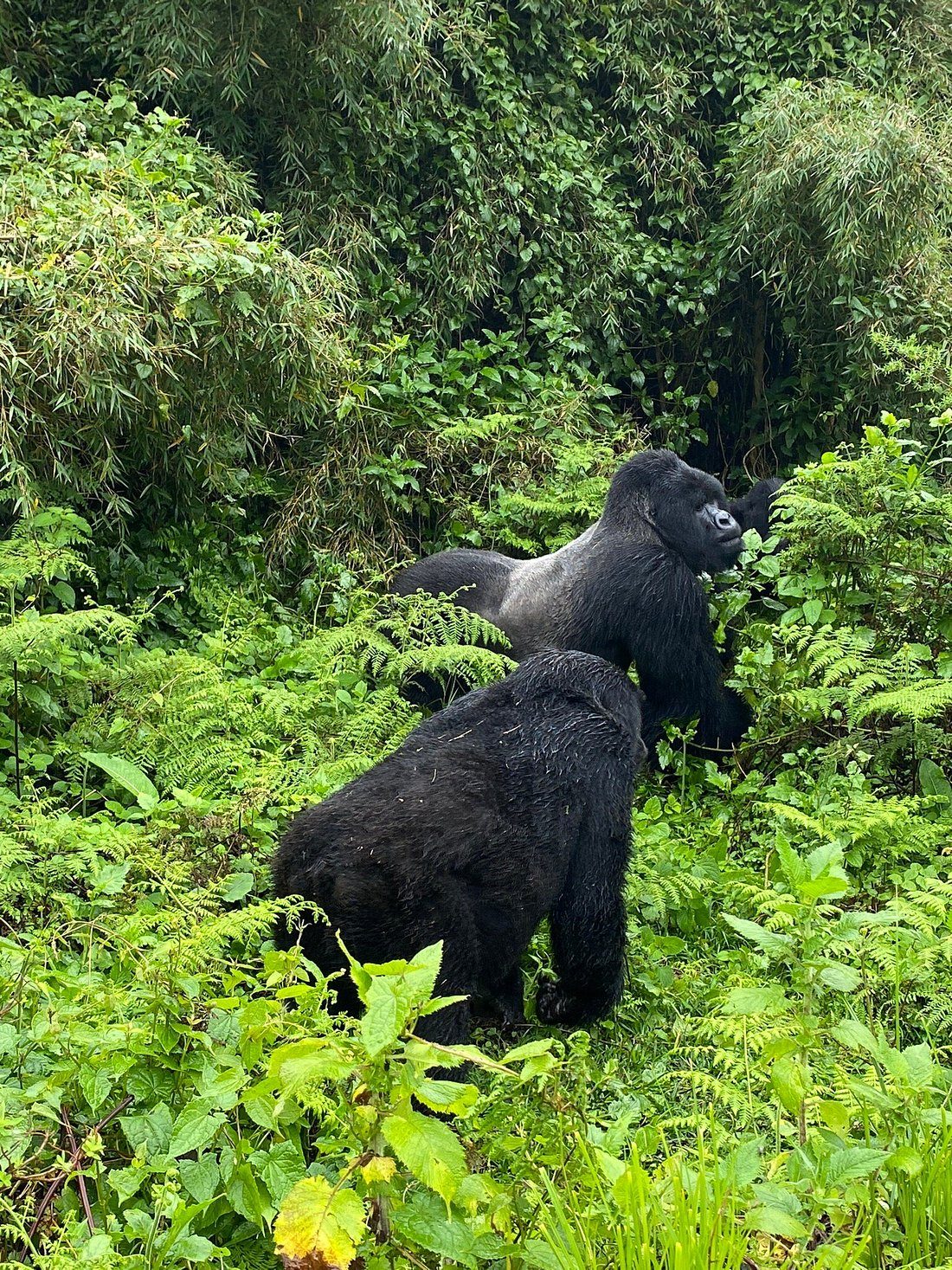
Day 12: Gorilla Trekking: The Ultimate Experience The day begins at park headquarters for a briefing before venturing into the jungle. Guided by expert trackers, you will hike through bamboo forests to find a gorilla family. Spending one hour just feet away from a silverback is a life-changing event. Observe their human-like social interactions and gentle nature in silence.
- Highlight: Life-changing mountain gorilla encounter.
Day 13: Golden Monkeys or Dian Fossey Hike Choose between tracking the rare, playful Golden Monkeys in the bamboo forests or hiking to the Dian Fossey tomb and Karisoke Research Center. Both options offer deep insights into the park’s ecology and history. In the afternoon, visit the Iby’iwacu Cultural Village to watch Intore dancers and learn about traditional medicine.
- Highlight: Primate tracking or historical hiking.
Day 14: Twin Lakes & Departure Visit the beautiful Twin Lakes, Burera and Ruhondo, which sit at the foot of Mount Muhabura. Enjoy the serene scenery and local birdlife before driving back to Kigali. Depending on your flight schedule, stop for last-minute souvenir shopping at the Caplaki Craft Village before your transfer to the airport for departure.
1. Volcanoes National Park: The Primate Capital
Volcanoes National Park is the crown jewel of Rwanda’s tourism, a misty rainforest sanctuary that forms part of the Virunga Massif. The definitive highlight here is Gorilla Trekking. Coming face-to-face with a silverback in its natural habitat is often described as a spiritual experience. The trek involves navigating dense bamboo shoots and steep slopes, guided by trackers who know every family's location. Beyond the gorillas, the park offers Golden Monkey tracking, where you can observe these playful, copper-colored primates jumping through the canopy.
For those seeking physical challenge and historical depth, the park offers incredible hiking. The trek to the Dian Fossey Grave provides a moving look into the life of the woman who dedicated her life to saving mountain gorillas. Alternatively, the hike up Mount Bisoke ($3,711$ meters) leads to a stunning crater lake at the summit. The park’s biodiversity is unparalleled, and the mist-covered peaks provide a dramatic backdrop that feels like stepping into a prehistoric world.
2. Nyungwe Forest: The Ancient Canopy
Nyungwe Forest National Park is one of the oldest rainforests in Africa, a vast expanse of emerald green that survived the last Ice Age. It is the premier destination for Chimpanzee Trekking. Hearing the deafening screams and hoots of a chimp troop before you see them is a sensory overload. Unlike the gorillas, chimps are highly mobile, making the pursuit through the undergrowth an exhilarating adventure.
The park is also famous for its Canopy Walk, a $160$-meter-long suspension bridge hanging $70$ meters above the forest floor. It offers a bird’s-eye view of the ancient treetops and the colorful birdlife—over $300$ species call this forest home. With $13$ different primate species, including the large troops of acrobatic Black and White Colobus monkeys, Nyungwe is a haven for primate lovers. The air is crisp, the flora is diverse, and the numerous waterfalls tucked away in the forest provide a serene, meditative atmosphere.
3. Akagera National Park: The Savannah Comeback
Akagera National Park represents one of Africa's great conservation success stories. Located in the eastern lowlands, it offers a stark contrast to the mountainous west. After the reintroduction of lions and rhinos, Akagera is now a Big Five destination. Game drives through the rolling hills and open plains reveal a mosaic of landscapes—from acacia woodland to papyrus swamps. You can expect to see elephants, giraffes, zebras, and various antelope species like the impala and topis.
A unique feature of Akagera is its water-rich ecosystem. A boat trip on Lake Ihema is a must, providing close-up views of enormous pods of hippos and some of the largest crocodiles in Africa. It is also an ornithologist's dream, with the rare Shoebill stork often spotted in the wetlands. Watching a pride of lions against the backdrop of the sun setting over the lake is the quintessential African safari experience, proving that Rwanda is far more than just a forest destination.
4. Cultural Heritage: The Soul of Rwanda
To understand Rwanda is to look beyond its landscapes and into its heritage. The Iby’iwacu Cultural Village (Gorilla Guardians) near Volcanoes National Park offers an interactive experience where former poachers have turned into conservationists, showcasing traditional dances, archery, and herbal medicine. It is a vibrant celebration of Rwandan community life.
Further south, the King’s Palace Museum in Nyanza offers a glimpse into Rwanda's monarchical past. The highlight here is the Inyambo (long-horned royal cattle), which are tended by singers who "hum" to them in a tradition that dates back centuries. Nearby, the Ethnographic Museum in Butare houses one of Africa’s finest collections of archaeological and anthropological artifacts. These sites provide critical context to the country's social structure, its pre-colonial sophistication, and the resilient spirit of its people that defines the modern "Land of a Thousand Hills."
5. Relaxation and Reflection: Kivu and Kigali
A 14-day journey deserves a balance of adrenaline and introspection. Lake Kivu, one of Africa’s Great Lakes, provides the perfect "beach" escape without the salt water. The resort towns of Rubavu or Karongi offer kayaking, island hopping, and the chance to watch the "singing fishermen" paddle out in their three-hull canoes at sunset. It is a place for slow mornings and fresh sambaza (small fried fish) by the water.
The journey usually begins or ends in Kigali, arguably Africa's cleanest and most organized capital. A city tour reveals a bustling, modern metropolis, but the most vital stop is the Kigali Genocide Memorial. It is a somber, beautifully maintained site that honors the victims of the 1994 genocide. While heartbreaking, it is essential for understanding Rwanda’s journey of "Never Again" and its incredible transformation into a unified, forward-looking nation. The city's vibrant art scene and coffee culture provide a hopeful, energetic bookend to the safari.
Overall experience of a 14-day Rwanda safari
A 14-day Rwanda safari offers a relaxed, immersive journey through one of Africa’s most compact yet remarkably diverse destinations. Unlike shorter itineraries that force a hurried schedule, a two-week trip gives you time to savor wildlife encounters, soak in landscapes, and connect with local culture. The itinerary commonly includes visits to Volcanoes National Park for mountain gorillas, Nyungwe Forest for chimpanzees and canopy walks, Akagera National Park for savanna wildlife and the Big Five, plus cultural stops and downtime at Lake Kivu. Each park delivers a distinct environment: misty, emerald slopes and bamboo forests at Volcanoes; a living cathedral of ancient rainforest, tea plantations, and waterfalls in Nyungwe; and broad open horizons, wetlands, and acacia woodlands in Akagera. The pace can be intentionally unhurried—allowing morning and afternoon activities, late breakfasts, and time to rest between treks. Additional cultural components provide deeper insight into Rwanda’s people and history: a Kigali city tour with a visit to the poignant Genocide Memorial, a cultural performance or village visit such as Iby’iwacu, coffee or tea plantation tours, or meetings with local conservation projects. Lake Kivu typically serves as a restful interlude where you can kayak, boat, swim, or just relax beside the water. Accommodation on a 14-day safari tends toward premium lodges and boutique hotels that emphasize high standards, local design, and views of the surrounding landscape. Guided travel throughout is usually with experienced, professional guides who manage logistics and safety while offering conservation context. Overall, this length of stay balances adrenaline and reflection: the emotional intensity of a gorilla encounter, the thrill of spotting lions and elephants in Akagera, and the quieter rewards of learning about Rwanda’s conservation successes and cultural resilience.
Safety on a 14-day Rwanda safari
Rwanda is widely regarded as one of the safest travel destinations in Africa, and a 14-day safari there is typically very secure. The country’s post-conflict recovery emphasized stability, rule of law, and a strong tourism infrastructure; as a result, crime rates affecting tourists are relatively low compared with many other regional destinations. Most safaris are conducted with professional operators who maintain clear safety protocols: experienced drivers and guides, properly equipped vehicles, communication systems for emergencies, and coordination with park authorities. Within national parks, rangers and guides manage wildlife encounters and trekking safety—particularly important for high-risk activities like gorilla trekking in Volcanoes National Park and chimpanzee tracking in Nyungwe. Visitors are briefed on behavior around wildlife, infection control (e.g., minimum distances, health restrictions for gorilla permits), and environmental hazards such as steep terrain, slippery trails, and sudden weather changes. Urban safety in Kigali is also relatively good; petty theft can occur, as anywhere, so standard precautions are prudent: avoid displaying valuables, use hotel safes, and remain vigilant in crowded areas. Health safety is a consideration: ensure routine vaccinations are up to date, bring anti-malarial medication as recommended, and carry a basic medical kit. Tour operators typically advise on altitude acclimatization (higher elevations near Volcanoes) and fitness expectations for treks. Politically, Rwanda is stable, with strong law enforcement and tourist-friendly policies; however, it’s sensible to register with your embassy and follow guidance from your operator. Overall, a 14-day Rwanda safari is safe when you travel with reputable guides, follow park rules and local advice, take normal travel precautions, and prepare for the physical demands and health considerations of trekking and rural travel.
Highlight: gorilla trekking in Volcanoes National Park
The standout moment on most 14-day Rwanda safaris is the mountain gorilla trek in Volcanoes National Park, a profound wildlife encounter that most visitors describe as life-changing. Mountain gorillas are critically endangered and found only in a few locations across the Virunga massif; Rwanda’s Volcanoes National Park is one of the most accessible places to see them. Trekking begins with a morning briefing where guides assign groups by permit and provide safety and etiquette rules—most importantly, how to behave near gorillas to minimize stress and disease risk. The trek itself can vary from a short, gentle walk to a strenuous, multi-hour ascent through dense bamboo and steep, muddy slopes depending on the gorillas’ current range. Because permits limit viewing time (usually one hour), the experience is intimate and focused: you may find yourself a few meters from a silverback, watching family interactions, infants playing, or females feeding. The close proximity, the gorillas’ human-like expressions, and the atmospheric rainforest make the encounter emotionally powerful. Extended itineraries, like a 14-day safari, allow for flexibility: you might trek twice (if you secure a second permit) or combine gorilla viewing with nearby Golden Monkey tracking for a complementary primate experience. Beyond the encounter itself, the surrounding conservation narrative enriches the visit: Rwanda’s park management, community-based tourism programs, and anti-poaching initiatives have contributed to gorilla population recovery and local benefits. For many visitors, the gorilla trek is also a reflective experience—an opportunity to connect with wildness, witness conservation in action, and contemplate the fragility of endangered species. Physically and emotionally demanding, the encounter is often the defining memory of a two-week Rwanda itinerary.
Seeing the Big Five in Akagera National Park
Akagera National Park, on Rwanda’s eastern border with Tanzania, offers a contrasting ecosystem to the country’s rainforests—expansive savannahs, lakes, papyrus swamps, and wooded hills. For travelers on a 14-day Rwanda safari, Akagera is the place to track the Big Five: lions, leopards, African elephants, buffalo, and black (or white, depending on the reintroduction program) rhinoceros. Once overrun by poaching, the park has undergone a remarkable conservation turnaround, driven by partnerships, reintroductions, and strengthened ranger units. Since restoration efforts began, species such as lions and rhinos have been reintroduced or reinforced, and elephant and buffalo populations have stabilized. Game drives in Akagera are typically conducted in open 4x4 vehicles with experienced guides who know the park’s habitats and animal patterns. Early morning and late afternoon drives offer the best light and higher wildlife activity. Boat safaris on Lake Ihema add a unique angle: hippos, crocodiles, and water birds are abundant, and lakeside sightings of elephants or buffalo can be memorable. Unlike some larger East African parks, Akagera is compact, meaning good sightings can occur even on shorter drives, but a two-week itinerary allows unhurried exploration across different sectors and the ability to combine game viewing with relaxation at lakeside lodges. Leopard sightings are less common but possible with patient tracking. Rhino viewing is a major draw—seeing these animals in Rwanda symbolizes successful conservation. As with all wildlife experiences, sightings are never guaranteed; nonetheless, Akagera offers a realistic chance to encounter the Big Five while also appreciating Rwanda’s broader ecological story.
Accommodation standard on a 14-day Rwanda safari
Rwanda positions itself as an upscale safari destination, and a 14-day itinerary typically features high-quality accommodations ranging from luxury lodges and boutique hotels to well-appointed mid-range lodges. The accommodation standard across Volcanoes, Nyungwe, and Akagera tends toward premium properties that emphasize comfort, local design, and immersive settings. Near Volcanoes National Park, many lodges deliver spectacular mountain views, refined service, heating (important given high elevation chill), and hearty cuisine. In Nyungwe, forest lodges often blend into the rainforest—raised walkways, large windows, and nature-focused architecture create a sense of being inside the forest while offering modern comforts. Lakeside lodges at Lake Kivu emphasize relaxation and water views, with options for private villas or elegant rooms and leisure facilities. In Akagera, safari camps and lodges provide game-drive-friendly amenities, often with open lounges, fire pits, and riverside or grassland views. Across the country, Rwanda’s tourism sector emphasizes sustainability: many properties incorporate locally sourced materials, community employment, and conservation fees that support park management. Boutique butler service, gourmet meals, spa treatments, and guided nature walks are common at the higher end. Even mid-range options tend to maintain cleanliness and good service standards. Note that Rwanda’s limited land area and conservation focus mean there are fewer mass-market, budget-style lodgings in park buffers; instead, tourism skews toward smaller, higher-quality establishments with fewer rooms—so booking in advance is important, especially in peak season. Overall, expect thoughtful, comfortable, and often luxurious accommodation that complements the natural and cultural highlights of a 14-day safari.
Fitness requirements for a 14-day Rwanda safari
A reasonable level of physical fitness is strongly recommended for many highlights of a 14-day Rwanda safari, especially gorilla trekking in Volcanoes National Park and chimpanzee tracking in Nyungwe Forest. Gorilla treks can last from an hour to an entire day and often require navigating steep inclines, muddy tracks, thick vegetation, and high altitude (Volcanoes elevations commonly exceed 2,000 meters). Walks may include sharp ascents, slippery descents, and clambering over roots and rocks. Chimpanzee tracking in Nyungwe also demands stamina for uphill and downhill forest hikes, sometimes on narrow trails. Even game drives in Akagera can involve bumpy roads and occasional walking to vantage points. Therefore, travelers should prepare with cardiovascular exercise (walking, jogging, cycling), lower-body strength work (hiking with a pack, squats, lunges), and flexibility training in the months leading up to travel. For those less fit, private porters are often available in Volcanoes to carry bags or assist with steep sections—this option makes trekking more accessible but does not replace the need for basic mobility. Guides will assess participants’ fitness and may assign different trekking groups accordingly. Health considerations include acclimatization to altitude, protection against insects, and being fit enough to handle long days and temperature variations. It’s also wise to bring appropriate gear—sturdy waterproof hiking boots, gaiters, long trousers, and layered clothing—which reduces fatigue by improving comfort. Finally, consult your physician if you have chronic health issues; while the trip is attainable for many travelers of average fitness, honesty about personal limitations helps ensure safety and enjoyment.
Best time to go on a 14-day Rwanda safari
The optimal times for a 14-day Rwanda safari are the country’s two dry seasons: June through September and December through February. During these periods, trails in Volcanoes and Nyungwe are less muddy and easier to navigate, making gorilla and chimpanzee treks more comfortable and safer. Dry conditions also improve road conditions for transfers between parks and enhance wildlife visibility in Akagera, since animals concentrate around water sources and vegetation is less dense. June to September aligns with Rwanda’s high season and offers long stretches of clear weather and good gorilla viewing; this is a particularly popular window for international travelers. The December to February window is shorter but also favorable, offering warm, dry days and opportunities to combine the safari with holiday travel. The wetter months—March to May (long rains) and October to November (short rains)—bring heavier precipitation that can make tracks slippery, increase leeches in forests, and occasionally lead to temporary disruptions in travel logistics. That said, the rainy months can have advantages: fewer tourists (off-peak rates and greater permit availability), lush green scenery, and active birdlife and migrating insects. If you travel in the shoulder or rainy season, plan for flexible scheduling, waterproof gear, and the possibility of more strenuous trekking conditions. Ultimately, your choice depends on priorities: for the most stable trekking conditions and easier road travel, pick the dry seasons; for lower crowds and greener scenery, consider the wetter months.
What to pack for a 14-day Rwanda safari
Packing for a 14-day Rwanda safari requires balancing preparedness for mountain chill and rainforest wetness with comfort for savannah heat. Key clothing and gear should include: sturdy, broken-in waterproof hiking boots with good ankle support; quick-dry, breathable long-sleeved shirts and trousers for protection against sun, thorns, and insects; a warm mid-layer or fleece for early mornings and high elevations (especially near Volcanoes); a waterproof, breathable rain jacket and a lightweight waterproof over-trousers for forest treks; a wide-brim hat or cap for sun protection, plus a warm hat and gloves for chilly mornings at altitude. For day-to-day comfort, pack moisture-wicking base layers, shorts and light shirts for Akagera and Lake Kivu, swimwear for the lake, and comfortable evening wear for lodges. Important accessories: a small daypack (20–30L) for treks, water bottle or hydration bladder, trekking poles (helpful on steep or muddy trails), gaiters, and a good headlamp or flashlight with spare batteries. Health and safety items include insect repellent with DEET, sunscreen, a basic first-aid kit, any prescription medications, anti-malarial tablets (as advised), and hand sanitizer. Photography gear—camera with extra batteries and memory cards, binoculars, and a protective dry bag—will make wildlife viewing more rewarding. Travel documents (passport, permits, travel insurance, printed confirmations), and a small amount of local currency (Rwandan francs) are useful. Finally, packing light but versatile and ensuring waterproof protection for electronics and documents will keep you comfortable and ready for the varied conditions encountered on a two-week Rwanda safari.
1. Physical Demands and Wildlife Encounters
A 14-day safari is an exhilarating but physically taxing adventure. The primary highlights involve trekking through dense, high-altitude rainforests. Gorilla trekking in Volcanoes National Park is the crown jewel, but it requires stamina; you might hike anywhere from one to six hours over steep, muddy terrain. Similarly, tracking Chimpanzees in Nyungwe involves navigating thick undergrowth at a brisk pace. However, the reward is unmatched. Beyond the primates, the itinerary balances this with the savannah of Akagera National Park, where you can see the Big Five—lions, leopards, rhinos, elephants, and buffaloes—from the comfort of a 4x4 vehicle. This variety ensures that while your legs get a workout in the mountains, your spirit finds rest in the wide-open plains.
2. Logistics: Transport, Safety, and Timing
Navigating the "Land of a Thousand Hills" is an experience in itself. You will typically travel in a 4x4 safari jeep with a pop-up roof, guided by an expert driver-guide who handles the winding, scenic roads. In terms of safety, Rwanda is one of the most stable and secure nations in Africa, with professional rangers and tourism police ensuring peace of mind in every park. To make the most of this, timing is key. The dry seasons (June to September and December to February) are ideal, as trails are less slippery and wildlife in Akagera gathers around water sources, making them easier to spot.
3. Accommodation, Food, and Tipping
The standard of hospitality in Rwanda has skyrocketed in recent years. Accommodations range from world-class luxury lodges—nestled on the edges of volcanic craters—to charming mid-range eco-lodges that offer stunning views and personalized service. The culinary experience is equally impressive; lodges serve a mix of international fine dining and local Rwandan staples. You’ll likely enjoy Ibitoke (steamed plantains), fresh tilapia from Lake Kivu, and rich, organic bean stews. Regarding tipping, it is a vital part of the local tourism economy. While not mandatory, it is customary to tip guides and trackers roughly $10 to $20 per day, and lodge staff about $5 to $10, acknowledging the high level of effort they put into your safety and comfort.
4. Cultural Heritage and Local Life
A two-week trip provides the luxury of time to move beyond the wildlife and meet the people. A visit to the Iby’iwacu Cultural Village allows you to witness the famous Intore dancers, whose rhythmic movements mimic the grace of the royal cattle. You’ll also visit the King’s Palace Museum to see the long-horned Inyambo cows. Crucially, the itinerary includes a visit to the Kigali Genocide Memorial. This is a deeply moving experience that provides the necessary context for Rwanda’s modern-day unity and resilience. Understanding the country’s past makes the smiles of the locals and the cleanliness of the streets feel even more significant.
5. Packing, Currency, and Practicalities
Packing for Rwanda requires preparing for "four seasons in one day." You need waterproof hiking boots with good grip, long trousers to protect against stinging nettles, and a light rain jacket. While the days are warm, the mountains get quite chilly at night, so layers are essential. For finances, the Rwandan Franc (RWF) is the local currency, but US Dollars (printed after 2013) are widely accepted for larger purchases and tips. Most travelers can obtain a visa on arrival, but if you plan to jump over to Uganda or Kenya, the East African Tourist Visa is a cost-effective, multi-entry option. Finally, don't forget a boat trip on Lake Kivu or Lake Ihema to see the aquatic side of Rwanda's stunning geography.
Booking 14 Days Rwanda safari with us Roads of Adventure safaris
Embark on a transformative 14-day Rwanda safari with Roads of Adventure Safaris, where we turn the "Land of a Thousand Hills" into your personal playground. Our expert guides lead you through the misty peaks of Volcanoes National Park for life-changing gorilla encounters and across the golden savannahs of Akagera to witness the Big Five.
From the ancient canopy of Nyungwe Forest to the rhythmic chants of Lake Kivu’s fishermen, we curate every detail with precision. Trust Roads of Adventure Safaris for a seamless, soulful journey through Rwanda’s breathtaking landscapes, vibrant culture, and world-class conservation success stories.
