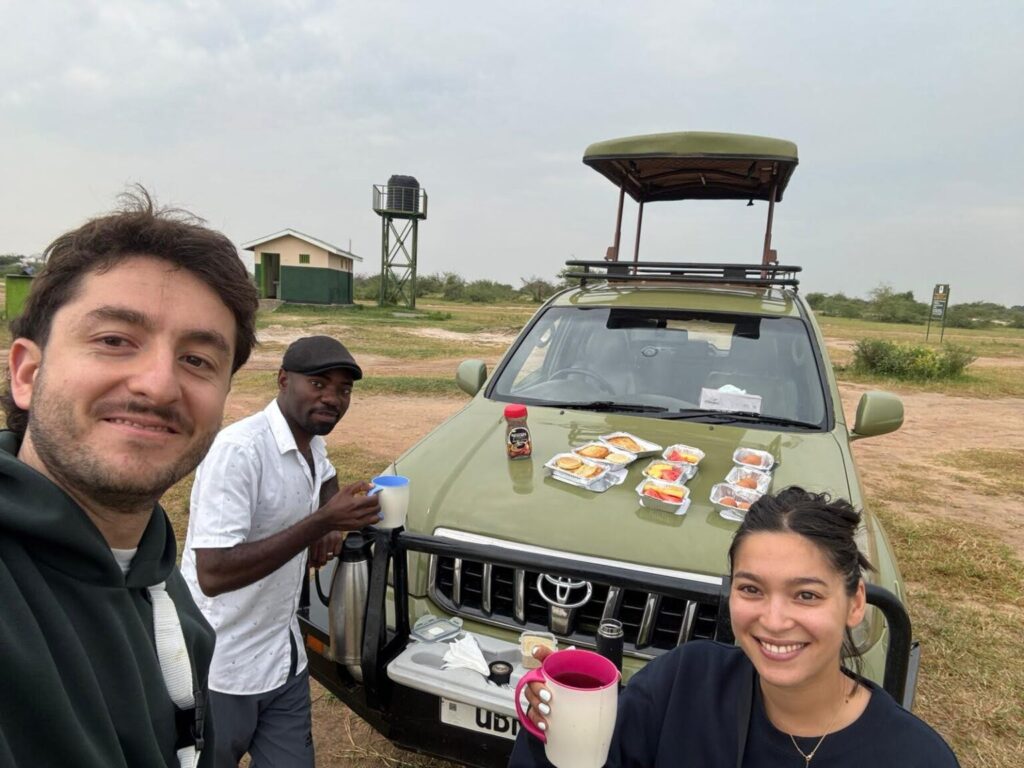
Renting a car with a driver in Uganda with Roads of Adventure safaris guarantees a stress-free, local-guided experience. Key factors to consider include your driver's safari expertise, vehicle suitability, fuel logistics, and hidden daily allowances for the driver. It is also crucial to confirm comprehensive insurance to protect against liabilities.
Popular tour packages you can follow for your Uganda safari
18-days-best-of-uganda-safari-holiday-vacation-to-all-best-parks
16-days-classic-uganda-wildlife-safari-and-gorilla-trekking-tour
15-days-africa-big-five-safari-in-uganda-and-primate-vacation
14-days-uganda-and-rwanda-safari-tour-itinerary
10-days-9-nights-midrange-uganda-wildlife-safari-and-cultural-experience
7-days-best-gorilla-trekking-and-safari-in-uganda-to-see-big-fives
1. Driver’s Expertise vs. Just a Chauffeur
When planning your Uganda safari, it is easy to assume that a driver is simply there to steer the vehicle from point A to point B. However, there is a massive difference between hiring a standard urban chauffeur and securing a professional driver-guide. A regular chauffeur can navigate paved highways but will likely struggle when handling waterlogged clay tracks, muddy mountain passes, or deep savanna sand. More importantly, a standard driver will miss the subtle signs of the wild that turn a simple drive into a breathtaking experience.
A certified driver-guide acts as your ultimate window into the African bush. These professionals undergo extensive training in defensive driving, mechanical troubleshooting, and wildlife biology. They don't just look at the road; they read the landscape. A professional guide can spot a camouflaged leopard tail dangling from a distant sausage tree, interpret the alarm calls of a baboon troop to locate a nearby lion pride, and tell you the exact nesting habits of the exotic birds flying overhead.
Furthermore, their deep knowledge of park routes means they know exactly where the wildlife congregates during different times of the day, ensuring you don't waste precious hours driving through empty plains. When booking your vehicle, always ensure your provider guarantees an experienced guide who understands animal behavior and park geography. This single choice transforms a simple transit day into an active, educational game drive, maximizing the value of your time in the wilderness.
2. Daily Allowances and Upfront Costs
Navigating the financial fine print of vehicle hire is a critical step in keeping your Uganda safari transparent and stress-free. One of the most common areas of confusion for travelers involves the driver's daily allowances. When an agency quotes you a daily rate for a vehicle and driver, you must explicitly clarify what that rate covers. Typically, a comprehensive quote includes the driver’s professional fee, but it may not fully account for their daily personal expenses, such as meals and overnight accommodation along the route.
If these costs are not bundled into your upfront rate, you are responsible for providing the driver with daily meal money and ensuring they have a place to sleep. Fortunately, the hospitality industry in Uganda is well-prepared for this structure. Most safari lodges and budget camps offer specialized, low-cost driver quarters and staff dining facilities on-site. These quarters are separate from the main guest rooms and are priced very affordably, allowing your driver to remain close to the vehicle and ready for early morning departures.
To avoid awkward conversations or unexpected expenses at checkout, always request an itemized contract before your trip begins. If you prefer a seamless experience, ask the rental company to provide an "all-inclusive" rate that covers the driver's salary, food, and lodging upfront. This gives you complete peace of mind, knowing that your field team is fully taken care of and you won't need to manage small cash outlays for staff overhead while trying to enjoy the scenery.
3. Vehicle Type and Pop-Up Roof Features
The rugged terrain of East Africa demands a heavy-duty vehicle capable of tackling demanding off-road conditions. For an authentic and safe Uganda safari, you should completely skip standard sedans or light city crossovers. Instead, opt for a true, robust 4x4 vehicle with excellent ground clearance, a low-range gear system, and heavy-duty suspension. The two absolute gold standards of the local tourism industry are the customized Toyota Land Cruiser and the classic 4x4 Safari Van, often locally referred to as a Super Custom.
Beyond a strong engine and tough tires, the single most important feature to confirm is a functional pop-up roof. The African savanna is vast, and wildlife can appear suddenly right beside your vehicle or high up in the tree canopy. A pop-up roof allows you to stand upright inside the safety of the vehicle, giving you an unobstructed, 360-degree panoramic view of the landscape. This feature is absolutely essential for photographers who need to stabilize long lenses without window glass or metal pillars blocking their shot.
A pop-up roof also keeps you safely separated from the wildlife while providing an immersive sensory experience. Standing up allows you to feel the cool morning breeze across the plains of Queen Elizabeth National Park, hear the distant roar of a lion pride, and view a herd of elephants from an elevated, clear vantage point. Before finalizing your vehicle rental, always double-check that the pop-up mechanism works perfectly and that the vehicle features large, sliding windows for optimal side viewing when the roof is lowered.
4. Understanding Fuel Policies and Remote Logistics
Fuel management is a massive logistical factor that many travelers overlook when organizing a Uganda safari. It is important to know that fuel is almost never included in the base daily rental rate of a vehicle. Because safari vehicles are large, heavy, and constantly operating in 4WD modes through rough terrain, mud, and steep hills, their fuel consumption is significantly higher than a standard road car. Budgeting accurately for fuel requires a clear understanding of your itinerary's total distance.
Before setting off, sit down with your rental agency or driver-guide to estimate the total kilometers you will cover, including transfer days between parks and daily game drives within the reserves. You will need to agree on how the fuel tank will be managed—the most common approach is starting the trip with a completely full tank and returning it full at the end. Alternatively, some companies can calculate an estimated flat fuel rate based on your specific route, allowing you to pay a single, predictable sum upfront.
Logistics become especially critical because modern, reliable fuel stations are incredibly scarce in remote wilderness areas like Kidepo Valley or the deep sectors of Bwindi Forest. A professional driver knows exactly where the last reliable fueling points are located before entering a national park. They will strategically manage the tank, often refilling well before the gauge drops low, ensuring you never find yourself stranded in the bush. Always carry a comfortable cash buffer in local currency, as remote fuel stations rarely accept international credit cards.
5. Navigating Insurance and Liabilities
Safety should always be your top priority when exploring a new country. When renting a vehicle for a Uganda safari, you must thoroughly verify the insurance coverage attached to the car. Never settle for basic third-party insurance, which only covers damage done to other people or vehicles in an accident. Instead, insist on comprehensive safari vehicle insurance that covers collision damage, theft, fire, and passenger liability. This protects both your financial interests and your physical well-being throughout the trip.
One of the greatest advantages of renting a vehicle with a professional driver rather than choosing a self-drive option is the immediate transfer of operational liability. When a company-employed driver is at the wheel, the rental agency retains primary responsibility for the vehicle's safety, mechanical health, and road conduct. If an accident occurs or the car experiences a major mechanical failure on a rough road, the financial burden of repairs or towing generally falls squarely on the rental company, not on you.
However, it is still vital to read the rental agreement carefully to identify minor exceptions or specific deductibles. For instance, some companies include clauses that make the client liable for minor cosmetic damages incurred during game viewing, such as a cracked windshield from a flying stone or a punctured tire from sharp acacia thorns. Understanding these minor boundary lines upfront ensures there are no surprises or disputes when it comes time to hand back the keys at the end of your adventure.
6. Language, Communication, and Cultural Connection
Clear and easy communication is the foundation of any successful journey. While English is the official language of Uganda and is widely spoken across major towns, hotels, and tourist hubs, the linguistic landscape changes dramatically once you enter deep rural areas. Uganda is incredibly diverse, boasting over forty distinct regional languages and dialects. Having a driver-guide who can bridge this linguistic gap turns your Uganda safari into a much smoother and richer cultural experience.
Confirming that your driver speaks fluent English ensures you can easily discuss your daily schedule, learn about local history, and understand complex park rules without any frustrating miscommunications. If you or your travel companions prefer to communicate in another major international language—such as German, French, or Spanish—many premier agencies can pair you with a specialized multilingual guide. This guarantees that everyone in your group can fully engage with the educational commentary during game drives.
Beyond just translation, a local driver-guide acts as a vital cultural ambassador. When passing through remote villages or stopping at roadside fruit markets, your driver can effortlessly converse with community members in their local dialects. This respectful connection opens doors to authentic interactions, allowing you to learn about traditional customs, try local foods, and navigate community tourism projects with complete ease. They ensure you are seen as a welcome guest rather than just a passing tourist, adding immense depth to your travels.
7. Maximizing Itinerary Flexibility in the Wild
Nature does not follow a strict timetable, and a rigid schedule is the quickest way to ruin a wildlife experience. The unpredictable nature of the African bush is precisely what makes it so exciting. A pride of lions might decide to hunt right next to the track just as you are supposed to head back for lunch, or a heavy afternoon downpour might wash out a bridge, forcing a complete change of route. Because of this, itinerary flexibility is a non-negotiable element of a great Uganda safari.
A great driver-guide possesses the situational awareness to balance your core travel goals with spontaneous opportunities. They understand that if you encounter a rare leopard crossing the track, the correct move is to kill the engine, let you quietly observe the animal, and comfortably push back your next scheduled stop. They don't rush you through the wilderness just to check off a box on a piece of paper; instead, they adapt the daily flow to match the natural rhythm of the wildlife.
Before your trip starts, discuss your general route with your driver, but explicitly establish that you value flexibility. A cooperative relationship allows you to make collaborative decisions on the fly—whether that means waking up an hour earlier to catch predators while they are still active, or spending an extra afternoon relaxing by a scenic river bank. This adaptable approach reduces travel stress, keeps the journey feeling organic and adventurous, and ensures you can fully embrace the magical, unexpected moments that define a truly great African expedition.
Where should you visit after renting a car for a Uganda safari?
After renting your vehicle, the ultimate road trip route heads west toward the iconic Albertine Rift Valley. Your first major stop should be Murchison Falls National Park, where the world’s most powerful waterfall squeezes through a tiny seven-meter gorge. From there, drive south through the lush tea plantations of Fort Portal to reach Kibale Forest National Park, the undisputed primate capital of East Africa. Continuing your journey, navigate the scenic crater lakes to enter Queen Elizabeth National Park for classic savannah game drives and an unforgettable boat cruise along the Kazinga Channel. Finally, take the rugged mountain roads up to Bwindi Impenetrable National Park, the majestic home of the endangered mountain gorillas. For an off-the-beaten-path adventure, drive north into the isolated, rugged wilderness of Kidepo Valley National Park to witness massive buffalo herds against a stunning backdrop of jagged mountain peaks.
What activities can I do on Uganda safari?
A Uganda safari offers an incredible variety of activities that go far beyond standard wildlife viewing. The absolute highlight for most travelers is gorilla trekking in Bwindi, which allows you to spend an unforgettable hour sitting just meters away from a wild mountain gorilla family. For more primate encounters, you can head into Kibale Forest for high-energy chimpanzee tracking. Out on the open savannas, early morning and late afternoon game drives give you the chance to spot elephants, lions, leopards, and giraffes. For a different perspective, take a leisurely boat safari along the Nile or the Kazinga Channel to view hundreds of hippos, massive crocodiles, and vibrant water birds. If you love active adventures, you can enjoy guided walking safaris in Lake Mburo, trek up to the beautiful Sipi Falls, or participate in a cultural community tour to learn about local traditions and daily life.
When is the best time for Uganda safari?
The absolute best time for a Uganda safari is during the country’s two distinct dry seasons: December to February and June to September. During these peak months, the weather is beautifully sunny, and rainfall is very rare, making it much easier to travel along the roads and navigate the dirt tracks inside the national parks. Because water sources dry up across the savanna, animals naturally gather around permanent rivers and waterholes, giving you spectacular, clear wildlife viewing. The dry seasons are also the most comfortable time for gorilla and chimpanzee trekking, as the steep forest trails are firm and less muddy. If you are an avid birdwatcher, you might prefer the rainy seasons from March to May and October to November, when migratory birds arrive in huge numbers. The wet months also offer lush, green scenery and lower lodge rates.
Where to stay on Uganda safari
When you travel with us at Roads of Adventure Safaris, we carefully select handpicked lodges that perfectly balance comfort, prime location, and true local hospitality. In the misty mountains of Bwindi, we position you at cozy, eco-friendly properties like Rushaga Gorilla Lodge or Buhoma Community Haven Lodge, ensuring you stay close to the tracking trailheads while directly supporting local community development. When exploring the vibrant savannas of Queen Elizabeth National Park, we host you at spectacular spots like Kasenyi Safari Camp or Enganzi Game Lodge, where you can relax on private verandas overlooking the game-rich plains. In Murchison Falls, we opt for beautifully designed riverside properties like Pakuba Safari Lodge or Murchison River Lodge. No matter your budget, we ensure every property offers clean rooms, delicious hot meals, excellent security, and a warm, welcoming atmosphere throughout your journey.
Booking a safari vehicle and driver guide for Uganda safari with us Roads of Adventure Safaris?
To book a safari vehicle and professional driver-guide with Roads of Adventure Safaris, you can easily arrange this by reaching out to their booking team. They offer custom itineraries, reliable 4x4 vehicles, and experienced driver-guides to help you navigate Uganda's parks
