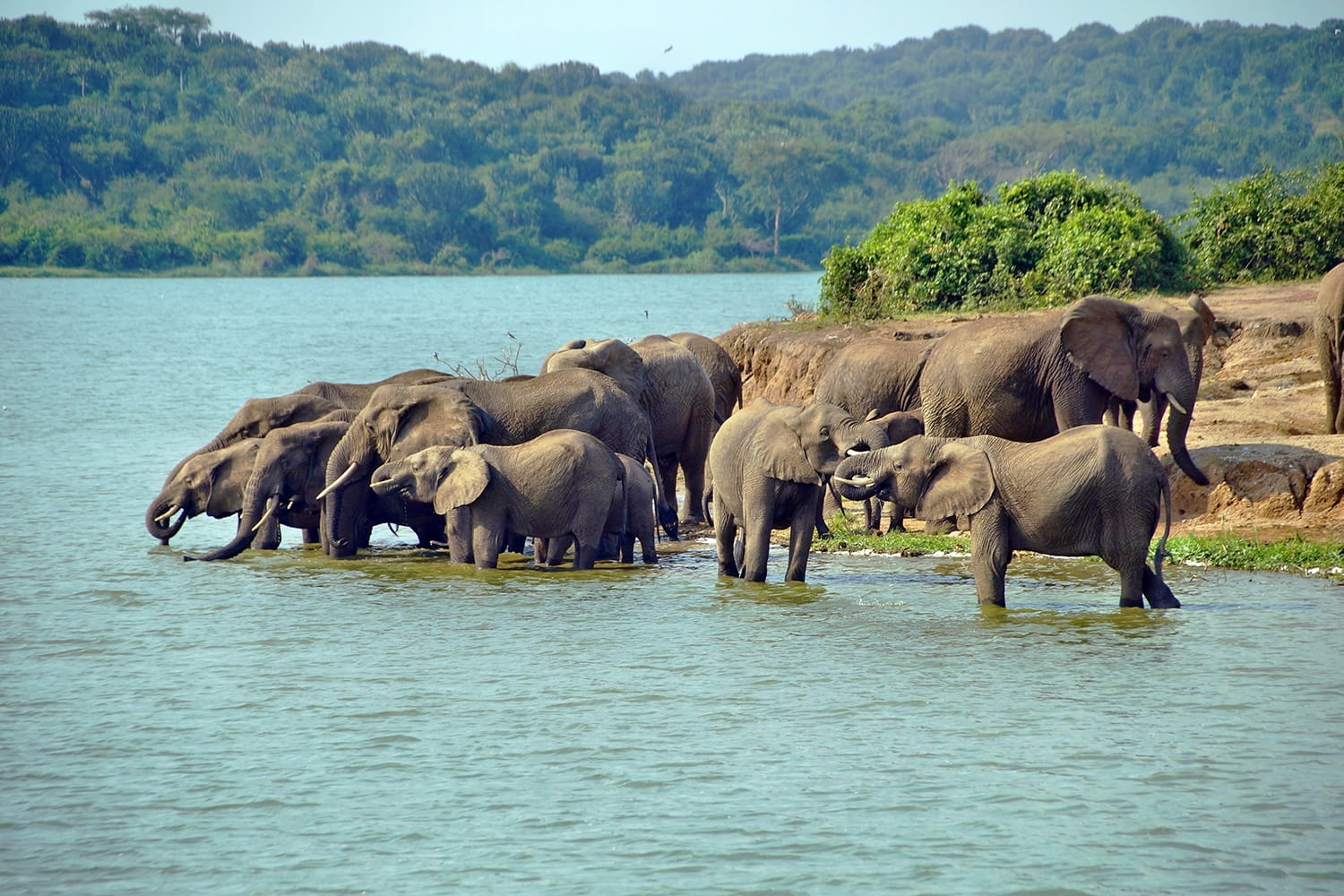
A 12 days safari to Uganda typically offers a comprehensive, immersive experience covering the "Big Five" (rhinos, elephants, lions, leopards, buffalo), mountain gorilla trekking in Bwindi, chimpanzee tracking in Kibale, and savanna game drives. Expect to explore diverse ecosystems—rainforests, savannahs, and lakes—with boat cruises, cultural tours, and scenic drives through the countryside
12-days-luxury-safari-in-uganda-parks
12-days-perfect-rwanda-uganda-gorilla-trekking-safari-holiday-vacation
12-days-uganda-wildlife-primate-experience-and-lake-mutanda-vacation
12-days-all-inclusive-uganda-wildlife-and-primate-safari
12-days-uganda-birding-tour-looking-for-rift-valley-endemic-birds-west-circuit
12-days-best-uganda-rwanda-primate-safaris-and-akagera-big-five-safaris
12-days-best-uganda-safari-big-five-and-uganda-primate-safari
12-days-uganda-safari-and-tours-combined-with-zanzibar-beach-vacation
What to Expect on a 12 Days Safari to Uganda
A 12-day safari in Uganda is a profound journey through "The Pearl of Africa," transitioning from the sun-drenched savannahs of the north to the mist-covered rainforests of the southwest. This itinerary is designed to provide a comprehensive look at the country’s diverse ecosystems, rare primates, and rich cultural heritage.
🦍 Gorilla and Chimpanzee Trekking
The primate experience is the emotional heart of any Ugandan safari. In Kibale National Park, known as the "Primate Capital of the World," you will track chimpanzees through dense tropical forest. The trek is relatively fast-paced, as chimps are highly mobile, often swinging through the canopy or vocalizing loudly to communicate. Once found, you spend one hour observing their complex social structures, grooming habits, and playful antics.
Further south lies Bwindi Impenetrable National Park, a UNESCO World Heritage site and home to roughly half the world's mountain gorillas. This trek is more physically demanding, involving hikes through steep, tangled vegetation at high altitudes. The "Impenetrable" forest lives up to its name, but the reward is unparalleled: a silent, face-to-face encounter with a silverback and his family. The sheer size and gentle nature of these giants create a sense of awe that most travelers describe as life-changing. Both treks require permits (booked months in advance) and are led by expert rangers who interpret the forest’s sounds and signs.
🦁 Big Game Viewing
Uganda’s savannah parks offer a classic safari experience with a unique twist. In Murchison Falls National Park, the landscape is dominated by Borassus palms and rolling grasslands. Morning game drives here focus on the "Big Four" (lions, leopards, elephants, and buffaloes), alongside massive herds of Rothschild’s giraffes and the endemic Uganda kob.
Queen Elizabeth National Park provides a different atmosphere, framed by the jagged Rwenzori Mountains. The park is famous for the Ishasha sector, where lions have the unusual habit of climbing fig trees to escape the heat and tsetse flies. Observing a 400-pound predator lounging on a branch is a rare sight. Beyond predators, these parks are teeming with waterbucks, topis, and giant forest hogs. Game drives are usually conducted in 4x4 vehicles with pop-up roofs, guided by professionals who use radio networks to track elusive leopards and lion prides, ensuring high-quality sightings.
🦏 Rhino Tracking
The Ziwa Rhino Sanctuary is the only place in Uganda where you can see rhinos in the wild. Since rhinos were poached to extinction in Uganda’s national parks by the early 1980s, this sanctuary serves as a vital breeding ground for their eventual reintroduction.
Unlike traditional game drives, rhino tracking at Ziwa is done on foot. After a safety briefing, rangers lead you through the bush to locate the southern white rhinos. Because rhinos are nearsighted, you can often get surprisingly close (about 20–30 feet) while remaining safe under the ranger’s guidance. Walking through the tall grass and hearing the rhythmic crunch of a 3,000kg animal grazing just meters away is a visceral experience. This activity also supports the heavily guarded conservation efforts required to protect these animals 24/7 from poaching threats.
🛥️ Scenic Boat Safaris
Uganda's abundance of water provides a unique "aquatic safari" perspective. The Kazinga Channel in Queen Elizabeth National Park is a 32km natural waterway connecting Lake Edward and Lake George. A two-hour boat cruise here reveals one of the world's highest concentrations of hippos and crocodiles. In the late afternoon, elephants and buffaloes frequently come to the banks to drink and bathe, allowing for incredible eye-level photography from the water.
In Murchison Falls, the boat safari takes you upstream on the Victoria Nile toward the base of the falls. You’ll pass pods of hippos and "the Devil's Cauldron," where the entire Nile River is squeezed through a 7-meter gap, creating a thunderous roar and permanent rainbows. For the adventurous, many safaris offer the option to disembark at the base and hike to the "Top of the Falls" for a bird’s-eye view of the world’s most powerful waterfall.
🌋 Landscape and Nature
Beyond the animals, Uganda’s topography is stunningly volcanic. The Crater Lakes region near Fort Portal consists of dozens of "explosion craters"—deep, emerald-green pools surrounded by steep, forested rims. Hiking through these hills offers views of tea plantations and the "Mountains of the Moon" (the Rwenzoris) in the distance.
The journey usually concludes at Lake Bunyonyi, often called the "Switzerland of Africa" due to its terraced hills and 29 scattered islands. It is one of the few lakes in Africa safe for swimming (free of bilharzia and hippos). Whether you spend your time paddling a traditional dugout canoe, birdwatching (over 200 species), or simply relaxing on a balcony overlooking the mist-covered water, it provides a necessary "soft landing" and a period of reflection after the intensity of trekking and game drives.
🏹 Cultural Experiences
A safari is incomplete without understanding the people who share this land. A highlight is the Batwa Cultural Experience. The Batwa (Pygmies) were the original "Keepers of the Forest" in Bwindi before it became a national park. Today, they lead guided walks through the forest fringes, demonstrating how they lived for millennia: how to start a fire with sticks, which plants serve as medicine, and how they hunted with bows and arrows.
These interactions are often bittersweet but deeply educational, highlighting the challenges of conservation and indigenous rights. You may also visit local community projects, such as women’s basket-weaving cooperatives or "Bigodi Wetland Sanctuary," a community-run birding site where the proceeds fund local schools and clinics. These moments provide a human connection that enriches the wildlife sightings.
🏨 Accommodation and Travel
Uganda’s tourism infrastructure offers a blend of "bush luxury" and rustic charm. Eco-lodges are the standard, often built using local stone and thatch to blend into the environment. Luxury lodges might feature private plunge pools and butler service, while mid-range options provide comfortable "glamping" tents or cottages with en-suite bathrooms and stunning views. Most lodges rely on solar power and serve three-course meals featuring local organic produce.
Travel logistics are the most underestimated part of the trip. While the distances aren't massive, the terrain and road conditions mean travel times are long. Expect several "African massage" days—long drives of 6 to 8 hours on bumpy or winding roads. However, these drives are rarely boring; you pass through vibrant trading centers, colorful markets, and changing climates, offering a "window safari" of Ugandan daily life that you would miss if you flew between parks.
12 days safari to Uganda
A 12-day safari in Uganda is a profound journey through the "Pearl of Africa," offering a comprehensive exploration of the country’s most iconic landscapes and rare wildlife. This itinerary meticulously balances the thrill of high-octane adventures—like tracking mountain gorillas in Bwindi and chimpanzees in Kibale—with the serene beauty of the Kazinga Channel and Lake Bunyonyi. You will traverse a geography that shifts from the thunderous cascades of Murchison Falls to the mist-shrouded volcanic peaks of the southwest. Along the way, you’ll encounter the Big Five, including the unique tree-climbing lions of Ishasha and the protected rhinos of Ziwa. Beyond the wildlife, the journey is enriched by authentic cultural exchanges with the Batwa people and the vibrant hospitality of local communities. This safari is not just a vacation; it is an immersive odyssey into the heart of Africa’s biodiversity, designed to leave you with a lifetime of stories and a deep connection to the natural world.
Day 1: Arrival and Transfer to Entebbe
Your Ugandan adventure begins upon arrival at Entebbe International Airport, a peninsula jutting into the vast Lake Victoria. After clearing customs, you will be met by your professional guide, whose expertise will be your greatest asset over the next twelve days. A short transfer takes you to your hotel in Entebbe, a town characterized by colonial charm and lush botanical gardens. Depending on your arrival time, you might take a sunset stroll along the lake's shores or visit the Uganda Wildlife Conservation Education Centre. The air is humid and carries the scent of tropical flowers, a stark contrast to the savannahs awaiting you. This first evening is about acclimatization and relaxation; you’ll enjoy a welcome dinner and a detailed briefing on the road ahead. It is the perfect time to test your camera gear and settle into the rhythmic pace of "African time" before the early start tomorrow.
Day 2: Ziwa Rhino Sanctuary and Murchison Falls
Leaving the bustle of the lakeside behind, you head north toward Murchison Falls National Park. The first major highlight is a stop at the Ziwa Rhino Sanctuary, the only place in Uganda where you can see wild southern white rhinos. Led by expert rangers, you will track these prehistoric-looking giants on foot, an exhilarating experience that allows you to stand just meters away from a 3,000kg animal. After lunch at the sanctuary, the journey continues into Murchison Falls National Park. As you enter the gates, the landscape transforms into Borassus palm-dotted savannah. You will drive to the "Top of the Falls," where the mighty Nile River is forced through a narrow 7-meter gorge. The sheer power of the water creates a thunderous roar and a permanent rainbow, a visceral demonstration of nature's raw force before you retire to your lodge overlooking the river.
Day 3: Game Drives and the Victoria Nile Cruise
The day begins at dawn with a game drive across the northern plains of Murchison Falls. This is the prime time to spot predators like lions and elusive leopards returning from their night hunts. You will also encounter massive herds of Rothschild’s giraffes, elephants, and Cape buffaloes grazing in the golden light. After a midday break, the focus shifts to the water for a boat safari on the Victoria Nile. Cruising upstream, you will witness an incredible density of hippos and Nile crocodiles basking on the banks. The river attracts a wealth of birdlife, including the rare Shoebill stork if luck is on your side. The boat takes you to the "Devil’s Cauldron," the base of the falls, where the water churns in a magnificent white froth. This perspective offers a different, equally humbling view of the falls you stood atop just the day before.
Day 4: Journey to the Primate Capital, Kibale
Today is a scenic "transit" day as you travel from the savannahs of the north to the tropical rainforests of the west. The drive to Kibale National Park is long—approximately 7 to 8 hours—but it serves as a stunning "window safari" of Ugandan life. You will pass through vibrant trading centers, colorful markets, and expansive tea plantations that carpet the rolling hills in brilliant shades of green. To the west, the fabled "Mountains of the Moon"—the Rwenzori Range—begin to rise against the horizon. Your guide will provide insights into the local cultures and agricultural practices of the region. Upon reaching Fort Portal, a clean and welcoming town in the shadow of the mountains, you are just a short distance from the forest. You’ll arrive at your lodge near Kibale in the late afternoon, greeted by the cacophony of the jungle, marking your entry into the primate kingdom.
Day 5: Chimpanzee Tracking and Bigodi Wetland
Kibale Forest is home to the highest density of primates in Africa, and today you go in search of our closest cousins: the chimpanzees. Following a briefing from the park rangers, you enter the dense canopy. The forest floor is a tangle of roots and vines, but the sound of distant "pant-hoots" guides your path. Once located, you spend an hour observing the chimps as they play, groom, and vocalize with startling intensity. It is a high-energy encounter that reveals the complex social structures of these intelligent apes. In the afternoon, you visit the Bigodi Wetland Sanctuary, a community-run conservation project. A boardwalk takes you through the swamp, a haven for eight different primate species, including the Red Colobus and L’Hoest’s monkey, as well as the Great Blue Turaco. This visit directly supports local schools and health initiatives, bridging the gap between tourism and community development.
Day 6: To Queen Elizabeth and the Kazinga Channel
After breakfast, you depart for Queen Elizabeth National Park, a journey of about 3 hours that takes you past dozens of ancient volcanic crater lakes. These "explosion craters" are now filled with emerald water and surrounded by lush vegetation, providing spectacular photographic opportunities. Upon entering the park, you’ll enjoy a short game drive en route to your lodge. The afternoon is dedicated to a boat cruise on the Kazinga Channel, a 32km waterway connecting Lake Edward and Lake George. This is arguably the highlight of the park; the banks are crowded with elephants, buffaloes, and waterbucks coming to drink, while the water itself is thick with pods of hippos. The birdlife here is staggering, with everything from African Fish Eagles to Pelicans. As the sun sets over the water, the golden light reflects off the backs of wallowing hippos, creating a quintessential African safari memory.
Day 7: Lion Tracking and the Ishasha Sector
The morning begins in the Kasenyi Plains, a vast savannah known for its lion populations that prey on the large numbers of Uganda kob. You may participate in a lion-tracking research session, using radio telemetry to locate prides for conservation monitoring. This provides a rare, behind-the-scenes look at how the park manages its apex predators. After lunch, you drive south toward the remote Ishasha sector of the park. Ishasha is world-famous for its "tree-climbing lions," a behavior rarely seen elsewhere in Africa. These lions spend the heat of the day draped over the branches of large fig trees to catch a breeze and avoid ground-dwelling insects. Searching for a 400-pound cat lounging ten meters above the ground is a thrilling challenge. The landscape here is distinct, characterized by open woodland and a sense of wild isolation that feels worlds away from the busier northern sectors.
Day 8: Into the Mist of Bwindi Impenetrable Forest
Leaving the savannah behind, you ascend into the Kigezi Highlands, often referred to as the "Switzerland of Africa" because of its steep, terraced hills and cool climate. The road winds higher and higher until you reach the edge of Bwindi Impenetrable National Park. This ancient rainforest is a UNESCO World Heritage site and home to roughly half of the world's remaining mountain gorillas. The air here is crisp and often mist-laden, creating an ethereal atmosphere. After checking into your lodge—often perched on a ridge overlooking the forest canopy—the rest of the day is spent preparing for the trek ahead. You might take a guided walk to meet the Batwa people, the original inhabitants of the forest, who share stories of their ancestral life as hunter-gatherers. The evening is quiet, filled with the anticipation of the face-to-face encounter with the silverbacks scheduled for the following morning.
Day 9: Gorilla Trekking – The Ultimate Encounter
This is the day many travelers consider the pinnacle of their journey. After an early briefing on trekking etiquette, you are assigned to a gorilla family and set off into the "impenetrable" forest. The trek can be physically demanding, lasting anywhere from two to six hours as you navigate steep slopes and thick undergrowth. However, the moment you find the gorillas, all fatigue vanishes. You are allowed one hour to sit quietly in their presence. Watching a massive silverback protect his family while infants tumble through the vines is a deeply emotional, almost spiritual experience. The lack of barriers and the gentle nature of these giants create a sense of connection that is hard to articulate. You return to the trailhead for your "Gorilla Graduation" certificate, carrying memories of an encounter that few people on earth will ever have the privilege to experience.
Day 10: Relaxation at Lake Bunyonyi
Following the intensity of the gorilla trek, the itinerary takes a slower pace at Lake Bunyonyi. Known as the "Lake of a Thousand Islands," Bunyonyi is one of the deepest and most beautiful lakes in Africa. Its calm, bilharzia-free waters are safe for swimming and surrounded by hills terraced to the very top. You will spend the afternoon exploring the lake by traditional dugout canoe or a motorized boat, visiting islands with storied pasts, such as "Punishment Island." The birdwatching is exceptional—the lake’s name translates to "Place of Little Birds." This is your time to decompress, sort through your thousands of photos, and enjoy the tranquil scenery. Whether you choose to hike to a panoramic viewpoint or simply read a book on a deck overlooking the water, the serenity of Bunyonyi is the perfect antidote to the rugged adventures of the previous week.
Day 11: Lake Mburo National Park
The journey begins its eastward turn toward Lake Mburo National Park, the smallest of Uganda’s savannah parks but one of its most charming. Unlike the other parks you’ve visited, Mburo is the only place in southern Uganda where you can see zebras and the giant eland antelope. The park is characterized by acacia woodlands and a series of interconnected lakes. After lunch, you will head out for an afternoon game drive or a boat ride on Lake Mburo. Because there are no elephants or lions in this park, it is one of the few places where you can take a guided "walking safari." Walking through the bush and coming face-to-face with a zebra or a giraffe without the metal skin of a vehicle between you is a visceral way to end your wildlife viewing. In the evening, the lodge often hosts a bonfire under a star-studded sky.
Day 12: The Equator and Departure
On your final day, you begin the drive back toward Entebbe. A highlight of the journey is a stop at the Equator crossing in Kayabwe. Here, you can stand with one foot in the Northern Hemisphere and the other in the Southern, participate in the "water flow" experiment, and pick up some last-minute handcrafted souvenirs from the local galleries. After a farewell lunch, you continue to Entebbe. Depending on your flight schedule, you may have time for a final cup of Ugandan coffee overlooking Lake Victoria. As you are transferred to the airport for your departure, the 12-day loop is complete. You leave with more than just photos; you leave with a deep appreciation for the complex beauty of the Ugandan landscape, the resilience of its wildlife, and the warmth of its people. The "Pearl of Africa" has a way of staying in your heart long after you’ve gone.
What wildlife can I expect to see on a 12 days safari to Uganda?
Uganda is a unique crossroads where the East African savannah meets the West African jungle, creating a massive variety of species. On a 12-day circuit, you can expect the Big Five: rhinos are tracked on foot at the Ziwa Rhino Sanctuary, while lions, leopards, elephants, and buffaloes roam the plains of Murchison Falls and Queen Elizabeth National Park. Beyond the big hitters, you’ll see the endemic Uganda kob, massive Rothschild’s giraffes, and thousands of hippos and Nile crocodiles along the water channels. Primate viewing is equally spectacular, featuring not only gorillas and chimpanzees but also Black-and-white Colobus, L’Hoest’s monkeys, and Olive baboons. For birders, the prehistoric Shoebill stork remains the ultimate prize in the wetlands.
Is gorilla trekking included in a 12 days safari to Uganda?
Yes, it is the undisputed emotional center of the itinerary. Most trips take place in Bwindi Impenetrable National Park, which houses nearly half of the world’s remaining mountain gorillas. In some cases, treks are conducted in Mgahinga Gorilla National Park, where gorillas often cross over from Rwanda or Congo. As of 2026, the experience remains strictly regulated; you are assigned to a habituated family and allowed exactly one hour in their presence. The trek itself can be physically demanding, involving hours of hiking through thick, steep, and often muddy terrain. However, the reward—sitting meters away from a gentle silverback—is often described as a once-in-a-lifetime spiritual experience.
What is the best time for a 12 days safari to Uganda?
The optimal windows are the dry seasons: June to September and December to February. During these months, the trails in Bwindi and Kibale are firmer and easier to navigate, and the savannah grasses are shorter, which makes spotting predators significantly easier. In the dry season, animals also congregate around permanent water sources like the Kazinga Channel and the Victoria Nile, leading to high-density wildlife sightings during boat safaris. While Uganda can be visited year-round, the "Green Seasons" (March–May and October–November) bring heavier rains that can make forest trekking slippery and turn dirt roads into challenging muddy tracks, though the landscapes are exceptionally lush for photography.
Will I see chimpanzees on a 12 days safari to Uganda?
Absolutely. A 12-day trip almost always includes a visit to Kibale National Park, often called the "Primate Capital of the World." Kibale has the highest concentration of primates in Africa and is home to about 1,500 chimpanzees. Tracking here is highly successful—usually over a 90% encounter rate—and provides a more active experience than gorilla trekking as chimps are highly mobile and vocal. You may also visit the Bigodi Wetland Sanctuary nearby, which is excellent for spotting other monkeys and the Great Blue Turaco. For those wanting a deeper dive, some itineraries offer a "Habituation Experience," where you spend more time with a troop under the guidance of researchers.
How are the roads and driving conditions on a 12 days safari to Uganda?
Travel in Uganda is a balance of smooth highway transit and rugged "African massages." Major arteries connecting Entebbe to Murchison Falls or Fort Portal are generally well-paved, but once you enter or approach national parks, you will encounter unpaved murram (dirt) roads. These can be dusty in the dry season and muddy in the wet. A 12-day safari involves several long-distance travel days, with drives typically lasting 5 to 8 hours. To navigate this, 4x4 safari Land Cruisers or customized vans with pop-up roofs are standard. As of 2026, new traffic regulations strictly enforce speed limits and discourage night driving, ensuring a safer but steady pace through the vibrant countryside.
What kind of accommodation is available on a 12 days safari to Uganda?
Uganda offers a tiered system of hospitality that ranges from "bush rustic" to "safari chic." Budget options include basic guest houses or community-run camps located just outside park boundaries. Mid-range lodges—the most popular choice—offer comfortable self-contained cottages, solar power, and beautiful views of the forest or savannah. Luxury eco-lodges provide high-end amenities such as private plunge pools, gourmet dining, and butler services, often situated in prime locations inside the parks. Many modern lodges are designed with sustainability in mind, utilizing local stone, thatch, and renewable energy to minimize their footprint on the sensitive ecosystems they overlook.
Is a 12 days safari to Uganda safe for tourists?
Uganda is considered safe for travelers, particularly within the tourism corridor of the west and north. National parks are heavily protected by the Uganda Wildlife Authority (UWA) rangers and specialized tourism police. As of early 2026, safari circuits have remained stable and unaffected by urban political shifts. The biggest "dangers" are usually natural: sunburn, dehydration, and the inherent risks of being near wild animals. Travelers are always advised to follow the "rules of the bush"—never leave your vehicle unless in designated areas and always stay with your guide. Using a reputable tour operator ensures you have a professional who receives real-time safety and road updates.
What should I pack for a 12 days safari to Uganda?
Packing for Uganda requires a "multi-climate" approach. You need lightweight, neutral-colored clothing (khaki, tan, or green) for the savannah to blend in and deflect heat. For gorilla and chimp trekking, sturdy waterproof hiking boots and long trousers are essential to protect against stinging nettles and "safari ants." A lightweight rain jacket is a must, even in the dry season, as forest rain is unpredictable. Don't forget high-SPF sunscreen, high-DEET insect repellent, binoculars, and a camera with a good zoom lens. A pair of gardening gloves is a pro-tip for gorilla trekking to help you grip vines and branches safely during steep climbs.
Are malaria vaccinations required for a 12 days safari to Uganda?
There is currently no widely used vaccine for malaria, but because Uganda is a high-risk zone, anti-malarial prophylaxis (like Malarone or Doxycycline) is strongly recommended after consulting your doctor. However, a Yellow Fever vaccination certificate is a mandatory entry requirement for almost all travelers; you will be asked for this at Entebbe Airport. It is also wise to ensure your routine shots (Hepatitis A/B, Typhoid, Tetanus) are up to date. In 2026, health protocols also emphasize hygiene to prevent the spread of regional viruses, and carrying a personal supply of hand sanitizer is encouraged.
What is the typical food like on a 12 days safari to Uganda?
Food on safari is generally a mix of international favorites and flavorful local dishes. Most lodges serve a three-course dinner and a buffet breakfast. You will encounter plenty of fresh tropical fruits—pineapple, mango, and passionfruit—which are world-class in Uganda. Local staples you must try include Matooke (steamed green bananas), Luwombo (meat or peanut stew steamed in banana leaves), and the "Rolex" (an omelet rolled in a chapati). If you have dietary restrictions like being vegan or gluten-free, lodges can almost always accommodate you, provided your tour operator informs them in advance. Ugandan coffee and tea are also staples of the morning safari ritual.
Do I need a visa for a 12 days safari to Uganda?
Yes, most international travelers require a visa. As of 2026, the process is entirely digital through the Uganda Electronic Visa/Permit System. You must apply and pay the $50 fee online before you arrive; visas are generally no longer issued upon arrival at the airport. You will need to upload a copy of your passport (valid for 6 months), a passport-sized photo, and your Yellow Fever certificate. If you are also planning to visit Kenya or Rwanda, the East African Tourist Visa ($100) is a fantastic value, allowing multiple entries between the three countries on a single permit.
What is the temperature and climate on a 12 days safari to Uganda?
Uganda’s climate is remarkably temperate due to its altitude, despite being on the Equator. Savannah parks like Murchison Falls can be hot, with daytime temperatures reaching 28°C to 30°C. However, as you move toward the southwest into Bwindi and the Kigezi Highlands, the altitude rises significantly. In these mountainous areas, it can be quite chilly, with morning and evening temperatures dropping to 10°C to 12°C. Mist and humidity are common in the rainforests, while the savannah is drier and sunnier. Expect varied weather throughout the day; it is common to start a morning drive in a fleece jacket and end it in a t-shirt.
Will I visit the Equator on a 12 days safari to Uganda?
Yes, most land-based itineraries include a stop at the Equator crossing in Kayabwe, about 75km south of Kampala. It is a popular tradition to stop for a photo op with the circular "Equator" signs. You can also witness the "Coriolis effect" demonstration, where water drains in different directions (clockwise vs. counter-clockwise) on either side of the line. Beyond the photo-op, it’s a great place to buy handcrafted souvenirs, support local artisans, and enjoy a coffee break. There is also a second, more "wild" equator crossing point inside Queen Elizabeth National Park, though it is less commercialized than the one in Kayabwe.
Is a 12 days safari to Uganda suitable for families?
Uganda is a wonderful family destination, but with one major caveat: the age limit for primate trekking. Children must be at least 15 years old to track gorillas and chimpanzees. While some exceptions can be made for 14-year-olds if they are physically fit and the park authority grants permission, it is not guaranteed. For families with younger children, many lodges offer "kids' clubs" or shorter nature walks while parents trek. Savannah parks like Lake Mburo and Queen Elizabeth are very child-friendly, but the long driving times (6+ hours) between locations can be taxing for very young children. It is best suited for families with teenagers.
What is not included in the cost of a 12 days safari to Uganda?
When booking a 12-day package, the quote usually covers your vehicle, guide, fuel, park entries, and accommodation. However, you should budget extra for international airfare, your visa fee, and travel insurance (which should include medical evacuation). On the ground, alcoholic drinks, laundry services, and personal items like souvenirs are typically extra. One of the most important "extras" is tipping. It is customary to tip your safari guide (roughly $15–$20 per day) and the lodge staff via a central tip box ($10 per day). If you use a porter for gorilla trekking—which is highly recommended—you should tip them around $15–$20 for their help during the hike.
Booking 12 Days safari to Uganda with us Roads of Adventure safaris
Book a 12-day all-inclusive Uganda wildlife and primate safari with Roads of Adventure Safaris to explore Murchison Falls, Kibale Forest, Queen Elizabeth National Park, and Bwindi Impenetrable National Park. Packages typically feature gorilla trekking, chimpanzee tracking, boat cruises, and game drives, with a 30% deposit required to secure bookings.
