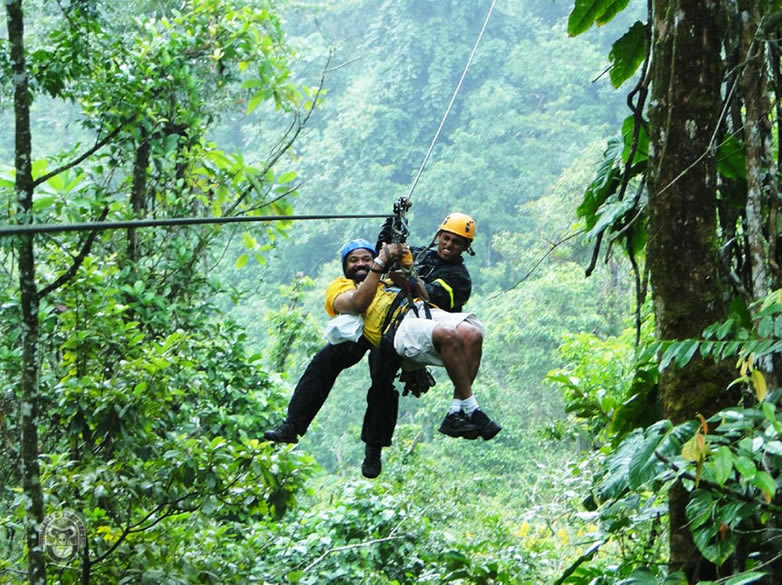
Ziplining in Mabira Forest is one of East Africa’s premier canopy adventures, offering a unique aerial view of Uganda’s largest remaining semi-deciduous tropical rainforest. Spanning 300 square kilometers across the Buikwe and Mukono districts, Mabira Forest provides an ideal setting for eco-tourism. The main activity, known as the Canopy Super Skyway, features a high-flying network of six zip cables stretching roughly 250 meters across the scenic Musamya River gorge. Managed directly by Griffin Falls Camp (the Mabira Forest Canopy Super Skyway project), this experience uses imported American climbing safety gear, certified double-pulley systems, and trained "Sky Captains" who enforce strict safety standards. Unlike standard terrestrial nature walks, ziplining in Mabira Forest elevates participants up to 35 meters into the forest canopy. From this height, visitors glide between platform stations mounted on ancient hardwood trees like Entandrophragma and Celtis, observing canopy ecology, rare primates, and colorful bird species from above. Tour operators such as Roads of Adventure Safaris frequently feature this thrill on short day trips out of Kampala or Entebbe, combining aerial adventure with nature walks and cultural stops along the Jinja highway.
Popular Jinja tour packages
2-days-jinja-white-water-rafting-tour-package
3-days-jinja-white-water-rafting-and-fishing-uganda-safari-tour
5-days-gorilla-trekking-and-jinja-white-water-rafting
5-days-perfect-uganda-honeymoon-safari-in-jinja
1-day-tubing-and-water-massage-jinja-tour-package
Where is Mabira Forest located, and how do you get there?
Mabira Forest is located in central Uganda along the primary Kampala–Jinja highway (A109 route), roughly 44 kilometers east of Kampala and 30 kilometers west of Jinja. Reaching the forest for ziplining in Mabira Forest takes approximately 1 to 1.5 hours by road from Kampala, depending on traffic conditions leaving the capital city. The main access point for the zip line activity is at Griffin Falls Camp, situated near Najjembe village in Buikwe District. Vehicles turn off the paved highway onto a well-maintained dirt feeder road that winds through local sugarcane plantations and forest edges before arriving at the camp reception. Travelers coming from Entebbe International Airport should allow approximately 2 to 2.5 hours for the 85-kilometer drive. Local ground handlers like Roads of Adventure Safaris provide comfortable private 4x4 transfers directly from hotels in Kampala, Entebbe, or Jinja, ensuring stress-free navigation, timely arrival for scheduled briefings, and seamless coordination with on-site Sky Captains.
Who manages the zip line infrastructure in Mabira Forest?
The Canopy Super Skyway zip line network is managed by Griffin Falls Camp, an eco-tourism initiative established under the Mabira Forest Integrated Community Development Project (MAFICO). This organization collaborates closely with the National Forestry Authority (NFA), the government body responsible for managing Uganda’s central forest reserves. The venture was designed to generate sustainable eco-tourism revenue that directly supports local forest conservation and community development programs in surrounding villages like Najjembe. On-site operations are run by professional local Ugandan guides known as "Sky Captains." These guides undergo training in canopy safety, high-rope rescue procedures, harness rigging, and environmental interpretation. Gear maintenance follows rigorous safety protocols, utilizing imported climbing harnesses, heavy-duty carabiners, steel cables, and brake systems meeting international mountaineering standards. When booking through local operators like Roads of Adventure Safaris, your permit fees directly support Griffin Falls Camp's community conservation initiatives.
How long does a typical ziplining session in Mabira Forest last?
A standard session of ziplining in Mabira Forest takes between 3 and 4 hours from start to finish, making it a manageable morning or afternoon activity. The experience begins at Griffin Falls Camp reception with a 30-minute registration, safety briefing, and equipment fitting session conducted by your assigned Sky Captains. Following the briefing, participants take a guided 15-to-20-minute nature walk through the lush forest understory to reach the base of the first launch platform. The actual canopy flight across the six zip line sections, platform transitions, and bridge crossings typically takes 1.5 to 2 hours, depending on group size and physical pace. After completing the final cable descent over the Musamya River, a brief 15-minute trail walk leads back to camp for gear removal, debriefing, and cold refreshments.
Safety, Gear & Requirements
What safety equipment is provided for ziplining in Mabira Forest?
Safety is paramount during ziplining in Mabira Forest, with all participants outfitted in professional-grade gear imported from certified equipment manufacturers in the United States and Europe. Every participant is fitted with an adjustable full-body or seat climbing harness, a protective hard-shell helmet, and heavy-duty leather gloves designed to assist with cable braking and hand positioning. The zip system utilizes dual steel cables attached to high-strength platforms anchored around mature trees using non-invasive mounting techniques. Each participant is secured to the cable system via dual safety lanyards equipped with industrial-grade locking carabiners and steel double-wheeled trolley pulleys. Sky Captains perform double-check inspections on every harness buckle, carabiner gate, and pulley placement before launching guests off any platform, ensuring maximum peace of mind throughout the canopy journey.
Are there age or weight restrictions for ziplining in Mabira Forest?
To ensure participant safety and proper equipment function, specific physical guidelines govern ziplining in Mabira Forest. The minimum age for participation is generally 6 years old, provided young children can comfortably fit into specialized child-sized climbing harnesses and follow safety instructions from the Sky Captains. Children under 15 must be accompanied by a parent, guardian, or tour guide. Regarding weight parameters, the maximum allowable weight limit for individual participants is typically 120 kilograms (264 pounds). This threshold ensures that harness capacities, cable tension tolerances, and speed braking systems operate well within certified safety limits. Participants do not need prior climbing experience, but they should possess moderate physical mobility to climb wooden access ladders and traverse short forest trails between zip platforms.
What role do the "Sky Captains" play during the zip line tour?
The "Sky Captains" are the professional guides who lead every session of ziplining in Mabira Forest. Trained in high-angle rope systems, canopy safety, and wilderness first aid, these Ugandan guides manage every technical aspect of your canopy tour. Two Sky Captains accompany each group: one acts as the lead launcher at the starting platform, while the second acts as the receiver and safety anchor on the landing platform. They handle all carabiner clipping, pulley transfers, and cable brake operations, eliminating the need for guests to manage complex mechanical systems independently. Beyond technical safety, Sky Captains share extensive knowledge about Mabira’s flora, fauna, medicinal plants, and forest conservation history, pointing out hidden primates and bird species along the route.
How safe is ziplining in Mabira Forest for beginners and first-timers?
Ziplining in Mabira Forest is designed to be fully accessible and safe for absolute beginners, including nervous first-timers and families with children. The dual-cable design provides built-in mechanical redundancy, meaning a primary safety line backs up every cable. Before ascending the first platform, Sky Captains conduct a practical demonstration on ground-level practice cables, teaching participants proper body posture, balance techniques, and hand placement. Throughout the canopy course, participants remain clipped into safety lines at all times, even while standing on wooden tree platforms between cables. Guests do not need to perform complex hand-braking maneuvers; gravity-fed landing inclines and guide-assisted braking systems bring flyers to a smooth, controlled stop at every platform.
What wildlife might you spot while ziplining in Mabira Forest?
Participating in ziplining in Mabira Forest provides rare opportunities to observe tropical wildlife in its natural canopy habitat. Mabira Forest houses over 312 tree species, 315 recorded bird species, 218 butterfly species, and 9 distinct primate species. While gliding between canopy platforms elevated up to 35 meters above the ground, participants frequently spot troops of Ugandan grey-cheeked mangabeys (Lophocebus ugandae)—a primate endemic to Uganda—and cheeky red-tailed monkeys (Cercopithecus ascanius) leaping through branches. Looking into the canopy layers may also reveal black-and-white colobus monkeys, forest squirrels, and fruit bats. Bird enthusiasts can watch for colorful forest species like the Great Blue Turaco, African Grey Parrot, Black-and-white-casqued Hornbill, and various kingfishers along the Musamya River channel.
How high and long are the zip line cables in Mabira Forest?
The Canopy Super Skyway in Mabira Forest comprises a network of 6 zip line sections spanning a total distance of roughly 250 meters. Individual cable lengths vary across the course, with the longest continuous zip line stretching approximately 78 meters across the Musamya River gorge. The platforms are positioned between 25 and 35 meters above the forest floor, anchored securely to the trunks of ancient hardwood trees like Entandrophragma utile (Mahogany). This height places flyer lines directly within the mid-canopy and upper crown layers, offering sweeping views over the surrounding valley, riverbank vegetation, and dense canopy cover. The varied line lengths and gentle slopes allow flyers to reach exhilarating speeds while maintaining smooth control.
What is the scenery like during ziplining in Mabira Forest?
The visual scenery experienced while ziplining in Mabira Forest is lush and dramatic. Flying above the forest canopy reveals a vast ocean of deep emerald foliage, tangled vines, giant ferns, and flowering orchids suspended in the upper branches. The highlight of the aerial route is soaring directly over the Musamya River, a scenic forest stream that winds through a steep valley below. Sunlight filters through the high canopy leaves, creating shifting patterns of light and shade along the flight paths. Below the platforms, thick undergrowth, ancient buttress tree roots, and babbling stream waters showcase the untouched interior of this central Ugandan rainforest reserve.
How does ziplining in Mabira Forest support forest conservation?
Ziplining in Mabira Forest plays a direct role in protecting this delicate tropical ecosystem from illegal logging, charcoal burning, and agricultural encroachment. Managed through Griffin Falls Camp and the Mabira Forest Integrated Community Development Project (MAFICO), a portion of all zip line permit fees is funneled directly into community development and conservation programs. Revenue supports eco-friendly income initiatives for surrounding villages, funds local forestry patrols, and pays for educational scholarships in Najjembe. By providing local Ugandan residents with sustainable employment as guides, porters, and camp staff, eco-tourism transforms neighboring communities into active guardians of the forest, demonstrating that standing trees generate greater long-term value than timber extraction.
How much does ziplining in Mabira Forest cost?
The standard fee for ziplining in Mabira Forest at Griffin Falls Camp is competitively priced for both international tourists and local residents. Rates generally average around $50 USD per person for foreign non-residents, $40 USD for foreign residents living in East Africa, and roughly 60,000 to 100,000 UGX for Ugandan citizens and East African Community members. This fee covers all gear rentals, harness fitting, professional Sky Captain guide services, canopy platform access, and local forest entry fees administered by Griffin Falls Camp. When booked as part of a complete day-tour package through Roads of Adventure Safaris, package prices include private round-trip vehicle transfers from Kampala or Jinja, a professional driver-guide, bottled drinking water, and lunch at Najjembe or Jinja.
Do you need to book ziplining in Mabira Forest in advance?
While walk-in visitors are welcomed at Griffin Falls Camp, advance booking for ziplining in Mabira Forest is strongly recommended, especially during weekends, public holidays, and peak tourist seasons (June to August and December to February). Pre-booking guarantees gear availability and locks in your preferred arrival time slot, preventing long waits at reception during busy days. Reserving in advance through a registered tour handler like Roads of Adventure Safaris ensures that Sky Captains are pre-assigned to your group, gear is prepared prior to your arrival, and surrounding itinerary components—such as river rafting in Jinja or nature walks in Mabira—are fully coordinated.
What should you wear for ziplining in Mabira Forest?
Dressing appropriately ensures comfort and protection while ziplining in Mabira Forest. Wear lightweight, breathable, and stretchable clothing, such as athletic trousers, leggings, or long shorts that fit comfortably underneath a padded leg harness. Long sleeves or light long-sleeved shirts are ideal to shield your arms from sun exposure, insect bites, and occasional foliage contact. Choose sturdy, closed-toe footwear like trail runners, light hiking boots, or athletic sneakers with good rubber grip; open sandals, flip-flops, and high heels are strictly prohibited on the canopy platforms. Tuck in loose clothing, tie back long hair securely, and remove hanging jewelry, watches, or scarves before putting on your climbing harness and helmet.
What items should you pack in your daypack for ziplining in Mabira Forest?
When preparing for ziplining in Mabira Forest, bring a lightweight daypack to carry personal items while leaving heavy luggage in your safari vehicle. Essential items include a refillable water bottle or hydration pack, high-DEET insect repellent, and broad-spectrum sunscreen. Bring a compact rain jacket or lightweight poncho, as tropical forest showers can occur with little warning. For photography, bring a smartphone or compact camera equipped with a secure wrist strap or neck lanyard to prevent accidental drops from 30-meter high platforms. Include extra cash in Ugandan Shillings (UGX) for tipping your Sky Captains, purchasing local snacks like roasted plantains at Najjembe market, or buying local crafts.
How can you combine ziplining in Mabira Forest with a visit to Jinja?
Because Mabira Forest sits directly along the main Kampala–Jinja highway, ziplining in Mabira Forest serves as an ideal morning stop on a broader Jinja day trip or weekend getaway. After completing your 3-hour canopy flight at Griffin Falls Camp, you can drive just 30 minutes further east to Jinja, the adventure capital of East Africa. In Jinja, travelers can visit the historic Source of the Nile River, take a boat cruise onto Lake Victoria, or engage in thrilling water sports like white-water rafting, kayaking, quad biking, and horseback riding along the Nile banks. Roads of Adventure Safaris crafts seamless single-day or multi-day itineraries that combine morning ziplining in Mabira with afternoon Nile cruises and fine dining in Jinja.
What other activities can you do in Mabira Forest besides ziplining?
Beyond ziplining in Mabira Forest, this rich central Ugandan nature reserve offers diverse eco-tourism activities. Visitors can embark on guided forest nature walks along 68 kilometers of maintained trails, exploring botanical diversity, ancient buttress tree formations, and medicinal plants with local NFA forest guides. Mabira is also an exceptional bird-watching destination, offering specialized birding walks to spot rare species like the Nahan's Francolin and Purple-throated Cuckoo-shrike. Additionally, mountain biking trails wind through forest tracks and neighboring villages, while butterfly-identification walks and visits to the nearby Griffin Falls waterfall provide relaxing ground-level alternatives for non-ziplining travel companions.
Is ziplining in Mabira Forest suitable for family travel and kids?
Yes, ziplining in Mabira Forest is a family-friendly activity suitable for children aged 6 and older who enjoy outdoor adventure. Sky Captains excel at guiding young flyers, offering patient encouragement, double-checking child safety harnesses, and occasionally flying tandem with younger children who feel hesitant about flying solo across the cables. The canopy course builds outdoor confidence, physical coordination, and environmental appreciation in kids as they spot monkeys and birds up close. Families can pair the zip line adventure with easy forest floor walks, educational insect viewing, and a relaxed picnic lunch at Griffin Falls Camp.
What food and refreshment options are available at Mabira Forest?
Griffin Falls Camp operates a rustic eco-restaurant and bar serving freshly cooked meals, local Ugandan dishes, hot beverages, and chilled soft drinks. Visitors can order lunch meals featuring grilled chicken, tilapia fish, rice, fresh chips, and seasonal salads after completing their zip line tour. Alternatively, stopping at the famous Najjembe roadside market along the Jinja highway provides an authentic taste of Ugandan street food, including famous roasted chicken, gonja (sweet roasted plantains), and fresh fruit like pineapples and yellow bananas. Roads of Adventure Safaris can also arrange catered packed lunches for private tour groups seeking a scenic picnic surrounded by forest nature.
What is the best time of year for ziplining in Mabira Forest?
Ziplining in Mabira Forest is operational year-round, thanks to Uganda's tropical climate, but the dry seasons offer the most comfortable conditions. The primary dry months run from December to February and June to August. During these periods, forest trails are firmer, humidity levels are slightly lower, and rain delays are rare, allowing smooth cable flights and easy walking between platforms. However, visiting during the wet seasons (March to May and September to November) offers distinct advantages: the forest canopy is exceptionally lush, bird life is highly active, and there are fewer overall visitors. Even during rainy months, showers often pass quickly, allowing ziplining operations to resume after brief breaks.
What happens if it rains during your scheduled ziplining session?
If light rain or brief tropical showers occur during ziplining in Mabira Forest, operations generally continue safely, as rain gear is worn and steel cables remain secure. However, if heavy downpours, high winds, or thunder and lightning develop, Sky Captains immediately suspend zip line activities as a precautionary safety measure. Participants on canopy platforms are safely guided down to ground level using access ropes or wooden staircases, returning to Griffin Falls Camp reception to wait out the storm. Once the weather clears and cables are cleared by safety staff, canopy tours resume promptly. Local tour coordinators at Roads of Adventure Safaris maintain flexible day schedules to accommodate minor weather delays without disrupting surrounding afternoon plans.
What physical fitness level is required for ziplining in Mabira Forest?
A basic to moderate level of physical fitness is required for ziplining in Mabira Forest. Participants do not need athletic strength, but they must be capable of walking along uneven forest trails for 20 to 30 minutes and climbing vertical wooden ladders or spiral staircases mounted on platform trees. The physical effort involved in flying along the zip line itself is minimal, as gravity propels you forward while your harness supports your full body weight. However, individuals with severe heart conditions, extreme vertigo, recent surgical procedures, or back injuries should consult a medical professional before participating. Pregnant women are advised against ziplining due to harness pressure considerations.
How are fear of heights and acrophobia handled by the guides?
Sky Captains managing ziplining in Mabira Forest are experienced in assisting guests who experience nervousness or a fear of heights. The canopy course begins on lower, shorter platforms, allowing hesitant flyers to gain confidence gradually before progressing to higher cable sections over the Musamya River gorge. Guides maintain a calm, reassuring atmosphere, explaining gear safety mechanisms in detail so guests feel completely secure. If a participant feels overly anxious on a platform, Sky Captains can attach a tandem tether, flying alongside the guest to provide physical stability and moral support throughout the flight.
Can you take photos and videos while ziplining in Mabira Forest?
Yes, capturing photos and videos during ziplining in Mabira Forest is encouraged, provided cameras are properly secured. Smartphones, Action cameras (like GoPros), and compact cameras can be used to film your flight and photograph canopy views. Action cameras equipped with chest mounts or helmet attachments are ideal, as they allow hands-free recording while flying along the cable. If using a handheld smartphone or camera, it MUST be attached via a secure wrist strap or neck lanyard; dropping a device from a 35-meter platform into dense forest undergrowth usually results in loss or damage. Sky Captains are happy to take photos and videos of you from landing platforms using your phone.
What local cultural experiences can you combine with Mabira Forest ziplining?
Integrating cultural encounters enriches a day spent ziplining in Mabira Forest. Neighboring communities like Najjembe and Ssitya Loss offer authentic glimpses into rural central Ugandan life. Visitors can participate in guided community walks organized by MAFICO to learn about traditional banana brewing methods, local herbal medicine processing using forest plants, and sugarcane farming techniques. Visiting local artisan markets allows travelers to purchase handmade wood carvings, woven baskets, and traditional crafts directly from local craftswomen. Engaging with these community initiatives supports economic development around forest borders and fosters meaningful cultural exchange.
Is ziplining in Mabira Forest suitable for corporate team building?
Yes, ziplining in Mabira Forest is an exceptional activity for corporate team building, school retreats, and group outings. Flying through the canopy requires mutual encouragement, trust building, and overcoming personal comfort boundaries—qualities that strengthen group cohesion. Griffin Falls Camp accommodates large corporate groups, offering tailored packages that combine morning zip line canopy flights with ground-level outdoor team challenge games, guided forest obstacle walks, and group buffet lunches. Tour specialists like Roads of Adventure Safaris coordinate group transportation, meal logistics, and private event bookings for corporate clients traveling from Kampala or Jinja.
How does Mabira Forest compare to other adventure spots in East Africa?
Ziplining in Mabira Forest offers a distinct eco-adventure experience compared to other adventure spots in East Africa. While activities like white-water rafting in Jinja or bungee jumping deliver high-adrenaline thrills over open water, Mabira's zip line focuses on immersive forest canopy exploration. It combines moderate adrenaline with close-up nature observation, allowing participants to experience a lush rainforest from a bird's-eye perspective without requiring intense physical exertion. Compared to zip line courses set over open canyons or agricultural valleys, flying through mature tropical canopy foliage surrounded by vocal primates and hornbills offers a rich ecological connection unique to Uganda.
What health and safety guidelines apply regarding forest insects and plants?
While ziplining in Mabira Forest, taking simple precautions protects you against forest insects and irritating foliage. Tropical rainforests harbor mosquitoes, biting midges, and safari ants (Dorylus). Wearing long pants tucked into socks and applying insect repellent containing DEET or Picaridin effectively prevents insect bites during trail walks. While on canopy platforms, avoid touching tree trunks carelessly, as sharp bark, mosses, or climbing ants may be present. Your Sky Captains monitor trails and platforms constantly, ensuring guests avoid contact with stinging nettles or brush. Staying on cleared paths and following guide directions keeps you safe throughout your session.
Why book your Mabira Forest zipline trip with Roads of Adventure Safaris?
Booking your canopy tour with Roads of Adventure Safaris guarantees a smoothly organized, safe, and stress-free day trip to Mabira Forest. As a professional local ground operator based in Uganda, Roads of Adventure Safaris manages all logistics—including private 4x4 vehicle transfers from your Kampala or Entebbe hotel, pre-reserved zip line slots at Griffin Falls Camp, and expert driver-guides who share deep knowledge of Ugandan culture and wildlife. Their custom day packages easily integrate ziplining in Mabira Forest with other regional activities, such as Source of the Nile boat cruises or Jinja white-water rafting, delivering an unforgettable, high-value adventure tailored to your schedule.
