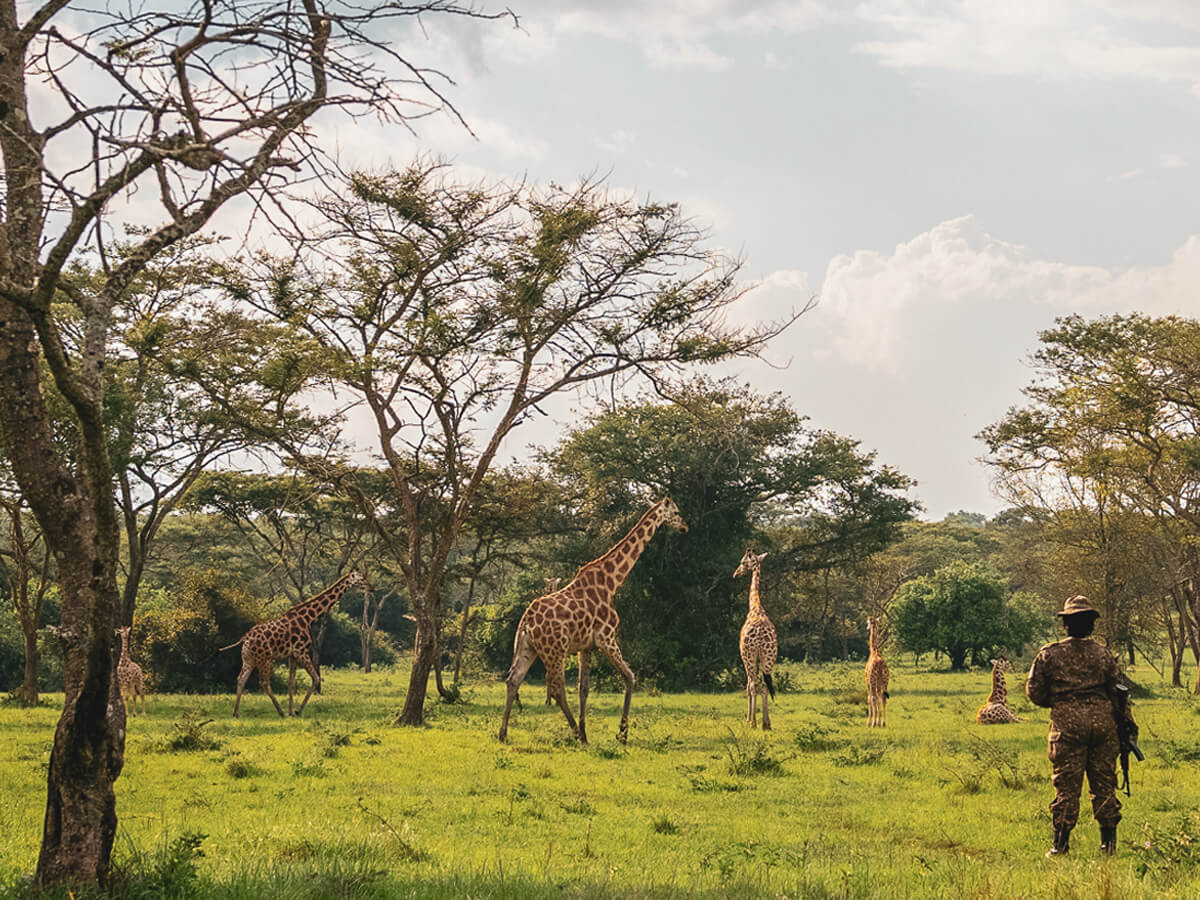
Lake Mburo National Park is Uganda's smallest savannah park, uniquely offering horseback safaris, walking safaris, and being the only place in the country to see impalas and large herds of elands. It also lacks major large predators like lions, making non-vehicular wildlife viewing safe and intimate
Popular safari tour packages in Uganda to Lake Mburo national park
2-days-lake-mburo-national-park-uganda-safari-holiday
3-days-best-of-lake-mburo-national-park-uganda-safari-tour-package
4-days-queen-elizabeth-park-and-lake-mburo-uganda-safari-tour
4-days-perfect-honeymoon-uganda-safari-to-lake-mburo-national-park-and-lake-bunyonyi
Distinctive Features
- Unique Wildlife: It is the exclusive home to the impala in Uganda and the best location to spot the giant eland, alongside large populations of Burchell's zebra
- No Big Cats: The absence of lions and elephants means you can explore the landscape freely on foot or horseback.
- Alternative Safari Activities: It offers horseback riding, cycling, and guided foot walks right up to salt licks, which are restricted or unavailable in other Ugandan parks.
- Accessibility: Located off the main highway to western parks, it is just a 3.5 to 4-hour drive from Kampala, making it the most accessible savannah destination in the country
What is the single most unique characteristic of Lake Mburo National Park?
Lake Mburo National Park stands out because it is Uganda’s most active and intimate savannah park. Unlike larger reserves where you spend all day seated inside a closed 4x4, Lake Mburo lets you step outside the vehicle. It is the only national park in Uganda where you can explore the open bush on foot, ride on horseback alongside zebras, pedal through dirt tracks on a mountain bike, or cruise across tranquility-filled lakes at sunset. Its compact size, lush acacia woodlands, and gentle topography create an open-air natural playground unlike any other safari destination in East Africa.
Why is Lake Mburo known as the "Home of the Impala" in Uganda?
Lake Mburo is the only national park in the entire country where wild impalas survive. In fact, Uganda's capital city, Kampala, gets its name from these medium-sized antelopes ("Hill of the Impala" or Akasozi k'Empala). Because impalas thrive in acacia-dominated woodlands interspersed with grassy clearings, Lake Mburo offers the perfect habitat. On any game drive or walking safari, you will see high-jumping bachelor herds and harem groups leaping gracefully over tracks, marking their territory, and feeding alongside plains zebras.
How does Lake Mburo's location make it unique for travelers starting in Kampala or Entebbe?
At roughly 235 kilometers (a 3.5 to 4-hour drive) southwest of Kampala and Entebbe, Lake Mburo is the closest savannah national park to Uganda's primary entry points. Most other major game reserves, like Murchison Falls or Kidepo Valley, require full-day road trips or domestic flights. Mburo’s strategic position makes it possible to leave the urban hustle after breakfast and be out on a afternoon boat cruise or evening game drive by sunset, making it unbeatable for short getaways or weekend breaks.
What makes horseback safaris in Lake Mburo such a distinctive experience?
Operated primarily out of Mihingo Lodge, horseback safaris in Lake Mburo offer a peaceful way to experience wild Africa without the rumble of an engine or dust of a vehicle. Wild animals view a horse and rider as another harmless four-legged herbivore rather than a threat. As a result, skittish species like zebras, elands, topis, and giraffes allow horseback riders to approach surprisingly close, offering an intimate, low-impact connection to the savanna.
How do guided walking safaris in Lake Mburo differ from traditional vehicle game drives?
Because Lake Mburo has virtually no resident lion prides, it is one of the few places in East Africa where walking safaris are widely permitted throughout the entire park. Accompanied by an armed Uganda Wildlife Authority ranger, you leave the road behind and trek along game trails, feeling the crunch of dry grass underfoot. Walking shifts your focus from merely spotting large mammals to reading animal tracks, inspecting medicinal plants, observing termite mounds, and listening to the rustle of the bush.
Is Lake Mburo the only park in Uganda where you can go mountain biking among wild animals?
Yes, Lake Mburo is the pioneer for mountain bike safaris in Uganda. Riding a bicycle along dirt paths, past herds of grazing zebras and warthogs, offers an exhilarating blend of adventure sports and wildlife viewing. Guided biking routes run along the park boundaries, through surrounding community lands, and past scenic swamp edges, allowing active travelers to burn energy while soaking in sweeping views of rolling hills and acacia plains.
What makes Lake Mburo's zebra population unique compared to other parks in Uganda?
Lake Mburo hosts the largest concentration of Plains zebras (Burchell's zebras) in western Uganda. While small populations exist far to the northeast in Kidepo Valley and Pian Upe, Mburo is the prime stronghold where zebras are guaranteed on every single outing. The contrast of their bold black-and-white stripes set against the emerald-green acacia backdrop produces classic African imagery. You will see thousands of them grooming each other, dust-bathing, and trotting alongside impalas across the park’s central tracks.
Why are night game drives so popular and successful in Lake Mburo National Park?
While night drives are prohibited or heavily restricted in many East African national parks, Lake Mburo embraces nocturnal exploration. Equipped with powerful spotlights and guided by experienced rangers, night drives reveal a completely different world. Because Mburo boasts a remarkably high density of leopards, your chances of spotting a leopard on a night hunt are exceptionally high. You will also look out for white-tailed mongooses, bushbabies, genets, spotted hyenas, and nightjars resting on dirt tracks.
How does the presence of Ankole long-horned cattle create a unique safari scene in Lake Mburo?
Lake Mburo is surrounded by the ancestral lands of the Bahima people, traditional pastoralists famous for raising majestic Ankole long-horned cattle. Historically, park boundaries overlapped with grazing lands, and today, controlled co-existence occurs along buffer zones. Seeing domestic cattle with massive, curving ivory horns grazing peacefully alongside wild zebras, impalas, and waterbucks creates a cultural landscape found nowhere else in Uganda—a living example of human-wildlife borderland dynamics.
Why is Lake Mburo considered the safest savannah park for active adventures in Uganda?
The absence of large, permanent lion prides makes Lake Mburo uniquely safe for open-air human activities like walking, cycling, and horseback riding. While leopards and hyenas are present, they are shy, nocturnal, and avoid humans during daylight hours. Furthermore, Mburo lacks large herds of aggressive wild elephants that can pose challenges on foot. This absence of mega-predators creates a relaxed atmosphere where visitors can safely explore nature on its own terms.
What role does the five-lake ecosystem play within Lake Mburo National Park?
Unlike drier savannah parks, Lake Mburo National Park contains five distinct lakes within its boundaries, with Lake Mburo being the largest. These lakes are part of a larger 14-lake wetland system linked by extensive papyrus swamps. This rich water network ensures that even during dry seasons, the park remains green and life-sustaining, attracting heavy concentrations of hippos, crocodiles, waterbirds, and thirsty mammals to shoreline watering holes year-round.
How did Lake Mburo become the only park in western Uganda with giraffes?
In 2015, the Uganda Wildlife Authority undertook a historic translocation project, moving 15 Rothschild’s (Nubian) giraffes from Murchison Falls in the north to Lake Mburo in the west. The project was a massive success: the giraffes adapted quickly, found an abundance of acacia foliage to eat, and began breeding rapidly. Today, the population exceeds 80 individuals, making Lake Mburo the exclusive home for wild giraffes in the entire western Uganda safari circuit.
What makes Lake Mburo the premier spot in Uganda to see the Eland?
The Eland is Africa’s largest and heaviest antelope, standing up to six feet tall at the shoulder with spiral horns and large throat dewlaps. Lake Mburo is one of only two national parks in Uganda where elands exist. Because they are naturally timid and wide-ranging, watching a herd of these giant antelopes leap effortlessly over low bushes at dawn—often near the salt licks or along the Kazuma Track—is a signature highlight for mammal enthusiasts.
Why is Lake Mburo a paradise for birdwatchers seeking acacia-dwelling species?
With over 350 recorded bird species, Lake Mburo is a top-tier birding destination, particularly for acacia-associated and wetland birds. It is one of the best places in East Africa to spot the elusive Red-faced Barbet, African Finfoot, and Crested Francolin. Birders can easily tick off species like the Tabora Cisticola, Emerald-spotted Wood-dove, Bare-faced Go-away-bird, and Green Wood-hoopoe along a single morning nature walk.
Why is Lake Mburo often described as an "acacia woodland wonderland"?
While parks like Queen Elizabeth or Serengeti feature vast open grasslands, Lake Mburo’s landscape is heavily defined by lush woodland dominated by Acacia hockii, Acacia gerrardii, and broad-leaved trees. This dense canopy creates an intimate forest-savannah hybrid landscape where sunbeams filter through thorny branches, flowers bloom after rains, and wildlife is constantly framing itself against rich green vegetation rather than open horizon.
How high is the density of leopards in Lake Mburo compared to larger parks?
Despite its small size (around 260 square kilometers), Lake Mburo holds one of the highest concentrations of leopards per square kilometer in East Africa. The abundance of medium-sized prey like impalas, bushbucks, and warthogs, combined with thick acacia cover and rocky outcrops for denning, creates ideal hunting grounds. Night game drives and early morning safari loops regularly yield sightings of these elusive spotted cats.
What is unique about taking a boat safari on Lake Mburo compared to the Kazinga Channel or the Nile?
Boat cruises on Lake Mburo are remarkably quiet, serene, and intimate. Because the lake is smaller and experiences less heavy motorized boat traffic than the Victoria Nile or Kazinga Channel, you glide peacefully along papyrus-lined shores without noise or crowds. You get up-close views of podded hippos, basking Nile crocodiles, floating vegetation, and rare waterbirds like the African Finfoot paddling along shaded banks.
Why is Lake Mburo the perfect stopover between Entebbe and Bwindi Forest?
Driving directly from Entebbe or Kampala to Bwindi Impenetrable National Park for gorilla trekking takes 8 to 10 tedious hours on the road. Lake Mburo sits almost precisely midway along the southern safari route. Stopping in Mburo breaks the long transit into two manageable drives, replacing road fatigue with an afternoon boat ride, a relaxing lodge stay, and a morning safari before continuing toward the gorilla mountains.
What local folklore and legend surround the origin of Lake Mburo?
According to local Banyankole folklore, two brothers named Kintu and Mburo lived in a fertile valley. One night, Kintu had a dream warning him of a massive flood and urged Mburo to flee. Kintu left for the surrounding hills, but Mburo ignored the dream and stayed behind. Soon after, heavy rains flooded the valley, drowning Mburo and creating the body of water known today as Lake Mburo, while Kintu watched from the nearby Kintu hills.
How does the absence of large elephant herds shape Lake Mburo's landscape?
Elephants are ecosystem engineers that knock down large trees, clear brush, and maintain wide-open grasslands. Because Lake Mburo lacks resident elephant herds, the park’s tree canopy remains dense, bushy, and woody. This unique habitat structure favors browsing species like giraffes, impalas, bushbucks, and duikers over pure grassland grazers, shaping the park’s overall biological diversity and visual scenery.
Can you spot the rare, secretive African Finfoot on Lake Mburo, and why is this significant?
The African Finfoot is an endangered, notoriously shy waterbird that hides under overhanging riverine vegetation. Lake Mburo is universally recognized as one of the best and most reliable locations in all of Africa to spot this elusive bird. During a quiet morning boat safari along the lake's quiet papyrus fringes, keen-eyed birders frequently catch glimpses of the finfoot paddling softly before ducking into the roots.
What makes sport fishing on Lake Mburo a unique experience for travelers?
Lake Mburo is one of the few national parks in Uganda where catch-and-release sport fishing is permitted at designated shoreline spots like Mazinga. Anglers can drop a line for six different fish species, including large Tilapia, Mudfish, and Catfish, surrounded by wild nature. Sitting on a quiet shore or wooden dock with a fishing rod while hippos grunt nearby offers a relaxing change of pace from standard game viewing.
How do the granite kopjes and hilltops enhance wildlife viewing in Lake Mburo?
The park’s landscape is dotted with ancient granite outcrops (kopjes) and elevated ridge lines like Kazuma Lookout. Climbing up to these high points provides sweeping 360-degree panoramas over the entire park, showing the five interconnected lakes, swamp networks, and rolling acacia hills below. Kopjes also serve as prime vantage points for spotting rock-dwelling klipspringers and basking leopards.
Why is Lake Mburo an excellent choice for budget-conscious safari travelers?
Because Lake Mburo is close to main highways, easily accessible without domestic flights, and features short driving distances within the park, fuel and transportation costs are significantly lower than for remote northern reserves. Additionally, park entry fees are very affordable, and the park offers a wide range of accommodation—from budget-friendly UWA bandas and public campsites to luxury eco-lodges—making it accessible for every budget.
How does Lake Mburo deliver a peaceful, uncrowded safari experience?
While parks like the Masai Mara or Serengeti can suffer from vehicle congestion around big animal sightings, Lake Mburo remains peaceful and uncrowded. Even during peak travel seasons, you will rarely encounter more than two or three safari vehicles on a track. This solitude creates an authentic wilderness feel where you can spend uninterrupted time observing wildlife without feeling rushed by surrounding traffic.
What makes the wooden salt lick boardwalks a unique wildlife viewing spot in Mburo?
The park features elevated wooden viewing platforms positioned directly above natural salty mud deposits (salt licks). Wildlife from across the park congregates at these salt licks to lick mineral-rich soil necessary for their digestion. Sitting quietly on a boardwalk banner allows you to watch dozens of zebras, impalas, elands, waterbucks, and warthogs gather together below you without them realizing you are there.
Why is Lake Mburo the most family-friendly national park in Uganda?
Lake Mburo’s gentle terrain, short driving distances between lodges and park gates, low transit times from Kampala, and abundance of engaging activities make it unbeatable for families traveling with children. Kids aren't stuck inside cars for 8 hours; instead, they can ride bikes, walk with rangers, enjoy calm boat rides, look for colorful birds, and see large animals up close without long, exhausting drives.
How does community-based conservation function uniquely around Lake Mburo?
Lake Mburo is a model for community-inclusive conservation in Uganda. The Uganda Wildlife Authority shares 20% of park entrance fees with surrounding local communities to fund schools, healthcare clinics, and clean water projects. Because local landowners benefit directly from wildlife tourism, many run private conservancies, host cultural cattle tours, and protect stray wildlife that wanders onto private farmland.
What makes Rubanga Forest inside Lake Mburo distinct from the surrounding savannah?
Tucked in the western portion of the park lies Rubanga Forest, a rare pocket of true closed-canopy tropical high forest surrounded by dry acacia savannah. Walking through Rubanga Forest feels like stepping into a completely different ecosystem. It provides a cool, shaded habitat for forest birds, blue monkeys, red-tailed monkeys, double-toothed barbets, and unique forest flora found nowhere else in the park.
Why is Lake Mburo National Park an indispensable highlight of any complete Uganda safari?
Lake Mburo bridges the gap between Uganda's dense primate rainforests and traditional open savannahs. It offers an active contrast to passive vehicle game drives, letting you walk, ride, pedal, and sail alongside wild African animals. Whether used as an action-packed weekend retreat or an enriching stopover en route to mountain gorilla trekking, Lake Mburo adds variety, color, and intimate charm to any Ugandan adventure.
Booking Uganda safari to lake Mburo park with us Roads of Adventure safaris
To book a Lake Mburo National Park safari with Roads of Adventure Safaris, email your request to info@roadsofadventuresafaris.com or call/WhatsApp +256 701041637. Packages range from 2-day quick trips to 3-day full wildlife tours, covering transport, permits, and activities like boat cruises and game drives
