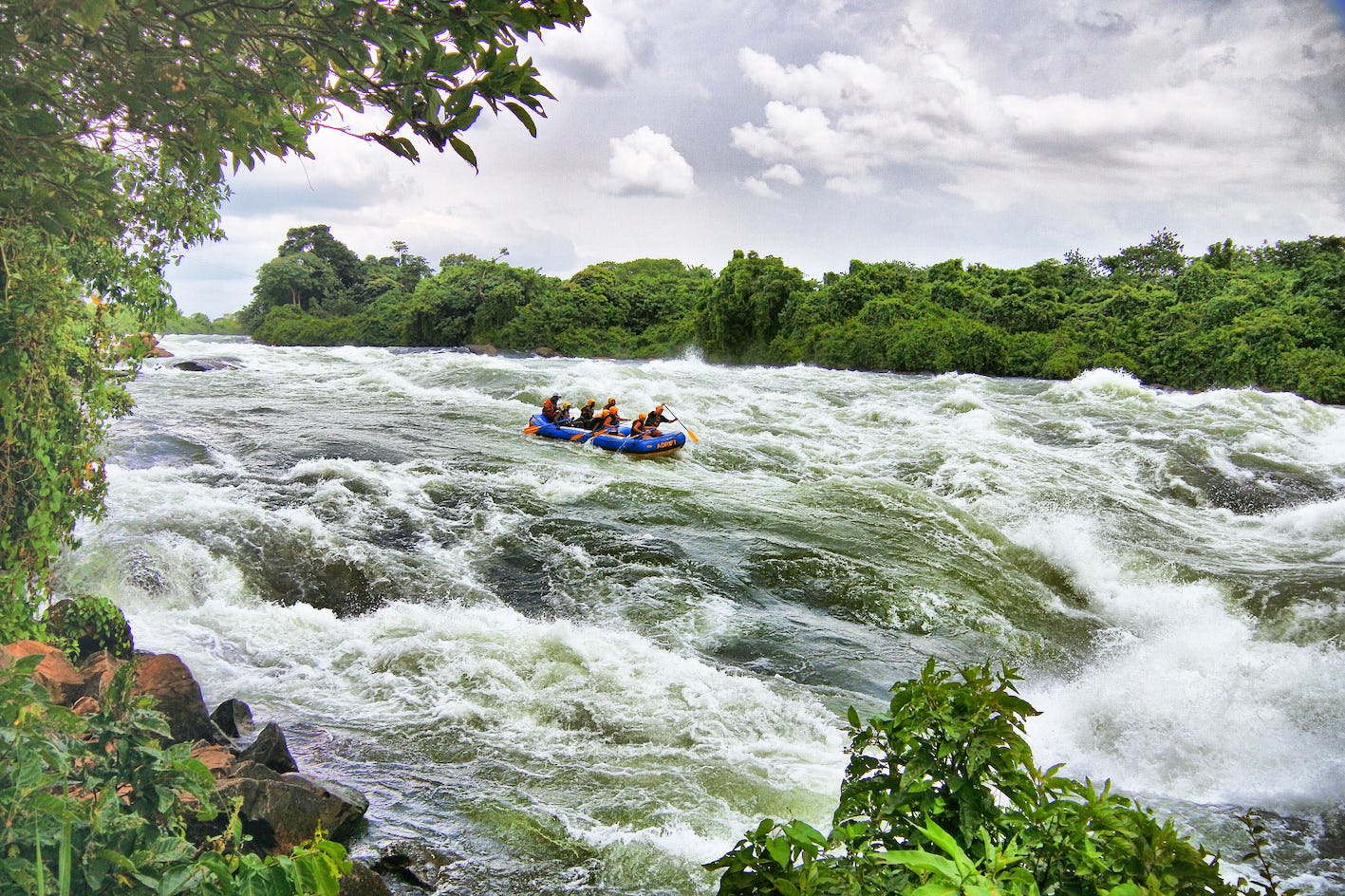
White water rafting on the White Nile in Jinja features rapids graded from Grade 1 to Grade 5. The full-day trips focus heavily on thrilling Grade 4 and Grade 5 rapids—such as the famous "Nile Special"—interspersed with calmer Grade 1 to 3 stretches for recovery and floating
2-days-jinja-white-water-rafting-tour-package
3-days-jinja-white-water-rafting-and-fishing-uganda-safari-tour
5-days-gorilla-trekking-and-jinja-white-water-rafting
5-days-perfect-uganda-honeymoon-safari-in-jinja
1-day-tubing-and-water-massage-jinja-tour-package
1-day-white-water-rafting-and-bungee-jumping-in-jinja-tour-from-kampala
4-days-luxury-murchison-falls-and-jinja-uganda-safari-vacation
14-days-uganda-primate-safari-and-jinja-white-water-rafting
6-days-jinja-white-water-rafting-gorilla-trekking-and-chimpanzee-tracking-adventure
6-days-jinja-white-water-rafting-bwindi-impenetrable-and-lake-mburo-park
Grade 1 to 3 Rapids
Grades 1 through 3 form the inviting, scenic backbone of a White Nile rafting trip, offering the perfect balance of gentle floating and playful splash waves. These introductory stretches feature clear, predictable channels and minor drops that give paddlers time to settle into a rhythm, practice synchronization, and master basic paddle commands given by the river guide. Rather than presenting high-pressure danger, these rapids serve as active warm-up phases where you learn how to lean into waves, brace your feet securely inside the raft, and practice rescue drills in warm, deep water.
Between the main rapid sections, these calm aquatic channels transform into serene, slow-moving pools framed by lush riverbanks, papyrus reeds, and granite islands. Travelers can hop out of the raft to swim in the warm river, absorb panoramic views of local fishing canoes, and watch river birds like fish eagles and kingfishers hunting along the shoreline. These gentler grades provide essential breathers between the heavy, adrenaline-pumping drops, making the overall journey an enjoyable blend of relaxed river cruising and light, fun white-water action suitable for paddlers of all skill levels.
Grade 4 Rapids
Stepping up to Grade 4 moves you directly into the heavy-hitting, high-volume white water that has made the Nile famous among adventure seekers worldwide. These rapids feature massive wave trains, powerful surging surges, and deep hydraulic holes formed by immense volumes of water carving through natural river channels. As your raft enters the roaring approach, the water transitions from calm green glass to exploding white foam, demanding total commitment, sharp team coordination, and aggressive forward paddling from everyone on board.
Navigating a Grade 4 rapid is an intense, thrilling sensory overload where getting thoroughly soaked is a absolute guarantee. Massive standing waves crash directly over the bow, briefly submerging the entire team before the raft pops back up through the crest. Flipping the raft or having paddlers tossed into the warm river water is a normal, exciting part of the experience on these bigger sections. Because the Nile’s waters are deep and warm, going for an unexpected swim in a Grade 4 rapid is overwhelmingly safe, exhilarating, and quickly managed by surrounding river guides, leaving you with an unbeatable adrenaline rush as you pull back onto the raft.
Grade 5 Rapids
Grade 5 represents the absolute pinnacle of commercially runnable white-water rafting, delivering wild, extreme, and highly turbulent drops that push adrenaline levels to their limit. Legendary rapids along the Nile—such as Overtime, Retaliator, and the world-renowned Nile Special—feature massive wall-like waves, boiling eddy lines, and sheer physical power capable of flipping full-sized rafts with ease. Hitting these monstrous drops requires precision maneuvering from your lead guide, maximum paddling power, and pure focus as thousands of tons of water crash around you.
Despite the raw intensity of Grade 5 rapids, safety protocols are managed with utmost professionalism. Highly skilled safety kayakers paddle alongside every expedition, positioning themselves downstream in calm eddies to assist swimmer recovery instantly if a raft capsizes. For travelers who want to experience the river without facing the absolute most daunting wave features, guides offer flexible choices: inexperienced or cautious guests can choose to walk along the scenic riverbanks around specific commercial Grade 5 monsters, re-boarding the raft safely in the calm pool below while adrenaline enthusiasts tackle the drop head-on.
What do the different rapid grades mean on the River Nile in Jinja?
River difficulty is measured on the International Scale from 1 to 6. Grade 1 consists of flat, gently moving water ideal for relaxed floating. Grade 2 and 3 feature moderate waves, clear channels, and splashing water where you stay mostly upright. Grade 4 brings powerful hydraulics, steep drops, and intense turbulence where rafts frequently flip. Grade 5 represents the absolute threshold of commercial rafting—massive standing waves, huge pressure drops, and deep water holes requiring expert navigation. Grade 6 is considered unrunnable and far too hazardous for commercial trips.
What is the most famous Grade 5 rapid in Jinja?
The undisputed star of the Victoria Nile is Nile Special, a world-famous Grade 5 rapid known for its enormous standing wave and massive hydraulic pressure. Rafters hit this section at high speed, often surfing the wave or getting flipped into warm, deep water. Kayakers from across the globe travel to Jinja specifically to play on Nile Special because its high-water volume creates a predictable, deep-water feature that is terrifying yet remarkably forgiving compared to rocky shallow rivers.
Why are Grade 5 rapids in Jinja considered safer than Grade 5 rapids elsewhere?
Unlike mountain rivers in Colorado or the Himalayas, which feature cold water and sharp, shallow rocks, the Nile in Jinja is a warm, deep, high-volume river fed by Lake Victoria. When a raft flips on a Grade 5 rapid in Jinja, you drop into pools that are often 10 to 30 meters deep. The lack of exposed, jagged boulders drastically reduces the risk of impact injuries, making Jinja one of the safest places in the world to experience extreme white water.
Can beginners attempt Grade 5 rafting in Jinja?
Yes, absolute beginners can safely complete a Grade 5 trip in Jinja. Because the river features high water volume and deep rescue pools, certified river guides can safely take first-timers through big rapids after a mandatory 30-minute safety briefing and flip-drill practice in calm water. You do not need previous paddling experience, provided you follow your guide’s commands and wear the provided high-flotation life jacket and helmet.
What happens if I want to avoid Grade 5 rapids during the trip?
Every commercial trip offers complete flexibility. Guides hold a group vote or check in before approaching major Grade 4 or 5 sections. If you prefer to bypass a intimidating rapid, you can walk along the riverbank while the guides navigate the drop, or transfer to the accompanying motorized safety boat to cruise calmly around the wild water. You reboard your raft immediately after the rapid in the calm pool below.
Do I need to know how to swim to go white water rafting in Jinja?
You do not need to be a strong swimmer, but you should be water-confident. Every participant is fitted with a specialized, high-buoyancy life jacket designed to pull your head above water automatically if you enter the river. Additionally, dedicated safety kayakers ride alongside every raft, ready to offer you the bow of their kayak and tow you back to the raft or safety boat within seconds of a spill.
What safety gear is provided by rafting operators?
Rafting operators supply ISO-certified, high-flotation personal flotation devices (PFDs) equipped with heavy-duty buckles, heavy-impact water helmets, and heavy-duty inflatable rafts with reinforced foot thwarts. Safety kayaks, throw bags, trauma first-aid kits, and motorized support boats accompany every expedition down the river.
What is the role of safety kayakers during the trip?
Safety kayakers are professional river rescues who paddle agile solo kayaks directly downstream of the main rafts. When a raft flips on a Grade 4 or 5 rapid, these kayakers sprint into the boiling water, stabilize disoriented swimmers, pull them out of whirlpools, and ferry them safely to the support boat or back into their raft.
What should I do if the raft flips upside down?
Flipping is an expected and thrilling part of Grade 5 rafting in Jinja. If the boat flips, stay calm, tucked in a ball briefly, and let your life jacket push you to the surface. Once above water, look up to see if you are under the flipped boat; if so, push yourself out from under the side. Float on your back with your toes pointed downstream to protect against underwater obstacles until a guide or safety kayaker pulls you in.
How have hydroelectric dams altered the rapids in Jinja?
The construction of the Bujagali and Isimba hydroelectric dams flooded former iconic rapids like Bujagali Falls and Namizi. However, rafting operators responded by shifting their launch points further downstream below the dams. The current 15-to-25 km commercial stretches preserve legendary rapids like Nile Special, Overtime, and The Bad Place, ensuring the thrill remains top-tier.
What is the difference between Full-Day and Half-Day rafting trips?
A Full-Day trip covers 15–25 kilometers over 4 to 6 hours on the water, taking on 8 to 10 major rapids ranging from Grade 2 to Grade 5. It includes mid-river fruit snacks, water, a riverside lunch, and end-of-day drinks. A Half-Day trip covers roughly half that distance in 2 to 3 hours, focusing on 4 to 5 rapids, ideal for travelers with tight schedules.
What is a Family Float trip?
The Family Float is a mild, scenic option designed for families with children aged 5 and older or seniors looking for a relaxed outing. Guides steer the raft around heavy turbulence, navigating gentle Grade 1 and 2 waters where guests can swim safely, spot rare bird species, and enjoy the tropical flora along the Nile’s banks.
What is Extreme / Tandem Kayaking on the Nile?
For true adrenaline junkies, tandem kayaking paired with a professional river guide replaces the multi-passenger raft with a two-person whitewater kayak. You paddle directly through massive hydraulic waves at eye level, experiencing the power of Grade 4 and 5 rapids in an intense, high-speed fashion.
Can I go tubing on the Nile instead of white water rafting?
Yes, river tubing is a popular alternative in Jinja. You float down flat water or mild Grade 1–2 stretches resting on heavy-duty inflated inner tubes. Flat-water tubing offers sunbathing, cold drinks, and birdwatching, while whitewater tubing lets you bounce down small, fun ripples under guide supervision.
Are multi-day river trips available in Jinja?
Multi-day trips combine several days of rafting, river kayaking, paddleboarding, and camping on lush islands along the Nile. Participants spend days conquering different river sections and evenings eating meals around campfires under tropical stars.
Practical Logistics & Planning
What is the best time of year for white water rafting in Jinja?
Rafting is a year-round activity because Lake Victoria maintains a steady water supply. However, the dry seasons—December to February and June to September—offer sunny skies, warm tropical weather, and pleasant water conditions.
How much does white water rafting in Jinja cost?
A Full-Day Grade 5 trip generally costs between $120 and $150 USD per person, while Half-Day trips cost $80 to $100 USD. Prices typically cover safety equipment, guide services, safety kayaker support, river fruit snacks, cold beverages, and end-of-day food.
What is the minimum age requirement for rafting?
For full Grade 5 trips, participants must be at least 15 or 16 years old. For Grade 3 soft trips, the minimum age drops to 12 to 14 years, while Family Floats accommodate young children down to age 5.
What clothing should I wear on the river?
Wear lightweight quick-dry clothing such as board shorts, synthetic t-shirts, or rash guards. Avoid heavy cotton or denim, which holds water and gets cold. Apply waterproof sunscreen liberally before setting off.
Should I wear shoes while rafting?
Sturdy water shoes, aquatic sandals with heel straps (like Chacos or Tevas), or old sneakers are recommended to protect your feet during embarkation, shore walks, and river exits. Flip-flops easily wash away in heavy rapids and should be avoided.
How long do you actually spend on the water?
A standard full-day outing puts you on the river for 4 to 5 hours. The total duration—including safety briefings, gear fitting, land transport to the put-in point, and post-rafting celebrations—spans 6 to 7 hours.
Is the water on the River Nile cold?
The water temperature remains comfortably warm year-round, averaging between 25°C and 27°C (77°F–80°F) thanks to equatorial sunshine and Lake Victoria's surface temperatures. Wetsuits are never required.
What food and drink are provided during the trip?
Midway through the trip in a quiet pool, guides cut open fresh Ugandan pineapples, bananas, and biscuits. At the trip's conclusion, guests enjoy cold sodas, local beers, and fresh wraps or barbecue meals.
Can I bring personal cameras or phones on the raft?
Personal non-waterproof cameras and phones should be left behind in locked storage. Operators deploy professional photographers in kayaks and safety boats to capture high-resolution photos and video clips, which are often included in your ticket price.
What happens during the calm stretches between rapids?
Between intense drops are long, peaceful pools of calm water. You can jump out of the raft to swim, look for otters and fish eagles, or chat with fellow rafters while drifting past lush tropical shorelines.
Health, Fitness & Environment
How physically demanding is Grade 5 rafting?
It requires moderate physical effort. You will paddle hard on command, hold onto safety lines during flips, and haul yourself back onto the raft. Reasonable mobility and arm strength are helpful, but extreme athleticism is not required.
Are there medical restrictions for rafting in Jinja?
Participants with severe cardiac conditions, uncontrolled hypertension, epilepsy, recent back or neck injuries, or advanced pregnancy should avoid white water rafting. All guests complete a health declaration form prior to launching.
Are there crocodiles or hippos in the rafting sections?
The high-volume, turbulent white water sections used for rafting are not suitable habitats for hippos or large Nile crocodiles. Commercial stretches are thoroughly scouted daily by river crews to ensure guest safety.
Is Bilharzia (Schistosomiasis) a risk when swimming in the river?
Bilharzia parasites thrive in stagnant, warm, shallow water near overgrown banks. The fast-flowing, oxygenated, deep water of the commercial rafting channel minimizes risk.
30. How does white water rafting support local communities in Jinja?
Rafting provides direct employment for local river guides, safety kayakers, drivers, cooks, and photography crews. Additionally, operators invest in surrounding villages through clean water initiatives, school funding, and community tourism.
Booking white water rafting in jinja with us Roads of Adventure safaris
Book your ultimate Nile River white water rafting adventure with Roads of Adventure Safaris! Based right here in Uganda, we manage your complete safari experience—combining heart-pounding Grade 5 rafting in Jinja with luxury 4x4 ground transportation, professional local guides, and seamless hotel transfers.
Whether you want a high-adrenaline full-day trip conquering iconic rapids like Nile Special or a relaxed family float, our team handles all logistics, safety bookings, and custom travel add-ons like gorilla trekking or wildlife safaris. Contact Roads of Adventure Safaris today to secure your seats and experience the source of the Nile in safety and style!
