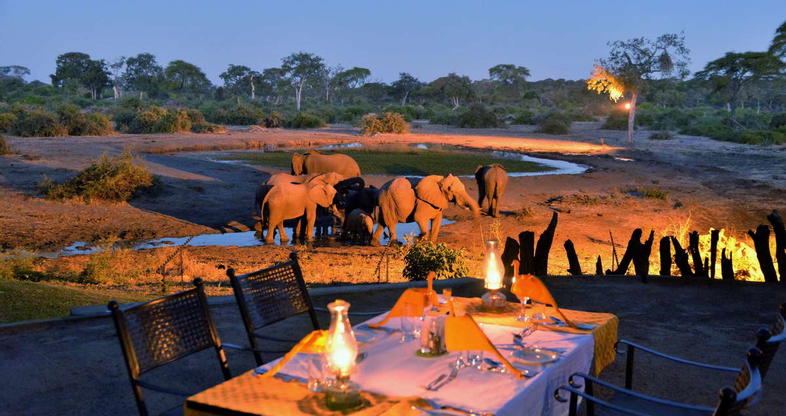
Avoid the crowds of Chobe and the Okavango Delta by exploring Botswana's remote, off-the-beaten-path safari destinations. Top hidden gems include the Central Kalahari Game Reserve, the otherworldly Makgadikgadi Pans, and the exclusive Mashatu Game Reserve in the Tuli Block
3-days-chobe-national-park-botswana-safari-tour-package-from-victoria-falls-town
6-day-best-victoria-falls-tour-chobe-and-hwange-zambia-wildlife-safari-holiday
8-days-best-zimbabwe-botswana-safari-all-inclusive-tour-package-from-victoria-falls
9-days-okavango-delta-moremi-game-reserve-chobe-river-front-and-victoria-falls-tour-package
11-days-un-comparable-best-botswana-safari-itinerary-and-optional-victoria-falls-tour
Central Kalahari Game Reserve (CKGR)
Spanning an astonishing 52,800 square kilometers, the Central Kalahari Game Reserve (CKGR) stands as one of the largest protected areas on Earth. This vast, unyielding wilderness presents an entirely different face of Botswana compared to the lush channels of the Okavango Delta. The landscape is defined by its scale: endless golden grasslands stretch to the horizon, punctuated by stunted acacia scrub, ancient sand dunes, and pancake-flat salt pans.
The reserve’s true magic reveals itself during the summer rains, typically between December and April. As water fills the fossilized river valleys—most notably Deception Valley—the arid terrain undergoes an immediate metamorphosis into an emerald paradise. Nutritious sweet grasses spring up, triggering the arrival of massive migratory herds of springbok, gemsbok (oryx), wildebeest, eland, and giraffe.
Naturally, this seasonal feast draws Africa’s most formidable predators. The CKGR is legendary for its exceptionally high concentrations of cheetahs, which thrive in the wide-open spaces, and its famous Kalahari black-maned lions, known for their impressive size and resilience. It is also an undisputed stronghold for more elusive carnivores like the brown hyena, leopard, honey badger, and wild dog.
Beyond game viewing, the CKGR offers profound human and celestial connections. Visitors can participate in cultural tracking walks led by local San (Basarwa) guides, gaining insight into thousands of years of survival skills, tracking techniques, and bush medicine. Furthermore, because of its absolute remoteness, light pollution is non-existent. At night, the sky transforms into a dazzling, immersive dome of stars, making it one of the most spectacular stargazing destinations on the continent. The sheer isolation gives travelers the rare impression of having an entire corner of Africa completely to themselves.
Makgadikgadi Pans National Park
Makgadikgadi Pans National Park offers a dramatic, surreal journey into a landscape shaped by the remnants of a super-lake that dried up thousands of years ago. Covering a massive area of salt flats, savanna, and riverine woodland, the park presents a stark dichotomy between the dry and wet seasons. During the arid winter months, the pans resemble a blindingly white, cratered lunar landscape. The vast silence and shimmering heat mirages create an eerie, otherworldly environment that invites exploration via thrilling quad bike excursions across the crusty earth, or spending the night sleeping completely exposed under the brilliant canopy of the Milky Way.
However, when the summer rains arrive, the parched flats transform into a lush, water-rich sanctuary. This environmental shift triggers one of Africa’s most spectacular yet vastly underrated wildlife phenomena: the second-largest zebra and wildebeest migration on the continent. Thousands of herbivores travel southward from the Boteti River to graze on the mineral-rich grasses of the pans, pursued closely by opportunistic prides of lions and packs of hyenas.
The Boteti River itself, running along the park’s western boundary, serves as a crucial dry-season lifeline. As the interior water dries up, the river becomes a focal point for massive herds of elephants, hippos, and migratory birds.
One of the park’s most memorable year-round highlights is the opportunity to interact with habituated wild meerkats. Over time, these charismatic insectivores have grown accustomed to human presence. Visitors can embark on walking safaris alongside them as they forage through the scrub, occasionally using a standing human’s head or shoulder as a convenient lookout tower to scout for predatory raptors, offering an unforgettable and intimate wildlife encounter.
Nxai Pan National Park
Situated on the northern fringe of the ancient Makgadikgadi basin, Nxai Pan National Park is a hidden gem that offers a remarkably distinct safari experience. The park is essentially a collection of fossilized pan beds surrounded by acacia woodlands and expansive, open grasslands. Like its neighbor, Nxai Pan experiences a dramatic seasonal transformation. During the dry season, the landscape is quiet and dust-blown, but the presence of a few permanent artificial waterholes ensures that wildlife viewing remains excellent. Large elephant bulls, prides of lions, and desert-adapted species like springbok and gemsbok frequent these watering spots, creating high-intensity predator-prey dynamics.
When the green season arrives with the summer rains, Nxai Pan bursts into life. The flat plains fill with rich grasses, drawing a massive influx of zebras and wildebeests migrating from the northern wetlands. This is the optimal time for wildlife enthusiasts to witness newborn animals and the high-speed hunts of resident cheetahs, who favor the open terrain for their sprint-based hunting style.
No visit to Nxai Pan is complete without journeying to the southwestern edge of the park to witness Baines’ Baobabs. Immortalized in an 1862 painting by explorer Thomas Baines, this cluster of seven ancient, upside-down-looking trees stands as a timeless monument on the edge of a small salt pan. Millennia old, these massive succulents look virtually unchanged from how they were depicted over 160 years ago.
Nxai Pan provides a perfect, crowd-free alternative to the busier parks of northern Botswana, offering a landscape where history, striking botany, and dramatic seasonal wildlife movements converge seamlessly.
Mashatu Game Reserve (Tuli Block)
Tucked away in the remote easternmost wedge of Botswana, where the country meets South Africa and Zimbabwe, lies the Mashatu Game Reserve. Encompassing 42,000 hectares of privately owned wilderness within the Northern Tuli Game Reserve, Mashatu is a landscape of stark contrasts. Unlike the flat, sand-dominated terrain of the Kalahari or the waterways of the Okavango, Mashatu features rugged sandstone cliffs, basalt formations, baobab-studded plains, and dense riverine forests fringing the Limpopo and Shashe rivers. It is affectionately known as the "Land of the Giants," celebrating its massive baobabs, towering nyala berry (Mashatu) trees, and the largest population of elephants on private land in Africa.
Mashatu stands out by breaking the traditional mold of the vehicle-bound African safari. Because it is a private reserve, it is not bound by strict national park regulations, allowing for exceptional off-road driving and night safaris. More importantly, it is a premier destination for active adventure. Visitors can ditch the 4x4 vehicle entirely to explore elephant paths and game trails via guided mountain biking safaris, horseback riding excursions, or intimate walking safaris led by expert local trackers.
For wildlife photographers, Mashatu is world-renowned. The reserve features the Matebole hide—a specially constructed, subterranean bunker positioned right at the edge of a busy waterhole. Photographers sit at ground level, capturing spectacular, low-angle shots of elephants, various antelopes, and predators drinking just meters away. With a robust population of leopards, lions, cheetahs, and over 350 bird species, Mashatu provides an intimate, uncrowded, and dynamic safari experience that feels completely detached from the rest of Botswana.
Reasons to visit less visited Botswana safari destinations
Visiting less-traveled safari regions in Botswana—such as the shimmering salt pans of Nxai Pan National Park or the rugged, wildlife-rich landscapes of Mashatu Game Reserve in the Northern Tuli Game Reserve—offers an intimate, crowd-free wilderness experience
Ultimate Solitude
The hallmark of a premium safari is the feeling of untamed isolation, a luxury that can sometimes be compromised in highly popular wildlife corridors. In heavily visited regions like the Okavango Delta or Chobe National Park, the excitement of spotting a predator is frequently shared with a fleet of other safari vehicles, leading to congested viewing loops and a diluted wilderness experience. In stark contrast, Botswana’s less-traveled safari frontiers—such as the Central Kalahari, Makgadikgadi, Nxai Pan, and Mashatu—offer the priceless gift of ultimate solitude. Because these parks host a limited number of lodges and private concessions, the human footprint is remarkably light.
Visiting these remote corners means entering a world where you are far more likely to encounter an active lion pride than a convoy of 4x4s. This scarcity of tourists changes the entire dynamic of a game drive. Instead of rushing to a coordinated radio sighting, guides have the time and freedom to track wildlife naturally, relying on ancient bushcraft rather than crowd sourcing. When a sighting occurs, it is an exclusive event. You can sit in absolute silence for hours, listening to the crunch of dry grass beneath an elephant’s foot or the low grunt of a leopard, entirely uninterrupted by the hum of idling engines or the chatter of other tour groups. This profound peace fosters a deep, meditative connection with the African bush. It transforms wildlife viewing from a checklist activity into a deeply personal, immersive journey, capturing the true, authentic spirit of an untouched African continent.
Diverse & Unique Ecosystems
While the winding waterways, papyrus channels, and lush floodplains of the Okavango Delta paint a classic image of fertile Africa, Botswana’s lesser-known regions offer a masterclass in ecological diversity. Venturing beyond the northern wetlands reveals stark, dramatic landscapes that challenge the traditional safari archetype. In destinations like Nxai Pan and the Makgadikgadi basin, the terrain is defined by ancient, fossilized salt lakes that stretch infinitely toward the horizon. These blindingly white flats—punctuated by historic landmarks like the towering, millennia-old Baines' Baobabs—create a surreal visual contrast against the deep blue African sky.
These arid and semi-arid environments have forced wildlife to undergo incredible evolutionary adaptations. Rather than the water-dependent species found in the north, these regions are populated by specialized, desert-adapted fauna. Travelers can marvel at the striking silhouette of a gemsbok (oryx), whose sophisticated internal cooling system allows it to survive days without drinking water, or spot the nomadic springbok leaping across the open plains. These ecosystems are also the preferred strongholds for unique, elusive predators that are rarely seen in dense wetlands. The bat-eared fox, with its enormous radar-like ears designed to detect insects underground, and the shaggy, mysterious brown hyena—a highly resilient desert scavenger—thrive in these open expanses. Exploring these varied terrains provides travelers with a much more comprehensive understanding of Africa’s natural history, proving that the continent's arid hearts are just as vibrant and captivating as its famous rivers.
Specialized Safari Activities
One of the greatest limitations of traditional national parks is the rigid structure of the activities allowed. In most public reserves, visitors are strictly confined to daytime game drives along designated dirt tracks. However, Botswana’s private reserves and unique geographical gems, such as Mashatu Game Reserve in the Tuli Block, shatter these boundaries by offering an exhilarating array of specialized safari activities. Because these private concessions are managed independently, they can provide immersive adventures that are logistically impossible or legally restricted in standard national parks, completely redefining how guests interact with the wilderness.
For those seeking an adrenaline rush, mountain biking safaris allow travelers to pedal along ancient elephant paths, feeling the African breeze and hearing the raw sounds of the bush without the barrier of a vehicle engine. Horseback safaris take this connection even further, allowing riders to move silently alongside herds of zebras and impalas, who view the horses as fellow herbivores rather than a threat. Night game drives open up a whole new world, utilizing powerful spotlights to track nocturnal hunters like leopards, genets, and bushbabies. Furthermore, Mashatu is a global pioneer in photographic safaris, featuring world-class underground hides. Positioned at ground level right at the edge of busy waterholes, these sunken bunkers allow photographers to sit safely just inches from drinking elephants and predators. This unique angle produces breathtaking, low-perspective shots that cannot be replicated from the seat of a standard safari truck, making it a dream destination for wildlife enthusiasts and creative professionals alike.
Sensational Seasonal Migrations
When most people think of African wildlife migrations, their minds immediately drift to the famous wildebeest river crossings of the Serengeti and Masai Mara. However, Botswana harbors one of the continent's best-kept secrets: a sensational, lesser-known zebra migration that is equally spectacular but completely devoid of massive tourist crowds. This dramatic wildlife event is closely tied to the seasons. During the dry winter months, the vast salt pans of Nxai Pan and Makgadikgadi are parched and empty. But the arrival of the summer rains between November and April triggers an immediate, miraculous transformation.
As the first heavy downpours hit the parched earth, the mineral-rich soils of the pans burst into life, carpeted in highly nutritious, sweet green grasses. Sensing this seasonal abundance, thousands of plains zebras and blue wildebeests embark on a massive journey from the northern rivers down to the Nxai Pan basin. It stands as one of the longest land mammal migrations in southern Africa. Watching these immense, striped herds move across the wide-open, emerald plains is a breathtaking sight. The green season is also a time of renewal, coinciding with the birthing season for thousands of antelopes. This sudden explosion of vulnerable young targets acts as a natural magnet for opportunistic apex predators. Prides of lions, packs of wild dogs, and resident cheetahs capitalize on the open terrain, leading to high-stakes, fast-paced hunting action that offers wildlife enthusiasts front-row seats to the raw, unfiltered circle of life.
Greater Focus on the 'Land of Giants'
Nestled in the remote eastern corner of Botswana, the Mashatu Game Reserve proudly carries the moniker the "Land of the Giants." This name is a nod to the magnificent scale of both its flora and fauna. While the Okavango Delta is famous for its intricate, water-based ecosystems, Mashatu shifts the spotlight toward grand, imposing landscapes dominated by monumental natural wonders. Chief among these wonders are the reserve's ancient baobab trees. These massive, prehistoric succulents—some of which have stood for over a thousand years—anchor the rugged landscape, their thick, gnarled trunks and root-like branches creating a dramatic silhouette against the horizon that has inspired explorers for centuries.
Living in perfect harmony with these ancient trees is Mashatu's most famous attraction: the largest population of elephants found on private land anywhere in Africa. The reserve’s unique combination of rugged sandstone cliffs, wide basalt plains, and dense riverine forests along the Limpopo River provides an ideal habitat for these majestic pachyderms. Travelers can witness massive family herds, numbering in the dozens, moving gracefully through the towering nyala berry trees. For wildlife photographers and nature lovers, this environment creates unparalleled opportunities. The contrast of these gentle giants moving past colossal rock formations and ancient trees provides a dramatic, artistic backdrop that is difficult to find elsewhere. Mashatu successfully shifts the safari narrative away from just checking off the "Big Five" and focuses instead on celebrating the sheer, monumental scale of Africa’s most iconic wildlife and landscapes.
Booking less visited Botswana safari destinations with us Roads of Adventure safaris
Booking off-the-beaten-path Botswana safaris with Roads of Adventure Safaris connects you with tailored, expert-led expeditions into remote wilderness areas. They specialize in curating bespoke, eco-friendly adventures that avoid crowds, taking travelers deep into regions far removed from standard tourist trails
