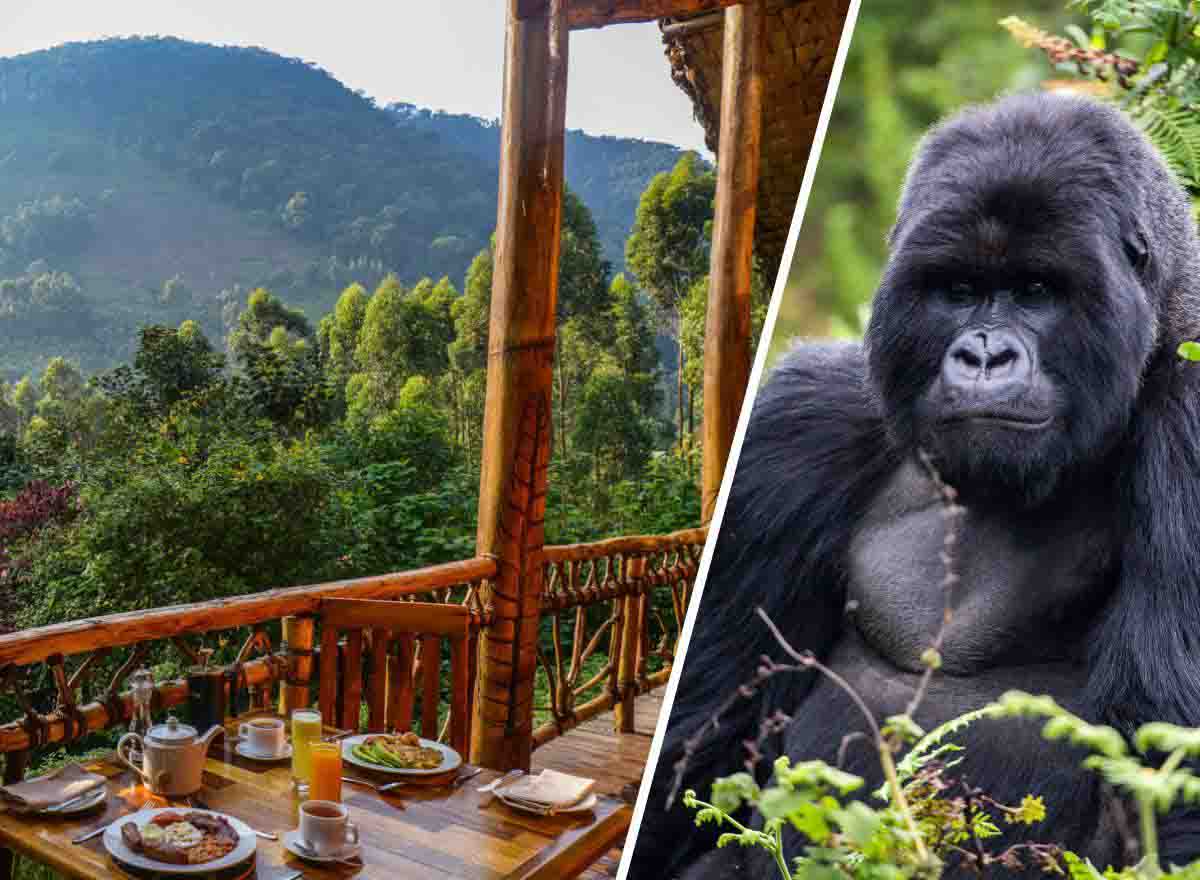
Securing your Rwanda gorilla permits is the most critical step in planning an unforgettable 10-day safari through the "Land of a Thousand Hills." These exclusive passes grant you a rare, life-changing face-to-face encounter with endangered mountain gorillas in their natural habitat. Because Rwanda prioritizes conservation and sustainable eco-tourism, permit availability is strictly limited each day to protect the volcano-dwelling primates.
Integrating this bucket-list trek into a broader 10-day itinerary allows you to balance high-intensity wildlife tracking with deep cultural immersion and scenic relaxation. From navigating booking rules to mapping out your ultimate travel route, understanding the logistics early ensures a seamless adventure. This guide breaks down pricing, booking timelines, and expert strategies to secure your permits, laying the perfect foundation for your comprehensive Rwandan expedition.
10-days-rwanda-uganda-safari-tour-double-gorilla-trekking-itinerary
10-days-rwanda-gorilla-trekking-safari-and-kenya-masai-mara-safari-tour
10-days-best-uganda-big-five-safaris-and-primate-experience
10-days-uganda-rwanda-primate-safari-vacation-and-game-drive-safari
10-days-best-of-uganda-and-rwanda-all-big-five-animal-and-gorilla-trekking
Rwanda gorilla Permit Details & Costs
• Foreign non-residents: US$1,500 per person
• Foreign Residents: US$500 per person
• East African / Rwandan Citizens: US$200 per person
• African Citizens (Outside East Africa): US$500 per person
• Private Gorilla Trek: US$15,000 per person (includes a dedicated private guide)
• Duration: Grants 1 hour of viewing time with one habituated mountain gorilla family in Volcanoes National Park.
• Daily Limit: Approximately 96 permits are issued per day (8 visitors across 12 habituated families).
• Age Requirement: The minimum age is 15 years old
Why are Rwanda gorilla permits priced at US$1,500 for foreign non-residents?
The US$1,500 permit price reflects Rwanda’s deliberate strategy of high-value, low-impact eco-tourism. This model intentionally limits tourist numbers to safeguard the fragile ecosystem of Volcanoes National Park while generating substantial revenue. A massive 10% of all permit proceeds goes directly to local communities living on the park borders, funding schools, clinics, and infrastructure. This direct financial link transforms former poachers into active conservationists. The remaining revenue funds round-the-clock veterinary care, intensive anti-poaching patrols, and park rangers who protect the habituated families. By maintaining a high price point, Rwanda prevents overcrowding, minimizes human-borne disease transmission to the primates, and guarantees an elite, intimate wildlife experience. The funds ensure that the mountain gorilla population—once on the brink of extinction—continues its remarkable upward growth trajectory.
What criteria must a traveler meet to qualify for the US$500 foreign resident permit?
To secure the discounted US$500 foreign resident rate, travelers must hold a valid residency permit or work visa for Rwanda or any other East African Community (EAC) member state. This discount does not apply to casual tourists or those traveling on standard holiday visas. To qualify, you must upload your valid residency identity documentation, work permit, or diplomatic card into the official Irembo portal during the booking process. The documentation must be valid at the time of booking and remain valid through the actual tracking date. Park authorities strictly audit these credentials at the Volcanoes National Park headquarters on the morning of the trek. If a traveler fails to present the original, physical residency documents matching their permit, the pass is invalidated. The traveler will then be required to pay the US$1,000 difference to match the foreign non-resident rate before being permitted to track.
How can citizens of African nations outside East Africa access the US$500 permit rate?
Citizens of non-EAC African nations qualify for a special US$500 promotional rate designed to foster intra-African travel and regional tourism. To access this specific tier, travelers must present a valid passport issued by an African Union member nation during the online booking process. When purchasing the permit through a licensed tour operator or directly via the Irembo platform, the passport details must be accurately entered. The physical passport must be carried to the park headquarters in Kinigi for verification during the 6:30 AM pre-trek registration. This initiative lowers financial barriers for African nationals, encouraging continental pride in conservation. It allows African travelers to experience a world-class wildlife encounter that was historically priced exclusively for wealthy intercontinental tourists.
What exclusive benefits are included in the US$15,000 private gorilla trek option?
The US$15,000 private gorilla trek transforms an standard group excursion into an ultra-exclusive, personalized expedition. Instead of trekking with a group of up to seven random tourists, this premier option grants you entirely exclusive access to an entire habituated mountain gorilla family. The package includes a dedicated private park guide, specialized trackers, and an assortment of porters to assist your group. This option is ideal for families, VIPs, or professional wildlife photographers who require a specific pace, specialized camera positioning, and silent fields of view without external interruptions. Furthermore, a private trek offers flexibility in family selection, allowing park rangers to assign a gorilla group that matches your precise physical fitness level and trekking preferences, ensuring ultimate comfort and isolation.
Why does Rwanda strictly limit gorilla viewing time to exactly one hour?
The one-hour viewing limit is a non-negotiable conservation rule designed to protect mountain gorillas from human-borne pathogens and behavioral stress. Because mountain gorillas share roughly 98% of their DNA with humans, they are highly susceptible to respiratory illnesses, colds, and viruses like influenza. Prolonged exposure increases the risk of cross-infection, which could devastate an entire family. Additionally, wild animals become stressed or defensive if humans linger too long in their immediate territory. Restricting contact to 60 minutes allows the gorillas to maintain their natural foraging, grooming, and nesting routines without behavioral disruption. Trackers monitor the time precisely; once the hour ends, guests must immediately withdraw, ensuring the primates retain their wild boundaries and low stress levels.
How is the daily limit of approximately 96 gorilla permits calculated?
The maximum daily limit of 96 permits is derived from a strict formula balancing conservation science with tourism access. Volcanoes National Park currently has 12 habituated mountain gorilla families allocated for public tourism tracking. To minimize human impact, wildlife authorities restrict visitor groups to a maximum of 8 people per gorilla family per day. Multiplying 12 families by 8 visitors yields exactly 96 available permits each morning. Additional habituated groups are reserved exclusively for scientific research and continuous health monitoring. Because this hard ceiling of 96 passes cannot be expanded, demand vastly outstrips supply during peak travel months. This mathematical limitation underscores the urgency of booking your tracking permits many months in advance of your 10-day safari.
Why is the minimum age for a gorilla trek in Rwanda set at 15 years?
The minimum age limit of 15 years is strictly enforced for two vital reasons: disease prevention and physical safety. Children under 15 frequently contract common childhood illnesses, such as coughs, colds, chickenpox, and measles, which can be fatal to mountain gorillas due to their lack of immunity. Behaviorally, younger children are less predictable when encountering large apex animals. If a massive silverback beats its chest, makes direct eye contact, or charges to assert dominance, a child might panic, scream, or run. This flight response triggers the gorilla's natural pursuit instincts, creating a highly volatile situation. A teenager of 15 is deemed mature enough to comprehend safety briefings, follow ranger commands, and withstand the rigorous, multi-hour mountain hikes.
How do I use the Irembo platform to book a Rwanda gorilla permit directly?
The Irembo Gov platform is the official digital gateway for buying government services in Rwanda, including gorilla permits. To book directly, create an account on the Irembo portal, navigate to the tourism section, and choose Volcanoes National Park Gorilla Tracking. Select your preferred dates and enter the correct passport numbers, nationalities, and ages for all trekkers. The platform requires full payment upfront, which can be settled via international credit card, bank transfer, or local mobile money networks. Once authorized, the portal generates a digital receipt and confirmation voucher. This voucher must be presented at the park headquarters to receive your physical tracking permit. While direct booking is possible, many travelers prefer using a licensed tour operator to handle the digital logistics smoothly.
What are the key advantages of booking your permit through a licensed tour operator?
Booking your gorilla permit through a licensed Rwandan tour operator eliminates administrative stress and ensures seamless logistics. Operators maintain priority access channels and up-to-the-minute knowledge of permit availability, which is crucial if your preferred dates are sold out on public portals. Beyond securing the permit, an operator coordinates the essential supporting components of your 10-day safari, including 4x4 transport, professional driver-guides, and lodge bookings. If flights change or unexpected park adjustments occur, a local operator can manage permit rescheduling or re-allocations directly with the Rwanda Development Board (RDB). Their established relationships with park rangers can also help advocate for a gorilla family assignment that matches your fitness level on the morning of the trek.
How far in advance should you secure permits for a peak-season safari?
For safaris falling within the dry peak seasons—June to September and December to February—permits must be secured 6 to 12 months in advance. During these periods, international demand peaks as global travelers flock to the park for dry trails and clear photography conditions. The daily supply of 96 permits sells out rapidly, often a year ahead for popular dates. Waiting to purchase permits until you arrive in Kigali or trying to book just a few weeks prior usually ends in disappointment or disrupted itineraries. For the low seasons (March to May and October to November), booking 3 to 4 months in advance is typically sufficient, though early reservation remains the safest strategy.
Does the Rwanda Development Board offer low-season discounts on gorilla permits?
Yes, the Rwanda Development Board (RDB) occasionally offers a 30% low-season discount on gorilla permits, reducing the foreign non-resident cost from $1,500 to $1,050. This promotional rate typically applies during the rainy months of March to May and October to November. To qualify for this specific discount, travelers must meet strict conditions, which usually require booking additional nights in other Rwandan national parks, such as Akagera National Park or Nyungwe Forest National Park. This strategic initiative incentivizes tourists to explore Rwanda’s diverse ecosystems during the quieter months. It transforms a single trek into an expansive, multi-destination safari across the country while providing significant financial savings.
Are there combined promotional permit packages for exploring multiple Rwandan parks?
Rwanda encourages multi-destination travel by offering package discounts for visitors who explore multiple national parks. Travelers who book a gorilla trek alongside safari activities in Akagera National Park (home to the Big Five) and primate trekking in Nyungwe Forest National Park (famous for chimpanzees and canopy walks) often qualify for specialized multi-park promotional rates. These packages are designed to extend visitor stays from brief weekend trips into comprehensive 10-day itineraries. By bundling these permits together through an authorized tour operator, you save money while supporting conservation initiatives across different habitats, directly benefiting savanna, montane forest, and volcanic ecosystems.
What is the official refund and cancellation policy for Rwanda gorilla permits?
The Rwanda Development Board enforces a strict cancellation and refund policy to prevent speculative bookings and financial losses. If a permit is canceled more than 30 days before the trek, a partial refund of approximately 50% may be approved under specific conditions. Cancellations made within 30 days of the trek date are generally non-refundable, and the entire permit fee is forfeited. However, if a traveler fails to track due to sudden, documented illness verified by a park medical authority on-site, a 50% medical refund may be granted to prevent sick individuals from entering the forest. Because of these stringent rules, purchasing comprehensive travel insurance that covers adventure travel cancellations is essential.
Can a gorilla permit be rescheduled if travel plans change unexpectedly?
Rescheduling a Rwanda gorilla permit is possible but subject to strict availability and RDB guidelines. Requests to change tracking dates must be submitted in writing through your tour operator or directly to the RDB well in advance of the original date. Permits can be shifted to a new date free of charge if availability exists within the same year, though a processing fee may apply for late adjustments. If you attempt to reschedule during peak season, you may find that all alternative dates are completely full, forcing you to adjust your entire 10-day safari sequence. Permits cannot be transferred to another traveler's name last-minute due to strict passport security protocols.
How should a gorilla trek be sequenced within a 10-day Rwanda safari?
In a balanced 10-day safari, the gorilla trek should ideally be positioned in the middle or toward the final third of the itinerary. A fantastic sequence begins with cultural sites in Kigali, followed by a big game savanna safari in Akagera National Park to acclimate to the climate. Next, travel to Nyungwe Forest National Park for chimpanzee tracking, which prepares your legs for mountain hiking. By days 6 or 7, you reach Volcanoes National Park fully acclimated and physically ready for the steep terrain of the gorilla trek. Conclude your safari with relaxing days along the shores of Lake Kivu to unwind after the intense physical tracking before heading back to Kigali for departure.
What physical fitness level is required to complete a trek in Volcanoes National Park?
Gorilla trekking requires a moderate to high level of physical fitness, as trails span elevations between 2,500 and 3,000+ meters above sea level. The terrain consists of steep slopes, thick tangled vegetation, muddy pathways, and slippery volcanic rocks. Hikes can last anywhere from 1 to 6 hours depending on where the assigned gorilla family is moving. Even fit individuals can find the thin air and steep climbs challenging. To prepare, incorporate cardiovascular exercises, stair climbing, and hiking with a weighted daypack into your routine for several weeks before your trip. For travelers with physical limitations, shorter treks can be requested during morning briefings, and porters are available for hire to provide physical assistance on the trails.
How are gorilla families assigned to trekkers on the morning of the excursion?
Gorilla family assignments take place at the park headquarters in Kinigi at 7:00 AM on the morning of your trek. Rangers divide the 96 daily visitors into 12 groups of 8 people. This allocation is a collaborative process based on age, physical fitness, and personal preferences. Trackers who venture into the forest at dawn radio back the approximate locations and movement directions of each gorilla family. Trekkers who are older or prefer a shorter walk are assigned families closer to the park boundaries, while fitter groups are assigned families deeper in the mountains. If you have a specific family you wish to see, inform your guide the night before so they can advocate for you during the morning assignment meeting.
What clothing and footwear should you pack to match your gorilla permit entry?
To ensure comfort during your trek, pack specialized clothing designed for unpredictable, dense rainforest environments. Essential items include:
• Sturdy, waterproof hiking boots with deep tread for traction on steep, muddy slopes.
• Long-sleeved shirts and long trousers to shield your skin from stinging nettles and sharp branches.
• Tuck your trousers into long socks to prevent safari ants and insects from crawling up your legs.
• Tough, waterproof gardening gloves to grip muddy vines and branches safely.
• A lightweight, breathable rain jacket to stay dry during sudden downpours.
• A wide-brimmed hat, polarized sunglasses, and a waterproof cover for your camera daypack.
What essential items must be carried inside your daypack on tracking day?
On tracking day, your daypack should contain essential items for safety, hydration, and documentation. You must bring your original passport to verify your identity against the permit registry during registration. Carry at least 2 liters of drinking water to stay hydrated at high altitude, along with energy-dense snacks like nuts, dried fruit, or energy bars. The park lodge will typically provide a packed lunch box, which should also go in your pack. Include a small, personal first-aid kit with blister Band-Aids, insect repellent, and any personal medications. Wrap your camera equipment and extra batteries in waterproof zip-top bags to shield them from moisture and unexpected mountain downpours.
What are the strict behavioral rules when facing a mountain gorilla family?
When you encounter a gorilla family, you must strictly follow the ranger's safety rules to ensure a safe, respectful visit. Maintain a minimum distance of 7 meters (22 feet) from the gorillas at all times to protect them from human illness and respect their space. Speak in low, hushed whispers and avoid sudden gestures that could be seen as threatening. Flash photography is strictly prohibited, as bright flashes can startle the silverback and trigger an aggressive charge. Never eat, drink, or smoke near the primates, as dropped crumbs can introduce dangerous bacteria. If a gorilla approaches you, stay calm, lower your eyes, crouch down gently, and let the ranger guide you through the interaction safely.
Booking 10-Day Safari in Rwanda with us Roads of Adventure safaris
Plan your 10-day Rwandan adventure with Roads of Adventure Safaris by visiting the official website to request a custom itinerary. This action-packed journey starts in Kigali with a city tour and genocide memorial visit, then moves to Nyungwe National Park for chimpanzee tracking and a canopy walk. Relax by the scenic shores of Lake Kivu, track endangered mountain gorillas in Volcanoes National Park, and finish with savannah game drives and boat safaris in Akagera National Park. Packages typically run from $300 to $1,000 per person daily, covering custom mid-range operations, permits, 4WD transport, and expert local guides.